The Art of Persuasion
(Getting people to do what you want them to do!)


                                              S
Just so you know…
 During this unit you will complete several assessments
  demonstrating your understanding of the art of
  persuasion.

 As you learn more about the art of persuasion, you are
  also going to learn how wide-spread the use and
  abuse of the art of persuasion is.

 We will soon see the characters of Brutus and Mark
  Antony use this tool to try to gain the support of the
  Roman people.
Persuasion

 To help you become familiar with the art of
  persuasion and its terminology, the advertising
  media is a great place to start!
 For better or worse, advertising is the king of
  persuasion!
Just to clarify…

 Advertising and propaganda are twins. Both
  seek to influence the way a person thinks and
  feels.
 The goal of advertising is to influence people to
  buy a product whether they need it or not.
 The goal of propaganda is to change the way
  people think and feel about a specific philosophy
  or worldview.
World War I & II
 Propaganda
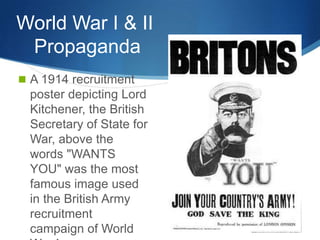
 A 1914 recruitment
  poster depicting Lord
  Kitchener, the British
  Secretary of State for
  War, above the
  words "WANTS
  YOU" was the most
  famous image used
  in the British Army
  recruitment
  campaign of World
Where do we find examples of
       Persuasion?

 Television & Radio

 Newspapers & Magazines

 Billboards

 Websites & Social Media Pages

 Political Speeches

 Job Recruitment
So what is the secret to the art
       of persuasion?
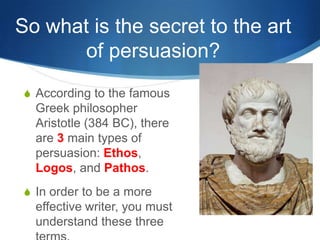
S According to the famous
  Greek philosopher
  Aristotle (384 BC), there
  are 3 main types of
  persuasion: Ethos,
  Logos, and Pathos.
S In order to be a more
  effective writer, you must
  understand these three
ETHOS

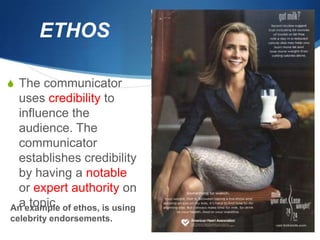
S The communicator
 uses credibility to
 influence the
 audience. The
 communicator
 establishes credibility
 by having a notable
 or expert authority on
 a topic.
An example of ethos, is using
celebrity endorsements.
PATHOS

S An emotional appeal
  to the heart, it draws
  upon the audiences’
  feelings.

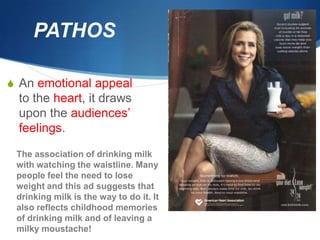
 The association of drinking milk
 with watching the waistline. Many
 people feel the need to lose
 weight and this ad suggests that
 drinking milk is the way to do it. It
 also reflects childhood memories
 of drinking milk and of leaving a
 milky moustache!
LOGOS

S A logical appeal, draws
  upon the audiences
  sense of reason, using
  facts, statistics or
  evidence.
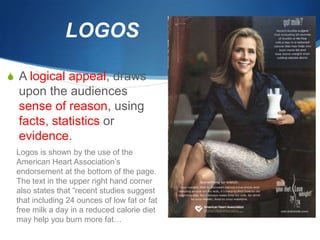
 Logos is shown by the use of the
 American Heart Association’s
 endorsement at the bottom of the page.
 The text in the upper right hand corner
 also states that “recent studies suggest
 that including 24 ounces of low fat or fat
 free milk a day in a reduced calorie diet
 may help you burn more fat…
Activity time!


S In your groups, look at the different
  advertisements – fill in your analysis chart
  including which types of persuasion are used
  (ETHOS, PATHOS and LOGOS) and your
  reasoning.
S We will exchange responses towards the end
  of the class

Persuasion

  • 1.
    The Art ofPersuasion (Getting people to do what you want them to do!) S
  • 2.
    Just so youknow…  During this unit you will complete several assessments demonstrating your understanding of the art of persuasion.  As you learn more about the art of persuasion, you are also going to learn how wide-spread the use and abuse of the art of persuasion is.  We will soon see the characters of Brutus and Mark Antony use this tool to try to gain the support of the Roman people.
  • 3.
    Persuasion  To helpyou become familiar with the art of persuasion and its terminology, the advertising media is a great place to start!  For better or worse, advertising is the king of persuasion!
  • 4.
    Just to clarify… Advertising and propaganda are twins. Both seek to influence the way a person thinks and feels.  The goal of advertising is to influence people to buy a product whether they need it or not.  The goal of propaganda is to change the way people think and feel about a specific philosophy or worldview.
  • 5.
    World War I& II Propaganda  A 1914 recruitment poster depicting Lord Kitchener, the British Secretary of State for War, above the words "WANTS YOU" was the most famous image used in the British Army recruitment campaign of World
  • 6.
    Where do wefind examples of Persuasion?  Television & Radio  Newspapers & Magazines  Billboards  Websites & Social Media Pages  Political Speeches  Job Recruitment
  • 7.
    So what isthe secret to the art of persuasion? S According to the famous Greek philosopher Aristotle (384 BC), there are 3 main types of persuasion: Ethos, Logos, and Pathos. S In order to be a more effective writer, you must understand these three
  • 8.
    ETHOS S The communicator uses credibility to influence the audience. The communicator establishes credibility by having a notable or expert authority on a topic. An example of ethos, is using celebrity endorsements.
  • 9.
    PATHOS S An emotionalappeal to the heart, it draws upon the audiences’ feelings. The association of drinking milk with watching the waistline. Many people feel the need to lose weight and this ad suggests that drinking milk is the way to do it. It also reflects childhood memories of drinking milk and of leaving a milky moustache!
  • 10.
    LOGOS S A logicalappeal, draws upon the audiences sense of reason, using facts, statistics or evidence. Logos is shown by the use of the American Heart Association’s endorsement at the bottom of the page. The text in the upper right hand corner also states that “recent studies suggest that including 24 ounces of low fat or fat free milk a day in a reduced calorie diet may help you burn more fat…
  • 11.
    Activity time! S Inyour groups, look at the different advertisements – fill in your analysis chart including which types of persuasion are used (ETHOS, PATHOS and LOGOS) and your reasoning. S We will exchange responses towards the end of the class