The Power of Persuasion
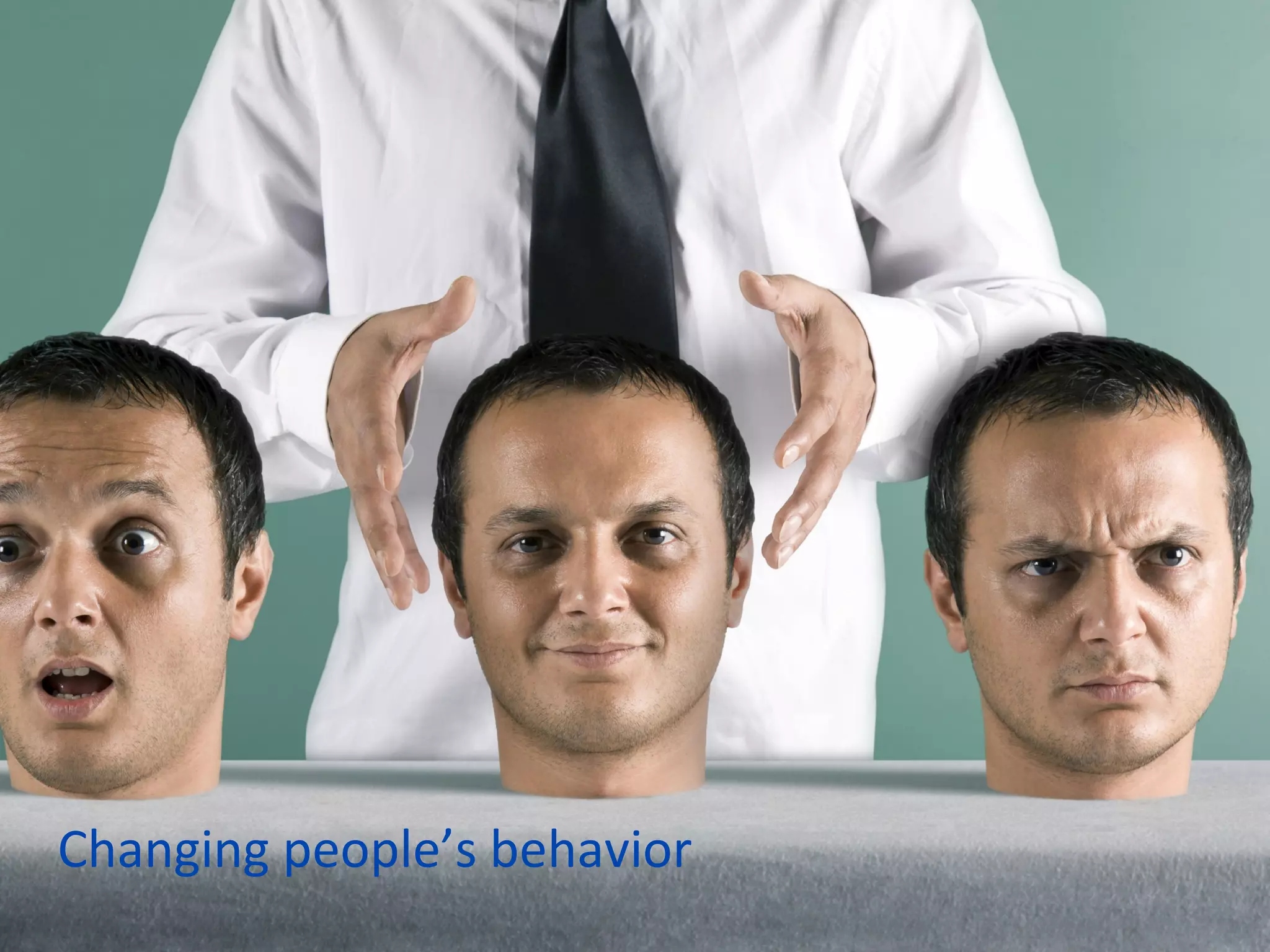
Changing people’s behavior
6 principles of persuasion
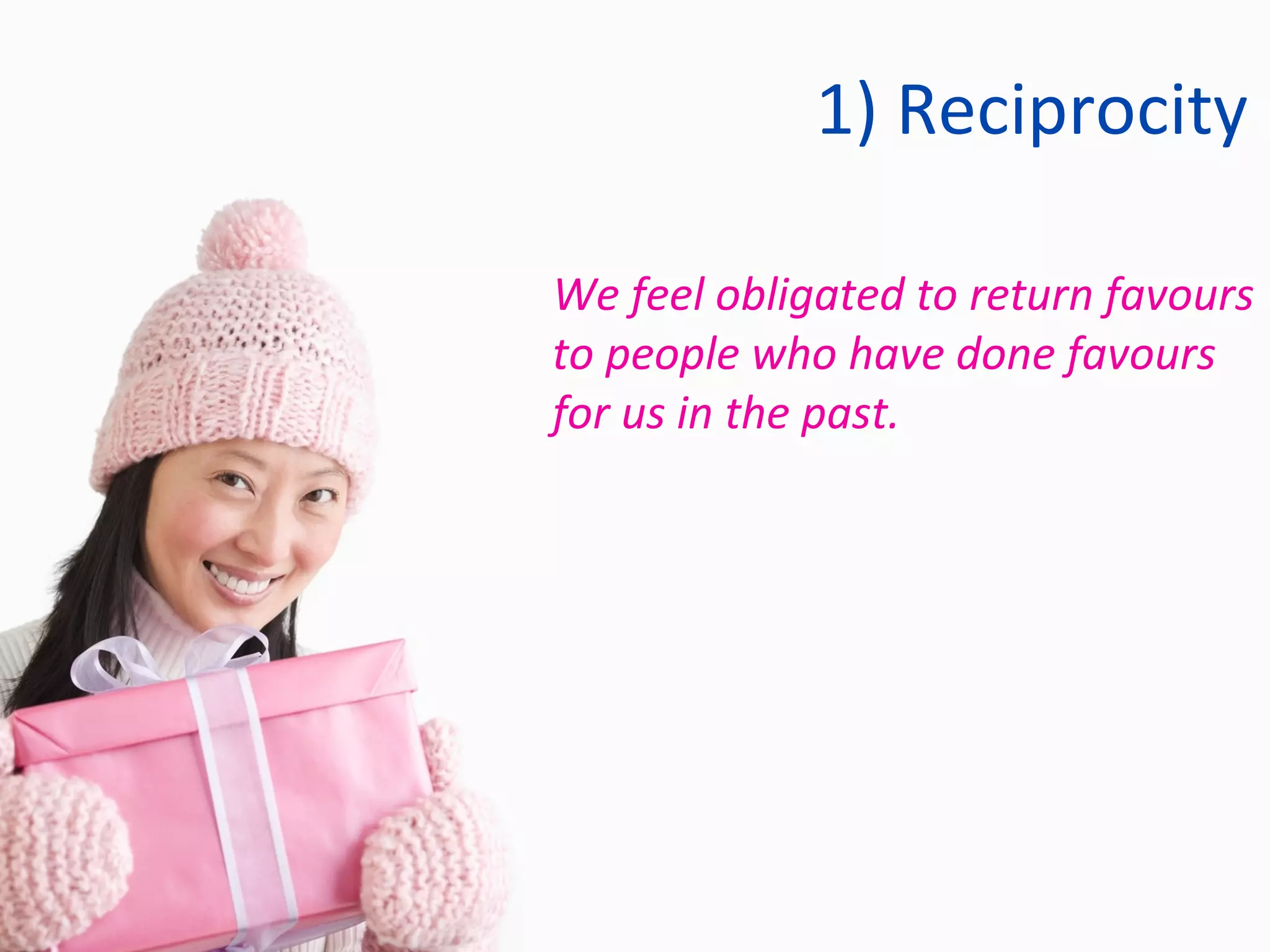
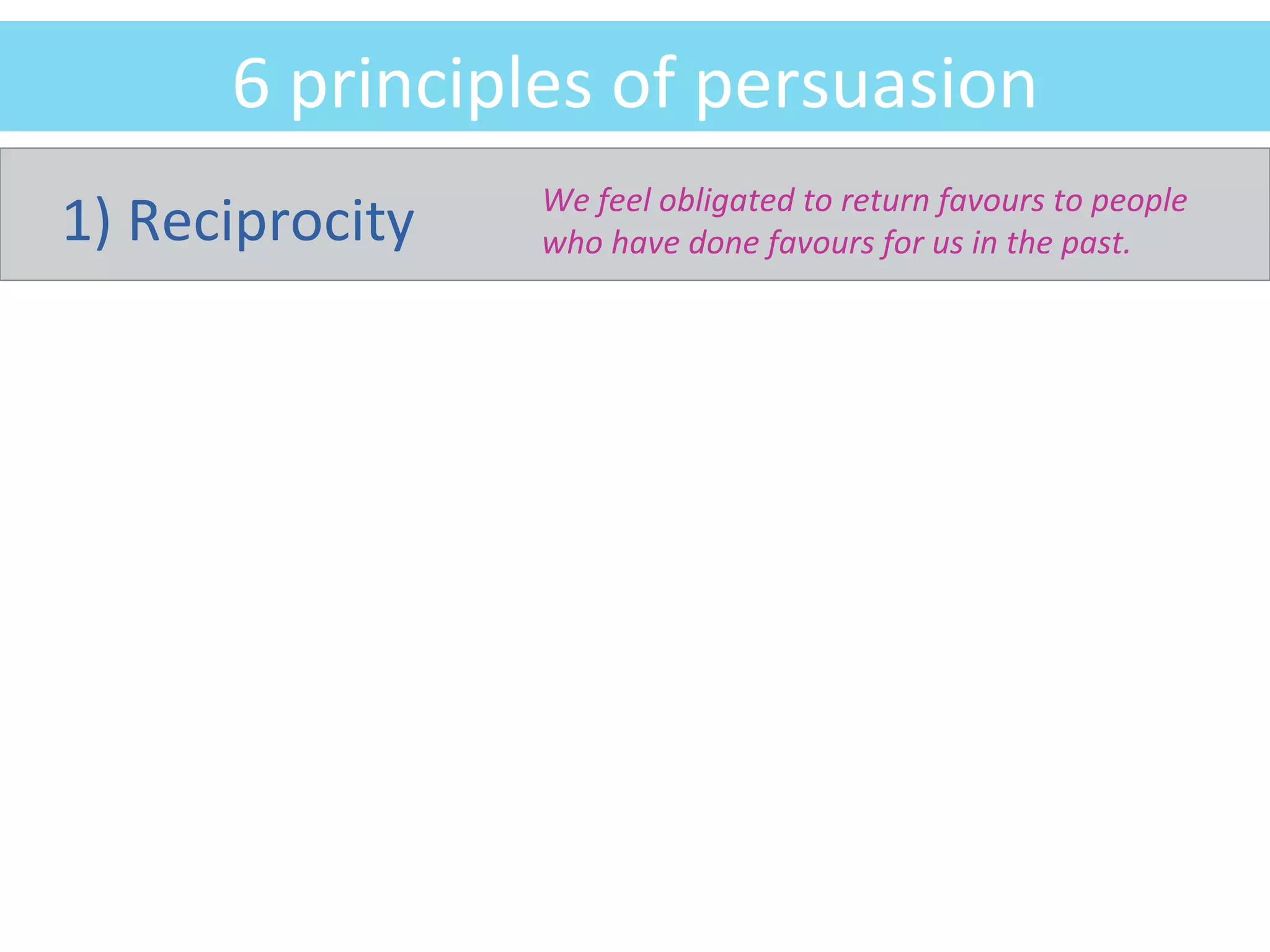
1) Reciprocity We feel obligated to return favours to people who have done favours for us in the past.
Practical Tip #1 Do people favours.
Don’t Forget
The magic part…
No problem! I’m glad to help you. I’m sure that if the situation were reversed,  you would do the same for me.
Reciprocity also  applies to concessions
If I give something up, you should give something up too.
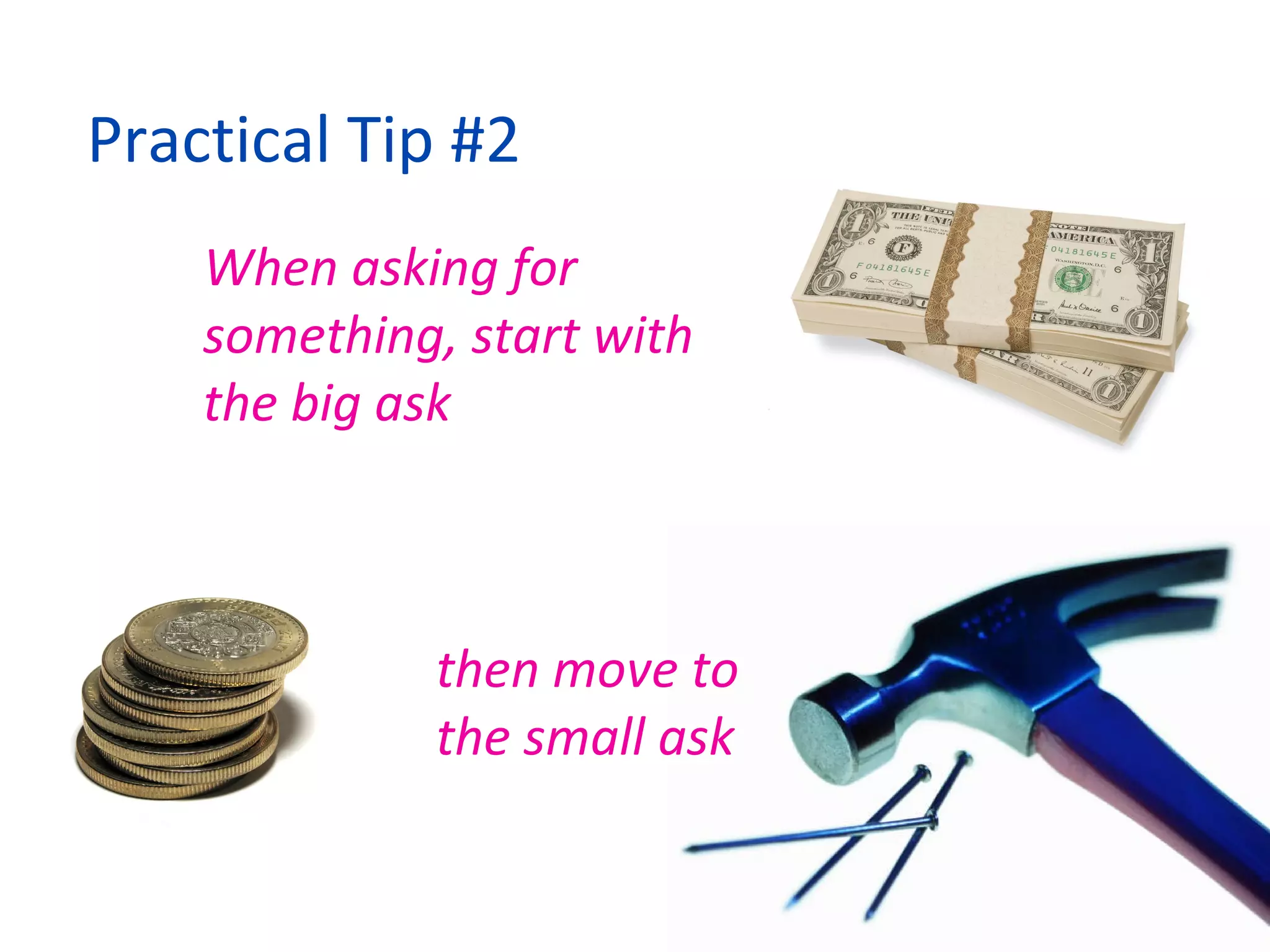
When asking for something, start with the big ask Practical Tip #2 then move to the small ask
Practical Tip #3 Frame decisions in terms of losses, not gains
If you don’t do this, you could be at risk to lose…
6 principles of persuasion 1) Reciprocity We feel obligated to return favours to people who have done favours for us in the past.
2) Scarcity
We value information and commodities that are scarce more then when they are abundant.
Exclusive information is like bread- serve it fresh to best enjoy
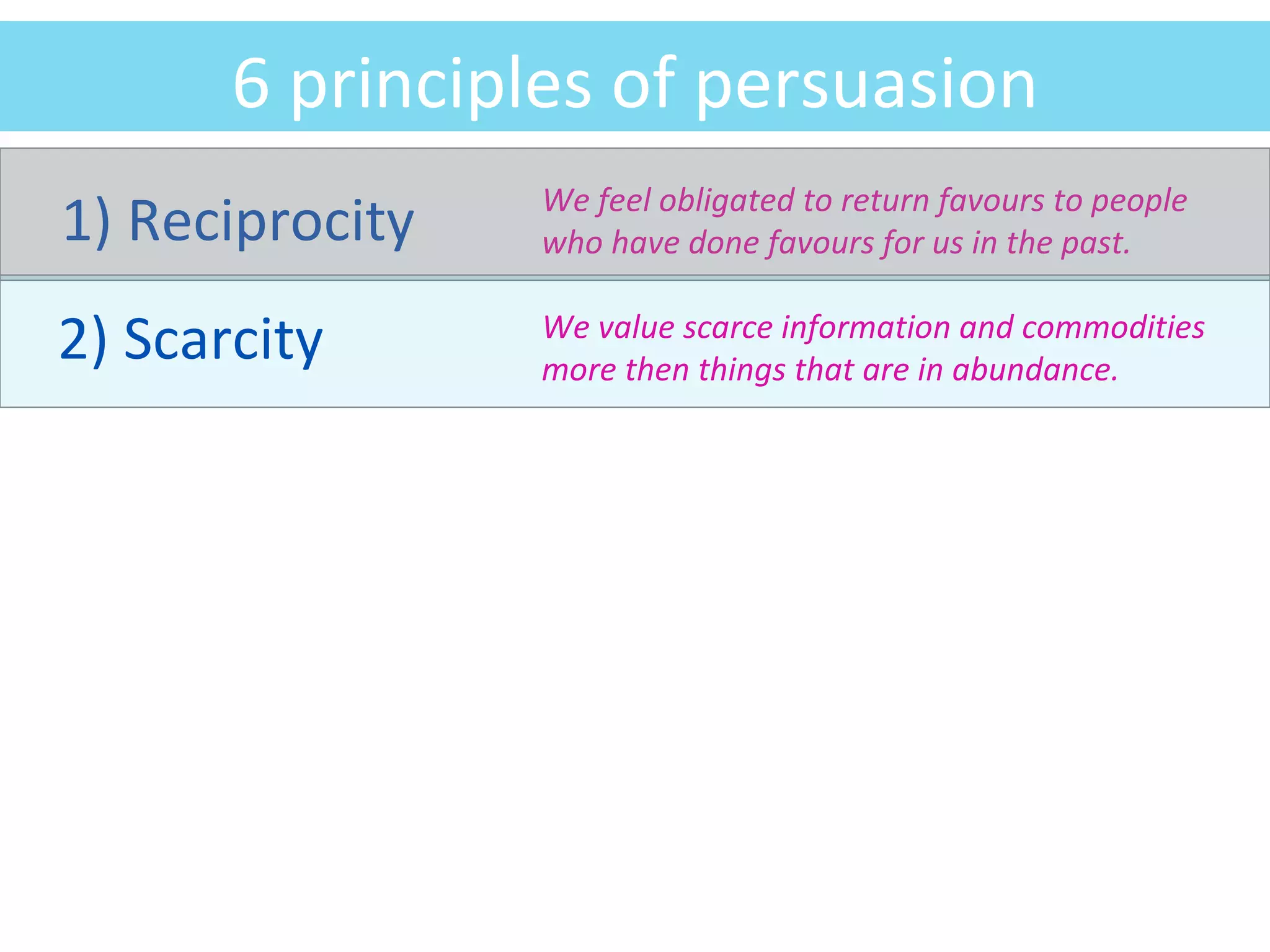
6 principles of persuasion 1) Reciprocity We feel obligated to return favours to people who have done favours for us in the past. 2) Scarcity We value scarce information and commodities more then things that are in abundance.
3) Authority We believe what  trustworthy and credible experts say
To be seen as an expert, you need credentials and trust worthiness
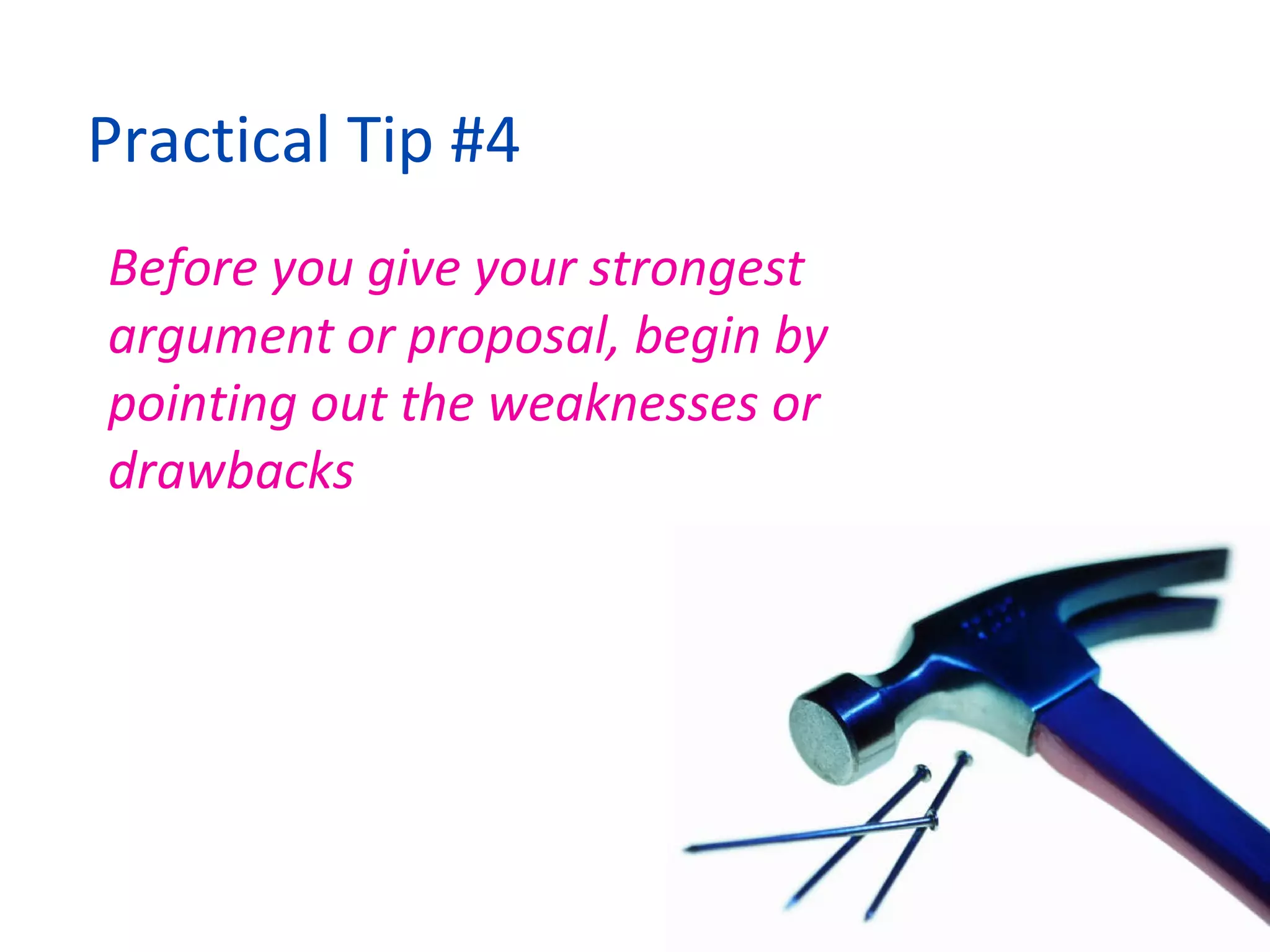
Practical Tip #4 Before you give your strongest argument or proposal, begin by pointing out the weaknesses or drawbacks
6 principles of persuasion 1) Reciprocity We feel obligated to return favours to people who have done favours for us in the past. 2) Scarcity We value scarce information and commodities more then things that are in abundance. 3) Authority We believe what trustworthy and credible experts say.
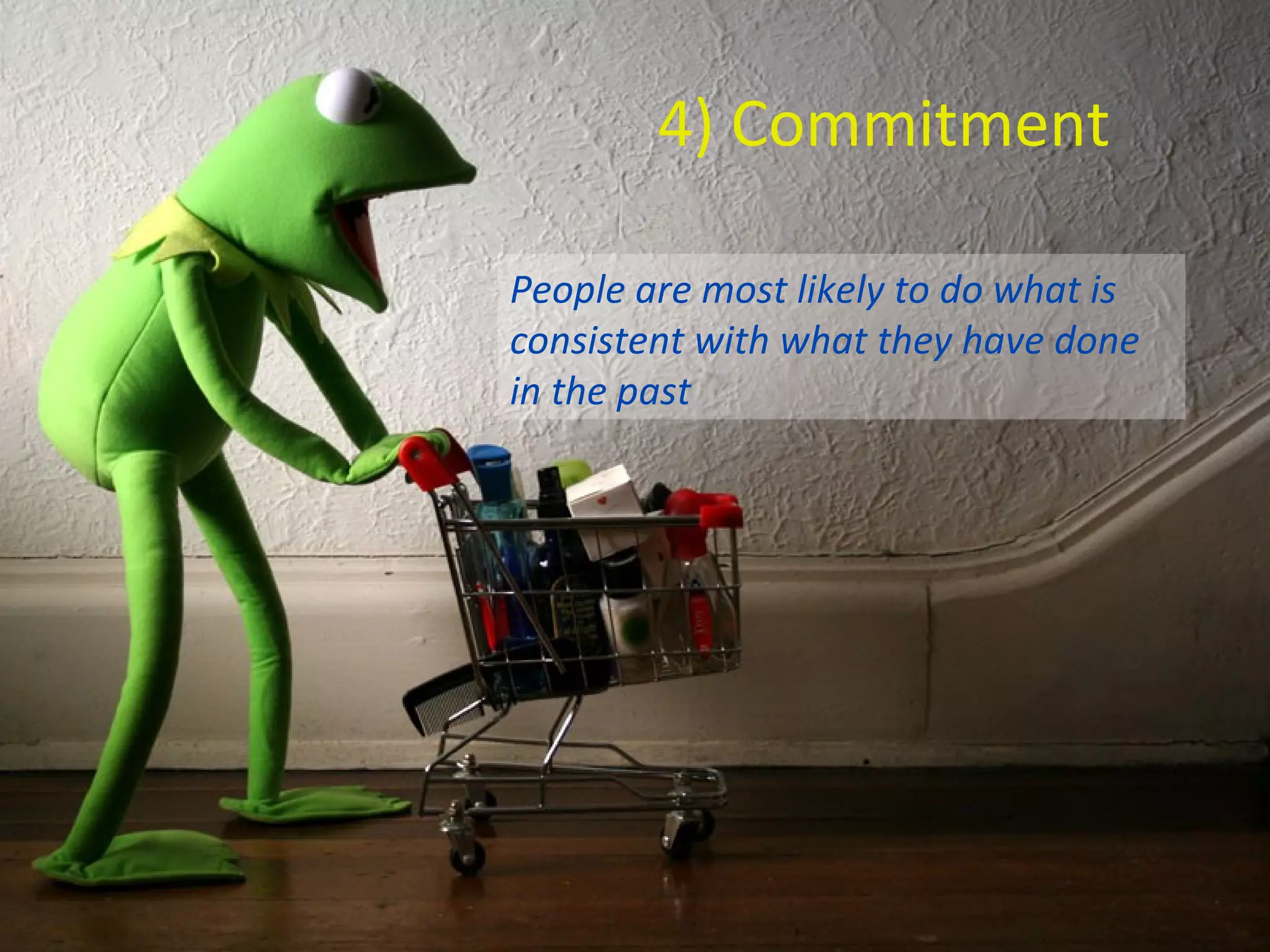
4) Commitment People are most likely to do what is consistent with what they have done in the past
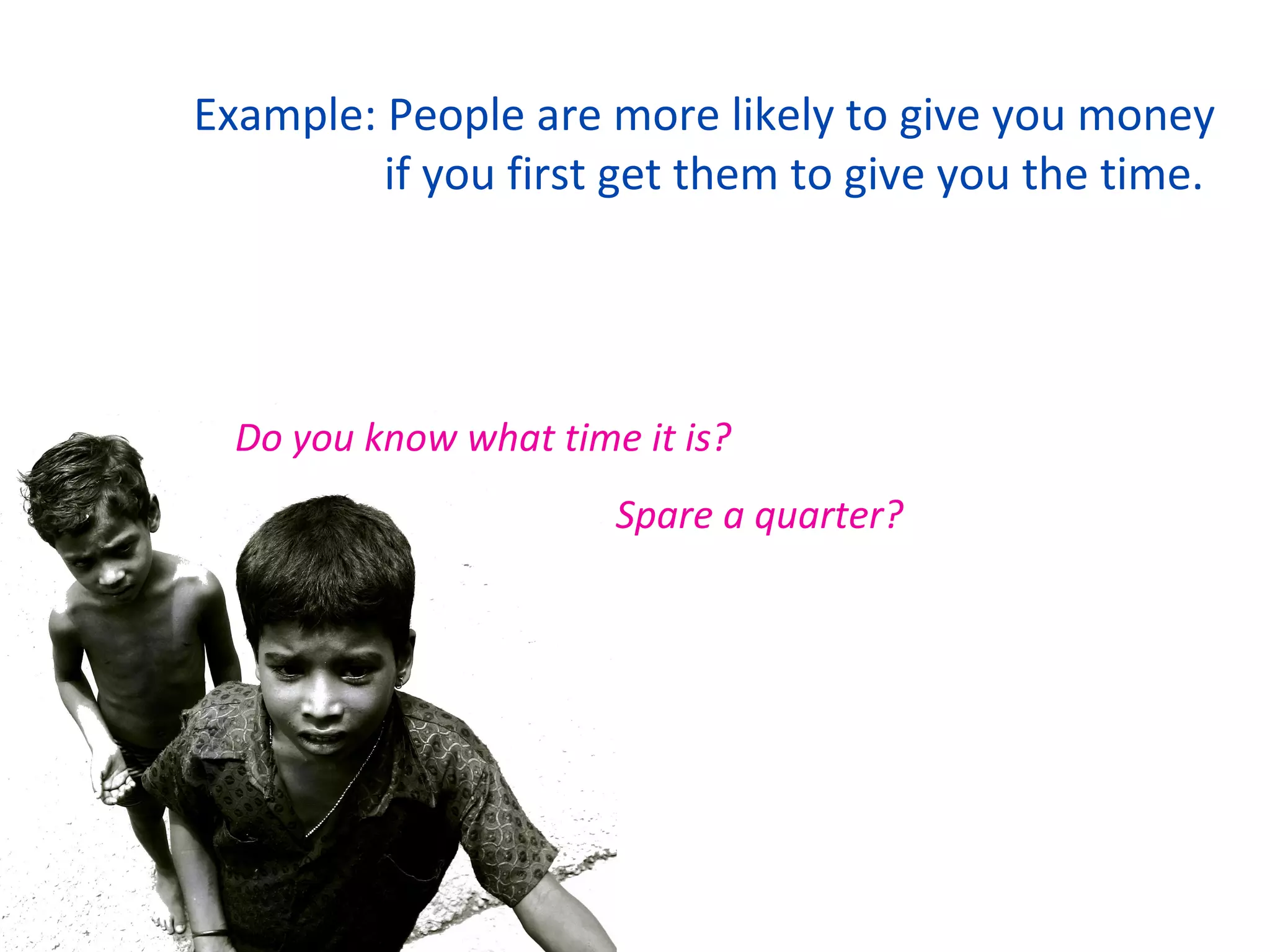
Example: People are more likely to give you money if you first get them to give you the time.  Do you know what time it is? Spare a quarter?
Written commitments are the most powerful
Practical Tip #5 Once someone has said yes to something, they will again- always try to deepen your existing relationships.
6 principles of persuasion 1) Reciprocity We feel obligated to return favours to people who have done favours for us in the past. 2) Scarcity We value scarce information and commodities more then things that are in abundance. 3) Authority We believe what trustworthy and credible experts say. 4) Commitment We are most likely to do what is consistent with what we have done in the past
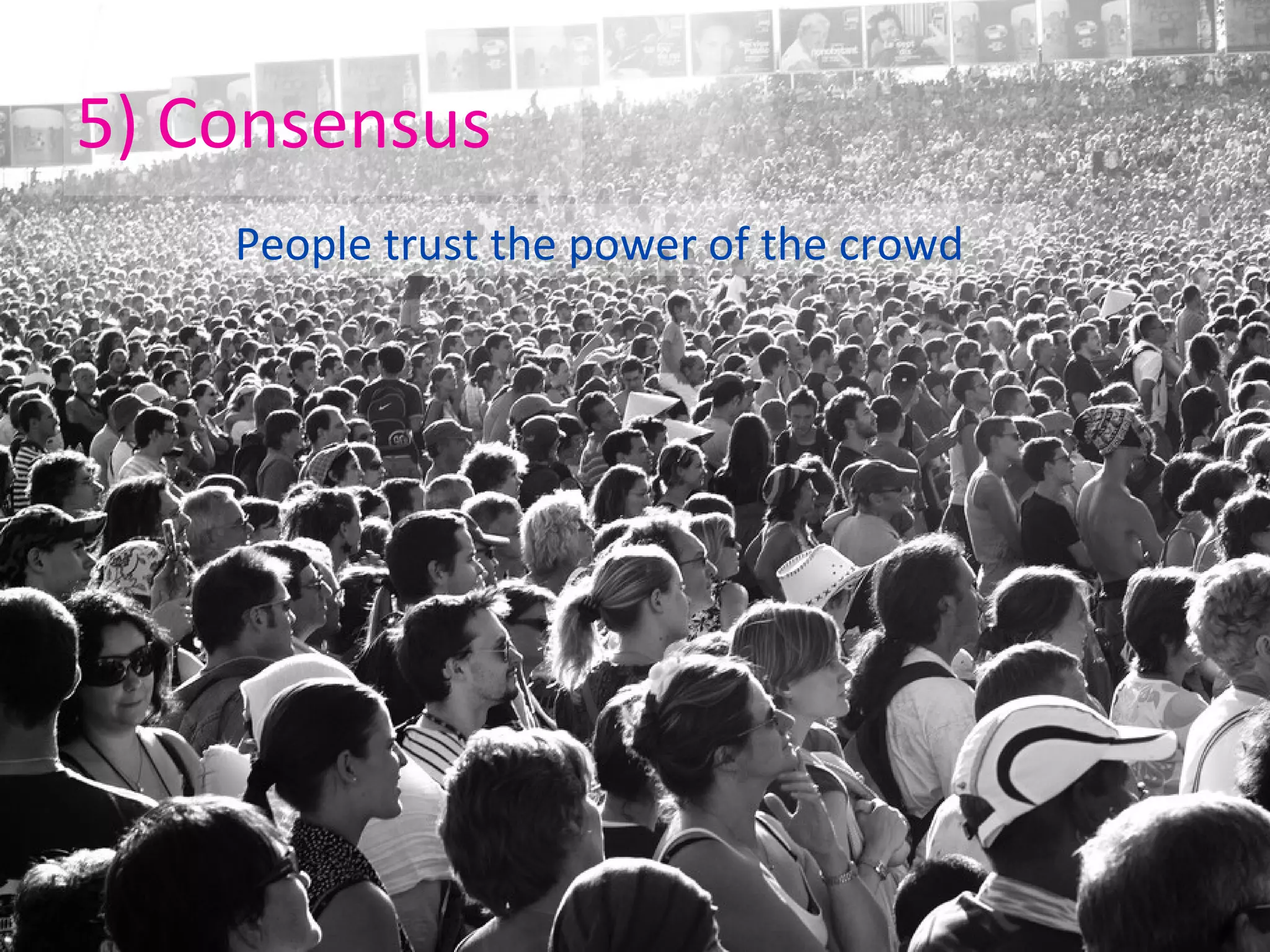
5) Consensus People trust the power of the crowd
People like to be associated with popular things.
Practical Tip #6 Make sure you (or your product) is seen as in high demand.
6 principles of persuasion 1) Reciprocity We feel obligated to return favours to people who have done favours for us in the past. 2) Scarcity We value scarce information and commodities more then things that are in abundance. 3) Authority We believe what trustworthy and credible experts say. 4) Commitment We are most likely to do what is consistent with what we have done in the past 5) Consensus We trust the power of the crowd and like to be associated with popular things.
6) Likability People are more likely to say yes to people they like
3 elements of likability
Similarities We like people that are similar or have similar interest as us.
Compliments People like genuine compliments.
Cooperative Efforts People like people who are willing to help out.
Be Careful!!!! If you aren’t genuine, it won’t work.
Practical Tip #6 Try to make people like you. But don’t try too hard, that won’t work.
Sounds easy? Application is the hard part.
6 principles of persuasion 1) Reciprocity We feel obligated to return favours to people who have done favours for us in the past. 2) Scarcity We value scarce information and commodities more then things that are in abundance. 3) Authority We believe what trustworthy and credible experts say. 4) Commitment We are most likely to do what is consistent with what we have done in the past 5) Consensus We trust the power of the crowd and like to be associated with popular things. 6) Likability We say yes to people that we like. Similarity, compliments and cooperative effort.
Practical Tips Do people favours.   When asking for something, start with the big ask then move to the small ask Frame decisions in terms of losses, not gains Before you give your strongest argument or proposal, begin by pointing out the weaknesses or drawbacks Once someone has said yes to something, they will again- always try to deepen your existing relationships. Make sure you (or your product) is seen as in high demand. Try to make people like you
Thank  you!!

The Power Of Persuasion

  • 1.
    The Power ofPersuasion
  • 2.
  • 3.
    6 principles ofpersuasion
  • 4.
    1) Reciprocity Wefeel obligated to return favours to people who have done favours for us in the past.
  • 5.
    Practical Tip #1Do people favours.
  • 6.
  • 7.
  • 8.
    No problem! I’mglad to help you. I’m sure that if the situation were reversed, you would do the same for me.
  • 9.
    Reciprocity also applies to concessions
  • 10.
    If I givesomething up, you should give something up too.
  • 11.
    When asking forsomething, start with the big ask Practical Tip #2 then move to the small ask
  • 12.
    Practical Tip #3Frame decisions in terms of losses, not gains
  • 13.
    If you don’tdo this, you could be at risk to lose…
  • 14.
    6 principles ofpersuasion 1) Reciprocity We feel obligated to return favours to people who have done favours for us in the past.
  • 15.
  • 16.
    We value informationand commodities that are scarce more then when they are abundant.
  • 17.
    Exclusive information islike bread- serve it fresh to best enjoy
  • 18.
    6 principles ofpersuasion 1) Reciprocity We feel obligated to return favours to people who have done favours for us in the past. 2) Scarcity We value scarce information and commodities more then things that are in abundance.
  • 19.
    3) Authority Webelieve what trustworthy and credible experts say
  • 20.
    To be seenas an expert, you need credentials and trust worthiness
  • 21.
    Practical Tip #4Before you give your strongest argument or proposal, begin by pointing out the weaknesses or drawbacks
  • 22.
    6 principles ofpersuasion 1) Reciprocity We feel obligated to return favours to people who have done favours for us in the past. 2) Scarcity We value scarce information and commodities more then things that are in abundance. 3) Authority We believe what trustworthy and credible experts say.
  • 23.
    4) Commitment Peopleare most likely to do what is consistent with what they have done in the past
  • 24.
    Example: People aremore likely to give you money if you first get them to give you the time. Do you know what time it is? Spare a quarter?
  • 25.
    Written commitments arethe most powerful
  • 26.
    Practical Tip #5Once someone has said yes to something, they will again- always try to deepen your existing relationships.
  • 27.
    6 principles ofpersuasion 1) Reciprocity We feel obligated to return favours to people who have done favours for us in the past. 2) Scarcity We value scarce information and commodities more then things that are in abundance. 3) Authority We believe what trustworthy and credible experts say. 4) Commitment We are most likely to do what is consistent with what we have done in the past
  • 28.
    5) Consensus Peopletrust the power of the crowd
  • 29.
    People like tobe associated with popular things.
  • 30.
    Practical Tip #6Make sure you (or your product) is seen as in high demand.
  • 31.
    6 principles ofpersuasion 1) Reciprocity We feel obligated to return favours to people who have done favours for us in the past. 2) Scarcity We value scarce information and commodities more then things that are in abundance. 3) Authority We believe what trustworthy and credible experts say. 4) Commitment We are most likely to do what is consistent with what we have done in the past 5) Consensus We trust the power of the crowd and like to be associated with popular things.
  • 32.
    6) Likability Peopleare more likely to say yes to people they like
  • 33.
    3 elements oflikability
  • 34.
    Similarities We likepeople that are similar or have similar interest as us.
  • 35.
    Compliments People likegenuine compliments.
  • 36.
    Cooperative Efforts Peoplelike people who are willing to help out.
  • 37.
    Be Careful!!!! Ifyou aren’t genuine, it won’t work.
  • 38.
    Practical Tip #6Try to make people like you. But don’t try too hard, that won’t work.
  • 39.
    Sounds easy? Applicationis the hard part.
  • 40.
    6 principles ofpersuasion 1) Reciprocity We feel obligated to return favours to people who have done favours for us in the past. 2) Scarcity We value scarce information and commodities more then things that are in abundance. 3) Authority We believe what trustworthy and credible experts say. 4) Commitment We are most likely to do what is consistent with what we have done in the past 5) Consensus We trust the power of the crowd and like to be associated with popular things. 6) Likability We say yes to people that we like. Similarity, compliments and cooperative effort.
  • 41.
    Practical Tips Dopeople favours. When asking for something, start with the big ask then move to the small ask Frame decisions in terms of losses, not gains Before you give your strongest argument or proposal, begin by pointing out the weaknesses or drawbacks Once someone has said yes to something, they will again- always try to deepen your existing relationships. Make sure you (or your product) is seen as in high demand. Try to make people like you
  • 42.

Editor's Notes

  • #2 Welcome to this training session on the power of persuasion. This is based on a lecture that Robert Caldini did at Stanford university; his area of expertise is psychology and in particular, the psychology of persuasion.