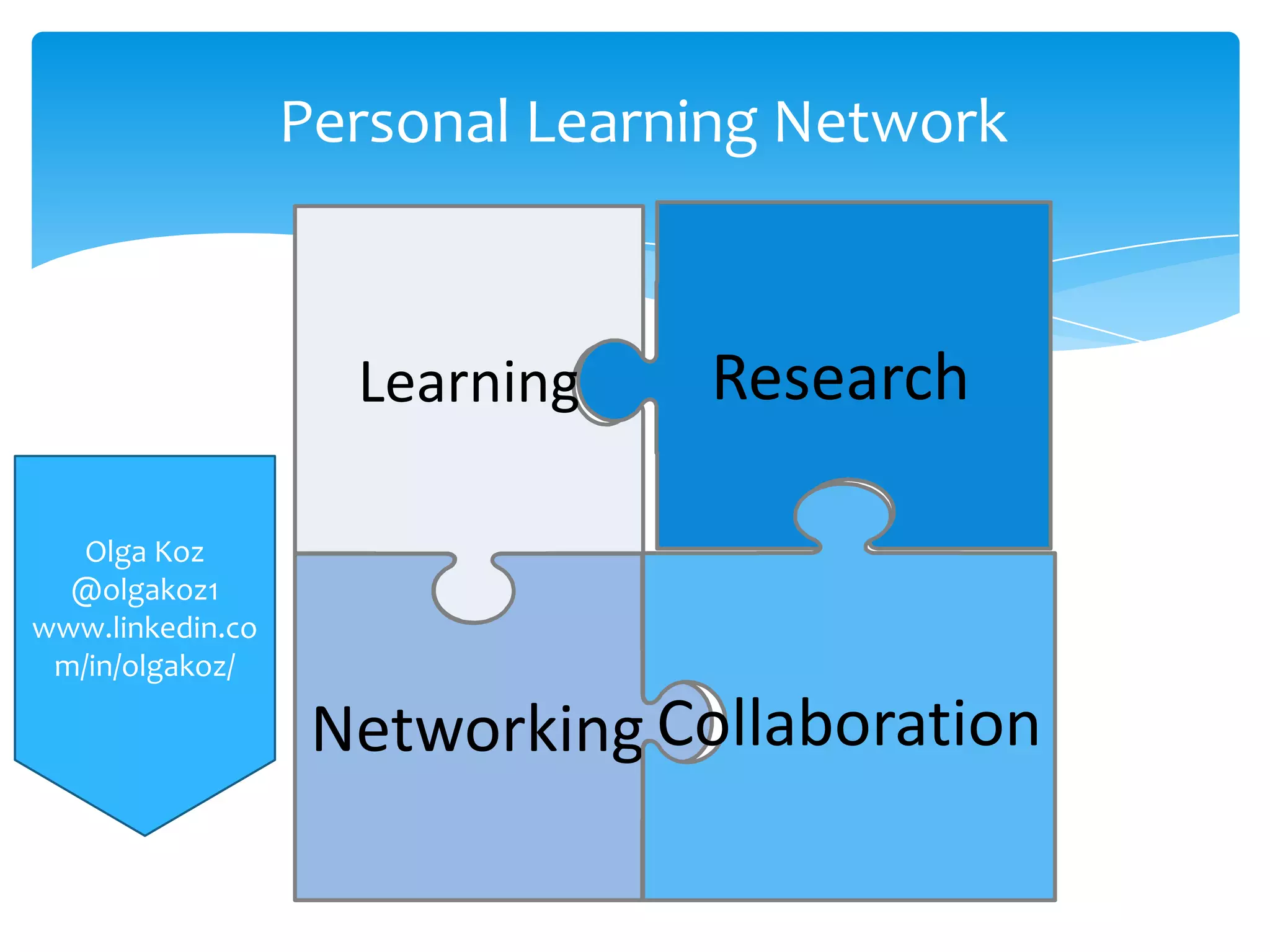
Personal Learning Network

Learning

Research

Olga Koz
@olgakoz1
www.linkedin.co
m/in/olgakoz/

Networking Collaboration
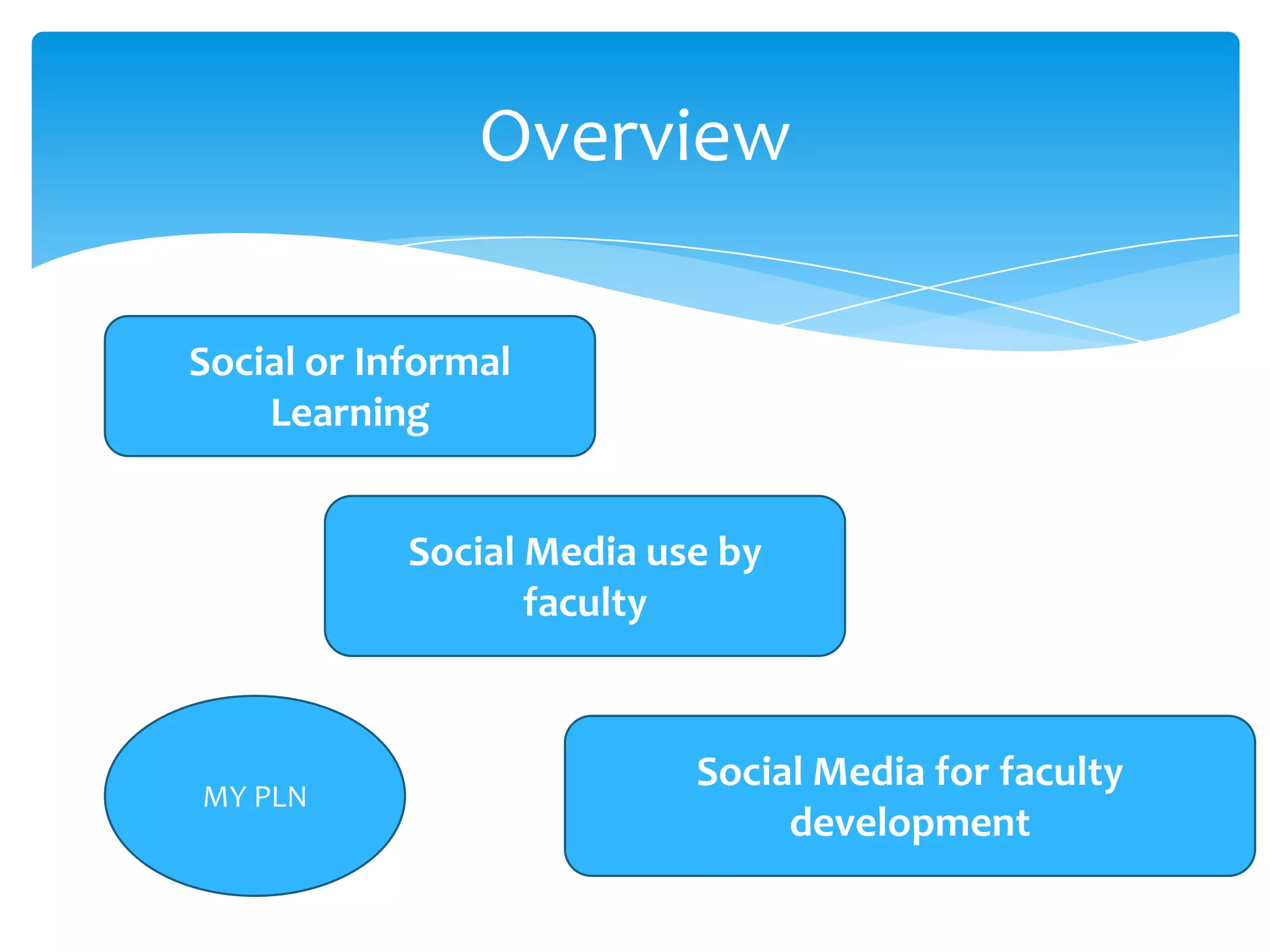
Overview
Social or Informal
Learning
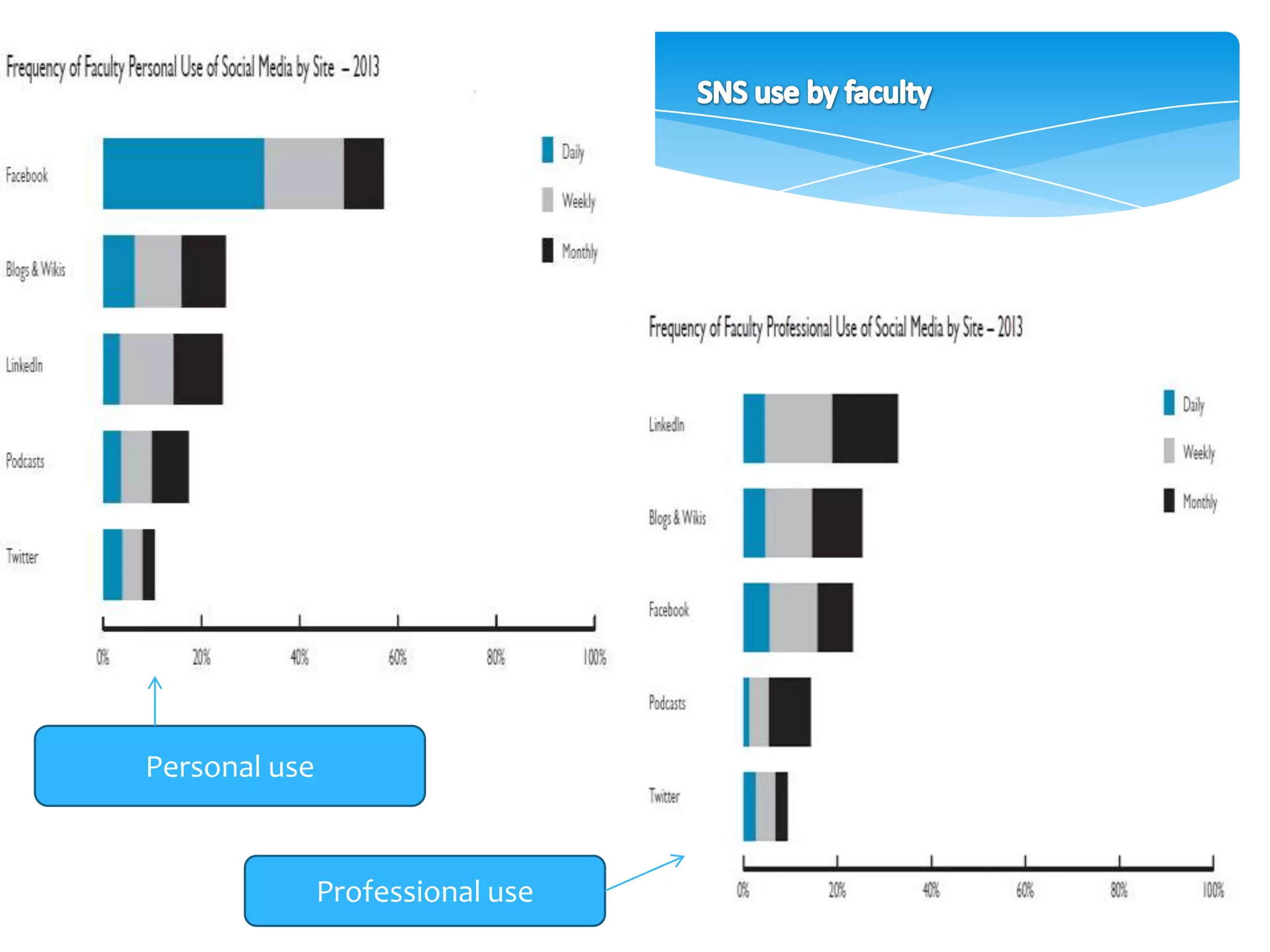
Social Media use by
faculty

MY PLN

Social Media for faculty
development
It is clearly difficult for some, who see themselves as the
gatekeepers of learning, to understand that they can no
longer control everything that people learn (J. Hart)
Theories and approaches

•
•
•
•

Social Learning (Bandura & Vygotsky)
Situated learning (J. Lave and E. Wenger)
Networked learning
Connected Learning

Manifestations
• Personal Learning Environments
http://www.colloquia.net/
• Personal Learning Networks
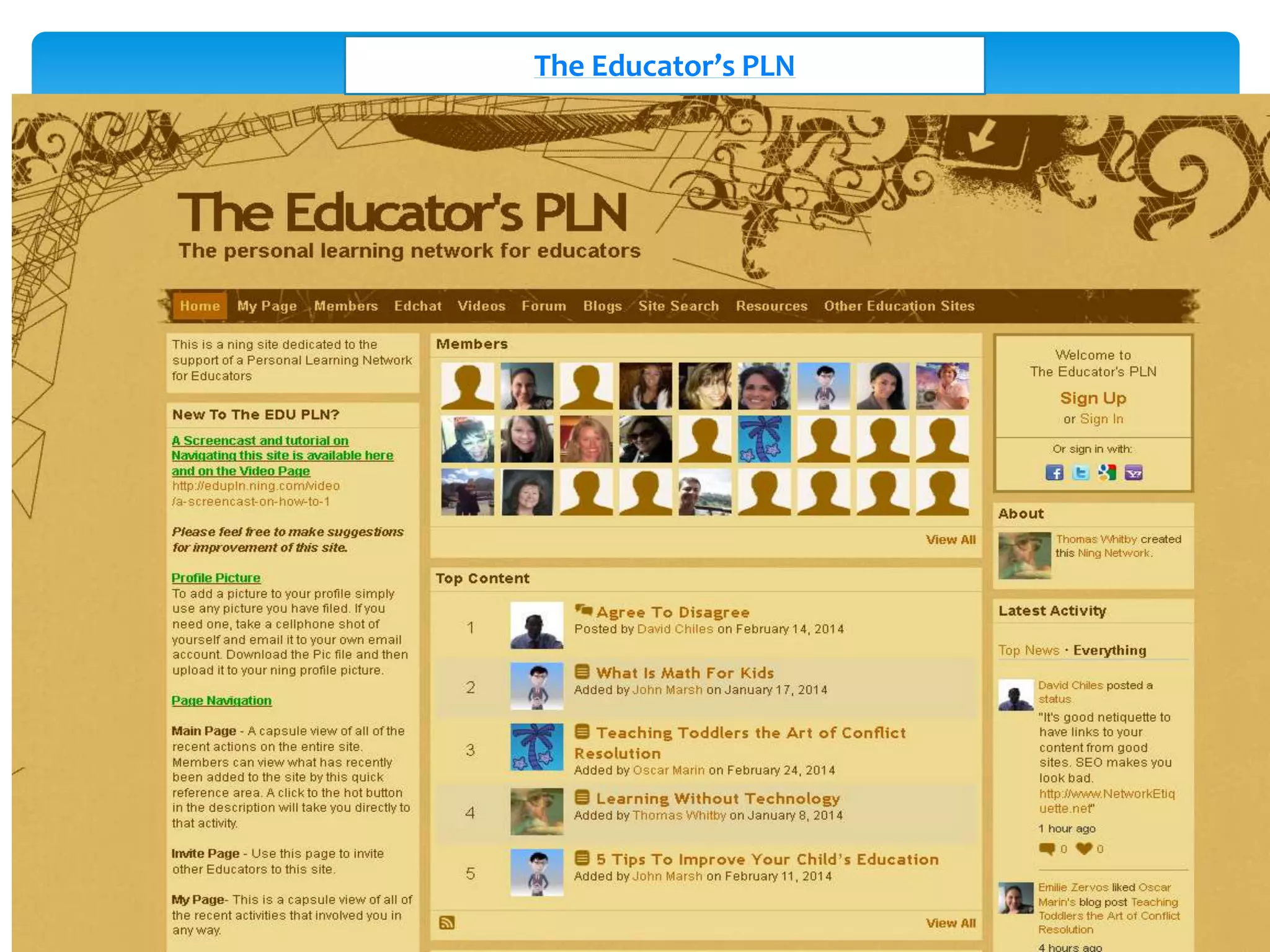
http://edupln.ning.com/
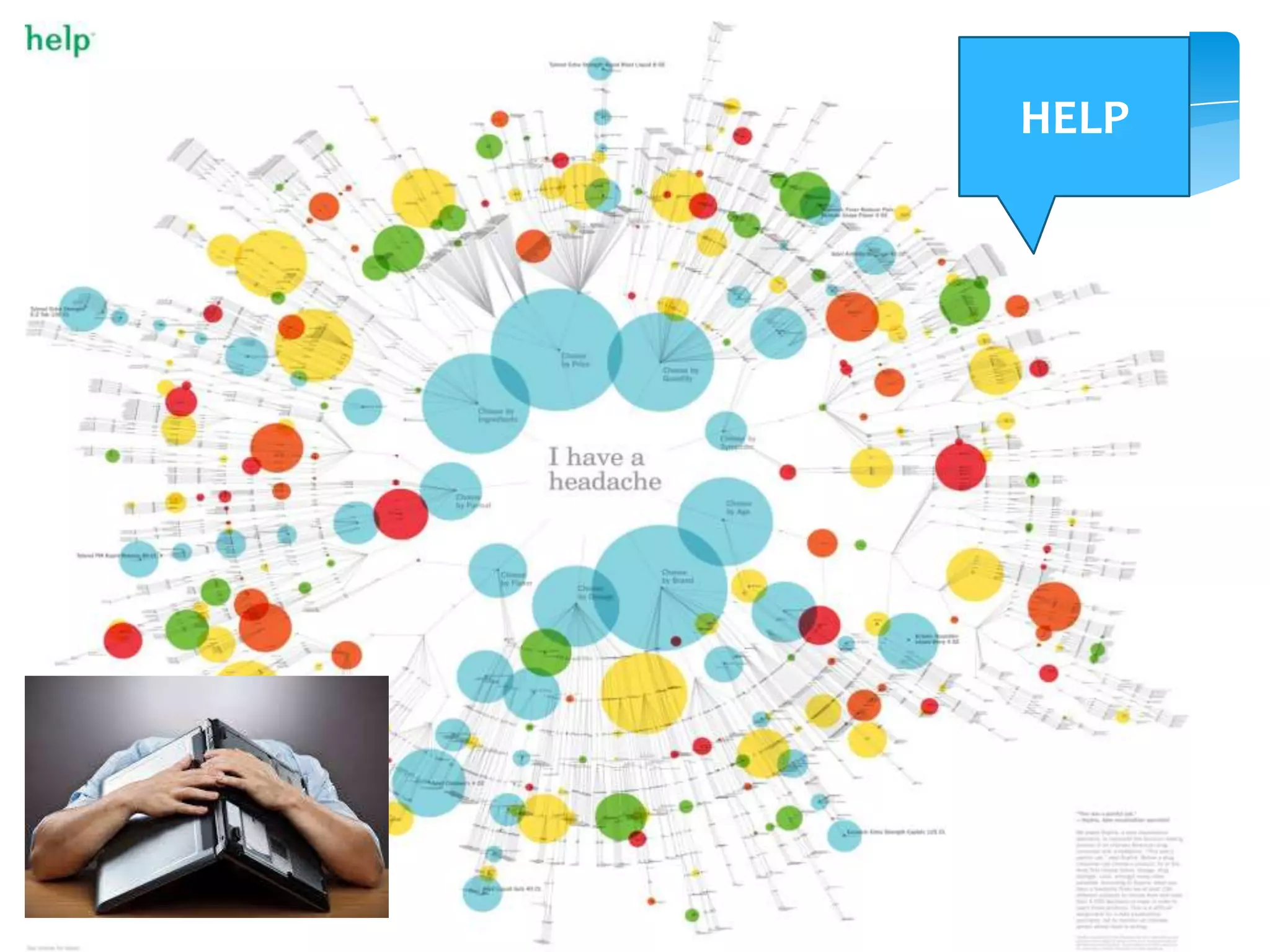
Obstacle 1: Information
overload
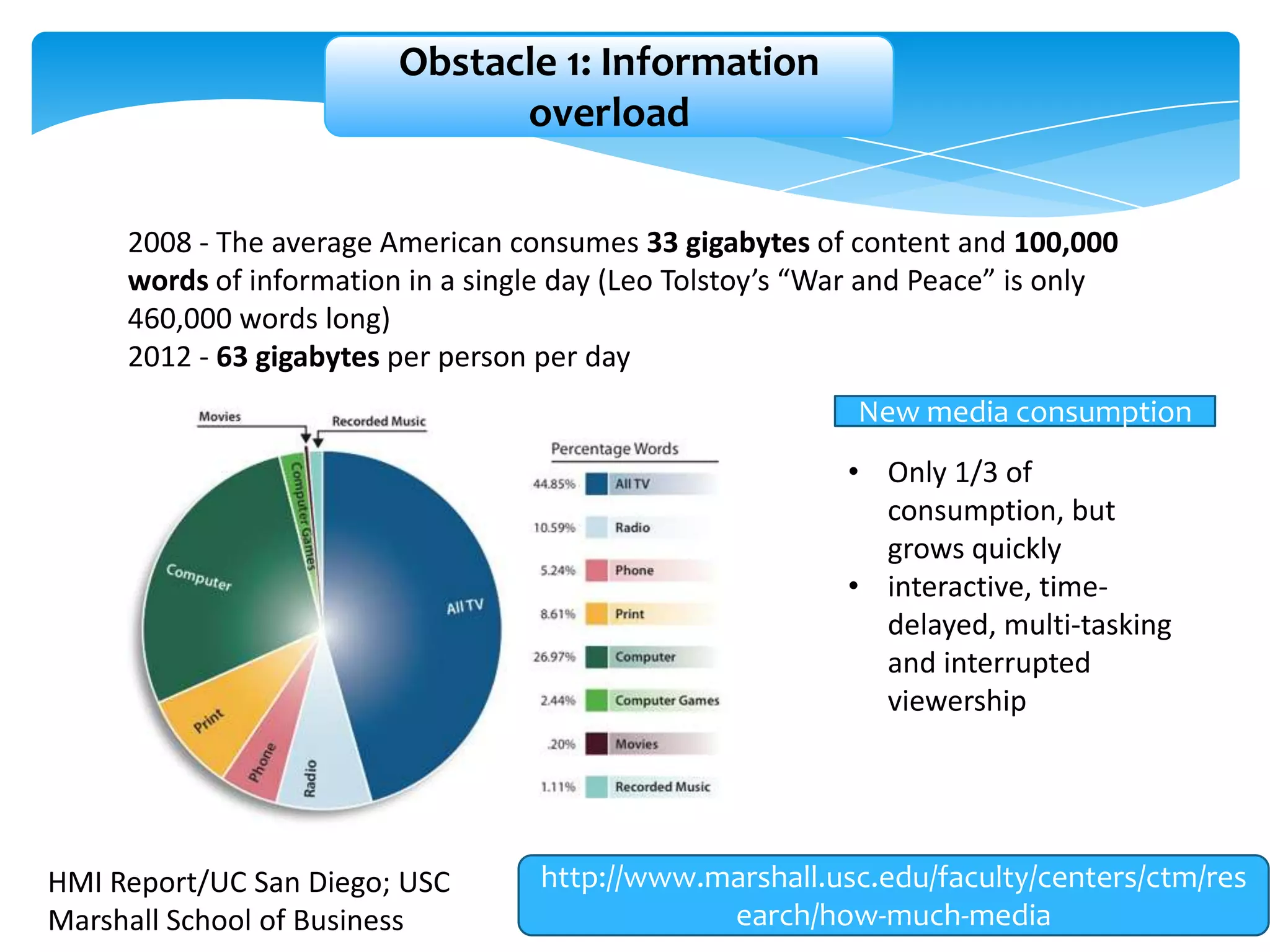
2008 - The average American consumes 33 gigabytes of content and 100,000
words of information in a single day (Leo Tolstoy’s “War and Peace” is only
460,000 words long)
2012 - 63 gigabytes per person per day
New media consumption

• Only 1/3 of
consumption, but
grows quickly
• interactive, timedelayed, multi-tasking
and interrupted
viewership

HMI Report/UC San Diego; USC
Marshall School of Business

http://www.marshall.usc.edu/faculty/centers/ctm/res
earch/how-much-media
HELP
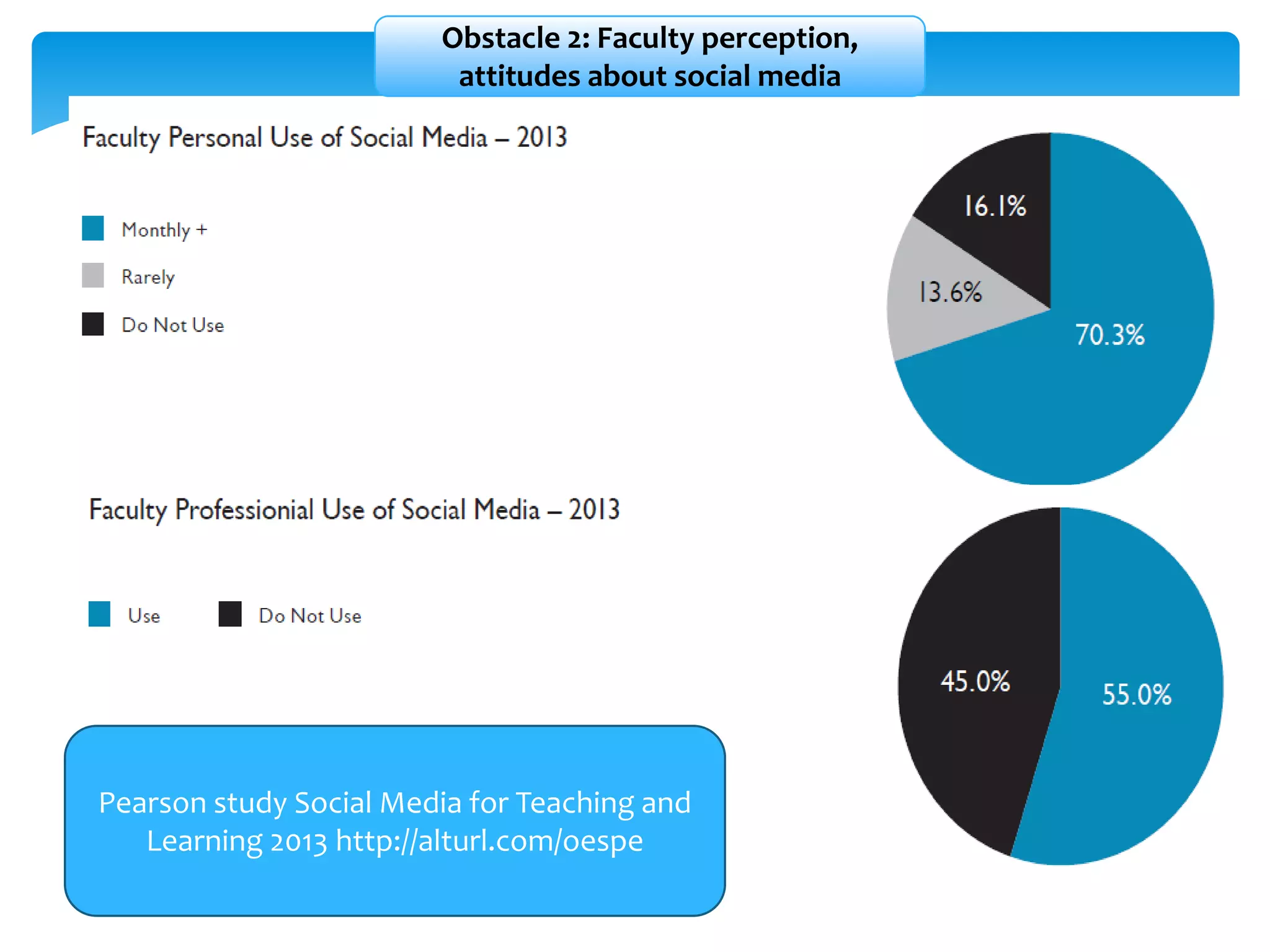
Obstacle 2: Faculty perception,
attitudes about social media

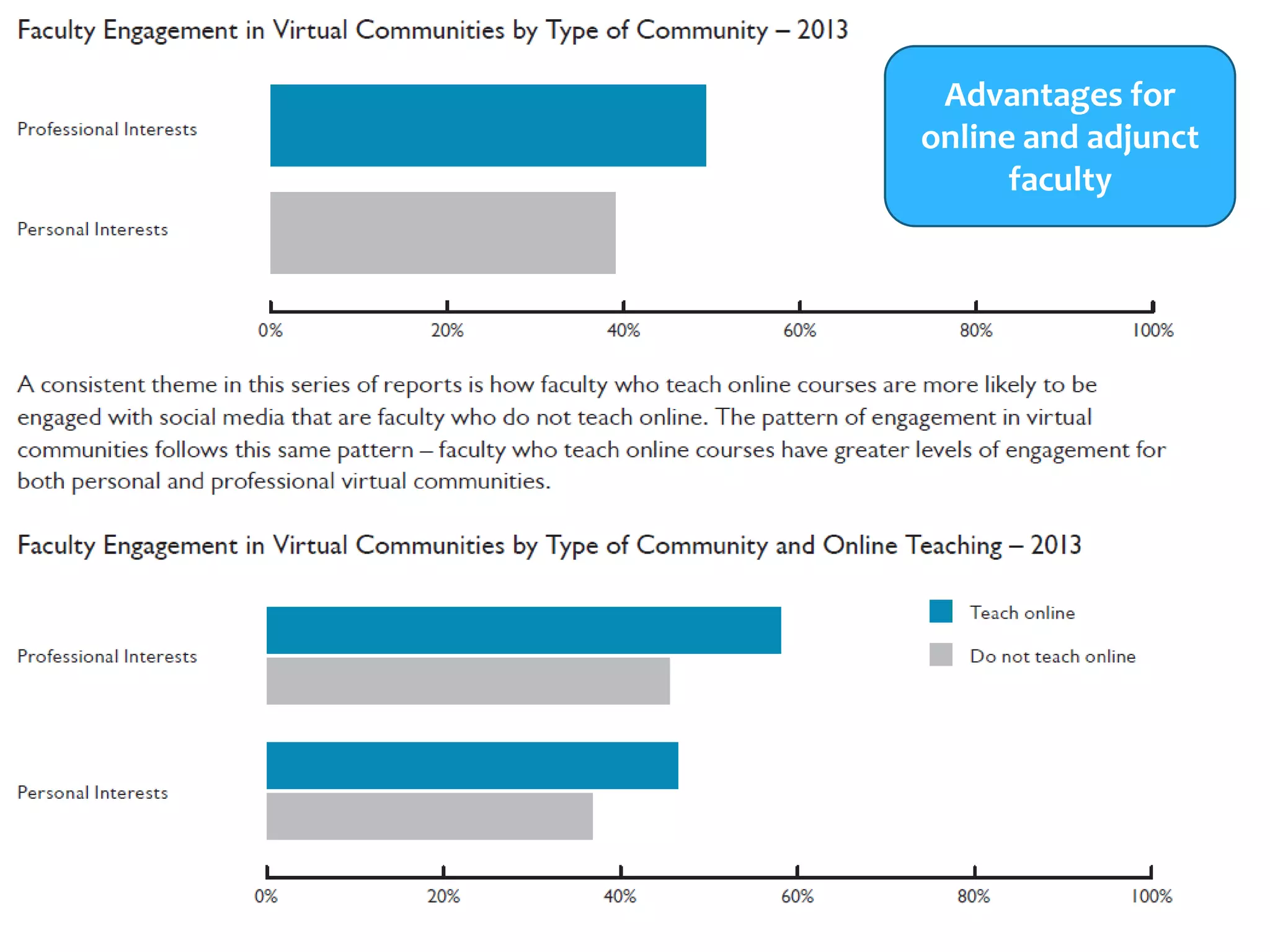
Pearson study Social Media for Teaching and
Learning 2013 http://alturl.com/oespe
Personal use

Professional use
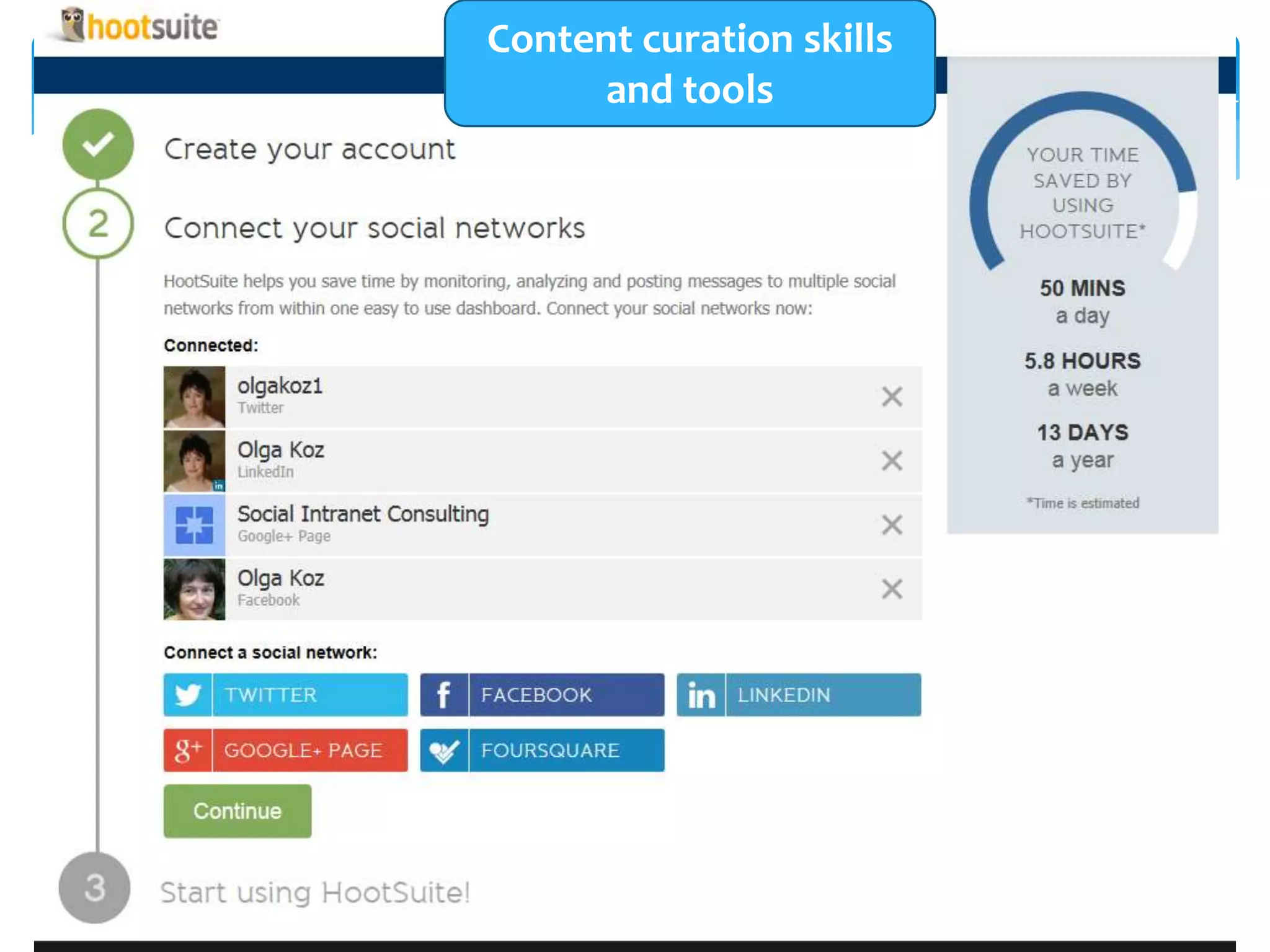
Content curation skills
and tools
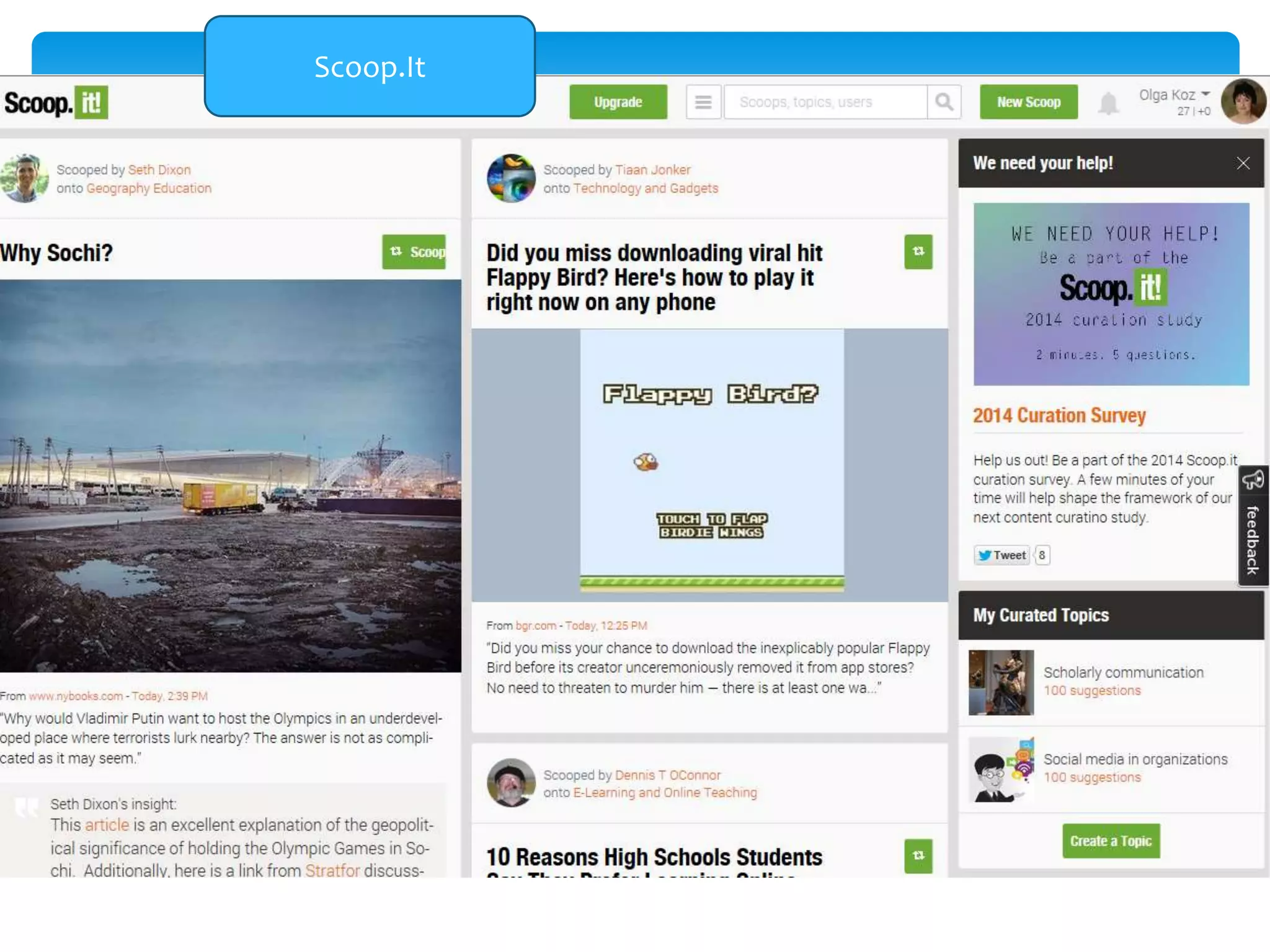
Scoop.It
Advantages for
online and adjunct
faculty
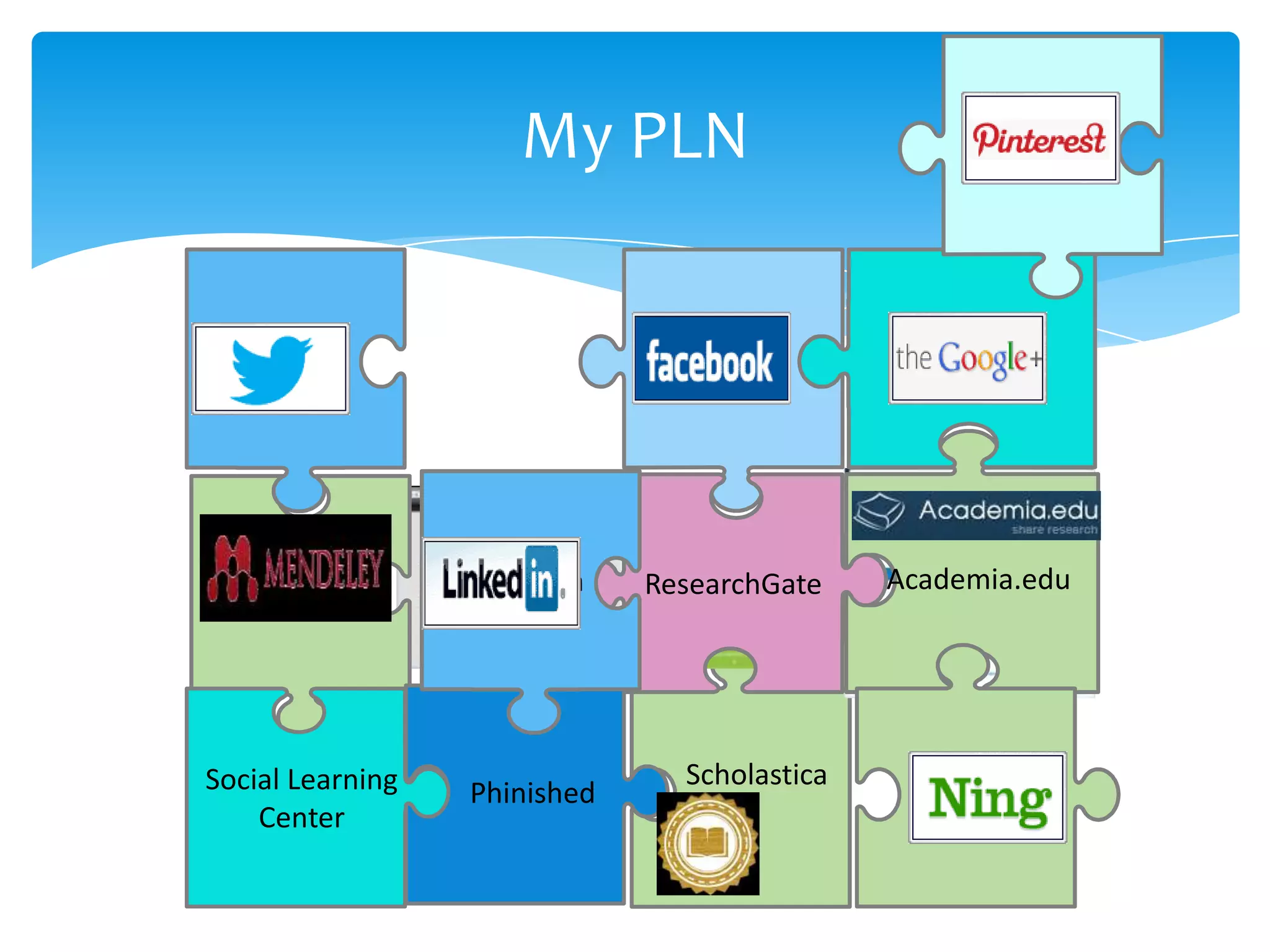
My PLN
Facebook

Twitter

Mendeley

Linkedin

Social Learning
Center

Phinished

ResearchGate

Scholastica

Text here

Google +

Academia.edu

Ning
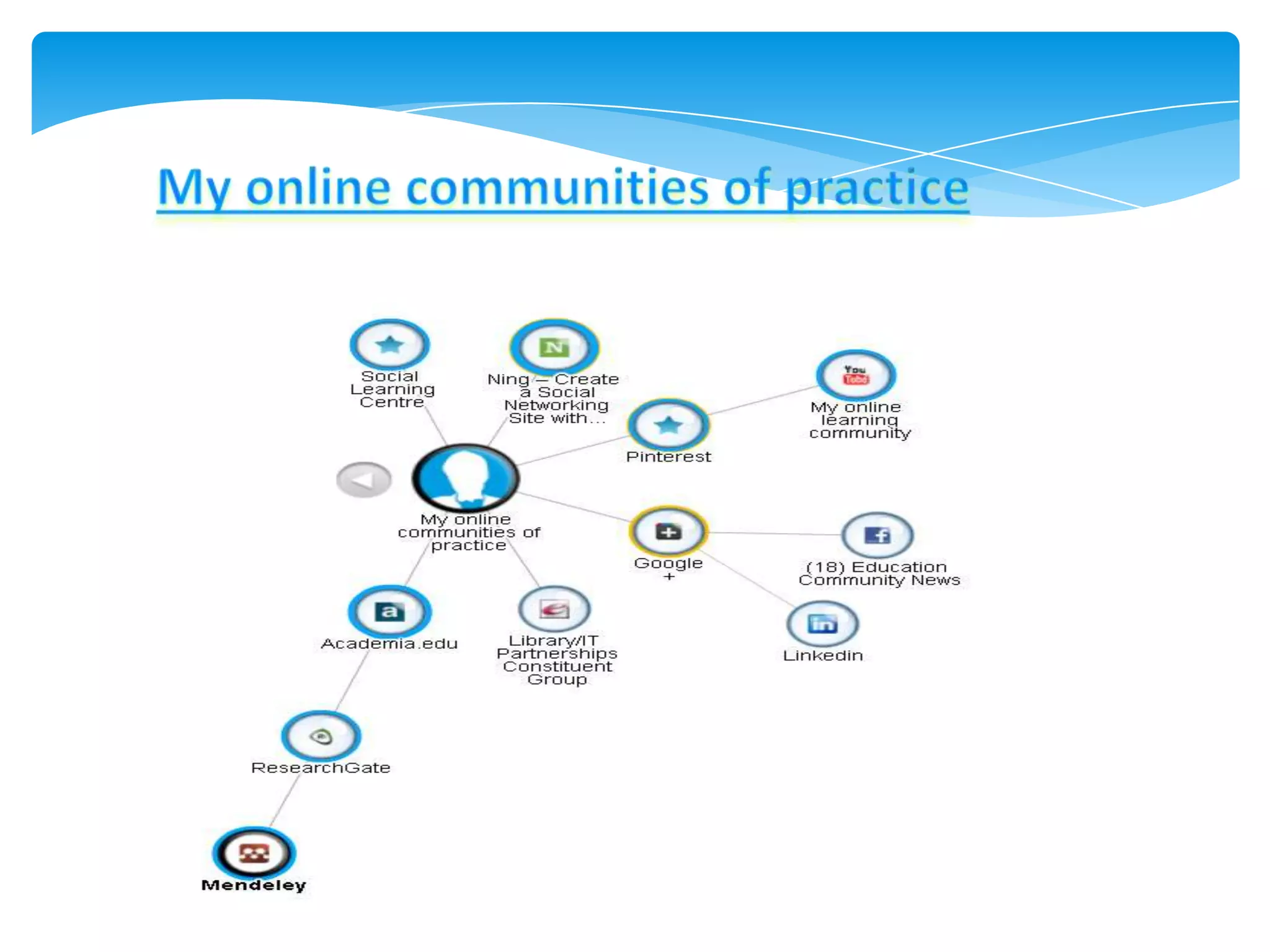
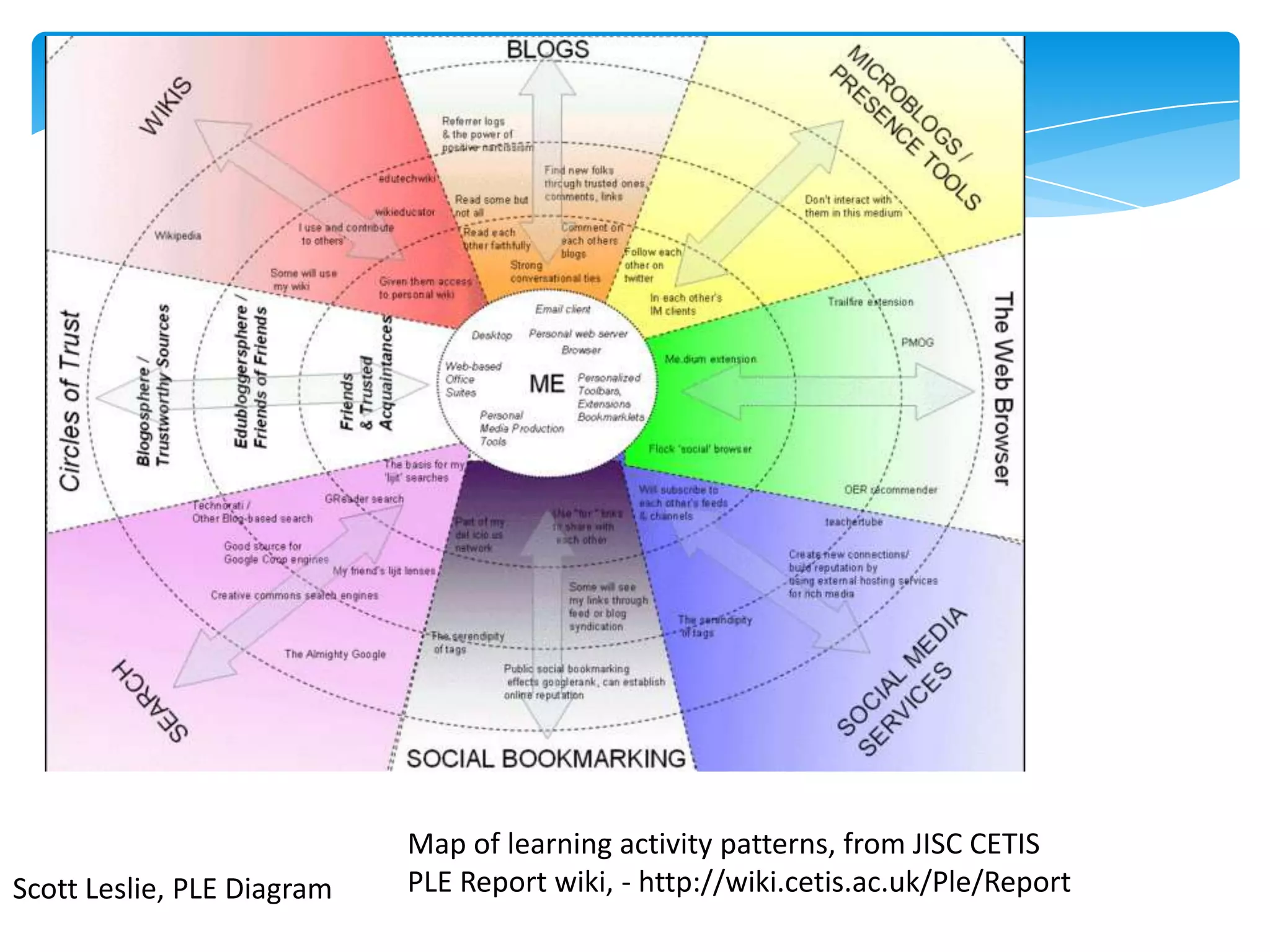
Scott Leslie, PLE Diagram

Map of learning activity patterns, from JISC CETIS
PLE Report wiki, - http://wiki.cetis.ac.uk/Ple/Report
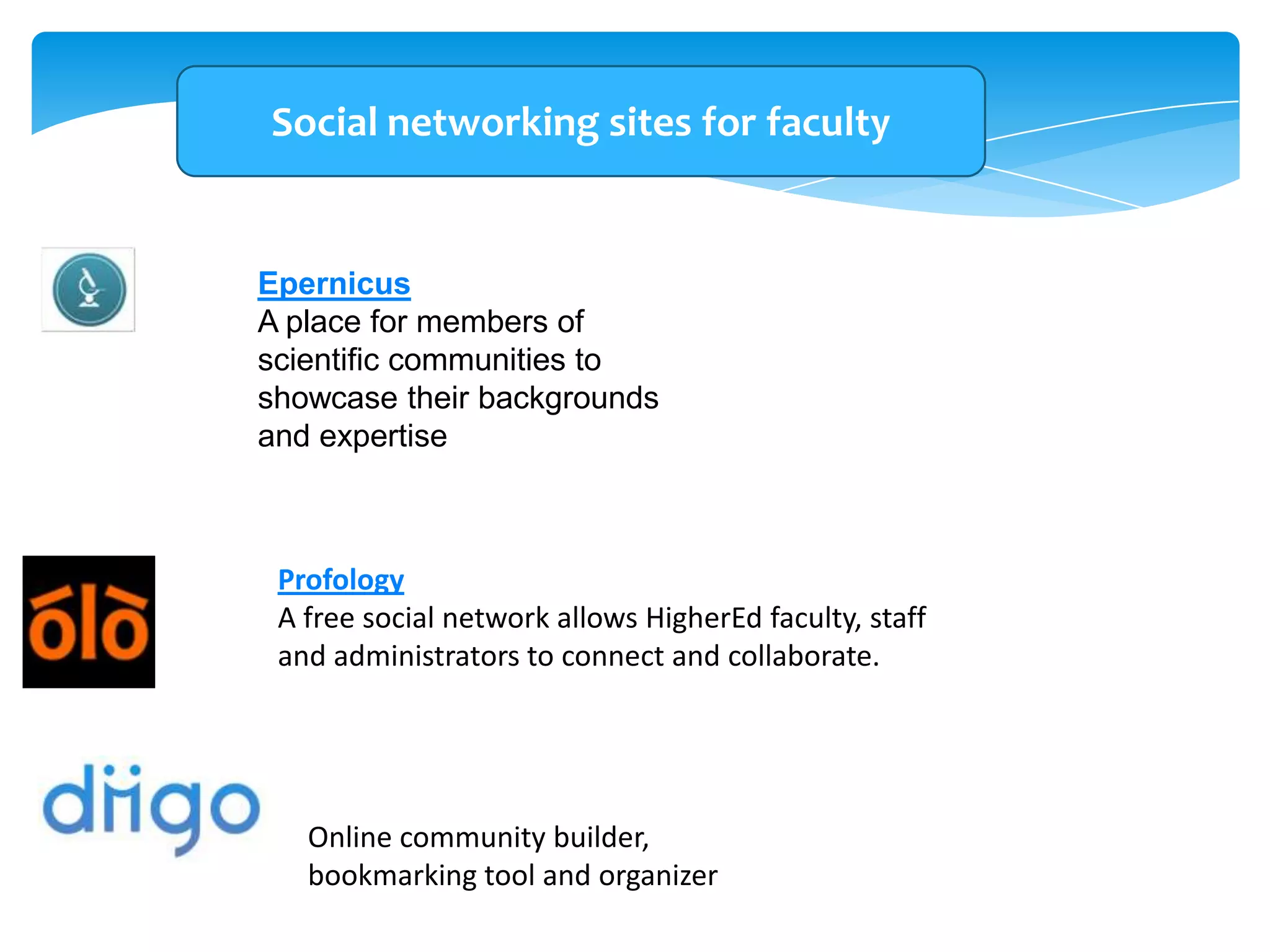
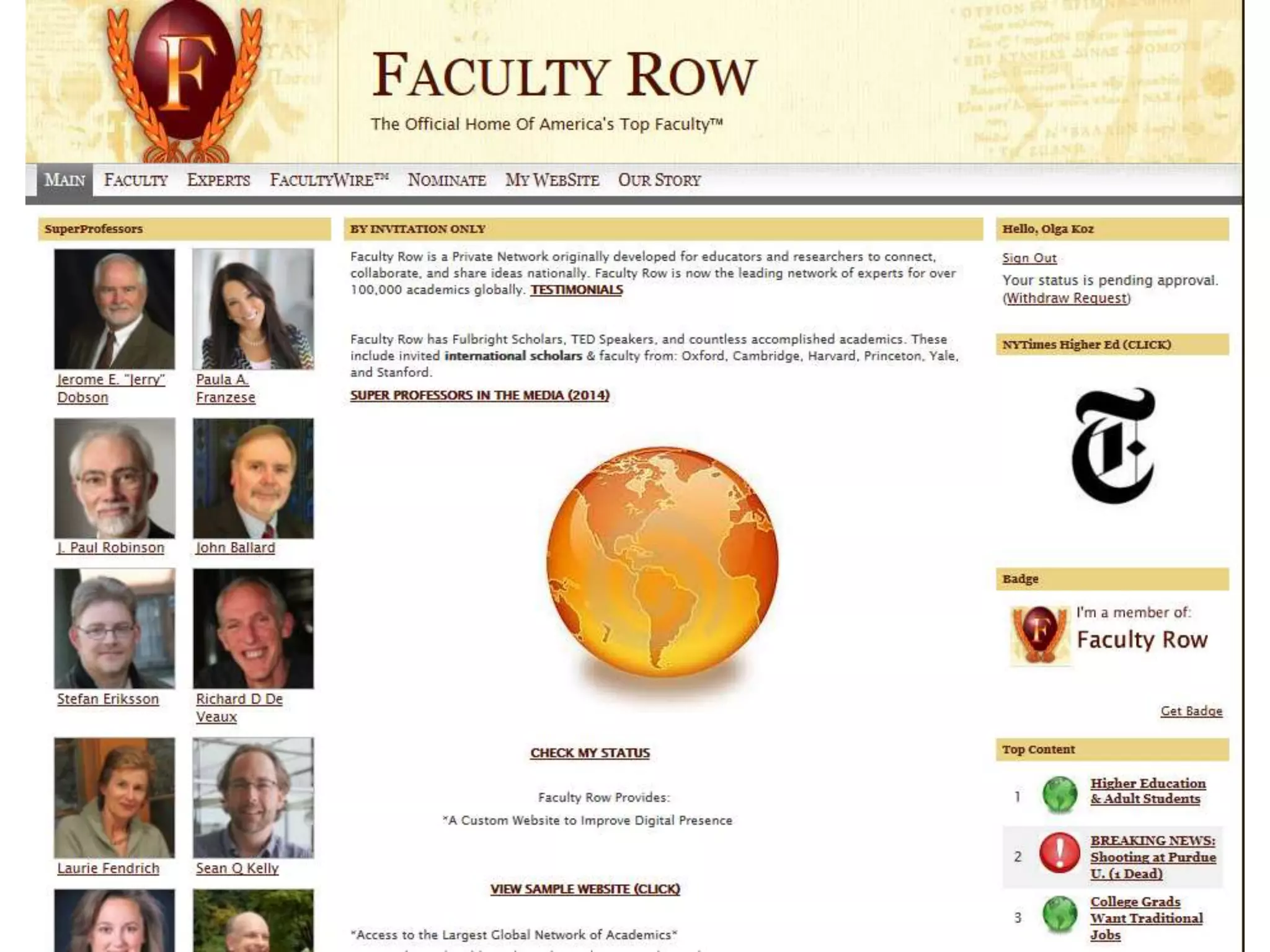
Social networking sites for faculty

Epernicus
A place for members of
scientific communities to
showcase their backgrounds
and expertise

Profology
A free social network allows HigherEd faculty, staff
and administrators to connect and collaborate.

Online community builder,
bookmarking tool and organizer
@courosa · 6h
A few
resources from
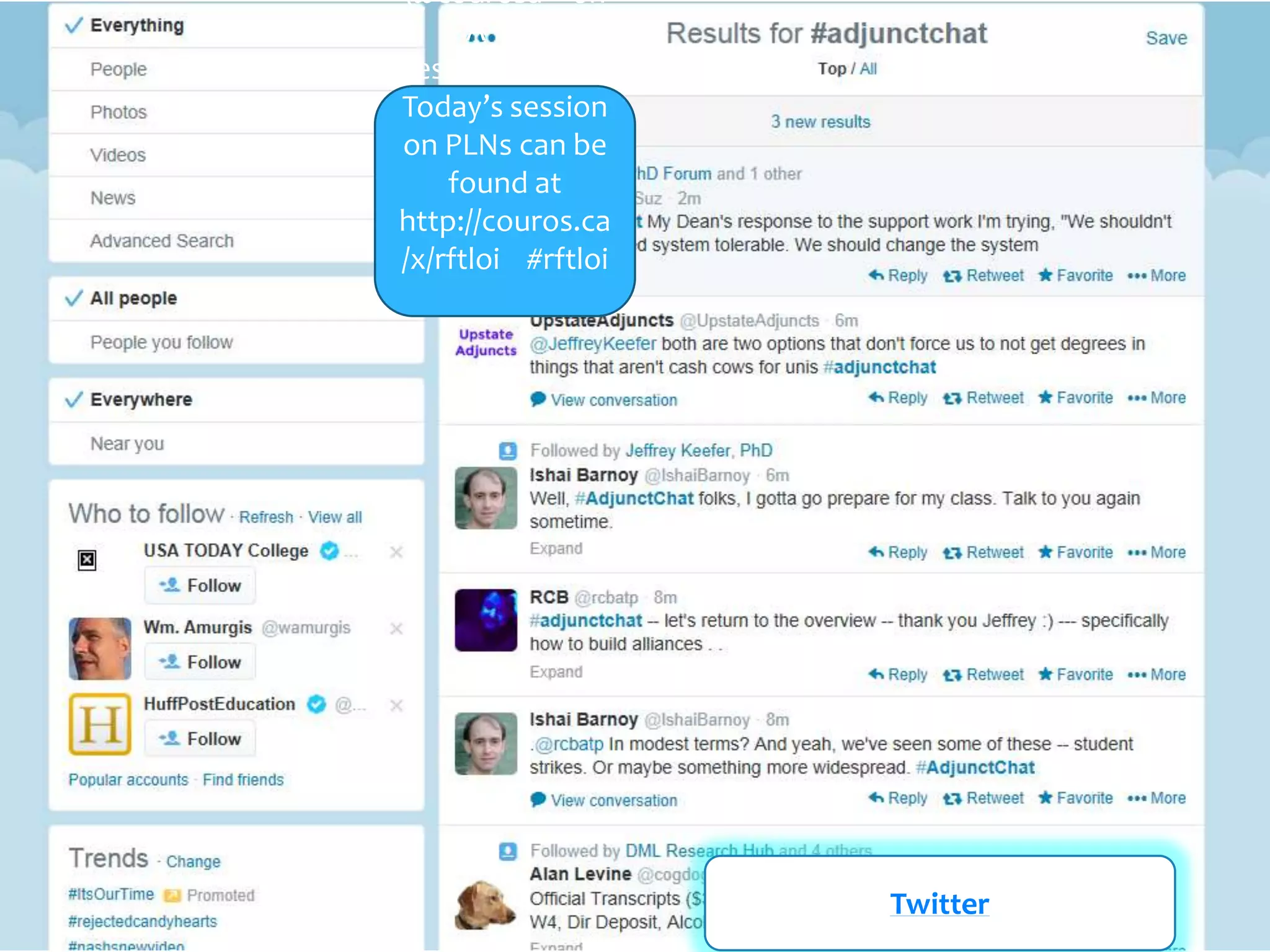
Today’s session
on PLNs can be
found at
http://couros.ca
/x/rftloi #rftloi

Twitter
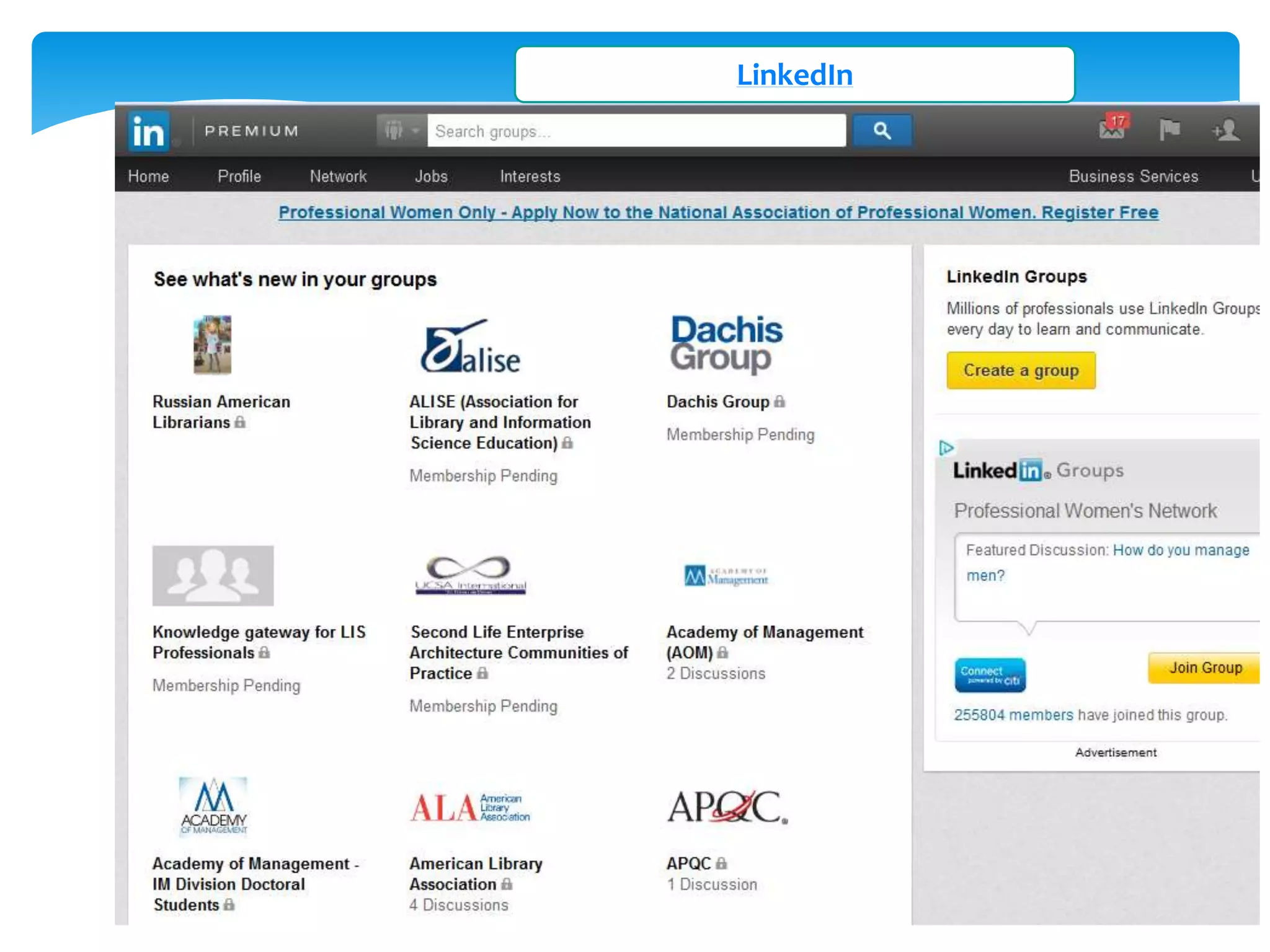
LinkedIn
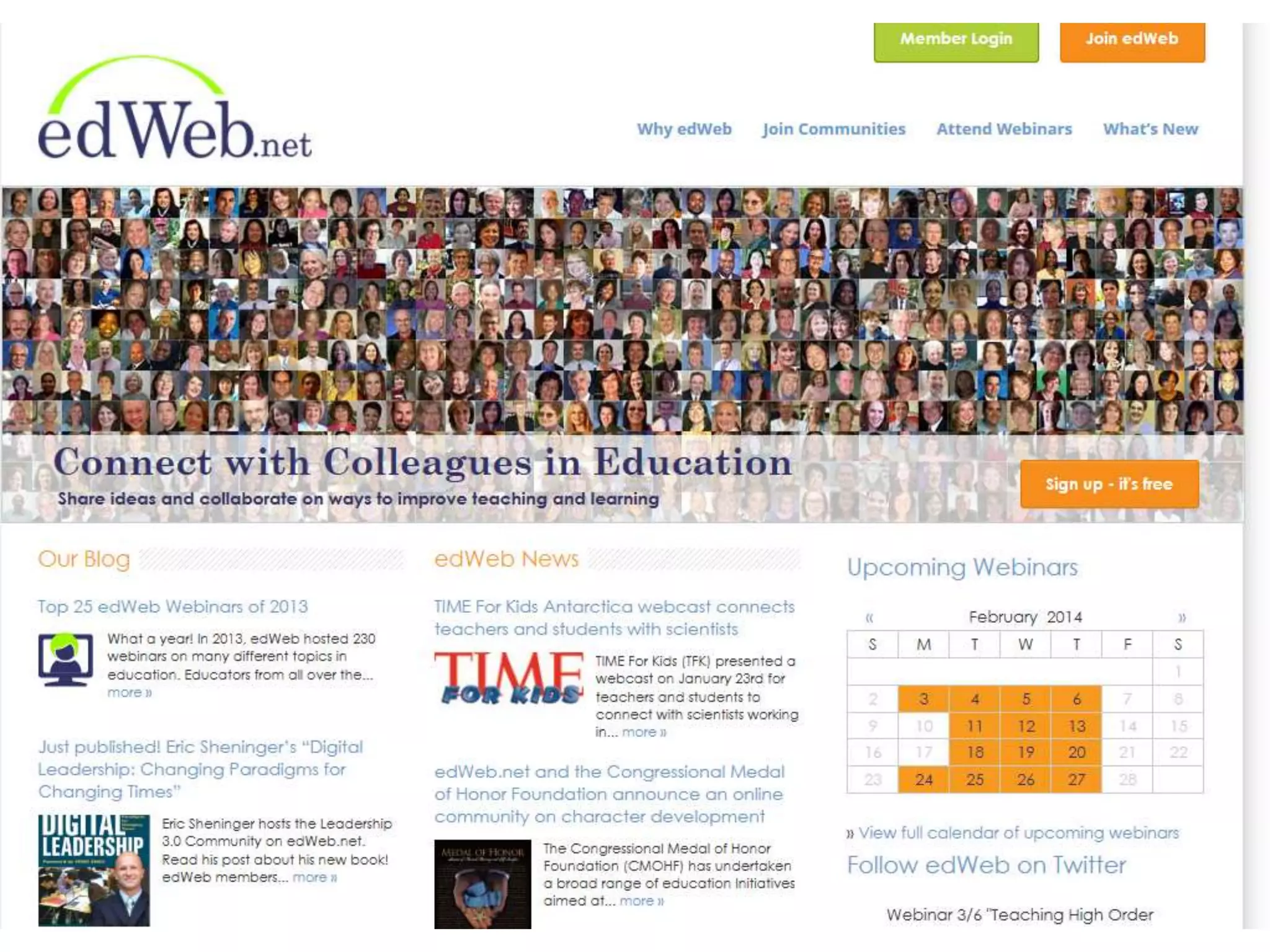
The Educator’s PLN
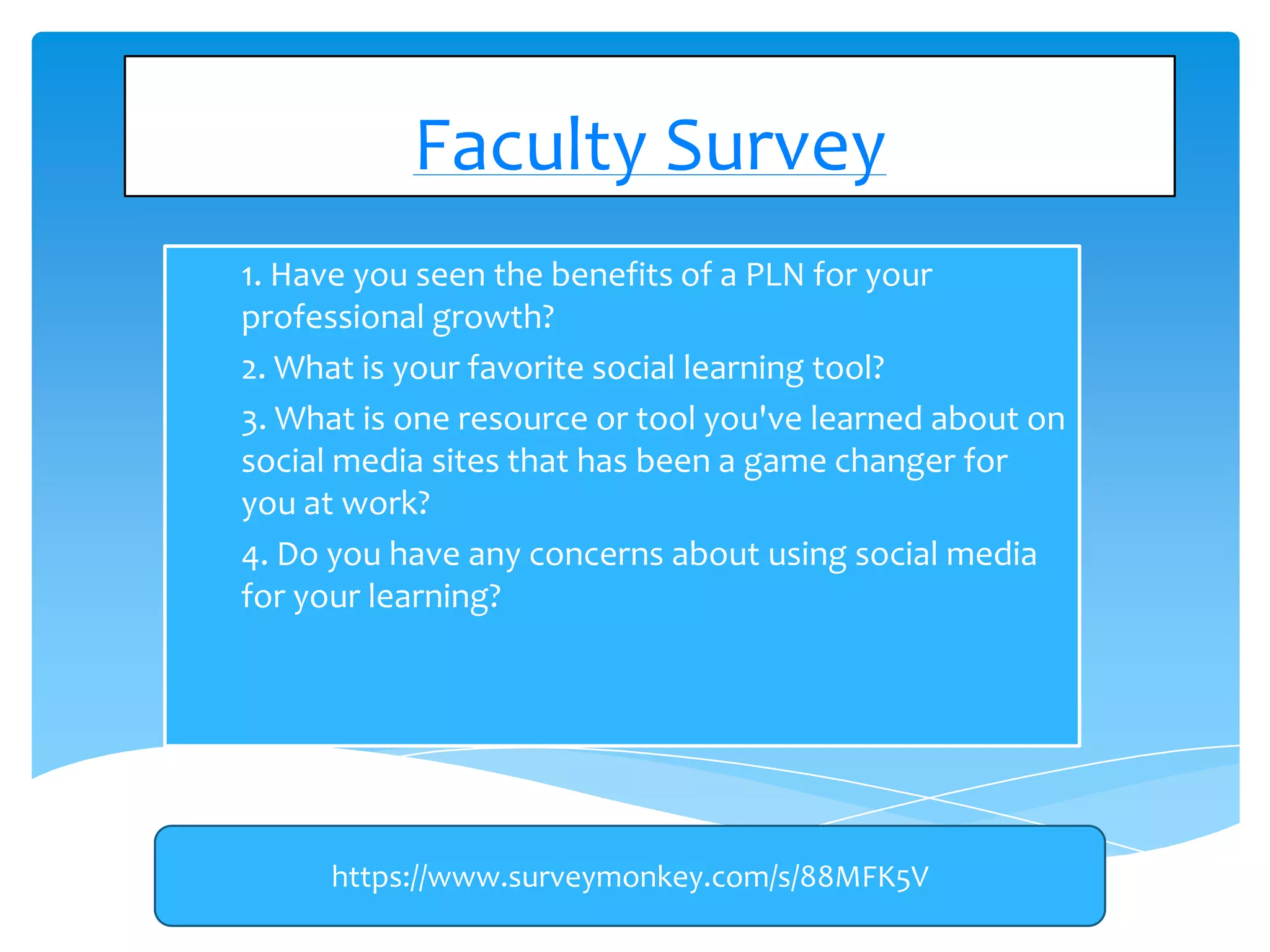
Faculty Survey
1)

1. Have you seen the benefits of a PLN for your
professional growth?
2) 2. What is your favorite social learning tool?
3) 3. What is one resource or tool you've learned about on
social media sites that has been a game changer for
you at work?
4) 4. Do you have any concerns about using social media
for your learning?

https://www.surveymonkey.com/s/88MFK5V
Put

Your

PLN
Here
References
Bandura, A. (1977). Social learning theory. Englewood Cliffs, NJ: Prentice Hall.
Hart, J. (2013). Throw your padlocks away. E.Learning Age, 20-21.
Richardson, W., & Mancabelli, R. (2011). Personal learning networks: Using the power
of connections to transform education. Bloomington, IN: Solution Tree
Press.
Siemens, G. (2008). Learning and knowing in networks: Changing roles for educators
and designers. Retrieved from
www.ipcp.org.br/References/Education/Siemens.pdf on June 23, 2011.

Personal Learning Network (PLN) for Faculty

  • 1.
    Personal Learning Network Learning Research OlgaKoz @olgakoz1 www.linkedin.co m/in/olgakoz/ Networking Collaboration
  • 2.
    Overview Social or Informal Learning SocialMedia use by faculty MY PLN Social Media for faculty development
  • 3.
    It is clearlydifficult for some, who see themselves as the gatekeepers of learning, to understand that they can no longer control everything that people learn (J. Hart) Theories and approaches • • • • Social Learning (Bandura & Vygotsky) Situated learning (J. Lave and E. Wenger) Networked learning Connected Learning Manifestations • Personal Learning Environments http://www.colloquia.net/ • Personal Learning Networks http://edupln.ning.com/
  • 4.
    Obstacle 1: Information overload 2008- The average American consumes 33 gigabytes of content and 100,000 words of information in a single day (Leo Tolstoy’s “War and Peace” is only 460,000 words long) 2012 - 63 gigabytes per person per day New media consumption • Only 1/3 of consumption, but grows quickly • interactive, timedelayed, multi-tasking and interrupted viewership HMI Report/UC San Diego; USC Marshall School of Business http://www.marshall.usc.edu/faculty/centers/ctm/res earch/how-much-media
  • 5.
  • 6.
    Obstacle 2: Facultyperception, attitudes about social media Pearson study Social Media for Teaching and Learning 2013 http://alturl.com/oespe
  • 7.
  • 8.
  • 9.
  • 10.
  • 11.
  • 13.
    Scott Leslie, PLEDiagram Map of learning activity patterns, from JISC CETIS PLE Report wiki, - http://wiki.cetis.ac.uk/Ple/Report
  • 15.
    Social networking sitesfor faculty Epernicus A place for members of scientific communities to showcase their backgrounds and expertise Profology A free social network allows HigherEd faculty, staff and administrators to connect and collaborate. Online community builder, bookmarking tool and organizer
  • 16.
    @courosa · 6h Afew resources from Today’s session on PLNs can be found at http://couros.ca /x/rftloi #rftloi Twitter
  • 17.
  • 18.
  • 20.
    Faculty Survey 1) 1. Haveyou seen the benefits of a PLN for your professional growth? 2) 2. What is your favorite social learning tool? 3) 3. What is one resource or tool you've learned about on social media sites that has been a game changer for you at work? 4) 4. Do you have any concerns about using social media for your learning? https://www.surveymonkey.com/s/88MFK5V
  • 21.
  • 22.
    References Bandura, A. (1977).Social learning theory. Englewood Cliffs, NJ: Prentice Hall. Hart, J. (2013). Throw your padlocks away. E.Learning Age, 20-21. Richardson, W., & Mancabelli, R. (2011). Personal learning networks: Using the power of connections to transform education. Bloomington, IN: Solution Tree Press. Siemens, G. (2008). Learning and knowing in networks: Changing roles for educators and designers. Retrieved from www.ipcp.org.br/References/Education/Siemens.pdf on June 23, 2011.

Editor's Notes

  • #2 Will Richardson defines personal learning networks (PLN) as “the collection of people with whom youengage and exchange information. They are the group of people who contribute to your knowledgeand understanding of topics in your field and beyond.” (www.nercomp.org/data/media/PLNTraining_OutlineWIT.pdf) He explains, “Personal Learning Networks extend your learning through increasedreflection, while enabling you to learn as part of a global community. That’s not to say thatface-to-face learning isn’t important or valuable. It is. But so is the learning we can now do on theWeb.
  • #4 At its simplest, situated learning is learning that takes place in the same context in which it is applied the term is coined by Lave and Wenger (1991)