Literature Review
A step-by-step process
By Dr. Olga Koz
Outline
• What is LR? Phases
• Scope/Resources
• Advanced Searching for Literature
• Organizing/Literature
Map/Software
• Synthesis
• When to Stop
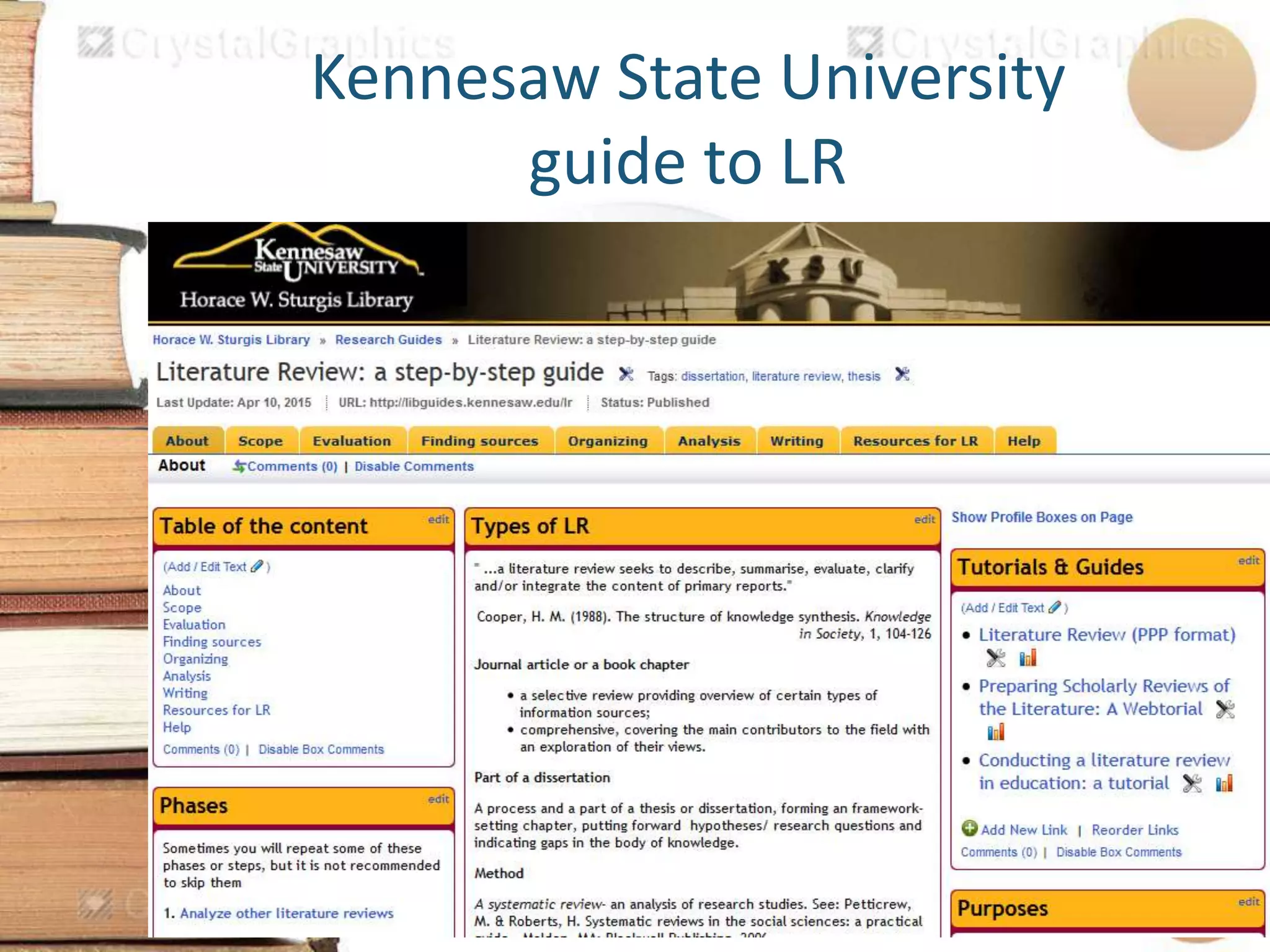
See more at: Literature Review: step-by-step
guide http://libguides.kennesaw.edu/lr
What is the Literature
Review
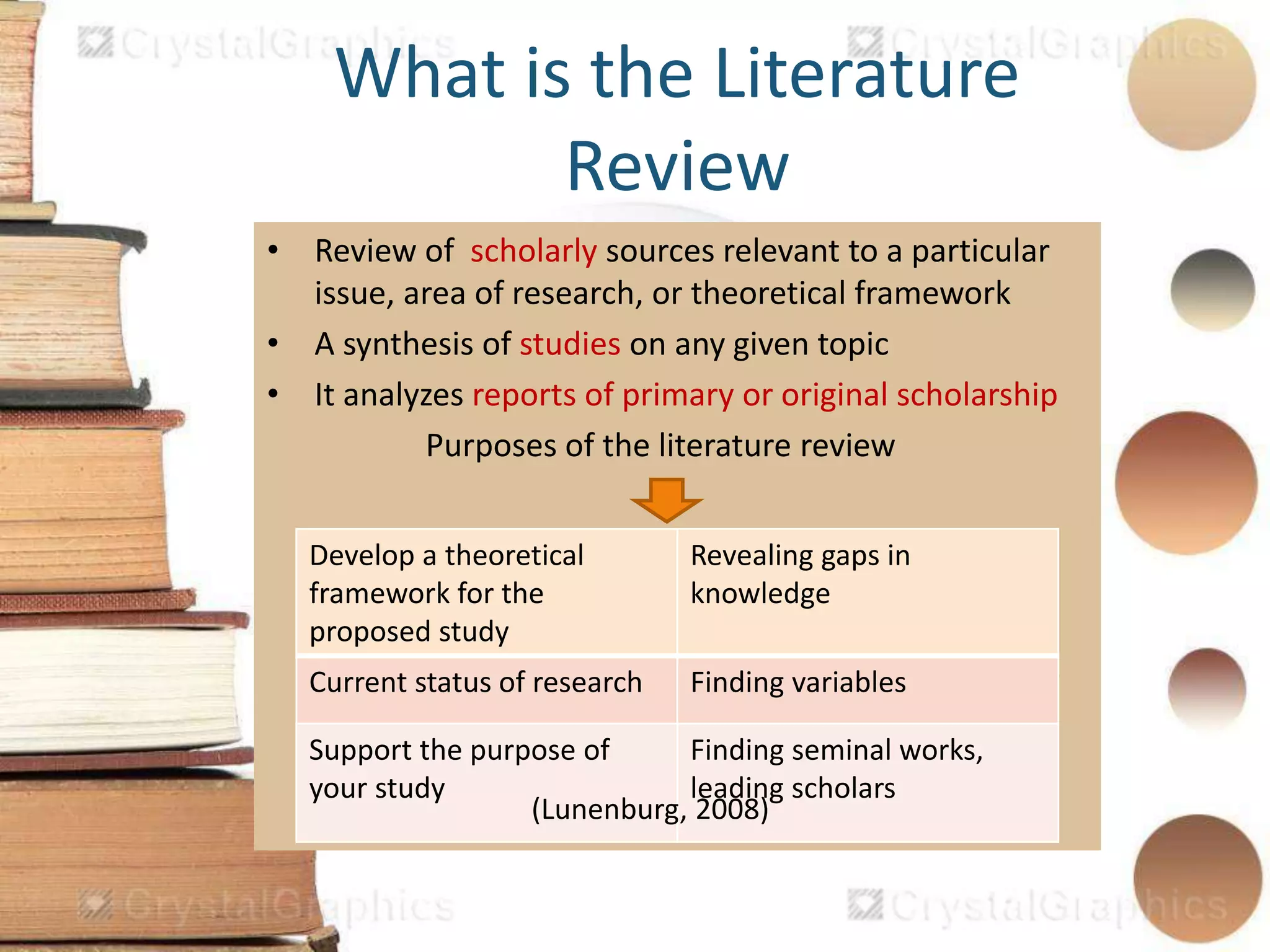
• Review of scholarly sources relevant to a particular
issue, area of research, or theoretical framework
• A synthesis of studies on any given topic
• It analyzes reports of primary or original scholarship
Purposes of the literature review
Develop a theoretical
framework for the
proposed study
Revealing gaps in
knowledge
Current status of research Finding variables
Support the purpose of
your study
Finding seminal works,
leading scholars
(Lunenburg, 2008)
Phases
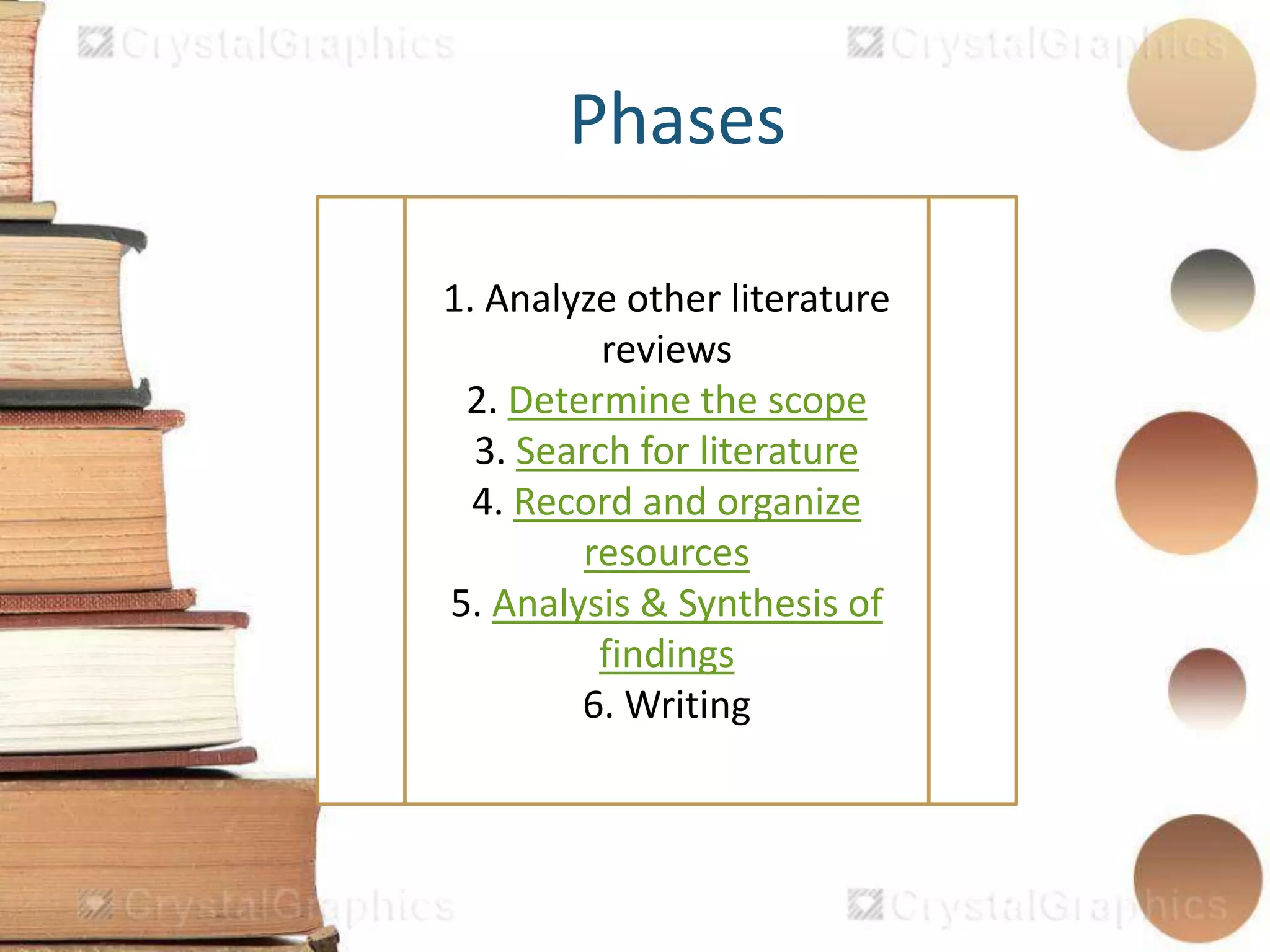
1. Analyze other literature
reviews
2. Determine the scope
3. Search for literature
4. Record and organize
resources
5. Analysis & Synthesis of
findings
6. Writing
Kennesaw State University
guide to LR
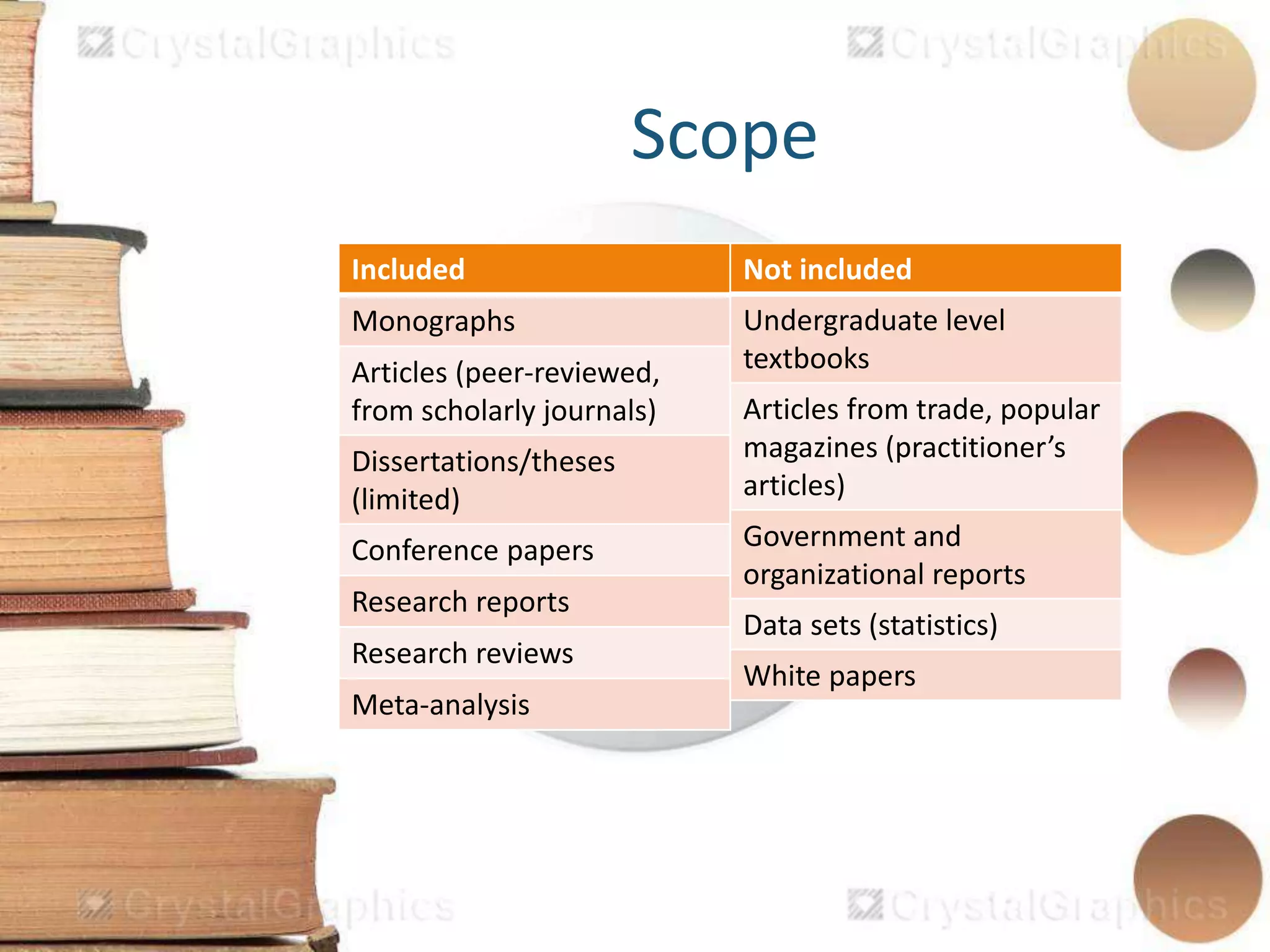
Scope
Included
Monographs
Articles (peer-reviewed,
from scholarly journals)
Dissertations/theses
(limited)
Conference papers
Research reports
Research reviews
Meta-analysis
Not included
Undergraduate level
textbooks
Articles from trade, popular
magazines (practitioner’s
articles)
Government and
organizational reports
Data sets (statistics)
White papers
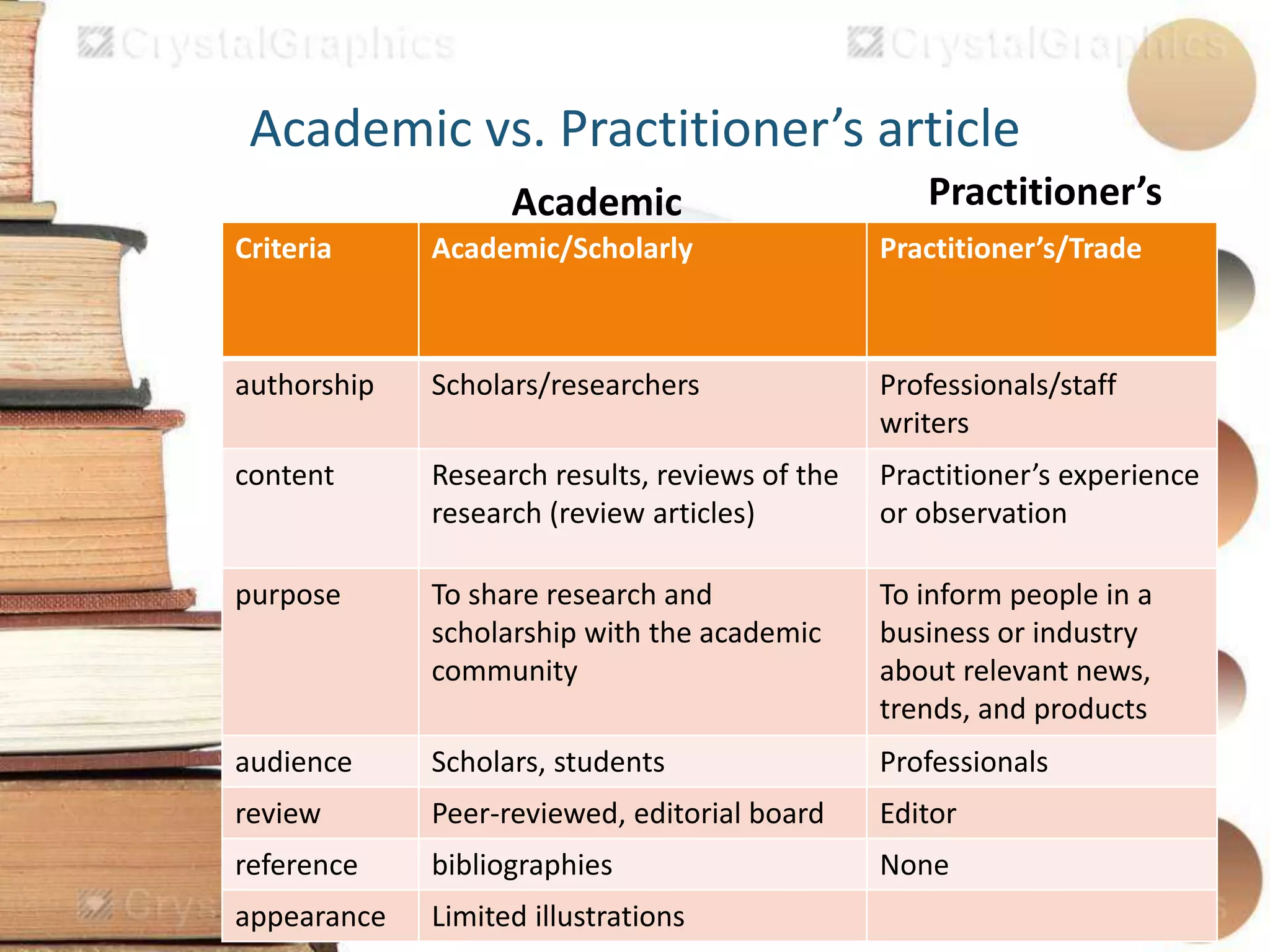
Academic Practitioner’s
Academic vs. Practitioner’s article
Criteria Academic/Scholarly Practitioner’s/Trade
authorship Scholars/researchers Professionals/staff
writers
content Research results, reviews of the
research (review articles)
Practitioner’s experience
or observation
purpose To share research and
scholarship with the academic
community
To inform people in a
business or industry
about relevant news,
trends, and products
audience Scholars, students Professionals
review Peer-reviewed, editorial board Editor
reference bibliographies None
appearance Limited illustrations
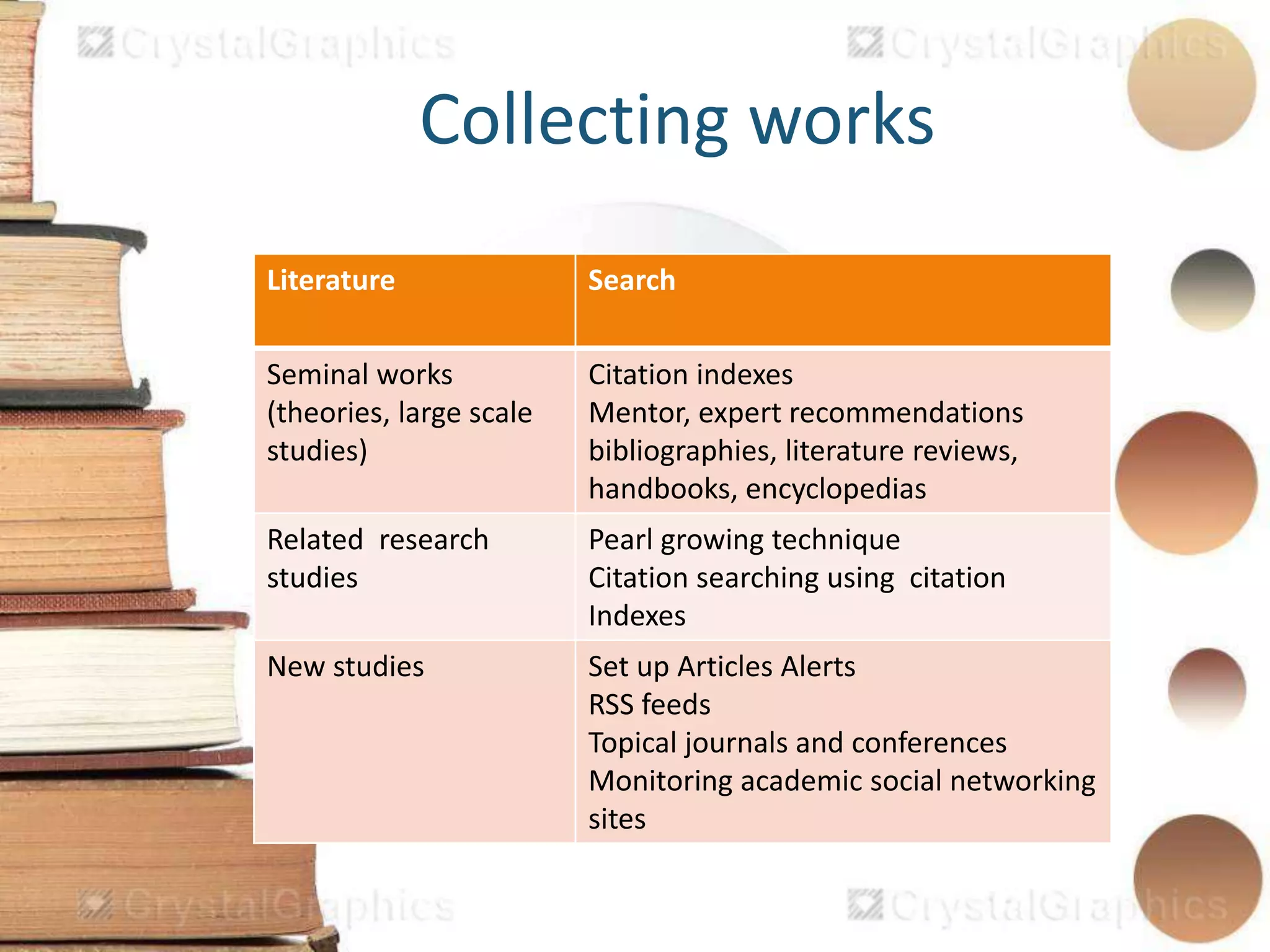
Collecting works
Literature Search
Seminal works
(theories, large scale
studies)
Citation indexes
Mentor, expert recommendations
bibliographies, literature reviews,
handbooks, encyclopedias
Related research
studies
Pearl growing technique
Citation searching using citation
Indexes
New studies Set up Articles Alerts
RSS feeds
Topical journals and conferences
Monitoring academic social networking
sites
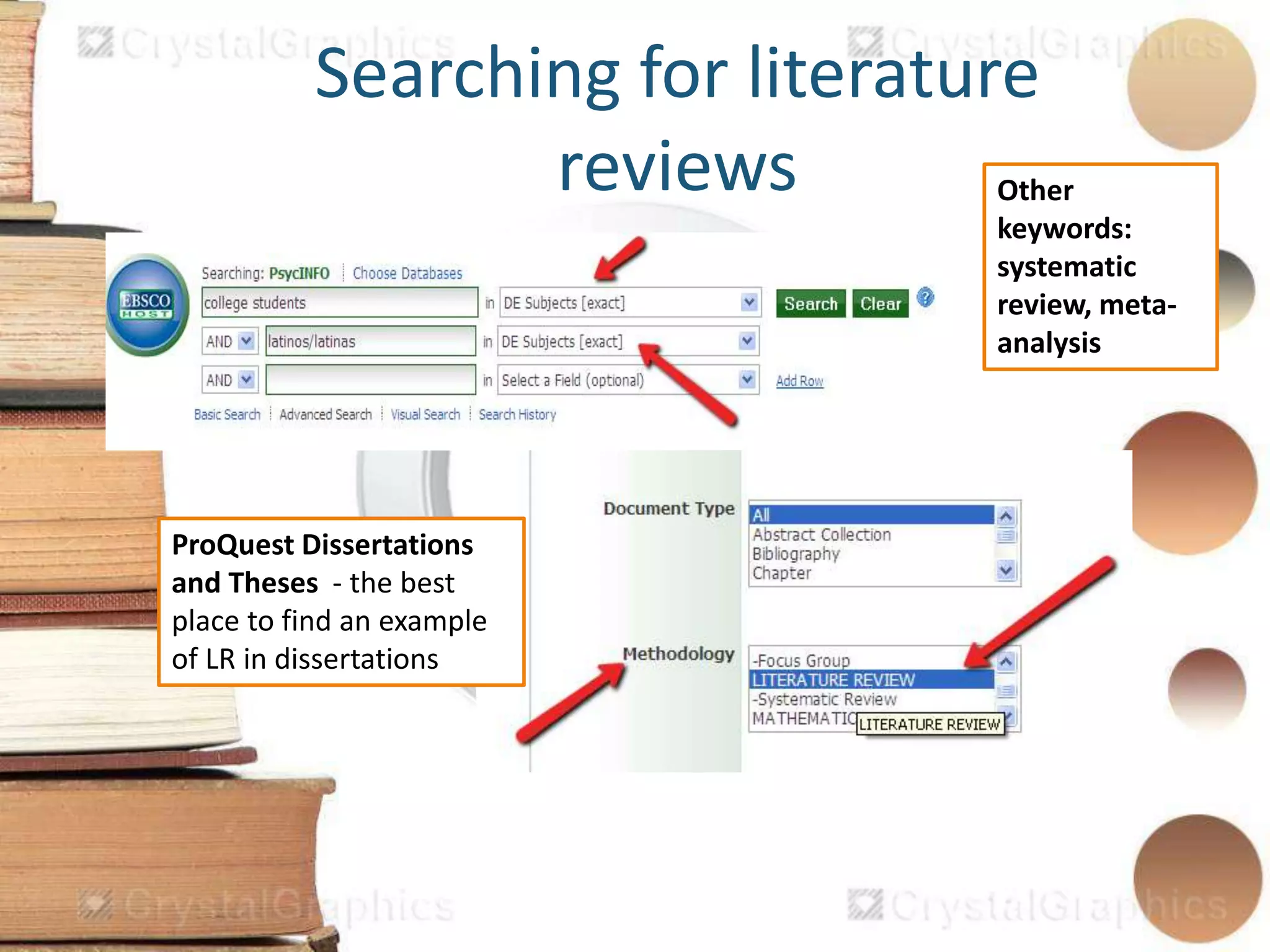
Searching for literature
reviews Other
keywords:
systematic
review, meta-
analysis
ProQuest Dissertations
and Theses - the best
place to find an example
of LR in dissertations
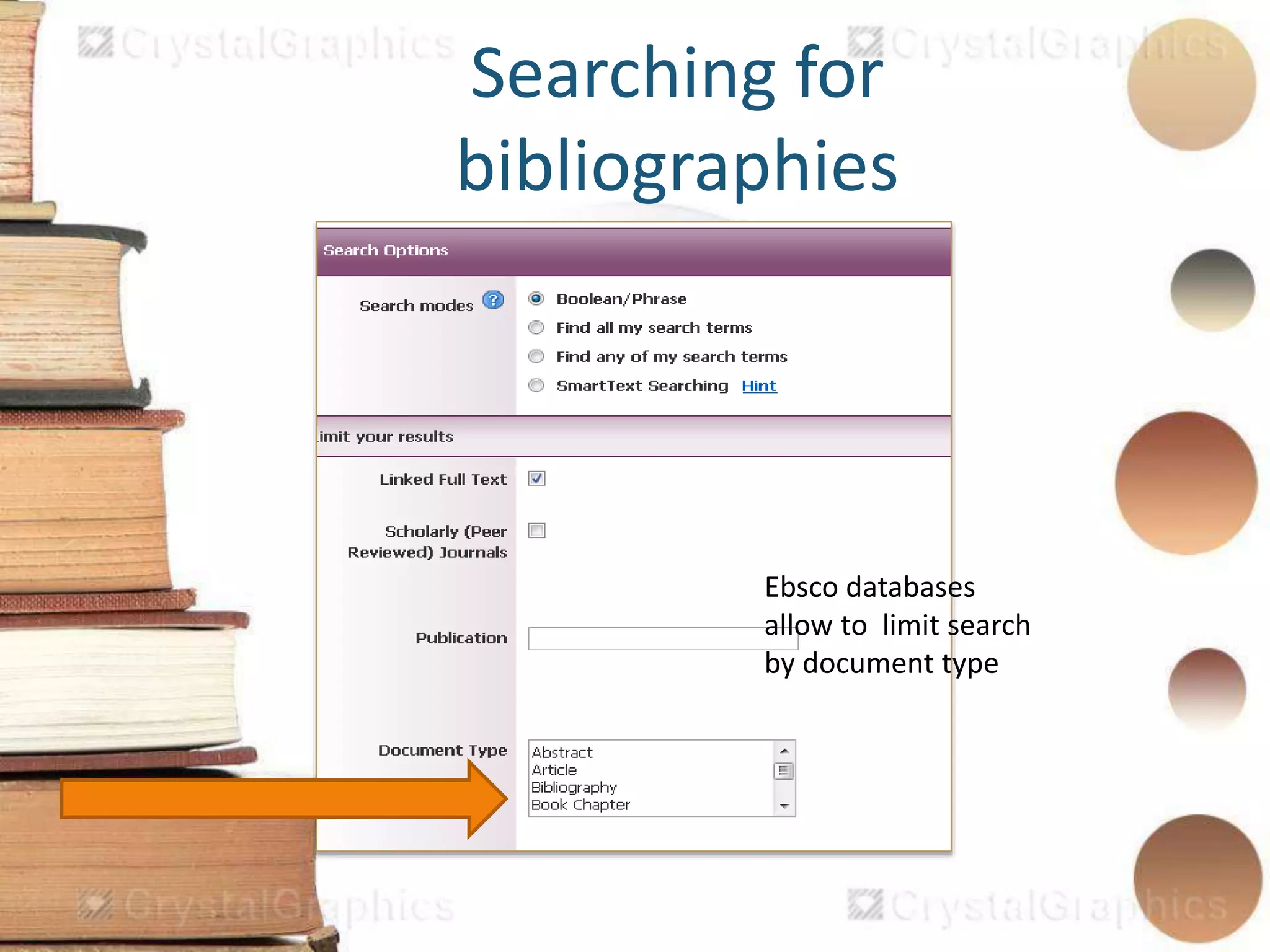
Searching for
bibliographies
Ebsco databases
allow to limit search
by document type
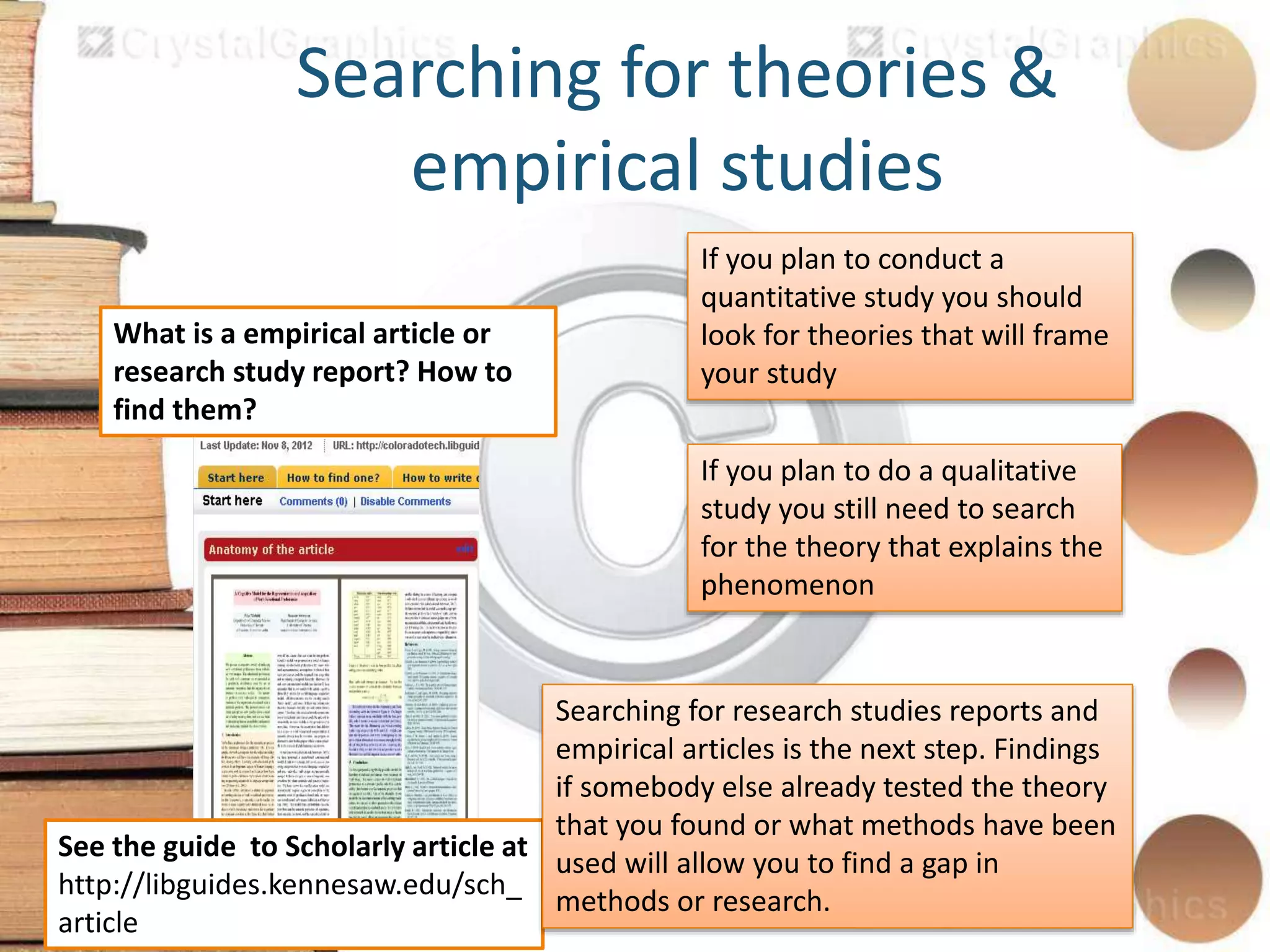
Searching for theories &
empirical studies
What is a empirical article or
research study report? How to
find them?
See the guide to Scholarly article at
http://libguides.kennesaw.edu/sch_
article
If you plan to conduct a
quantitative study you should
look for theories that will frame
your study
If you plan to do a qualitative
study you still need to search
for the theory that explains the
phenomenon
Searching for research studies reports and
empirical articles is the next step. Findings
if somebody else already tested the theory
that you found or what methods have been
used will allow you to find a gap in
methods or research.
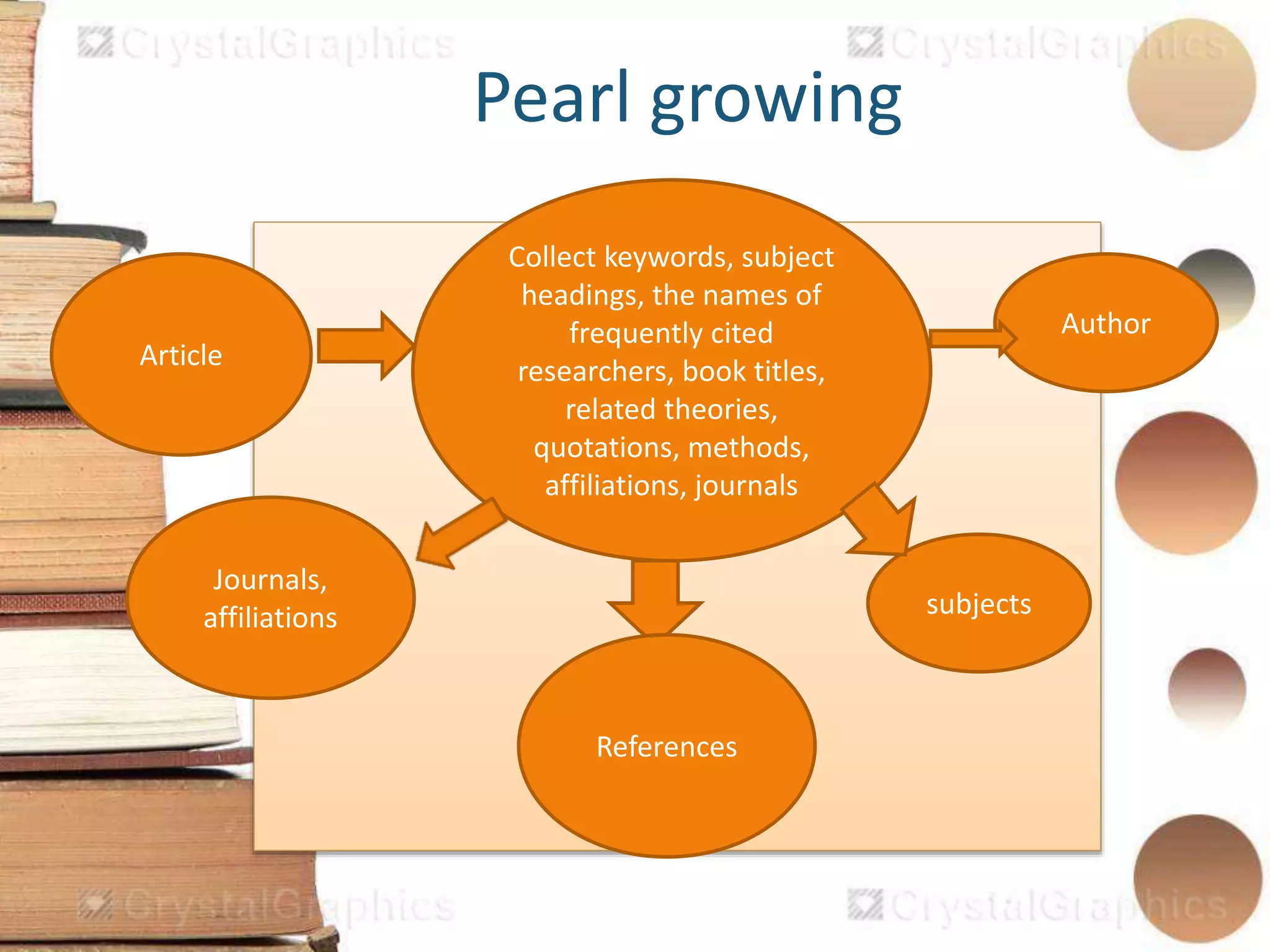
Pearl growing
affiliations, journalsCollect keywords, subject
headings, the names of
frequently cited
researchers, book titles,
related theories,
quotations, methods,
affiliations, journals
References
Author
Article
subjects
Journals,
affiliations
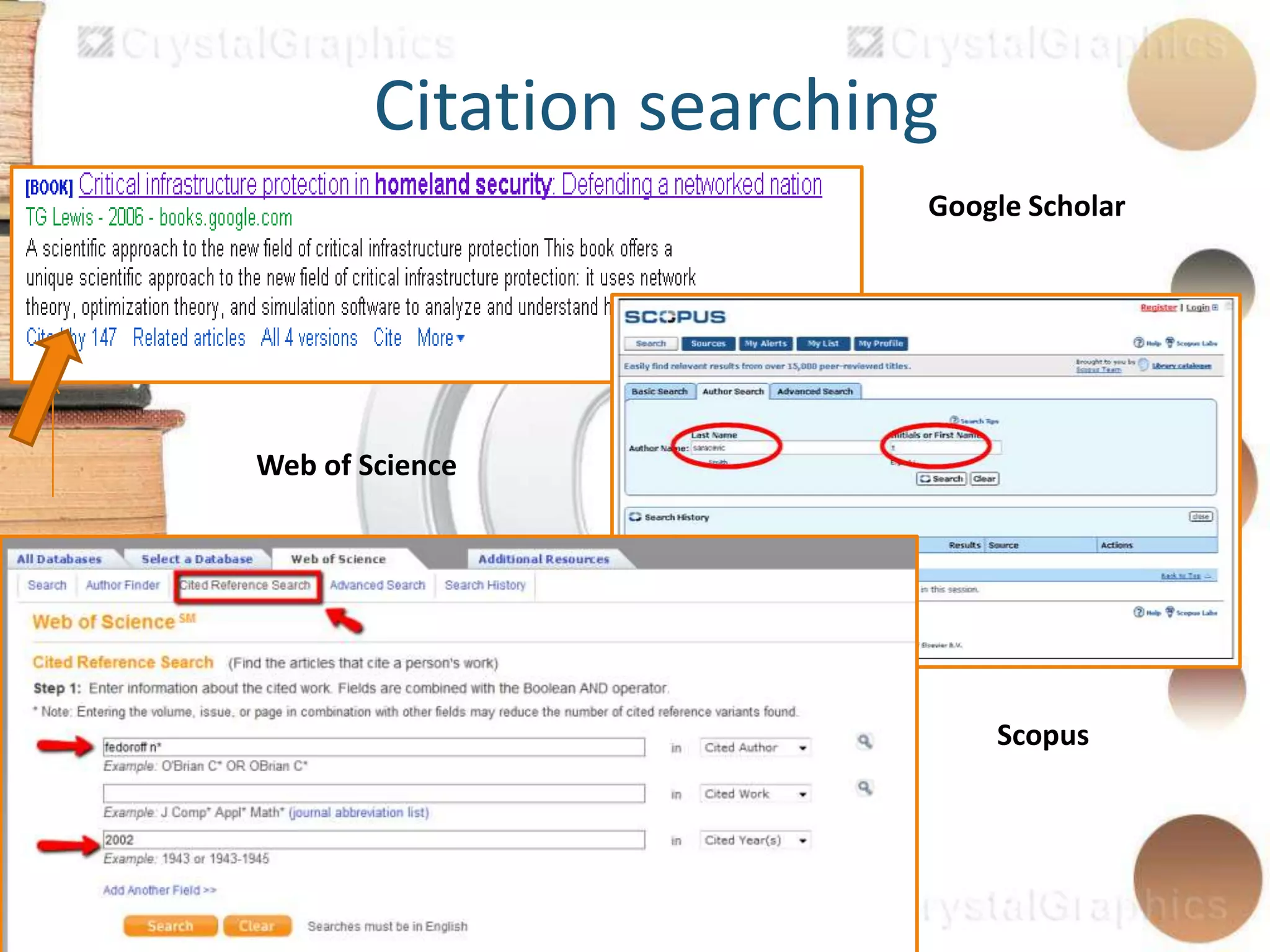
Citation searching
Google Scholar
Scopus
Web of Science
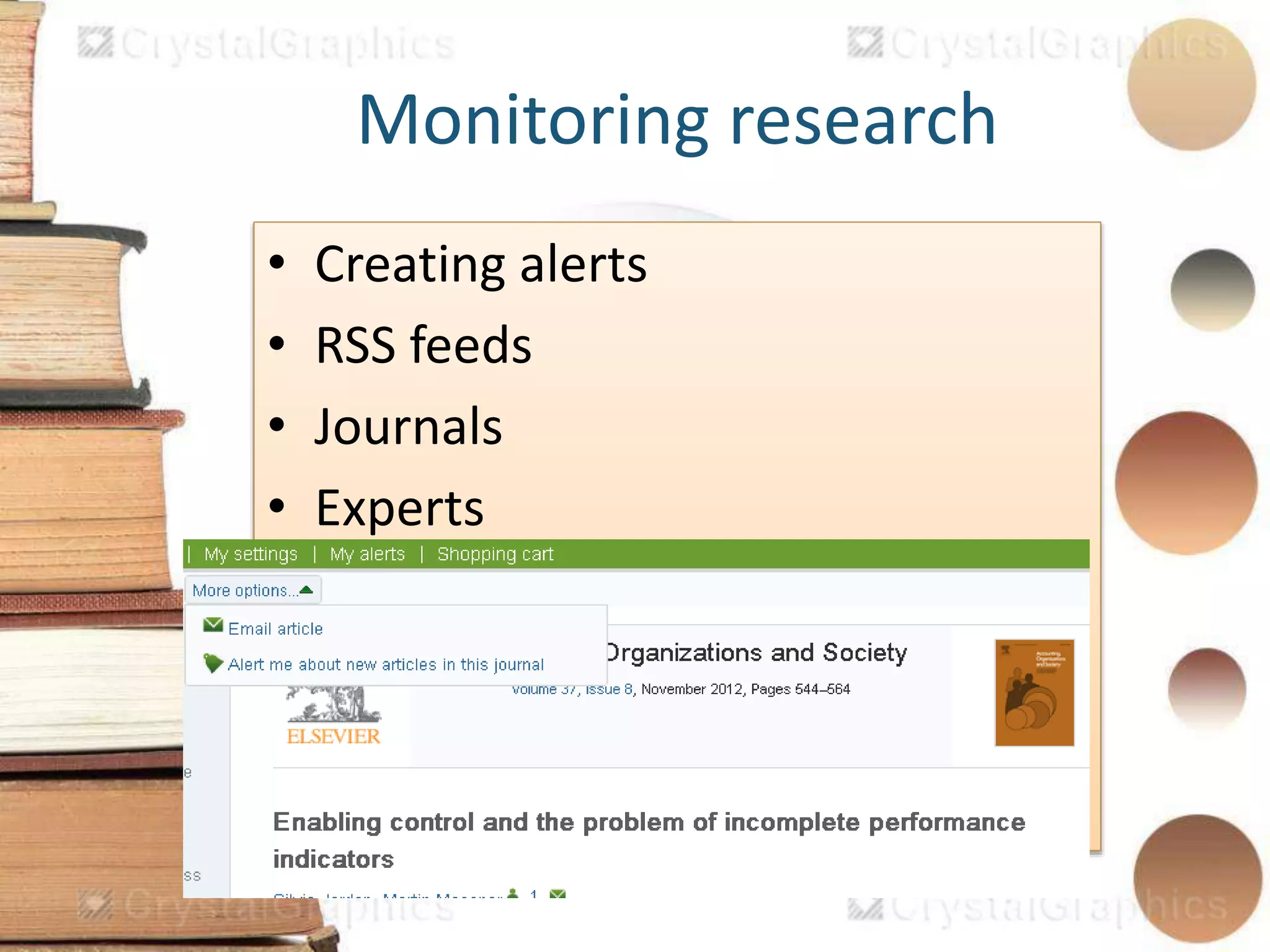
Monitoring research
• Creating alerts
• RSS feeds
• Journals
• Experts
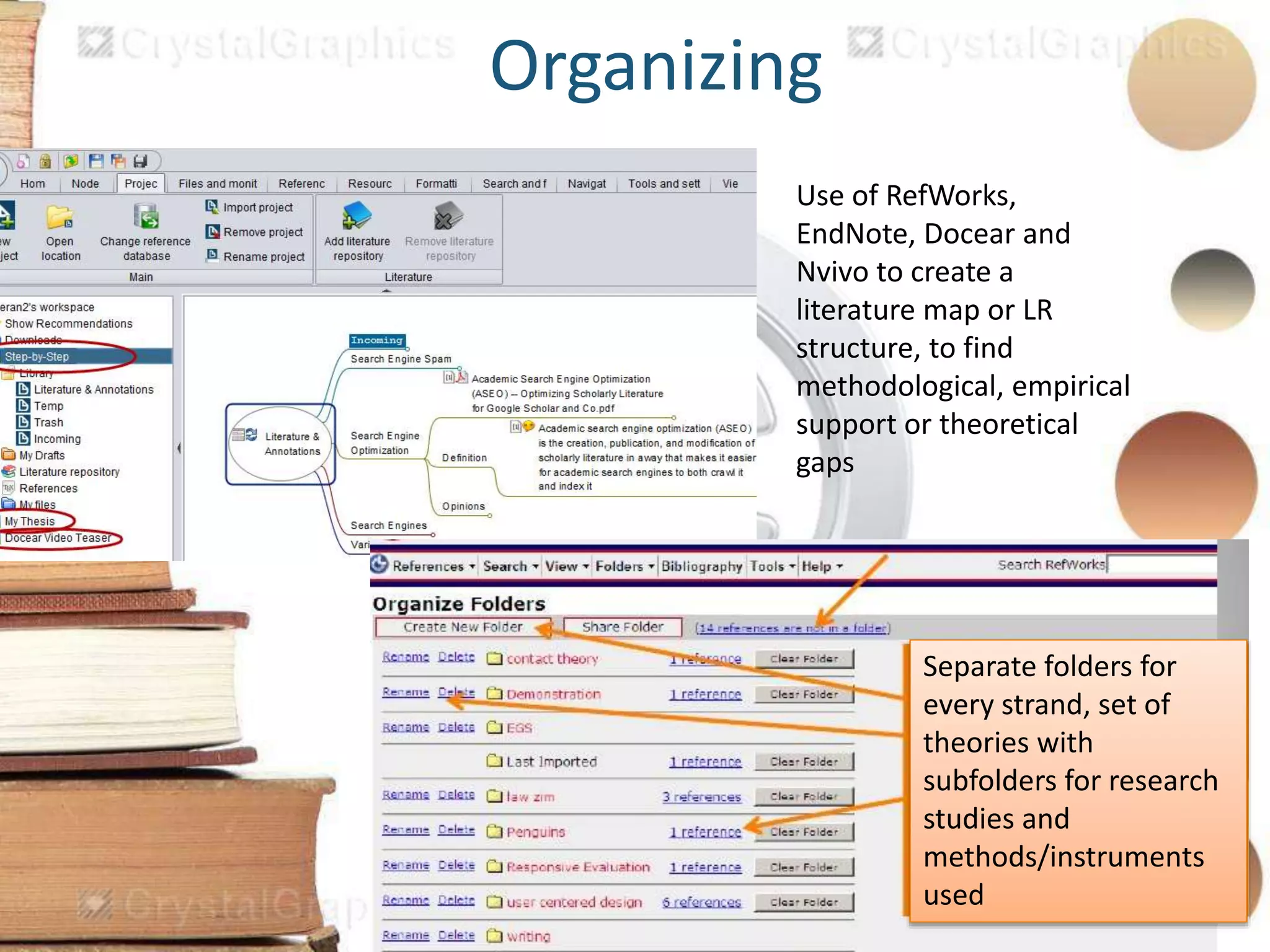
Organizing
Use of RefWorks,
EndNote, Docear and
Nvivo to create a
literature map or LR
structure, to find
methodological, empirical
support or theoretical
gaps
Separate folders for
every strand, set of
theories with
subfolders for research
studies and
methods/instruments
used
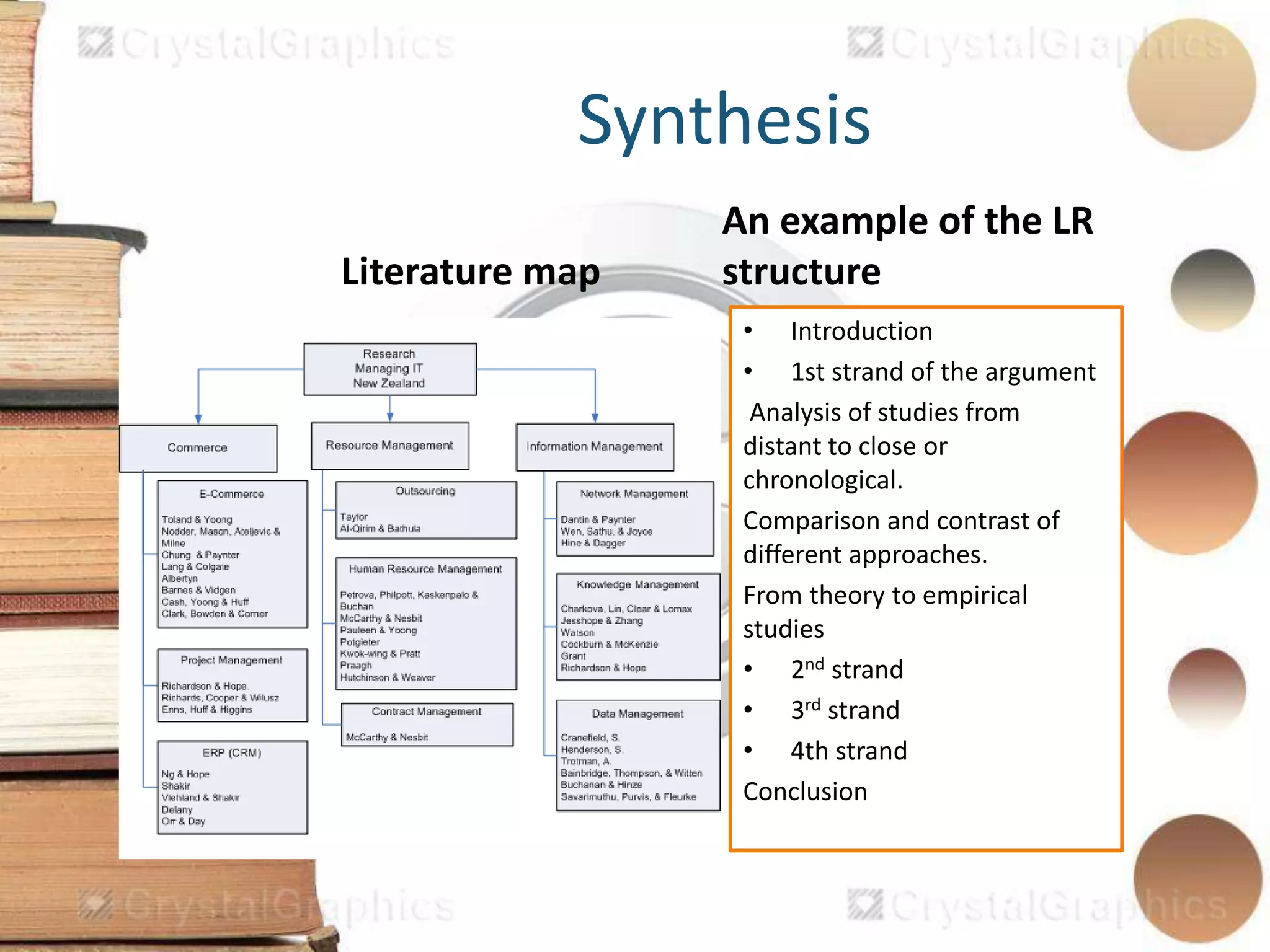
Literature map
An example of the LR
structure
Synthesis
• Introduction
• 1st strand of the argument
Analysis of studies from
distant to close or
chronological.
Comparison and contrast of
different approaches.
From theory to empirical
studies
• 2nd strand
• 3rd strand
• 4th strand
Conclusion
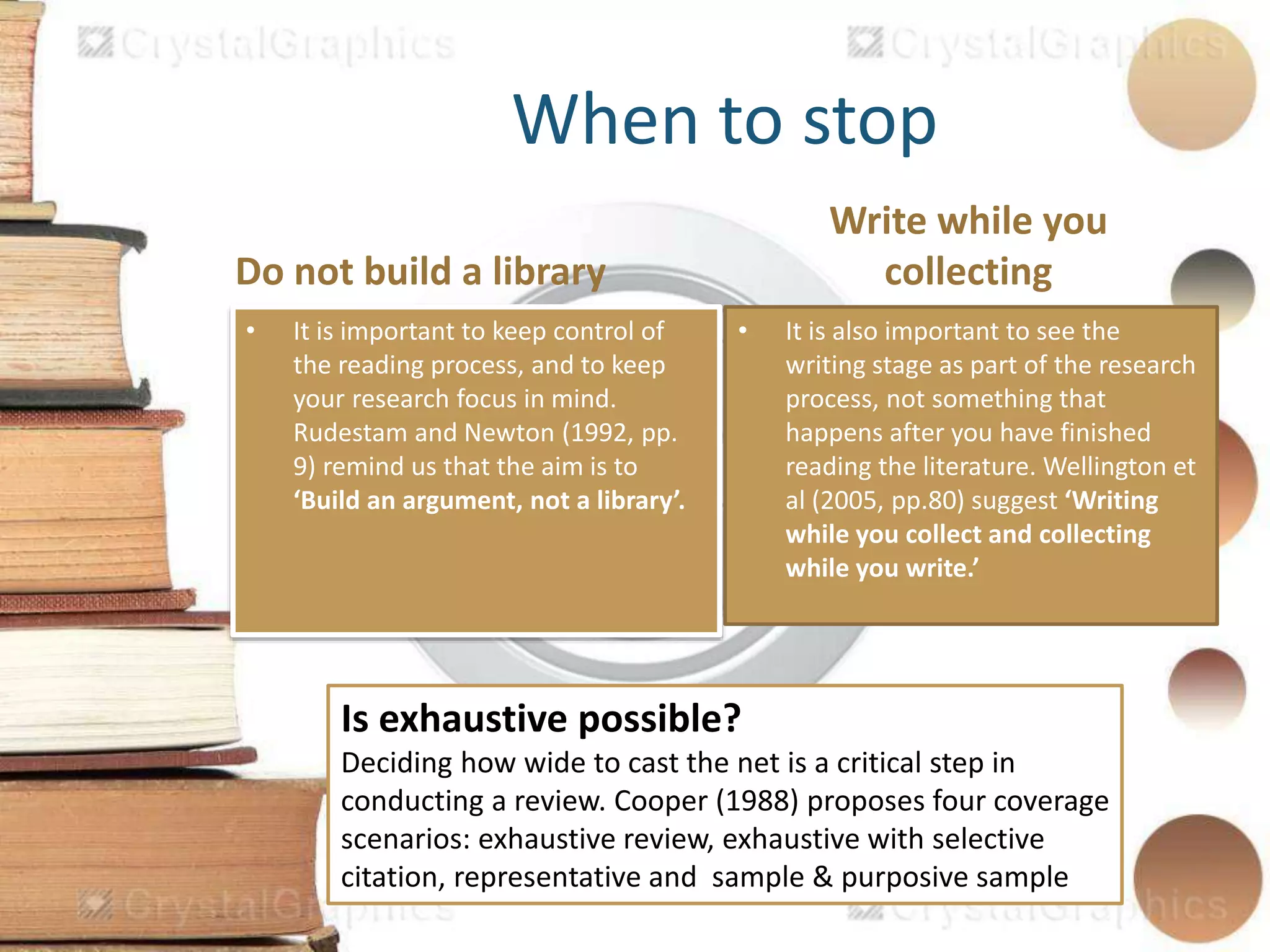
Do not build a library
Write while you
collecting
When to stop
• It is important to keep control of
the reading process, and to keep
your research focus in mind.
Rudestam and Newton (1992, pp.
9) remind us that the aim is to
‘Build an argument, not a library’.
• It is also important to see the
writing stage as part of the research
process, not something that
happens after you have finished
reading the literature. Wellington et
al (2005, pp.80) suggest ‘Writing
while you collect and collecting
while you write.’
Is exhaustive possible?
Deciding how wide to cast the net is a critical step in
conducting a review. Cooper (1988) proposes four coverage
scenarios: exhaustive review, exhaustive with selective
citation, representative and sample & purposive sample
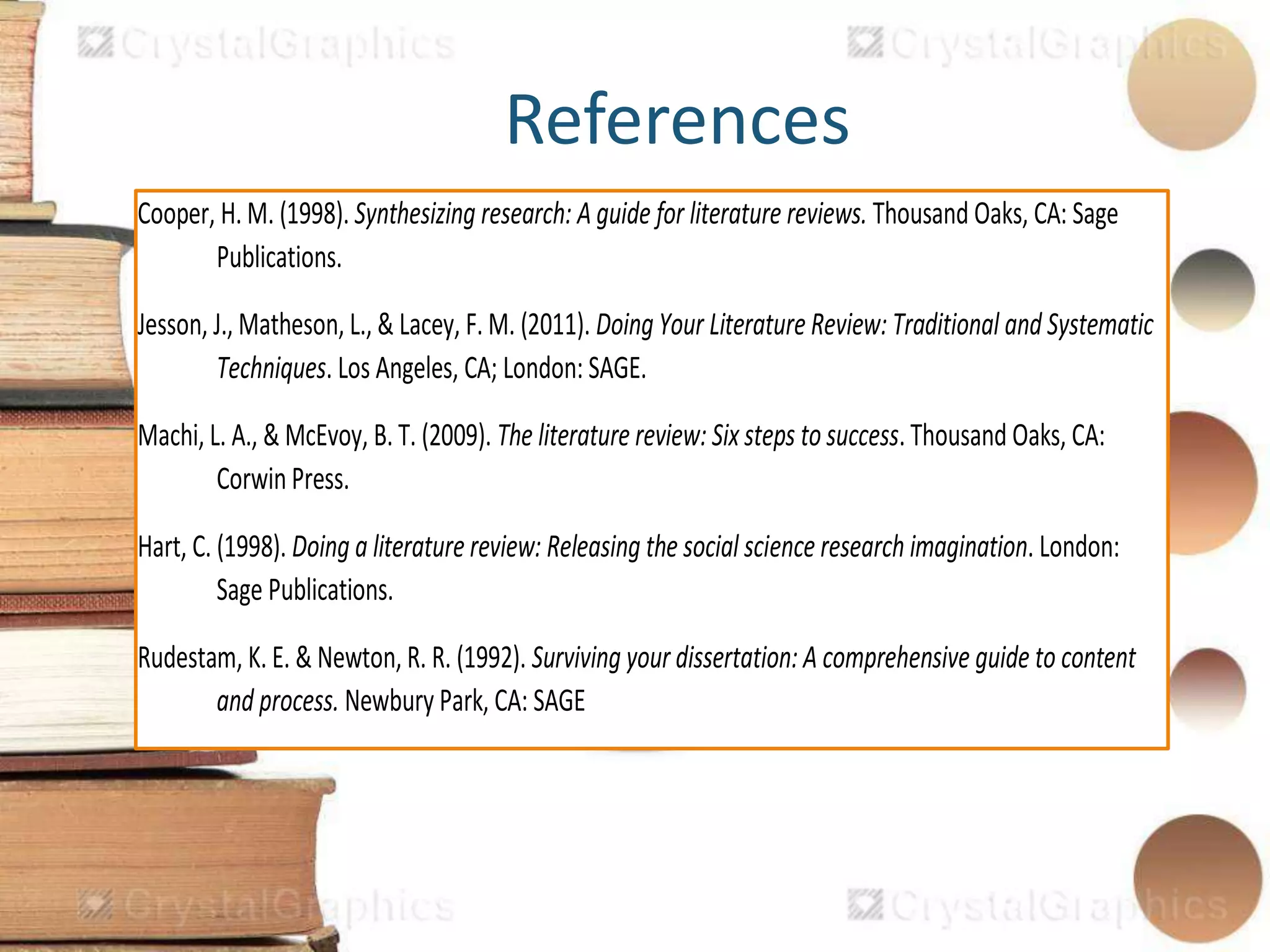
References
Cooper, H. M. (1998). Synthesizing research: A guide for literature reviews. Thousand Oaks, CA: Sage
Publications.
Jesson, J., Matheson, L., & Lacey, F. M. (2011). Doing Your Literature Review: Traditional and Systematic
Techniques. Los Angeles, CA; London: SAGE.
Machi, L. A., & McEvoy, B. T. (2009). The literature review: Six steps to success. Thousand Oaks, CA:
Corwin Press.
Hart, C. (1998). Doing a literature review: Releasing the social science research imagination. London:
Sage Publications.
Rudestam, K. E. & Newton, R. R. (1992). Surviving your dissertation: A comprehensive guide to content
and process. Newbury Park, CA: SAGE

Literature review for a dissertation: a step-by-step guide

  • 1.
    Literature Review A step-by-stepprocess By Dr. Olga Koz
  • 2.
    Outline • What isLR? Phases • Scope/Resources • Advanced Searching for Literature • Organizing/Literature Map/Software • Synthesis • When to Stop See more at: Literature Review: step-by-step guide http://libguides.kennesaw.edu/lr
  • 3.
    What is theLiterature Review • Review of scholarly sources relevant to a particular issue, area of research, or theoretical framework • A synthesis of studies on any given topic • It analyzes reports of primary or original scholarship Purposes of the literature review Develop a theoretical framework for the proposed study Revealing gaps in knowledge Current status of research Finding variables Support the purpose of your study Finding seminal works, leading scholars (Lunenburg, 2008)
  • 4.
    Phases 1. Analyze otherliterature reviews 2. Determine the scope 3. Search for literature 4. Record and organize resources 5. Analysis & Synthesis of findings 6. Writing
  • 5.
  • 6.
    Scope Included Monographs Articles (peer-reviewed, from scholarlyjournals) Dissertations/theses (limited) Conference papers Research reports Research reviews Meta-analysis Not included Undergraduate level textbooks Articles from trade, popular magazines (practitioner’s articles) Government and organizational reports Data sets (statistics) White papers
  • 7.
    Academic Practitioner’s Academic vs.Practitioner’s article Criteria Academic/Scholarly Practitioner’s/Trade authorship Scholars/researchers Professionals/staff writers content Research results, reviews of the research (review articles) Practitioner’s experience or observation purpose To share research and scholarship with the academic community To inform people in a business or industry about relevant news, trends, and products audience Scholars, students Professionals review Peer-reviewed, editorial board Editor reference bibliographies None appearance Limited illustrations
  • 8.
    Collecting works Literature Search Seminalworks (theories, large scale studies) Citation indexes Mentor, expert recommendations bibliographies, literature reviews, handbooks, encyclopedias Related research studies Pearl growing technique Citation searching using citation Indexes New studies Set up Articles Alerts RSS feeds Topical journals and conferences Monitoring academic social networking sites
  • 9.
    Searching for literature reviewsOther keywords: systematic review, meta- analysis ProQuest Dissertations and Theses - the best place to find an example of LR in dissertations
  • 10.
  • 11.
    Searching for theories& empirical studies What is a empirical article or research study report? How to find them? See the guide to Scholarly article at http://libguides.kennesaw.edu/sch_ article If you plan to conduct a quantitative study you should look for theories that will frame your study If you plan to do a qualitative study you still need to search for the theory that explains the phenomenon Searching for research studies reports and empirical articles is the next step. Findings if somebody else already tested the theory that you found or what methods have been used will allow you to find a gap in methods or research.
  • 12.
    Pearl growing affiliations, journalsCollectkeywords, subject headings, the names of frequently cited researchers, book titles, related theories, quotations, methods, affiliations, journals References Author Article subjects Journals, affiliations
  • 13.
  • 14.
    Monitoring research • Creatingalerts • RSS feeds • Journals • Experts
  • 15.
    Organizing Use of RefWorks, EndNote,Docear and Nvivo to create a literature map or LR structure, to find methodological, empirical support or theoretical gaps Separate folders for every strand, set of theories with subfolders for research studies and methods/instruments used
  • 16.
    Literature map An exampleof the LR structure Synthesis • Introduction • 1st strand of the argument Analysis of studies from distant to close or chronological. Comparison and contrast of different approaches. From theory to empirical studies • 2nd strand • 3rd strand • 4th strand Conclusion
  • 17.
    Do not builda library Write while you collecting When to stop • It is important to keep control of the reading process, and to keep your research focus in mind. Rudestam and Newton (1992, pp. 9) remind us that the aim is to ‘Build an argument, not a library’. • It is also important to see the writing stage as part of the research process, not something that happens after you have finished reading the literature. Wellington et al (2005, pp.80) suggest ‘Writing while you collect and collecting while you write.’ Is exhaustive possible? Deciding how wide to cast the net is a critical step in conducting a review. Cooper (1988) proposes four coverage scenarios: exhaustive review, exhaustive with selective citation, representative and sample & purposive sample
  • 18.
    References Cooper, H. M.(1998). Synthesizing research: A guide for literature reviews. Thousand Oaks, CA: Sage Publications. Jesson, J., Matheson, L., & Lacey, F. M. (2011). Doing Your Literature Review: Traditional and Systematic Techniques. Los Angeles, CA; London: SAGE. Machi, L. A., & McEvoy, B. T. (2009). The literature review: Six steps to success. Thousand Oaks, CA: Corwin Press. Hart, C. (1998). Doing a literature review: Releasing the social science research imagination. London: Sage Publications. Rudestam, K. E. & Newton, R. R. (1992). Surviving your dissertation: A comprehensive guide to content and process. Newbury Park, CA: SAGE