Social Software  for Empowerment Cutting-edge Tools and Techniques for Alternative Learning
What is social software? Social software  enables people to rendezvous, connect or collaborate through  computer-mediated communication  and to form  online communities . (Wikipedia)
Some quick facts (Philippines) 7,820,000 Internet users as of March/05, 9.1% of the population (Computer Industry Almanac) Internet usage will grow 23 percent annually and reach 21.5 million by 2008 (International Data Corporation)  The number of online gamers will reach 6.3 million by 2008
Driving force The communities of friends or families forming "clans" when playing (working) online is a major factor The ability to network/share/collaborate with peers reflects a  social  factor in the emerging skillset of the new generation of learners
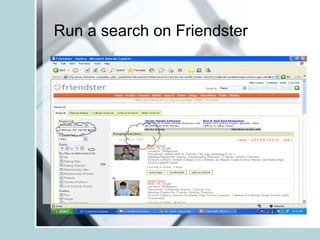
Run a search on Friendster
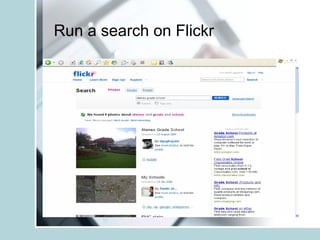
Run a search on Flickr
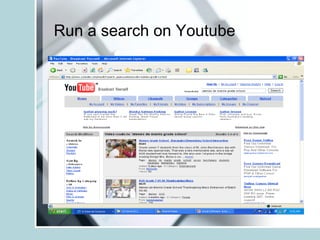
Run a search on Youtube
We are now in the Web 2.0 era a.k.a.  Read/Write Web  A time when “[trainers] are starting to explore the potential of blogs, media-sharing services and other social software--which, although not designed specifically for e-learning [or alternative learning], can be used to empower [learners] and create exciting new learning opportunities”  and building capacity
Case studies (in the academic setting) Web 2.0 as a Toolset for Teaching Creativity and Innovation -  http://joelogs.tripod.com/JoelYuvienco1.htm Ped Xing (Philippine Literature Class Blog)-  http://phillit-dlsc0506.blogspot.com/   Quando Omni Flunkus Moritatus (Business Simulation Class Blog) –  http://bizgaming.blogspot.com
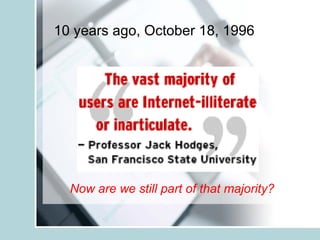
10 years ago, October 18, 1996 Now are we still part of that majority?
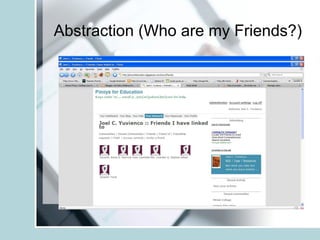
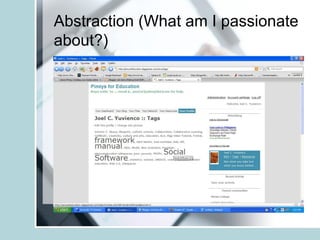
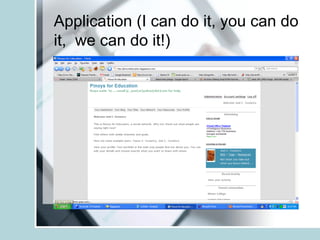
Elements of Module Activity – Discovery Abstraction – Self-reflection on discovery by “friending” and blogs  Analysis – Identifying Group/Community “Desire Lines” e.g. What drives them? What is their center of excellence? Multiple Intelligence? Application – Build a Social Networking Space (with blogs and wikis)
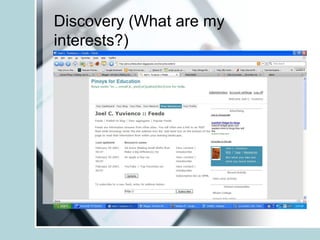
Discovery (What are my interests?)
Abstraction (Who are my Friends?)
Abstraction (What am I passionate about?)
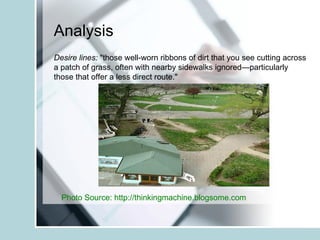
Analysis Desire lines:  "those well-worn ribbons of dirt that you see cutting across a patch of grass, often with nearby sidewalks ignored—particularly those that offer a less direct route."  Photo Source: http://thinkingmachine.blogsome.com
Application (I can do it, you can do it,  we can do it!)
Some useful Social Software http://www.flickr.com http://blogger.com http://ning.com http://www.bix.com http://stu.dicio.us/   http://flocked.com   http://elgg.net
Some useful Websites http://edu.blogs.com/edublogs/2006/01/making_presenta.html   http://www.shambles.net/web2/   http://davidwarlick.com/2cents/2006/01/17/web-20-education-philosophy/ http://www.shambles.net/pages/learning/EnglishP/eslpodcast/

Social Software for Empowerment

  • 1.
    Social Software for Empowerment Cutting-edge Tools and Techniques for Alternative Learning
  • 2.
    What is socialsoftware? Social software enables people to rendezvous, connect or collaborate through computer-mediated communication and to form online communities . (Wikipedia)
  • 3.
    Some quick facts(Philippines) 7,820,000 Internet users as of March/05, 9.1% of the population (Computer Industry Almanac) Internet usage will grow 23 percent annually and reach 21.5 million by 2008 (International Data Corporation) The number of online gamers will reach 6.3 million by 2008
  • 4.
    Driving force Thecommunities of friends or families forming "clans" when playing (working) online is a major factor The ability to network/share/collaborate with peers reflects a social factor in the emerging skillset of the new generation of learners
  • 5.
    Run a searchon Friendster
  • 6.
    Run a searchon Flickr
  • 7.
    Run a searchon Youtube
  • 8.
    We are nowin the Web 2.0 era a.k.a. Read/Write Web A time when “[trainers] are starting to explore the potential of blogs, media-sharing services and other social software--which, although not designed specifically for e-learning [or alternative learning], can be used to empower [learners] and create exciting new learning opportunities” and building capacity
  • 9.
    Case studies (inthe academic setting) Web 2.0 as a Toolset for Teaching Creativity and Innovation - http://joelogs.tripod.com/JoelYuvienco1.htm Ped Xing (Philippine Literature Class Blog)- http://phillit-dlsc0506.blogspot.com/ Quando Omni Flunkus Moritatus (Business Simulation Class Blog) – http://bizgaming.blogspot.com
  • 10.
    10 years ago,October 18, 1996 Now are we still part of that majority?
  • 11.
    Elements of ModuleActivity – Discovery Abstraction – Self-reflection on discovery by “friending” and blogs Analysis – Identifying Group/Community “Desire Lines” e.g. What drives them? What is their center of excellence? Multiple Intelligence? Application – Build a Social Networking Space (with blogs and wikis)
  • 12.
    Discovery (What aremy interests?)
  • 13.
  • 14.
    Abstraction (What amI passionate about?)
  • 15.
    Analysis Desire lines: "those well-worn ribbons of dirt that you see cutting across a patch of grass, often with nearby sidewalks ignored—particularly those that offer a less direct route." Photo Source: http://thinkingmachine.blogsome.com
  • 16.
    Application (I cando it, you can do it, we can do it!)
  • 17.
    Some useful SocialSoftware http://www.flickr.com http://blogger.com http://ning.com http://www.bix.com http://stu.dicio.us/ http://flocked.com http://elgg.net
  • 18.
    Some useful Websiteshttp://edu.blogs.com/edublogs/2006/01/making_presenta.html http://www.shambles.net/web2/ http://davidwarlick.com/2cents/2006/01/17/web-20-education-philosophy/ http://www.shambles.net/pages/learning/EnglishP/eslpodcast/