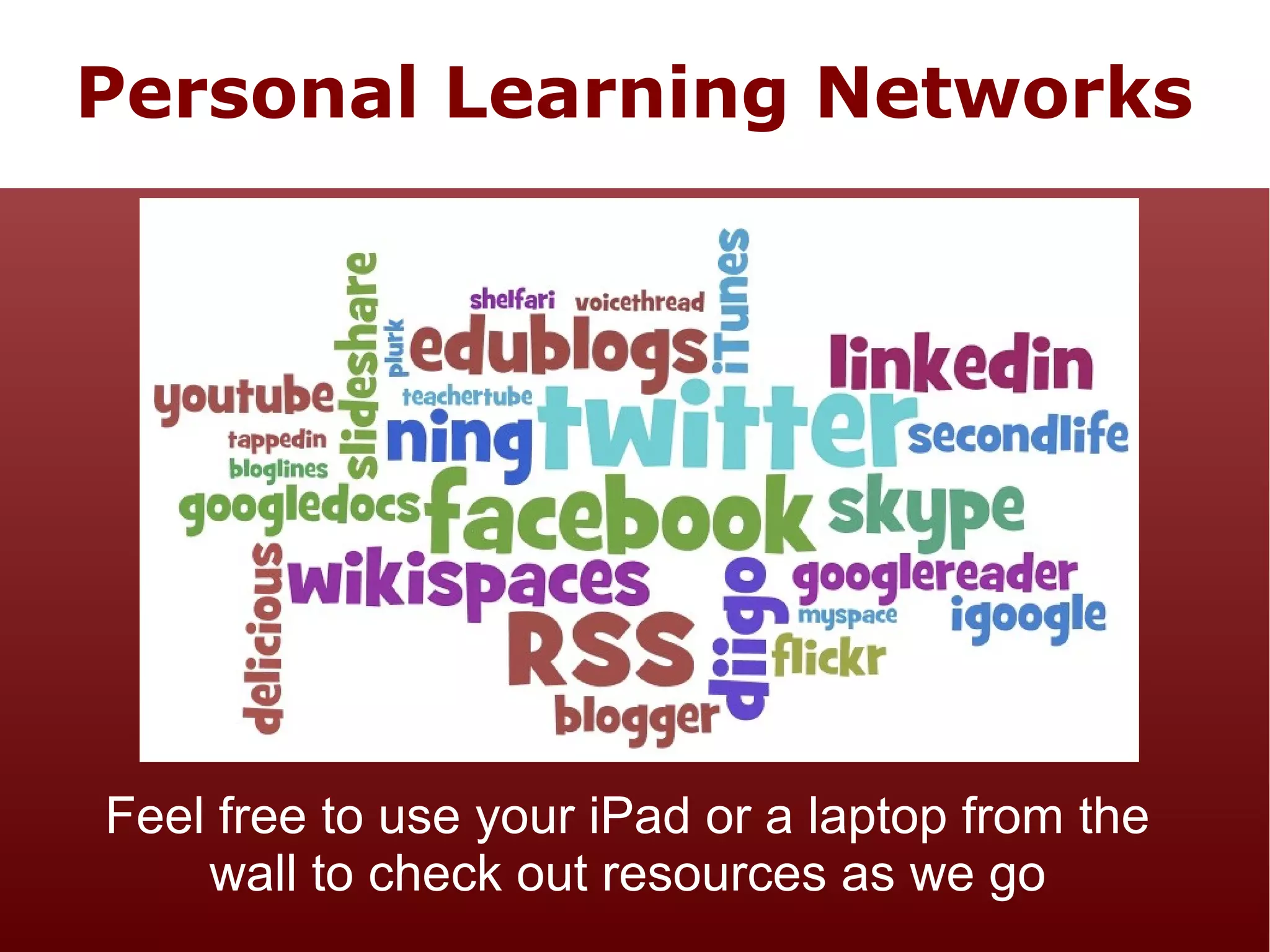
Personal Learning Networks

Feel free to use your iPad or a laptop from the
wall to check out resources as we go
Teaching Means Learning
●

Teachers have always been lifelong
learners
–

●

●

The reason some people get into
teaching

Today there are more resources than ever
for professional learning
There's also a greater need than ever
–

Changing student needs

–

Changing technology & resources
What Are We Doing Today?
●

PLN as an approach/framework

●

A few specific tools
–

Nings

–

Diigo or Pearltrees

●

Too much for one session

●

Follow-up through ITFs
What Is a PLN?
●

Informal learning network--the people
and resources you learn from
–

Connections in the network are
specifically made for learning

–

Doesn’t have to consist of people you
know personally

"For the first time in history, we know now how to store
virtually all humanity's most important information and
make it available, almost instantly, in almost any form, to
almost anyone on earth. We also know how to do that in
great new ways so that people can interact with it , and
learn from it." --Gordon Dryden, Jeannette Vos, The
Learning Revolution
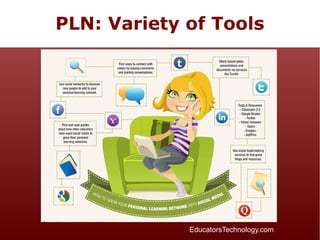
PLN: Variety of Tools

EducatorsTechnology.com
Characteristics of PLNs
●

●

Learner doesn't just receive—learner also
contributes
Usually a social/personal aspect to it—it's
not just websites, personal connections
are formed
Getting Started With PLNS
●

●

●

●

Connect: Comment, +1, Like, Reply
Contribute: Make your own work
accessible—post things
Converse: Share information and build
relationships
Request: Once you've contributed and
built relationships, you're more likely to
get quality responses to questions or
needs
Dr. Mark Wagner, GettingSmart.com
Getting Started With PLNS
●

Also:
–

Be patient. These networks aren't built
quickly.

–

Be authentic. People respond to others
they see as sincere.
Dr. Mark Wagner, GettingSmart.com
Twitter
●

Twitter is like a personal news ticker

●

You can
–

Follow people

–

Follow hashtags—great way to find other
people
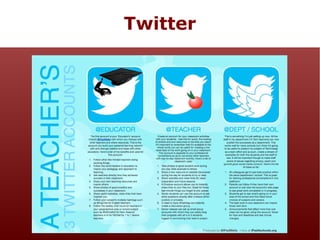
Twitter
Blogs
●

●

Great teaching blogs:
http://teach.com/teach100
A couple of blogs I follow:
–

Edudemic: http://www.edudemic.com/

–

Edutech4Teachers:
http://edutech4teachers.edublogs.org/

–

Educational Technology and Mobile
Learning:
http://www.educatorstechnology.com/
RSS
●

●

Really Simple Syndication—a way of
following updates from different sources
There's a variety of programs and sites to
help you follow RSS:
–

Firefox

–

My Yahoo

–

Feedly
Ning
●

●

Social networks centered around specific
interests
Helpful Nings:
–

http://www.classroom20.com/

–

http://edupln.ning.com/
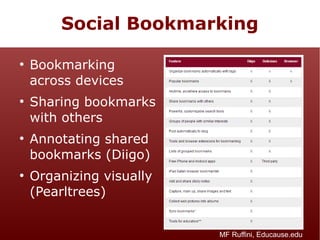
Social Bookmarking
●

●

●

●

Bookmarking
across devices
Sharing bookmarks
with others
Annotating shared
bookmarks (Diigo)
Organizing visually
(Pearltrees)
MF Ruffini, Educause.edu
What Is Your Role?
●

Activist: Learn through doing and prefer
activities
–

●

Reflector: Enjoy reviewing and considering
–

●

Post comments

Theorist: Like to know theories, research, data
–

●

Write a blog

Create your own model or research

Pragmatist: Like to apply learning to the real
world
–

Get students to make PLNs in the
classroom
PLN Tips
●

●

●

●

●

●

Keep collaboration
at the center
Join an online
community

●

●

Join a Meetup
Share your own
contributions
Ask questions
Participate actively

●

●

Be polite and
acknowledge
original authors
Separate
professional and
personal accounts
Create a landing
page
Engage newbies

Miriam Clifford, opencolleges.edu.au
Other PLN Resources
●

Webinars

●

Massively Open Online Courses (MOOCs)

●

iTunes U

●

JSEA/JVLA
Build and Balance
●

●

Start small
Locate one or two resources for your
strongest interest

●

Check them regularly

●

Jump in—participate!!
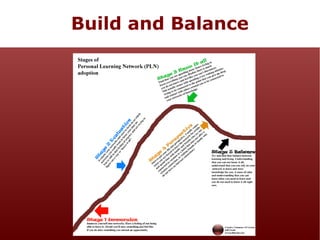
Build and Balance

20140220pln final2

  • 1.
    Personal Learning Networks Feelfree to use your iPad or a laptop from the wall to check out resources as we go
  • 2.
    Teaching Means Learning ● Teachershave always been lifelong learners – ● ● The reason some people get into teaching Today there are more resources than ever for professional learning There's also a greater need than ever – Changing student needs – Changing technology & resources
  • 3.
    What Are WeDoing Today? ● PLN as an approach/framework ● A few specific tools – Nings – Diigo or Pearltrees ● Too much for one session ● Follow-up through ITFs
  • 4.
    What Is aPLN? ● Informal learning network--the people and resources you learn from – Connections in the network are specifically made for learning – Doesn’t have to consist of people you know personally "For the first time in history, we know now how to store virtually all humanity's most important information and make it available, almost instantly, in almost any form, to almost anyone on earth. We also know how to do that in great new ways so that people can interact with it , and learn from it." --Gordon Dryden, Jeannette Vos, The Learning Revolution
  • 5.
    PLN: Variety ofTools EducatorsTechnology.com
  • 6.
    Characteristics of PLNs ● ● Learnerdoesn't just receive—learner also contributes Usually a social/personal aspect to it—it's not just websites, personal connections are formed
  • 7.
    Getting Started WithPLNS ● ● ● ● Connect: Comment, +1, Like, Reply Contribute: Make your own work accessible—post things Converse: Share information and build relationships Request: Once you've contributed and built relationships, you're more likely to get quality responses to questions or needs Dr. Mark Wagner, GettingSmart.com
  • 8.
    Getting Started WithPLNS ● Also: – Be patient. These networks aren't built quickly. – Be authentic. People respond to others they see as sincere. Dr. Mark Wagner, GettingSmart.com
  • 9.
    Twitter ● Twitter is likea personal news ticker ● You can – Follow people – Follow hashtags—great way to find other people
  • 10.
  • 11.
    Blogs ● ● Great teaching blogs: http://teach.com/teach100 Acouple of blogs I follow: – Edudemic: http://www.edudemic.com/ – Edutech4Teachers: http://edutech4teachers.edublogs.org/ – Educational Technology and Mobile Learning: http://www.educatorstechnology.com/
  • 12.
    RSS ● ● Really Simple Syndication—away of following updates from different sources There's a variety of programs and sites to help you follow RSS: – Firefox – My Yahoo – Feedly
  • 13.
    Ning ● ● Social networks centeredaround specific interests Helpful Nings: – http://www.classroom20.com/ – http://edupln.ning.com/
  • 14.
    Social Bookmarking ● ● ● ● Bookmarking across devices Sharingbookmarks with others Annotating shared bookmarks (Diigo) Organizing visually (Pearltrees) MF Ruffini, Educause.edu
  • 15.
    What Is YourRole? ● Activist: Learn through doing and prefer activities – ● Reflector: Enjoy reviewing and considering – ● Post comments Theorist: Like to know theories, research, data – ● Write a blog Create your own model or research Pragmatist: Like to apply learning to the real world – Get students to make PLNs in the classroom
  • 16.
    PLN Tips ● ● ● ● ● ● Keep collaboration atthe center Join an online community ● ● Join a Meetup Share your own contributions Ask questions Participate actively ● ● Be polite and acknowledge original authors Separate professional and personal accounts Create a landing page Engage newbies Miriam Clifford, opencolleges.edu.au
  • 17.
    Other PLN Resources ● Webinars ● MassivelyOpen Online Courses (MOOCs) ● iTunes U ● JSEA/JVLA
  • 18.
    Build and Balance ● ● Startsmall Locate one or two resources for your strongest interest ● Check them regularly ● Jump in—participate!!
  • 19.