How to keep your body Clean and Healthy
BY:-
ULFAT AMIN
MSC NURSING
CHILD HEALTH NURSING
WHAT IS PERSONAL HYGIENE?
• Personal hygiene is defined as the
principle of maintaining cleanliness
and grooming of the external body.
• Maintaining a high level of
personal hygiene will help to
increase self esteem and confidence.
Poor Personal Hygiene
Failure to keep up a standard of
hygiene can have many
implications like;
• Increased risk of getting an
infection or illness
• Social embarrassment
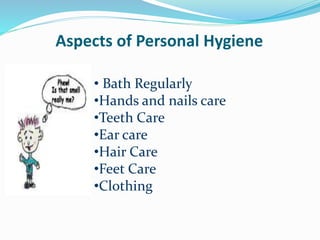
Aspects of Personal Hygiene
• Bath Regularly
•Hands and nails care
•Teeth Care
•Ear care
•Hair Care
•Feet Care
•Clothing
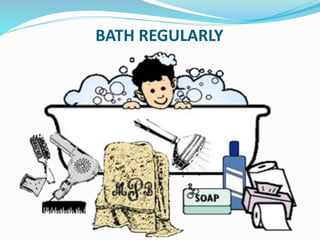
BATH REGULARLY
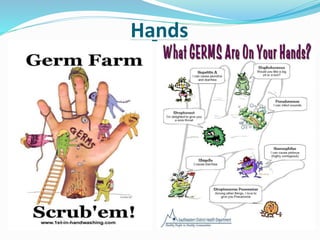
Hands
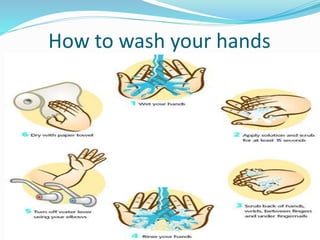
How to wash your hands
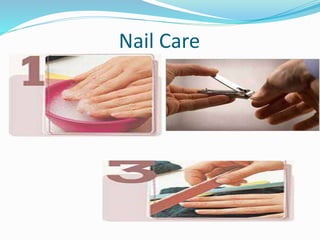
Nail Care
Teeth
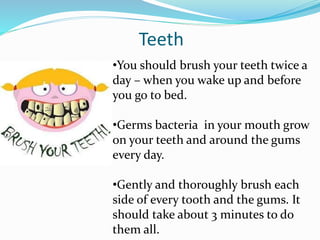
•You should brush your teeth twice a
day – when you wake up and before
you go to bed.
•Germs bacteria in your mouth grow
on your teeth and around the gums
every day.
•Gently and thoroughly brush each
side of every tooth and the gums. It
should take about 3 minutes to do
them all.
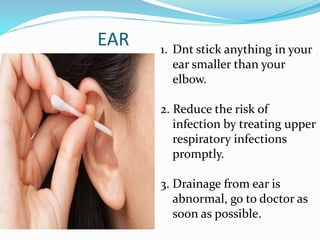
EAR 1. Dnt stick anything in your
ear smaller than your
elbow.
2. Reduce the risk of
infection by treating upper
respiratory infections
promptly.
3. Drainage from ear is
abnormal, go to doctor as
soon as possible.
Hair
• The hair follicles produce oil
which keeps the hair smooth.
• The oil, sweat and dead cells all
add together and can make hair
greasy and look dirty unless you
wash it regularly.
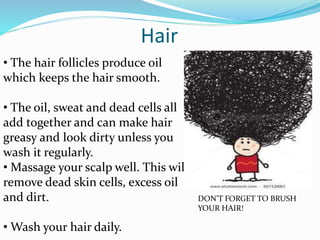
• Massage your scalp well. This will
remove dead skin cells, excess oil
and dirt.
• Wash your hair daily.
DON’T FORGET TO BRUSH
YOUR HAIR!
Feet & Shoes
•Very large collection of sweat glands
live in your feet! Wash your feet well at
least once a day.
•Dry them carefully, especially
between the toes.
•Sweat gets into your shoes and then
bacteria arrive which love the moist
leather or fabric.
Clothes
•Clothes can get stained and dirty you need to change
them often.
•Underclothes are right next to your skin and collect dead
skin cells, sweat and possibly other unmentionable stains.
•Overnight bacteria start to work on these stains so your
clothes do not smell as nice on the second day of wearing.
•Change your clothes after showering, you don't want to
put dirty clothes onto a clean body.
THANK YOU

Personal hygiene ppt

  • 1.
    How to keepyour body Clean and Healthy BY:- ULFAT AMIN MSC NURSING CHILD HEALTH NURSING
  • 2.
    WHAT IS PERSONALHYGIENE? • Personal hygiene is defined as the principle of maintaining cleanliness and grooming of the external body. • Maintaining a high level of personal hygiene will help to increase self esteem and confidence.
  • 3.
    Poor Personal Hygiene Failureto keep up a standard of hygiene can have many implications like; • Increased risk of getting an infection or illness • Social embarrassment
  • 4.
    Aspects of PersonalHygiene • Bath Regularly •Hands and nails care •Teeth Care •Ear care •Hair Care •Feet Care •Clothing
  • 5.
  • 6.
  • 7.
    How to washyour hands
  • 8.
  • 9.
    Teeth •You should brushyour teeth twice a day – when you wake up and before you go to bed. •Germs bacteria in your mouth grow on your teeth and around the gums every day. •Gently and thoroughly brush each side of every tooth and the gums. It should take about 3 minutes to do them all.
  • 10.
    EAR 1. Dntstick anything in your ear smaller than your elbow. 2. Reduce the risk of infection by treating upper respiratory infections promptly. 3. Drainage from ear is abnormal, go to doctor as soon as possible.
  • 11.
    Hair • The hairfollicles produce oil which keeps the hair smooth. • The oil, sweat and dead cells all add together and can make hair greasy and look dirty unless you wash it regularly. • Massage your scalp well. This will remove dead skin cells, excess oil and dirt. • Wash your hair daily. DON’T FORGET TO BRUSH YOUR HAIR!
  • 12.
    Feet & Shoes •Verylarge collection of sweat glands live in your feet! Wash your feet well at least once a day. •Dry them carefully, especially between the toes. •Sweat gets into your shoes and then bacteria arrive which love the moist leather or fabric.
  • 13.
    Clothes •Clothes can getstained and dirty you need to change them often. •Underclothes are right next to your skin and collect dead skin cells, sweat and possibly other unmentionable stains. •Overnight bacteria start to work on these stains so your clothes do not smell as nice on the second day of wearing. •Change your clothes after showering, you don't want to put dirty clothes onto a clean body.
  • 14.