HYGIENE
BY
SHABNUM KHURSHEED
OBJECTIVE
 By the end of the presentation students will be able to
 What is personal hygiene?
 Types of personal hygiene
 Why is personal hygiene important?
 Effects of poor personal hygiene
 Hygiene routine tips
HYGIENE
Hygiene is any practice or activity that you do to keep things healthy
and clean. Washing hands, coughing into your elbow, and regular house
cleaning are all part of good hygiene.
WHAT IS PERSONAL HYGIENE?
 Personal hygiene is how you care for your body.
This practice includes bathing, washing your
hands, brushing your teeth, and more.
TYPES OF PERSONAL HYGIENE
 Each person’s idea of personal hygiene differs.
These main categories are a useful place to start
for building good hygiene habits:
Toilet hygiene
 Wash your hands after you use the toilet room.
Scrub with soap for 20 to 30 seconds, and be sure
to clean between your fingers, on the back of your
hands, and under your nails. Rinse with warm
water, and dry with a clean towel.
 If you don’t have running water or soap, an alcohol-
based hand sanitizer will also work. Use one that’s
at least 60 percent alcohol.
SHOWER HYGIENE
 Personal preference may dictate how often you
wish to shower, but most people will benefit from a
rinse at least every other day. Showering with soap
helps rinse away dead skin cells, bacteria, and oils.
 You should also wash your hair at least twice a
week. Shampooing your hair and scalp helps
remove skin buildup and protects against oily
residues that can irritate your skin.
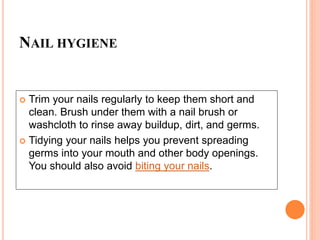
NAIL HYGIENE
 Trim your nails regularly to keep them short and
clean. Brush under them with a nail brush or
washcloth to rinse away buildup, dirt, and germs.
 Tidying your nails helps you prevent spreading
germs into your mouth and other body openings.
You should also avoid biting your nails.
TEETH HYGIENE
 Good dental hygiene is about more than just pearly
white teeth. Caring for your teeth and gums is a
smart way to prevent gum diseases and cavities.
 Brush at least twice a day for 2 minutes. Aim to
brush after you wake up and before bed. If you can,
brush after every meal, too. Floss between your
teeth daily, and ask your dentist about using an
antibacterial mouthwash.
 These two steps can help prevent tooth decay and
eliminate pockets where bacteria and germs can
build up.
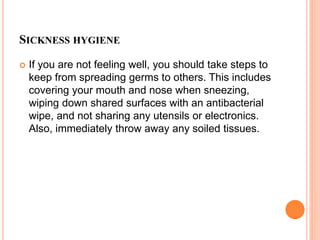
SICKNESS HYGIENE
 If you are not feeling well, you should take steps to
keep from spreading germs to others. This includes
covering your mouth and nose when sneezing,
wiping down shared surfaces with an antibacterial
wipe, and not sharing any utensils or electronics.
Also, immediately throw away any soiled tissues.
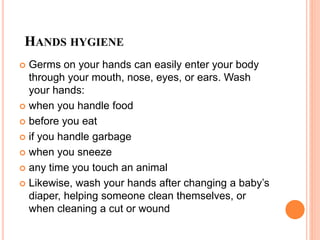
HANDS HYGIENE
 Germs on your hands can easily enter your body
through your mouth, nose, eyes, or ears. Wash
your hands:
 when you handle food
 before you eat
 if you handle garbage
 when you sneeze
 any time you touch an animal
 Likewise, wash your hands after changing a baby’s
diaper, helping someone clean themselves, or
when cleaning a cut or wound
WHY IS PERSONAL HYGIENE IMPORTANT?
 Practicing good personal hygiene is important for
helping keep the body healthy and clean.
EFFECTS OF POOR PERSONAL
HYGIENE
 Poor hygiene is a sensitive topic, and talking to a person about it can be
difficult. As a result, a person with poor personal hygiene could become
isolated from other people.
 Poor personal hygiene may also have an effect on the workplace.
Companies may be more likely to offer jobs Trusted Source and
promotions to individuals who appear to take care of their health and
presentation.
 There are also many health implications of having poor personal
hygiene, with the following as hygiene-related diseases:
 athlete’s foot
 body lice
 chronic diarrhea
 tooth decay
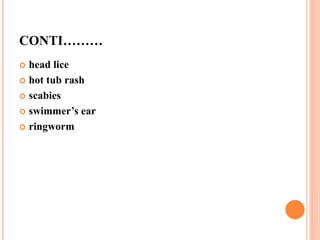
CONTI………
 head lice
 hot tub rash
 scabies
 swimmer’s ear
 ringworm
HYGIENE ROUTINE TIPS
 Helpful tips for creating a hygiene routine include the
following:
Make it a habit:
With daily practice, a new habit can become a regular part of life.
Choose one area to focus on and practice until it becomes
second nature.
 Set reminders:
Using the notes app on a cell phone can be a great way to avoid
forgetting any tasks.
 Use rewards:
A sticker chart can be a brilliant incentive for children to maintain
their personal hygiene.
Hygiene
Hygiene

Hygiene

  • 1.
  • 2.
    OBJECTIVE  By theend of the presentation students will be able to  What is personal hygiene?  Types of personal hygiene  Why is personal hygiene important?  Effects of poor personal hygiene  Hygiene routine tips
  • 3.
    HYGIENE Hygiene is anypractice or activity that you do to keep things healthy and clean. Washing hands, coughing into your elbow, and regular house cleaning are all part of good hygiene.
  • 4.
    WHAT IS PERSONALHYGIENE?  Personal hygiene is how you care for your body. This practice includes bathing, washing your hands, brushing your teeth, and more.
  • 6.
    TYPES OF PERSONALHYGIENE  Each person’s idea of personal hygiene differs. These main categories are a useful place to start for building good hygiene habits: Toilet hygiene  Wash your hands after you use the toilet room. Scrub with soap for 20 to 30 seconds, and be sure to clean between your fingers, on the back of your hands, and under your nails. Rinse with warm water, and dry with a clean towel.  If you don’t have running water or soap, an alcohol- based hand sanitizer will also work. Use one that’s at least 60 percent alcohol.
  • 7.
    SHOWER HYGIENE  Personalpreference may dictate how often you wish to shower, but most people will benefit from a rinse at least every other day. Showering with soap helps rinse away dead skin cells, bacteria, and oils.  You should also wash your hair at least twice a week. Shampooing your hair and scalp helps remove skin buildup and protects against oily residues that can irritate your skin.
  • 8.
    NAIL HYGIENE  Trimyour nails regularly to keep them short and clean. Brush under them with a nail brush or washcloth to rinse away buildup, dirt, and germs.  Tidying your nails helps you prevent spreading germs into your mouth and other body openings. You should also avoid biting your nails.
  • 9.
    TEETH HYGIENE  Gooddental hygiene is about more than just pearly white teeth. Caring for your teeth and gums is a smart way to prevent gum diseases and cavities.  Brush at least twice a day for 2 minutes. Aim to brush after you wake up and before bed. If you can, brush after every meal, too. Floss between your teeth daily, and ask your dentist about using an antibacterial mouthwash.  These two steps can help prevent tooth decay and eliminate pockets where bacteria and germs can build up.
  • 10.
    SICKNESS HYGIENE  Ifyou are not feeling well, you should take steps to keep from spreading germs to others. This includes covering your mouth and nose when sneezing, wiping down shared surfaces with an antibacterial wipe, and not sharing any utensils or electronics. Also, immediately throw away any soiled tissues.
  • 11.
    HANDS HYGIENE  Germson your hands can easily enter your body through your mouth, nose, eyes, or ears. Wash your hands:  when you handle food  before you eat  if you handle garbage  when you sneeze  any time you touch an animal  Likewise, wash your hands after changing a baby’s diaper, helping someone clean themselves, or when cleaning a cut or wound
  • 13.
    WHY IS PERSONALHYGIENE IMPORTANT?  Practicing good personal hygiene is important for helping keep the body healthy and clean.
  • 14.
    EFFECTS OF POORPERSONAL HYGIENE  Poor hygiene is a sensitive topic, and talking to a person about it can be difficult. As a result, a person with poor personal hygiene could become isolated from other people.  Poor personal hygiene may also have an effect on the workplace. Companies may be more likely to offer jobs Trusted Source and promotions to individuals who appear to take care of their health and presentation.  There are also many health implications of having poor personal hygiene, with the following as hygiene-related diseases:  athlete’s foot  body lice  chronic diarrhea  tooth decay
  • 15.
    CONTI………  head lice hot tub rash  scabies  swimmer’s ear  ringworm
  • 16.
    HYGIENE ROUTINE TIPS Helpful tips for creating a hygiene routine include the following: Make it a habit: With daily practice, a new habit can become a regular part of life. Choose one area to focus on and practice until it becomes second nature.  Set reminders: Using the notes app on a cell phone can be a great way to avoid forgetting any tasks.  Use rewards: A sticker chart can be a brilliant incentive for children to maintain their personal hygiene.