Personal
Hygiene
TOPIC
According to the world health organization,
health is a state of complete physical,
mental and social well-being and not
merely the absence of disease or infirmity.
Health
Personal hygiene may be described as the principle of
maintaining cleanliness and grooming of the external
body.
Failure to keep up a standard of hygiene can
have many implications. Not only is there an increased
risk of getting an infection or illness, but there are
many social and psychological aspects that can be
affected.
Personal Hygiene
o According to the Centers for Disease Control and
Prevention, addressing the spread of germs in schools
is essential to the health of our youth, our schools, and
our nation
o Good hygiene prevents the spread of germs
o It also helps to give a good first impression to others
The Benefits of Good Hygiene
Regular Routine of Personal Care
Washing and Grooming of
 Hair
 Face and Skin
 Teeth
 Ears
 Hands
 Nails
 Feet
What is Personal Hygiene?
HAIR
Hair Care
o Wash regularly with shampoo. Rinse hair thoroughly
with clear water after shampooing to remove all the
soap
o Don't scrub or rub too hard . It may irritate your
scalp or damage your hair.
o Massage your scalp well. It will remove dead skin
cells, excess oil and dirt
o Brush hair daily
o Wash combs and brushes frequently
o Don’t share combs, brushes etc.
FACE & SKIN
o Bathe or shower regularly using soap
Do not scrub violently
o If possible, bathe or shower after exercise –
especially after sweating
o Use antiperspirants decreases perspiration
and cover odor with a manly smell
o Wear clean clothes
o Reduce stress levels which irritates the skin
o Maintain a healthy diet
Face & Skin care tips
o Wash your face 2 times a day.
o Avoid washing too often, as the skin will
become irritated and dry out.
o Keep oily hair away from your skin
o Avoid touching acne except when washing
o Don’t squeeze or pick the pimples
o Try to avoid touching the face.
o Keep hands clean by washing them often.
Face & Skin care tips
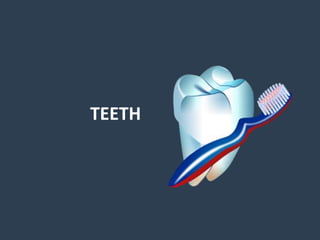
TEETH
How to avoid Dental problems
 Daily dental hygiene routine that consist of
brushing for 2-4 minutes and flossing
 I f possible, brush after every meal or rinse
your mouth with warm water.
 Use a soft-bristled brush.
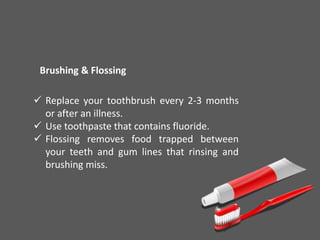
Brushing & Flossing
 Replace your toothbrush every 2-3 months
or after an illness.
 Use toothpaste that contains fluoride.
 Flossing removes food trapped between
your teeth and gum lines that rinsing and
brushing miss.
EAR
Ear
 Wash ears daily with a wash cloth don’t
forget behind the ears
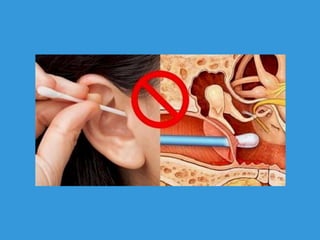
 Do not use Q tips in ears it will smash the
ear wax deep into the ear canal
 Usually Ear wax is usually removed when
you chew food or gum
Ear
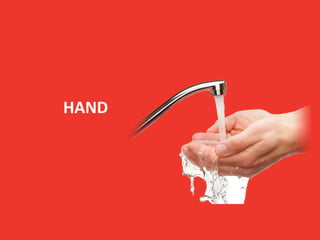
HAND
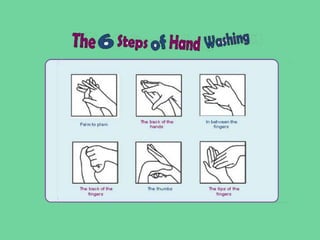
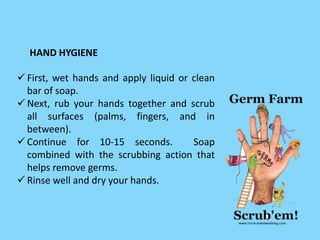
 First, wet hands and apply liquid or clean
bar of soap.
 Next, rub your hands together and scrub
all surfaces (palms, fingers, and in
between).
 Continue for 10-15 seconds. Soap
combined with the scrubbing action that
helps remove germs.
 Rinse well and dry your hands.
HAND HYGIENE
NAILS AND CUTICLES
 Keep nails trim but do not cut nails shorter than skin
level.
 Keep nails clean.
 Round your fingernails slightly when trimming them.
 Cut toe nails straight across.
 Smooth rough nail edges with a file or emery board.
Nail Care
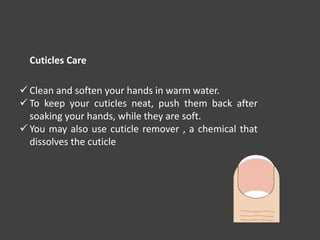
 Clean and soften your hands in warm water.
 To keep your cuticles neat, push them back after
soaking your hands, while they are soft.
 You may also use cuticle remover , a chemical that
dissolves the cuticle
Cuticles Care
FEET
 Wash your feet well at least once a day.
 Dry them carefully, especially between the toes.
 Keep feet and skin clean and dry
 Change socks daily
 Avoid walking barefoot in public areas
Feet Care
Q & A session
HANK OU!

Personal Hygiene

  • 2.
  • 3.
    According to theworld health organization, health is a state of complete physical, mental and social well-being and not merely the absence of disease or infirmity. Health
  • 4.
    Personal hygiene maybe described as the principle of maintaining cleanliness and grooming of the external body. Failure to keep up a standard of hygiene can have many implications. Not only is there an increased risk of getting an infection or illness, but there are many social and psychological aspects that can be affected. Personal Hygiene
  • 5.
    o According tothe Centers for Disease Control and Prevention, addressing the spread of germs in schools is essential to the health of our youth, our schools, and our nation o Good hygiene prevents the spread of germs o It also helps to give a good first impression to others The Benefits of Good Hygiene
  • 6.
    Regular Routine ofPersonal Care Washing and Grooming of  Hair  Face and Skin  Teeth  Ears  Hands  Nails  Feet What is Personal Hygiene?
  • 7.
  • 8.
    Hair Care o Washregularly with shampoo. Rinse hair thoroughly with clear water after shampooing to remove all the soap o Don't scrub or rub too hard . It may irritate your scalp or damage your hair. o Massage your scalp well. It will remove dead skin cells, excess oil and dirt o Brush hair daily o Wash combs and brushes frequently o Don’t share combs, brushes etc.
  • 9.
  • 10.
    o Bathe orshower regularly using soap Do not scrub violently o If possible, bathe or shower after exercise – especially after sweating o Use antiperspirants decreases perspiration and cover odor with a manly smell o Wear clean clothes o Reduce stress levels which irritates the skin o Maintain a healthy diet Face & Skin care tips
  • 11.
    o Wash yourface 2 times a day. o Avoid washing too often, as the skin will become irritated and dry out. o Keep oily hair away from your skin o Avoid touching acne except when washing o Don’t squeeze or pick the pimples o Try to avoid touching the face. o Keep hands clean by washing them often. Face & Skin care tips
  • 12.
  • 13.
    How to avoidDental problems  Daily dental hygiene routine that consist of brushing for 2-4 minutes and flossing  I f possible, brush after every meal or rinse your mouth with warm water.  Use a soft-bristled brush.
  • 14.
    Brushing & Flossing Replace your toothbrush every 2-3 months or after an illness.  Use toothpaste that contains fluoride.  Flossing removes food trapped between your teeth and gum lines that rinsing and brushing miss.
  • 15.
  • 16.
  • 17.
     Wash earsdaily with a wash cloth don’t forget behind the ears  Do not use Q tips in ears it will smash the ear wax deep into the ear canal  Usually Ear wax is usually removed when you chew food or gum Ear
  • 18.
  • 20.
     First, wethands and apply liquid or clean bar of soap.  Next, rub your hands together and scrub all surfaces (palms, fingers, and in between).  Continue for 10-15 seconds. Soap combined with the scrubbing action that helps remove germs.  Rinse well and dry your hands. HAND HYGIENE
  • 21.
  • 22.
     Keep nailstrim but do not cut nails shorter than skin level.  Keep nails clean.  Round your fingernails slightly when trimming them.  Cut toe nails straight across.  Smooth rough nail edges with a file or emery board. Nail Care
  • 23.
     Clean andsoften your hands in warm water.  To keep your cuticles neat, push them back after soaking your hands, while they are soft.  You may also use cuticle remover , a chemical that dissolves the cuticle Cuticles Care
  • 24.
  • 25.
     Wash yourfeet well at least once a day.  Dry them carefully, especially between the toes.  Keep feet and skin clean and dry  Change socks daily  Avoid walking barefoot in public areas Feet Care
  • 26.
    Q & Asession
  • 27.