Download to read offline
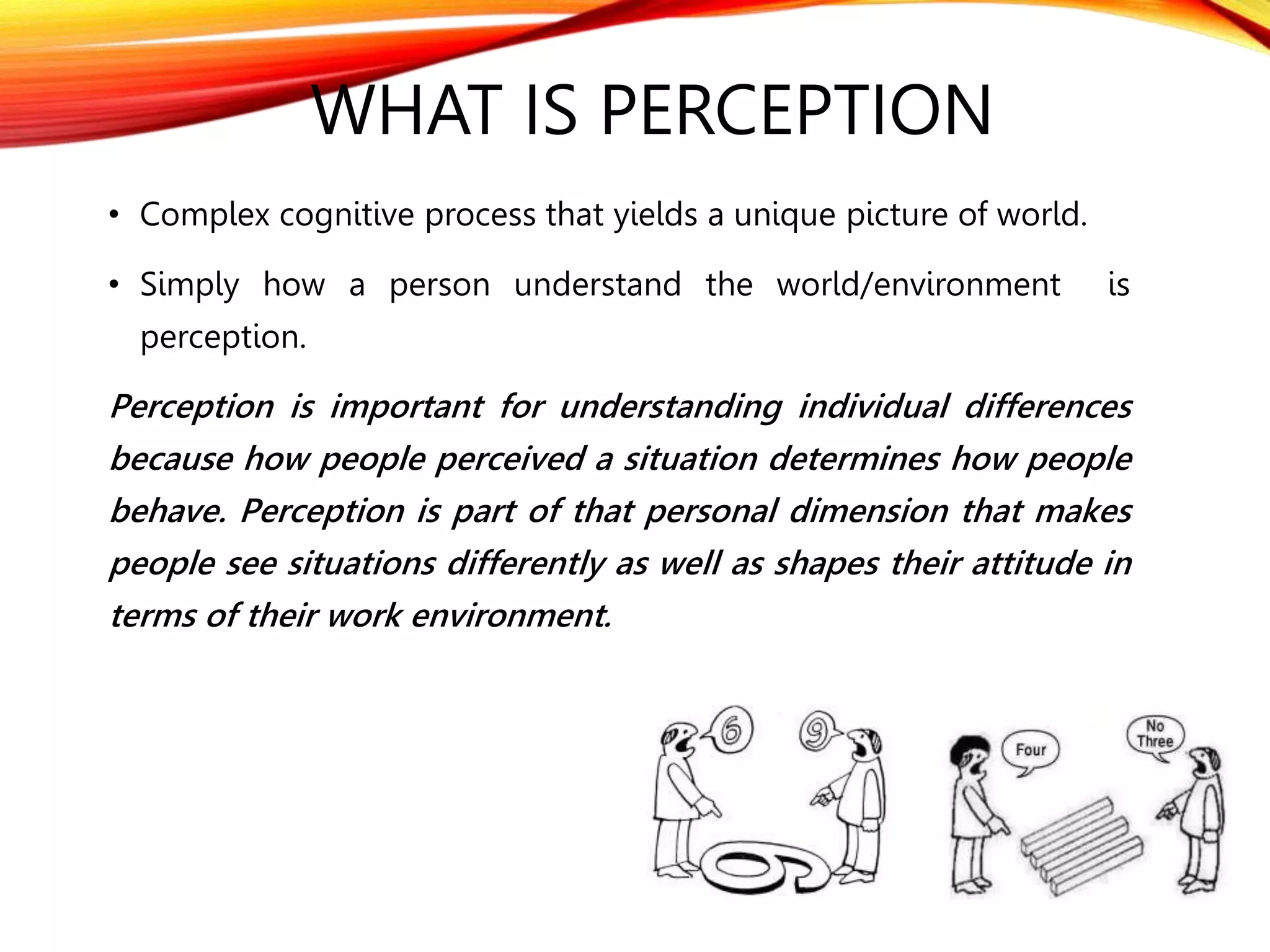



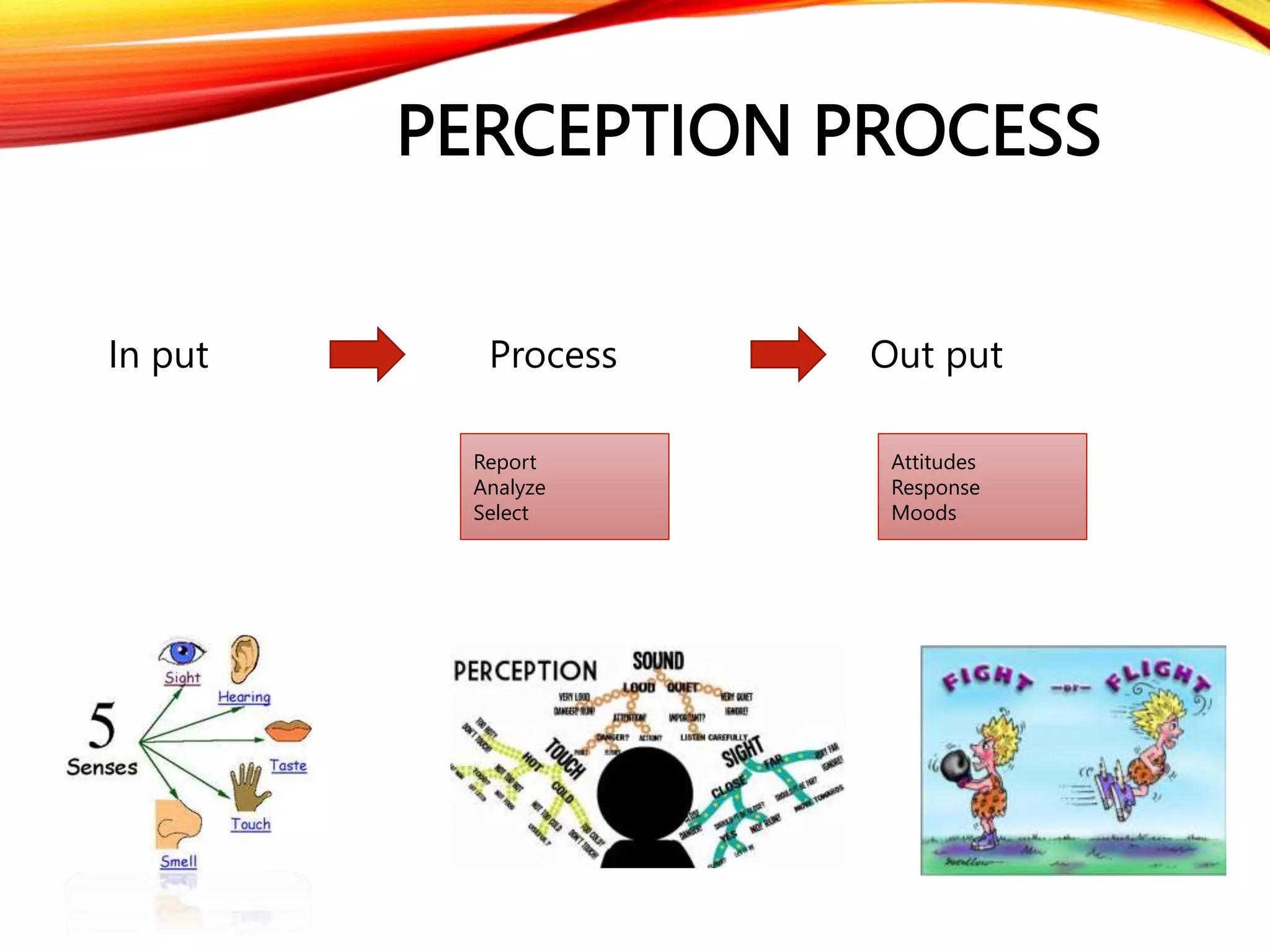
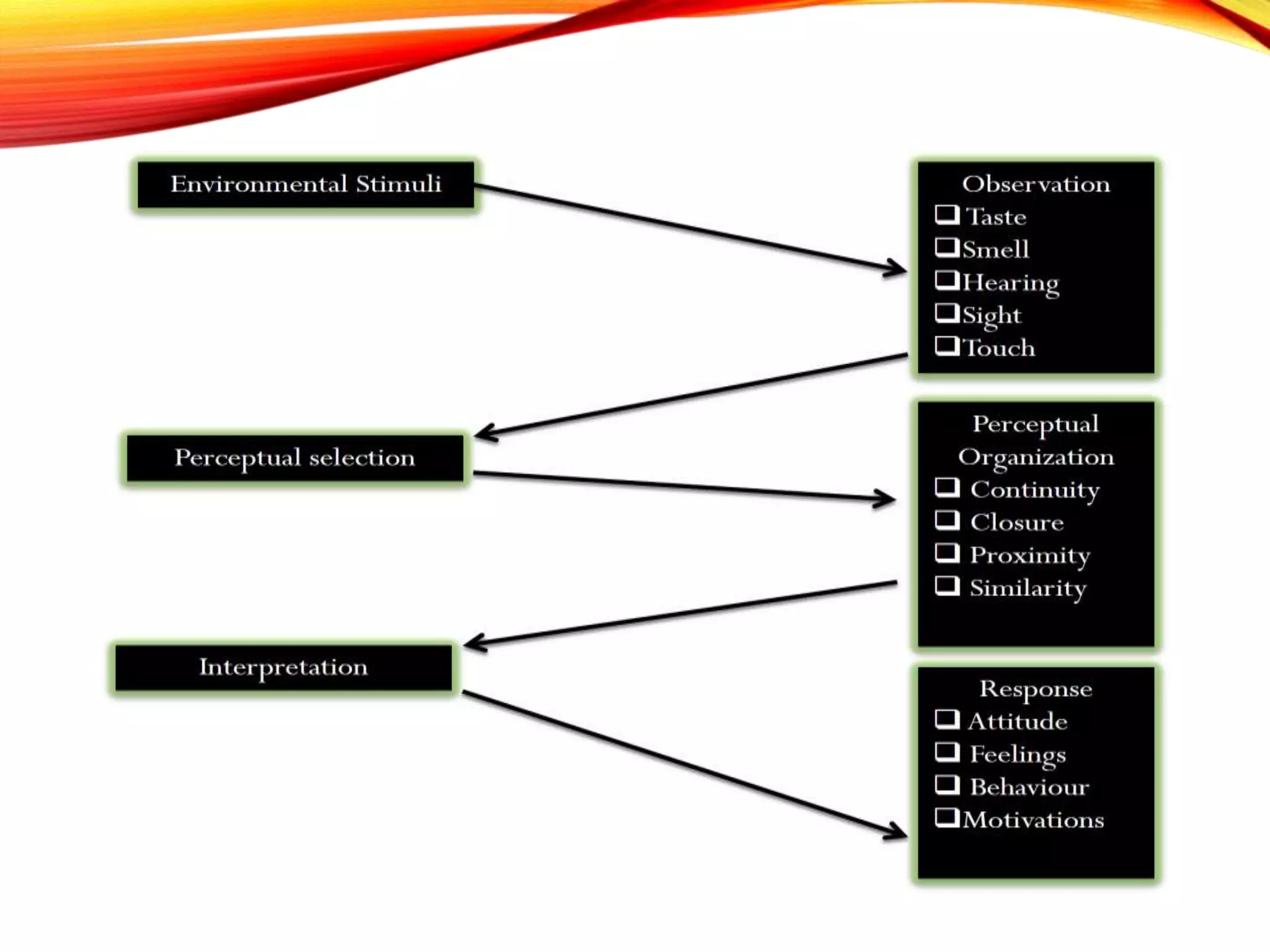
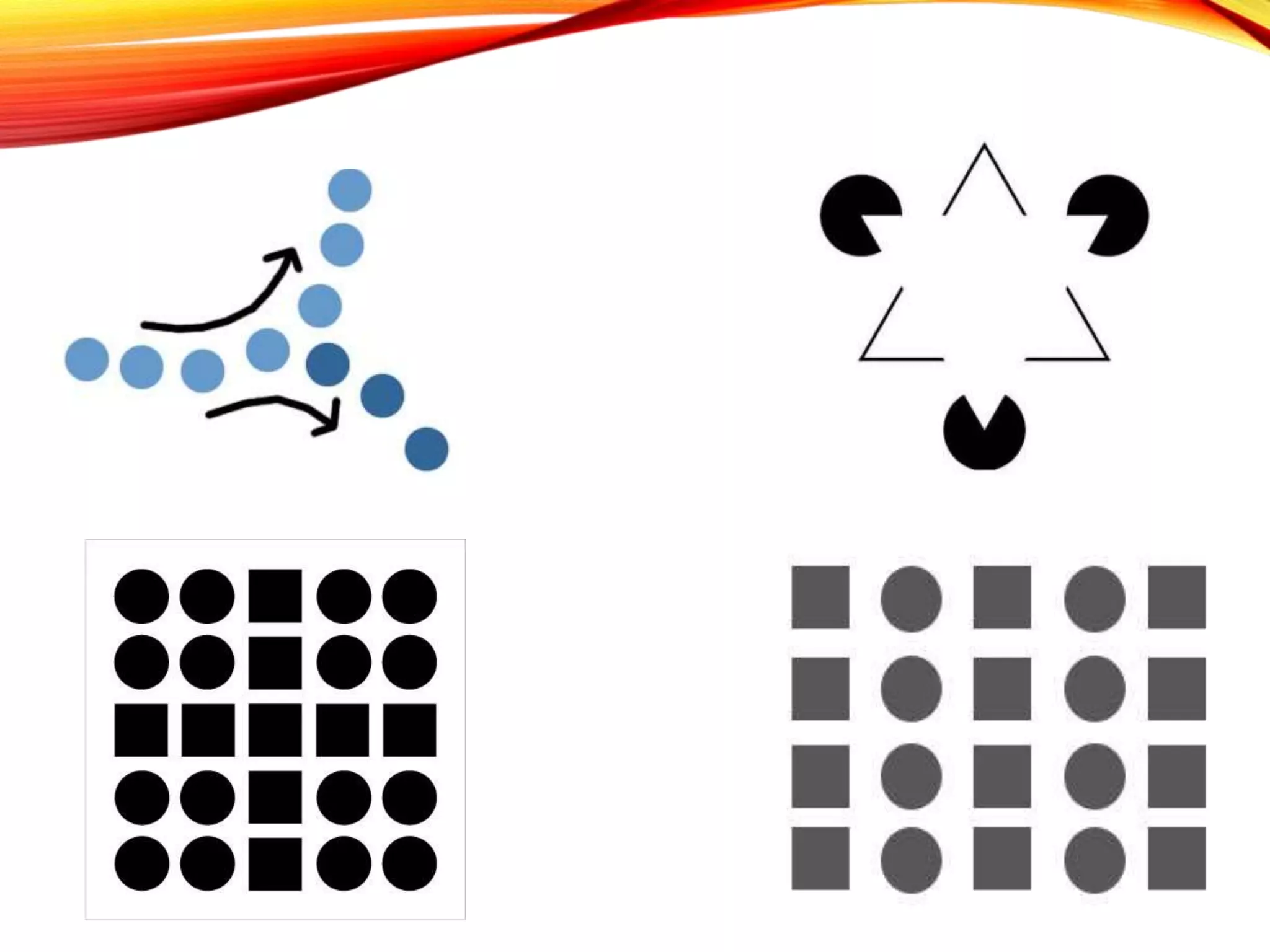
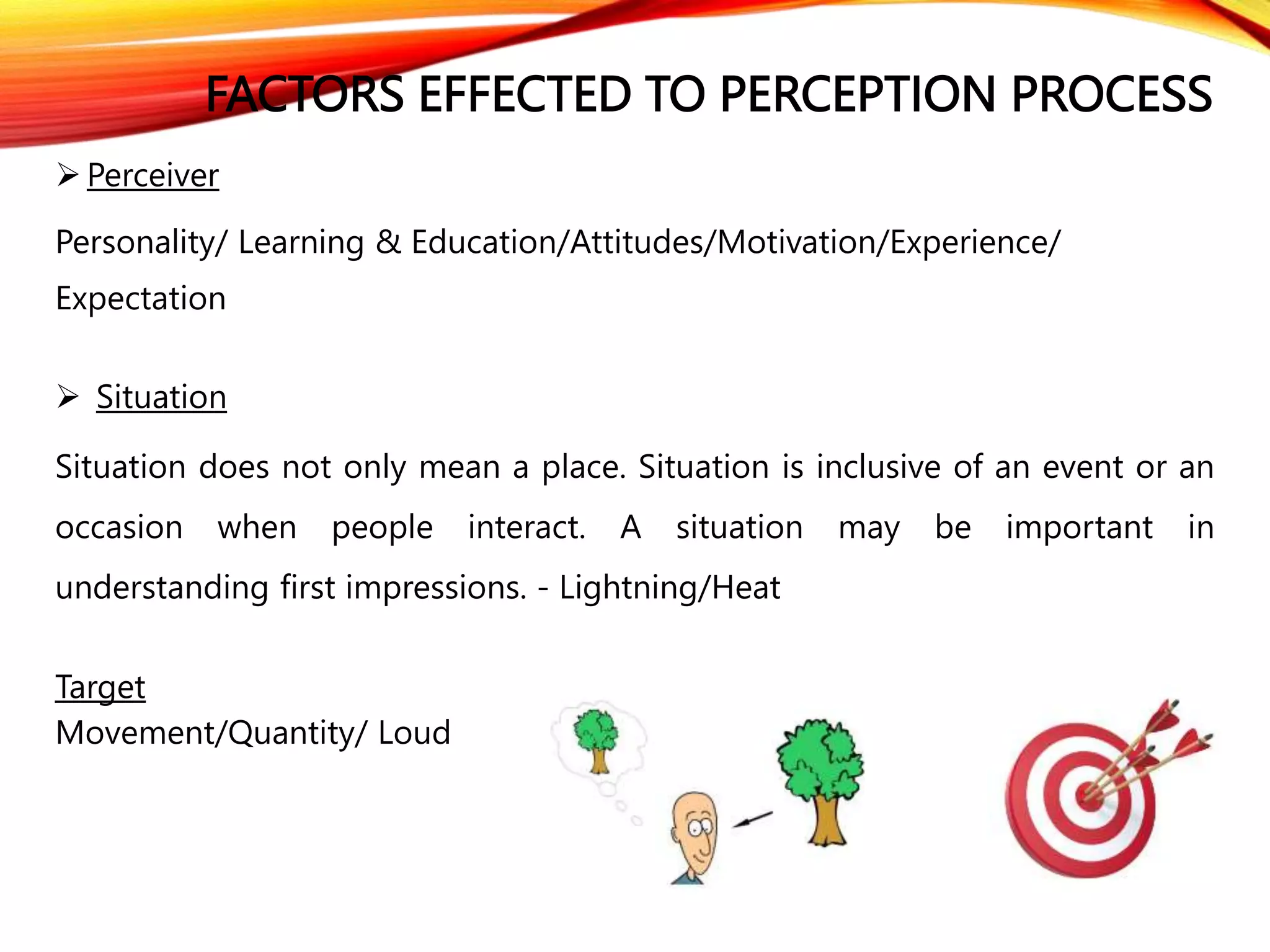
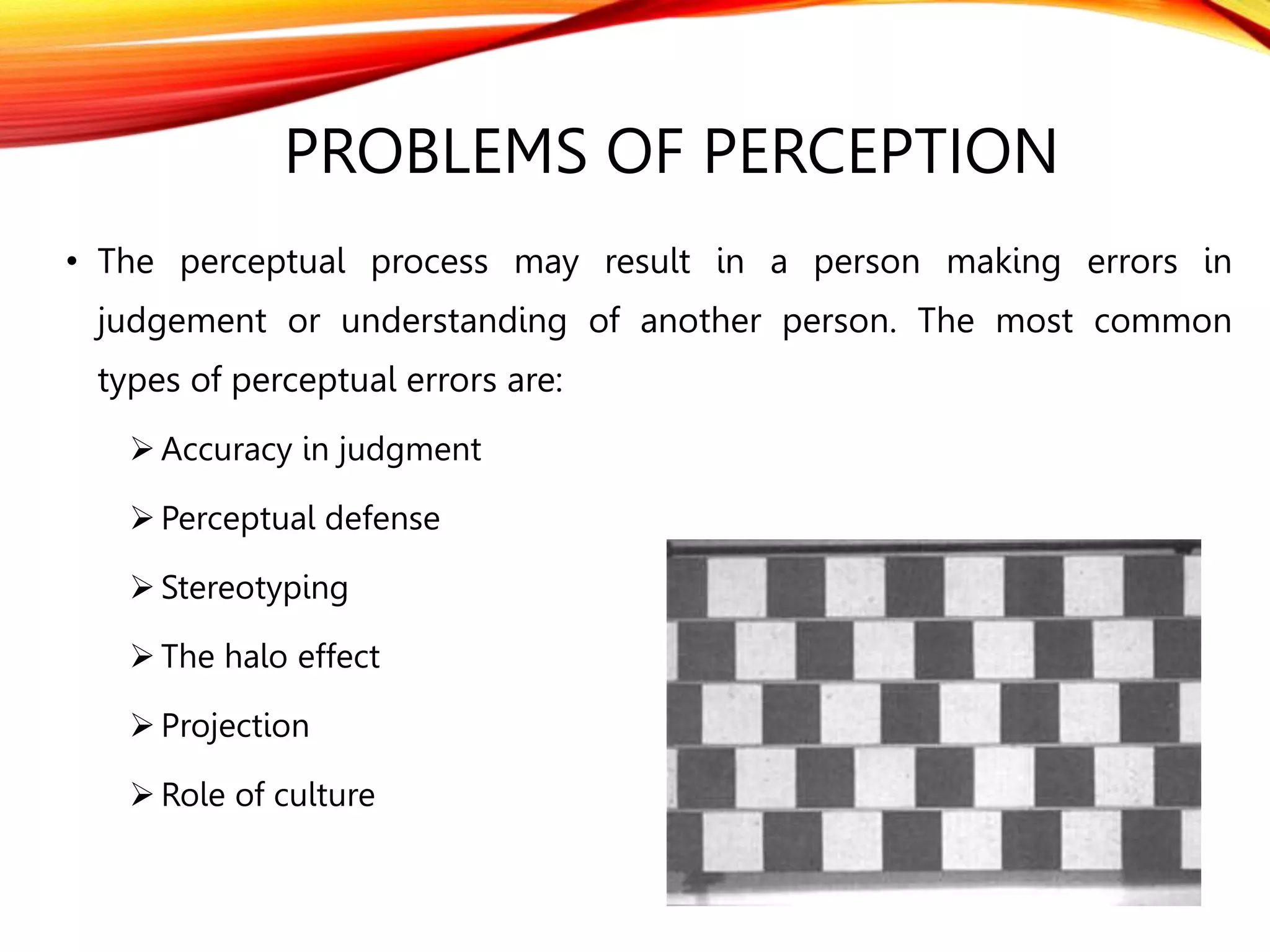



This document discusses perception, the perception process, factors that affect perception, problems with perception, the importance of perception, and methods to overcome perception issues. It defines perception as a complex cognitive process that yields a unique understanding of the world. The perception process involves input, analysis, selection, and output. Factors like personality, attitudes, motivation, experience, and the situation itself can influence perception. Common problems with perception include inaccurate judgments, perceptual defenses, stereotyping, the halo effect, and projection. Perception is important because it determines behavior, impressions, relationships, and evaluations. Methods to address perception issues include avoiding attribution, open communication, self-awareness, empathy, and maintaining a positive attitude.


