


MOTIVATION
PRESENTED BY:
MR.ABHAY RAJPOOT
M.SC.NURSING FINAL YEAR
DEFINITION
Motivation has to do with the forces that maintain and alter the
direction, quality and intensity of behaviour
- Kelly (1974)
OR
Motivation refers to ‘the wilful desire to direct one’s behaviour
toward goal’
- Middlesmist and Hitt (1981)
NATURE OF MOTIVATION
 Based on motives
 Goal directed behaviour
 Related to satisfaction
 Person is motivated in totality
 Complex process
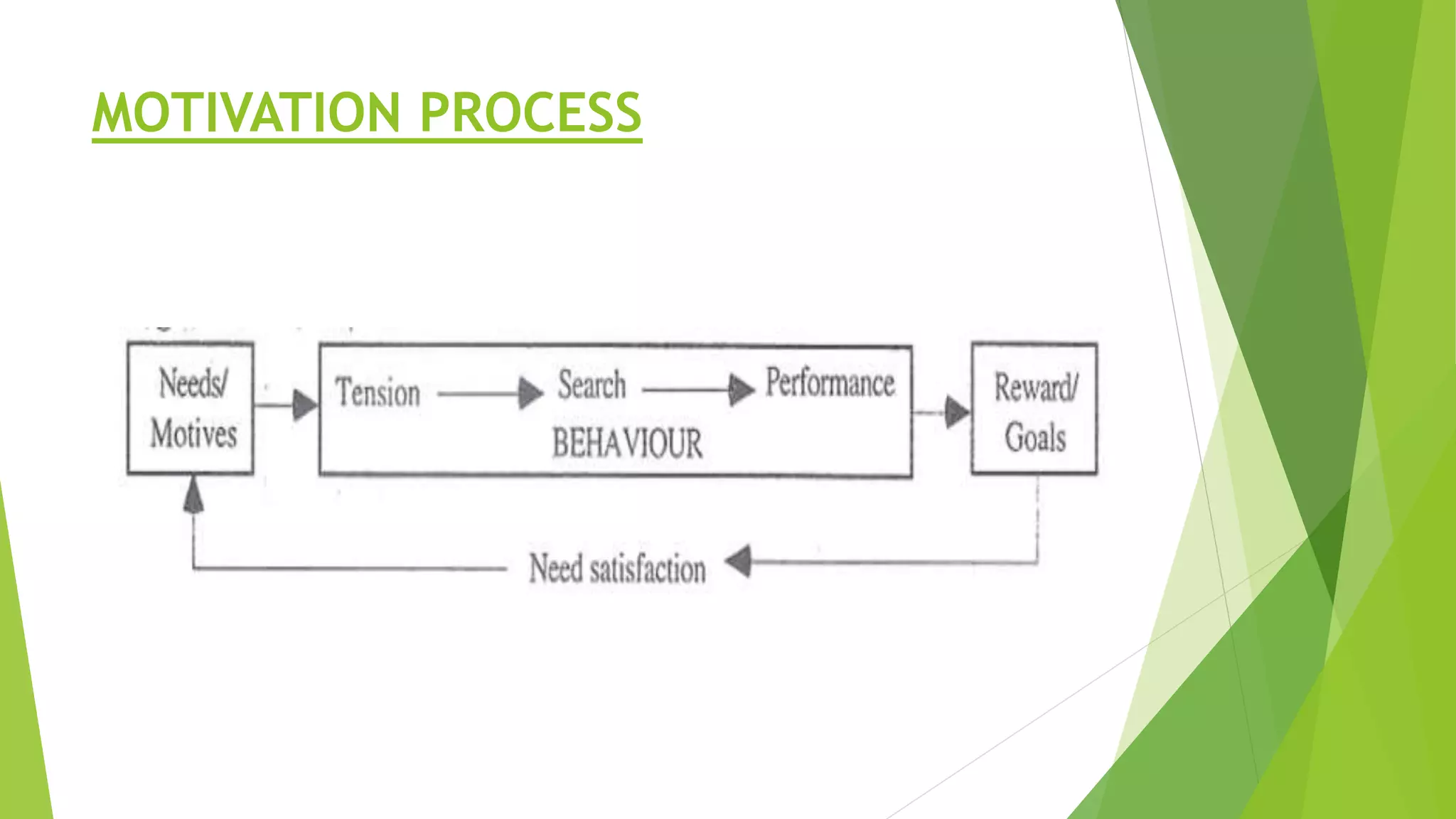
MOTIVATION PROCESS
TYPES OF MOTIVATION
The Two Main Categories of Motivation
Different types of motivation fall into two main categories.
1. Intrinsic Motivation
Intrinsic motivation is a type of motivation in which an
individual is being motivated by internal desires.
2. Extrinsic Motivation
Extrinsic motivation, on the other hand, is a type of
motivation in which an individual is being motivated by
external desires.
Minor Forms of Motivation
3. Reward-Based Motivation
4. Fear-Based Motivation
5. Achievement-Based Motivation
6. Power-Based Motivation
7. Affiliation Motivation
8. Competence Motivation
9. Attitude Motivation
THEORIES OF MOTIVATION
Hertzberg’s Two-Factor Theory
 Motivator factors – Simply put, these are factors that lead to satisfaction
and motivate employees to work harder. Examples might include enjoying
your work, feeling recognised and career progression.
 Hygiene factors – These factors can lead to dissatisfaction and a lack of
motivation if they are absent. Examples include salary, company policies,
benefits, relationships with managers and co-workers.
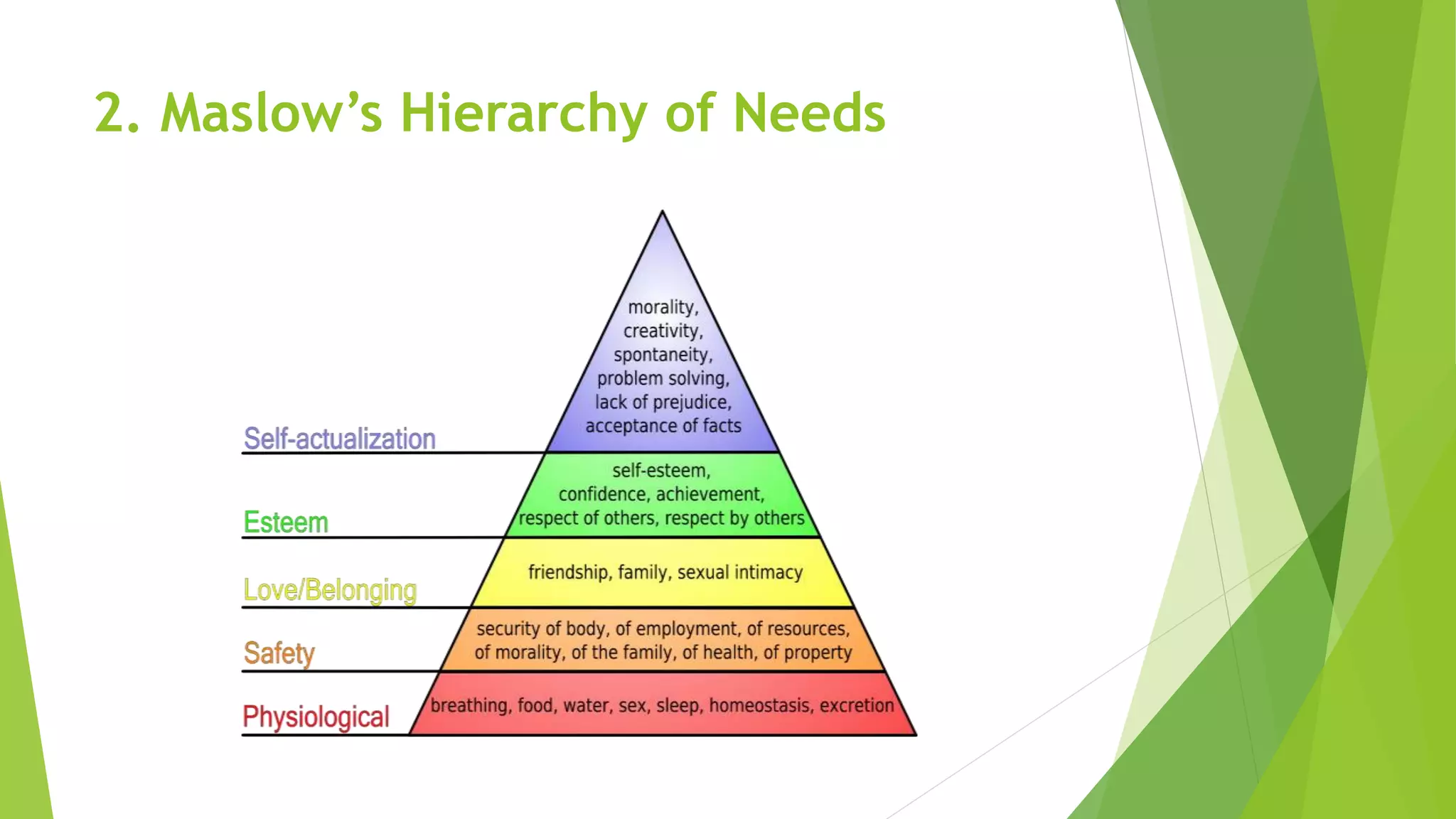
2. Maslow’s Hierarchy of Needs
The hierarchy is made up of 5 levels
1.Physiological – these needs must be met in order for a
person to survive, such as food, water and shelter.
2. Safety – including personal and financial security and
health and wellbeing.
3. Love/belonging – the need for friendships, relationships
and family.
4. Esteem – the need to feel confident and be respected by
others.
5. Self-actualisation – the desire to achieve everything you
possibly can and become the most that you can be
3.Hawthorne Effect
The Hawthorne Effect was first described by Henry A.
Landsberger in 1950 who noticed a tendency for some people
to work harder and perform better when they were being
observed by researchers.
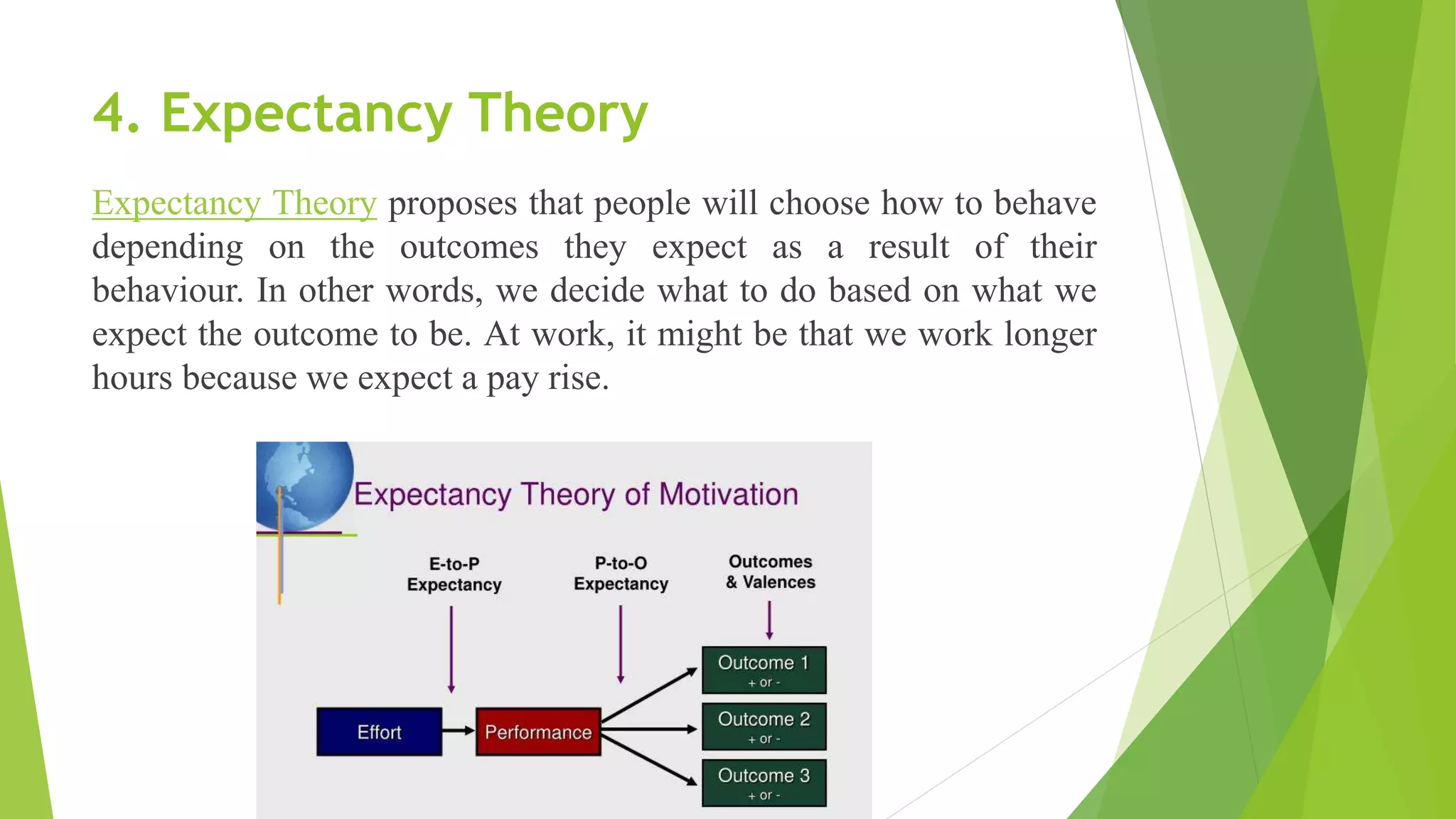
4. Expectancy Theory
Expectancy Theory proposes that people will choose how to behave
depending on the outcomes they expect as a result of their
behaviour. In other words, we decide what to do based on what we
expect the outcome to be. At work, it might be that we work longer
hours because we expect a pay rise.
Expectancy Theory is based on three
elements:
1.Expectancy – the belief that your effort will result in your
desired goal. This is based on your past experience, your self
confidence and how difficult you think the goal is to achieve
.
2. Instrumentality – the belief that you will receive a reward if
you meet performance expectations.
3. Valence – the value you place on the reward.
BENEFITS OF MOTIVATION
 1. Need satisfaction
 2. Job satisfaction
 3. Productivity
 4. Learning
 5. Discipline
CREATING MOTIVATING CLIMATE:
For proper motivation among employees, the manager has to
create:
 Conditions where workers energies are not extended totally in
meeting their basic needs.
 A climate for inter-dependent work rather than dependency.
 A competitive climate through recognition of good work
 A productive climate through personal example
 A climate approach and problem-solving rather than avoidance
 Motivate individually through guidance and counselling
ROLE:
 Recognize each worker as a unique individual who is motivated by
different things.
 Identify the individual and collective value system of the unit; and
implement a reward system that is consistent with those values.
 Identify unmet needs that can cause dissatisfaction
 Encourage workers to stretch themselves in an effort to promote
self-growth and self-actualization.
 Encourage monitoring, sponsorship and coaching with subordinates.
 Devote time and energy to create an environment that is supportive
and encouraging to the discouraged individual.
ASSIGNMENT
IMPORTANCE OF MOTIVATION FOR STAFF NURSES
AND STUDENT NURSE
BIBLIOGRAPHY
 https://www.onlinedailys.com/different-definitions-motivation-
different-authors-motivated/
 http://www.academia.com.ng/what-is-motivation-definitions-of-
motivation-by-different-authors/
 https://iedunote.com/motivation-process
 https://www.lifehack.org/articles/productivity/6-types-of-
motivation-explained.html
 https://contactzilla.com/blog/5-psychological-theories-
motivation-increase-productivity/
 https://www.slideshare.net/Jyothi19587/motivation-ppt-9434441
Motivation

Motivation

  • 1.
  • 2.
    DEFINITION Motivation has todo with the forces that maintain and alter the direction, quality and intensity of behaviour - Kelly (1974) OR Motivation refers to ‘the wilful desire to direct one’s behaviour toward goal’ - Middlesmist and Hitt (1981)
  • 3.
    NATURE OF MOTIVATION Based on motives  Goal directed behaviour  Related to satisfaction  Person is motivated in totality  Complex process
  • 4.
  • 5.
    TYPES OF MOTIVATION TheTwo Main Categories of Motivation Different types of motivation fall into two main categories. 1. Intrinsic Motivation Intrinsic motivation is a type of motivation in which an individual is being motivated by internal desires. 2. Extrinsic Motivation Extrinsic motivation, on the other hand, is a type of motivation in which an individual is being motivated by external desires.
  • 6.
    Minor Forms ofMotivation 3. Reward-Based Motivation 4. Fear-Based Motivation 5. Achievement-Based Motivation 6. Power-Based Motivation 7. Affiliation Motivation 8. Competence Motivation 9. Attitude Motivation
  • 7.
    THEORIES OF MOTIVATION Hertzberg’sTwo-Factor Theory  Motivator factors – Simply put, these are factors that lead to satisfaction and motivate employees to work harder. Examples might include enjoying your work, feeling recognised and career progression.  Hygiene factors – These factors can lead to dissatisfaction and a lack of motivation if they are absent. Examples include salary, company policies, benefits, relationships with managers and co-workers.
  • 8.
  • 9.
    The hierarchy ismade up of 5 levels 1.Physiological – these needs must be met in order for a person to survive, such as food, water and shelter. 2. Safety – including personal and financial security and health and wellbeing. 3. Love/belonging – the need for friendships, relationships and family. 4. Esteem – the need to feel confident and be respected by others. 5. Self-actualisation – the desire to achieve everything you possibly can and become the most that you can be
  • 10.
    3.Hawthorne Effect The HawthorneEffect was first described by Henry A. Landsberger in 1950 who noticed a tendency for some people to work harder and perform better when they were being observed by researchers.
  • 11.
    4. Expectancy Theory ExpectancyTheory proposes that people will choose how to behave depending on the outcomes they expect as a result of their behaviour. In other words, we decide what to do based on what we expect the outcome to be. At work, it might be that we work longer hours because we expect a pay rise.
  • 12.
    Expectancy Theory isbased on three elements: 1.Expectancy – the belief that your effort will result in your desired goal. This is based on your past experience, your self confidence and how difficult you think the goal is to achieve . 2. Instrumentality – the belief that you will receive a reward if you meet performance expectations. 3. Valence – the value you place on the reward.
  • 13.
    BENEFITS OF MOTIVATION 1. Need satisfaction  2. Job satisfaction  3. Productivity  4. Learning  5. Discipline
  • 14.
    CREATING MOTIVATING CLIMATE: Forproper motivation among employees, the manager has to create:  Conditions where workers energies are not extended totally in meeting their basic needs.  A climate for inter-dependent work rather than dependency.  A competitive climate through recognition of good work  A productive climate through personal example  A climate approach and problem-solving rather than avoidance  Motivate individually through guidance and counselling
  • 15.
    ROLE:  Recognize eachworker as a unique individual who is motivated by different things.  Identify the individual and collective value system of the unit; and implement a reward system that is consistent with those values.  Identify unmet needs that can cause dissatisfaction  Encourage workers to stretch themselves in an effort to promote self-growth and self-actualization.  Encourage monitoring, sponsorship and coaching with subordinates.  Devote time and energy to create an environment that is supportive and encouraging to the discouraged individual.
  • 16.
    ASSIGNMENT IMPORTANCE OF MOTIVATIONFOR STAFF NURSES AND STUDENT NURSE
  • 17.
    BIBLIOGRAPHY  https://www.onlinedailys.com/different-definitions-motivation- different-authors-motivated/  http://www.academia.com.ng/what-is-motivation-definitions-of- motivation-by-different-authors/ https://iedunote.com/motivation-process  https://www.lifehack.org/articles/productivity/6-types-of- motivation-explained.html  https://contactzilla.com/blog/5-psychological-theories- motivation-increase-productivity/  https://www.slideshare.net/Jyothi19587/motivation-ppt-9434441