23/10/2024 DR. PRACHI AJIT 1
DR. PRACHI AJIT
PHD, MMS, PGDBM,
B.COM
Subject Code: 102
Subject Name: OB
Semester: I
Chapter No: II
Title : Perception
Specialization: HR
Course : MBA
As per Savitribai Phule Pune University Revised Syllabus (2019)
23/10/2024 DR. PRACHI AJIT 2
Perception
• Perception: Meaning and concept of perception,
• Factors influencing perception, Selective perception, Attribution
theory, Perceptual process, social perception (stereotyping and halo
effect).
23/10/2024 DR. PRACHI AJIT 3
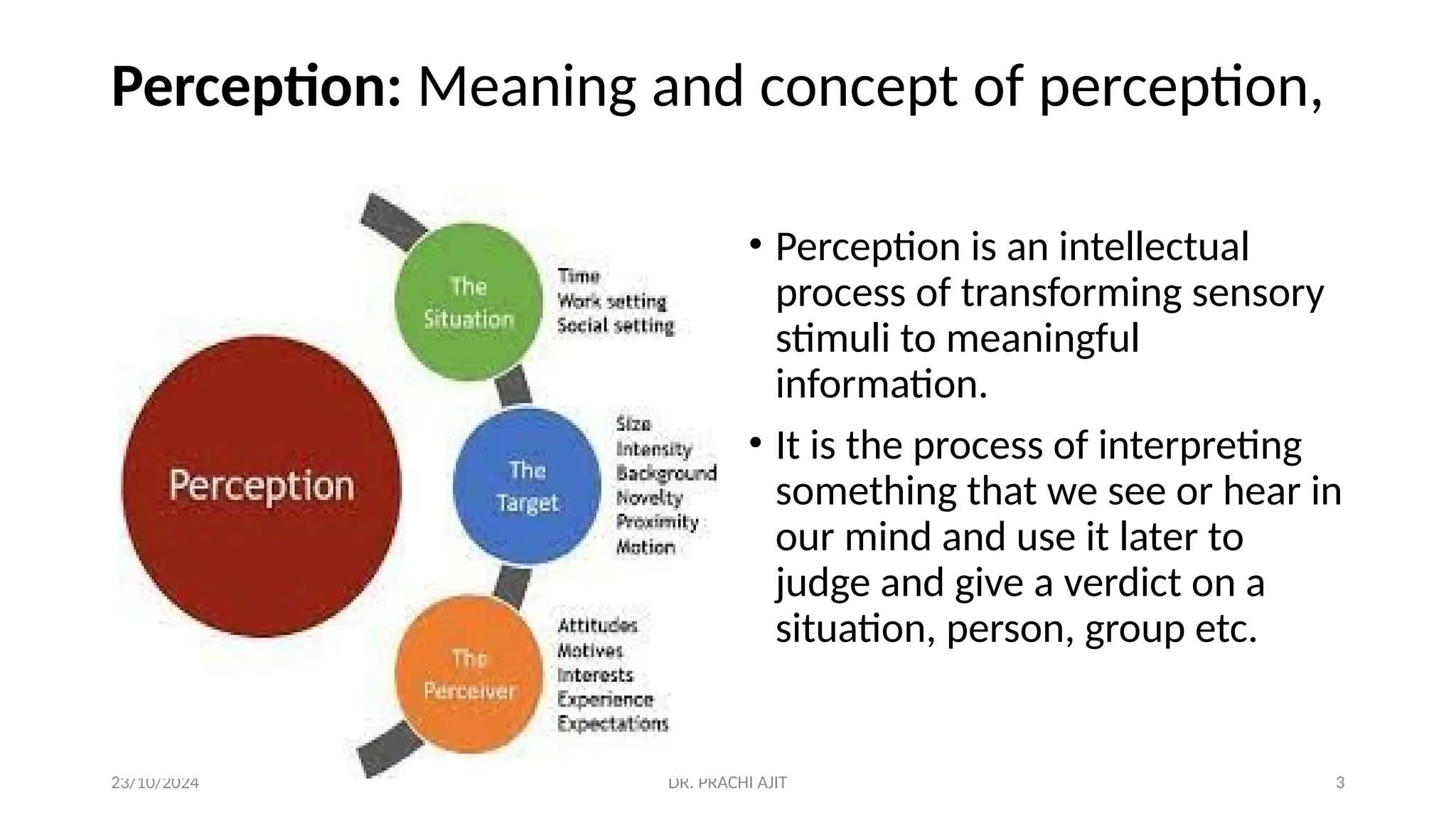
Perception: Meaning and concept of perception,
• Perception is an intellectual
process of transforming sensory
stimuli to meaningful
information.
• It is the process of interpreting
something that we see or hear in
our mind and use it later to
judge and give a verdict on a
situation, person, group etc.
23/10/2024 DR. PRACHI AJIT 4
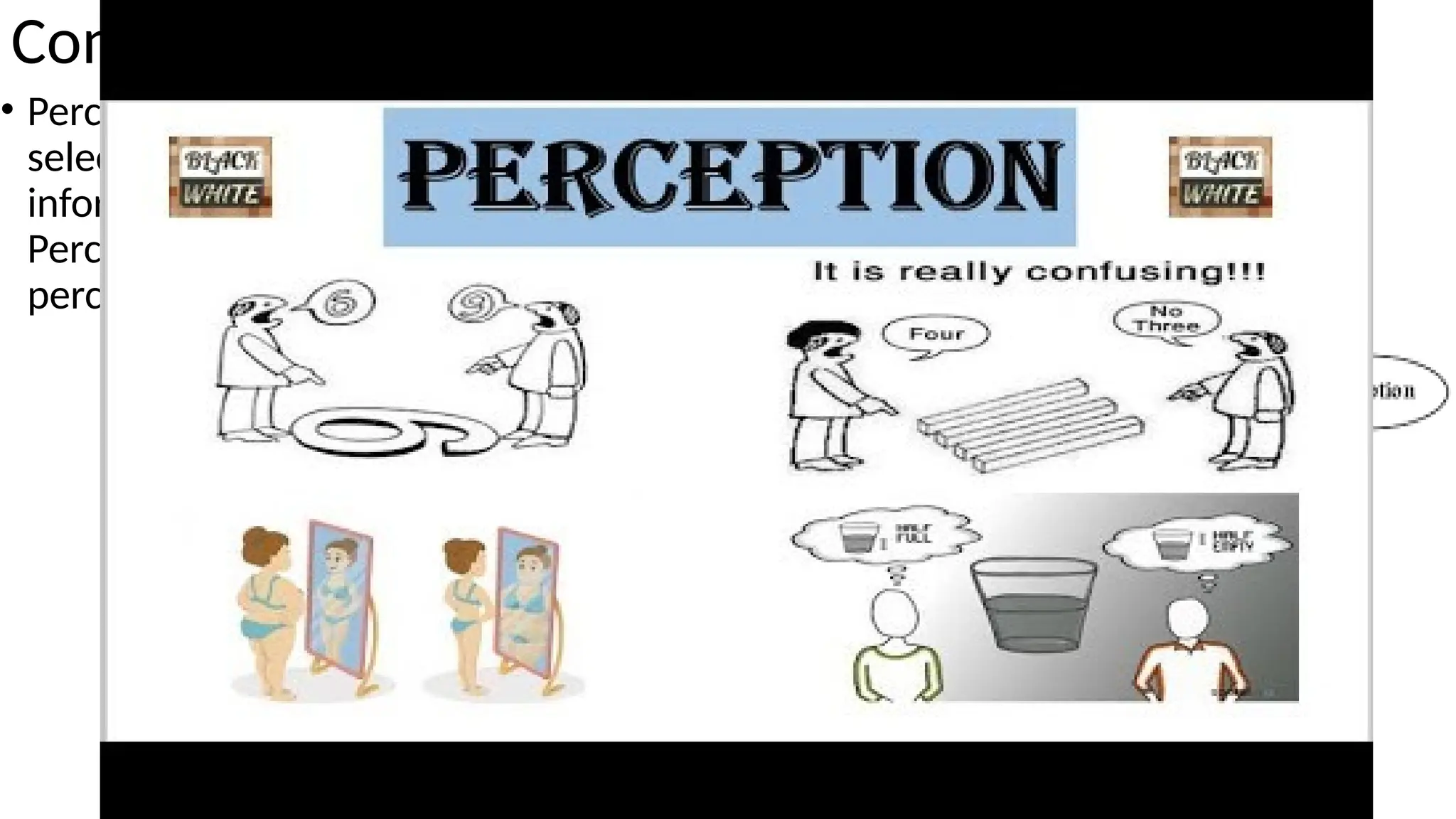
Concept of perception
• Perception is the conscious reception,
selection, processing and interpretation of
information by our brain via all senses.
Perception is also used to describe what is
perceived.
23/10/2024 DR. PRACHI AJIT 5
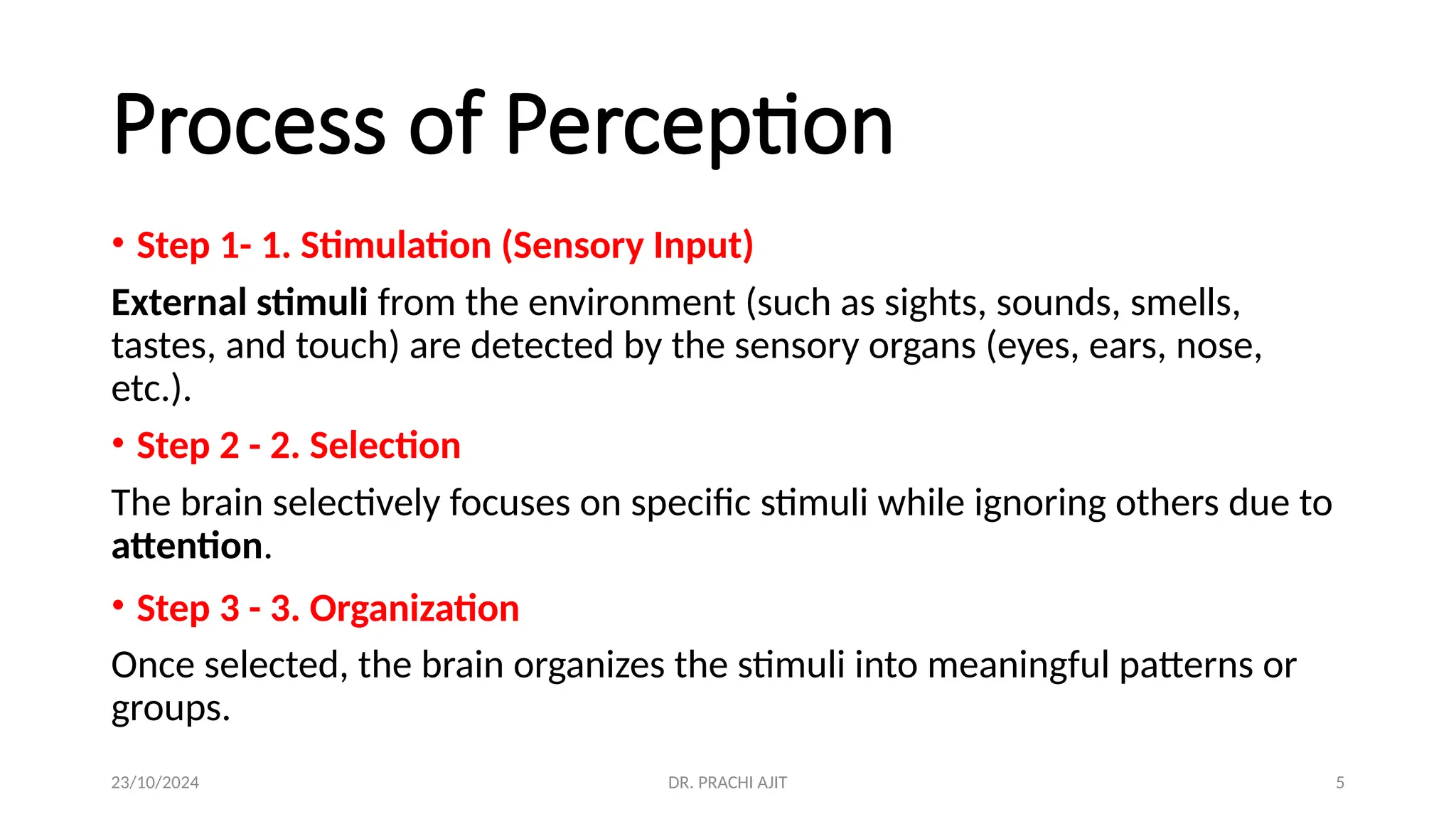
Process of Perception
• Step 1- 1. Stimulation (Sensory Input)
External stimuli from the environment (such as sights, sounds, smells,
tastes, and touch) are detected by the sensory organs (eyes, ears, nose,
etc.).
• Step 2 - 2. Selection
The brain selectively focuses on specific stimuli while ignoring others due to
attention.
• Step 3 - 3. Organization
Once selected, the brain organizes the stimuli into meaningful patterns or
groups.
23/10/2024 DR. PRACHI AJIT 6
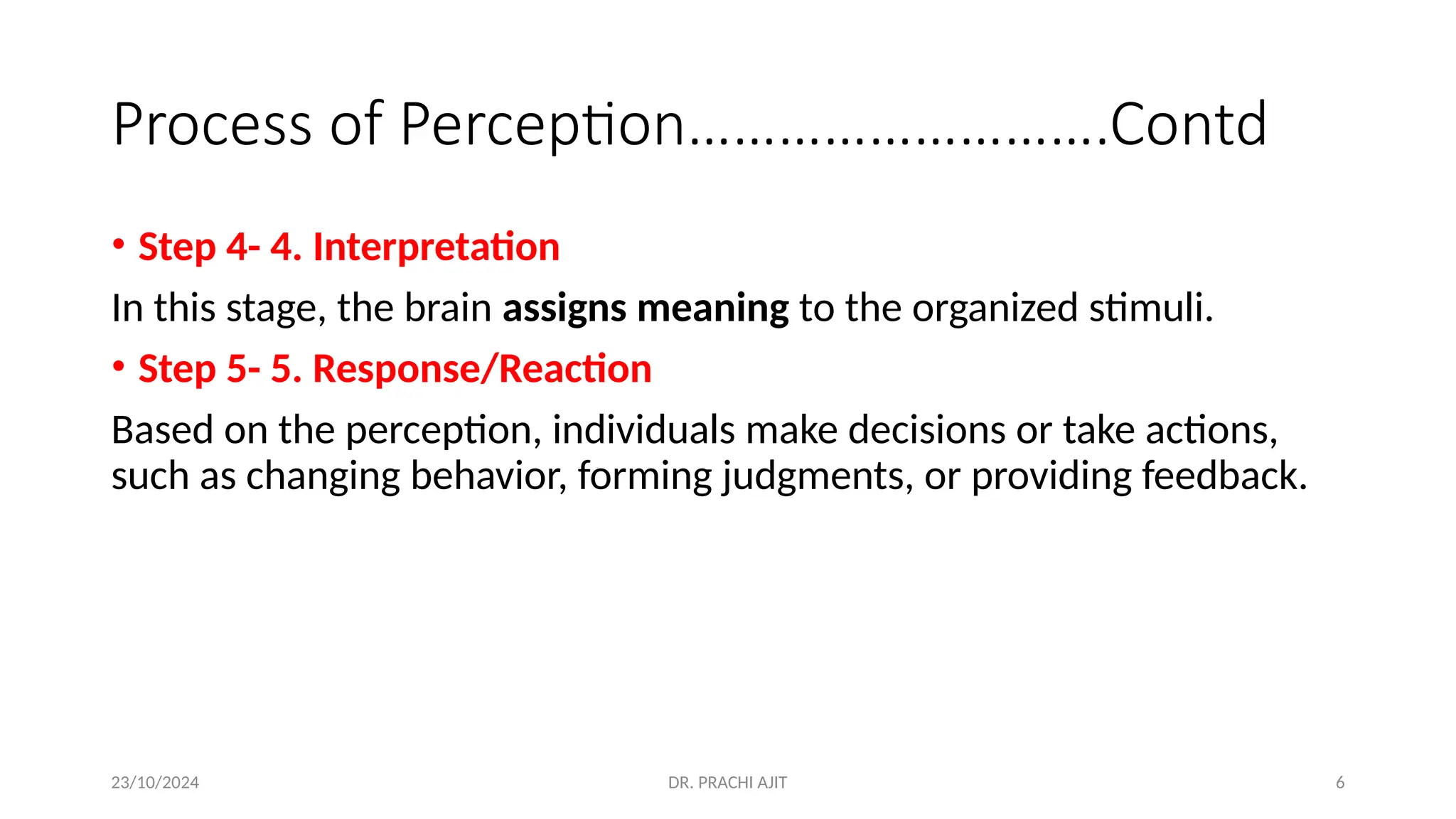
Process of Perception……………………….Contd
• Step 4- 4. Interpretation
In this stage, the brain assigns meaning to the organized stimuli.
• Step 5- 5. Response/Reaction
Based on the perception, individuals make decisions or take actions,
such as changing behavior, forming judgments, or providing feedback.
23/10/2024 DR. PRACHI AJIT 7
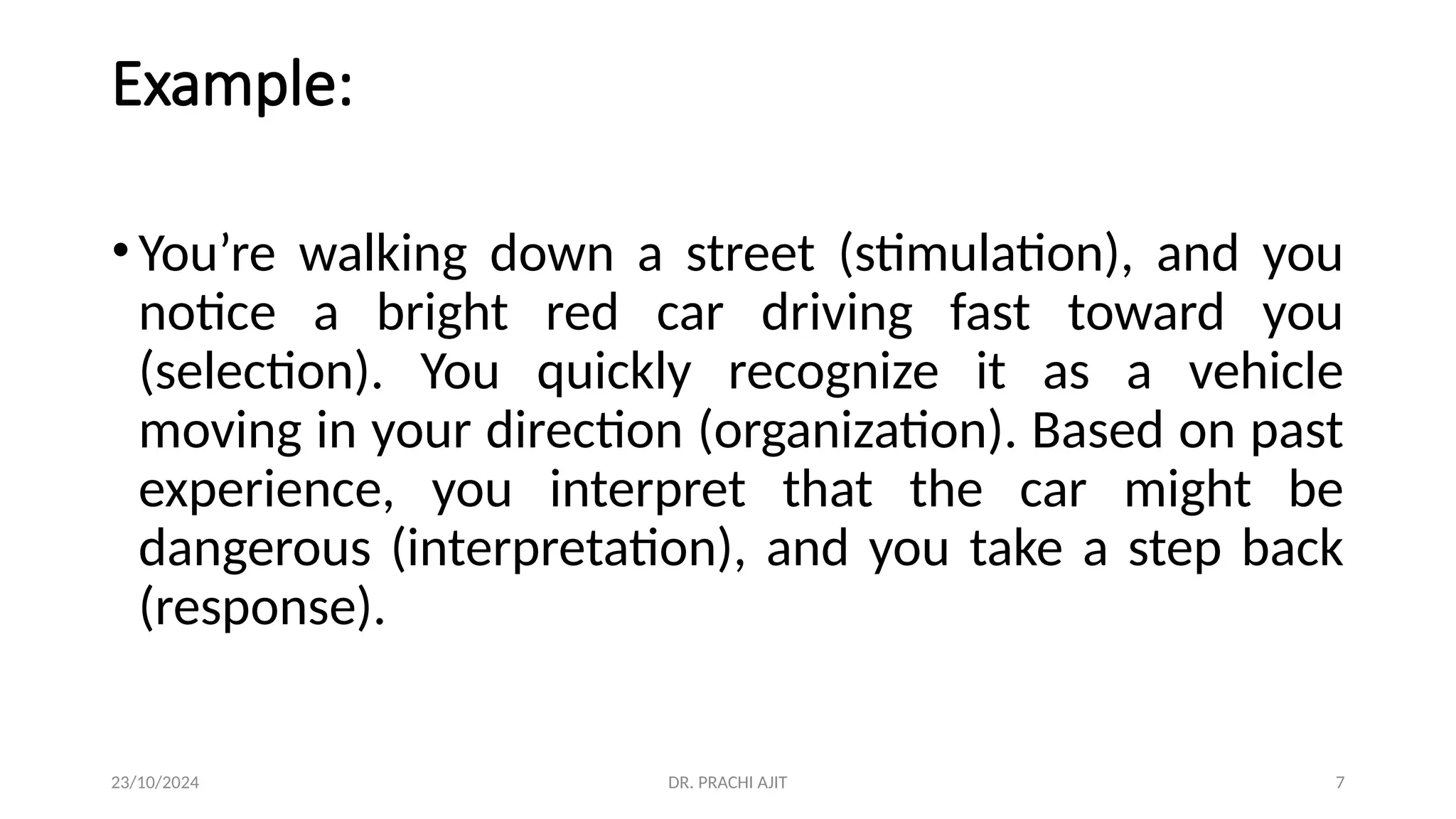
Example:
•You’re walking down a street (stimulation), and you
notice a bright red car driving fast toward you
(selection). You quickly recognize it as a vehicle
moving in your direction (organization). Based on past
experience, you interpret that the car might be
dangerous (interpretation), and you take a step back
(response).
23/10/2024 DR. PRACHI AJIT 8
Factors influencing perception, Selective perception, Attribution theory,
Perceptual process, social perception (stereotyping and halo effect).
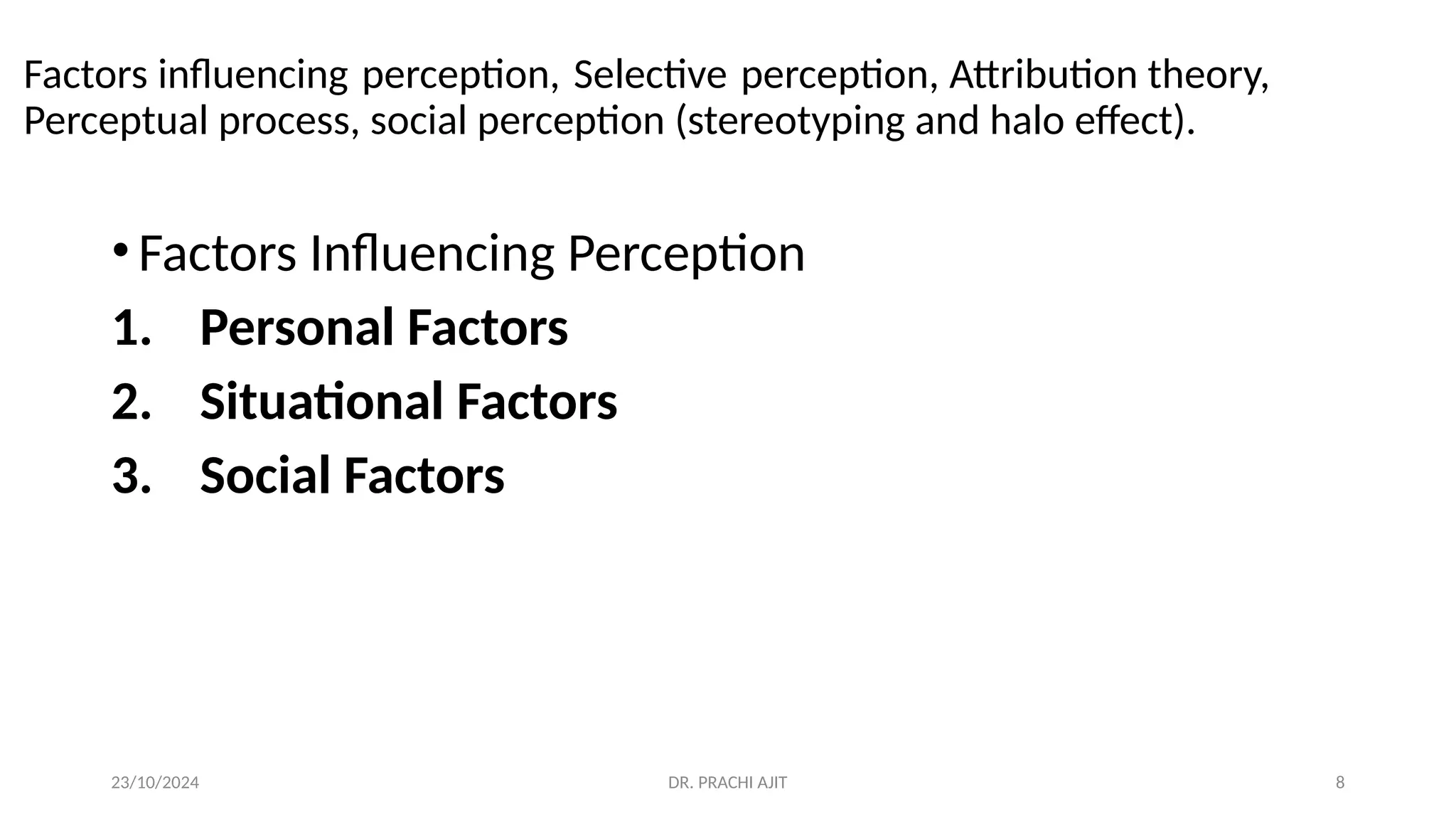
•Factors Influencing Perception
1. Personal Factors
2. Situational Factors
3. Social Factors
23/10/2024 DR. PRACHI AJIT 9
Selective perception
•Selective perception is the process by which
individuals perceive what they want to in media
messages while ignoring opposing viewpoints. It is a
broad term to identify the behavior all people exhibit
to tend to "see things" based on their particular frame
of reference.
23/10/2024 DR. PRACHI AJIT 10
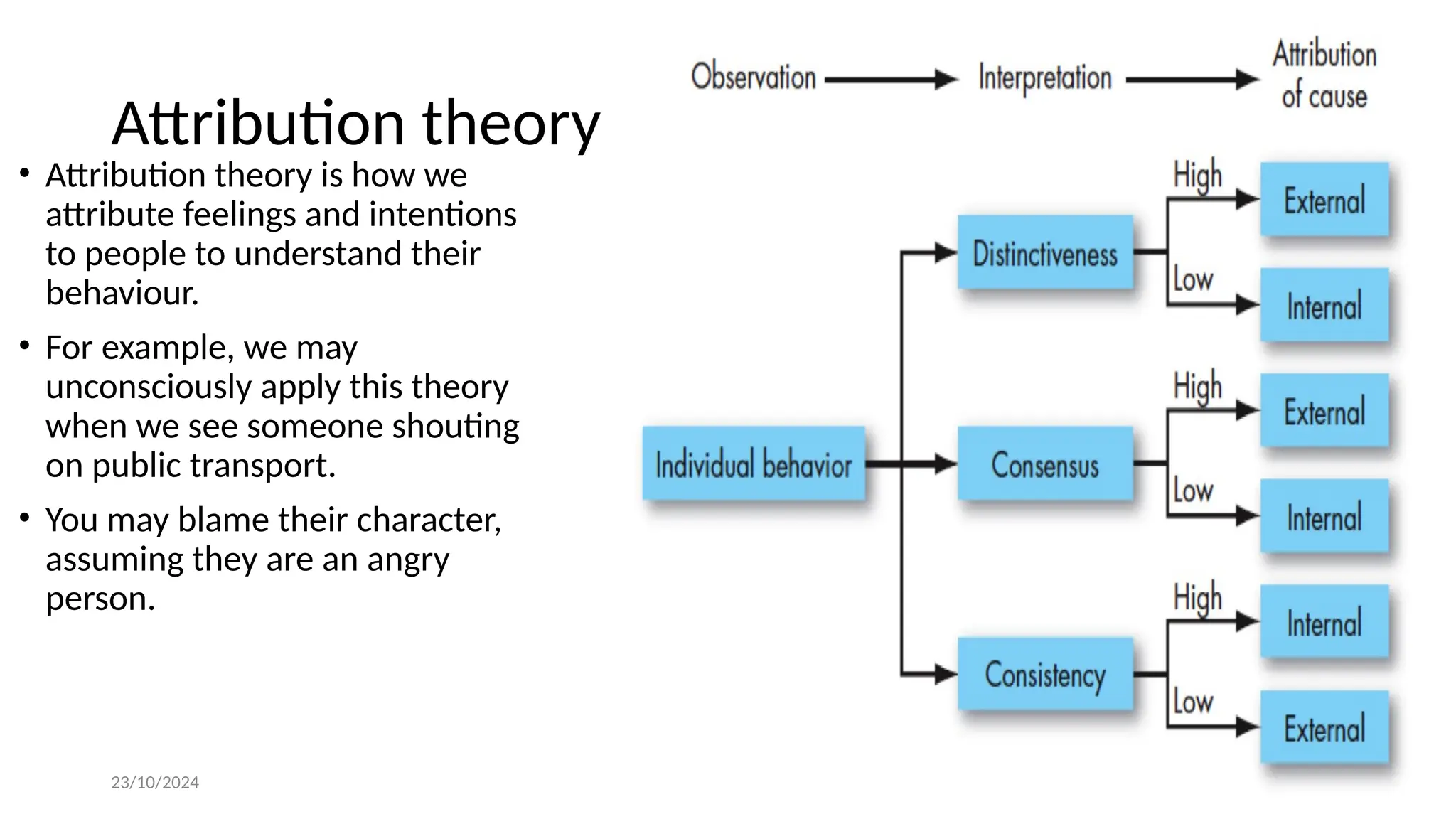
Attribution theory
• Attribution theory is how we
attribute feelings and intentions
to people to understand their
behaviour.
• For example, we may
unconsciously apply this theory
when we see someone shouting
on public transport.
• You may blame their character,
assuming they are an angry
person.
23/10/2024 DR. PRACHI AJIT 11
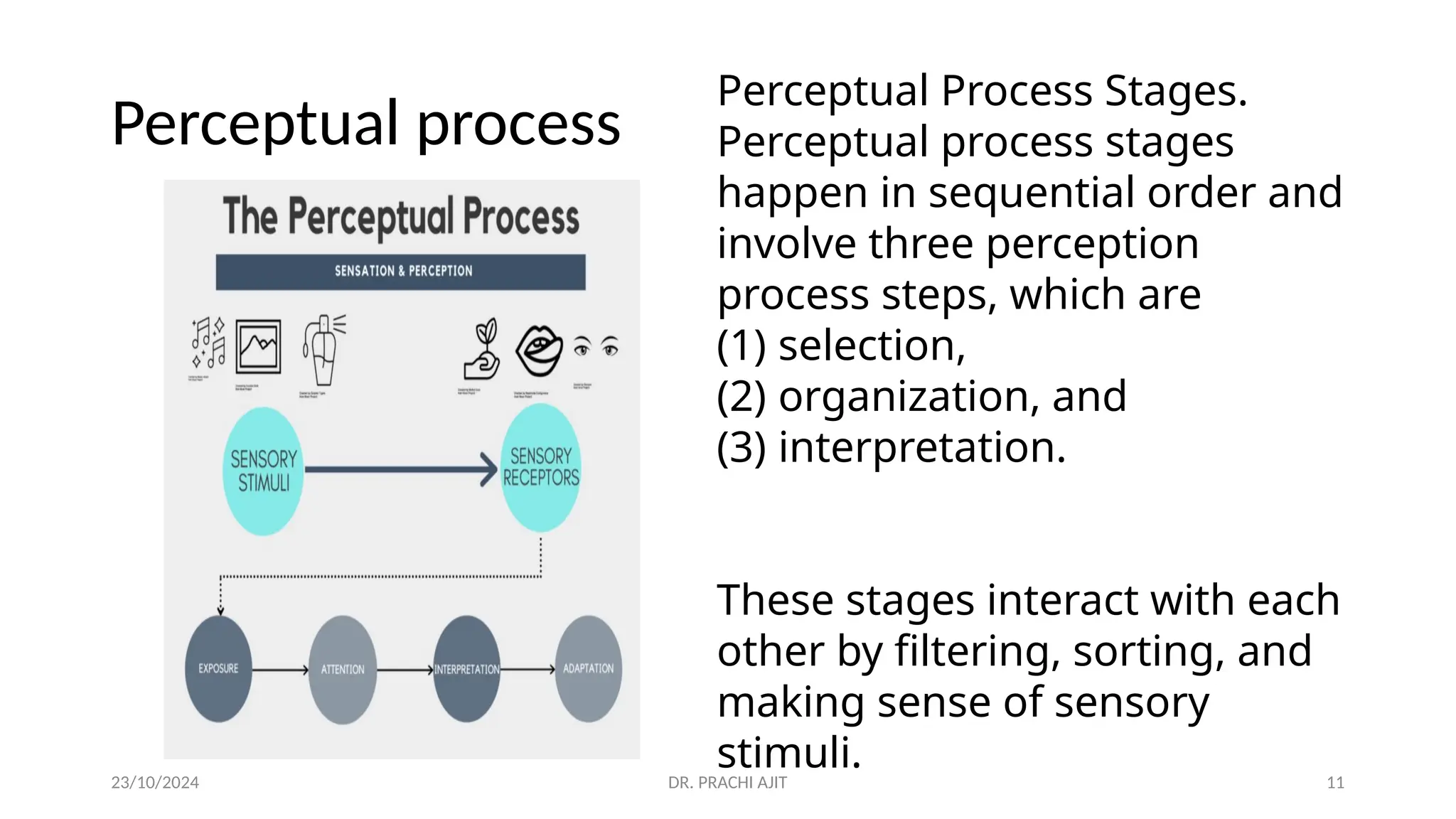
Perceptual process
Perceptual Process Stages.
Perceptual process stages
happen in sequential order and
involve three perception
process steps, which are
(1) selection,
(2) organization, and
(3) interpretation.
These stages interact with each
other by filtering, sorting, and
making sense of sensory
stimuli.
23/10/2024 DR. PRACHI AJIT 12
Social perception (stereotyping and halo
effect)
• a widely held but fixed
and oversimplified image or idea
of a particular type of person or
thing.
The halo effect is a form of
stereotyping. You assume
everyone who exhibits a
particular trait is the same
and make assumptions
about them that might be
untrue. As part of the halo
effect, you notice a single
trait about someone and
then attach other qualities to
them and form an overall
impression.
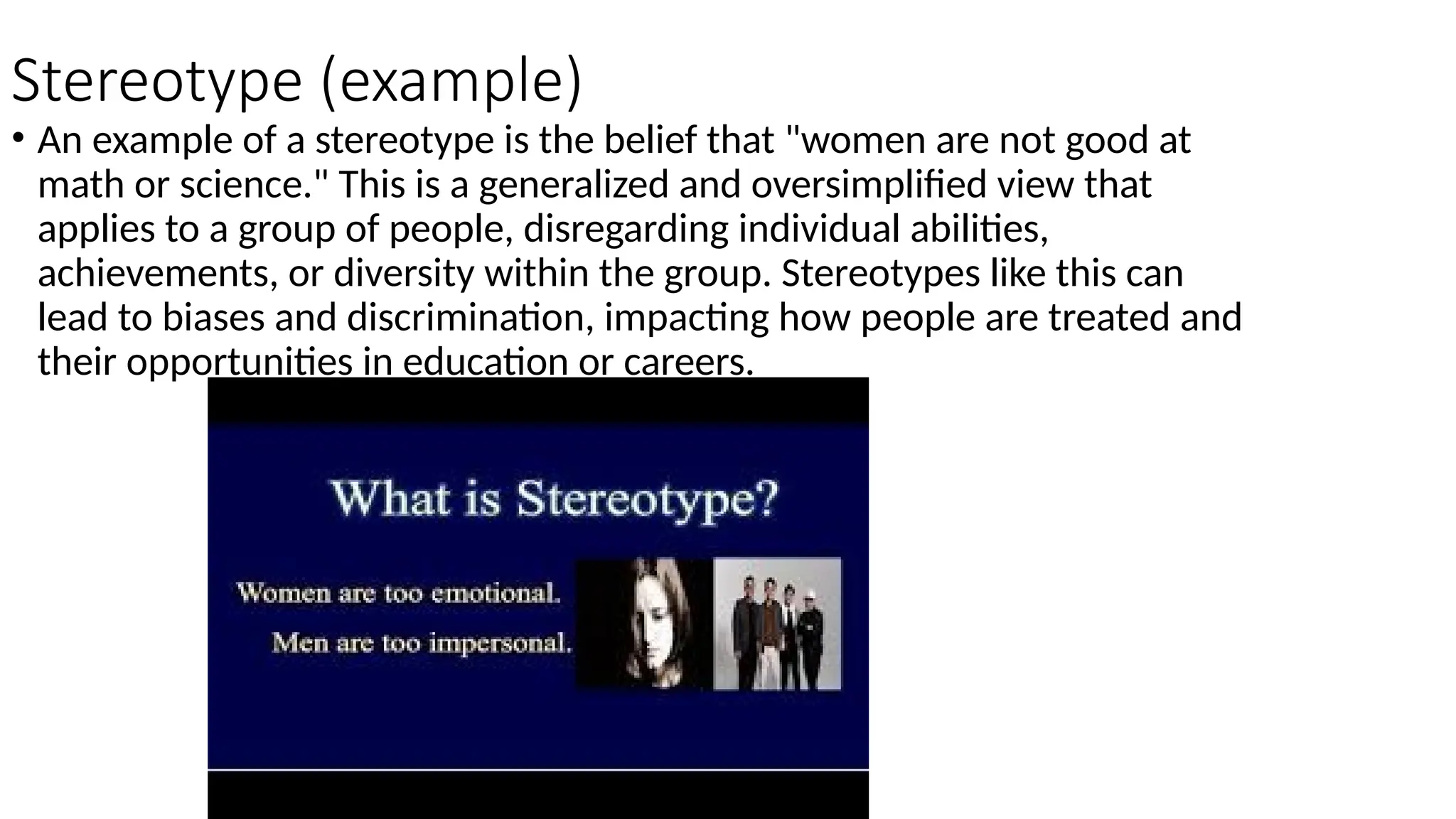
Stereotype (example)
• An example of a stereotype is the belief that "women are not good at
math or science." This is a generalized and oversimplified view that
applies to a group of people, disregarding individual abilities,
achievements, or diversity within the group. Stereotypes like this can
lead to biases and discrimination, impacting how people are treated and
their opportunities in education or careers.
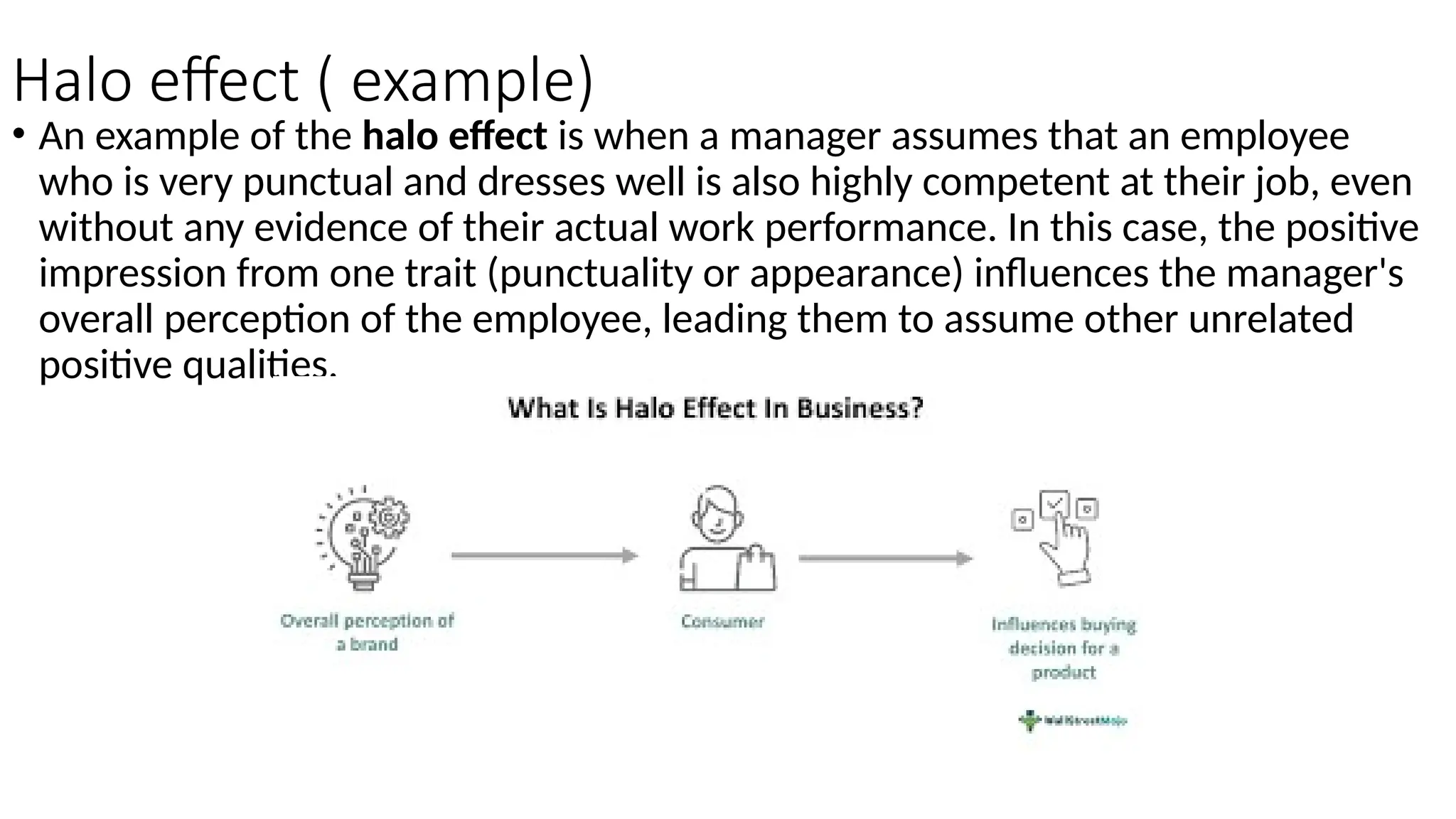
Halo effect ( example)
• An example of the halo effect is when a manager assumes that an employee
who is very punctual and dresses well is also highly competent at their job, even
without any evidence of their actual work performance. In this case, the positive
impression from one trait (punctuality or appearance) influences the manager's
overall perception of the employee, leading them to assume other unrelated
positive qualities.

Unit II - Perception- Dr. Prachi Ajeet.pptx

  • 1.
    23/10/2024 DR. PRACHIAJIT 1 DR. PRACHI AJIT PHD, MMS, PGDBM, B.COM Subject Code: 102 Subject Name: OB Semester: I Chapter No: II Title : Perception Specialization: HR Course : MBA As per Savitribai Phule Pune University Revised Syllabus (2019)
  • 2.
    23/10/2024 DR. PRACHIAJIT 2 Perception • Perception: Meaning and concept of perception, • Factors influencing perception, Selective perception, Attribution theory, Perceptual process, social perception (stereotyping and halo effect).
  • 3.
    23/10/2024 DR. PRACHIAJIT 3 Perception: Meaning and concept of perception, • Perception is an intellectual process of transforming sensory stimuli to meaningful information. • It is the process of interpreting something that we see or hear in our mind and use it later to judge and give a verdict on a situation, person, group etc.
  • 4.
    23/10/2024 DR. PRACHIAJIT 4 Concept of perception • Perception is the conscious reception, selection, processing and interpretation of information by our brain via all senses. Perception is also used to describe what is perceived.
  • 5.
    23/10/2024 DR. PRACHIAJIT 5 Process of Perception • Step 1- 1. Stimulation (Sensory Input) External stimuli from the environment (such as sights, sounds, smells, tastes, and touch) are detected by the sensory organs (eyes, ears, nose, etc.). • Step 2 - 2. Selection The brain selectively focuses on specific stimuli while ignoring others due to attention. • Step 3 - 3. Organization Once selected, the brain organizes the stimuli into meaningful patterns or groups.
  • 6.
    23/10/2024 DR. PRACHIAJIT 6 Process of Perception……………………….Contd • Step 4- 4. Interpretation In this stage, the brain assigns meaning to the organized stimuli. • Step 5- 5. Response/Reaction Based on the perception, individuals make decisions or take actions, such as changing behavior, forming judgments, or providing feedback.
  • 7.
    23/10/2024 DR. PRACHIAJIT 7 Example: •You’re walking down a street (stimulation), and you notice a bright red car driving fast toward you (selection). You quickly recognize it as a vehicle moving in your direction (organization). Based on past experience, you interpret that the car might be dangerous (interpretation), and you take a step back (response).
  • 8.
    23/10/2024 DR. PRACHIAJIT 8 Factors influencing perception, Selective perception, Attribution theory, Perceptual process, social perception (stereotyping and halo effect). •Factors Influencing Perception 1. Personal Factors 2. Situational Factors 3. Social Factors
  • 9.
    23/10/2024 DR. PRACHIAJIT 9 Selective perception •Selective perception is the process by which individuals perceive what they want to in media messages while ignoring opposing viewpoints. It is a broad term to identify the behavior all people exhibit to tend to "see things" based on their particular frame of reference.
  • 10.
    23/10/2024 DR. PRACHIAJIT 10 Attribution theory • Attribution theory is how we attribute feelings and intentions to people to understand their behaviour. • For example, we may unconsciously apply this theory when we see someone shouting on public transport. • You may blame their character, assuming they are an angry person.
  • 11.
    23/10/2024 DR. PRACHIAJIT 11 Perceptual process Perceptual Process Stages. Perceptual process stages happen in sequential order and involve three perception process steps, which are (1) selection, (2) organization, and (3) interpretation. These stages interact with each other by filtering, sorting, and making sense of sensory stimuli.
  • 12.
    23/10/2024 DR. PRACHIAJIT 12 Social perception (stereotyping and halo effect) • a widely held but fixed and oversimplified image or idea of a particular type of person or thing. The halo effect is a form of stereotyping. You assume everyone who exhibits a particular trait is the same and make assumptions about them that might be untrue. As part of the halo effect, you notice a single trait about someone and then attach other qualities to them and form an overall impression.
  • 13.
    Stereotype (example) • Anexample of a stereotype is the belief that "women are not good at math or science." This is a generalized and oversimplified view that applies to a group of people, disregarding individual abilities, achievements, or diversity within the group. Stereotypes like this can lead to biases and discrimination, impacting how people are treated and their opportunities in education or careers.
  • 14.
    Halo effect (example) • An example of the halo effect is when a manager assumes that an employee who is very punctual and dresses well is also highly competent at their job, even without any evidence of their actual work performance. In this case, the positive impression from one trait (punctuality or appearance) influences the manager's overall perception of the employee, leading them to assume other unrelated positive qualities.