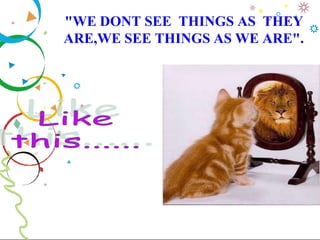
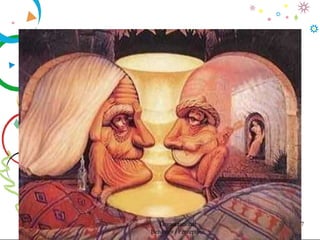
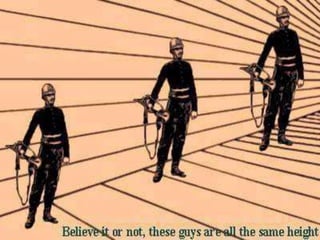
"WE DONT SEE THINGS AS THEY
ARE,WE SEE THINGS AS WE ARE".
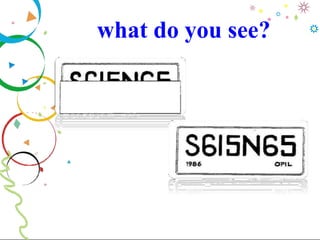
what do you see?
Organizational
Behavior / Perception
4
Organizational
Behavior / Perception
5
Organizational
Behavior / Perception
6
Organizational
Behavior / Perception
7
Organizational
Behavior / Perception
8
Organizational
Behavior / Perception
9
Organizational
Behavior / Perception
10
Organizational
Behavior / Perception
11
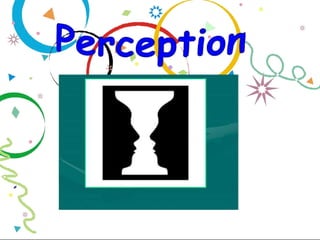
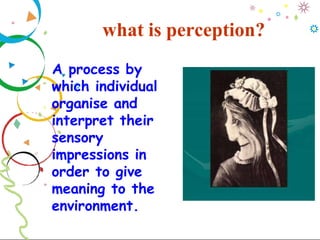
what is perception?
A process by
which individual
organise and
interpret their
sensory
impressions in
order to give
meaning to the
environment.
perception is an important factor in human behaviour
• Perceptions vary from person to person.
• Different people perceive different things about the same
situation.
• But more than that, we assign different meanings to what
we perceive. And the meanings might change for a
certain person.
•
• One might change one's perspective or simply make
things mean something else.
14 Organizational
Behavior / Perception
•
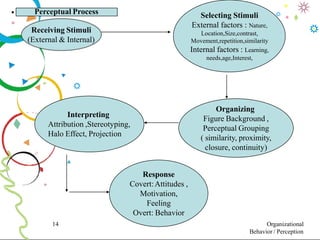
Receiving Stimuli
(External & Internal)
Selecting Stimuli
External factors : Nature,
Location,Size,contrast,
Movement,repetition,similarity
Internal factors : Learning,
needs,age,Interest,
Organizing
Figure Background ,
Perceptual Grouping
( similarity, proximity,
closure, continuity)
Response
Covert:Attitudes ,
Motivation,
Feeling
Overt: Behavior
Perceptual Process
Interpreting
Attribution ,Stereotyping,
Halo Effect, Projection
perception process
•selection of stimuli
• organisation of stimuli
•interpretation of stimuli
selection of stimuli
• selection is the first process in perception
• the process of filtering information received
by our sense is called selecting stimuli.
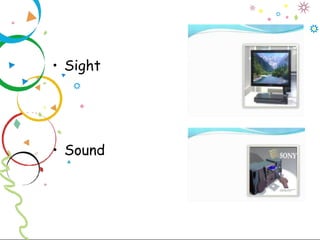
• we are selecting the stimuli through our
senses, like...
• Sight
• Sound
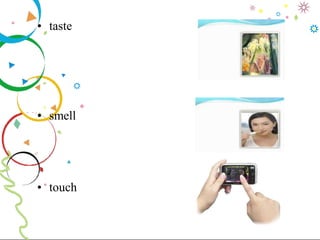
• taste
• smell
• touch
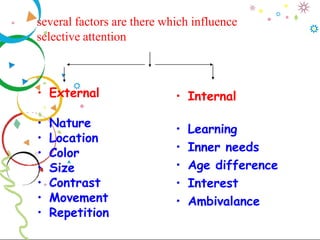
• External
• Nature
• Location
• Color
• Size
• Contrast
• Movement
• Repetition
• Internal
• Learning
• Inner needs
• Age difference
• Interest
• Ambivalance
several factors are there which influence
selective attention
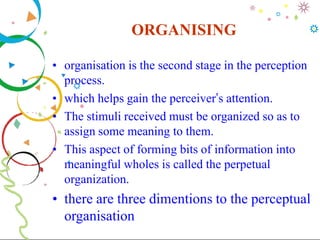
ORGANISING
• organisation is the second stage in the perception
process.
• which helps gain the perceiver’s attention.
• The stimuli received must be organized so as to
assign some meaning to them.
• This aspect of forming bits of information into
meaningful wholes is called the perpetual
organization.
• there are three dimentions to the perceptual
organisation
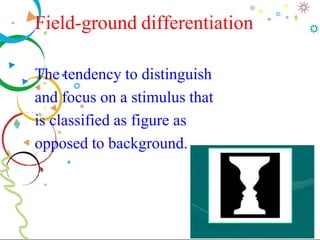
Field-ground differentiation
The tendency to distinguish
and focus on a stimulus that
is classified as figure as
opposed to background.
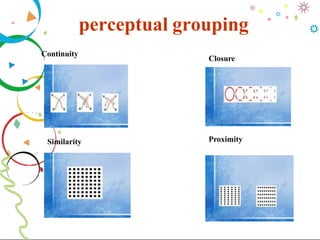
perceptual grouping
Continuity
Closure
Proximity
Similarity
• Perceptual constancy
•
• Perceptual constancy is one of the advanced forms of
perceptual organization.
• According to this principle, individuals’ perception of
certain elements in objects like
size, shape, color, brightness, and location is constant and
does not change from person to person.
• For instance, even though the picture of an apple is
printed in black and white, we still perceive the color of
the fruit as red.
• Perceptual constancy is enhanced by learning. Learning
helps individuals perceive certain patterns of cues in a
similar way and this leads to perceptual constancy.
• Perceptual Context
• The context of the situation also plays a major role
in shaping the perception of individuals.
• Different contexts convey different meanings to
people.
• For example, if a manager pats his twoyear-old
son, it is considered a sign of love and affection.
However, if he gives an employee a pat on the
back, it is considered a sign of appreciation for the
work done by the employee.
interpretation
• after the selection and organising the stimuli has to
interpret them in order to make a sensible meaning.
• perceiver cant draw any meaning without
interpretation.
• it is a subjective and judgemental process.
• perceiver uses his assumption of
people,things,object, and situation.
• he makes attributions,uses his judgemental skills
distorts information,adds/delete information brings his
own subjective feelings,opinion,and emotions,in
interpreting and drawing the measures
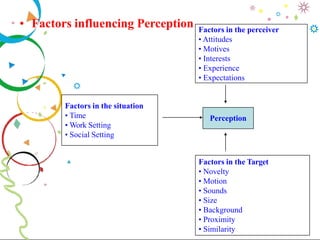
• Factors influencing Perception Factors in the perceiver
• Attitudes
• Motives
• Interests
• Experience
• Expectations
Perception
Factors in the Target
• Novelty
• Motion
• Sounds
• Size
• Background
• Proximity
• Similarity
Factors in the situation
• Time
• Work Setting
• Social Setting
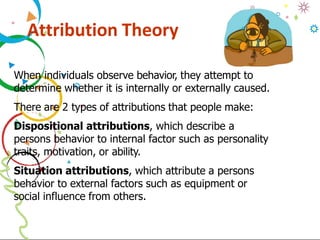
Attribution Theory
When individuals observe behavior, they attempt to
determine whether it is internally or externally caused.
There are 2 types of attributions that people make:
Dispositional attributions, which describe a
persons behavior to internal factor such as personality
traits, motivation, or ability.
Situation attributions, which attribute a persons
behavior to external factors such as equipment or
social influence from others.
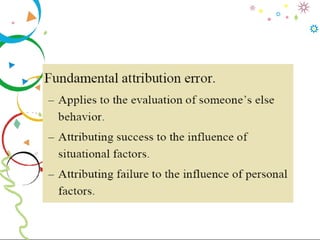
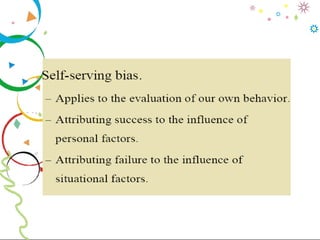
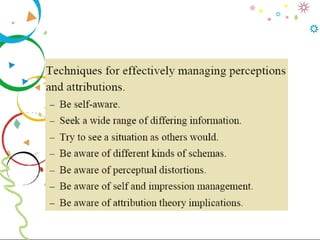
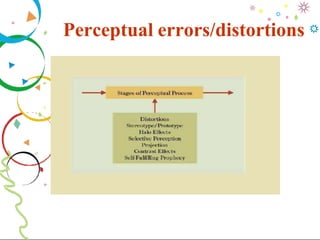
Perceptual errors/distortions
stereoptyping
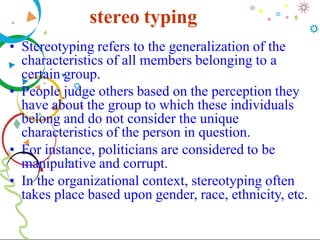
stereo typing
• Stereotyping refers to the generalization of the
characteristics of all members belonging to a
certain group.
• People judge others based on the perception they
have about the group to which these individuals
belong and do not consider the unique
characteristics of the person in question.
• For instance, politicians are considered to be
manipulative and corrupt.
• In the organizational context, stereotyping often
takes place based upon gender, race, ethnicity, etc.
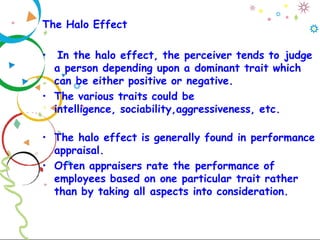
The Halo Effect
• In the halo effect, the perceiver tends to judge
a person depending upon a dominant trait which
can be either positive or negative.
• The various traits could be
intelligence, sociability,aggressiveness, etc.
• The halo effect is generally found in performance
appraisal.
• Often appraisers rate the performance of
employees based on one particular trait rather
than by taking all aspects into consideration.
Thank you

perception-120601103144-phpapp02.pptx

  • 2.
    "WE DONT SEETHINGS AS THEY ARE,WE SEE THINGS AS WE ARE".
  • 3.
  • 4.
  • 5.
  • 6.
  • 7.
  • 8.
  • 9.
  • 10.
  • 11.
  • 12.
    what is perception? Aprocess by which individual organise and interpret their sensory impressions in order to give meaning to the environment.
  • 13.
    perception is animportant factor in human behaviour • Perceptions vary from person to person. • Different people perceive different things about the same situation. • But more than that, we assign different meanings to what we perceive. And the meanings might change for a certain person. • • One might change one's perspective or simply make things mean something else.
  • 14.
    14 Organizational Behavior /Perception • Receiving Stimuli (External & Internal) Selecting Stimuli External factors : Nature, Location,Size,contrast, Movement,repetition,similarity Internal factors : Learning, needs,age,Interest, Organizing Figure Background , Perceptual Grouping ( similarity, proximity, closure, continuity) Response Covert:Attitudes , Motivation, Feeling Overt: Behavior Perceptual Process Interpreting Attribution ,Stereotyping, Halo Effect, Projection
  • 15.
    perception process •selection ofstimuli • organisation of stimuli •interpretation of stimuli
  • 16.
    selection of stimuli •selection is the first process in perception • the process of filtering information received by our sense is called selecting stimuli. • we are selecting the stimuli through our senses, like...
  • 17.
  • 18.
  • 19.
    • External • Nature •Location • Color • Size • Contrast • Movement • Repetition • Internal • Learning • Inner needs • Age difference • Interest • Ambivalance several factors are there which influence selective attention
  • 20.
    ORGANISING • organisation isthe second stage in the perception process. • which helps gain the perceiver’s attention. • The stimuli received must be organized so as to assign some meaning to them. • This aspect of forming bits of information into meaningful wholes is called the perpetual organization. • there are three dimentions to the perceptual organisation
  • 21.
    Field-ground differentiation The tendencyto distinguish and focus on a stimulus that is classified as figure as opposed to background.
  • 22.
  • 23.
    • Perceptual constancy • •Perceptual constancy is one of the advanced forms of perceptual organization. • According to this principle, individuals’ perception of certain elements in objects like size, shape, color, brightness, and location is constant and does not change from person to person. • For instance, even though the picture of an apple is printed in black and white, we still perceive the color of the fruit as red. • Perceptual constancy is enhanced by learning. Learning helps individuals perceive certain patterns of cues in a similar way and this leads to perceptual constancy.
  • 24.
    • Perceptual Context •The context of the situation also plays a major role in shaping the perception of individuals. • Different contexts convey different meanings to people. • For example, if a manager pats his twoyear-old son, it is considered a sign of love and affection. However, if he gives an employee a pat on the back, it is considered a sign of appreciation for the work done by the employee.
  • 25.
    interpretation • after theselection and organising the stimuli has to interpret them in order to make a sensible meaning. • perceiver cant draw any meaning without interpretation. • it is a subjective and judgemental process. • perceiver uses his assumption of people,things,object, and situation. • he makes attributions,uses his judgemental skills distorts information,adds/delete information brings his own subjective feelings,opinion,and emotions,in interpreting and drawing the measures
  • 26.
    • Factors influencingPerception Factors in the perceiver • Attitudes • Motives • Interests • Experience • Expectations Perception Factors in the Target • Novelty • Motion • Sounds • Size • Background • Proximity • Similarity Factors in the situation • Time • Work Setting • Social Setting
  • 27.
    Attribution Theory When individualsobserve behavior, they attempt to determine whether it is internally or externally caused. There are 2 types of attributions that people make: Dispositional attributions, which describe a persons behavior to internal factor such as personality traits, motivation, or ability. Situation attributions, which attribute a persons behavior to external factors such as equipment or social influence from others.
  • 33.
  • 34.
  • 35.
    stereo typing • Stereotypingrefers to the generalization of the characteristics of all members belonging to a certain group. • People judge others based on the perception they have about the group to which these individuals belong and do not consider the unique characteristics of the person in question. • For instance, politicians are considered to be manipulative and corrupt. • In the organizational context, stereotyping often takes place based upon gender, race, ethnicity, etc.
  • 37.
    The Halo Effect •In the halo effect, the perceiver tends to judge a person depending upon a dominant trait which can be either positive or negative. • The various traits could be intelligence, sociability,aggressiveness, etc. • The halo effect is generally found in performance appraisal. • Often appraisers rate the performance of employees based on one particular trait rather than by taking all aspects into consideration.
  • 42.