Presentation
On Nestlé
They have defined three
overarching ambitions for 2030 which
guide their work and support the
achievement of the UN Sustainable
Development Goals.
Nestlé is the world’s largest food
and beverage company. They
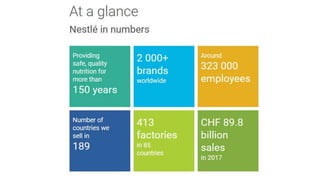
have more than 2000 brands
ranging from global icons to local
favorites, and they are present in
189 countries around the world.
Nestlé's purpose is enhancing
quality of life and contributing to
a healthier future. They want to
help shape a better and
healthier world. They also want
to inspire people to live healthier
lives.
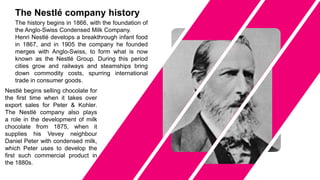
The history begins in 1866, with the foundation of
the Anglo-Swiss Condensed Milk Company.
Henri Nestlé develops a breakthrough infant food
in 1867, and in 1905 the company he founded
merges with Anglo-Swiss, to form what is now
known as the Nestlé Group. During this period
cities grow and railways and steamships bring
down commodity costs, spurring international
trade in consumer goods.
Nestlé begins selling chocolate for
the first time when it takes over
export sales for Peter & Kohler.
The Nestlé company also plays
a role in the development of milk
chocolate from 1875, when it
supplies his Vevey neighbour
Daniel Peter with condensed milk,
which Peter uses to develop the
first such commercial product in
the 1880s.
The Nestlé company history
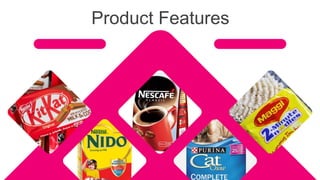
Product Features
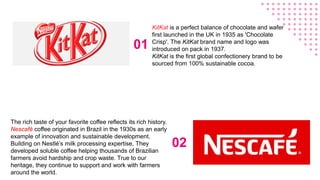
01
02
The rich taste of your favorite coffee reflects its rich history.
Nescafé coffee originated in Brazil in the 1930s as an early
example of innovation and sustainable development.
Building on Nestlé’s milk processing expertise, They
developed soluble coffee helping thousands of Brazilian
farmers avoid hardship and crop waste. True to our
heritage, they continue to support and work with farmers
around the world.
KitKat is a perfect balance of chocolate and wafer
first launched in the UK in 1935 as 'Chocolate
Crisp'. The KitKat brand name and logo was
introduced on pack in 1937.
KitKat is the first global confectionery brand to be
sourced from 100% sustainable cocoa.
03
The brand offers a complete range of milk and
milk-based products that offer nutrition solutions
for each stage of childhood. The Nido brand is
trusted by mothers, with a taste that kids love.
04
Maggi products help bring out the best in every
meal. Quick and easy solutions - like bouillons,
soups, seasonings and sauces - to aid cooking
and add flavor.
05
For over 75 years we’ve been committed to
helping make pets' lives better all over the
world through their range of trusted pet food
brands and advice for those who love their
pet.
SWOT analysis of Nestle
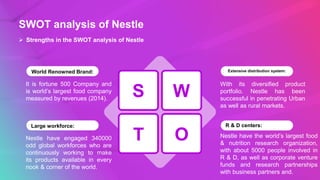
 Strengths in the SWOT analysis of Nestle
S W
T O
With its diversified product
portfolio. Nestle has been
successful in penetrating Urban
as well as rural markets.
Extensive distribution system:
Nestle have the world’s largest food
& nutrition research organization,
with about 5000 people involved in
R & D, as well as corporate venture
funds and research partnerships
with business partners and.
R & D centers:
It is fortune 500 Company and
is world’s largest food company
measured by revenues (2014).
World Renowned Brand:
Nestle have engaged 340000
odd global workforces who are
continuously working to make
its products available in every
nook & corner of the world.
Large workforce:
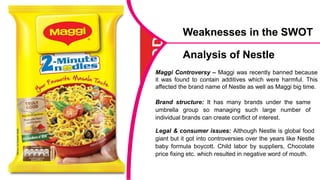
Maggi Controversy – Maggi was recently banned because
it was found to contain additives which were harmful. This
affected the brand name of Nestle as well as Maggi big time.
Weaknesses in the SWOT
Analysis of Nestle
Modern Portfolio
Designed
Brand structure: It has many brands under the same
umbrella group so managing such large number of
individual brands can create conflict of interest.
Legal & consumer issues: Although Nestle is global food
giant but it got into controversies over the years like Nestle
baby formula boycott. Child labor by suppliers, Chocolate
price fixing etc. which resulted in negative word of mouth.
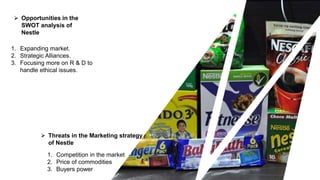
1. Expanding market.
2. Strategic Alliances.
3. Focusing more on R & D to
handle ethical issues.
 Opportunities in the
SWOT analysis of
Nestle
 Threats in the Marketing strategy
of Nestle
1. Competition in the market
2. Price of commodities
3. Buyers power
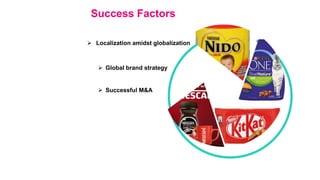
 Localization amidst globalization
 Global brand strategy
 Successful M&A
Success Factors
Problems & challenges
faced by Nestle
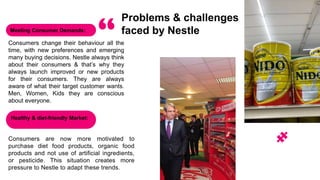
Meeting Consumer Demands:
Consumers change their behaviour all the
time, with new preferences and emerging
many buying decisions. Nestle always think
about their consumers & that’s why they
always launch improved or new products
for their consumers. They are always
aware of what their target customer wants.
Men, Women, Kids they are conscious
about everyone.
Healthy & diet-friendly Market:
Consumers are now more motivated to
purchase diet food products, organic food
products and not use of artificial ingredients,
or pesticide. This situation creates more
pressure to Nestle to adapt these trends.
Shifting towards E-commerce:
Industries like consumer electronics,
appliances, toys and games, and other
household products are already firmly
established in the e-commerce space, but food
and beverage manufacturers have overall been
slower on the uptake. Amazon have been
investing in grocery e-commerce.
The anti-sugar movement:
Major organizations like
the WHO and FDA coming out
against high sugar intake, the
latter recommending a cap
of no more than 10% of daily
calories, more consumers are
turning away from foods that
are high in sugar.
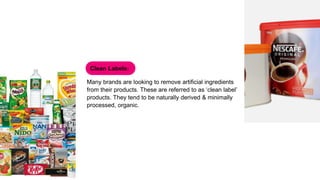
Clean Labels:
Many brands are looking to remove artificial ingredients
from their products. These are referred to as ‘clean label’
products. They tend to be naturally derived & minimally
processed, organic.
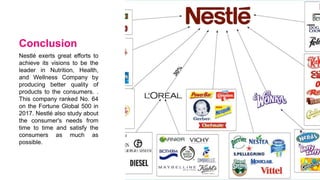
Nestlé exerts great efforts to
achieve its visions to be the
leader in Nutrition, Health,
and Wellness Company by
producing better quality of
products to the consumers. .
This company ranked No. 64
on the Fortune Global 500 in
2017. Nestlé also study about
the consumer's needs from
time to time and satisfy the
consumers as much as
possible.
Conclusion
Thank You

nestle-190107171241 (1).pdf

  • 1.
  • 2.
    They have definedthree overarching ambitions for 2030 which guide their work and support the achievement of the UN Sustainable Development Goals. Nestlé is the world’s largest food and beverage company. They have more than 2000 brands ranging from global icons to local favorites, and they are present in 189 countries around the world. Nestlé's purpose is enhancing quality of life and contributing to a healthier future. They want to help shape a better and healthier world. They also want to inspire people to live healthier lives.
  • 3.
    The history beginsin 1866, with the foundation of the Anglo-Swiss Condensed Milk Company. Henri Nestlé develops a breakthrough infant food in 1867, and in 1905 the company he founded merges with Anglo-Swiss, to form what is now known as the Nestlé Group. During this period cities grow and railways and steamships bring down commodity costs, spurring international trade in consumer goods. Nestlé begins selling chocolate for the first time when it takes over export sales for Peter & Kohler. The Nestlé company also plays a role in the development of milk chocolate from 1875, when it supplies his Vevey neighbour Daniel Peter with condensed milk, which Peter uses to develop the first such commercial product in the 1880s. The Nestlé company history
  • 5.
  • 6.
    01 02 The rich tasteof your favorite coffee reflects its rich history. Nescafé coffee originated in Brazil in the 1930s as an early example of innovation and sustainable development. Building on Nestlé’s milk processing expertise, They developed soluble coffee helping thousands of Brazilian farmers avoid hardship and crop waste. True to our heritage, they continue to support and work with farmers around the world. KitKat is a perfect balance of chocolate and wafer first launched in the UK in 1935 as 'Chocolate Crisp'. The KitKat brand name and logo was introduced on pack in 1937. KitKat is the first global confectionery brand to be sourced from 100% sustainable cocoa.
  • 7.
    03 The brand offersa complete range of milk and milk-based products that offer nutrition solutions for each stage of childhood. The Nido brand is trusted by mothers, with a taste that kids love. 04 Maggi products help bring out the best in every meal. Quick and easy solutions - like bouillons, soups, seasonings and sauces - to aid cooking and add flavor.
  • 8.
    05 For over 75years we’ve been committed to helping make pets' lives better all over the world through their range of trusted pet food brands and advice for those who love their pet.
  • 9.
    SWOT analysis ofNestle  Strengths in the SWOT analysis of Nestle S W T O With its diversified product portfolio. Nestle has been successful in penetrating Urban as well as rural markets. Extensive distribution system: Nestle have the world’s largest food & nutrition research organization, with about 5000 people involved in R & D, as well as corporate venture funds and research partnerships with business partners and. R & D centers: It is fortune 500 Company and is world’s largest food company measured by revenues (2014). World Renowned Brand: Nestle have engaged 340000 odd global workforces who are continuously working to make its products available in every nook & corner of the world. Large workforce:
  • 10.
    Maggi Controversy –Maggi was recently banned because it was found to contain additives which were harmful. This affected the brand name of Nestle as well as Maggi big time. Weaknesses in the SWOT Analysis of Nestle Modern Portfolio Designed Brand structure: It has many brands under the same umbrella group so managing such large number of individual brands can create conflict of interest. Legal & consumer issues: Although Nestle is global food giant but it got into controversies over the years like Nestle baby formula boycott. Child labor by suppliers, Chocolate price fixing etc. which resulted in negative word of mouth.
  • 11.
    1. Expanding market. 2.Strategic Alliances. 3. Focusing more on R & D to handle ethical issues.  Opportunities in the SWOT analysis of Nestle  Threats in the Marketing strategy of Nestle 1. Competition in the market 2. Price of commodities 3. Buyers power
  • 12.
     Localization amidstglobalization  Global brand strategy  Successful M&A Success Factors
  • 13.
    Problems & challenges facedby Nestle Meeting Consumer Demands: Consumers change their behaviour all the time, with new preferences and emerging many buying decisions. Nestle always think about their consumers & that’s why they always launch improved or new products for their consumers. They are always aware of what their target customer wants. Men, Women, Kids they are conscious about everyone. Healthy & diet-friendly Market: Consumers are now more motivated to purchase diet food products, organic food products and not use of artificial ingredients, or pesticide. This situation creates more pressure to Nestle to adapt these trends.
  • 14.
    Shifting towards E-commerce: Industrieslike consumer electronics, appliances, toys and games, and other household products are already firmly established in the e-commerce space, but food and beverage manufacturers have overall been slower on the uptake. Amazon have been investing in grocery e-commerce. The anti-sugar movement: Major organizations like the WHO and FDA coming out against high sugar intake, the latter recommending a cap of no more than 10% of daily calories, more consumers are turning away from foods that are high in sugar.
  • 15.
    Clean Labels: Many brandsare looking to remove artificial ingredients from their products. These are referred to as ‘clean label’ products. They tend to be naturally derived & minimally processed, organic.
  • 16.
    Nestlé exerts greatefforts to achieve its visions to be the leader in Nutrition, Health, and Wellness Company by producing better quality of products to the consumers. . This company ranked No. 64 on the Fortune Global 500 in 2017. Nestlé also study about the consumer's needs from time to time and satisfy the consumers as much as possible. Conclusion
  • 17.