
CASE PRESENTATION ON
INGUINAL HERNIA
SUBMITTED BY
METI.BHARATH KUMAR
16DK1T0014
Pharm.D Internship
DEMOGRAPHIC DETAILS
• NAME: sudhakar
• AGE:35 years
• GENDER: male
• DEPARTMENT: General surgery
• UNIT:MS-6
• IP NO:62311
• DOA:13/11/2021
• CONSULTANT PHYSICIAN:Dr.madhavi shyamala
SUBJECTIVE EVIDENCE
• A 35 years male patient was admitted in male sugery unit-6 with the
chief complaints of ,
abdominal pain at RUQ since 6 days associated with
vomitings but subsided now.
c/o swelling of 5*2 cm in L inguinal scrotal region,
cough impulse +
c/o of inguino scrotal swelling since 3 years gradually
increase pain.
OBJECTIVE EVIDENCE
• ECG : WNL
• CX-RAY : WNL
• CECT ABDOMEN:
3.3 cm defect noted in anterior abdominal wall left inguinal region at
superficial ring with herniation of omentum through defect extending
upto base of scrotum.
• IMPRESSION: left non obstructive renal calculus,left inguinal hernia
with omentum as content.
• USG inguino scrotal region: inguinal region.
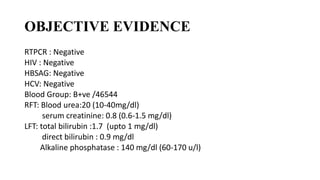
OBJECTIVE EVIDENCE
RTPCR : Negative
HIV : Negative
HBSAG: Negative
HCV: Negative
Blood Group: B+ve /46544
RFT: Blood urea:20 (10-40mg/dl)
serum creatinine: 0.8 (0.6-1.5 mg/dl)
LFT: total bilirubin :1.7 (upto 1 mg/dl)
direct bilirubin : 0.9 mg/dl
Alkaline phosphatase : 140 mg/dl (60-170 u/l)
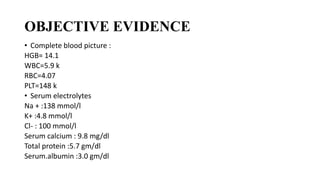
OBJECTIVE EVIDENCE
• Complete blood picture :
HGB= 14.1
WBC=5.9 k
RBC=4.07
PLT=148 k
• Serum electrolytes
Na + :138 mmol/l
K+ :4.8 mmol/l
Cl- : 100 mmol/l
Serum calcium : 9.8 mg/dl
Total protein :5.7 gm/dl
Serum.albumin :3.0 gm/dl
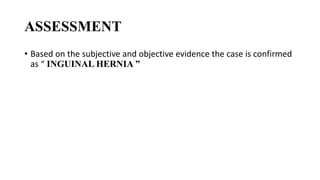
ASSESSMENT
• Based on the subjective and objective evidence the case is confirmed
as “ INGUINAL HERNIA ”
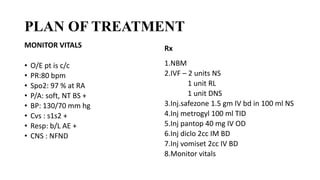
PLAN OF TREATMENT
MONITOR VITALS
• O/E pt is c/c
• PR:80 bpm
• Spo2: 97 % at RA
• P/A: soft, NT BS +
• BP: 130/70 mm hg
• Cvs : s1s2 +
• Resp: b/L AE +
• CNS : NFND
Rx
1.NBM
2.IVF – 2 units NS
1 unit RL
1 unit DNS
3.Inj.safezone 1.5 gm IV bd in 100 ml NS
4.Inj metrogyl 100 ml TID
5.Inj pantop 40 mg IV OD
6.Inj diclo 2cc IM BD
7.Inj vomiset 2cc IV BD
8.Monitor vitals
PLAN OF TREATMENT
Pre op instructions:
• 1.NBM from 10 pm onwards
• 2.inj.taxim 1 gm IV ½ hr before surgery
• 3.inj.T T 0.5 CC IM
• 4.inj.xylocaine 0.5 cc test dose ID
• 5.parts prepared and informed and written consent.
• 6. shift case to OT with reports by 9.00 am.
OPERATIVE NOTES
• DIAGNOSIS: left indirect inguinal hernia
• SURGERY: left hernioplasty under SA
• POSITION: supine
• INCISION: MC burney’s incision
• ANAESTHESIA: spinal anaesthesia
• IOF: sac with omentum as content identified.
atrophied testis identified @ left inguinal region and
orchidectomy done.
POST OP INSTRUCTIONS
• 1.NBM for 6 hours
• 2. IVF : 1 unit RL
2 units DNS
• 3.inj.ceftriaxone 1 gm IV BD
• 4.inj.pantop 40 mg IV OD
• 5.inj.diclo 2 cc IM BD
• 6.inj,vomiset 2 cc IV BD
• 7.monitor vitals
POD 1
MONITOR VITALS
• Pt is c/c
• c/o : cough
• Bp:130/80 mm hg
• Pr: 90 bpm
• Sp02 : 97 % at RA
• Cvs: s1s2+
• Rs:BAE+
• p/a: soft,tenderness @ incision site
• drain:50 ml
Rx
• 1.soft diet
• 2. syrup ambroxyl 10 ml TID
• 3.inj.ceftriaxone 1 gm IV BD
• 4.inj.pantop 40 mg IV OD
• 5.inj.diclo 2 cc IM BD
• 6.inj,vomiset 2 cc IV BD
• 7.Tab,chymoral forte TID
• 8.tab,azithro 500 mg BD
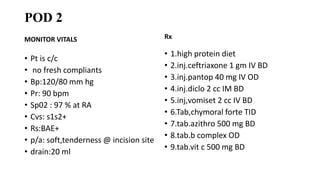
POD 2
MONITOR VITALS
• Pt is c/c
• no fresh compliants
• Bp:120/80 mm hg
• Pr: 90 bpm
• Sp02 : 97 % at RA
• Cvs: s1s2+
• Rs:BAE+
• p/a: soft,tenderness @ incision site
• drain:20 ml
Rx
• 1.high protein diet
• 2.inj.ceftriaxone 1 gm IV BD
• 3.inj.pantop 40 mg IV OD
• 4.inj.diclo 2 cc IM BD
• 5.inj,vomiset 2 cc IV BD
• 6.Tab,chymoral forte TID
• 7.tab.azithro 500 mg BD
• 8.tab.b complex OD
• 9.tab.vit c 500 mg BD
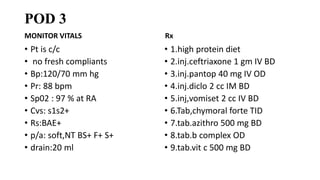
POD 3
MONITOR VITALS
• Pt is c/c
• no fresh compliants
• Bp:120/70 mm hg
• Pr: 88 bpm
• Sp02 : 97 % at RA
• Cvs: s1s2+
• Rs:BAE+
• p/a: soft,NT BS+ F+ S+
• drain:20 ml
Rx
• 1.high protein diet
• 2.inj.ceftriaxone 1 gm IV BD
• 3.inj.pantop 40 mg IV OD
• 4.inj.diclo 2 cc IM BD
• 5.inj,vomiset 2 cc IV BD
• 6.Tab,chymoral forte TID
• 7.tab.azithro 500 mg BD
• 8.tab.b complex OD
• 9.tab.vit c 500 mg BD
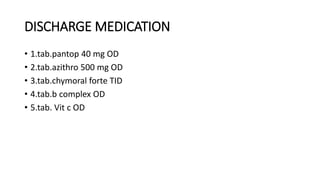
DISCHARGE MEDICATION
• 1.tab.pantop 40 mg OD
• 2.tab.azithro 500 mg OD
• 3.tab.chymoral forte TID
• 4.tab.b complex OD
• 5.tab. Vit c OD
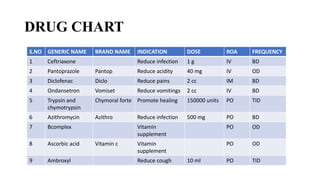
DRUG CHART
S.NO GENERIC NAME BRAND NAME INDICATION DOSE ROA FREQUENCY
1 Ceftriaxone Reduce infection 1 g IV BD
2 Pantoprazole Pantop Reduce acidity 40 mg IV OD
3 Diclofenac Diclo Reduce pains 2 cc IM BD
4 Ondansetron Vomiset Reduce vomitings 2 cc IV BD
5 Trypsin and
chymotrypsin
Chymoral forte Promote healing 150000 units PO TID
6 Azithromycin Azithro Reduce infection 500 mg PO BD
7 Bcomplex Vitamin
supplement
PO OD
8 Ascorbic acid Vitamin c Vitamin
supplement
PO OD
9 Ambroxyl Reduce cough 10 ml PO TID
PHARMACEUTICAL CARE ISSUES
• No pharmaceutical care issues found the prescription was
rational.
DISCUSSION
• A hernia occurs when an organ pushes through an opening in the
muscle or tissue that holds it in place. For example, the intestines may
break through a weakened area in the abdominal wall.
• Many hernias occur in the abdomen between your chest and hips, but
they can also appear in the upper thigh and groin areas.
TYPES CAUSES
DIRECT AND INDIRECT HERNIA
SYMPTOMS
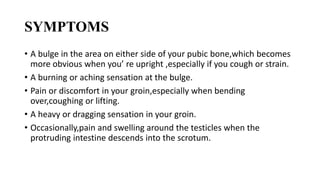
• A bulge in the area on either side of your pubic bone,which becomes
more obvious when you’ re upright ,especially if you cough or strain.
• A burning or aching sensation at the bulge.
• Pain or discomfort in your groin,especially when bending
over,coughing or lifting.
• A heavy or dragging sensation in your groin.
• Occasionally,pain and swelling around the testicles when the
protruding intestine descends into the scrotum.
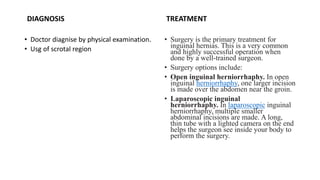
DIAGNOSIS
• Doctor diagnise by physical examination.
• Usg of scrotal region
TREATMENT
• Surgery is the primary treatment for
inguinal hernias. This is a very common
and highly successful operation when
done by a well-trained surgeon.
• Surgery options include:
• Open inguinal herniorrhaphy. In open
inguinal herniorrhaphy, one larger incision
is made over the abdomen near the groin.
• Laparoscopic inguinal
herniorrhaphy. In laparoscopic inguinal
herniorrhaphy, multiple smaller
abdominal incisions are made. A long,
thin tube with a lighted camera on the end
helps the surgeon see inside your body to
perform the surgery.
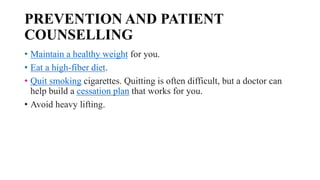
PREVENTION AND PATIENT
COUNSELLING
• Maintain a healthy weight for you.
• Eat a high-fiber diet.
• Quit smoking cigarettes. Quitting is often difficult, but a doctor can
help build a cessation plan that works for you.
• Avoid heavy lifting.
CASE PRESENTATION ON INGUINAL HERNIA

CASE PRESENTATION ON INGUINAL HERNIA

  • 1.
    CASE PRESENTATION ON INGUINALHERNIA SUBMITTED BY METI.BHARATH KUMAR 16DK1T0014 Pharm.D Internship
  • 2.
    DEMOGRAPHIC DETAILS • NAME:sudhakar • AGE:35 years • GENDER: male • DEPARTMENT: General surgery • UNIT:MS-6 • IP NO:62311 • DOA:13/11/2021 • CONSULTANT PHYSICIAN:Dr.madhavi shyamala
  • 3.
    SUBJECTIVE EVIDENCE • A35 years male patient was admitted in male sugery unit-6 with the chief complaints of , abdominal pain at RUQ since 6 days associated with vomitings but subsided now. c/o swelling of 5*2 cm in L inguinal scrotal region, cough impulse + c/o of inguino scrotal swelling since 3 years gradually increase pain.
  • 4.
    OBJECTIVE EVIDENCE • ECG: WNL • CX-RAY : WNL • CECT ABDOMEN: 3.3 cm defect noted in anterior abdominal wall left inguinal region at superficial ring with herniation of omentum through defect extending upto base of scrotum. • IMPRESSION: left non obstructive renal calculus,left inguinal hernia with omentum as content. • USG inguino scrotal region: inguinal region.
  • 5.
    OBJECTIVE EVIDENCE RTPCR :Negative HIV : Negative HBSAG: Negative HCV: Negative Blood Group: B+ve /46544 RFT: Blood urea:20 (10-40mg/dl) serum creatinine: 0.8 (0.6-1.5 mg/dl) LFT: total bilirubin :1.7 (upto 1 mg/dl) direct bilirubin : 0.9 mg/dl Alkaline phosphatase : 140 mg/dl (60-170 u/l)
  • 6.
    OBJECTIVE EVIDENCE • Completeblood picture : HGB= 14.1 WBC=5.9 k RBC=4.07 PLT=148 k • Serum electrolytes Na + :138 mmol/l K+ :4.8 mmol/l Cl- : 100 mmol/l Serum calcium : 9.8 mg/dl Total protein :5.7 gm/dl Serum.albumin :3.0 gm/dl
  • 7.
    ASSESSMENT • Based onthe subjective and objective evidence the case is confirmed as “ INGUINAL HERNIA ”
  • 8.
    PLAN OF TREATMENT MONITORVITALS • O/E pt is c/c • PR:80 bpm • Spo2: 97 % at RA • P/A: soft, NT BS + • BP: 130/70 mm hg • Cvs : s1s2 + • Resp: b/L AE + • CNS : NFND Rx 1.NBM 2.IVF – 2 units NS 1 unit RL 1 unit DNS 3.Inj.safezone 1.5 gm IV bd in 100 ml NS 4.Inj metrogyl 100 ml TID 5.Inj pantop 40 mg IV OD 6.Inj diclo 2cc IM BD 7.Inj vomiset 2cc IV BD 8.Monitor vitals
  • 9.
    PLAN OF TREATMENT Preop instructions: • 1.NBM from 10 pm onwards • 2.inj.taxim 1 gm IV ½ hr before surgery • 3.inj.T T 0.5 CC IM • 4.inj.xylocaine 0.5 cc test dose ID • 5.parts prepared and informed and written consent. • 6. shift case to OT with reports by 9.00 am.
  • 10.
    OPERATIVE NOTES • DIAGNOSIS:left indirect inguinal hernia • SURGERY: left hernioplasty under SA • POSITION: supine • INCISION: MC burney’s incision • ANAESTHESIA: spinal anaesthesia • IOF: sac with omentum as content identified. atrophied testis identified @ left inguinal region and orchidectomy done.
  • 11.
    POST OP INSTRUCTIONS •1.NBM for 6 hours • 2. IVF : 1 unit RL 2 units DNS • 3.inj.ceftriaxone 1 gm IV BD • 4.inj.pantop 40 mg IV OD • 5.inj.diclo 2 cc IM BD • 6.inj,vomiset 2 cc IV BD • 7.monitor vitals
  • 12.
    POD 1 MONITOR VITALS •Pt is c/c • c/o : cough • Bp:130/80 mm hg • Pr: 90 bpm • Sp02 : 97 % at RA • Cvs: s1s2+ • Rs:BAE+ • p/a: soft,tenderness @ incision site • drain:50 ml Rx • 1.soft diet • 2. syrup ambroxyl 10 ml TID • 3.inj.ceftriaxone 1 gm IV BD • 4.inj.pantop 40 mg IV OD • 5.inj.diclo 2 cc IM BD • 6.inj,vomiset 2 cc IV BD • 7.Tab,chymoral forte TID • 8.tab,azithro 500 mg BD
  • 13.
    POD 2 MONITOR VITALS •Pt is c/c • no fresh compliants • Bp:120/80 mm hg • Pr: 90 bpm • Sp02 : 97 % at RA • Cvs: s1s2+ • Rs:BAE+ • p/a: soft,tenderness @ incision site • drain:20 ml Rx • 1.high protein diet • 2.inj.ceftriaxone 1 gm IV BD • 3.inj.pantop 40 mg IV OD • 4.inj.diclo 2 cc IM BD • 5.inj,vomiset 2 cc IV BD • 6.Tab,chymoral forte TID • 7.tab.azithro 500 mg BD • 8.tab.b complex OD • 9.tab.vit c 500 mg BD
  • 14.
    POD 3 MONITOR VITALS •Pt is c/c • no fresh compliants • Bp:120/70 mm hg • Pr: 88 bpm • Sp02 : 97 % at RA • Cvs: s1s2+ • Rs:BAE+ • p/a: soft,NT BS+ F+ S+ • drain:20 ml Rx • 1.high protein diet • 2.inj.ceftriaxone 1 gm IV BD • 3.inj.pantop 40 mg IV OD • 4.inj.diclo 2 cc IM BD • 5.inj,vomiset 2 cc IV BD • 6.Tab,chymoral forte TID • 7.tab.azithro 500 mg BD • 8.tab.b complex OD • 9.tab.vit c 500 mg BD
  • 15.
    DISCHARGE MEDICATION • 1.tab.pantop40 mg OD • 2.tab.azithro 500 mg OD • 3.tab.chymoral forte TID • 4.tab.b complex OD • 5.tab. Vit c OD
  • 16.
    DRUG CHART S.NO GENERICNAME BRAND NAME INDICATION DOSE ROA FREQUENCY 1 Ceftriaxone Reduce infection 1 g IV BD 2 Pantoprazole Pantop Reduce acidity 40 mg IV OD 3 Diclofenac Diclo Reduce pains 2 cc IM BD 4 Ondansetron Vomiset Reduce vomitings 2 cc IV BD 5 Trypsin and chymotrypsin Chymoral forte Promote healing 150000 units PO TID 6 Azithromycin Azithro Reduce infection 500 mg PO BD 7 Bcomplex Vitamin supplement PO OD 8 Ascorbic acid Vitamin c Vitamin supplement PO OD 9 Ambroxyl Reduce cough 10 ml PO TID
  • 17.
    PHARMACEUTICAL CARE ISSUES •No pharmaceutical care issues found the prescription was rational.
  • 18.
    DISCUSSION • A herniaoccurs when an organ pushes through an opening in the muscle or tissue that holds it in place. For example, the intestines may break through a weakened area in the abdominal wall. • Many hernias occur in the abdomen between your chest and hips, but they can also appear in the upper thigh and groin areas.
  • 19.
  • 20.
  • 21.
    SYMPTOMS • A bulgein the area on either side of your pubic bone,which becomes more obvious when you’ re upright ,especially if you cough or strain. • A burning or aching sensation at the bulge. • Pain or discomfort in your groin,especially when bending over,coughing or lifting. • A heavy or dragging sensation in your groin. • Occasionally,pain and swelling around the testicles when the protruding intestine descends into the scrotum.
  • 22.
    DIAGNOSIS • Doctor diagniseby physical examination. • Usg of scrotal region TREATMENT • Surgery is the primary treatment for inguinal hernias. This is a very common and highly successful operation when done by a well-trained surgeon. • Surgery options include: • Open inguinal herniorrhaphy. In open inguinal herniorrhaphy, one larger incision is made over the abdomen near the groin. • Laparoscopic inguinal herniorrhaphy. In laparoscopic inguinal herniorrhaphy, multiple smaller abdominal incisions are made. A long, thin tube with a lighted camera on the end helps the surgeon see inside your body to perform the surgery.
  • 23.
    PREVENTION AND PATIENT COUNSELLING •Maintain a healthy weight for you. • Eat a high-fiber diet. • Quit smoking cigarettes. Quitting is often difficult, but a doctor can help build a cessation plan that works for you. • Avoid heavy lifting.