Prepared by
Mehwish Jamil
At the end of this presentation students will be able to:
 Define peptic ulcer
 Describe pathophysiology of peptic ulcer
 Enlist sign and symptom of peptic ulcer
 Discuss complications of peptic ulcer
 Describe medical management of peptic ulcer
 Describe nursing diagnosis and nursing intervention of
peptic ulcer
 Definition:
A peptic ulcer is an excavation (hollowed-out
area) that forms in the mucosal wall of the stomach, in the
pylorus (the opening between the stomach and
duodenum), in the duodenum (the first part of the small
intestine), or in the esophagus.
 A peptic ulcer may be referred to as a gastric,
duodenal, or esophageal ulcer, depending on its
location.
 Peptic ulcers are more likely to occur in the duodenum
than in the stomach.
 Chronic gastric ulcers tend to occur in the lesser
curvature of the stomach, near the pylorus.
 Esophageal ulcers occur as a result of the backward
flow of HCl from the stomach into the esophagus
(gastro esophageal reflux disease [GERD])
 Duodenal ulcer. Peptic ulcers are more likely to occur
in the duodenum than in the stomach
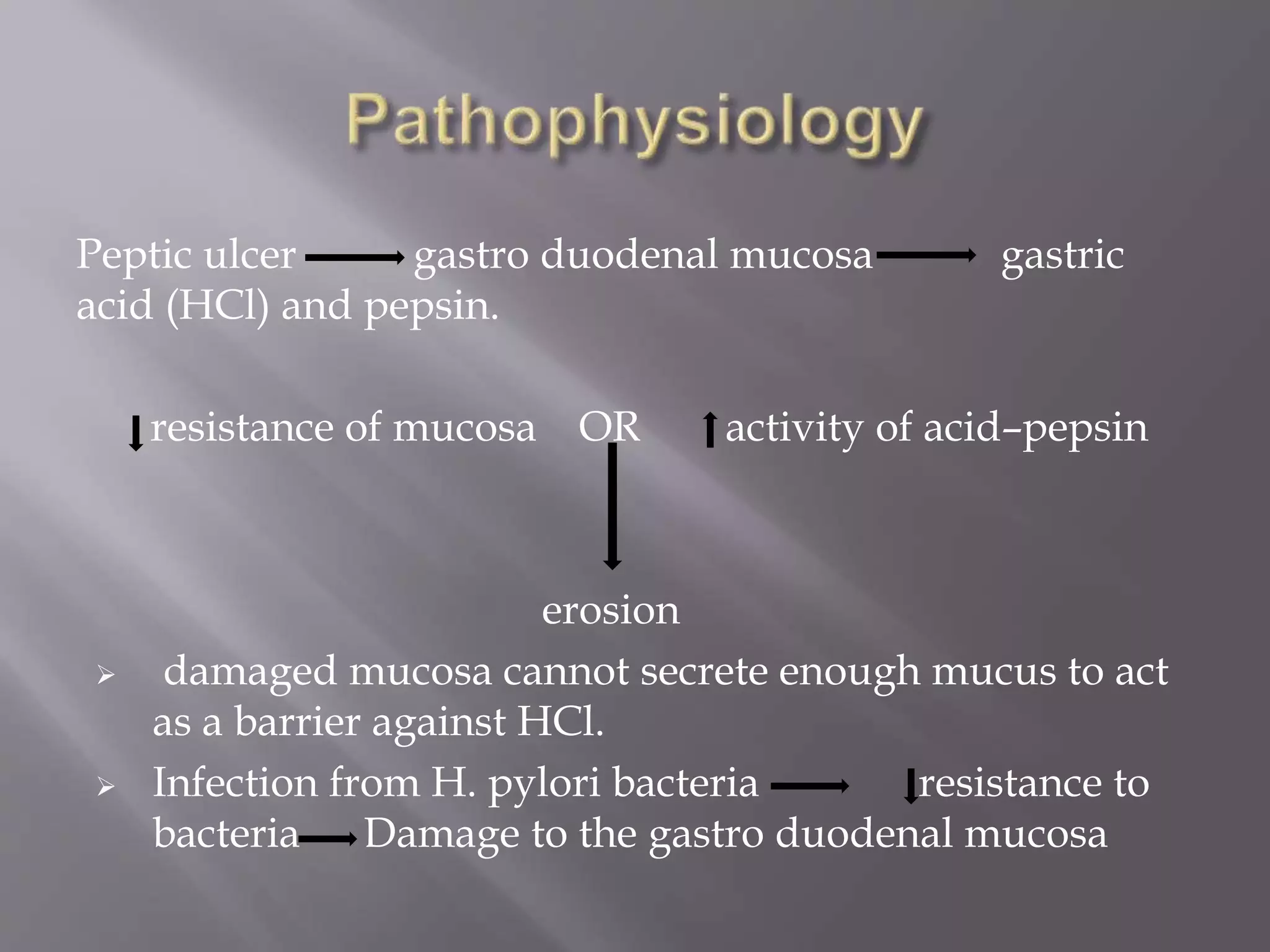
Peptic ulcer gastro duodenal mucosa gastric
acid (HCl) and pepsin.
resistance of mucosa OR activity of acid–pepsin
erosion
 damaged mucosa cannot secrete enough mucus to act
as a barrier against HCl.
 Infection from H. pylori bacteria resistance to
bacteria Damage to the gastro duodenal mucosa
Stress ulcer
the ulceration is preceded by shock
decreased gastric mucosal blood flow
reflux of duodenal contents into the
stomach
large quantities of pepsin are released.
The combination of ischemia, acid, and
pepsin creates an ideal climate for
ulceration
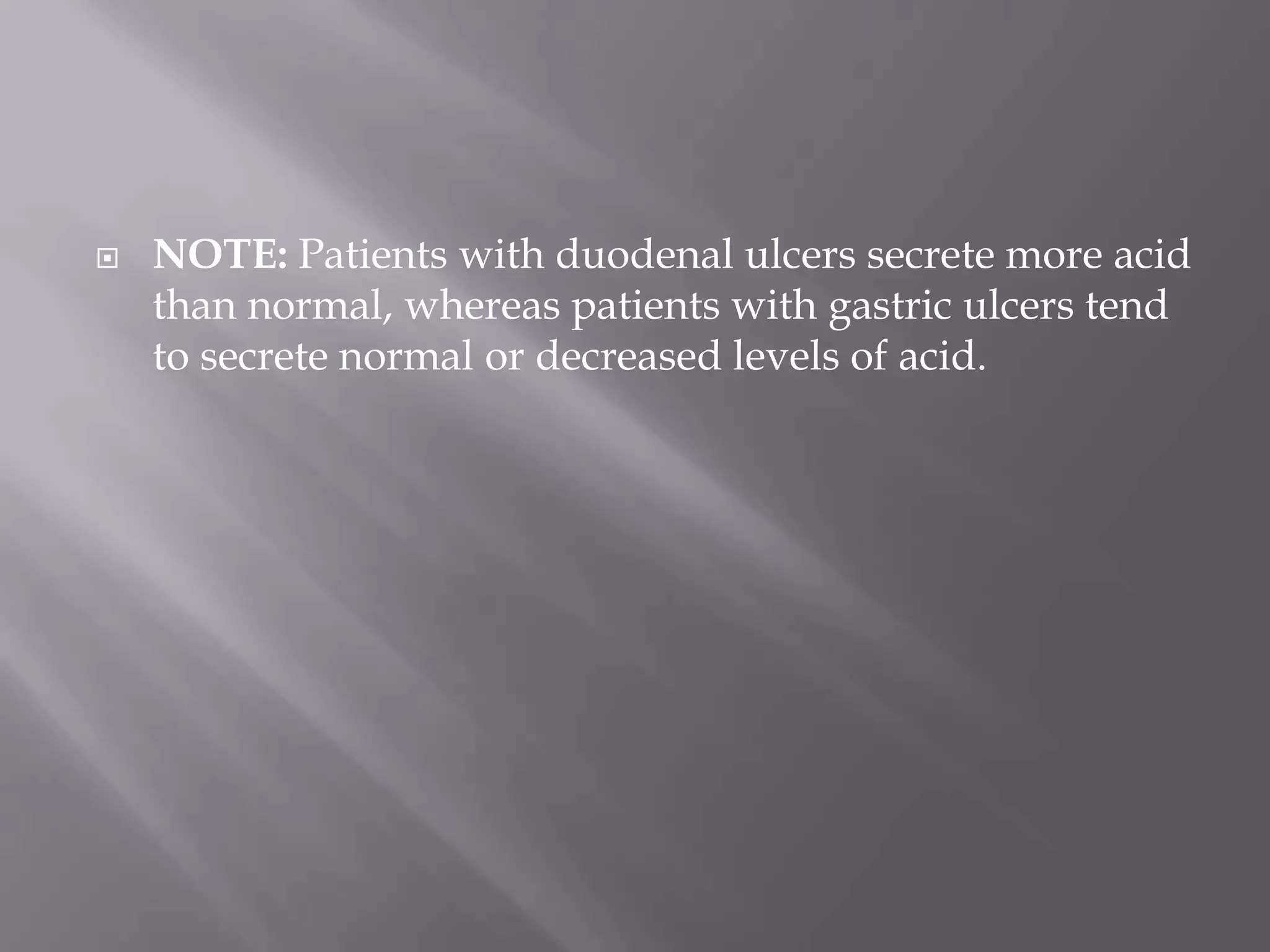
 NOTE: Patients with duodenal ulcers secrete more acid
than normal, whereas patients with gastric ulcers tend
to secrete normal or decreased levels of acid.
 Greatest frequency in people between 40 and 60 years of
age.
 uncommon in women of childbearing age, but it has been
observed in children and even in infants.
 stress and anxiety
 gram-negative bacteria H.pylori
 excessive secretion of HCl
 ingestion of milk and caffeinated beverages
 Smoking
 alcohol
 patients with
 tumors that cause secretion of excessive amounts of the
hormone gastrin
 Zollinger-Ellison syndrome (ZES)
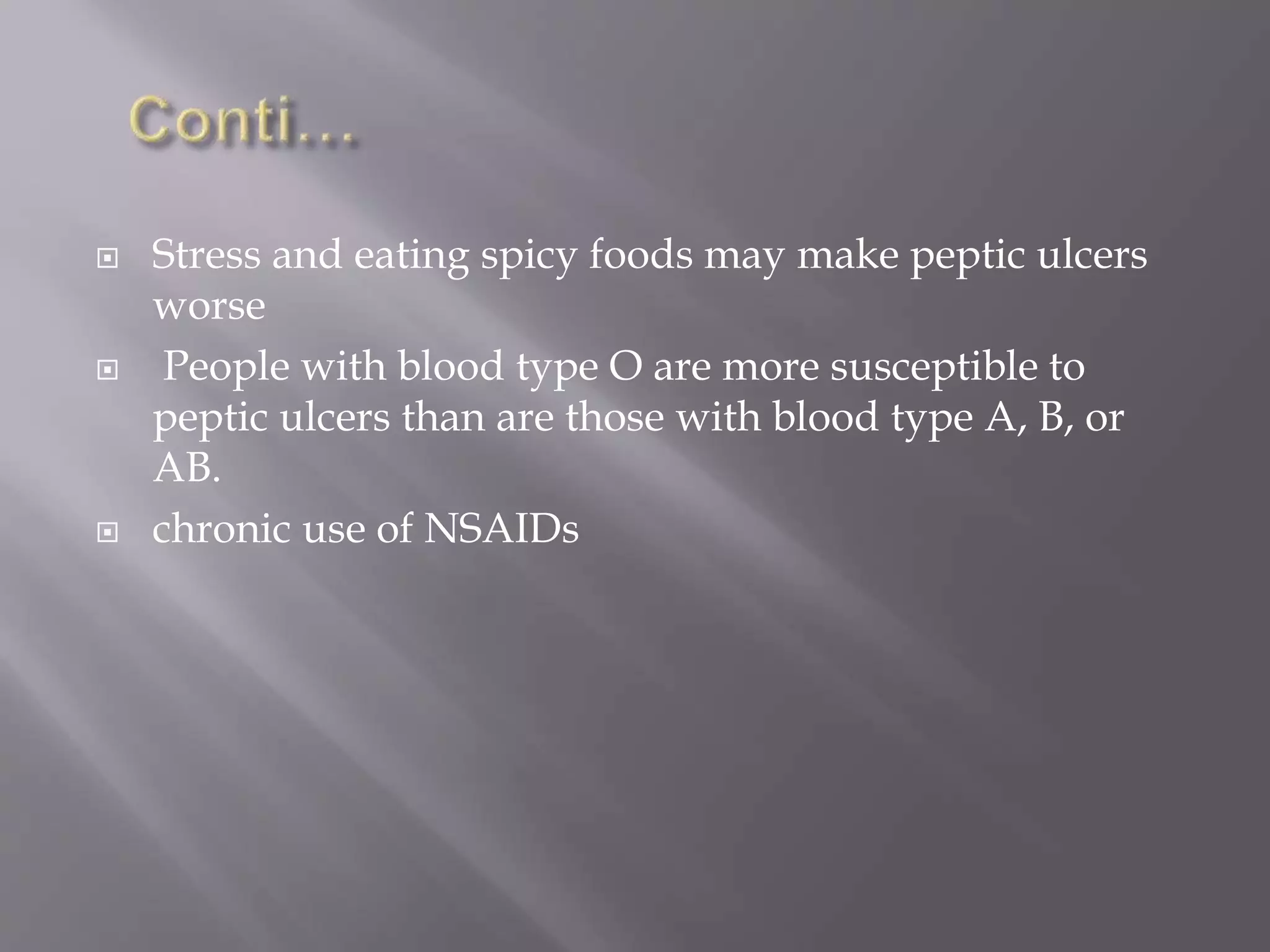
 Stress and eating spicy foods may make peptic ulcers
worse
 People with blood type O are more susceptible to
peptic ulcers than are those with blood type A, B, or
AB.
 chronic use of NSAIDs
 patient with an ulcer complains of dull, gnawing pain or a
burning sensation in the midepigastrium or the back.
 localized tenderness
 pyrosis (heartburn)
 vomiting
 constipation or diarrhea
 Bleeding Heartburn is often accompanied by sour
eructation,
or burping, which is common when the patient’s stomach is
empty.
 Fifteen percent of patients with peptic ulcer experience
bleeding
 Hemorrhage. Hemorrhage, the most common
complication, occurs in 10% to 20% of patients with
peptic ulcers in the form of hematemesis or melena.
 Perforation and penetration. Perforation is the erosion
of the ulcer through the gastric serosa into the
peritoneal cavity without warning, while penetration is
the erosion of the ulcer through the gastric serosa into
adjacent structures.
 Pyloric obstruction. Pyloric obstruction occurs when
the area distal to the pyloric sphincter becomes scarred
and stenosed from spasm or edema or from scar tissue
that forms when an ulcer alternately heals and breaks
down.
 A physical examination may reveal pain, epigastric
tenderness, or abdominal distention
 barium study
 endoscopy is the preferred diagnostic procedure
 serologic testing for antibodies against the H. pylori
antigen
 stool antigen test
 urea breath test
 The goals are to eradicate H.pylori and to manage
gastric acidity.
 Methods used include:
 medications
 lifestyle changes,
 and surgical intervention.
 the most commonly used therapy for peptic ulcers is a
combination of antibiotics, proton pump inhibitors, and
bismuth salts that suppress or eradicate H. pylori.
 Recommended therapy for 10 to 14 days includes triple
therapy with two antibiotics (eg, metronidazole [Flagyl] or
amoxicillin [Amoxil] and clarithromycin [Biaxin]) plus a
proton pump inhibitor (eg, lansoprazole [Prevacid],
omeprazole [Prilosec], or rabeprazole [Aciphex])
 OR quadruple therapy with two antibiotics (metronidazole
and tetracycline) plus a proton pump inhibitor and bismuth
salts (Pepto-Bismol).
 Research is being conducted to develop a vaccine againstH.
pylori
 Histamine-2 (H2) receptor antagonists and proton
pump inhibitors
 Patients at risk for stress ulcers (eg, patients with head
injury or extensive burns) may be treated
prophylactically with IV H2 receptor antagonists and
cytoprotective agents (eg, misoprostol, sucralfate)
because of the risk of upper GI tract hemorrhage.
 ZES______Sandostatin(octreotide)
 Vagotomy, with or without Pyloroplasty (transecting
nerves that stimulate acid secretion and opening the
pylorus)
 antrectomy
 • Acute pain related to the effect of gastric acid
secretion on damaged tissue
 • Anxiety related to an acute illness
 • Imbalanced nutrition related to changes in diet
 • Deficient knowledge about prevention of symptoms
and management of the condition
 Relieving Pain
 Pain relief can be achieved with prescribed
medications. The patient should avoid aspirin, foods
and beverages that contain caffeine, and decaffeinated
coffee.
 Reducing Anxiety
 Maintaining Optimal Nutritional Status
 Monitoring and Managing Complications
Peptic ulcer
Peptic ulcer

Peptic ulcer

  • 1.
  • 2.
    At the endof this presentation students will be able to:  Define peptic ulcer  Describe pathophysiology of peptic ulcer  Enlist sign and symptom of peptic ulcer  Discuss complications of peptic ulcer  Describe medical management of peptic ulcer  Describe nursing diagnosis and nursing intervention of peptic ulcer
  • 3.
     Definition: A pepticulcer is an excavation (hollowed-out area) that forms in the mucosal wall of the stomach, in the pylorus (the opening between the stomach and duodenum), in the duodenum (the first part of the small intestine), or in the esophagus.  A peptic ulcer may be referred to as a gastric, duodenal, or esophageal ulcer, depending on its location.  Peptic ulcers are more likely to occur in the duodenum than in the stomach.
  • 4.
     Chronic gastriculcers tend to occur in the lesser curvature of the stomach, near the pylorus.  Esophageal ulcers occur as a result of the backward flow of HCl from the stomach into the esophagus (gastro esophageal reflux disease [GERD])  Duodenal ulcer. Peptic ulcers are more likely to occur in the duodenum than in the stomach
  • 5.
    Peptic ulcer gastroduodenal mucosa gastric acid (HCl) and pepsin. resistance of mucosa OR activity of acid–pepsin erosion  damaged mucosa cannot secrete enough mucus to act as a barrier against HCl.  Infection from H. pylori bacteria resistance to bacteria Damage to the gastro duodenal mucosa
  • 6.
    Stress ulcer the ulcerationis preceded by shock decreased gastric mucosal blood flow reflux of duodenal contents into the stomach large quantities of pepsin are released. The combination of ischemia, acid, and pepsin creates an ideal climate for ulceration
  • 7.
     NOTE: Patientswith duodenal ulcers secrete more acid than normal, whereas patients with gastric ulcers tend to secrete normal or decreased levels of acid.
  • 10.
     Greatest frequencyin people between 40 and 60 years of age.  uncommon in women of childbearing age, but it has been observed in children and even in infants.  stress and anxiety  gram-negative bacteria H.pylori  excessive secretion of HCl  ingestion of milk and caffeinated beverages  Smoking  alcohol  patients with  tumors that cause secretion of excessive amounts of the hormone gastrin  Zollinger-Ellison syndrome (ZES)
  • 11.
     Stress andeating spicy foods may make peptic ulcers worse  People with blood type O are more susceptible to peptic ulcers than are those with blood type A, B, or AB.  chronic use of NSAIDs
  • 13.
     patient withan ulcer complains of dull, gnawing pain or a burning sensation in the midepigastrium or the back.  localized tenderness  pyrosis (heartburn)  vomiting  constipation or diarrhea  Bleeding Heartburn is often accompanied by sour eructation, or burping, which is common when the patient’s stomach is empty.  Fifteen percent of patients with peptic ulcer experience bleeding
  • 14.
     Hemorrhage. Hemorrhage,the most common complication, occurs in 10% to 20% of patients with peptic ulcers in the form of hematemesis or melena.  Perforation and penetration. Perforation is the erosion of the ulcer through the gastric serosa into the peritoneal cavity without warning, while penetration is the erosion of the ulcer through the gastric serosa into adjacent structures.  Pyloric obstruction. Pyloric obstruction occurs when the area distal to the pyloric sphincter becomes scarred and stenosed from spasm or edema or from scar tissue that forms when an ulcer alternately heals and breaks down.
  • 15.
     A physicalexamination may reveal pain, epigastric tenderness, or abdominal distention  barium study  endoscopy is the preferred diagnostic procedure  serologic testing for antibodies against the H. pylori antigen  stool antigen test  urea breath test
  • 16.
     The goalsare to eradicate H.pylori and to manage gastric acidity.  Methods used include:  medications  lifestyle changes,  and surgical intervention.
  • 17.
     the mostcommonly used therapy for peptic ulcers is a combination of antibiotics, proton pump inhibitors, and bismuth salts that suppress or eradicate H. pylori.  Recommended therapy for 10 to 14 days includes triple therapy with two antibiotics (eg, metronidazole [Flagyl] or amoxicillin [Amoxil] and clarithromycin [Biaxin]) plus a proton pump inhibitor (eg, lansoprazole [Prevacid], omeprazole [Prilosec], or rabeprazole [Aciphex])  OR quadruple therapy with two antibiotics (metronidazole and tetracycline) plus a proton pump inhibitor and bismuth salts (Pepto-Bismol).  Research is being conducted to develop a vaccine againstH. pylori
  • 18.
     Histamine-2 (H2)receptor antagonists and proton pump inhibitors  Patients at risk for stress ulcers (eg, patients with head injury or extensive burns) may be treated prophylactically with IV H2 receptor antagonists and cytoprotective agents (eg, misoprostol, sucralfate) because of the risk of upper GI tract hemorrhage.  ZES______Sandostatin(octreotide)
  • 19.
     Vagotomy, withor without Pyloroplasty (transecting nerves that stimulate acid secretion and opening the pylorus)  antrectomy
  • 20.
     • Acutepain related to the effect of gastric acid secretion on damaged tissue  • Anxiety related to an acute illness  • Imbalanced nutrition related to changes in diet  • Deficient knowledge about prevention of symptoms and management of the condition
  • 21.
     Relieving Pain Pain relief can be achieved with prescribed medications. The patient should avoid aspirin, foods and beverages that contain caffeine, and decaffeinated coffee.  Reducing Anxiety  Maintaining Optimal Nutritional Status  Monitoring and Managing Complications