Peptic Ulcer Disease
Dr. Husham Aldaoseri
8.NOV.2023
Peptic Ulcer Disease (PUD)
Objectives:
1. Define the following terms: peptic ulcer, gastric ulcer,
2. Discuss the different etiologic factors of PUD
3. List the role of H.pylori as the main cause of PUD.
4. Discuss the different diagnostic methods of PUD
5. Discuss the complications of PUD
6. Discuss the treatment of PUD
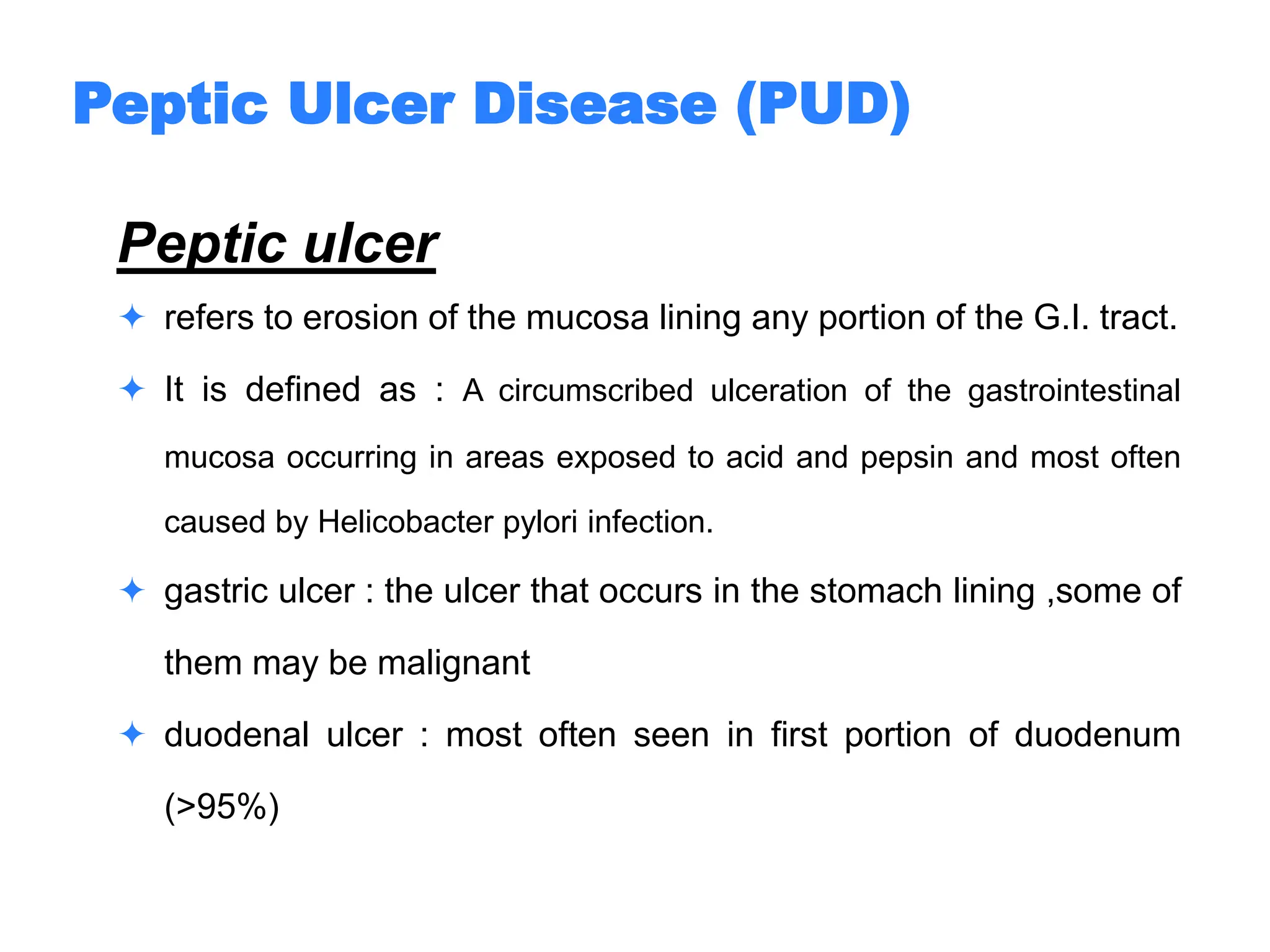
Peptic ulcer
 refers to erosion of the mucosa lining any portion of the G.I. tract.
 It is defined as : A circumscribed ulceration of the gastrointestinal
mucosa occurring in areas exposed to acid and pepsin and most often
caused by Helicobacter pylori infection.
 gastric ulcer : the ulcer that occurs in the stomach lining ,some of
them may be malignant
 duodenal ulcer : most often seen in first portion of duodenum
(>95%)
Peptic Ulcer Disease (PUD)
Ulcer
1. Peptic ulcer
2. Stress ulcers (acute gastric ulcers)
 Ulcer: a breach in the mucosa of
the alimentary tract that may
extend through muscularis
mucosa into submucosa or
deeper.
 About 6% of patients attending a
dentist office will have peptic
ulcer disease
 The lifetime prevalence of peptic
ulcers ranges from 11 to 14% for
men and 8 to 11% for women.
Normal
Esophagus & Stomach
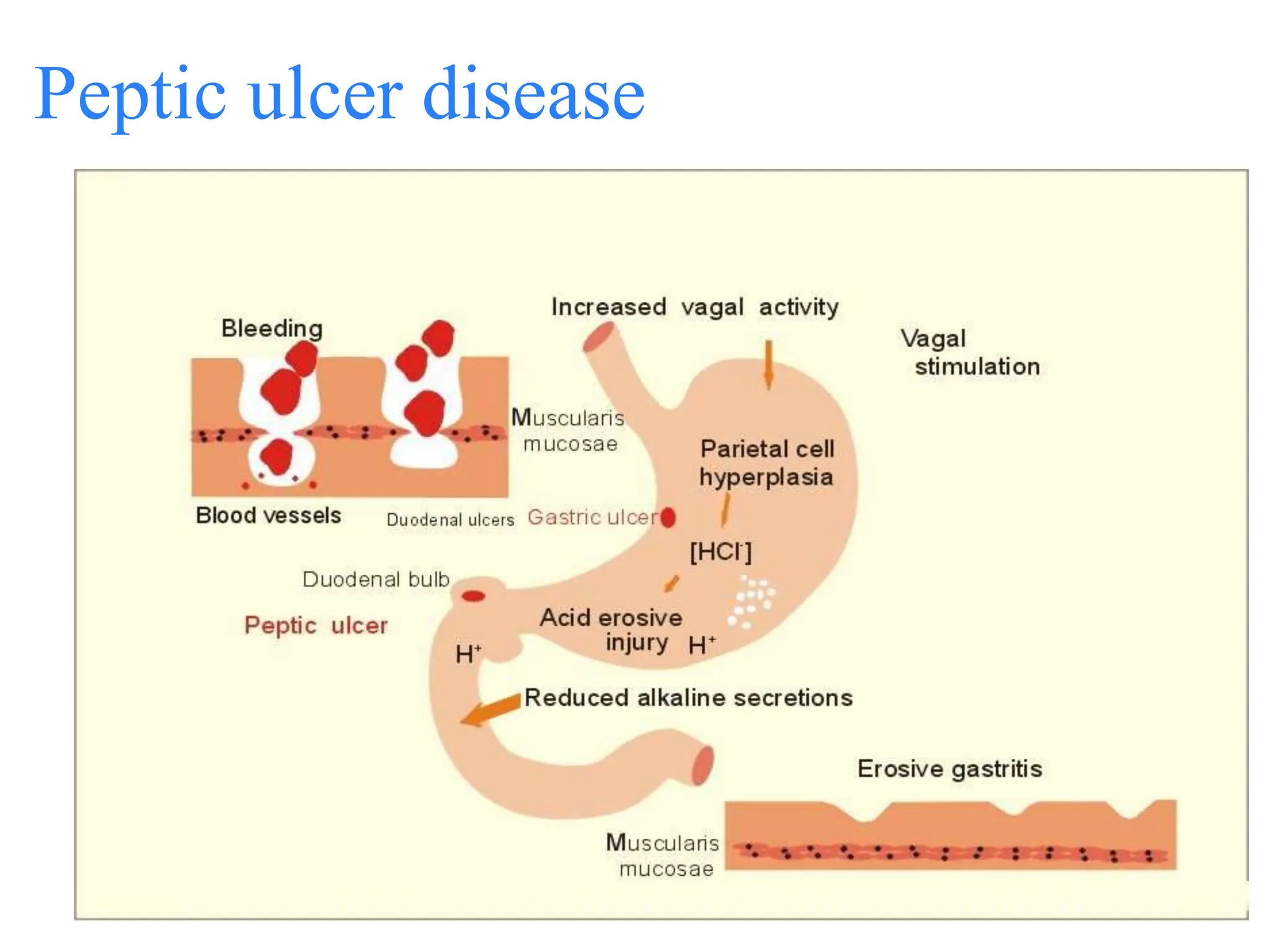
Peptic ulcer disease
Pathogenesis of Ulcers
Aggressive Factors
Acid, pepsin
Bile salts
Drugs (NSAIDs)
H. pylori
Defensive Factors
Mucus, bicarbonate layer
Blood flow, cell renewal
Prostaglandins
Phospholipid
Free radical scavengers
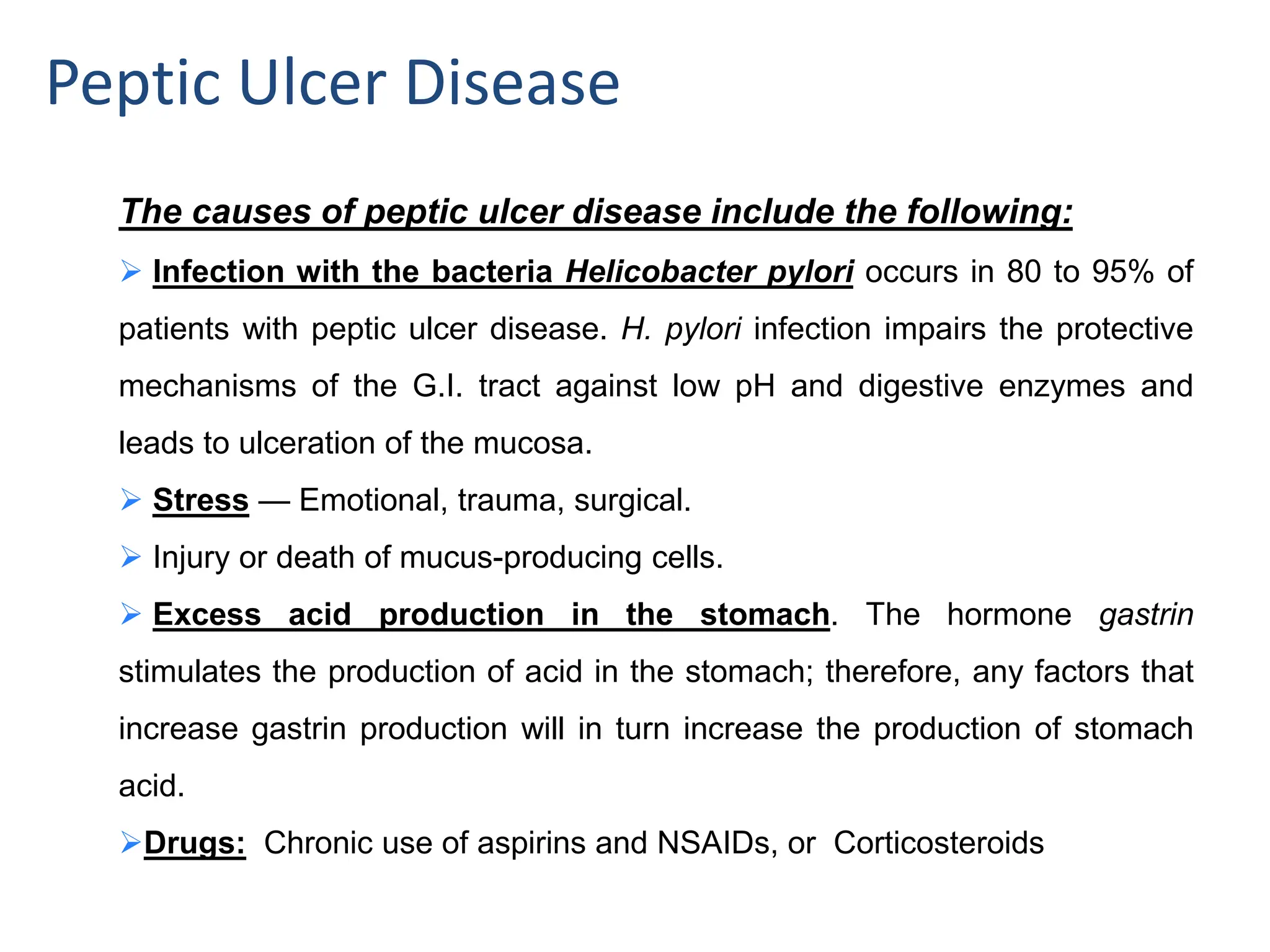
The causes of peptic ulcer disease include the following:
 Infection with the bacteria Helicobacter pylori occurs in 80 to 95% of
patients with peptic ulcer disease. H. pylori infection impairs the protective
mechanisms of the G.I. tract against low pH and digestive enzymes and
leads to ulceration of the mucosa.
 Stress — Emotional, trauma, surgical.
 Injury or death of mucus-producing cells.
 Excess acid production in the stomach. The hormone gastrin
stimulates the production of acid in the stomach; therefore, any factors that
increase gastrin production will in turn increase the production of stomach
acid.
Drugs: Chronic use of aspirins and NSAIDs, or Corticosteroids
Peptic Ulcer Disease
ETIOLOGIC FACTORS OF PUD
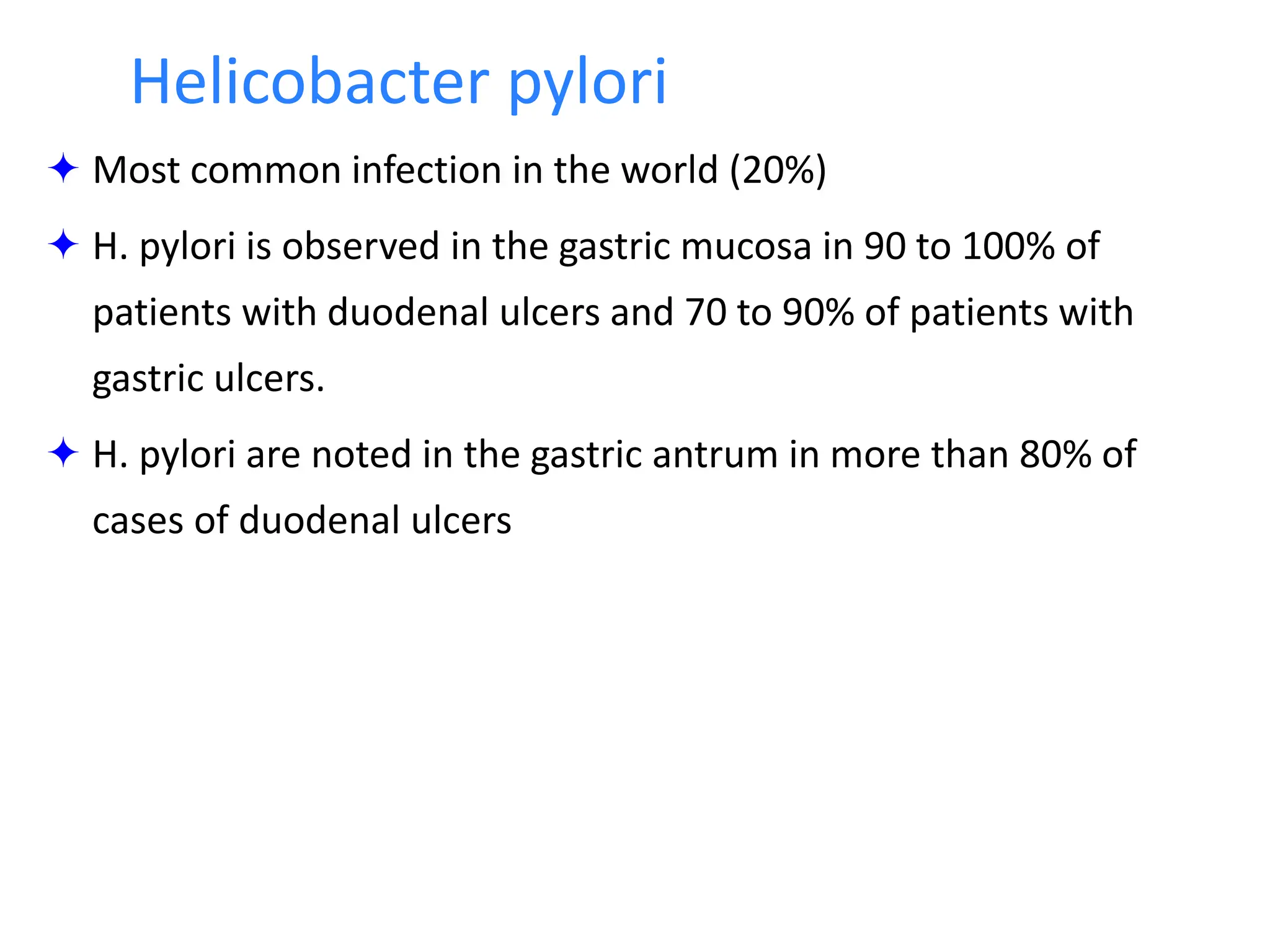
 Most common infection in the world (20%)
 H. pylori is observed in the gastric mucosa in 90 to 100% of
patients with duodenal ulcers and 70 to 90% of patients with
gastric ulcers.
 H. pylori are noted in the gastric antrum in more than 80% of
cases of duodenal ulcers
Helicobacter pylori
Helicobacter pylori
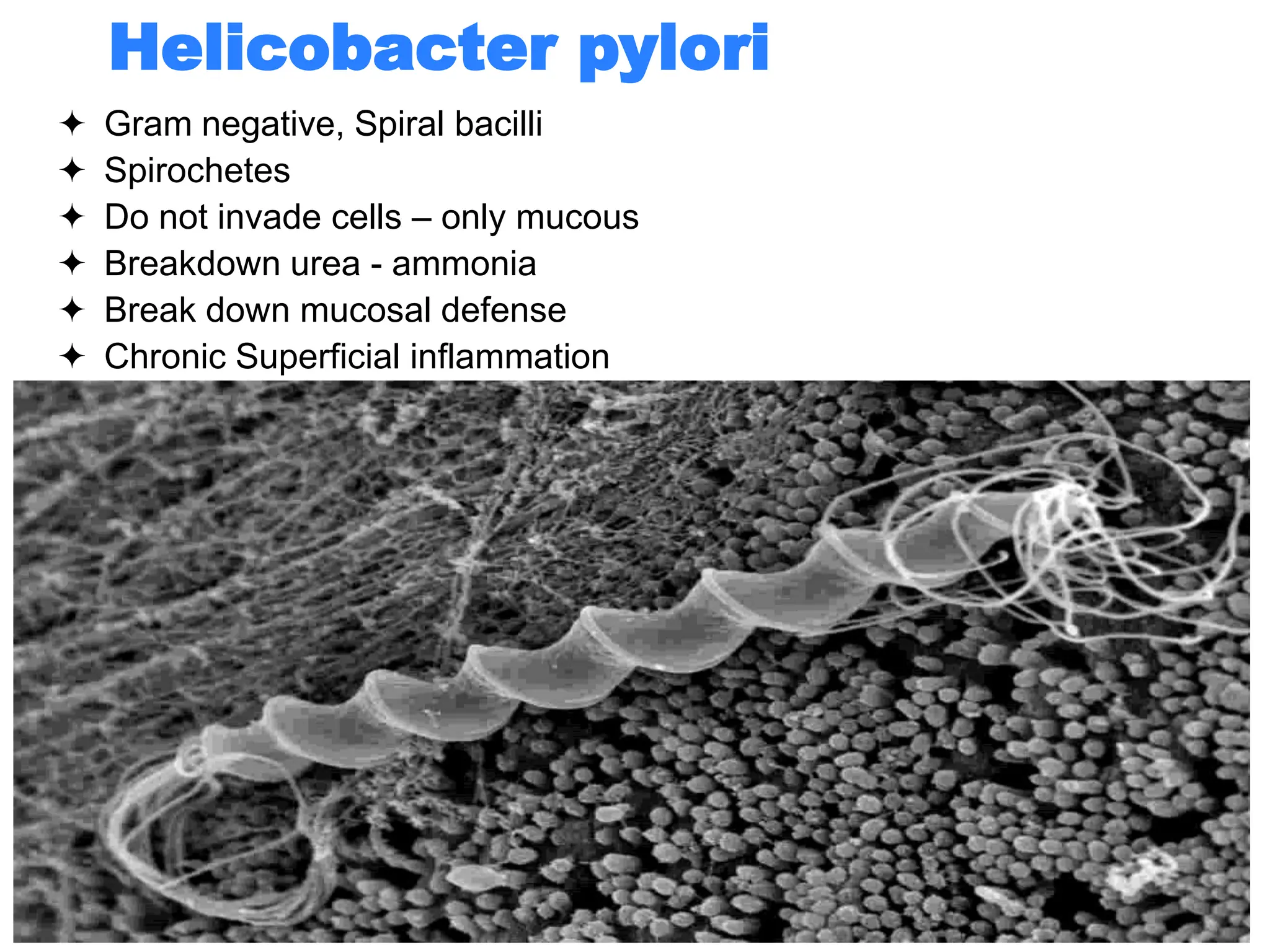
 Gram negative, Spiral bacilli
 Spirochetes
 Do not invade cells – only mucous
 Breakdown urea - ammonia
 Break down mucosal defense
 Chronic Superficial inflammation
 duodenal sites are 4x as common as
gastric sites
 most common in middle age with peak
30-50 years
 Male to female ratio—4:1
 Genetic link: 3x more common in 1st
degree relatives
 more common with blood group O
 associated with increased serum
pepsinogen
 H. pylori infection common,up to 95%
 smoking is twice as common
 common in late middle age.
 incidence increases with age.
 Male to female ratio—2:1
 More common with bl. group A
 Use of NSAIDs: associated with a
three- to four-fold increase in risk
of gastric ulcer
 Less related to H. pylori than
duodenal ulcers : about 80%
 10 - 20% of patients with a gastric
ulcer have a concomitant duodenal
ulcer
Duodenal Ulcer Vs. Gastric Ulcer
Clinical features
• Epigastric pain (the most common symptom)
– Gnawing or burning sensation
– Occurs 2-3 hours after meals
– Relieved by food or antacids
– Patient awakens with pain at night.
Some present with complications such as iron deficiency
anemia, obstruction, frank hemorrhage, or perforation.
Oral manifestations of peptic ulcer disease
 Rare unless there is severe anemia from gastrointestinal
bleeding or persistent regurgitation of gastric acid as a result
of pyloric stenosis that leads to dental erosion, typically of the
palatal aspect of the maxillary teeth.
 Vascular malformations of the lip have been reported and
range from a very small macule to a large venous pool.
 H. pylori has been islolated from dental plaque implicating the
oral cavity as a potential source of this organism which is
responsible for both peptic ulcer disease and gastric cancer.
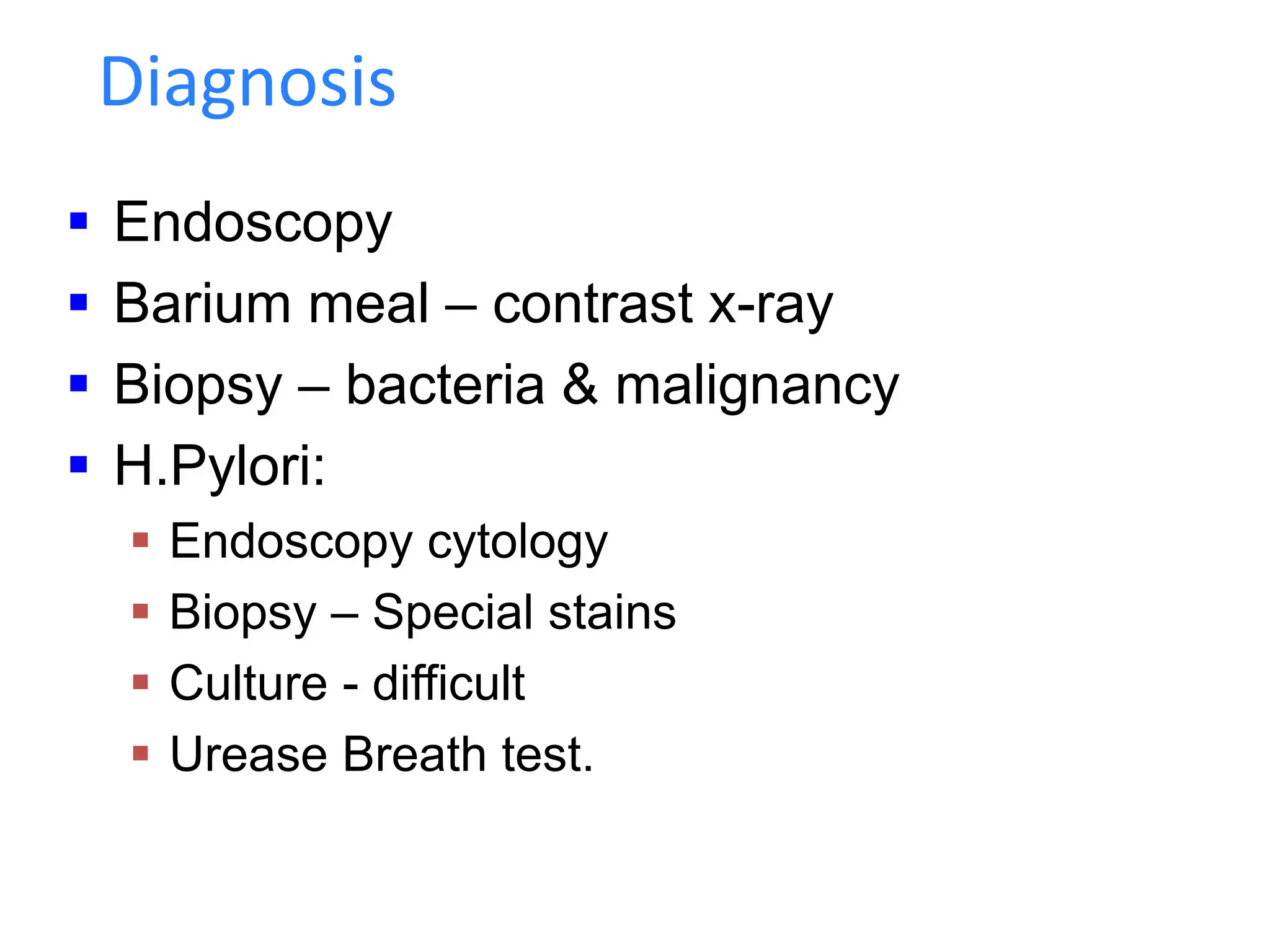
 Endoscopy
 Barium meal – contrast x-ray
 Biopsy – bacteria & malignancy
 H.Pylori:
 Endoscopy cytology
 Biopsy – Special stains
 Culture - difficult
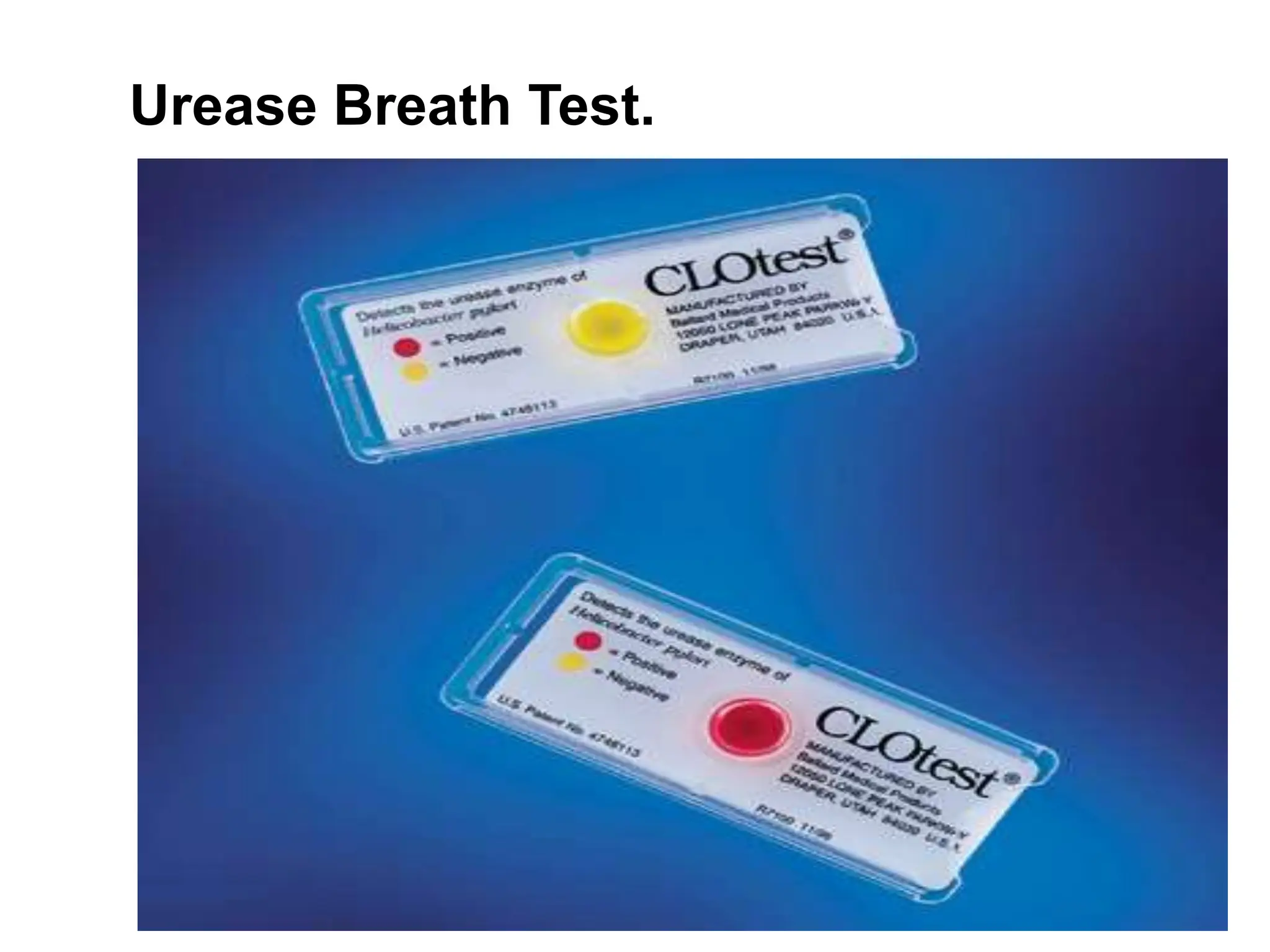
 Urease Breath test.
Diagnosis
Urease Breath Test.
 Bleeding – Chronic, Acute, Massive
 Fibrosis, Stricture obstruction – pyloric stenosis.
 Perforation – Peritonitis- emergency.
 Gastric carcinoma. (not duodenal carcinoma)
Complications
Non-pharmacological Treatment of
Peptic ulcer
1-Avoid spicy food.
2-Avoid xanthin containing beverges.
3-Avoid Alcohol.
4-Avoid Smoking.
5-Avoid heavy meals.
6-Encourage small frequent low caloric
meals.
7-Avoid ulcerating drugs e.g. NSAIDs,
corticosteroids, xanthines and
parasympathomimetics
Treatment
Triple therapy for 14 days is considered the ttt of choice.
Proton Pump Inhibitor + clarithromycin and amoxicillin
Omeprazole
Lansoprazole
Rabeprazole
Esomeprazole (Nexium):
Clarithromycin
 and Amoxicillin
• Can substitute Flagyl 500 mg PO bid for 14 d if allergic to Penicillin.
 lengthy dental procedures should be avoided or divided over
shorter appointments to minimize stress.
 To avoid aspirations, patients should not be left in a supine or
subsupine position for lengthy periods during dental appointments.
 Dentists should avoid administering aspirin and other NSAIDs.
Instead, acetaminophen products should be recommended.
 the antacids contain calcium, magnesium, and aluminum salts that
bind antibiotics, such as erythromycin and tetracycline, may
decrease the absorption of the antibiotic as much as 75 to 85%.
 Exogenous steroid administration should be avoided.
 treated the hyposalivation and dry mouth (xerostomia).
 Prior to extensive oral surgical or periodontal procedures,
physicians should be consulted

peptic ulcer management and Treatment ppt

  • 1.
    Peptic Ulcer Disease Dr.Husham Aldaoseri 8.NOV.2023
  • 2.
    Peptic Ulcer Disease(PUD) Objectives: 1. Define the following terms: peptic ulcer, gastric ulcer, 2. Discuss the different etiologic factors of PUD 3. List the role of H.pylori as the main cause of PUD. 4. Discuss the different diagnostic methods of PUD 5. Discuss the complications of PUD 6. Discuss the treatment of PUD
  • 3.
    Peptic ulcer  refersto erosion of the mucosa lining any portion of the G.I. tract.  It is defined as : A circumscribed ulceration of the gastrointestinal mucosa occurring in areas exposed to acid and pepsin and most often caused by Helicobacter pylori infection.  gastric ulcer : the ulcer that occurs in the stomach lining ,some of them may be malignant  duodenal ulcer : most often seen in first portion of duodenum (>95%) Peptic Ulcer Disease (PUD)
  • 4.
    Ulcer 1. Peptic ulcer 2.Stress ulcers (acute gastric ulcers)  Ulcer: a breach in the mucosa of the alimentary tract that may extend through muscularis mucosa into submucosa or deeper.  About 6% of patients attending a dentist office will have peptic ulcer disease  The lifetime prevalence of peptic ulcers ranges from 11 to 14% for men and 8 to 11% for women.
  • 5.
  • 6.
  • 7.
    Pathogenesis of Ulcers AggressiveFactors Acid, pepsin Bile salts Drugs (NSAIDs) H. pylori Defensive Factors Mucus, bicarbonate layer Blood flow, cell renewal Prostaglandins Phospholipid Free radical scavengers
  • 8.
    The causes ofpeptic ulcer disease include the following:  Infection with the bacteria Helicobacter pylori occurs in 80 to 95% of patients with peptic ulcer disease. H. pylori infection impairs the protective mechanisms of the G.I. tract against low pH and digestive enzymes and leads to ulceration of the mucosa.  Stress — Emotional, trauma, surgical.  Injury or death of mucus-producing cells.  Excess acid production in the stomach. The hormone gastrin stimulates the production of acid in the stomach; therefore, any factors that increase gastrin production will in turn increase the production of stomach acid. Drugs: Chronic use of aspirins and NSAIDs, or Corticosteroids Peptic Ulcer Disease
  • 9.
  • 10.
     Most commoninfection in the world (20%)  H. pylori is observed in the gastric mucosa in 90 to 100% of patients with duodenal ulcers and 70 to 90% of patients with gastric ulcers.  H. pylori are noted in the gastric antrum in more than 80% of cases of duodenal ulcers Helicobacter pylori
  • 11.
    Helicobacter pylori  Gramnegative, Spiral bacilli  Spirochetes  Do not invade cells – only mucous  Breakdown urea - ammonia  Break down mucosal defense  Chronic Superficial inflammation
  • 12.
     duodenal sitesare 4x as common as gastric sites  most common in middle age with peak 30-50 years  Male to female ratio—4:1  Genetic link: 3x more common in 1st degree relatives  more common with blood group O  associated with increased serum pepsinogen  H. pylori infection common,up to 95%  smoking is twice as common  common in late middle age.  incidence increases with age.  Male to female ratio—2:1  More common with bl. group A  Use of NSAIDs: associated with a three- to four-fold increase in risk of gastric ulcer  Less related to H. pylori than duodenal ulcers : about 80%  10 - 20% of patients with a gastric ulcer have a concomitant duodenal ulcer Duodenal Ulcer Vs. Gastric Ulcer
  • 13.
    Clinical features • Epigastricpain (the most common symptom) – Gnawing or burning sensation – Occurs 2-3 hours after meals – Relieved by food or antacids – Patient awakens with pain at night. Some present with complications such as iron deficiency anemia, obstruction, frank hemorrhage, or perforation.
  • 14.
    Oral manifestations ofpeptic ulcer disease  Rare unless there is severe anemia from gastrointestinal bleeding or persistent regurgitation of gastric acid as a result of pyloric stenosis that leads to dental erosion, typically of the palatal aspect of the maxillary teeth.  Vascular malformations of the lip have been reported and range from a very small macule to a large venous pool.  H. pylori has been islolated from dental plaque implicating the oral cavity as a potential source of this organism which is responsible for both peptic ulcer disease and gastric cancer.
  • 15.
     Endoscopy  Bariummeal – contrast x-ray  Biopsy – bacteria & malignancy  H.Pylori:  Endoscopy cytology  Biopsy – Special stains  Culture - difficult  Urease Breath test. Diagnosis
  • 16.
  • 17.
     Bleeding –Chronic, Acute, Massive  Fibrosis, Stricture obstruction – pyloric stenosis.  Perforation – Peritonitis- emergency.  Gastric carcinoma. (not duodenal carcinoma) Complications
  • 18.
    Non-pharmacological Treatment of Pepticulcer 1-Avoid spicy food. 2-Avoid xanthin containing beverges. 3-Avoid Alcohol. 4-Avoid Smoking. 5-Avoid heavy meals. 6-Encourage small frequent low caloric meals. 7-Avoid ulcerating drugs e.g. NSAIDs, corticosteroids, xanthines and parasympathomimetics
  • 19.
    Treatment Triple therapy for14 days is considered the ttt of choice. Proton Pump Inhibitor + clarithromycin and amoxicillin Omeprazole Lansoprazole Rabeprazole Esomeprazole (Nexium): Clarithromycin  and Amoxicillin • Can substitute Flagyl 500 mg PO bid for 14 d if allergic to Penicillin.
  • 20.
     lengthy dentalprocedures should be avoided or divided over shorter appointments to minimize stress.  To avoid aspirations, patients should not be left in a supine or subsupine position for lengthy periods during dental appointments.  Dentists should avoid administering aspirin and other NSAIDs. Instead, acetaminophen products should be recommended.  the antacids contain calcium, magnesium, and aluminum salts that bind antibiotics, such as erythromycin and tetracycline, may decrease the absorption of the antibiotic as much as 75 to 85%.
  • 21.
     Exogenous steroidadministration should be avoided.  treated the hyposalivation and dry mouth (xerostomia).  Prior to extensive oral surgical or periodontal procedures, physicians should be consulted