Group 5
By:Aishath Ifsha
Aminath Azma
Khadheejath Ayat
Fathimath Sara
Objectives
 Definition
 Signs/symptoms
 Etiology/cause
 Medical management
 Nursing management
 Health education
 Effects of disorder on elderly
 Conclusion
Definition
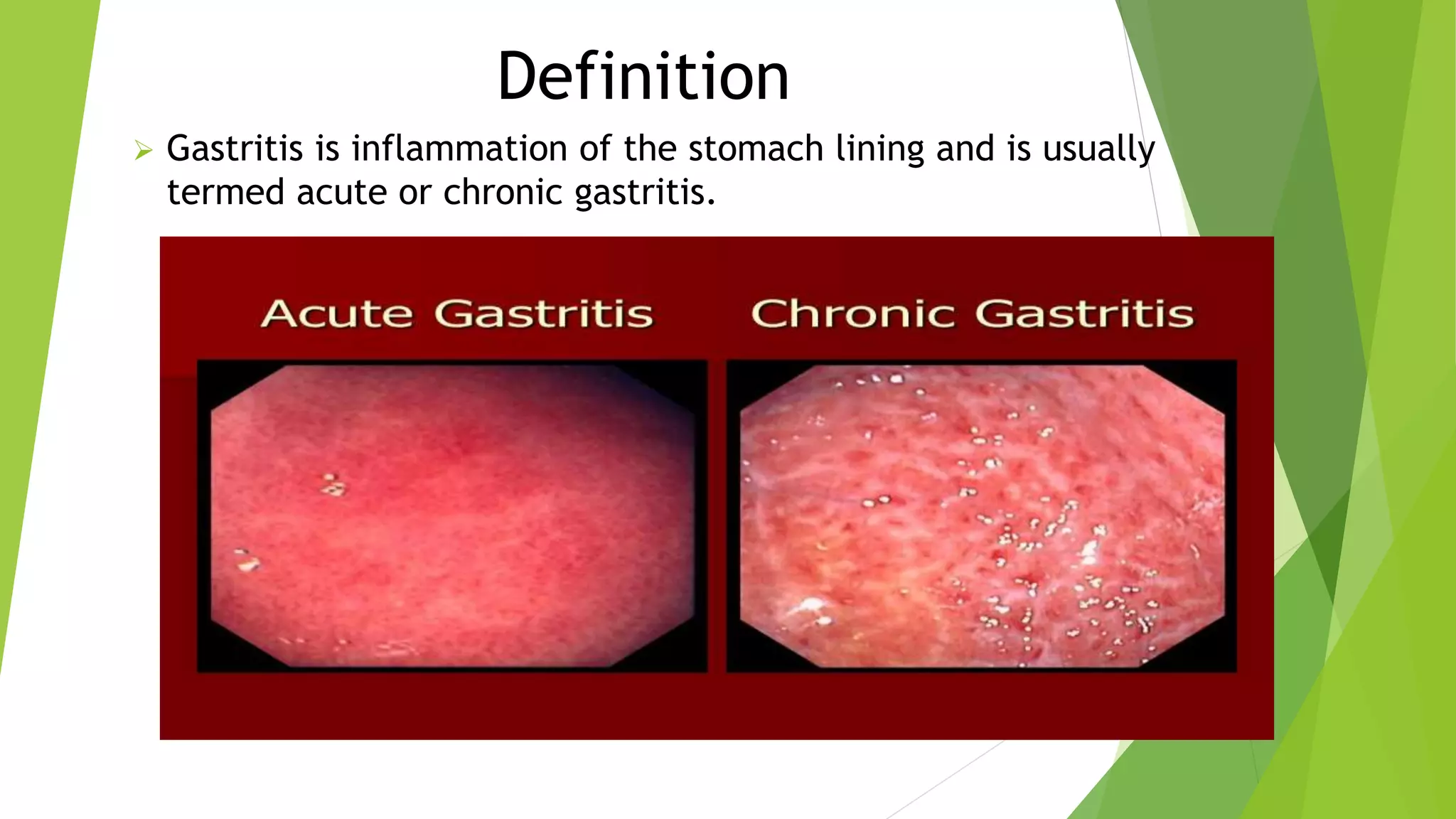
 Gastritis is inflammation of the stomach lining and is usually
termed acute or chronic gastritis.
Sign and symptoms
 Nausea or recurrent upset stomach
 Vomiting
 Indigestion
 Hiccups
 Loss of appetite
 Burning or gnawing feeling in the stomach between meals or at night
 Gnawing or burning ache or pain (indigestion) in your upper abdomen
 Feeling of fullness in your upper abdomen after eating
Etiology/Cause
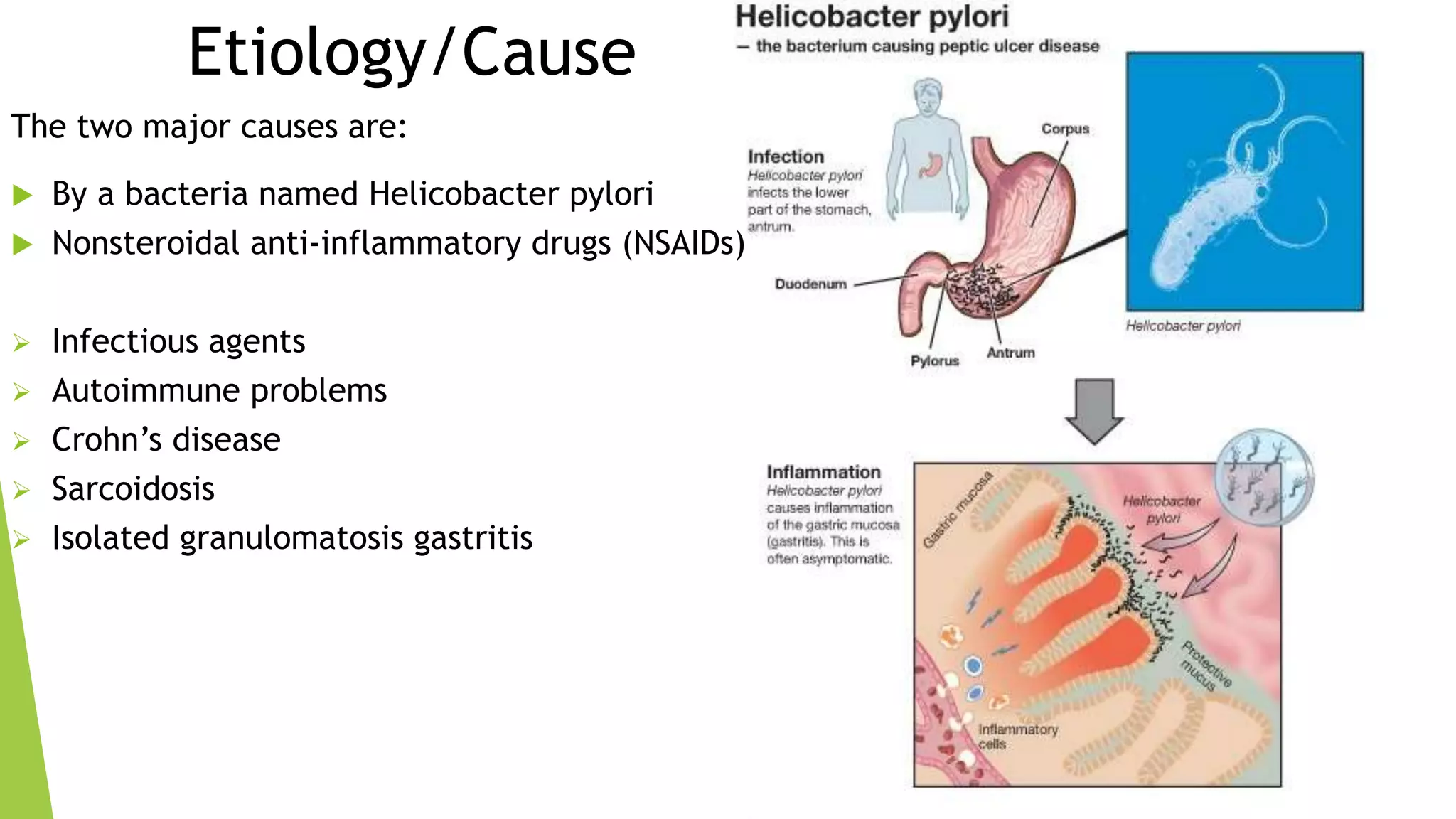
The two major causes are:
 By a bacteria named Helicobacter pylori
 Nonsteroidal anti-inflammatory drugs (NSAIDs)
 Infectious agents
 Autoimmune problems
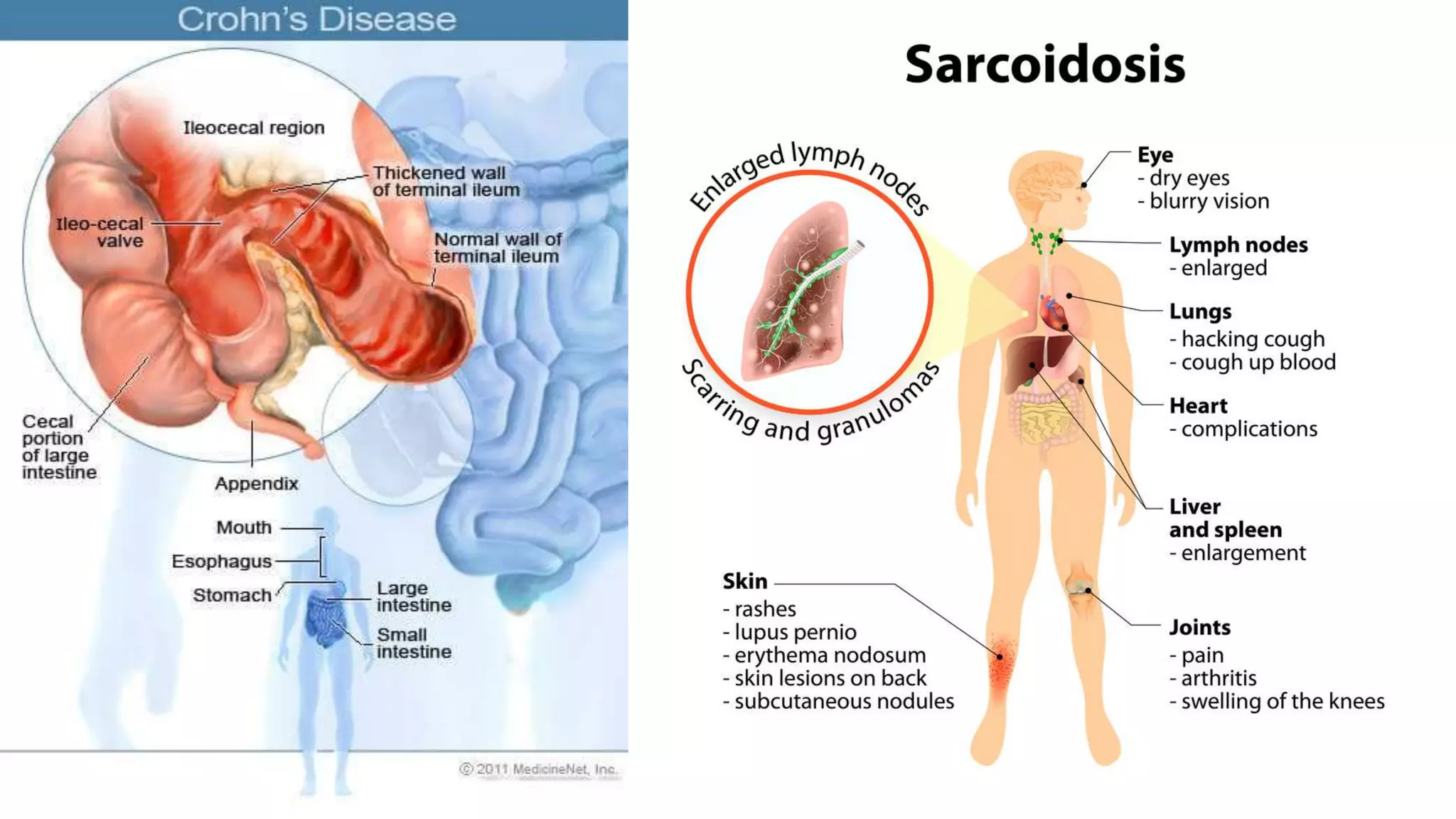
 Crohn’s disease
 Sarcoidosis
 Isolated granulomatosis gastritis
Medical management
 Antibiotic medications to kill H. pylori.
 Medications that block acid production and promote healing
 Proton pump inhibitors reduce acid by blocking the action of the parts of
cells that produce acid.
 Medications to reduce acid production
 Reduce amount of acid released
 Antacids that neutralize stomach acid
Nursing management
 If the patient is vomiting, give antiemetics
 Administer IV fluids as ordered
 Provide a bland diet that takes into account his/her food preference
 Offer smaller or more frequent servings
 Help patient identify specific foods that cause gastric upset
 Administer antacids
 Administer pain medications
 Monitor patients fluid intake and output
 Assess the patient for presence of bowel sounds
 Teach the patient about the disorder
Health Education
 Take medicines as directed
 Avoid NSAIDs
 Stop smoking
 Drink fluids and get plenty of rest
 Take soft foods
 Drink clear liquids
Effects of the disorder on elderly
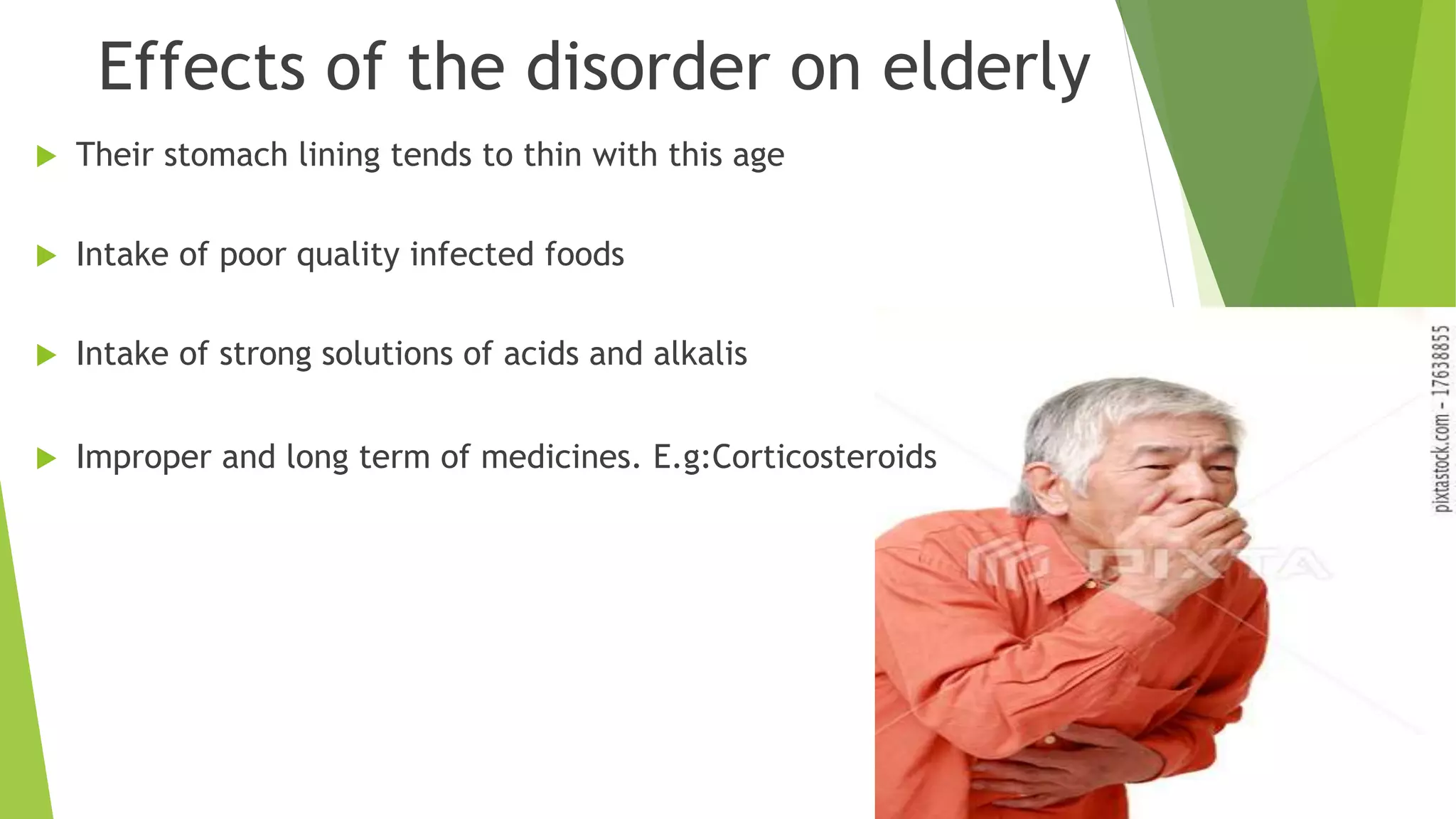
 Their stomach lining tends to thin with this age
 Intake of poor quality infected foods
 Intake of strong solutions of acids and alkalis
 Improper and long term of medicines. E.g:Corticosteroids
Conclusion
 Defintion
 Signs/symptoms
 Etiology/cause
 Medical management
 Nursing management
 Health education
 Effects of the disorder on elderly
Reference
 https://www.mayoclinic.org/diseases-conditions/gastritis/symptoms-causes/syc-
20355807(1998-2018)
 http://nursingfile.com/nursing-care-plan/nursing-interventions/nursing-interventions-for-
gastritis.html (2018)
 https://www.mayoclinic.org/diseases-conditions/gastritis/diagnosis-treatment/drc-20355813
(1998-2018)

Gastritis

  • 1.
    Group 5 By:Aishath Ifsha AminathAzma Khadheejath Ayat Fathimath Sara
  • 2.
    Objectives  Definition  Signs/symptoms Etiology/cause  Medical management  Nursing management  Health education  Effects of disorder on elderly  Conclusion
  • 3.
    Definition  Gastritis isinflammation of the stomach lining and is usually termed acute or chronic gastritis.
  • 4.
    Sign and symptoms Nausea or recurrent upset stomach  Vomiting  Indigestion  Hiccups  Loss of appetite  Burning or gnawing feeling in the stomach between meals or at night  Gnawing or burning ache or pain (indigestion) in your upper abdomen  Feeling of fullness in your upper abdomen after eating
  • 5.
    Etiology/Cause The two majorcauses are:  By a bacteria named Helicobacter pylori  Nonsteroidal anti-inflammatory drugs (NSAIDs)  Infectious agents  Autoimmune problems  Crohn’s disease  Sarcoidosis  Isolated granulomatosis gastritis
  • 7.
    Medical management  Antibioticmedications to kill H. pylori.  Medications that block acid production and promote healing  Proton pump inhibitors reduce acid by blocking the action of the parts of cells that produce acid.  Medications to reduce acid production  Reduce amount of acid released  Antacids that neutralize stomach acid
  • 8.
    Nursing management  Ifthe patient is vomiting, give antiemetics  Administer IV fluids as ordered  Provide a bland diet that takes into account his/her food preference  Offer smaller or more frequent servings  Help patient identify specific foods that cause gastric upset  Administer antacids  Administer pain medications  Monitor patients fluid intake and output  Assess the patient for presence of bowel sounds  Teach the patient about the disorder
  • 9.
    Health Education  Takemedicines as directed  Avoid NSAIDs  Stop smoking  Drink fluids and get plenty of rest  Take soft foods  Drink clear liquids
  • 10.
    Effects of thedisorder on elderly  Their stomach lining tends to thin with this age  Intake of poor quality infected foods  Intake of strong solutions of acids and alkalis  Improper and long term of medicines. E.g:Corticosteroids
  • 11.
    Conclusion  Defintion  Signs/symptoms Etiology/cause  Medical management  Nursing management  Health education  Effects of the disorder on elderly
  • 14.