Pediatric Nutrition
Objectives
o To recognize the changing nutritional needs
of children.
o To understand that nutritional
recommendations for children vary by age
and stage of development.
o To understand the global burden of child
malnutrition
Why nutrition?
o Energy of daily living
o Maintenance of all body functions
o Vital to growth and development
o Therapeutic benefits
Healing
Prevention
Determinants of Caloric Needs
o Basal metabolic rate (BMR)
o Activity level
o Growth (2x BMR during first year)
o Stress (infection, surgery, illness)
Nutritional recommendations
Infancy (Birth to 1 year)
o This is a critical period because the rate of
growth and development is more rapid than
any time in life.
o Milk is the sole source of nutrition up until 4
to 6 months of age.
o Milk could be in the form of breast milk,
infant formula, or a combination of both.
Cont…
o Breast feeding is superior to formula
feeding.
o WHO recommends exclusive breast feeding
the first 6 months of life, with continued
breast feeding along with appropriate
complementary foods through the first 2
years of life.
o Worldwide, it is estimated that only 34.8%
of infants are exclusively breastfed for the
first 6 months of life.
Cont…
Breast feeding advantages - Infant
o Immunologic benefits.
o Decreased incidence of ear infections, UTI,
gastroenteritis, respiratory illnesses, and
bacteremia.
o Convenient and ready to feed.
o Reduced chance of overfeeding?
o Fosters mother-infant bonding.
Cont…
BF advantages - Mother
o May delay return of ovulation.
o Loss of pregnancy-associated adipose
tissue and weight gain.
o Suppresses post-partum bleeding.
o Decreased breast cancer rate.
Cont…
o Solid foods (such as cereals, fruits and
vegetables) can be introduced when the
infant is developmentally and
physiologically ready by the age of 4 to 6
months.
o Gradual introduction of semisolid and solid
foods to the infant until s(h)e is accustomed
to the regular family diet.
o Complementary foods need to be
nutritionally adequate, safe, and
appropriately fed in order to meet the young
child’s energy and nutrient needs.
Cont…
Between Infancy and Childhood
o The period between age 1 and 2 is a
transition between infancy and childhood.
o There is dramatic decrease in growth rate
reflected in disinterest in food.
o Growth, BMR, and endless activity require
an energy supply of 1300 kcal/day for ages
1 to 3.
Cont…
Children 4 to 6 years old
o Children can have their independent eating
styles.
o Snacks form an integral part of the child’s
nutrient intake.
o Energy requirements increase to 1800 kcal/
day.
Cont…
Children 7 to 12 years old
o Actual growth may slow down at this stage
o The body is preparing for the puberty
growth spurt
o Puberty for girls may begin from around
age 9 and on and, for boys, puberty may be
reached in early teen years
o Energy requirements increase to 2000 to
2200 kcal/day
Growth monitoring
o Use growth charts
o Monitor trends in growth not one value
using wt, ht, HC (< 2 yrs), BMI.
o In general, normals fall within 5th-95th%ile.
o Evaluate changes in %iles.
o Malnutrition results in:
Decreased weight (acute), then height,
then head circumference (chronic).
Protein Energy Malnutrition
 Malnutrition is defined as the cellular
imbalance between the supply of nutrients
and energy and the body's demand for
them to ensure growth, maintenance, and
specific functions.
 Malnutrition :overnutrition (obesity) and
undernutrition
Cont…
 It is accompanied by deficiency of several
micronutrients.
 The origin of protein-energy malnutrition
(PEM) can be primary or secondary.
Cont…
Historical Background
 1930s
Dr. Cicely Williams described kwashiorkor
 1940s
researchers showed that most patients with
kwashiorkor had low concentrations of
serum proteins
Cont…
 1950s
PEM gained worldwide recognition
 1960s
Studies done since this period have
shown that marasmus and kwashiorkor
have distinct metabolic features.
Epidemiology
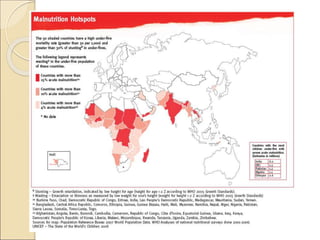
 Child malnutrition remains a major public
health problem in almost all developing
countries.
 In some of these countries, severe
malnutrition is the most common reason
for pediatric hospitalization.
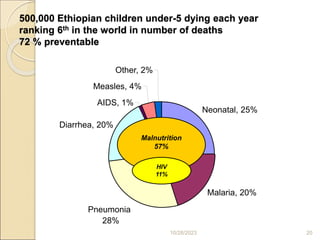
500,000 Ethiopian children under-5 dying each year
ranking 6th in the world in number of deaths
72 % preventable
10/28/2023 20
Neonatal, 25%
Malaria, 20%
Pneumonia,
28%
Diarrhea, 20%
AIDS, 1%
Measles, 4%
Other, 2%
Malnutrition
57%
HIV
11%
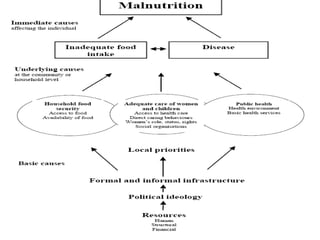
Etiology
 Protein-energy malnutrition results from
the interaction of several factors of which
inadequate diets and infectious diseases
are most important.
10/28/2023 22
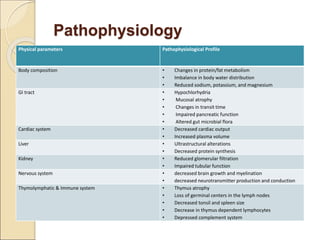
Pathophysiology
Physical parameters Pathophysiological Profile
Body composition • Changes in protein/fat metabolism
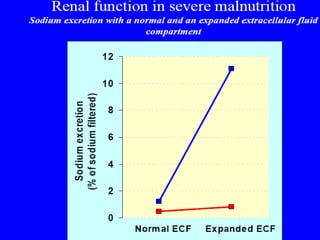
• Imbalance in body water distribution
• Reduced sodium, potassium, and magnesium
GI tract • Hypochlorhydria
• Mucosal atrophy
• Changes in transit time
• Impaired pancreatic function
• Altered gut microbial flora
Cardiac system • Decreased cardiac output
• Increased plasma volume
Liver • Ultrastructural alterations
• Decreased protein synthesis
Kidney • Reduced glomerular filtration
• Impaired tubular function
Nervous system • decreased brain growth and myelination
• decreased neurotransmitter production and conduction
Thymolymphatic & Immune system • Thymus atrophy
• Loss of germinal centers in the lymph nodes
• Decreased tonsil and spleen size
• Decrease in thymus dependent lymphocytes
• Depressed complement system
10/28/2023 24
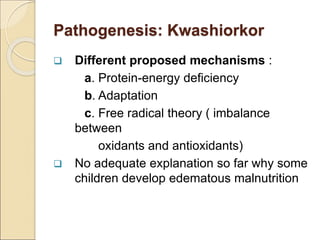
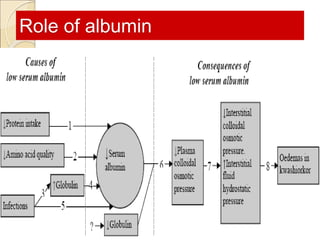
Pathogenesis: Kwashiorkor
 Different proposed mechanisms :
a. Protein-energy deficiency
b. Adaptation
c. Free radical theory ( imbalance
between
oxidants and antioxidants)
 No adequate explanation so far why some
children develop edematous malnutrition
Role of albumin
10/28/2023 26
Classification
 Depends on the purpose for which it is
used: Clinical studies or community
surveys
 WHO has broadly classified PEM into
underweight, wasting and stunting.
 Clinically, PEM is a disease spectrum
that can present as underweight,
marasmus, marasmic-kwashiorkor or
kwashiorkor.
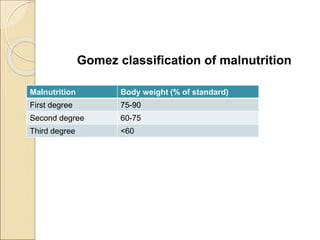
Gomez classification of malnutrition
Malnutrition Body weight (% of standard)
First degree 75-90
Second degree 60-75
Third degree <60
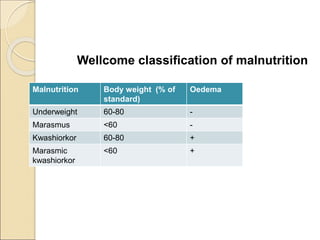
Wellcome classification of malnutrition
Malnutrition Body weight (% of
standard)
Oedema
Underweight 60-80 -
Marasmus <60 -
Kwashiorkor 60-80 +
Marasmic
kwashiorkor
<60 +
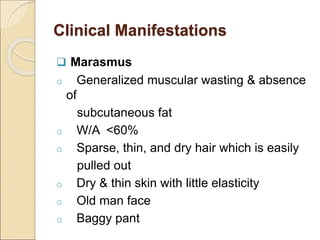
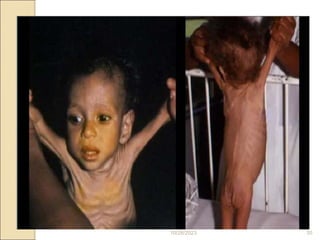
Clinical Manifestations
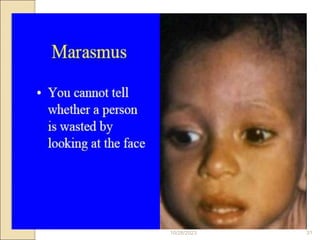
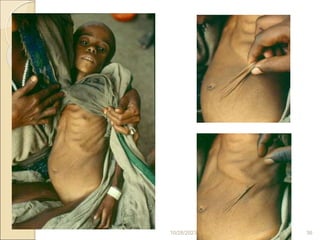
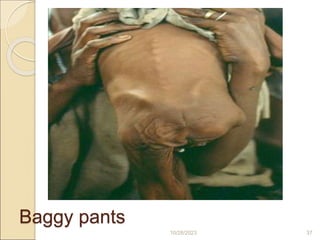
 Marasmus
o Generalized muscular wasting & absence
of
subcutaneous fat
o W/A <60%
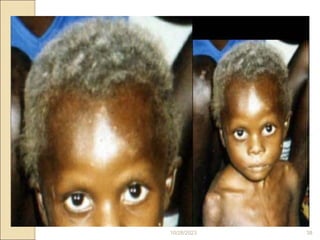
o Sparse, thin, and dry hair which is easily
pulled out
o Dry & thin skin with little elasticity
o Old man face
o Baggy pant
10/28/2023 31
Cont…
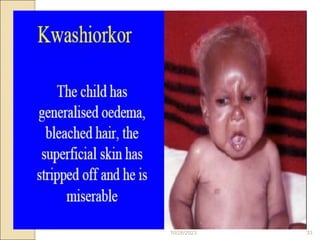
 Kwashiorkor
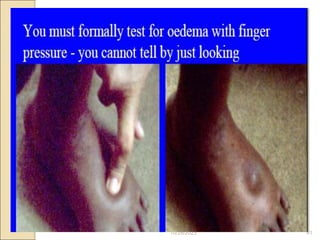
o Pitting edema, usually in the feet and legs
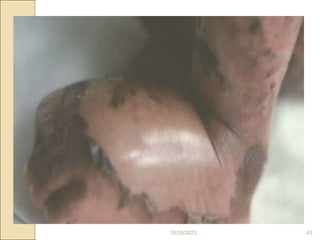
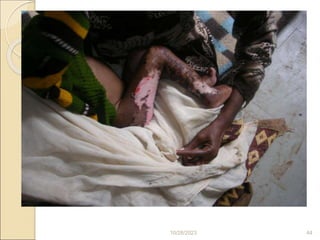
o Skin lesions, in the areas of edema
o Epidermis peels off in large scales
o Sparse, thin, and dry hair which is easily
pulled out
o Apathetic and irritable, cry easily
o Hepatomegaly with a soft, round edge
10/28/2023 33
Marasmus
10/28/2023 34
10/28/2023 35
Severe wasting
10/28/2023 36
Baggy pants
10/28/2023 37
10/28/2023 38
10/28/2023 39
Kwashiorkor
10/28/2023 40
10/28/2023 41
10/28/2023 42
10/28/2023 43
10/28/2023 44
10/28/2023 45
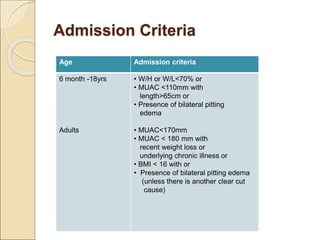
Admission Criteria
Age Admission criteria
6 month -18yrs
Adults
• W/H or W/L<70% or
• MUAC <110mm with
length>65cm or
• Presence of bilateral pitting
edema
• MUAC<170mm
• MUAC < 180 mm with
recent weight loss or
underlying chronic illness or
• BMI < 16 with or
• Presence of bilateral pitting edema
(unless there is another clear cut
cause)
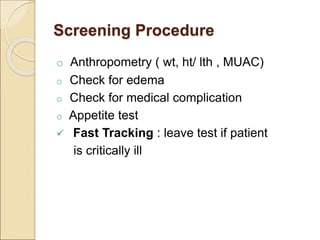
Screening Procedure
o Anthropometry ( wt, ht/ lth , MUAC)
o Check for edema
o Check for medical complication
o Appetite test
 Fast Tracking : leave test if patient
is critically ill
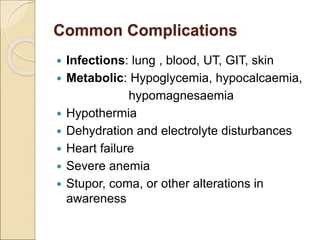
Common Complications
 Infections: lung , blood, UT, GIT, skin
 Metabolic: Hypoglycemia, hypocalcaemia,
hypomagnesaemia
 Hypothermia
 Dehydration and electrolyte disturbances
 Heart failure
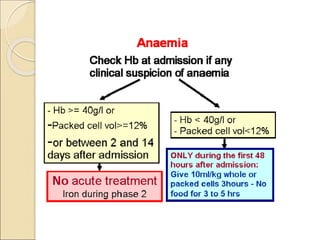
 Severe anemia
 Stupor, coma, or other alterations in
awareness
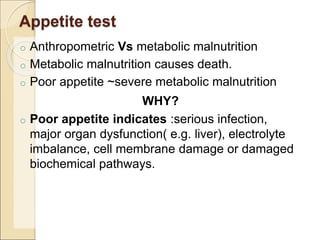
Appetite test
o Anthropometric Vs metabolic malnutrition
o Metabolic malnutrition causes death.
o Poor appetite ~severe metabolic malnutrition
WHY?
o Poor appetite indicates :serious infection,
major organ dysfunction( e.g. liver), electrolyte
imbalance, cell membrane damage or damaged
biochemical pathways.
Steps to test appetite
o Quiet separate area.
o Explain the purpose of the test to the carer.
o The carer, where possible, should wash his
hands.
o The carer should sit comfortably and offer the
RUTF from the packet or put a small amount
on finger.
o Gently encourage the child (don’t force ).
o Offer plenty of water to drink with the RUTF.
child may be frightened, distressed or fearful of
the environment or staff.
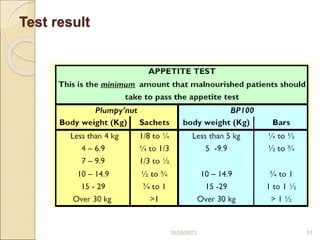
Test result
10/28/2023 51
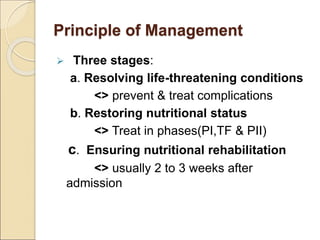
Principle of Management
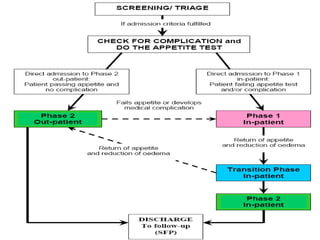
 Three stages:
a. Resolving life-threatening conditions
<> prevent & treat complications
b. Restoring nutritional status
<> Treat in phases(PI,TF & PII)
c. Ensuring nutritional rehabilitation
<> usually 2 to 3 weeks after
admission
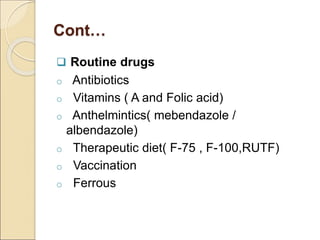
Cont…
 Routine drugs
o Antibiotics
o Vitamins ( A and Folic acid)
o Anthelmintics( mebendazole /
albendazole)
o Therapeutic diet( F-75 , F-100,RUTF)
o Vaccination
o Ferrous
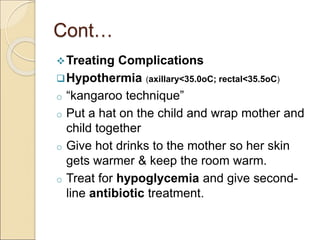
Cont…
Treating Complications
Hypothermia (axillary<35.0oC; rectal<35.5oC)
o “kangaroo technique”
o Put a hat on the child and wrap mother and
child together
o Give hot drinks to the mother so her skin
gets warmer & keep the room warm.
o Treat for hypoglycemia and give second-
line antibiotic treatment.
Cont…
Hypoglycemia
A. Conscious child with RBS of <54mg/dl :
o Give 50 ml bolus of 10% glucose or 10%
sucrose solution and then feed F-75 every
30 min. for two hours
o Antibiotics- second-line
o Two-hourly feeds, day and night
Cont…
B. If the child is unconscious, lethargic or
convulsing
o IV sterile 10% glucose (5ml/kg), followed by
50ml of 10% glucose or sucrose by Ng tube.
Then give F-75
o Antibiotics- second line
o Two-hourly feeds, day and night
 Monitor
o Blood glucose
o Rectal temperature
o Level of consciousness
Cont…
Infection
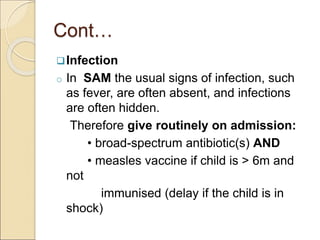
o In SAM the usual signs of infection, such
as fever, are often absent, and infections
are often hidden.
Therefore give routinely on admission:
• broad-spectrum antibiotic(s) AND
• measles vaccine if child is > 6m and
not
immunised (delay if the child is in
shock)
Cont…
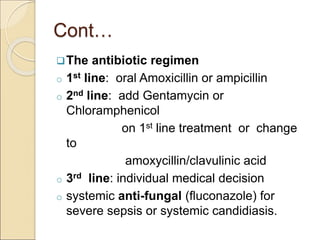
The antibiotic regimen
o 1st line: oral Amoxicillin or ampicillin
o 2nd line: add Gentamycin or
Chloramphenicol
on 1st line treatment or change
to
amoxycillin/clavulinic acid
o 3rd line: individual medical decision
o systemic anti-fungal (fluconazole) for
severe sepsis or systemic candidiasis.
Cont…
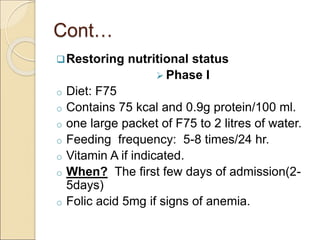
Restoring nutritional status
 Phase I
o Diet: F75
o Contains 75 kcal and 0.9g protein/100 ml.
o one large packet of F75 to 2 litres of water.
o Feeding frequency: 5-8 times/24 hr.
o Vitamin A if indicated.
o When? The first few days of admission(2-
5days)
o Folic acid 5mg if signs of anemia.
Cont…
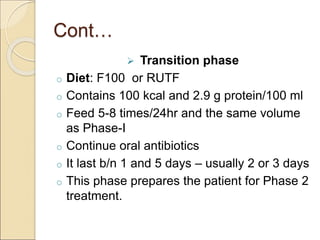
 Transition phase
o Diet: F100 or RUTF
o Contains 100 kcal and 2.9 g protein/100 ml
o Feed 5-8 times/24hr and the same volume
as Phase-I
o Continue oral antibiotics
o It last b/n 1 and 5 days – usually 2 or 3 days
o This phase prepares the patient for Phase 2
treatment.
Cont…
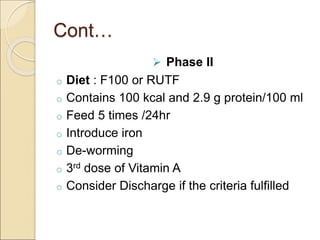
 Phase II
o Diet : F100 or RUTF
o Contains 100 kcal and 2.9 g protein/100 ml
o Feed 5 times /24hr
o Introduce iron
o De-worming
o 3rd dose of Vitamin A
o Consider Discharge if the criteria fulfilled
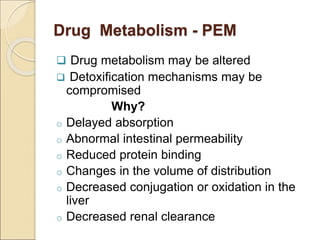
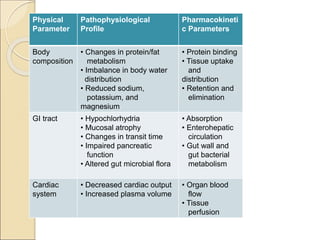
Drug Metabolism - PEM
 Drug metabolism may be altered
 Detoxification mechanisms may be
compromised
Why?
o Delayed absorption
o Abnormal intestinal permeability
o Reduced protein binding
o Changes in the volume of distribution
o Decreased conjugation or oxidation in the
liver
o Decreased renal clearance
Physical
Parameter
Pathophysiological
Profile
Pharmacokineti
c Parameters
Body
composition
• Changes in protein/fat
metabolism
• Imbalance in body water
distribution
• Reduced sodium,
potassium, and
magnesium
• Protein binding
• Tissue uptake
and
distribution
• Retention and
elimination
GI tract • Hypochlorhydria
• Mucosal atrophy
• Changes in transit time
• Impaired pancreatic
function
• Altered gut microbial flora
• Absorption
• Enterohepatic
circulation
• Gut wall and
gut bacterial
metabolism
Cardiac
system
• Decreased cardiac output
• Increased plasma volume
• Organ blood
flow
• Tissue
perfusion
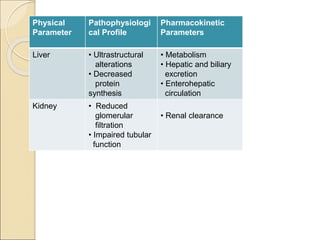
Physical
Parameter
Pathophysiologi
cal Profile
Pharmacokinetic
Parameters
Liver • Ultrastructural
alterations
• Decreased
protein
synthesis
• Metabolism
• Hepatic and biliary
excretion
• Enterohepatic
circulation
Kidney • Reduced
glomerular
filtration
• Impaired tubular
function
• Renal clearance
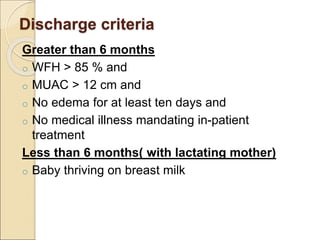
Discharge criteria
Greater than 6 months
o WFH > 85 % and
o MUAC > 12 cm and
o No edema for at least ten days and
o No medical illness mandating in-patient
treatment
Less than 6 months( with lactating mother)
o Baby thriving on breast milk
Any ???
THANK YOU!

Pediatric nutrition.ppt

  • 1.
  • 2.
    Objectives o To recognizethe changing nutritional needs of children. o To understand that nutritional recommendations for children vary by age and stage of development. o To understand the global burden of child malnutrition
  • 3.
    Why nutrition? o Energyof daily living o Maintenance of all body functions o Vital to growth and development o Therapeutic benefits Healing Prevention
  • 4.
    Determinants of CaloricNeeds o Basal metabolic rate (BMR) o Activity level o Growth (2x BMR during first year) o Stress (infection, surgery, illness)
  • 5.
    Nutritional recommendations Infancy (Birthto 1 year) o This is a critical period because the rate of growth and development is more rapid than any time in life. o Milk is the sole source of nutrition up until 4 to 6 months of age. o Milk could be in the form of breast milk, infant formula, or a combination of both.
  • 6.
    Cont… o Breast feedingis superior to formula feeding. o WHO recommends exclusive breast feeding the first 6 months of life, with continued breast feeding along with appropriate complementary foods through the first 2 years of life. o Worldwide, it is estimated that only 34.8% of infants are exclusively breastfed for the first 6 months of life.
  • 7.
    Cont… Breast feeding advantages- Infant o Immunologic benefits. o Decreased incidence of ear infections, UTI, gastroenteritis, respiratory illnesses, and bacteremia. o Convenient and ready to feed. o Reduced chance of overfeeding? o Fosters mother-infant bonding.
  • 8.
    Cont… BF advantages -Mother o May delay return of ovulation. o Loss of pregnancy-associated adipose tissue and weight gain. o Suppresses post-partum bleeding. o Decreased breast cancer rate.
  • 9.
    Cont… o Solid foods(such as cereals, fruits and vegetables) can be introduced when the infant is developmentally and physiologically ready by the age of 4 to 6 months. o Gradual introduction of semisolid and solid foods to the infant until s(h)e is accustomed to the regular family diet. o Complementary foods need to be nutritionally adequate, safe, and appropriately fed in order to meet the young child’s energy and nutrient needs.
  • 10.
    Cont… Between Infancy andChildhood o The period between age 1 and 2 is a transition between infancy and childhood. o There is dramatic decrease in growth rate reflected in disinterest in food. o Growth, BMR, and endless activity require an energy supply of 1300 kcal/day for ages 1 to 3.
  • 11.
    Cont… Children 4 to6 years old o Children can have their independent eating styles. o Snacks form an integral part of the child’s nutrient intake. o Energy requirements increase to 1800 kcal/ day.
  • 12.
    Cont… Children 7 to12 years old o Actual growth may slow down at this stage o The body is preparing for the puberty growth spurt o Puberty for girls may begin from around age 9 and on and, for boys, puberty may be reached in early teen years o Energy requirements increase to 2000 to 2200 kcal/day
  • 13.
    Growth monitoring o Usegrowth charts o Monitor trends in growth not one value using wt, ht, HC (< 2 yrs), BMI. o In general, normals fall within 5th-95th%ile. o Evaluate changes in %iles. o Malnutrition results in: Decreased weight (acute), then height, then head circumference (chronic).
  • 14.
    Protein Energy Malnutrition Malnutrition is defined as the cellular imbalance between the supply of nutrients and energy and the body's demand for them to ensure growth, maintenance, and specific functions.  Malnutrition :overnutrition (obesity) and undernutrition
  • 15.
    Cont…  It isaccompanied by deficiency of several micronutrients.  The origin of protein-energy malnutrition (PEM) can be primary or secondary.
  • 16.
    Cont… Historical Background  1930s Dr.Cicely Williams described kwashiorkor  1940s researchers showed that most patients with kwashiorkor had low concentrations of serum proteins
  • 17.
    Cont…  1950s PEM gainedworldwide recognition  1960s Studies done since this period have shown that marasmus and kwashiorkor have distinct metabolic features.
  • 18.
    Epidemiology  Child malnutritionremains a major public health problem in almost all developing countries.  In some of these countries, severe malnutrition is the most common reason for pediatric hospitalization.
  • 20.
    500,000 Ethiopian childrenunder-5 dying each year ranking 6th in the world in number of deaths 72 % preventable 10/28/2023 20 Neonatal, 25% Malaria, 20% Pneumonia, 28% Diarrhea, 20% AIDS, 1% Measles, 4% Other, 2% Malnutrition 57% HIV 11%
  • 21.
    Etiology  Protein-energy malnutritionresults from the interaction of several factors of which inadequate diets and infectious diseases are most important.
  • 22.
  • 23.
    Pathophysiology Physical parameters PathophysiologicalProfile Body composition • Changes in protein/fat metabolism • Imbalance in body water distribution • Reduced sodium, potassium, and magnesium GI tract • Hypochlorhydria • Mucosal atrophy • Changes in transit time • Impaired pancreatic function • Altered gut microbial flora Cardiac system • Decreased cardiac output • Increased plasma volume Liver • Ultrastructural alterations • Decreased protein synthesis Kidney • Reduced glomerular filtration • Impaired tubular function Nervous system • decreased brain growth and myelination • decreased neurotransmitter production and conduction Thymolymphatic & Immune system • Thymus atrophy • Loss of germinal centers in the lymph nodes • Decreased tonsil and spleen size • Decrease in thymus dependent lymphocytes • Depressed complement system
  • 24.
  • 25.
    Pathogenesis: Kwashiorkor  Differentproposed mechanisms : a. Protein-energy deficiency b. Adaptation c. Free radical theory ( imbalance between oxidants and antioxidants)  No adequate explanation so far why some children develop edematous malnutrition
  • 26.
  • 27.
    Classification  Depends onthe purpose for which it is used: Clinical studies or community surveys  WHO has broadly classified PEM into underweight, wasting and stunting.  Clinically, PEM is a disease spectrum that can present as underweight, marasmus, marasmic-kwashiorkor or kwashiorkor.
  • 28.
    Gomez classification ofmalnutrition Malnutrition Body weight (% of standard) First degree 75-90 Second degree 60-75 Third degree <60
  • 29.
    Wellcome classification ofmalnutrition Malnutrition Body weight (% of standard) Oedema Underweight 60-80 - Marasmus <60 - Kwashiorkor 60-80 + Marasmic kwashiorkor <60 +
  • 30.
    Clinical Manifestations  Marasmus oGeneralized muscular wasting & absence of subcutaneous fat o W/A <60% o Sparse, thin, and dry hair which is easily pulled out o Dry & thin skin with little elasticity o Old man face o Baggy pant
  • 31.
  • 32.
    Cont…  Kwashiorkor o Pittingedema, usually in the feet and legs o Skin lesions, in the areas of edema o Epidermis peels off in large scales o Sparse, thin, and dry hair which is easily pulled out o Apathetic and irritable, cry easily o Hepatomegaly with a soft, round edge
  • 33.
  • 34.
  • 35.
  • 36.
  • 37.
  • 38.
  • 39.
  • 40.
  • 41.
  • 42.
  • 43.
  • 44.
  • 45.
  • 46.
    Admission Criteria Age Admissioncriteria 6 month -18yrs Adults • W/H or W/L<70% or • MUAC <110mm with length>65cm or • Presence of bilateral pitting edema • MUAC<170mm • MUAC < 180 mm with recent weight loss or underlying chronic illness or • BMI < 16 with or • Presence of bilateral pitting edema (unless there is another clear cut cause)
  • 47.
    Screening Procedure o Anthropometry( wt, ht/ lth , MUAC) o Check for edema o Check for medical complication o Appetite test  Fast Tracking : leave test if patient is critically ill
  • 48.
    Common Complications  Infections:lung , blood, UT, GIT, skin  Metabolic: Hypoglycemia, hypocalcaemia, hypomagnesaemia  Hypothermia  Dehydration and electrolyte disturbances  Heart failure  Severe anemia  Stupor, coma, or other alterations in awareness
  • 49.
    Appetite test o AnthropometricVs metabolic malnutrition o Metabolic malnutrition causes death. o Poor appetite ~severe metabolic malnutrition WHY? o Poor appetite indicates :serious infection, major organ dysfunction( e.g. liver), electrolyte imbalance, cell membrane damage or damaged biochemical pathways.
  • 50.
    Steps to testappetite o Quiet separate area. o Explain the purpose of the test to the carer. o The carer, where possible, should wash his hands. o The carer should sit comfortably and offer the RUTF from the packet or put a small amount on finger. o Gently encourage the child (don’t force ). o Offer plenty of water to drink with the RUTF. child may be frightened, distressed or fearful of the environment or staff.
  • 51.
  • 52.
    Principle of Management Three stages: a. Resolving life-threatening conditions <> prevent & treat complications b. Restoring nutritional status <> Treat in phases(PI,TF & PII) c. Ensuring nutritional rehabilitation <> usually 2 to 3 weeks after admission
  • 53.
    Cont…  Routine drugs oAntibiotics o Vitamins ( A and Folic acid) o Anthelmintics( mebendazole / albendazole) o Therapeutic diet( F-75 , F-100,RUTF) o Vaccination o Ferrous
  • 54.
    Cont… Treating Complications Hypothermia (axillary<35.0oC;rectal<35.5oC) o “kangaroo technique” o Put a hat on the child and wrap mother and child together o Give hot drinks to the mother so her skin gets warmer & keep the room warm. o Treat for hypoglycemia and give second- line antibiotic treatment.
  • 55.
    Cont… Hypoglycemia A. Conscious childwith RBS of <54mg/dl : o Give 50 ml bolus of 10% glucose or 10% sucrose solution and then feed F-75 every 30 min. for two hours o Antibiotics- second-line o Two-hourly feeds, day and night
  • 56.
    Cont… B. If thechild is unconscious, lethargic or convulsing o IV sterile 10% glucose (5ml/kg), followed by 50ml of 10% glucose or sucrose by Ng tube. Then give F-75 o Antibiotics- second line o Two-hourly feeds, day and night  Monitor o Blood glucose o Rectal temperature o Level of consciousness
  • 60.
    Cont… Infection o In SAMthe usual signs of infection, such as fever, are often absent, and infections are often hidden. Therefore give routinely on admission: • broad-spectrum antibiotic(s) AND • measles vaccine if child is > 6m and not immunised (delay if the child is in shock)
  • 61.
    Cont… The antibiotic regimen o1st line: oral Amoxicillin or ampicillin o 2nd line: add Gentamycin or Chloramphenicol on 1st line treatment or change to amoxycillin/clavulinic acid o 3rd line: individual medical decision o systemic anti-fungal (fluconazole) for severe sepsis or systemic candidiasis.
  • 62.
    Cont… Restoring nutritional status Phase I o Diet: F75 o Contains 75 kcal and 0.9g protein/100 ml. o one large packet of F75 to 2 litres of water. o Feeding frequency: 5-8 times/24 hr. o Vitamin A if indicated. o When? The first few days of admission(2- 5days) o Folic acid 5mg if signs of anemia.
  • 64.
    Cont…  Transition phase oDiet: F100 or RUTF o Contains 100 kcal and 2.9 g protein/100 ml o Feed 5-8 times/24hr and the same volume as Phase-I o Continue oral antibiotics o It last b/n 1 and 5 days – usually 2 or 3 days o This phase prepares the patient for Phase 2 treatment.
  • 65.
    Cont…  Phase II oDiet : F100 or RUTF o Contains 100 kcal and 2.9 g protein/100 ml o Feed 5 times /24hr o Introduce iron o De-worming o 3rd dose of Vitamin A o Consider Discharge if the criteria fulfilled
  • 66.
    Drug Metabolism -PEM  Drug metabolism may be altered  Detoxification mechanisms may be compromised Why? o Delayed absorption o Abnormal intestinal permeability o Reduced protein binding o Changes in the volume of distribution o Decreased conjugation or oxidation in the liver o Decreased renal clearance
  • 67.
    Physical Parameter Pathophysiological Profile Pharmacokineti c Parameters Body composition • Changesin protein/fat metabolism • Imbalance in body water distribution • Reduced sodium, potassium, and magnesium • Protein binding • Tissue uptake and distribution • Retention and elimination GI tract • Hypochlorhydria • Mucosal atrophy • Changes in transit time • Impaired pancreatic function • Altered gut microbial flora • Absorption • Enterohepatic circulation • Gut wall and gut bacterial metabolism Cardiac system • Decreased cardiac output • Increased plasma volume • Organ blood flow • Tissue perfusion
  • 68.
    Physical Parameter Pathophysiologi cal Profile Pharmacokinetic Parameters Liver •Ultrastructural alterations • Decreased protein synthesis • Metabolism • Hepatic and biliary excretion • Enterohepatic circulation Kidney • Reduced glomerular filtration • Impaired tubular function • Renal clearance
  • 69.
    Discharge criteria Greater than6 months o WFH > 85 % and o MUAC > 12 cm and o No edema for at least ten days and o No medical illness mandating in-patient treatment Less than 6 months( with lactating mother) o Baby thriving on breast milk
  • 70.
  • 71.