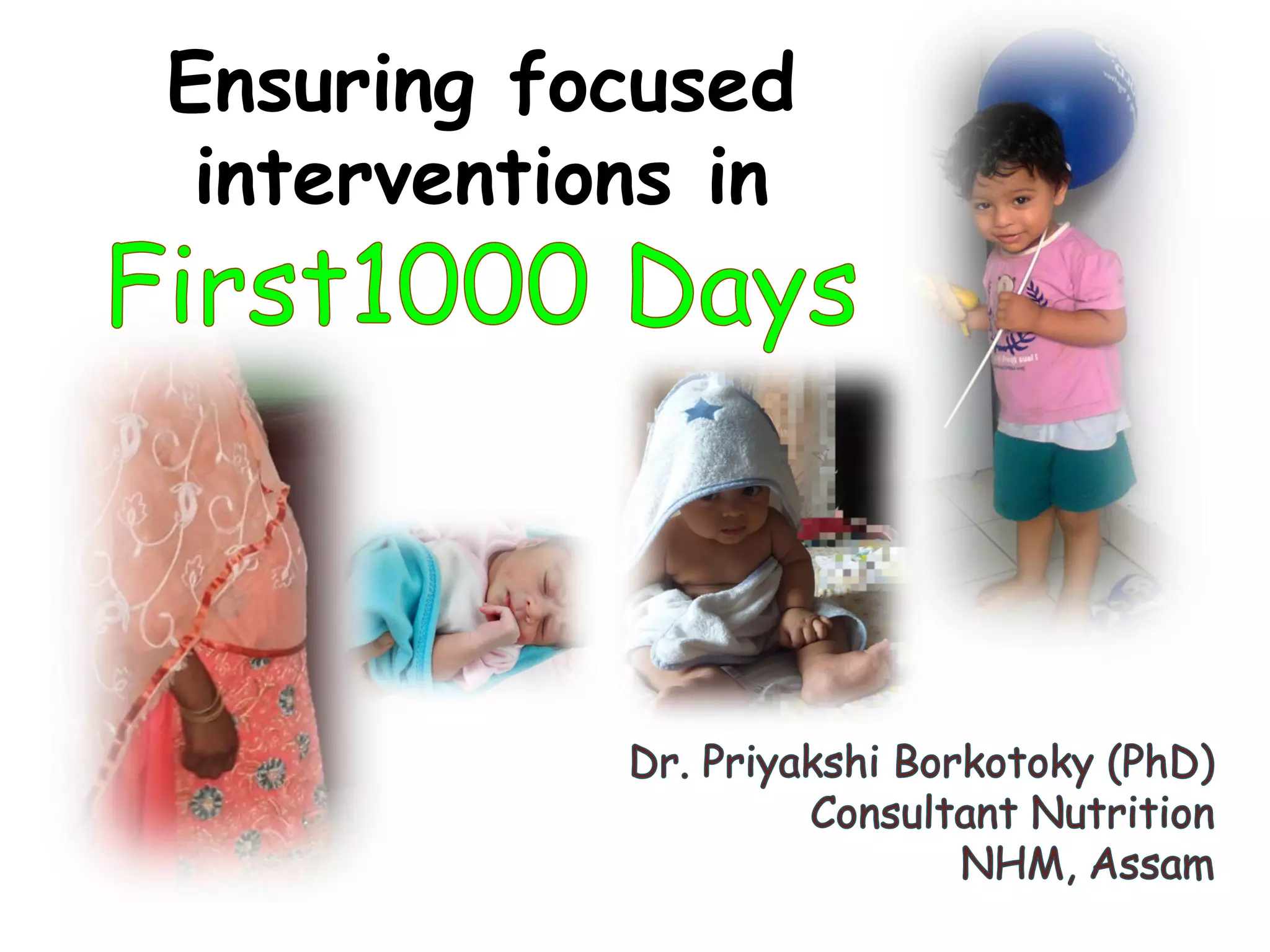
Ensuring focused
interventions in
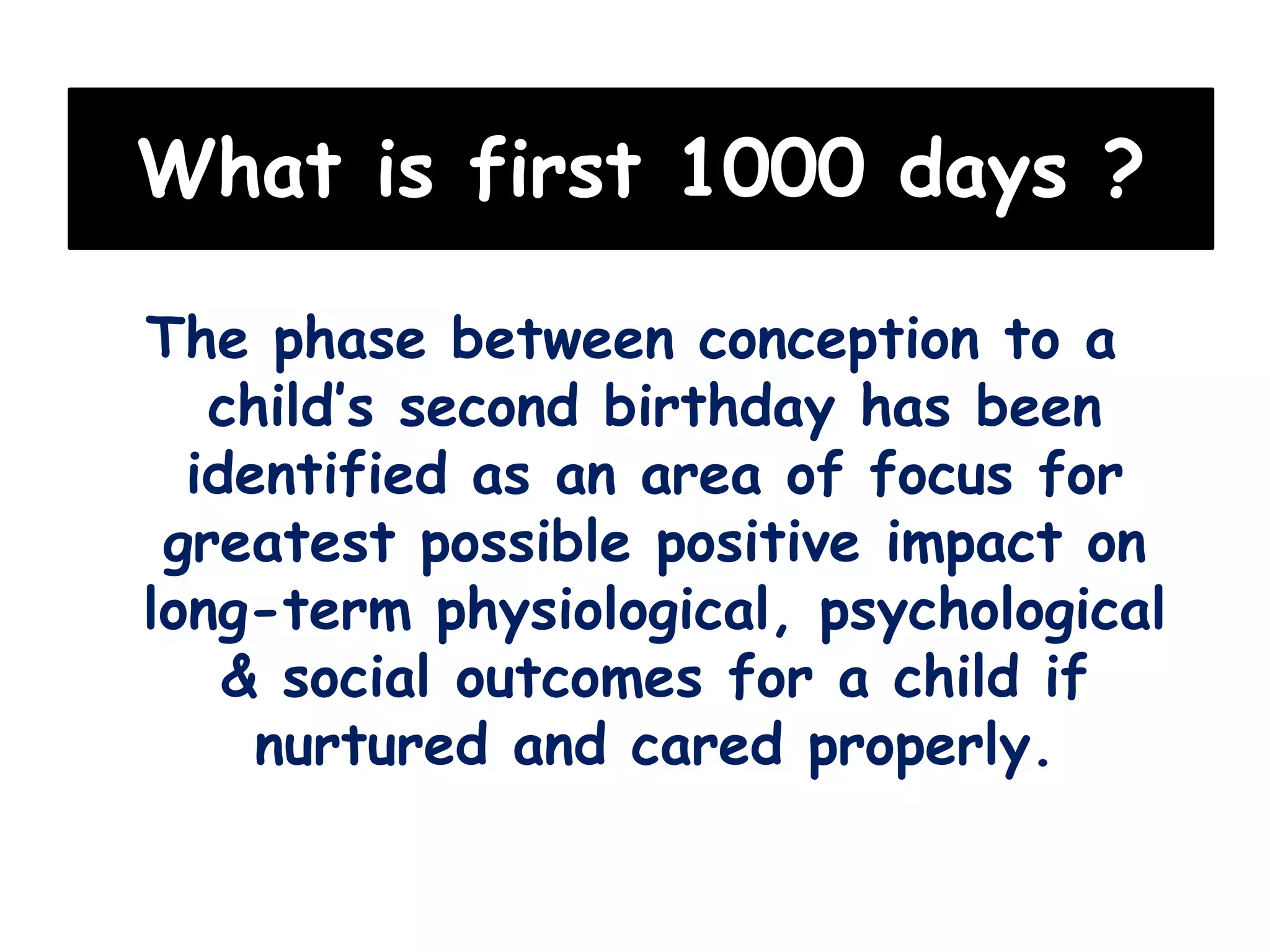
What is first 1000 days ?
The phase between conception to a
child’s second birthday has been
identified as an area of focus for
greatest possible positive impact on
long-term physiological, psychological
& social outcomes for a child if
nurtured and cared properly.
Can shape out
✓ Cognitive development
✓ Physical development
✓ Sociological development
✓ Psychological developments
✓ Food habit
of an individual.
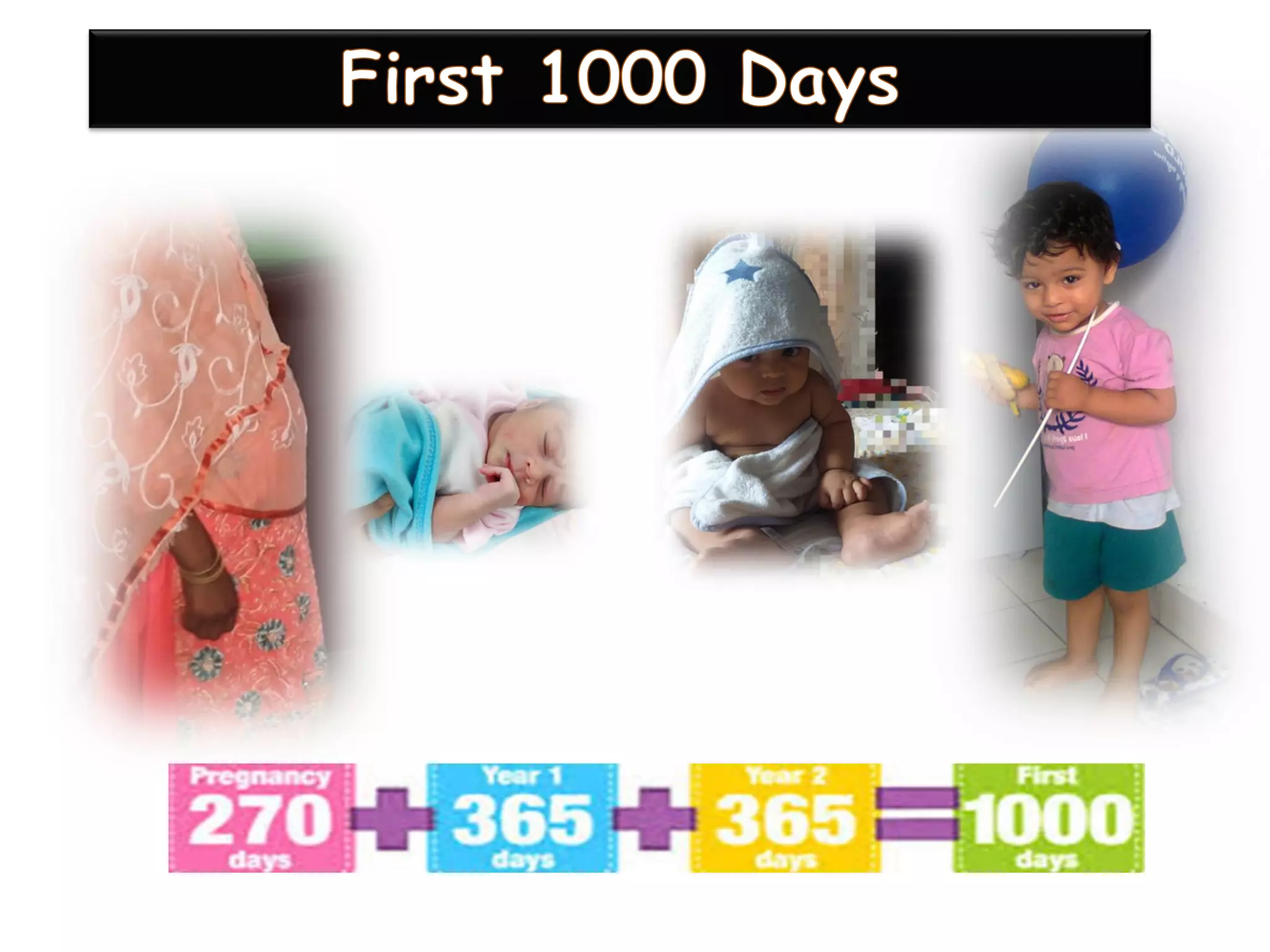
Why first 1000days
The brain grows to 80% of its full size by the age of 2 years!
The brain needs different essential elements to grow & develop
well, just like a plant
Important First 1000 Day Facts!
caring
adult
Nurture,
Support &
Care stress
free
environme
nt
good
parenting
Safety
Protection
Stimulation
Nutrition
Health
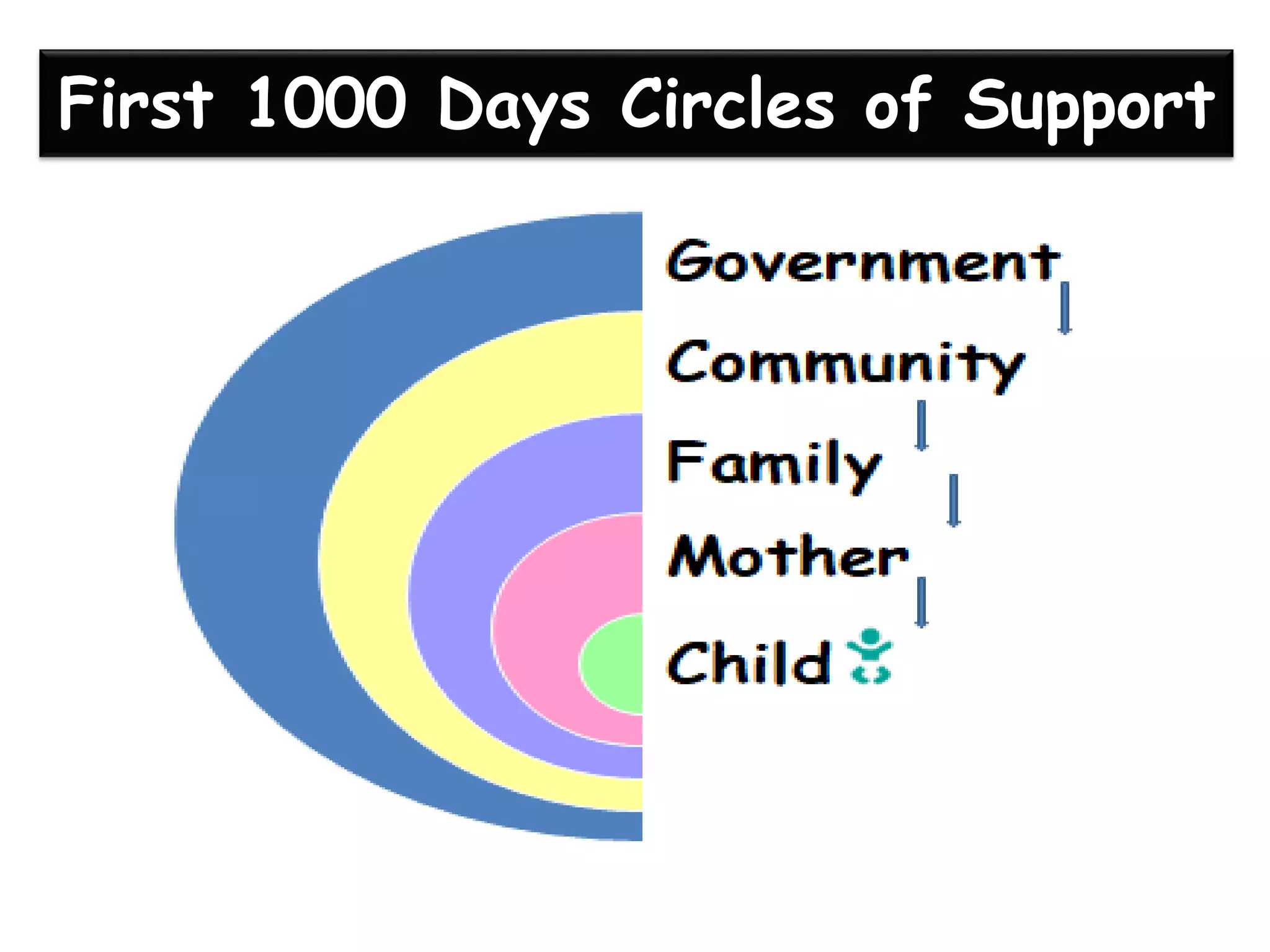
First 1000 Days Circles of Support
▪ Brain develops most rapidly from
conception to three years
▪ 100 billion neurons in human brain
by 40 weeks of gestation
▪ Up to 700 neural connections
formed every second through
stimulation
▪ Responsive relationships and
healthy stimulating environments
build sturdy brain
What Science Tells us
▪ Intrauterine growth
retardation
▪ Preterm birth
▪ Behavioural problems
in children
Maternal Stress during Pregnancy
Stress
Reduces preterm birth. Preventing
childhood caries in babies.
Oral Hygiene & Pregnancy
Evidence: Periodontitis is associated with
preterm birth and low birth weight, and
bacteria in mothers can lead to increased
dental caries in the infant
Exposure to too much heat and
effect on fetus
Excess heat during first trimester could
increase the chance of having a baby with a
birth defect or other reproductive problems
(body temperature higher than 39°C or 102.2°F)
.
Infant’s food choice develops
during Pregnancy & Breast feeding
Identification of flavour and taste
through amniotic fluid and breast milk
➢ Have variety in diet
➢ Eat healthy food
➢Include all food groups
➢Avoid alcohol
12
• Iodine Deficiency Disorders (IDD): the single most
preventable cause of mental retardation in childhood.
IDD reduces intelligence quotients IQ by 10-15%.
• Iron deficiency and iron deficiency anemia (IDA):
maximum during 6 -24 months and any deficiency would
impact the cognition during this critical period of brain
development
• Protein-energy malnutrition/undernutrition (PEM): Over
all impact on child growth and development
Nutrition & Early Childhood
Development
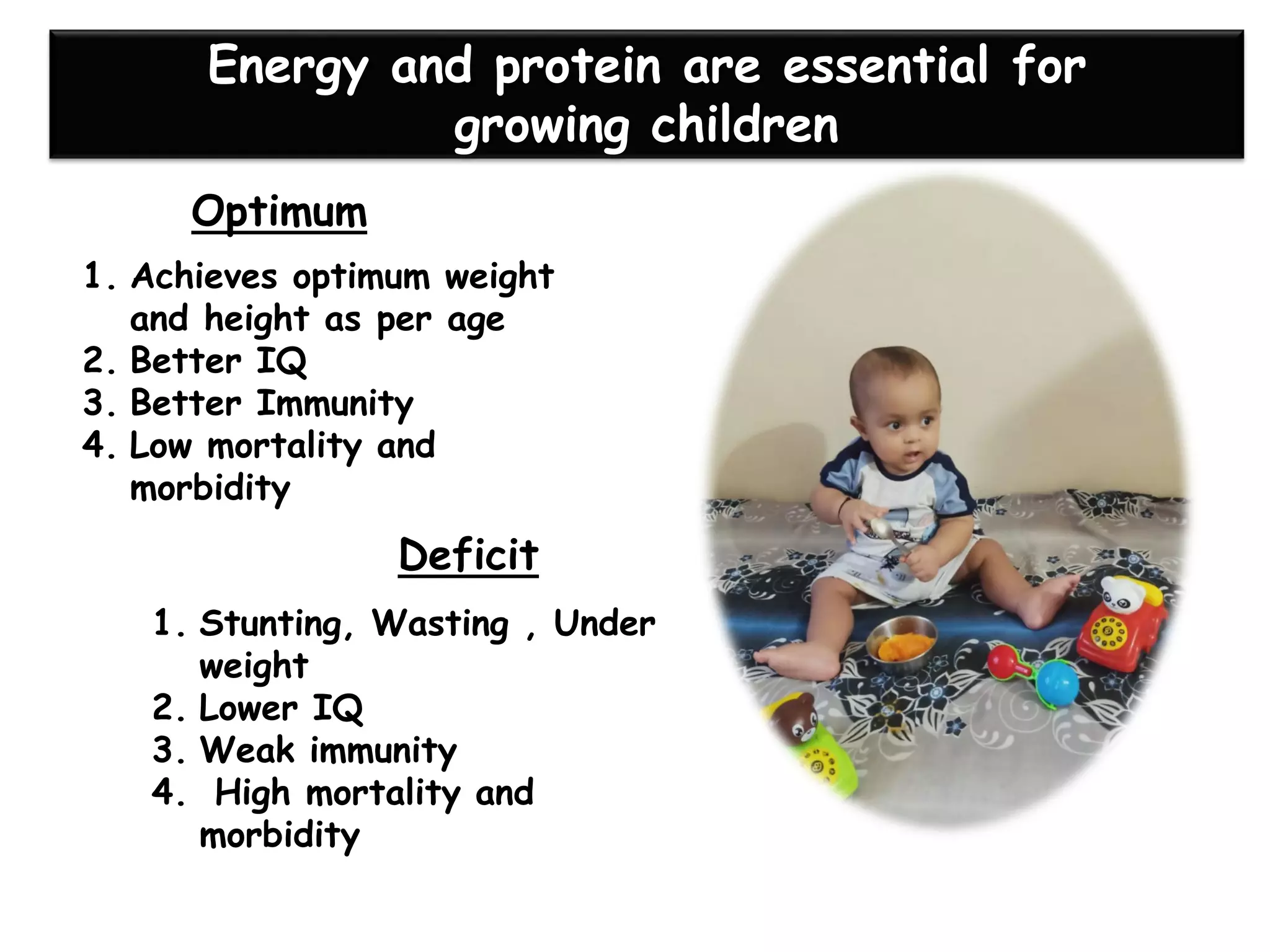
Energy and protein are essential for
growing children
Optimum
Deficit
1. Stunting, Wasting , Under
weight
2. Lower IQ
3. Weak immunity
4. High mortality and
morbidity
1. Achieves optimum weight
and height as per age
2. Better IQ
3. Better Immunity
4. Low mortality and
morbidity
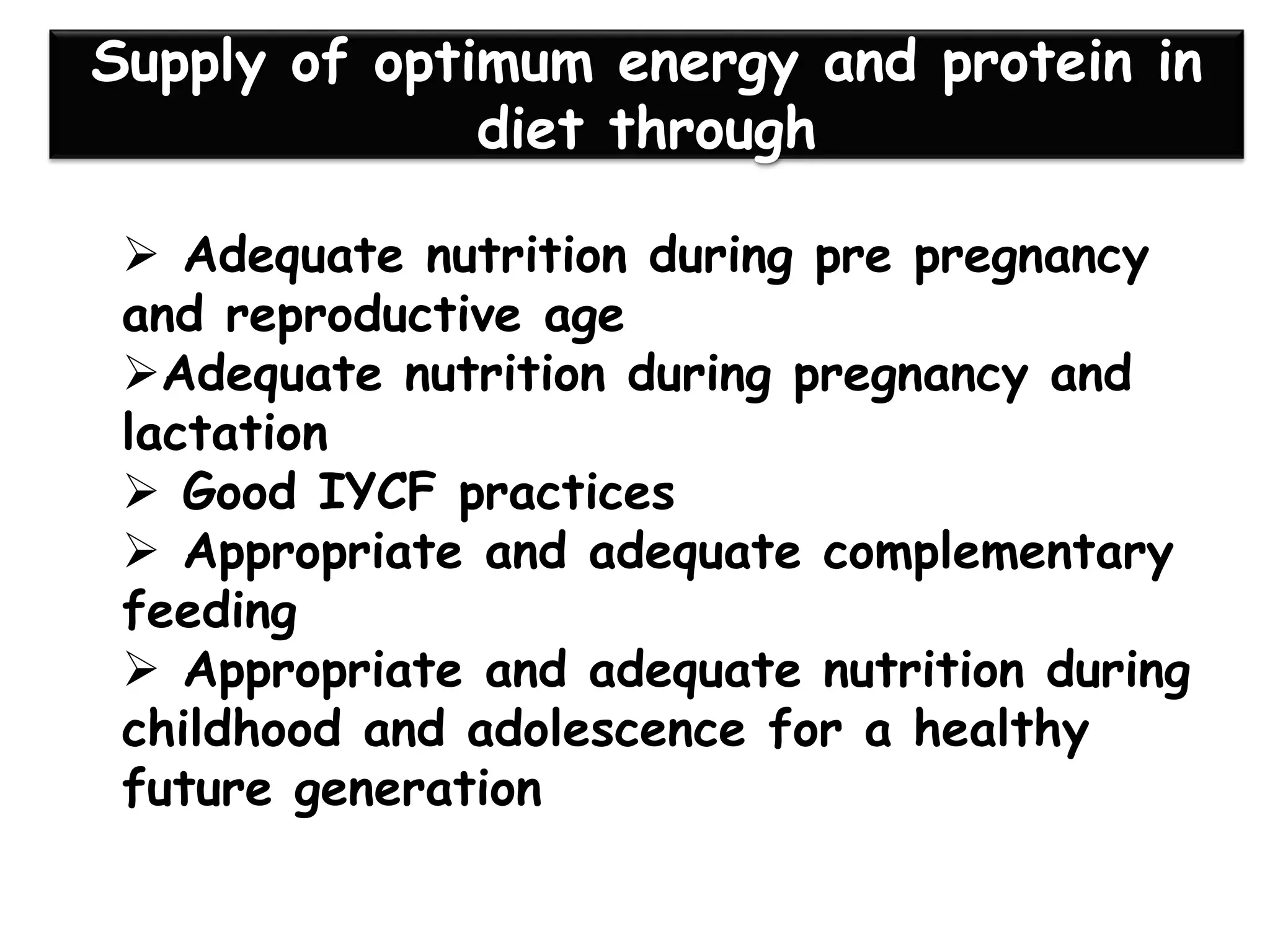
Supply of optimum energy and protein in
diet through
➢ Adequate nutrition during pre pregnancy
and reproductive age
➢Adequate nutrition during pregnancy and
lactation
➢ Good IYCF practices
➢ Appropriate and adequate complementary
feeding
➢ Appropriate and adequate nutrition during
childhood and adolescence for a healthy
future generation
➢ Early initiation of breast feeding
➢ Kangaroo Mother care
➢ Exclusive breast feeding
➢ Maternal weight gain monitoring
➢ Maternal immunization
➢ Screening for any developmental
delays
Recommendation during pregnancy
(270 Days)
➢ Early initiation of breast feeding
➢ Kangaroo Mother care
➢ Exclusive breast feeding
➢ Growth Monitoring
➢ Regular immunization
➢ Screening for any developmental delays
➢ Vitamin A supplementation
Recommendation from birth to 6 months
(180 Days)
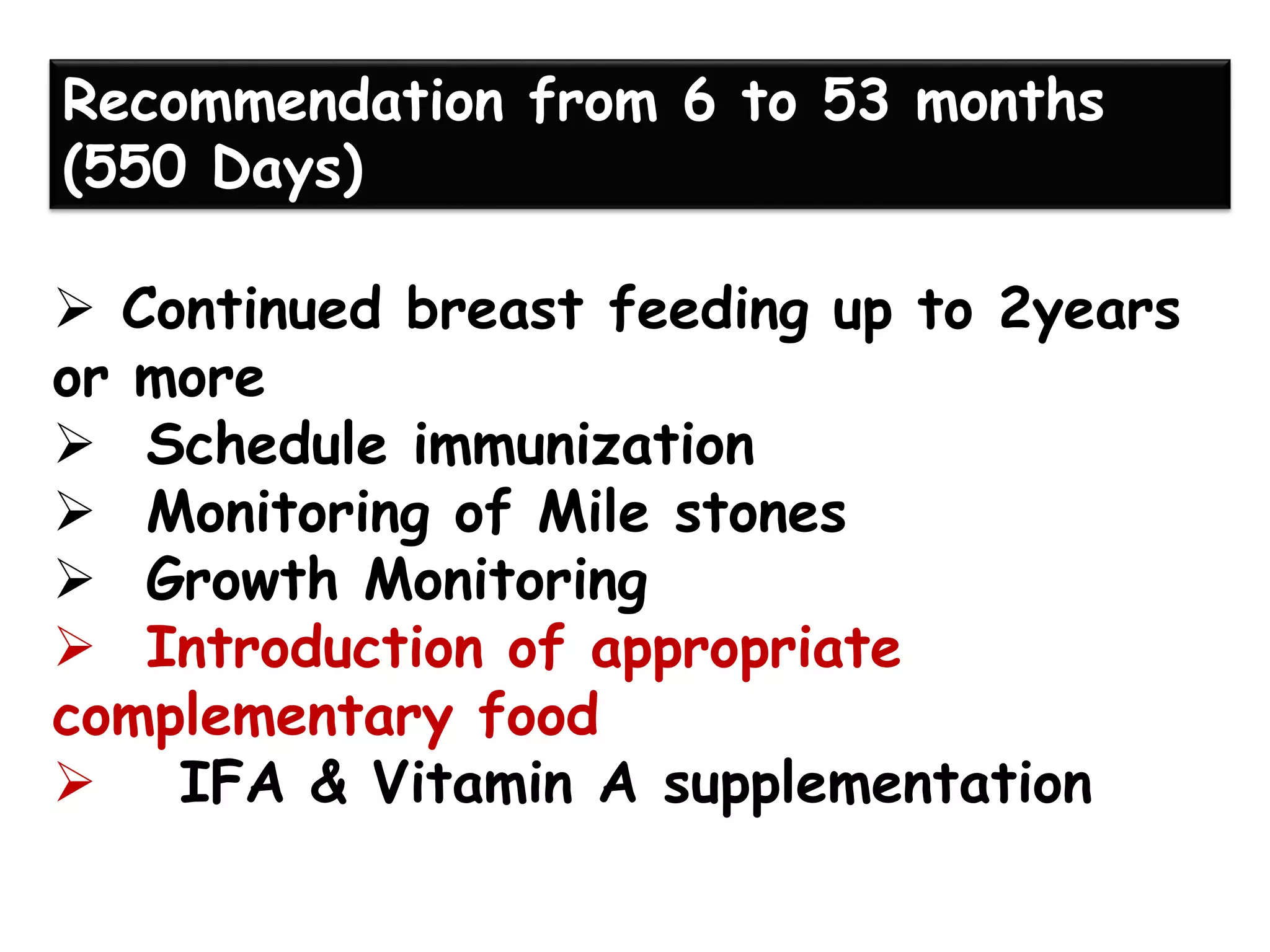
➢ Continued breast feeding up to 2years
or more
➢ Schedule immunization
➢ Monitoring of Mile stones
➢ Growth Monitoring
➢ Introduction of appropriate
complementary food
➢ IFA & Vitamin A supplementation
Recommendation from 6 to 53 months
(550 Days)
Nutrition and stimulation
• Communication & relation between mother and
child and child with surrounding provides
stimulation to the child and contribute to
optimal growth and development
• Improved infant and young child feeding helps
in reducing malnutrition.
• Optimum nutrition and stimuli are essential
for cognitive development (WHO 1999)
Stimulation
❑ Family is the first social
institution and family
members are the architects
of a child’s social and
cognitive development.
❑ Tools of stimuli are
actions like talking, playing,
reading singing, love etc.
❑ Without any expenditure
stimuli seems to have
immense impact on a child
growth & development
Toys should be developmentally appropriate,
safe, and affordable
Nurturing care is required for children
• Children which are essentially normal but could do
better with proper stimulation during the critical
period of brain development
• Children who are at risk of developmental delay
due to biological reasons like Birth defect ,
newborns discharged from the NICU/SNCU
• Children who are at risk of developmental delay
due to psychological and social reasons like orphan
child, extreme poverty , domestic violence and
child abuse
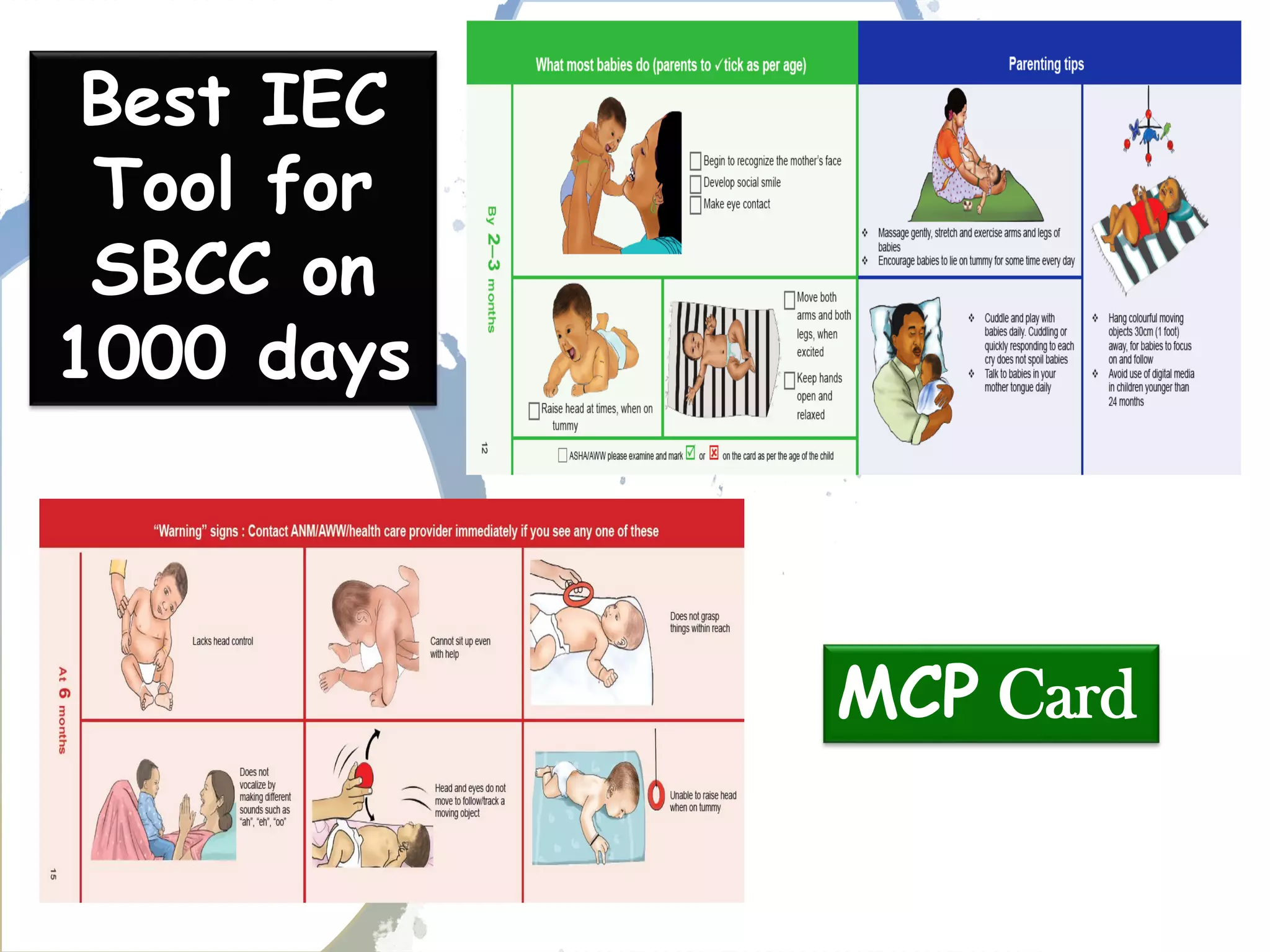
MCP Card
Best IEC
Tool for
SBCC on
1000 days
Thank you

1000 days converted

  • 1.
  • 2.
    What is first1000 days ? The phase between conception to a child’s second birthday has been identified as an area of focus for greatest possible positive impact on long-term physiological, psychological & social outcomes for a child if nurtured and cared properly.
  • 4.
    Can shape out ✓Cognitive development ✓ Physical development ✓ Sociological development ✓ Psychological developments ✓ Food habit of an individual. Why first 1000days
  • 5.
    The brain growsto 80% of its full size by the age of 2 years! The brain needs different essential elements to grow & develop well, just like a plant Important First 1000 Day Facts! caring adult Nurture, Support & Care stress free environme nt good parenting Safety Protection Stimulation Nutrition Health
  • 6.
    First 1000 DaysCircles of Support
  • 7.
    ▪ Brain developsmost rapidly from conception to three years ▪ 100 billion neurons in human brain by 40 weeks of gestation ▪ Up to 700 neural connections formed every second through stimulation ▪ Responsive relationships and healthy stimulating environments build sturdy brain What Science Tells us
  • 8.
    ▪ Intrauterine growth retardation ▪Preterm birth ▪ Behavioural problems in children Maternal Stress during Pregnancy Stress
  • 9.
    Reduces preterm birth.Preventing childhood caries in babies. Oral Hygiene & Pregnancy Evidence: Periodontitis is associated with preterm birth and low birth weight, and bacteria in mothers can lead to increased dental caries in the infant
  • 10.
    Exposure to toomuch heat and effect on fetus Excess heat during first trimester could increase the chance of having a baby with a birth defect or other reproductive problems (body temperature higher than 39°C or 102.2°F) .
  • 11.
    Infant’s food choicedevelops during Pregnancy & Breast feeding Identification of flavour and taste through amniotic fluid and breast milk ➢ Have variety in diet ➢ Eat healthy food ➢Include all food groups ➢Avoid alcohol
  • 12.
    12 • Iodine DeficiencyDisorders (IDD): the single most preventable cause of mental retardation in childhood. IDD reduces intelligence quotients IQ by 10-15%. • Iron deficiency and iron deficiency anemia (IDA): maximum during 6 -24 months and any deficiency would impact the cognition during this critical period of brain development • Protein-energy malnutrition/undernutrition (PEM): Over all impact on child growth and development Nutrition & Early Childhood Development
  • 13.
    Energy and proteinare essential for growing children Optimum Deficit 1. Stunting, Wasting , Under weight 2. Lower IQ 3. Weak immunity 4. High mortality and morbidity 1. Achieves optimum weight and height as per age 2. Better IQ 3. Better Immunity 4. Low mortality and morbidity
  • 14.
    Supply of optimumenergy and protein in diet through ➢ Adequate nutrition during pre pregnancy and reproductive age ➢Adequate nutrition during pregnancy and lactation ➢ Good IYCF practices ➢ Appropriate and adequate complementary feeding ➢ Appropriate and adequate nutrition during childhood and adolescence for a healthy future generation
  • 15.
    ➢ Early initiationof breast feeding ➢ Kangaroo Mother care ➢ Exclusive breast feeding ➢ Maternal weight gain monitoring ➢ Maternal immunization ➢ Screening for any developmental delays Recommendation during pregnancy (270 Days)
  • 16.
    ➢ Early initiationof breast feeding ➢ Kangaroo Mother care ➢ Exclusive breast feeding ➢ Growth Monitoring ➢ Regular immunization ➢ Screening for any developmental delays ➢ Vitamin A supplementation Recommendation from birth to 6 months (180 Days)
  • 17.
    ➢ Continued breastfeeding up to 2years or more ➢ Schedule immunization ➢ Monitoring of Mile stones ➢ Growth Monitoring ➢ Introduction of appropriate complementary food ➢ IFA & Vitamin A supplementation Recommendation from 6 to 53 months (550 Days)
  • 18.
    Nutrition and stimulation •Communication & relation between mother and child and child with surrounding provides stimulation to the child and contribute to optimal growth and development • Improved infant and young child feeding helps in reducing malnutrition. • Optimum nutrition and stimuli are essential for cognitive development (WHO 1999)
  • 19.
    Stimulation ❑ Family isthe first social institution and family members are the architects of a child’s social and cognitive development. ❑ Tools of stimuli are actions like talking, playing, reading singing, love etc. ❑ Without any expenditure stimuli seems to have immense impact on a child growth & development
  • 20.
    Toys should bedevelopmentally appropriate, safe, and affordable
  • 21.
    Nurturing care isrequired for children • Children which are essentially normal but could do better with proper stimulation during the critical period of brain development • Children who are at risk of developmental delay due to biological reasons like Birth defect , newborns discharged from the NICU/SNCU • Children who are at risk of developmental delay due to psychological and social reasons like orphan child, extreme poverty , domestic violence and child abuse
  • 22.
    MCP Card Best IEC Toolfor SBCC on 1000 days
  • 23.