PEDIATRIC HISTORY TAKINGPEDIATRIC  HISTORY  TAKING
Interviewing: MethodsActive listening-use of silence plus on-verbal indications of interest such as nodding, maintaining an open, receptive body stance, leaning forward and maintaining eye contact- effective at the start of the interviewFacilitation- door openers-invite patient to continue talking,rocking-uses words to indicate to the patient that the interviewer is listening or repeating-in the form of a question, word or phrase that the patient has just stated, will aid the patient in further elaborating his thoughts
Interview:MethodsQuestioning- may require open ended or specific questions-probing questions- requests more information in a specific area already mentioned by the patient; clarifying questions-requests an explanation of what has already been said specially if the interviewer is not sure of what the patient is trying to communicate
Interview: MethodsReflection-a response that repeats something the patient has just said. It provides feedback to the information he has just given. The interviewer reflects the facts the facts and the feelings which accompany the facts
Confrontation-focuses the patient’s attention on a component of his experience such as feelings, behaviour or statement.Outline of HistoryInformant- relationship to patient and reliabilityPatient ‘s NamePatient’s AddressDate of BirthBirth PlaceSexNationality
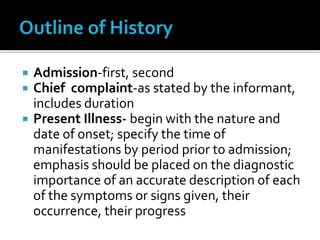
Outline of HistoryAdmission-first, second
Chief  complaint-as stated by the informant, includes duration
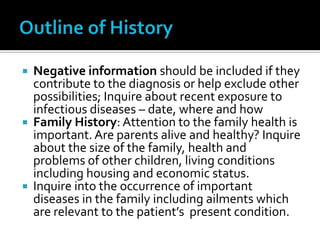
Present Illness- begin with the nature and date of onset; specify the time of manifestations by period prior to admission; emphasis should be placed on the diagnostic importance of an accurate description of each of the symptoms or signs given, their occurrence, their progressOutline of HistoryNegative information should be included if they contribute to the diagnosis or help exclude other possibilities; Inquire about recent exposure to infectious diseases – date, where and how
Family History: Attention to the family health is important. Are parents alive and healthy? Inquire about the size of the family, health and problems of other children, living conditions including housing and economic status.
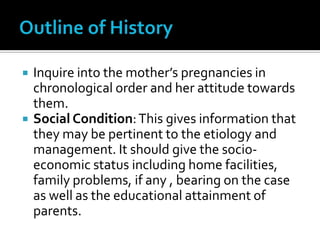
Inquire into the occurrence of important diseases in the family including ailments which are relevant to the patient’s  present condition.Outline of HistoryInquire into the mother’s pregnancies in chronological order and her attitude towards them.
Social Condition: This gives information that they may be pertinent to the etiology and management. It should give the socio-economic status including home facilities, family problems, if any , bearing on the case as well as the educational attainment of parents.Outline of HistoryPersonal History:
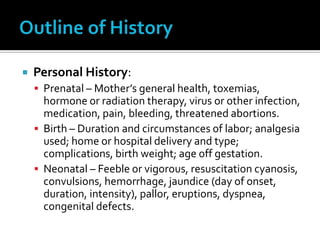
Prenatal – Mother’s general health, toxemias, hormone or radiation therapy, virus or other infection, medication, pain, bleeding, threatened abortions.
Birth – Duration and circumstances of labor; analgesia used; home or hospital delivery and type; complications, birth weight; age off gestation.

Pediatric history taking hd

  • 1.
  • 2.
    Interviewing: MethodsActive listening-useof silence plus on-verbal indications of interest such as nodding, maintaining an open, receptive body stance, leaning forward and maintaining eye contact- effective at the start of the interviewFacilitation- door openers-invite patient to continue talking,rocking-uses words to indicate to the patient that the interviewer is listening or repeating-in the form of a question, word or phrase that the patient has just stated, will aid the patient in further elaborating his thoughts
  • 3.
    Interview:MethodsQuestioning- may requireopen ended or specific questions-probing questions- requests more information in a specific area already mentioned by the patient; clarifying questions-requests an explanation of what has already been said specially if the interviewer is not sure of what the patient is trying to communicate
  • 4.
    Interview: MethodsReflection-a responsethat repeats something the patient has just said. It provides feedback to the information he has just given. The interviewer reflects the facts the facts and the feelings which accompany the facts
  • 5.
    Confrontation-focuses the patient’sattention on a component of his experience such as feelings, behaviour or statement.Outline of HistoryInformant- relationship to patient and reliabilityPatient ‘s NamePatient’s AddressDate of BirthBirth PlaceSexNationality
  • 6.
  • 7.
    Chief complaint-asstated by the informant, includes duration
  • 8.
    Present Illness- beginwith the nature and date of onset; specify the time of manifestations by period prior to admission; emphasis should be placed on the diagnostic importance of an accurate description of each of the symptoms or signs given, their occurrence, their progressOutline of HistoryNegative information should be included if they contribute to the diagnosis or help exclude other possibilities; Inquire about recent exposure to infectious diseases – date, where and how
  • 9.
    Family History: Attentionto the family health is important. Are parents alive and healthy? Inquire about the size of the family, health and problems of other children, living conditions including housing and economic status.
  • 10.
    Inquire into theoccurrence of important diseases in the family including ailments which are relevant to the patient’s present condition.Outline of HistoryInquire into the mother’s pregnancies in chronological order and her attitude towards them.
  • 11.
    Social Condition: Thisgives information that they may be pertinent to the etiology and management. It should give the socio-economic status including home facilities, family problems, if any , bearing on the case as well as the educational attainment of parents.Outline of HistoryPersonal History:
  • 12.
    Prenatal – Mother’sgeneral health, toxemias, hormone or radiation therapy, virus or other infection, medication, pain, bleeding, threatened abortions.
  • 13.
    Birth – Durationand circumstances of labor; analgesia used; home or hospital delivery and type; complications, birth weight; age off gestation.