Avijit Paul
PGT, Dept. of Community Medicine
Burdwan Medical College
SOCIO-CLINICAL
CASE PRESENTATION
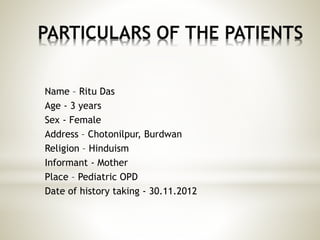
PARTICULARS OF THE PATIENTS
Name – Ritu Das
Age - 3 years
Sex - Female
Address – Chotonilpur, Burdwan
Religion – Hinduism
Informant - Mother
Place – Pediatric OPD
Date of history taking - 30.11.2012
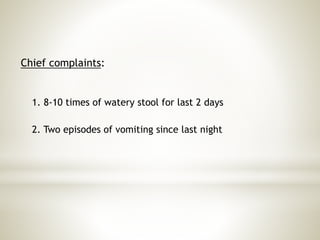
Chief complaints:
1. 8-10 times of watery stool for last 2 days
2. Two episodes of vomiting since last night
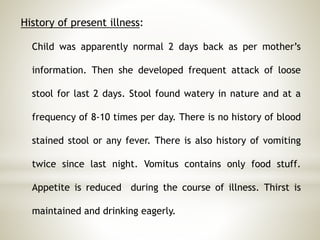
History of present illness:
Child was apparently normal 2 days back as per mother’s
information. Then she developed frequent attack of loose
stool for last 2 days. Stool found watery in nature and at a
frequency of 8-10 times per day. There is no history of blood
stained stool or any fever. There is also history of vomiting
twice since last night. Vomitus contains only food stuff.
Appetite is reduced during the course of illness. Thirst is
maintained and drinking eagerly.
History of past illness:
There is a history of similar type of episode 6 months back.
There is no history of any major illness in the past.
Treatment history:
The child was treated for the past episode of diarrhea with
ORT at home. There was no history of hospitalization in the
past.
Personal history
Antenatal history of the mother
No significant illness of the mother in the antenatal
period.
Took 2 antenatal check up, 2 doses of Tetanus toxoid
and iron and folic acid tablets for 2 month only.
Intranatal history
Institutional (Burdwan Medical College and Hospital)
Normal vaginal delivery
Baby cried after birth
Birth weight – 2.8 kg
Feeding history
o Colostrum not given
o History of prelacteal feeding with honey and water
o Not exclusively breast fed, cow milk and water was given to
her occasionally
o Complementary feeding was started at 7 months with soft
cooked rice, vegetables
o She is now on usual home diet but currently on soft cooked
rice, smashed vegetables due to illness
o Breast feeding - Stopped
o Feeding - restricted during the periods of illness
• Bowel habit – Regular
• Appetite – Loss of appetite
• Sleep – No abnormality
• Immunization history -
All the vaccines were given at the proper time.
Immunization card was not available at the time of
examination.
BCG scar mark is not seen.
• Developmental history -
The child achieved all the developmental milestones in due time
like other children of the same age sex.
Knowledge and practices
regarding the disease
• Source of infection - contaminated food
• Mode of transmission – fly
• Mode of prevention - avoiding contaminated food
• Care seeking behavior – doctor’s advice or hospitals
Identification of the family
 Name of the head of the family – Dibyendu Das
 Type of family – Joint
 Total family members- 7
 Social problem in the family – Father is having a habit of
smoking and chewing tobacco. Grand Father is also addicted
to bidi.
Socioeconomic characteristics of family
1. Education of the Head of the family (HOF) :
High school completed (score -- 4)
2. Occupation of the HOF :
Stationary shopkeeper (Unskilled worker) ( score -- 5)
3. Total monthly income :
≈Rs. 15,000 (score -- 6)
 Total score 15 i.e. Socioeconomic status is lower middle
class according to Modified Kuppuswamy Scale
ENVIRONMENTAL
CONDITION
1. Type of house – Kuchha-pucca
2. Number of living rooms – 3
3. Source of drinking water –
 Tube well, situated just outside of their house
 They collect and store water for drinking and cooking
purpose in an uncovered bucket
 Personal food hygiene –
Hand washing practice before taking food is not regular
 Practice of defecation –
The family use sanitary latrine of their own.
They often wash their hand with water only.
 Refuse disposal –
They throw refuse indiscriminately out side the house.
PHYSICAL EXAMINATION
1. The child is conscious cooperative but restless
2. Anthropometry
Height – 88 cm
Weight - 11.5 kg
Mid arm circumference – 14 cm
3. General Survey
Pulse rate – 110/min
Respiratory rate – 30/min
Pallor, Icterus, Cyanosis - Absent
Neck vein – Not engorged
Temperature – not raised
Tongue - Dry
SYSTEMIC
EXAMINATION
1. Gastro-intestinal system –
• No superficial or deep tenderness
• No abdominal distension
• No superficial visible swelling or organomegaly
• Skin pinch on abdomen goes back slowly
• No other abnormality detected
SYSTEMIC
EXAMINATION
2. Central nervous system –
• All superficial and deep reflexes were present
• No other abnormality detected
3. Cardiovascular system –
• S1 and S2 audible
• No added sound heard
4. Respiratory system –
• Bilateral vesicular breath sound audible
• No added sound
This is a case of acute diarrhea with some dehydration.
PROVISIONAL
DIAGNOSIS
MEDICO-SOCIAL
DIAGNOSIS
Ritu Das, a 3 yrs old female child of a lower middle class hindu-joint
family is suffering from acute diarrhea with some dehydration. She is
living in a kuchha-pucca house and the family members who don’t
follow proper hand washing, food handling and defecation practices.
They throw refuse indiscriminately. There is presence of tobacco
smoking and chewing habits as a social problem in this family. There
is lack of exclusive breast feeding, history of pre-lacteal feeding
with honey and water. Colostrum was not given to the child.
Complementary feeding was started at 7 months of age with soft
cooked rice, vegetables.
Currently she is on soft cooked rice, smashed vegetables
and her feeding is restricted during the periods of
illness. Clinical examination of the child reveals she is
restless, pulse rate - 110/min , dried tongue, drinks
water eagerly and skin pinch goes back slowly.
Anthropometric examination excludes any malnutrition.
1. ORS - 900ml within 4 hours
2. Zn Tablet 20 mg 1 tab OD for 14 days
3. Home available fluid
4. Feeding should be continued
• Khichri with oil
• Rice with milk or curd and sugar
• Mashed banana with milk or curd
5) Informed about danger signs and asked to seek health
facilities if:-
• Many watery stools
• Repeated vomiting
• Marked thirst or not able to drink
• Fever
• Blood in the stool
6) Advised to take all the remaining doses of vaccines.
7. IEC
• Collect, store and use water in a proper way.
• Proper hand washing practice
• Wash hand after defecation with soap wate
maintain proper hygiene.
• Proper feeding of child during illness
RECOMMENDATION
1. The mother has been counseled to give her child properly
collected, stored and handled potable water.
2. Father has been informed regarding the ill effects tobacco
addiction to him and others so that he could quit the same
and could motivate the other family members.
THANK YOU

Diarrhoea, A socio-clinical case presentation.

  • 1.
    Avijit Paul PGT, Dept.of Community Medicine Burdwan Medical College SOCIO-CLINICAL CASE PRESENTATION
  • 2.
    PARTICULARS OF THEPATIENTS Name – Ritu Das Age - 3 years Sex - Female Address – Chotonilpur, Burdwan Religion – Hinduism Informant - Mother Place – Pediatric OPD Date of history taking - 30.11.2012
  • 3.
    Chief complaints: 1. 8-10times of watery stool for last 2 days 2. Two episodes of vomiting since last night
  • 4.
    History of presentillness: Child was apparently normal 2 days back as per mother’s information. Then she developed frequent attack of loose stool for last 2 days. Stool found watery in nature and at a frequency of 8-10 times per day. There is no history of blood stained stool or any fever. There is also history of vomiting twice since last night. Vomitus contains only food stuff. Appetite is reduced during the course of illness. Thirst is maintained and drinking eagerly.
  • 5.
    History of pastillness: There is a history of similar type of episode 6 months back. There is no history of any major illness in the past. Treatment history: The child was treated for the past episode of diarrhea with ORT at home. There was no history of hospitalization in the past.
  • 6.
    Personal history Antenatal historyof the mother No significant illness of the mother in the antenatal period. Took 2 antenatal check up, 2 doses of Tetanus toxoid and iron and folic acid tablets for 2 month only. Intranatal history Institutional (Burdwan Medical College and Hospital) Normal vaginal delivery Baby cried after birth Birth weight – 2.8 kg
  • 7.
    Feeding history o Colostrumnot given o History of prelacteal feeding with honey and water o Not exclusively breast fed, cow milk and water was given to her occasionally o Complementary feeding was started at 7 months with soft cooked rice, vegetables o She is now on usual home diet but currently on soft cooked rice, smashed vegetables due to illness o Breast feeding - Stopped o Feeding - restricted during the periods of illness
  • 8.
    • Bowel habit– Regular • Appetite – Loss of appetite • Sleep – No abnormality • Immunization history - All the vaccines were given at the proper time. Immunization card was not available at the time of examination. BCG scar mark is not seen. • Developmental history - The child achieved all the developmental milestones in due time like other children of the same age sex.
  • 9.
    Knowledge and practices regardingthe disease • Source of infection - contaminated food • Mode of transmission – fly • Mode of prevention - avoiding contaminated food • Care seeking behavior – doctor’s advice or hospitals
  • 10.
    Identification of thefamily  Name of the head of the family – Dibyendu Das  Type of family – Joint  Total family members- 7  Social problem in the family – Father is having a habit of smoking and chewing tobacco. Grand Father is also addicted to bidi.
  • 11.
    Socioeconomic characteristics offamily 1. Education of the Head of the family (HOF) : High school completed (score -- 4) 2. Occupation of the HOF : Stationary shopkeeper (Unskilled worker) ( score -- 5) 3. Total monthly income : ≈Rs. 15,000 (score -- 6)  Total score 15 i.e. Socioeconomic status is lower middle class according to Modified Kuppuswamy Scale
  • 12.
    ENVIRONMENTAL CONDITION 1. Type ofhouse – Kuchha-pucca 2. Number of living rooms – 3 3. Source of drinking water –  Tube well, situated just outside of their house  They collect and store water for drinking and cooking purpose in an uncovered bucket
  • 13.
     Personal foodhygiene – Hand washing practice before taking food is not regular  Practice of defecation – The family use sanitary latrine of their own. They often wash their hand with water only.  Refuse disposal – They throw refuse indiscriminately out side the house.
  • 14.
    PHYSICAL EXAMINATION 1. Thechild is conscious cooperative but restless 2. Anthropometry Height – 88 cm Weight - 11.5 kg Mid arm circumference – 14 cm 3. General Survey Pulse rate – 110/min Respiratory rate – 30/min Pallor, Icterus, Cyanosis - Absent Neck vein – Not engorged Temperature – not raised Tongue - Dry
  • 15.
    SYSTEMIC EXAMINATION 1. Gastro-intestinal system– • No superficial or deep tenderness • No abdominal distension • No superficial visible swelling or organomegaly • Skin pinch on abdomen goes back slowly • No other abnormality detected
  • 16.
    SYSTEMIC EXAMINATION 2. Central nervoussystem – • All superficial and deep reflexes were present • No other abnormality detected 3. Cardiovascular system – • S1 and S2 audible • No added sound heard 4. Respiratory system – • Bilateral vesicular breath sound audible • No added sound
  • 17.
    This is acase of acute diarrhea with some dehydration. PROVISIONAL DIAGNOSIS
  • 18.
    MEDICO-SOCIAL DIAGNOSIS Ritu Das, a3 yrs old female child of a lower middle class hindu-joint family is suffering from acute diarrhea with some dehydration. She is living in a kuchha-pucca house and the family members who don’t follow proper hand washing, food handling and defecation practices. They throw refuse indiscriminately. There is presence of tobacco smoking and chewing habits as a social problem in this family. There is lack of exclusive breast feeding, history of pre-lacteal feeding with honey and water. Colostrum was not given to the child. Complementary feeding was started at 7 months of age with soft cooked rice, vegetables.
  • 19.
    Currently she ison soft cooked rice, smashed vegetables and her feeding is restricted during the periods of illness. Clinical examination of the child reveals she is restless, pulse rate - 110/min , dried tongue, drinks water eagerly and skin pinch goes back slowly. Anthropometric examination excludes any malnutrition.
  • 20.
    1. ORS -900ml within 4 hours 2. Zn Tablet 20 mg 1 tab OD for 14 days 3. Home available fluid 4. Feeding should be continued • Khichri with oil • Rice with milk or curd and sugar • Mashed banana with milk or curd
  • 21.
    5) Informed aboutdanger signs and asked to seek health facilities if:- • Many watery stools • Repeated vomiting • Marked thirst or not able to drink • Fever • Blood in the stool 6) Advised to take all the remaining doses of vaccines.
  • 22.
    7. IEC • Collect,store and use water in a proper way. • Proper hand washing practice • Wash hand after defecation with soap wate maintain proper hygiene. • Proper feeding of child during illness
  • 23.
    RECOMMENDATION 1. The motherhas been counseled to give her child properly collected, stored and handled potable water. 2. Father has been informed regarding the ill effects tobacco addiction to him and others so that he could quit the same and could motivate the other family members.
  • 24.