Obstetrics & Gynecology - 2014 
CASE PRESENTATION & CASE REVIEW 
CASE ONE 
PRESENTER: 
Dr. T.KIAK
CASE SUMMARY 
Cont… 
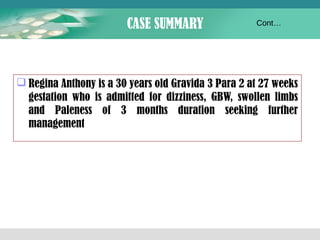
Regina Anthony is a 30 years old Gravida 3 Para 2 at 27 weeks 
gestation who is admitted for dizziness, GBW, swollen limbs 
and Paleness of 3 months duration seeking further 
management
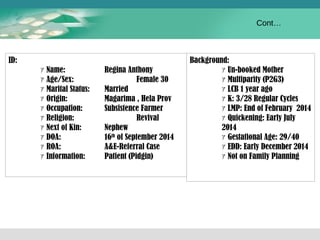
ID: 
ァName: Regina Anthony 
ァAge/Sex: Female 30 
ァMarital Status: Married 
ァOrigin: Magarima , Hela Prov 
ァOccupation: Subsistence Farmer 
ァReligion: Revival 
ァNext of Kin: Nephew 
ァDOA: 16th of September 2014 
ァROA: A&E-Referral Case 
ァInformation: Patient (Pidgin) 
Background: 
Cont… 
ァUn-booked Mother 
ァMultiparity (P2G3) 
ァLCB 1 year ago 
ァK: 3/28 Regular Cycles 
ァLMP: End of February 2014 
ァQuickening: Early July 
2014 
ァGestational Age: 29/40 
ァEDD: Early December 2014 
ァNot on Family Planning
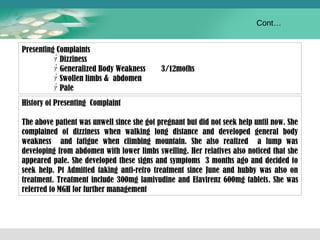
Presenting Complaints 
ァDizziness 
ァGeneralized Body Weakness 3/12moths 
ァSwollen limbs & abdomen 
ァPale 
History of Presenting Complaint 
Cont… 
The above patient was unwell since she got pregnant but did not seek help until now. She 
complained of dizziness when walking long distance and developed general body 
weakness and fatigue when climbing mountain. She also realized a lump was 
developing from abdomen with lower limbs swelling. Her relatives also noticed that she 
appeared pale. She developed these signs and symptoms 3 months ago and decided to 
seek help. Pt Admitted taking anti-retro treatment since June and hubby was also on 
treatment. Treatment include 300mg lamivudine and Efavirenz 600mg tablets. She was 
referred to MGH for further management
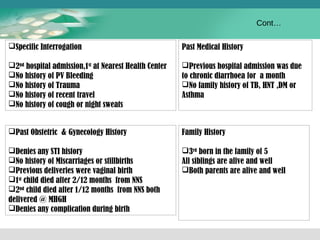
Specific Interrogation 
2nd hospital admission,1st at Nearest Health Center 
No history of PV Bleeding 
No history of Trauma 
No history of recent travel 
No history of cough or night sweats 
Past Obstetric & Gynecology History 
Denies any STI history 
No history of Miscarriages or stillbirths 
Previous deliveries were vaginal birth 
1st child died after 2/12 months from NNS 
2nd child died after 1/12 months from NNS both 
delivered @ MHGH 
Denies any complication during birth 
Cont… 
Past Medical History 
Previous hospital admission was due 
to chronic diarrhoea for a month 
No family history of TB, HNT ,DM or 
Asthma 
Family History 
3rd born in the family of 5 
All siblings are alive and well 
Both parents are alive and well
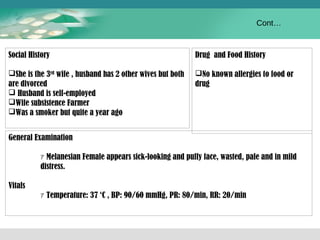
Social History 
She is the 3rd wife , husband has 2 other wives but both 
are divorced 
 Husband is self-employed 
Wife subsistence Farmer 
Was a smoker but quite a year ago 
Drug and Food History 
No known allergies to food or 
drug 
General Examination 
ァMelanesian Female appears sick-looking and puffy face, wasted, pale and in mild 
distress. 
Vitals 
ァTemperature: 37 ‘C , BP: 90/60 mmHg, PR: 80/min, RR: 20/min 
Cont…
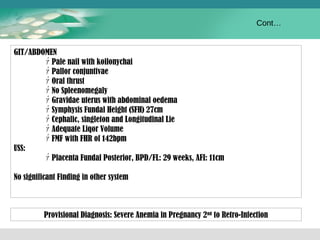
GIT/ABDOMEN 
ァPale nail with koilonychai 
ァPallor conjuntivae 
ァOral thrust 
ァNo Spleenomegaly 
ァGravidae uterus with abdominal oedema 
ァSymphysis Fundal Height (SFH) 27cm 
ァCephalic, singleton and Longitudinal Lie 
ァAdequate Liqor Volume 
ァFMF with FHR of 142bpm 
USS: 
ァPlacenta Fundal Posterior, BPD/FL: 29 weeks, AFI: 11cm 
No significant Finding in other system 
Cont… 
Provisional Diagnosis: Severe Anemia in Pregnancy 2nd to Retro-Infection
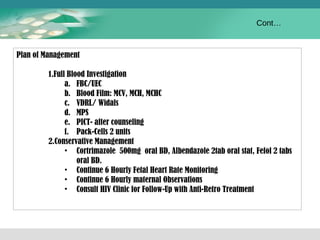
Plan of Management 
1.Full Blood Investigation 
a. FBC/UEC 
b. Blood Film: MCV, MCH, MCHC 
c. VDRL/ Widals 
d. MPS 
e. PICT- after counseling 
f. Pack-Cells 2 units 
2.Conservative Management 
• Cortrimazole 500mg oral BD, Albendazole 2tab oral stat, Fefol 2 tabs 
oral BD. 
• Continue 6 Hourly Fetal Heart Rate Monitoring 
• Continue 6 Hourly maternal Observations 
• Consult HIV Clinic for Follow-Up with Anti-Retro Treatment 
Cont…
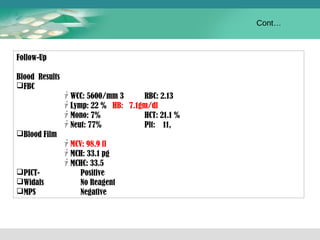
Follow-Up 
Blood Results 
FBC 
ァWCC: 5600/mm 3 RBC: 2.13 
ァLymp: 22 % HB: 7.1gm/dl 
ァMono: 7% HCT: 21.1 % 
ァNeut: 77% Plt: 11, 
Blood Film 
ァMCV: 98.9 fl 
ァMCH: 33.1 pg 
ァMCHC: 33.5 
PICT- Positive 
Widals No Reagent 
MPS Negative 
Cont…
CASE REVIEW: Anemia in Pregnancy 
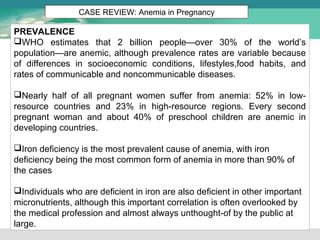
PREVALENCE 
WHO estimates that 2 billion people—over 30% of the world’s 
population—are anemic, although prevalence rates are variable because 
of differences in socioeconomic conditions, lifestyles,food habits, and 
rates of communicable and noncommunicable diseases. 
Nearly half of all pregnant women suffer from anemia: 52% in low-resource 
countries and 23% in high-resource regions. Every second 
pregnant woman and about 40% of preschool children are anemic in 
developing countries. 
Iron deficiency is the most prevalent cause of anemia, with iron 
deficiency being the most common form of anemia in more than 90% of 
the cases 
Individuals who are deficient in iron are also deficient in other important 
micronutrients, although this important correlation is often overlooked by 
the medical profession and almost always unthought-of by the public at 
large.
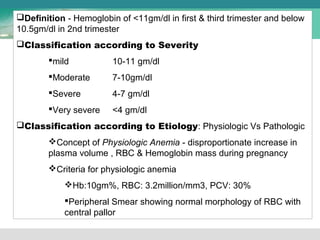
Definition - Hemoglobin of <11gm/dl in first & third trimester and below 
10.5gm/dl in 2nd trimester 
Classification according to Severity 
mild 10-11 gm/dl 
Moderate 7-10gm/dl 
Severe 4-7 gm/dl 
Very severe <4 gm/dl 
Classification according to Etiology: Physiologic Vs Pathologic 
Concept of Physiologic Anemia - disproportionate increase in 
plasma volume , RBC & Hemoglobin mass during pregnancy 
Criteria for physiologic anemia 
Hb:10gm%, RBC: 3.2million/mm3, PCV: 30% 
Peripheral Smear showing normal morphology of RBC with 
central pallor
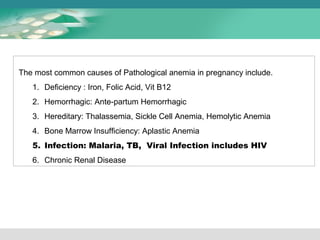
The most common causes of Pathological anemia in pregnancy include. 
1. Deficiency : Iron, Folic Acid, Vit B12 
2. Hemorrhagic: Ante-partum Hemorrhagic 
3. Hereditary: Thalassemia, Sickle Cell Anemia, Hemolytic Anemia 
4. Bone Marrow Insufficiency: Aplastic Anemia 
5. Infection: Malaria, TB, Viral Infection includes HIV 
6. Chronic Renal Disease
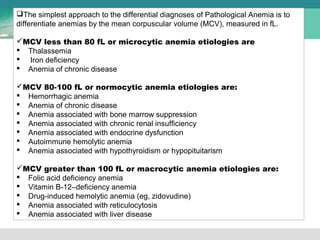
The simplest approach to the differential diagnoses of Pathological Anemia is to 
differentiate anemias by the mean corpuscular volume (MCV), measured in fL. 
MCV less than 80 fL or microcytic anemia etiologies are 
 Thalassemia 
 Iron deficiency 
 Anemia of chronic disease 
MCV 80-100 fL or normocytic anemia etiologies are: 
 Hemorrhagic anemia 
 Anemia of chronic disease 
 Anemia associated with bone marrow suppression 
 Anemia associated with chronic renal insufficiency 
 Anemia associated with endocrine dysfunction 
 Autoimmune hemolytic anemia 
 Anemia associated with hypothyroidism or hypopituitarism 
MCV greater than 100 fL or macrocytic anemia etiologies are: 
 Folic acid deficiency anemia 
 Vitamin B-12–deficiency anemia 
 Drug-induced hemolytic anemia (eg, zidovudine) 
 Anemia associated with reticulocytosis 
 Anemia associated with liver disease
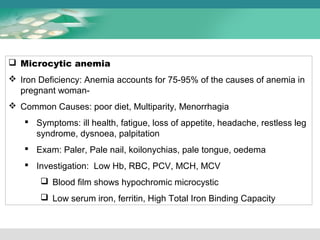
 Microcytic anemia 
 Iron Deficiency: Anemia accounts for 75-95% of the causes of anemia in 
pregnant woman- 
 Common Causes: poor diet, Multiparity, Menorrhagia 
 Symptoms: ill health, fatigue, loss of appetite, headache, restless leg 
syndrome, dysnoea, palpitation 
 Exam: Paler, Pale nail, koilonychias, pale tongue, oedema 
 Investigation: Low Hb, RBC, PCV, MCH, MCV 
 Blood film shows hypochromic microcystic 
 Low serum iron, ferritin, High Total Iron Binding Capacity
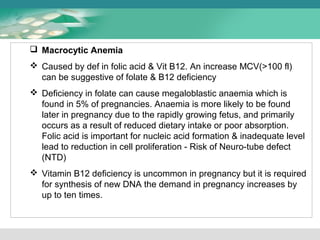
 Macrocytic Anemia 
 Caused by def in folic acid & Vit B12. An increase MCV(>100 fl) 
can be suggestive of folate & B12 deficiency 
 Deficiency in folate can cause megaloblastic anaemia which is 
found in 5% of pregnancies. Anaemia is more likely to be found 
later in pregnancy due to the rapidly growing fetus, and primarily 
occurs as a result of reduced dietary intake or poor absorption. 
Folic acid is important for nucleic acid formation & inadequate level 
lead to reduction in cell proliferation - Risk of Neuro-tube defect 
(NTD) 
 Vitamin B12 deficiency is uncommon in pregnancy but it is required 
for synthesis of new DNA the demand in pregnancy increases by 
up to ten times.
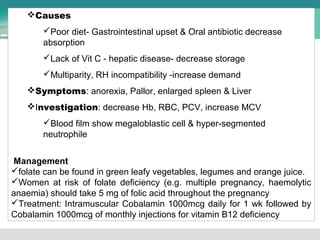
Causes 
Poor diet- Gastrointestinal upset & Oral antibiotic decrease 
absorption 
Lack of Vit C - hepatic disease- decrease storage 
Multiparity, RH incompatibility -increase demand 
Symptoms: anorexia, Pallor, enlarged spleen & Liver 
Investigation: decrease Hb, RBC, PCV, increase MCV 
Blood film show megaloblastic cell & hyper-segmented 
neutrophile 
Management 
folate can be found in green leafy vegetables, legumes and orange juice. 
Women at risk of folate deficiency (e.g. multiple pregnancy, haemolytic 
anaemia) should take 5 mg of folic acid throughout the pregnancy 
Treatment: Intramuscular Cobalamin 1000mcg daily for 1 wk followed by 
Cobalamin 1000mcg of monthly injections for vitamin B12 deficiency
Other Causes of Anemia 
Microangiopathic anaemia can be seen in pregnancy conditions such 
as preeclampsia, eclampsia, HELLP syndrome, and with thrombotic 
thrombocytopenia purpure. Autoimmune haemolytic anaemia occurs up 
to four times more frequently in pregnancy.
Infectious causes of Anemia
Chronic infections and disorders as causes of anemia 
Infectious cause of anemia are more common in low resource countries. 
Anemia can be caused by infections such as parvovirus B-19, 
cytomegalovirus (CMV), HIV, hepatitis viruses, Epstein-Barr virus (EBV), 
malaria, babesiosis, bartonellosis, hookworm infestation, and Clostridium 
toxin. 
It has serious short- and long-term consequences during pregnancy 
and beyond. The anemic condition is often worsened by the presence of 
other chronic diseases as stated earlier. 
Untreated anemia also leads to increased morbidity and mortality from 
these chronic conditions as well. 
 It is surprising that despite these chronic conditions (such as malaria, 
tuberculosis, and HIV) often being preventable, they still pose a real threat 
to public health
 Pathophysiology 
The exact pathophysiologic mechanism by which anemia is caused in 
chronic inflammatory conditions is unknown. 
1. A common factor may be the contribution of hepcidin, a polypeptide 
hormone. Chronic inflammatory conditions lead to release of cytokines 
from the reticuloendothelial system as a part of cell-mediated 
immunity.In response to these cytokines, mainly interleukin 6 (IL-6),the 
liver produces increased amounts of hepcidin, which in turn prevents 
release of iron from its stores. The process is mediated by blocking iron 
channels (such as ferroportin). Inflammatory cytokines also appear to 
influence other important aspects of iron metabolism, such as 
decreasing ferroportin expression, and possibly directly suppressing 
erythropoiesis by decreasing the ability of the bone marrow to respond 
to erythropoietin. 
2. The propensity to infections is also thought to be caused by altered 
cellular immunity due to iron deficiency.
Short-term risks of anemia 
Antepartum: Prone to infections, preterm labor, left ventricular failure. 
Intrapartum: Heart failure, postpartum hemorrhage, shock. 
Postpartum: Heart failure, puerperal sepsis, uterine sub-involution, 
increased cesarean delivery morbidity. 
Fetus: Increased stillbirth and morbidity and mortality due to intrauterine 
growth restriction, prematurity & sepsis. 
Long-term risks of anemia 
Anemia leads to debilitating physical (tiredness, lethargy, reduced exercise 
tolerance, dyspnea, dizziness, anginal pain, and palpitation) and mental 
(impaired cognitive function) symptoms, both of which negatively affect quality 
of life.In terms of the effect of anemia on HIV, some studies strongly suggest 
that adverse pregnancy events (such as low birth weight, stillbirth, preterm 
birth, and intrauterine growth restriction) are worsened in the presence of 
anemia. Moreover,mother-to-child transmission (MTCT) of HIV may be 
increased. HIV infection in pregnancy also increases anemia-related maternal 
deaths. Anemic condition, in turn, can result in HIV disease progression
Chronic conditions/diseases associated with anemia 
Infections:Malaria, HIV, tuberculosis, osteomyelitis, bacterial 
endocarditis, pulmonary abscess. 
Parasitic infestations: Hookworm, ascaris, schistosomiasis 
Chronic noninfectious diseases: Diabetes, rheumatoid arthritis, 
Systemic Lupus Erythematosus, Crohn’s disease, ulcerative 
colitis,chronic liver disease, cirrhosis, hemoglobinopathies 
Malignancy: Carcinoma, sarcoma, lymphoma, myeloma
Anemia is often worsened by chronic communicable and 
noncommunicable diseases, the most important being malaria, 
HIV,tuberculosis, and diabetes. When anemia occurs in pregnancy it 
not only results in poor pregnancy outcome in the short term but, in 
the long term, it also leads to worsening of these chronic 
conditions,reduced work capacity, and an impaired cognitive 
developmentof the child. 
A joint social and political approach is necessary to control anemia in 
pregnancy, as it represents a life-threatening but preventable cause of 
maternal and childhood morbidity and mortality
References: 
1. http://emedicine.medscape.com/article/261586-overview 
2. Raja Gangopadhyaya, Mahantesh Karoshia, Louis Keithb: Anemia and 
pregnancy: A link to maternal chronic diseases:International Journal of 
Gynecology and Obstetrics 115 Suppl. 1 (2011) S11–S15 
3. WHO, Centers for Disease Control and Prevention Atlanta. Worldwide 
prevalenceof anaemia 993–2005. 
www.who.int.http://whqlibdoc.who.int/publications/2008/9789241596657_eng. 
pdf. Published 2008. 
4. Nemeth E, Rivera S, Gabayan V, Keller C, Taudorf S, Pedersen BK, et al. IL- 
6mediates hypoferremia of inflammation by inducing the synthesis of the 
ironregulatory hormone hepcidin. J Clin Invest 2004;113(9):1271–6. 
5. Haurani FI. Hepcidin and the anemia of chronic disease. Ann Clin Lab Sci 
2006;36(1):3–6

Case presntation -Anamia in Pregnancy-Case Review

  • 1.
    Obstetrics & Gynecology- 2014 CASE PRESENTATION & CASE REVIEW CASE ONE PRESENTER: Dr. T.KIAK
  • 2.
    CASE SUMMARY Cont… Regina Anthony is a 30 years old Gravida 3 Para 2 at 27 weeks gestation who is admitted for dizziness, GBW, swollen limbs and Paleness of 3 months duration seeking further management
  • 3.
    ID: ァName: ReginaAnthony ァAge/Sex: Female 30 ァMarital Status: Married ァOrigin: Magarima , Hela Prov ァOccupation: Subsistence Farmer ァReligion: Revival ァNext of Kin: Nephew ァDOA: 16th of September 2014 ァROA: A&E-Referral Case ァInformation: Patient (Pidgin) Background: Cont… ァUn-booked Mother ァMultiparity (P2G3) ァLCB 1 year ago ァK: 3/28 Regular Cycles ァLMP: End of February 2014 ァQuickening: Early July 2014 ァGestational Age: 29/40 ァEDD: Early December 2014 ァNot on Family Planning
  • 4.
    Presenting Complaints ァDizziness ァGeneralized Body Weakness 3/12moths ァSwollen limbs & abdomen ァPale History of Presenting Complaint Cont… The above patient was unwell since she got pregnant but did not seek help until now. She complained of dizziness when walking long distance and developed general body weakness and fatigue when climbing mountain. She also realized a lump was developing from abdomen with lower limbs swelling. Her relatives also noticed that she appeared pale. She developed these signs and symptoms 3 months ago and decided to seek help. Pt Admitted taking anti-retro treatment since June and hubby was also on treatment. Treatment include 300mg lamivudine and Efavirenz 600mg tablets. She was referred to MGH for further management
  • 5.
    Specific Interrogation 2ndhospital admission,1st at Nearest Health Center No history of PV Bleeding No history of Trauma No history of recent travel No history of cough or night sweats Past Obstetric & Gynecology History Denies any STI history No history of Miscarriages or stillbirths Previous deliveries were vaginal birth 1st child died after 2/12 months from NNS 2nd child died after 1/12 months from NNS both delivered @ MHGH Denies any complication during birth Cont… Past Medical History Previous hospital admission was due to chronic diarrhoea for a month No family history of TB, HNT ,DM or Asthma Family History 3rd born in the family of 5 All siblings are alive and well Both parents are alive and well
  • 6.
    Social History Sheis the 3rd wife , husband has 2 other wives but both are divorced  Husband is self-employed Wife subsistence Farmer Was a smoker but quite a year ago Drug and Food History No known allergies to food or drug General Examination ァMelanesian Female appears sick-looking and puffy face, wasted, pale and in mild distress. Vitals ァTemperature: 37 ‘C , BP: 90/60 mmHg, PR: 80/min, RR: 20/min Cont…
  • 7.
    GIT/ABDOMEN ァPale nailwith koilonychai ァPallor conjuntivae ァOral thrust ァNo Spleenomegaly ァGravidae uterus with abdominal oedema ァSymphysis Fundal Height (SFH) 27cm ァCephalic, singleton and Longitudinal Lie ァAdequate Liqor Volume ァFMF with FHR of 142bpm USS: ァPlacenta Fundal Posterior, BPD/FL: 29 weeks, AFI: 11cm No significant Finding in other system Cont… Provisional Diagnosis: Severe Anemia in Pregnancy 2nd to Retro-Infection
  • 8.
    Plan of Management 1.Full Blood Investigation a. FBC/UEC b. Blood Film: MCV, MCH, MCHC c. VDRL/ Widals d. MPS e. PICT- after counseling f. Pack-Cells 2 units 2.Conservative Management • Cortrimazole 500mg oral BD, Albendazole 2tab oral stat, Fefol 2 tabs oral BD. • Continue 6 Hourly Fetal Heart Rate Monitoring • Continue 6 Hourly maternal Observations • Consult HIV Clinic for Follow-Up with Anti-Retro Treatment Cont…
  • 9.
    Follow-Up Blood Results FBC ァWCC: 5600/mm 3 RBC: 2.13 ァLymp: 22 % HB: 7.1gm/dl ァMono: 7% HCT: 21.1 % ァNeut: 77% Plt: 11, Blood Film ァMCV: 98.9 fl ァMCH: 33.1 pg ァMCHC: 33.5 PICT- Positive Widals No Reagent MPS Negative Cont…
  • 10.
    CASE REVIEW: Anemiain Pregnancy PREVALENCE WHO estimates that 2 billion people—over 30% of the world’s population—are anemic, although prevalence rates are variable because of differences in socioeconomic conditions, lifestyles,food habits, and rates of communicable and noncommunicable diseases. Nearly half of all pregnant women suffer from anemia: 52% in low-resource countries and 23% in high-resource regions. Every second pregnant woman and about 40% of preschool children are anemic in developing countries. Iron deficiency is the most prevalent cause of anemia, with iron deficiency being the most common form of anemia in more than 90% of the cases Individuals who are deficient in iron are also deficient in other important micronutrients, although this important correlation is often overlooked by the medical profession and almost always unthought-of by the public at large.
  • 11.
    Definition - Hemoglobinof <11gm/dl in first & third trimester and below 10.5gm/dl in 2nd trimester Classification according to Severity mild 10-11 gm/dl Moderate 7-10gm/dl Severe 4-7 gm/dl Very severe <4 gm/dl Classification according to Etiology: Physiologic Vs Pathologic Concept of Physiologic Anemia - disproportionate increase in plasma volume , RBC & Hemoglobin mass during pregnancy Criteria for physiologic anemia Hb:10gm%, RBC: 3.2million/mm3, PCV: 30% Peripheral Smear showing normal morphology of RBC with central pallor
  • 12.
    The most commoncauses of Pathological anemia in pregnancy include. 1. Deficiency : Iron, Folic Acid, Vit B12 2. Hemorrhagic: Ante-partum Hemorrhagic 3. Hereditary: Thalassemia, Sickle Cell Anemia, Hemolytic Anemia 4. Bone Marrow Insufficiency: Aplastic Anemia 5. Infection: Malaria, TB, Viral Infection includes HIV 6. Chronic Renal Disease
  • 13.
    The simplest approachto the differential diagnoses of Pathological Anemia is to differentiate anemias by the mean corpuscular volume (MCV), measured in fL. MCV less than 80 fL or microcytic anemia etiologies are  Thalassemia  Iron deficiency  Anemia of chronic disease MCV 80-100 fL or normocytic anemia etiologies are:  Hemorrhagic anemia  Anemia of chronic disease  Anemia associated with bone marrow suppression  Anemia associated with chronic renal insufficiency  Anemia associated with endocrine dysfunction  Autoimmune hemolytic anemia  Anemia associated with hypothyroidism or hypopituitarism MCV greater than 100 fL or macrocytic anemia etiologies are:  Folic acid deficiency anemia  Vitamin B-12–deficiency anemia  Drug-induced hemolytic anemia (eg, zidovudine)  Anemia associated with reticulocytosis  Anemia associated with liver disease
  • 14.
     Microcytic anemia  Iron Deficiency: Anemia accounts for 75-95% of the causes of anemia in pregnant woman-  Common Causes: poor diet, Multiparity, Menorrhagia  Symptoms: ill health, fatigue, loss of appetite, headache, restless leg syndrome, dysnoea, palpitation  Exam: Paler, Pale nail, koilonychias, pale tongue, oedema  Investigation: Low Hb, RBC, PCV, MCH, MCV  Blood film shows hypochromic microcystic  Low serum iron, ferritin, High Total Iron Binding Capacity
  • 15.
     Macrocytic Anemia  Caused by def in folic acid & Vit B12. An increase MCV(>100 fl) can be suggestive of folate & B12 deficiency  Deficiency in folate can cause megaloblastic anaemia which is found in 5% of pregnancies. Anaemia is more likely to be found later in pregnancy due to the rapidly growing fetus, and primarily occurs as a result of reduced dietary intake or poor absorption. Folic acid is important for nucleic acid formation & inadequate level lead to reduction in cell proliferation - Risk of Neuro-tube defect (NTD)  Vitamin B12 deficiency is uncommon in pregnancy but it is required for synthesis of new DNA the demand in pregnancy increases by up to ten times.
  • 16.
    Causes Poor diet-Gastrointestinal upset & Oral antibiotic decrease absorption Lack of Vit C - hepatic disease- decrease storage Multiparity, RH incompatibility -increase demand Symptoms: anorexia, Pallor, enlarged spleen & Liver Investigation: decrease Hb, RBC, PCV, increase MCV Blood film show megaloblastic cell & hyper-segmented neutrophile Management folate can be found in green leafy vegetables, legumes and orange juice. Women at risk of folate deficiency (e.g. multiple pregnancy, haemolytic anaemia) should take 5 mg of folic acid throughout the pregnancy Treatment: Intramuscular Cobalamin 1000mcg daily for 1 wk followed by Cobalamin 1000mcg of monthly injections for vitamin B12 deficiency
  • 17.
    Other Causes ofAnemia Microangiopathic anaemia can be seen in pregnancy conditions such as preeclampsia, eclampsia, HELLP syndrome, and with thrombotic thrombocytopenia purpure. Autoimmune haemolytic anaemia occurs up to four times more frequently in pregnancy.
  • 18.
  • 19.
    Chronic infections anddisorders as causes of anemia Infectious cause of anemia are more common in low resource countries. Anemia can be caused by infections such as parvovirus B-19, cytomegalovirus (CMV), HIV, hepatitis viruses, Epstein-Barr virus (EBV), malaria, babesiosis, bartonellosis, hookworm infestation, and Clostridium toxin. It has serious short- and long-term consequences during pregnancy and beyond. The anemic condition is often worsened by the presence of other chronic diseases as stated earlier. Untreated anemia also leads to increased morbidity and mortality from these chronic conditions as well.  It is surprising that despite these chronic conditions (such as malaria, tuberculosis, and HIV) often being preventable, they still pose a real threat to public health
  • 20.
     Pathophysiology Theexact pathophysiologic mechanism by which anemia is caused in chronic inflammatory conditions is unknown. 1. A common factor may be the contribution of hepcidin, a polypeptide hormone. Chronic inflammatory conditions lead to release of cytokines from the reticuloendothelial system as a part of cell-mediated immunity.In response to these cytokines, mainly interleukin 6 (IL-6),the liver produces increased amounts of hepcidin, which in turn prevents release of iron from its stores. The process is mediated by blocking iron channels (such as ferroportin). Inflammatory cytokines also appear to influence other important aspects of iron metabolism, such as decreasing ferroportin expression, and possibly directly suppressing erythropoiesis by decreasing the ability of the bone marrow to respond to erythropoietin. 2. The propensity to infections is also thought to be caused by altered cellular immunity due to iron deficiency.
  • 21.
    Short-term risks ofanemia Antepartum: Prone to infections, preterm labor, left ventricular failure. Intrapartum: Heart failure, postpartum hemorrhage, shock. Postpartum: Heart failure, puerperal sepsis, uterine sub-involution, increased cesarean delivery morbidity. Fetus: Increased stillbirth and morbidity and mortality due to intrauterine growth restriction, prematurity & sepsis. Long-term risks of anemia Anemia leads to debilitating physical (tiredness, lethargy, reduced exercise tolerance, dyspnea, dizziness, anginal pain, and palpitation) and mental (impaired cognitive function) symptoms, both of which negatively affect quality of life.In terms of the effect of anemia on HIV, some studies strongly suggest that adverse pregnancy events (such as low birth weight, stillbirth, preterm birth, and intrauterine growth restriction) are worsened in the presence of anemia. Moreover,mother-to-child transmission (MTCT) of HIV may be increased. HIV infection in pregnancy also increases anemia-related maternal deaths. Anemic condition, in turn, can result in HIV disease progression
  • 22.
    Chronic conditions/diseases associatedwith anemia Infections:Malaria, HIV, tuberculosis, osteomyelitis, bacterial endocarditis, pulmonary abscess. Parasitic infestations: Hookworm, ascaris, schistosomiasis Chronic noninfectious diseases: Diabetes, rheumatoid arthritis, Systemic Lupus Erythematosus, Crohn’s disease, ulcerative colitis,chronic liver disease, cirrhosis, hemoglobinopathies Malignancy: Carcinoma, sarcoma, lymphoma, myeloma
  • 23.
    Anemia is oftenworsened by chronic communicable and noncommunicable diseases, the most important being malaria, HIV,tuberculosis, and diabetes. When anemia occurs in pregnancy it not only results in poor pregnancy outcome in the short term but, in the long term, it also leads to worsening of these chronic conditions,reduced work capacity, and an impaired cognitive developmentof the child. A joint social and political approach is necessary to control anemia in pregnancy, as it represents a life-threatening but preventable cause of maternal and childhood morbidity and mortality
  • 24.
    References: 1. http://emedicine.medscape.com/article/261586-overview 2. Raja Gangopadhyaya, Mahantesh Karoshia, Louis Keithb: Anemia and pregnancy: A link to maternal chronic diseases:International Journal of Gynecology and Obstetrics 115 Suppl. 1 (2011) S11–S15 3. WHO, Centers for Disease Control and Prevention Atlanta. Worldwide prevalenceof anaemia 993–2005. www.who.int.http://whqlibdoc.who.int/publications/2008/9789241596657_eng. pdf. Published 2008. 4. Nemeth E, Rivera S, Gabayan V, Keller C, Taudorf S, Pedersen BK, et al. IL- 6mediates hypoferremia of inflammation by inducing the synthesis of the ironregulatory hormone hepcidin. J Clin Invest 2004;113(9):1271–6. 5. Haurani FI. Hepcidin and the anemia of chronic disease. Ann Clin Lab Sci 2006;36(1):3–6