Peak Performance CoachingBelinda AsonganyiCoaching Psychologist
About MeBackground in HRChartered ScientistNLP QualifiedQualified in EI & Psychometric testingCoaching Psychologist – Leadership, Career Transition, Stress Management & Wellness
Coaching -  Today’s approachCoaching is about unlocking a person’s potential to maximise their performanceit’s all about learning than teaching them
Aim is to.....Highlight the importance of workplace wellbeing to your organization.Outline the role of life coaching in general wellbeing.Demonstrate how life coaching at work can enhance wellbeing and productivity.
Positive psychological well-being – behavioural impactPeople higher on psychological well-beingShow greater flexibility Are more engagedRespond better to criticism Make more positive judgments about othersAre likely to live longer Have less absence from workAre happier at home and at work
My Role as a CoachPersonal CredibilityExcellent listen skillsAbility to give constructive feedbackConfidentialityTraining in a number of different tools and techniques
“Coaching in the workplace emphasizes fundamental aspects of behavior, skill and personal qualities needed to secure effective work performance” (Sparrow, 2007)
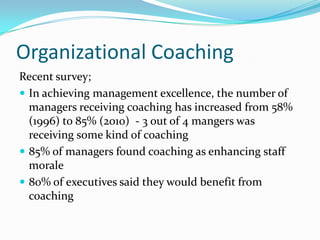
Organizational CoachingRecent survey;In achieving management excellence, the number of managers receiving coaching has increased from 58% (1996) to 85% (2010)  - 3 out of 4 mangers was receiving some kind of coaching85% of managers found coaching as enhancing staff morale80% of executives said they would benefit from coaching
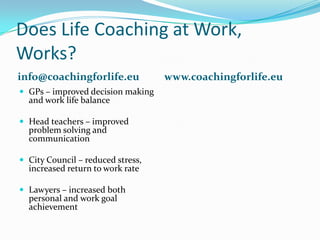
Does Life Coaching at Work, Works?info@coachingforlife.euwww.coachingforlife.euGPs – improved decision making and work life balanceHead teachers – improved problem solving and communicationCity Council – reduced stress, increased return to work rateLawyers – increased both personal and work goal achievement
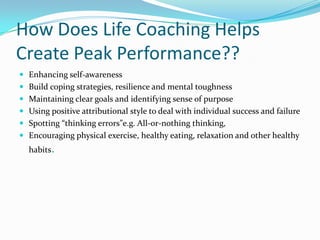
How Does Life Coaching Helps Create Peak Performance??Enhancing self-awarenessBuild coping strategies, resilience and mental toughnessMaintaining clear goals and identifying sense of purposeUsing positive attributionalstyle to deal with individual success and failureSpotting “thinking errors”e.g. All-or-nothing thinking, Encouraging physical exercise, healthy eating, relaxation and other healthy habits.
Life Vs Work
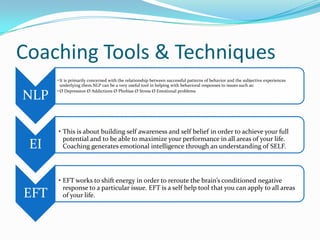
Coaching Tools & Techniques
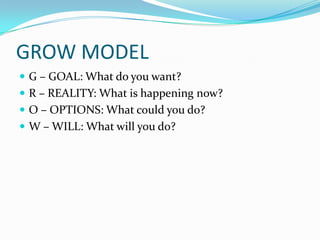
GROW MODELG – GOAL: What do you want?R – REALITY: What is happening now?O – OPTIONS: What could you do?W – WILL: What will you do?
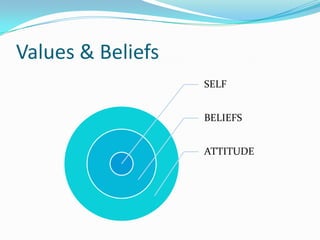
Values & Beliefs
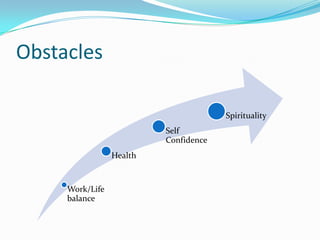
Obstacles
Performance      - Gain the vital edge at work to make you a more powerful communicator      - Master your own emotions so that you can handle all eventualities easily      - Enhance your personal relationships      - Develop "instant confidence" and motivate yourself and others      - Use language with greater precision and elegance      - Discover your true potential      - Create better and more satisfying emotional relationships.    
Coaching DiagnosticsThe interview processDirect Observation (behavioural)Objective assessmentMulti-point feedback (360°C)
Psychometric CoachingLooks at personal measures, including emotional intelligenceThe Big Five personality Test 	What Kind of Person Are You? The Big Five Personality Test is based on the 'Big Five' theory 	of personality, pioneered in a popular 1963 study by psychologist 	Warren Norman. This theory classifies the main non-cognitive 	personality traits as:Extroversion Agreeableness Conscientiousness Emotional Stability Intellect/Openness==> http://tinyurl.com/personalityt
The Self Esteem TestAre You Self-Confident? This assessment is designed to determine your level of self-esteem. 	Specifically, it looks at eight different factors heavily affecting the 	way you feel about yourself, how you perceive other people see you,	and how these beliefs affect your capabilities.This test will help you decipher the beliefs you have about yourself, 	as well as your overall level of self-esteem. You will be able to figure 	out if twinges of self-doubt are in fact recognizable symptoms 	of low self-esteem. How you feel about yourself affects how you behave.  ==> http://tinyurl.com/selfest This test will assess different behaviors associated with low self-esteem 	and help you understand how your sense of self-worth, as well as how 	your self-esteem is affecting the way you live your life.
What is Emotional Intelligence?Emotional intelligence can be defined as “ a set of skills, competencies and capabilities which makes the difference in being successful and in life and in work”Defined by Goleman as “the capacity for recognizing our own feelings and those of others, and for managing emotions in ourselves and in our relationships”
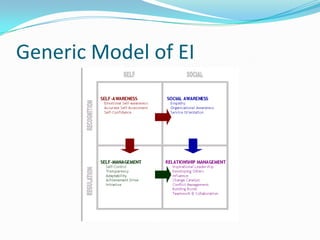
Generic Model of EI
A case for coaching EIEmotional intelligence is a powerful tool which helps a person build relationships, using the knowledge of different behavior types, enhance communication skills, and promote leadership capabilities. From HR perspective, emotional intelligence is a significant factor that is potentially useful in understanding and predicting employees’ individual performance at work. Although measuring EQ is a challenging task, this information could significantly increase the effectiveness of HR activities.
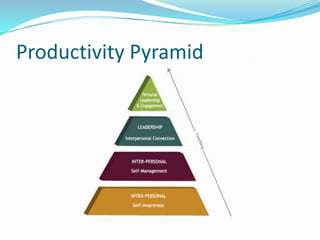
Productivity Pyramid
Reasons for CoachingControlling and transforming emotionsOvercoming personal blocksAccessing your true peak stateOvercoming insecurities and self-criticismHarnessing inner powerEliciting true commitmentTransforming negative thoughts into positive instinctsBreaking from self-limiting behaviors
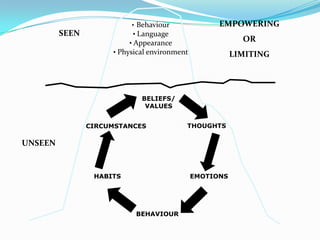
EMPOWERINGORLIMITINGBehaviour
 Language
 Appearance
 Physical environmentSEENBELIEFS/VALUESTHOUGHTSCIRCUMSTANCESUNSEENEMOTIONSHABITSBEHAVIOUR
Peak Performance      - Gain the vital edge at work to make you a more powerful communicator      - Master your own emotions so that you can handle all eventualities easily      - Enhance your personal relationships      - Develop "instant confidence" and motivate yourself and others      - Use language with greater precision and elegance      - Discover your true potential      - Create better and more satisfying emotional relationships.    
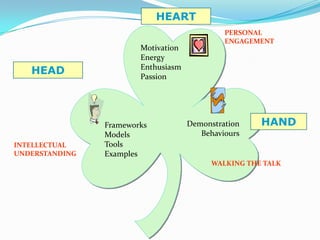
HEARTPERSONAL ENGAGEMENTMotivationEnergyEnthusiasmPassionHEADHANDDemonstrationBehavioursFrameworksModelsToolsExamplesINTELLECTUALUNDERSTANDINGWALKING THE TALK
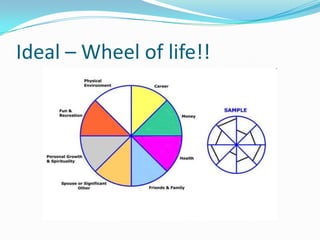
Ideal – Wheel of life!!
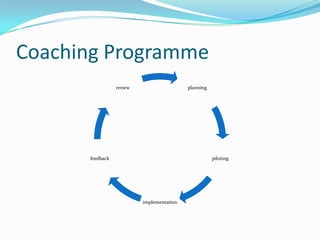
Coaching Programme
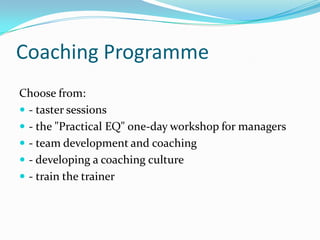
Coaching ProgrammeChoose from:- taster sessions- the "Practical EQ" one-day workshop for managers- team development and coaching- developing a coaching culture- train the trainer
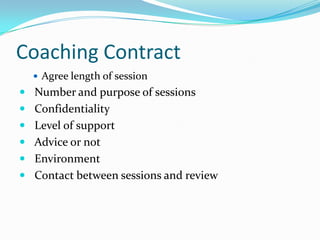
Coaching ContractAgree length of session  Number and purpose of sessions  Confidentiality  Level of support  Advice or not  Environment   Contact between sessions and review

Peak Performance Coaching

  • 1.
    Peak Performance CoachingBelindaAsonganyiCoaching Psychologist
  • 2.
    About MeBackground inHRChartered ScientistNLP QualifiedQualified in EI & Psychometric testingCoaching Psychologist – Leadership, Career Transition, Stress Management & Wellness
  • 3.
    Coaching - Today’s approachCoaching is about unlocking a person’s potential to maximise their performanceit’s all about learning than teaching them
  • 4.
    Aim is to.....Highlightthe importance of workplace wellbeing to your organization.Outline the role of life coaching in general wellbeing.Demonstrate how life coaching at work can enhance wellbeing and productivity.
  • 5.
    Positive psychological well-being– behavioural impactPeople higher on psychological well-beingShow greater flexibility Are more engagedRespond better to criticism Make more positive judgments about othersAre likely to live longer Have less absence from workAre happier at home and at work
  • 6.
    My Role asa CoachPersonal CredibilityExcellent listen skillsAbility to give constructive feedbackConfidentialityTraining in a number of different tools and techniques
  • 7.
    “Coaching in theworkplace emphasizes fundamental aspects of behavior, skill and personal qualities needed to secure effective work performance” (Sparrow, 2007)
  • 8.
    Organizational CoachingRecent survey;Inachieving management excellence, the number of managers receiving coaching has increased from 58% (1996) to 85% (2010) - 3 out of 4 mangers was receiving some kind of coaching85% of managers found coaching as enhancing staff morale80% of executives said they would benefit from coaching
  • 9.
    Does Life Coachingat Work, Works?info@coachingforlife.euwww.coachingforlife.euGPs – improved decision making and work life balanceHead teachers – improved problem solving and communicationCity Council – reduced stress, increased return to work rateLawyers – increased both personal and work goal achievement
  • 10.
    How Does LifeCoaching Helps Create Peak Performance??Enhancing self-awarenessBuild coping strategies, resilience and mental toughnessMaintaining clear goals and identifying sense of purposeUsing positive attributionalstyle to deal with individual success and failureSpotting “thinking errors”e.g. All-or-nothing thinking, Encouraging physical exercise, healthy eating, relaxation and other healthy habits.
  • 11.
  • 12.
  • 13.
    GROW MODELG –GOAL: What do you want?R – REALITY: What is happening now?O – OPTIONS: What could you do?W – WILL: What will you do?
  • 14.
  • 15.
  • 16.
    Performance - Gain the vital edge at work to make you a more powerful communicator - Master your own emotions so that you can handle all eventualities easily - Enhance your personal relationships - Develop "instant confidence" and motivate yourself and others - Use language with greater precision and elegance - Discover your true potential - Create better and more satisfying emotional relationships.    
  • 17.
    Coaching DiagnosticsThe interviewprocessDirect Observation (behavioural)Objective assessmentMulti-point feedback (360°C)
  • 18.
    Psychometric CoachingLooks atpersonal measures, including emotional intelligenceThe Big Five personality Test What Kind of Person Are You? The Big Five Personality Test is based on the 'Big Five' theory of personality, pioneered in a popular 1963 study by psychologist Warren Norman. This theory classifies the main non-cognitive personality traits as:Extroversion Agreeableness Conscientiousness Emotional Stability Intellect/Openness==> http://tinyurl.com/personalityt
  • 19.
    The Self EsteemTestAre You Self-Confident? This assessment is designed to determine your level of self-esteem. Specifically, it looks at eight different factors heavily affecting the way you feel about yourself, how you perceive other people see you, and how these beliefs affect your capabilities.This test will help you decipher the beliefs you have about yourself, as well as your overall level of self-esteem. You will be able to figure out if twinges of self-doubt are in fact recognizable symptoms of low self-esteem. How you feel about yourself affects how you behave.  ==> http://tinyurl.com/selfest This test will assess different behaviors associated with low self-esteem and help you understand how your sense of self-worth, as well as how your self-esteem is affecting the way you live your life.
  • 20.
    What is EmotionalIntelligence?Emotional intelligence can be defined as “ a set of skills, competencies and capabilities which makes the difference in being successful and in life and in work”Defined by Goleman as “the capacity for recognizing our own feelings and those of others, and for managing emotions in ourselves and in our relationships”
  • 21.
  • 22.
    A case forcoaching EIEmotional intelligence is a powerful tool which helps a person build relationships, using the knowledge of different behavior types, enhance communication skills, and promote leadership capabilities. From HR perspective, emotional intelligence is a significant factor that is potentially useful in understanding and predicting employees’ individual performance at work. Although measuring EQ is a challenging task, this information could significantly increase the effectiveness of HR activities.
  • 23.
  • 24.
    Reasons for CoachingControllingand transforming emotionsOvercoming personal blocksAccessing your true peak stateOvercoming insecurities and self-criticismHarnessing inner powerEliciting true commitmentTransforming negative thoughts into positive instinctsBreaking from self-limiting behaviors
  • 25.
  • 26.
  • 27.
  • 28.
  • 29.
    Peak Performance - Gain the vital edge at work to make you a more powerful communicator - Master your own emotions so that you can handle all eventualities easily - Enhance your personal relationships - Develop "instant confidence" and motivate yourself and others - Use language with greater precision and elegance - Discover your true potential - Create better and more satisfying emotional relationships.    
  • 30.
  • 31.
  • 32.
  • 33.
    Coaching ProgrammeChoose from:-taster sessions- the "Practical EQ" one-day workshop for managers- team development and coaching- developing a coaching culture- train the trainer
  • 34.
    Coaching ContractAgree lengthof session Number and purpose of sessions Confidentiality Level of support Advice or not Environment Contact between sessions and review