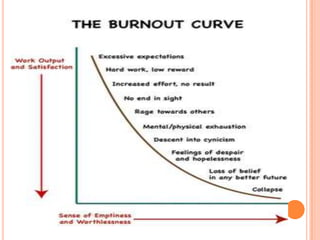
BURNOUT
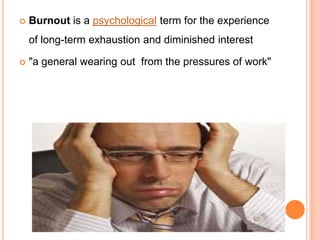
   Burnout is a psychological term for the experience
    of long-term exhaustion and diminished interest

   "a general wearing out from the pressures of work"
WHAT IS BURNOUT?
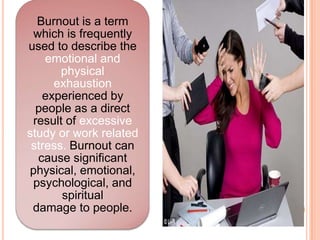
Burnout is a term
 which is frequently
used to describe the
    emotional and
       physical
     exhaustion
   experienced by
  people as a direct
 result of excessive
study or work related
 stress. Burnout can
  cause significant
physical, emotional,
 psychological, and
       spiritual
 damage to people.
EXAMPLE
YOU MAY BE ON THE ROAD TO BURNOUT IF:
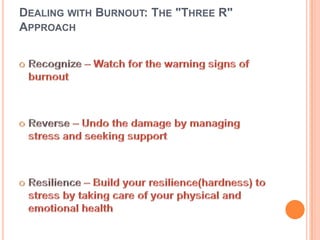
DEALING WITH BURNOUT: THE "THREE R"
APPROACH
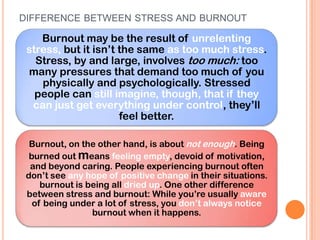
DIFFERENCE BETWEEN STRESS AND BURNOUT

    Burnout may be the result of unrelenting
 stress, but it isn’t the same as too much stress.
   Stress, by and large, involves too much: too
 many pressures that demand too much of you
    physically and psychologically. Stressed
   people can still imagine, though, that if they
  can just get everything under control, they’ll
                      feel better.

  Burnout, on the other hand, is about not enough. Being
  burned out means feeling empty, devoid of motivation,
  and beyond caring. People experiencing burnout often
 don’t see any hope of positive change in their situations.
     burnout is being all dried up. One other difference
 between stress and burnout: While you’re usually aware
   of being under a lot of stress, you don’t always notice
                 burnout when it happens.
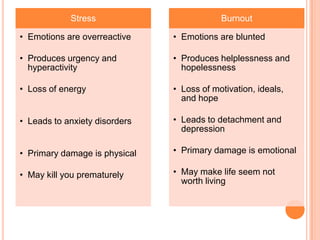
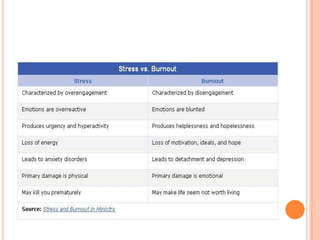
Stress                         Burnout

• Emotions are overreactive    • Emotions are blunted

• Produces urgency and         • Produces helplessness and
  hyperactivity                  hopelessness

• Loss of energy               • Loss of motivation, ideals,
                                 and hope

• Leads to anxiety disorders   • Leads to detachment and
                                 depression

• Primary damage is physical   • Primary damage is emotional

• May kill you prematurely     • May make life seem not
                                 worth living
CAUSES OF BURNOUT

 There are many causes of burnout. In many cases,
  burnout stems from the job. But anyone who feels
  overworked and undervalued is at risk for burnout –
  from the hardworking office worker who hasn’t had
  a vacation or a raise in two years to the frazzled
  stay-at-home mom struggling with the heavy
  responsibility of taking care of three kids, the
  housework, and her aging father.
 But burnout is not caused solely by stressful work
  or too many responsibilities. Other factors
  contribute to burnout, including your lifestyle and
  certain personality traits. What you do in your
  downtime and how you look at the world can play
  just as big of a role in causing burnout as work or
  home demands.
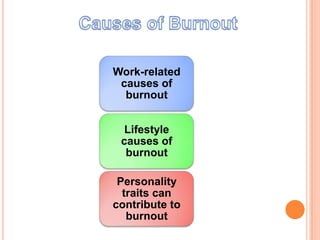
Work-related
 causes of
  burnout


  Lifestyle
 causes of
  burnout

 Personality
  traits can
contribute to
   burnout
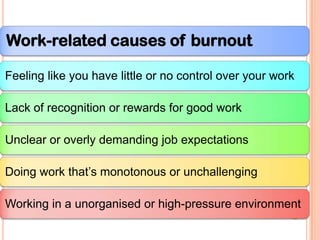
Work-related causes of burnout

Feeling like you have little or no control over your work

Lack of recognition or rewards for good work

Unclear or overly demanding job expectations

Doing work that’s monotonous or unchallenging

Working in a unorganised or high-pressure environment
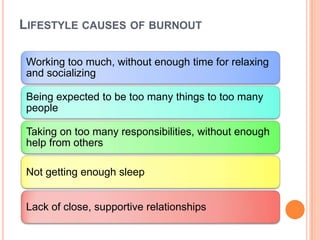
LIFESTYLE CAUSES OF BURNOUT

 Working too much, without enough time for relaxing
 and socializing

 Being expected to be too many things to too many
 people

 Taking on too many responsibilities, without enough
 help from others

 Not getting enough sleep


 Lack of close, supportive relationships
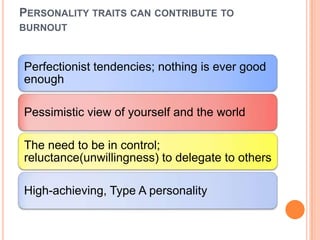
PERSONALITY TRAITS CAN CONTRIBUTE TO
BURNOUT


Perfectionist tendencies; nothing is ever good
enough

Pessimistic view of yourself and the world

The need to be in control;
reluctance(unwillingness) to delegate to others

High-achieving, Type A personality
Burnout is a gradual process that occurs over an extended period of time. It
doesn’t happen overnight, but it can creep up on you if you’re not paying
attention to the warning signals. The signs and symptoms of burnout are
subtle(slight) at first, but they get worse and worse as time goes on.


Physical signs and symptoms of burnout


Emotional signs and symptoms of burnout


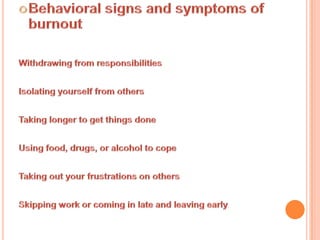
Behavioral signs and symptoms of burnout
WARNING SIGNS AND SYMPTOMS OF BURNOUT


              Physical signs
              and symptoms
                of burnout

               Emotional
               signs and
              symptoms of
                burnout

               Behavioral
               signs and
              symptoms of
                burnout
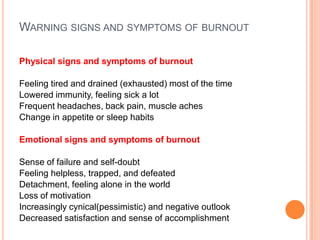
WARNING SIGNS AND SYMPTOMS OF BURNOUT

Physical signs and symptoms of burnout

Feeling tired and drained (exhausted) most of the time
Lowered immunity, feeling sick a lot
Frequent headaches, back pain, muscle aches
Change in appetite or sleep habits

Emotional signs and symptoms of burnout

Sense of failure and self-doubt
Feeling helpless, trapped, and defeated
Detachment, feeling alone in the world
Loss of motivation
Increasingly cynical(pessimistic) and negative outlook
Decreased satisfaction and sense of accomplishment
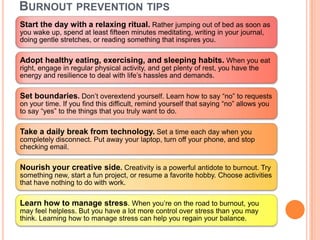
BURNOUT PREVENTION TIPS
Start the day with a relaxing ritual. Rather jumping out of bed as soon as
you wake up, spend at least fifteen minutes meditating, writing in your journal,
doing gentle stretches, or reading something that inspires you.

Adopt healthy eating, exercising, and sleeping habits. When you eat
right, engage in regular physical activity, and get plenty of rest, you have the
energy and resilience to deal with life’s hassles and demands.

Set boundaries. Don’t overextend yourself. Learn how to say ―no‖ to requests
on your time. If you find this difficult, remind yourself that saying ―no‖ allows you
to say ―yes‖ to the things that you truly want to do.

Take a daily break from technology. Set a time each day when you
completely disconnect. Put away your laptop, turn off your phone, and stop
checking email.

Nourish your creative side. Creativity is a powerful antidote to burnout. Try
something new, start a fun project, or resume a favorite hobby. Choose activities
that have nothing to do with work.

Learn how to manage stress. When you’re on the road to burnout, you
may feel helpless. But you have a lot more control over stress than you may
think. Learning how to manage stress can help you regain your balance.
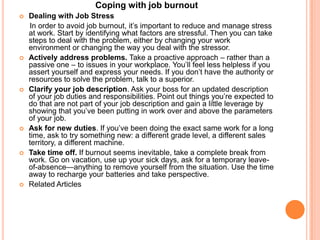
Coping with job burnout
   Dealing with Job Stress
    In order to avoid job burnout, it’s important to reduce and manage stress
    at work. Start by identifying what factors are stressful. Then you can take
    steps to deal with the problem, either by changing your work
    environment or changing the way you deal with the stressor.
   Actively address problems. Take a proactive approach – rather than a
    passive one – to issues in your workplace. You’ll feel less helpless if you
    assert yourself and express your needs. If you don’t have the authority or
    resources to solve the problem, talk to a superior.
   Clarify your job description. Ask your boss for an updated description
    of your job duties and responsibilities. Point out things you’re expected to
    do that are not part of your job description and gain a little leverage by
    showing that you’ve been putting in work over and above the parameters
    of your job.
   Ask for new duties. If you’ve been doing the exact same work for a long
    time, ask to try something new: a different grade level, a different sales
    territory, a different machine.
   Take time off. If burnout seems inevitable, take a complete break from
    work. Go on vacation, use up your sick days, ask for a temporary leave-
    of-absence—anything to remove yourself from the situation. Use the time
    away to recharge your batteries and take perspective.
   Related Articles
Burnout

Burnout

  • 2.
  • 3.
    Burnout is a psychological term for the experience of long-term exhaustion and diminished interest  "a general wearing out from the pressures of work"
  • 4.
  • 5.
    Burnout is aterm which is frequently used to describe the emotional and physical exhaustion experienced by people as a direct result of excessive study or work related stress. Burnout can cause significant physical, emotional, psychological, and spiritual damage to people.
  • 6.
  • 7.
    YOU MAY BEON THE ROAD TO BURNOUT IF:
  • 9.
    DEALING WITH BURNOUT:THE "THREE R" APPROACH
  • 10.
    DIFFERENCE BETWEEN STRESSAND BURNOUT Burnout may be the result of unrelenting stress, but it isn’t the same as too much stress. Stress, by and large, involves too much: too many pressures that demand too much of you physically and psychologically. Stressed people can still imagine, though, that if they can just get everything under control, they’ll feel better. Burnout, on the other hand, is about not enough. Being burned out means feeling empty, devoid of motivation, and beyond caring. People experiencing burnout often don’t see any hope of positive change in their situations. burnout is being all dried up. One other difference between stress and burnout: While you’re usually aware of being under a lot of stress, you don’t always notice burnout when it happens.
  • 11.
    Stress Burnout • Emotions are overreactive • Emotions are blunted • Produces urgency and • Produces helplessness and hyperactivity hopelessness • Loss of energy • Loss of motivation, ideals, and hope • Leads to anxiety disorders • Leads to detachment and depression • Primary damage is physical • Primary damage is emotional • May kill you prematurely • May make life seem not worth living
  • 12.
    CAUSES OF BURNOUT There are many causes of burnout. In many cases, burnout stems from the job. But anyone who feels overworked and undervalued is at risk for burnout – from the hardworking office worker who hasn’t had a vacation or a raise in two years to the frazzled stay-at-home mom struggling with the heavy responsibility of taking care of three kids, the housework, and her aging father.  But burnout is not caused solely by stressful work or too many responsibilities. Other factors contribute to burnout, including your lifestyle and certain personality traits. What you do in your downtime and how you look at the world can play just as big of a role in causing burnout as work or home demands.
  • 13.
    Work-related causes of burnout Lifestyle causes of burnout Personality traits can contribute to burnout
  • 14.
    Work-related causes ofburnout Feeling like you have little or no control over your work Lack of recognition or rewards for good work Unclear or overly demanding job expectations Doing work that’s monotonous or unchallenging Working in a unorganised or high-pressure environment
  • 15.
    LIFESTYLE CAUSES OFBURNOUT Working too much, without enough time for relaxing and socializing Being expected to be too many things to too many people Taking on too many responsibilities, without enough help from others Not getting enough sleep Lack of close, supportive relationships
  • 16.
    PERSONALITY TRAITS CANCONTRIBUTE TO BURNOUT Perfectionist tendencies; nothing is ever good enough Pessimistic view of yourself and the world The need to be in control; reluctance(unwillingness) to delegate to others High-achieving, Type A personality
  • 17.
    Burnout is agradual process that occurs over an extended period of time. It doesn’t happen overnight, but it can creep up on you if you’re not paying attention to the warning signals. The signs and symptoms of burnout are subtle(slight) at first, but they get worse and worse as time goes on. Physical signs and symptoms of burnout Emotional signs and symptoms of burnout Behavioral signs and symptoms of burnout
  • 18.
    WARNING SIGNS ANDSYMPTOMS OF BURNOUT Physical signs and symptoms of burnout Emotional signs and symptoms of burnout Behavioral signs and symptoms of burnout
  • 19.
    WARNING SIGNS ANDSYMPTOMS OF BURNOUT Physical signs and symptoms of burnout Feeling tired and drained (exhausted) most of the time Lowered immunity, feeling sick a lot Frequent headaches, back pain, muscle aches Change in appetite or sleep habits Emotional signs and symptoms of burnout Sense of failure and self-doubt Feeling helpless, trapped, and defeated Detachment, feeling alone in the world Loss of motivation Increasingly cynical(pessimistic) and negative outlook Decreased satisfaction and sense of accomplishment
  • 21.
    BURNOUT PREVENTION TIPS Startthe day with a relaxing ritual. Rather jumping out of bed as soon as you wake up, spend at least fifteen minutes meditating, writing in your journal, doing gentle stretches, or reading something that inspires you. Adopt healthy eating, exercising, and sleeping habits. When you eat right, engage in regular physical activity, and get plenty of rest, you have the energy and resilience to deal with life’s hassles and demands. Set boundaries. Don’t overextend yourself. Learn how to say ―no‖ to requests on your time. If you find this difficult, remind yourself that saying ―no‖ allows you to say ―yes‖ to the things that you truly want to do. Take a daily break from technology. Set a time each day when you completely disconnect. Put away your laptop, turn off your phone, and stop checking email. Nourish your creative side. Creativity is a powerful antidote to burnout. Try something new, start a fun project, or resume a favorite hobby. Choose activities that have nothing to do with work. Learn how to manage stress. When you’re on the road to burnout, you may feel helpless. But you have a lot more control over stress than you may think. Learning how to manage stress can help you regain your balance.
  • 23.
    Coping with jobburnout  Dealing with Job Stress In order to avoid job burnout, it’s important to reduce and manage stress at work. Start by identifying what factors are stressful. Then you can take steps to deal with the problem, either by changing your work environment or changing the way you deal with the stressor.  Actively address problems. Take a proactive approach – rather than a passive one – to issues in your workplace. You’ll feel less helpless if you assert yourself and express your needs. If you don’t have the authority or resources to solve the problem, talk to a superior.  Clarify your job description. Ask your boss for an updated description of your job duties and responsibilities. Point out things you’re expected to do that are not part of your job description and gain a little leverage by showing that you’ve been putting in work over and above the parameters of your job.  Ask for new duties. If you’ve been doing the exact same work for a long time, ask to try something new: a different grade level, a different sales territory, a different machine.  Take time off. If burnout seems inevitable, take a complete break from work. Go on vacation, use up your sick days, ask for a temporary leave- of-absence—anything to remove yourself from the situation. Use the time away to recharge your batteries and take perspective.  Related Articles