Polychlorinated
Biphenyls
Aditya G
Chemical Composition

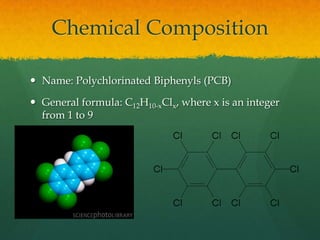
 Name: Polychlorinated Biphenyls (PCB)

 General formula: C12H10-xClx, where x is an integer
  from 1 to 9
Chemical Reactivity

 Degraded by
   Hydroxyl radicals
   Photolysis
   Bacteria and Eukaryotes
     Reductive dechlorination – releases chloride ions
     Oxidized by dioxygenase
Physical Characteristics

 Odorless, tasteless, clear to pale-yellow viscous
  liquid

 Low water solubilities
   0.0027-0.42 ng/L

 High solubility in organic solvents (oils, fats)
Movement through
         Environment
 Accumulates in the hydrosphere, the organic
  fraction of soil, and in organisms

 Oceans dissolve a significant quantity of PCBs

 Detected in atmosphere of urbanized areas

 Found in regions north of Arctic Circle

 Atmosphere is the primary route of global transport
Movement into Cells

 Binds to aryl hydrocarbon receptor (AhR)
   Alters the transcription of genes

 Commercial PCB formed triacylglycerol-like
  droplets that accumulate in hepatocytes

 Mode of uptake is through hydrophobic domains of
  lipids for the transport of PCBs by plasma fractions
   Accumulates in adipose tissue
Major Sources

 Landfills containing transformers, capacitors, and other PCB
  waste
 Incineration of municipal waste
 Evaporation from contaminated water bodies
 Wastewater effluent
 Scrap metal recycling (heat transfer and hydraulic equipment)
 Used oil (<50 ppm)
 Asphalt roofing materials
 Auto salvage yards (hydraulic fluid, ignition coils)
Toxicity

 Maximum containment levels in drinking water
  mandated by the EPA is 0.5 ppb

 2,3,7,8-tetrachlorodibenzo[p]dioxin is assigned a
  toxic equivalency factor of 1
Environmental Damage

 Classified as a persistent organic pollutant
   Bioaccumulation

 Does not decompose readily
 Long half life of 8 to 10 years
 Generates toxic dibenzodioxins and dibenzofurans
 Damages animal life
   Liver damage
   Hepatocarcinoma
   Impaired reproduction
Health Effects

 Endocrine disruption

 Neurotoxin

 Skin conditions, such as chloracne or rashes

 Fatigue, headaches, coughs, unusual skin sores

 Ocular lesions, irregular menstrual cycles, lowered
  immune response
Link to Cancer

 Imitates estrogen compound and can feed breast
  cancer cells

 Linked to cancer of the liver and biliary tract

 Department of Health and Human Services
  conclude PCBs are anticipated to be carcinogens

Pcb

  • 1.
  • 2.
    Chemical Composition  Name:Polychlorinated Biphenyls (PCB)  General formula: C12H10-xClx, where x is an integer from 1 to 9
  • 3.
    Chemical Reactivity  Degradedby  Hydroxyl radicals  Photolysis  Bacteria and Eukaryotes  Reductive dechlorination – releases chloride ions  Oxidized by dioxygenase
  • 4.
    Physical Characteristics  Odorless,tasteless, clear to pale-yellow viscous liquid  Low water solubilities  0.0027-0.42 ng/L  High solubility in organic solvents (oils, fats)
  • 5.
    Movement through Environment  Accumulates in the hydrosphere, the organic fraction of soil, and in organisms  Oceans dissolve a significant quantity of PCBs  Detected in atmosphere of urbanized areas  Found in regions north of Arctic Circle  Atmosphere is the primary route of global transport
  • 6.
    Movement into Cells Binds to aryl hydrocarbon receptor (AhR)  Alters the transcription of genes  Commercial PCB formed triacylglycerol-like droplets that accumulate in hepatocytes  Mode of uptake is through hydrophobic domains of lipids for the transport of PCBs by plasma fractions  Accumulates in adipose tissue
  • 7.
    Major Sources  Landfillscontaining transformers, capacitors, and other PCB waste  Incineration of municipal waste  Evaporation from contaminated water bodies  Wastewater effluent  Scrap metal recycling (heat transfer and hydraulic equipment)  Used oil (<50 ppm)  Asphalt roofing materials  Auto salvage yards (hydraulic fluid, ignition coils)
  • 8.
    Toxicity  Maximum containmentlevels in drinking water mandated by the EPA is 0.5 ppb  2,3,7,8-tetrachlorodibenzo[p]dioxin is assigned a toxic equivalency factor of 1
  • 9.
    Environmental Damage  Classifiedas a persistent organic pollutant  Bioaccumulation  Does not decompose readily  Long half life of 8 to 10 years  Generates toxic dibenzodioxins and dibenzofurans  Damages animal life  Liver damage  Hepatocarcinoma  Impaired reproduction
  • 10.
    Health Effects  Endocrinedisruption  Neurotoxin  Skin conditions, such as chloracne or rashes  Fatigue, headaches, coughs, unusual skin sores  Ocular lesions, irregular menstrual cycles, lowered immune response
  • 11.
    Link to Cancer Imitates estrogen compound and can feed breast cancer cells  Linked to cancer of the liver and biliary tract  Department of Health and Human Services conclude PCBs are anticipated to be carcinogens