Amity University Rajasthan, Jaipur
Dye and their impact onEnvironment
Presented By-
Chhavi Kumawat
Content
• Dye
• Types of Dye
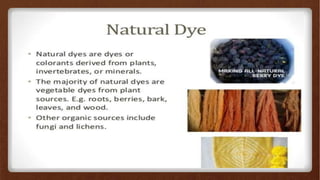
✓ Natural dyes
✓ Synthetic dyes
✓ Food dyes
✓ Organic dyes
✓ Other dyes
• Impact on Environment
• Conclusion
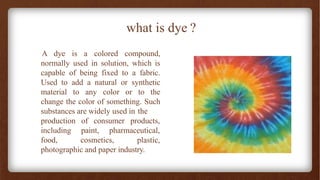
what is dye ?
A dye is a colored compound,
normally used in solution, which is
capable of being fixed to a fabric.
Used to add a natural or synthetic
material to any color or to the
change the color of something. Such
substances are widely used in the
of consumer products,
paint, pharmaceutical,
production
including
food, cosmetics, plastic,
photographic and paper industry.
• It is estimated that more than 10,000 different colors and colors are used
industrially and 7 x 10 power 5 ton synthetic colors are produced annually
worldwide.
• Regarding the quantity and quantity of production, Azo-Dyes is the largest
group of colors, which is 60-70% of all organic colors produced in the
world.
• They have extensive applications in their textiles, pharmaceuticals and
cosmetic industries, and they are also used in food, paper, leather and paint.
• In the organized sector, 65% of the total market is in the area, while the
unorganized sector controls the remaining 35% of the market.
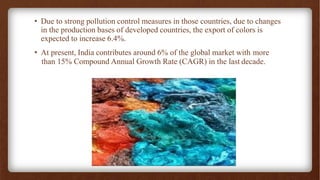
• Due to strong pollution control measures in those countries, due to changes
in the production bases of developed countries, the export of colors is
expected to increase 6.4%.
• At present, India contributes around 6% of the global market with more
than 15% Compound Annual Growth Rate (CAGR) in the last decade.
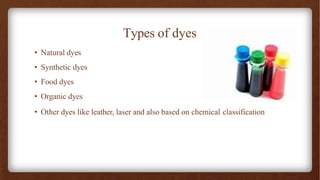
Types of dyes
• Natural dyes
• Synthetic dyes
• Food dyes
• Organic dyes
• Other dyes like leather, laser and also based on chemical classification
Food dyes
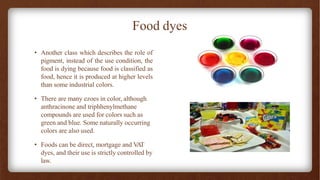
• Another class which describes the role of
pigment, instead of the use condition, the
food is dying because food is classified as
food, hence it is produced at higher levels
than some industrial colors.
• There are many ezoes in color, although
anthracinone and triphhenylmethane
compounds are used for colors such as
green and blue. Some naturally occurring
colors are also used.
• Foods can be direct, mortgage and VAT
dyes, and their use is strictly controlled by
law.
Organic dyes
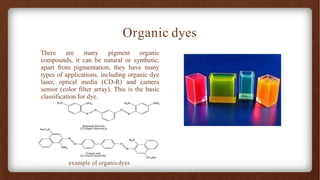
There are many pigment organic
compounds, it can be natural or synthetic,
apart from pigmentation, they have many
types of applications, including organic dye
laser, optical media (CD-R) and camera
sensor (color filter array). This is the basic
classification for dye.
example of organicdyes
Impacts of dyes on environment
• Air pollution-
✓Most processes performed in textile mills produce atmospheric emissions.
Gaseous emissions have been identified as the second greatest pollution
problem (after effluent quality) for the textile industry.
✓Speculation concerning the amounts and types of air pollutants emitted from
textile operations has been widespread but, generally, air emission data for
textile manufacturing operations are not readily available.
✓Air pollution is the most difficult type of pollution to sample, test, and
quantify in an audit.
• Water Pollution –
✓The textile industry consumes a substantial amount of water in its
manufacturing processes used mainly in the dyeing and finishing operations
of the plants. The wastewater from textile plants is classified as the most
polluting of all the industrial sectors, considering the volume generated as
well as the effluent composition.
✓In the textile industry, up to 200,000 tons of these dyes are lost to effluents
every year during the dyeing and finishing operations, due to the
inefficiency of the dyeing process.
✓Dyes can remain in the environment for an extended period of time, because
of high thermal and photo stability to resist bio degradation..
Dyes lead to number of environmental & health hazards which
are as follows:
• The greatest environmental concern with dyes is their absorption and
reflection of sunlight entering the water. Light absorption diminishes
photosynthetic activity of algae and seriously influences the food chain.
• Many dyes and their breakdown products are carcinogenic, mutagenic
and/or toxic to life. Dyes are mostly introduced into the environment
through industrial effluents.
• Triple primary cancers involving kidney, urinary bladder and liver of dye
workers have been reported.
• Textile dyes can cause allergies such as contact dermatitis and respiratory
diseases, allergic reaction in eyes, skin irritation, and irritation to mucous
membrane and the upper respiratory tract.
• Reactive dyes form covalent bonds with cellulose, woollen and PAfibres.
Certain reactive dyes have caused respiratory sensitisation of workers
occupationally exposed to them.
• The presence of very small amounts of dyes in the water, which are
nevertheless highly visible, seriously affects the quality and transparency of
water bodies such as lakes, rivers and others, leading to damage to the
aquatic environment.
• The highly toxic and mutagenic dyes decrease light penetration and
photosynthetic activity, causing oxygen deficiency and limiting downstream
beneficial uses such as recreation, drinking water and irrigation.
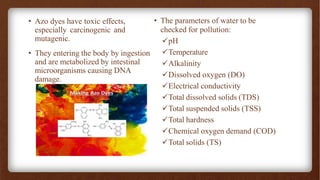
• Azo dyes have toxic effects,
especially carcinogenic and
mutagenic.
• They entering the body by ingestion
and are metabolized by intestinal
microorganisms causing DNA
damage.
• The parameters of water to be
checked for pollution:
✓pH
✓Temperature
✓Alkalinity
✓Dissolved oxygen (DO)
✓Electrical conductivity
✓Total dissolved solids (TDS)
✓Total suspended solids (TSS)
✓Total hardness
✓Chemical oxygen demand (COD)
✓Total solids (TS)
Conclusion
• To reduce the problems related to the treatment of cloth wastes, an
alternative would be to develop a more effective dye, which can reduce the
fiber with high efficiency, thereby reducing the amount of water required in
the dyeing process Which can certainly improve the cost and the quality of
the flow
• Global demand of affordable end products like paint, textiles, printing inks,
paper, plastic and food will push the dye house and take operation to
another city to respond to local rules. Ethical atrocities will not convince
many leading manufacturers to change their ways; By the time the
companies do not pay for the land and do not put the poison of their
suppliers in the water, then the misuse of environment and environment
such as environment and use of air water will continue misuse.
Thank You

Dye pollution

  • 1.
    Amity University Rajasthan,Jaipur Dye and their impact onEnvironment Presented By- Chhavi Kumawat
  • 2.
    Content • Dye • Typesof Dye ✓ Natural dyes ✓ Synthetic dyes ✓ Food dyes ✓ Organic dyes ✓ Other dyes • Impact on Environment • Conclusion
  • 3.
    what is dye? A dye is a colored compound, normally used in solution, which is capable of being fixed to a fabric. Used to add a natural or synthetic material to any color or to the change the color of something. Such substances are widely used in the of consumer products, paint, pharmaceutical, production including food, cosmetics, plastic, photographic and paper industry.
  • 4.
    • It isestimated that more than 10,000 different colors and colors are used industrially and 7 x 10 power 5 ton synthetic colors are produced annually worldwide. • Regarding the quantity and quantity of production, Azo-Dyes is the largest group of colors, which is 60-70% of all organic colors produced in the world. • They have extensive applications in their textiles, pharmaceuticals and cosmetic industries, and they are also used in food, paper, leather and paint. • In the organized sector, 65% of the total market is in the area, while the unorganized sector controls the remaining 35% of the market.
  • 5.
    • Due tostrong pollution control measures in those countries, due to changes in the production bases of developed countries, the export of colors is expected to increase 6.4%. • At present, India contributes around 6% of the global market with more than 15% Compound Annual Growth Rate (CAGR) in the last decade.
  • 6.
    Types of dyes •Natural dyes • Synthetic dyes • Food dyes • Organic dyes • Other dyes like leather, laser and also based on chemical classification
  • 9.
    Food dyes • Anotherclass which describes the role of pigment, instead of the use condition, the food is dying because food is classified as food, hence it is produced at higher levels than some industrial colors. • There are many ezoes in color, although anthracinone and triphhenylmethane compounds are used for colors such as green and blue. Some naturally occurring colors are also used. • Foods can be direct, mortgage and VAT dyes, and their use is strictly controlled by law.
  • 10.
    Organic dyes There aremany pigment organic compounds, it can be natural or synthetic, apart from pigmentation, they have many types of applications, including organic dye laser, optical media (CD-R) and camera sensor (color filter array). This is the basic classification for dye. example of organicdyes
  • 12.
    Impacts of dyeson environment • Air pollution- ✓Most processes performed in textile mills produce atmospheric emissions. Gaseous emissions have been identified as the second greatest pollution problem (after effluent quality) for the textile industry. ✓Speculation concerning the amounts and types of air pollutants emitted from textile operations has been widespread but, generally, air emission data for textile manufacturing operations are not readily available. ✓Air pollution is the most difficult type of pollution to sample, test, and quantify in an audit.
  • 13.
    • Water Pollution– ✓The textile industry consumes a substantial amount of water in its manufacturing processes used mainly in the dyeing and finishing operations of the plants. The wastewater from textile plants is classified as the most polluting of all the industrial sectors, considering the volume generated as well as the effluent composition. ✓In the textile industry, up to 200,000 tons of these dyes are lost to effluents every year during the dyeing and finishing operations, due to the inefficiency of the dyeing process. ✓Dyes can remain in the environment for an extended period of time, because of high thermal and photo stability to resist bio degradation..
  • 14.
    Dyes lead tonumber of environmental & health hazards which are as follows: • The greatest environmental concern with dyes is their absorption and reflection of sunlight entering the water. Light absorption diminishes photosynthetic activity of algae and seriously influences the food chain. • Many dyes and their breakdown products are carcinogenic, mutagenic and/or toxic to life. Dyes are mostly introduced into the environment through industrial effluents. • Triple primary cancers involving kidney, urinary bladder and liver of dye workers have been reported. • Textile dyes can cause allergies such as contact dermatitis and respiratory diseases, allergic reaction in eyes, skin irritation, and irritation to mucous membrane and the upper respiratory tract.
  • 15.
    • Reactive dyesform covalent bonds with cellulose, woollen and PAfibres. Certain reactive dyes have caused respiratory sensitisation of workers occupationally exposed to them. • The presence of very small amounts of dyes in the water, which are nevertheless highly visible, seriously affects the quality and transparency of water bodies such as lakes, rivers and others, leading to damage to the aquatic environment. • The highly toxic and mutagenic dyes decrease light penetration and photosynthetic activity, causing oxygen deficiency and limiting downstream beneficial uses such as recreation, drinking water and irrigation.
  • 16.
    • Azo dyeshave toxic effects, especially carcinogenic and mutagenic. • They entering the body by ingestion and are metabolized by intestinal microorganisms causing DNA damage. • The parameters of water to be checked for pollution: ✓pH ✓Temperature ✓Alkalinity ✓Dissolved oxygen (DO) ✓Electrical conductivity ✓Total dissolved solids (TDS) ✓Total suspended solids (TSS) ✓Total hardness ✓Chemical oxygen demand (COD) ✓Total solids (TS)
  • 17.
    Conclusion • To reducethe problems related to the treatment of cloth wastes, an alternative would be to develop a more effective dye, which can reduce the fiber with high efficiency, thereby reducing the amount of water required in the dyeing process Which can certainly improve the cost and the quality of the flow • Global demand of affordable end products like paint, textiles, printing inks, paper, plastic and food will push the dye house and take operation to another city to respond to local rules. Ethical atrocities will not convince many leading manufacturers to change their ways; By the time the companies do not pay for the land and do not put the poison of their suppliers in the water, then the misuse of environment and environment such as environment and use of air water will continue misuse.
  • 18.