PAVEMENT PROBLEMS
TYPES OF PROBLEMS
 ALLIGATOR CRACKING
 SLIPPAGE CRACKING
 SHRINKAGE CRACKING
 REFLECTIVE CRACKING
 POTHOLES
 DEPRESSION
 RUTTING
 RAVELING
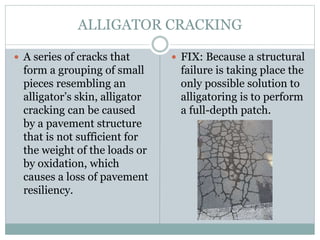
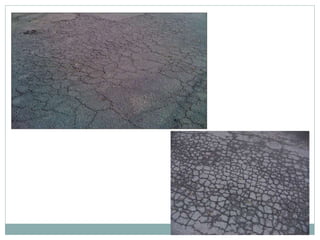
ALLIGATOR CRACKING
 A series of cracks that
form a grouping of small
pieces resembling an
alligator’s skin, alligator
cracking can be caused
by a pavement structure
that is not sufficient for
the weight of the loads or
by oxidation, which
causes a loss of pavement
resiliency.
 FIX: Because a structural
failure is taking place the
only possible solution to
alligatoring is to perform
a full-depth patch.
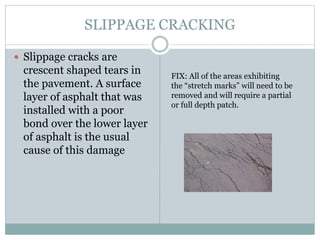
SLIPPAGE CRACKING
 Slippage cracks are
crescent shaped tears in
the pavement. A surface
layer of asphalt that was
installed with a poor
bond over the lower layer
of asphalt is the usual
cause of this damage
FIX: All of the areas exhibiting
the “stretch marks” will need to be
removed and will require a partial
or full depth patch.
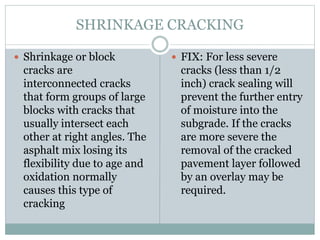
SHRINKAGE CRACKING
 Shrinkage or block
cracks are
interconnected cracks
that form groups of large
blocks with cracks that
usually intersect each
other at right angles. The
asphalt mix losing its
flexibility due to age and
oxidation normally
causes this type of
cracking
 FIX: For less severe
cracks (less than 1/2
inch) crack sealing will
prevent the further entry
of moisture into the
subgrade. If the cracks
are more severe the
removal of the cracked
pavement layer followed
by an overlay may be
required.
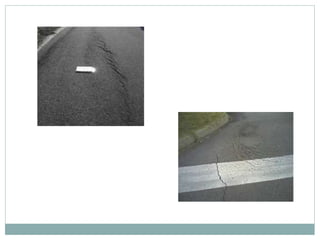
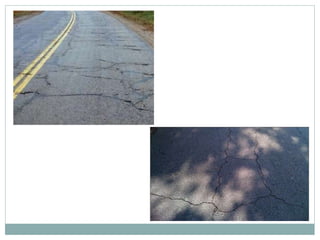
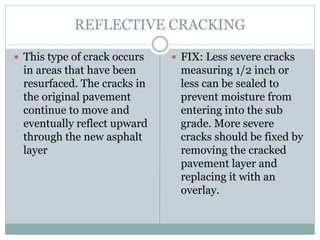
REFLECTIVE CRACKING
 This type of crack occurs
in areas that have been
resurfaced. The cracks in
the original pavement
continue to move and
eventually reflect upward
through the new asphalt
layer
 FIX: Less severe cracks
measuring 1/2 inch or
less can be sealed to
prevent moisture from
entering into the sub
grade. More severe
cracks should be fixed by
removing the cracked
pavement layer and
replacing it with an
overlay.
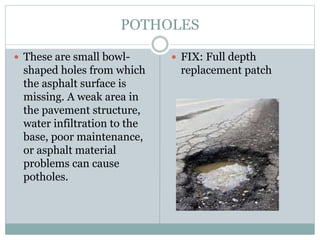
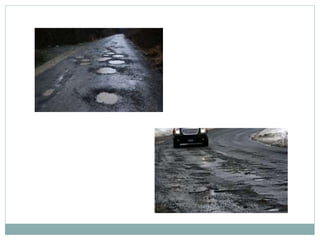
POTHOLES
 These are small bowl-
shaped holes from which
the asphalt surface is
missing. A weak area in
the pavement structure,
water infiltration to the
base, poor maintenance,
or asphalt material
problems can cause
potholes.
 FIX: Full depth
replacement patch
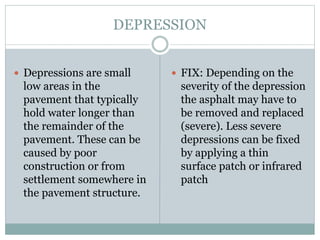
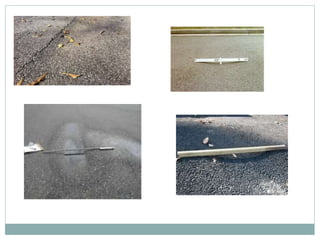
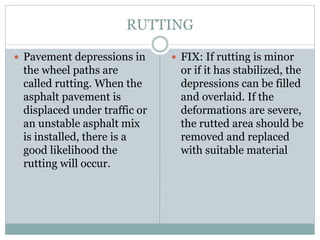
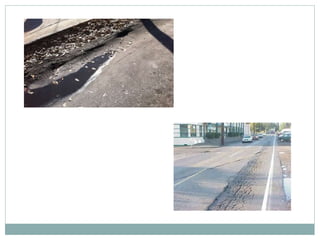
DEPRESSION
 Depressions are small
low areas in the
pavement that typically
hold water longer than
the remainder of the
pavement. These can be
caused by poor
construction or from
settlement somewhere in
the pavement structure.
 FIX: Depending on the
severity of the depression
the asphalt may have to
be removed and replaced
(severe). Less severe
depressions can be fixed
by applying a thin
surface patch or infrared
patch
RUTTING
 Pavement depressions in
the wheel paths are
called rutting. When the
asphalt pavement is
displaced under traffic or
an unstable asphalt mix
is installed, there is a
good likelihood the
rutting will occur.
 FIX: If rutting is minor
or if it has stabilized, the
depressions can be filled
and overlaid. If the
deformations are severe,
the rutted area should be
removed and replaced
with suitable material
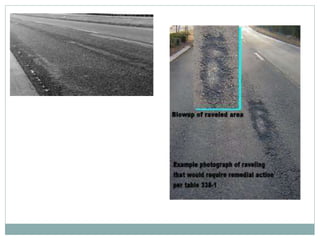
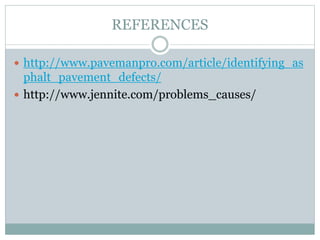
RAVELING
 Raveling is a separation
of the aggregate base
(stone) from the
pavement surface, giving
it a rough texture. An
inferior asphalt mix, age
hardening, lack of proper
compaction, or
construction of the
pavement during bad
weather can all
contribute to pavement
raveling
 FIX: Apply a thin hot-
mix overlay. Other
solutions could include:
sand seal, chip seal,
slurry seal or micro-
surfacing.
REFERENCES
 http://www.pavemanpro.com/article/identifying_as
phalt_pavement_defects/
 http://www.jennite.com/problems_causes/
THANKYOU

Pavement problems

  • 1.
  • 2.
    TYPES OF PROBLEMS ALLIGATOR CRACKING  SLIPPAGE CRACKING  SHRINKAGE CRACKING  REFLECTIVE CRACKING  POTHOLES  DEPRESSION  RUTTING  RAVELING
  • 3.
    ALLIGATOR CRACKING  Aseries of cracks that form a grouping of small pieces resembling an alligator’s skin, alligator cracking can be caused by a pavement structure that is not sufficient for the weight of the loads or by oxidation, which causes a loss of pavement resiliency.  FIX: Because a structural failure is taking place the only possible solution to alligatoring is to perform a full-depth patch.
  • 5.
    SLIPPAGE CRACKING  Slippagecracks are crescent shaped tears in the pavement. A surface layer of asphalt that was installed with a poor bond over the lower layer of asphalt is the usual cause of this damage FIX: All of the areas exhibiting the “stretch marks” will need to be removed and will require a partial or full depth patch.
  • 7.
    SHRINKAGE CRACKING  Shrinkageor block cracks are interconnected cracks that form groups of large blocks with cracks that usually intersect each other at right angles. The asphalt mix losing its flexibility due to age and oxidation normally causes this type of cracking  FIX: For less severe cracks (less than 1/2 inch) crack sealing will prevent the further entry of moisture into the subgrade. If the cracks are more severe the removal of the cracked pavement layer followed by an overlay may be required.
  • 9.
    REFLECTIVE CRACKING  Thistype of crack occurs in areas that have been resurfaced. The cracks in the original pavement continue to move and eventually reflect upward through the new asphalt layer  FIX: Less severe cracks measuring 1/2 inch or less can be sealed to prevent moisture from entering into the sub grade. More severe cracks should be fixed by removing the cracked pavement layer and replacing it with an overlay.
  • 11.
    POTHOLES  These aresmall bowl- shaped holes from which the asphalt surface is missing. A weak area in the pavement structure, water infiltration to the base, poor maintenance, or asphalt material problems can cause potholes.  FIX: Full depth replacement patch
  • 13.
    DEPRESSION  Depressions aresmall low areas in the pavement that typically hold water longer than the remainder of the pavement. These can be caused by poor construction or from settlement somewhere in the pavement structure.  FIX: Depending on the severity of the depression the asphalt may have to be removed and replaced (severe). Less severe depressions can be fixed by applying a thin surface patch or infrared patch
  • 15.
    RUTTING  Pavement depressionsin the wheel paths are called rutting. When the asphalt pavement is displaced under traffic or an unstable asphalt mix is installed, there is a good likelihood the rutting will occur.  FIX: If rutting is minor or if it has stabilized, the depressions can be filled and overlaid. If the deformations are severe, the rutted area should be removed and replaced with suitable material
  • 17.
    RAVELING  Raveling isa separation of the aggregate base (stone) from the pavement surface, giving it a rough texture. An inferior asphalt mix, age hardening, lack of proper compaction, or construction of the pavement during bad weather can all contribute to pavement raveling  FIX: Apply a thin hot- mix overlay. Other solutions could include: sand seal, chip seal, slurry seal or micro- surfacing.
  • 19.
  • 20.