



LOKENDRA YADAV
     IETE
M.NO-SD185245
TEN
 FACTS
 ABOUT
PATIENT
 SAFETY
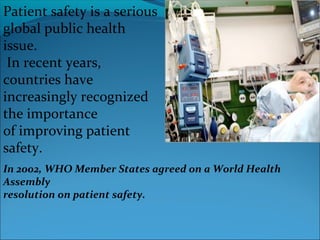
Patient safety is a serious
global public health
issue.
 In recent years,
countries have
increasingly recognized
the importance
of improving patient
safety.
In 2002, WHO Member States agreed on a World Health
Assembly
resolution on patient safety.
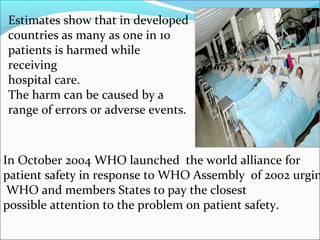
Estimates show that in developed
countries as many as one in 10
patients is harmed while
receiving
hospital care.
The harm can be caused by a
range of errors or adverse events.


In October 2004 WHO launched the world alliance for
patient safety in response to WHO Assembly of 2002 urgin
 WHO and members States to pay the closest
possible attention to the problem on patient safety.
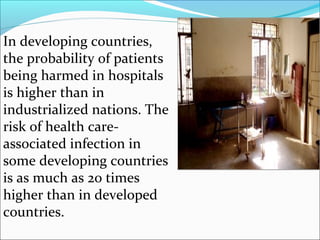
In developing countries,
the probability of patients
being harmed in hospitals
is higher than in
industrialized nations. The
risk of health care-
associated infection in
some developing countries
is as much as 20 times
higher than in developed
countries.
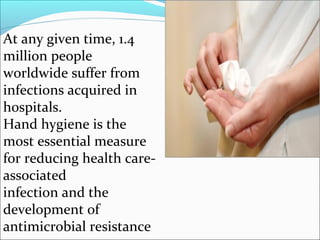
At any given time, 1.4
million people
worldwide suffer from
infections acquired in
hospitals.
Hand hygiene is the
most essential measure
for reducing health care-
associated
infection and the
development of
antimicrobial resistance
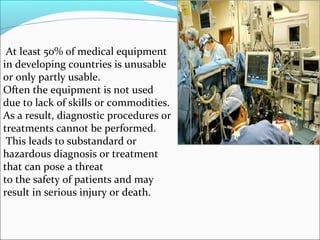
At least 50% of medical equipment
in developing countries is unusable
or only partly usable.
Often the equipment is not used
due to lack of skills or commodities.
As a result, diagnostic procedures or
treatments cannot be performed.
 This leads to substandard or
hazardous diagnosis or treatment
that can pose a threat
to the safety of patients and may
result in serious injury or death.
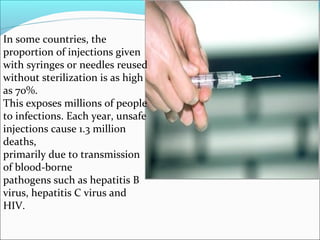
In some countries, the
proportion of injections given
with syringes or needles reused
without sterilization is as high
as 70%.
This exposes millions of people
to infections. Each year, unsafe
injections cause 1.3 million
deaths,
primarily due to transmission
of blood-borne
pathogens such as hepatitis B
virus, hepatitis C virus and
HIV.
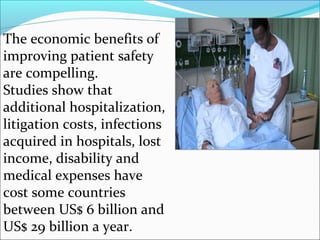
The economic benefits of
improving patient safety
are compelling.
Studies show that
additional hospitalization,
litigation costs, infections
acquired in hospitals, lost
income, disability and
medical expenses have
cost some countries
between US$ 6 billion and
US$ 29 billion a year.
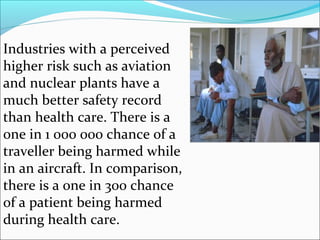
Industries with a perceived
higher risk such as aviation
and nuclear plants have a
much better safety record
than health care. There is a
one in 1 000 000 chance of a
traveller being harmed while
in an aircraft. In comparison,
there is a one in 300 chance
of a patient being harmed
during health care.
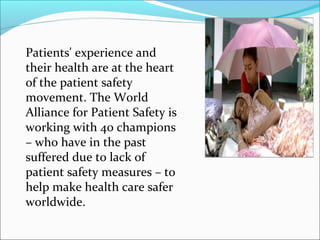
Patients' experience and
their health are at the heart
of the patient safety
movement. The World
Alliance for Patient Safety is
working with 40 champions
– who have in the past
suffered due to lack of
patient safety measures – to
help make health care safer
worldwide.
WHO EFFORTS…
The global patient safety challenge 2005-2006,A core program
of the WORLD ALLIANCE FOR PATIENT SAFETY ,brings
together the WHO guidelines on :

Hand hygiene in heath care

Work on blood safety

Injection and immunization safety

Safer clinical practices

Safe water ,Sanitation and health care waste management
The global patient safety
challenges builds upon existing
country efforts and initiative to fight
health care associated infections.
Reducing the spread of these
infections will be a critical step
towards enhanced and long term
safety in health care.
INDIAN EFFORTS…
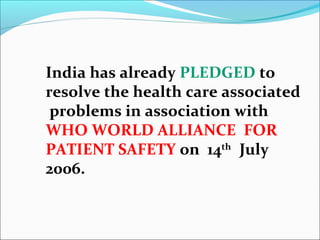
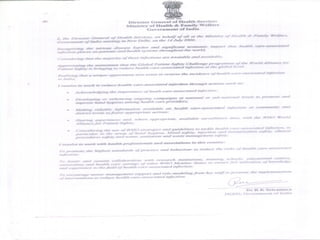
India has already PLEDGED to
resolve the health care associated
 problems in association with
WHO WORLD ALLIANCE FOR
PATIENT SAFETY on 14th July
2006.
V
THIS CHAPTER IS
COME TO AN
END..
BUT THE STORY
WILL
CONTINUE…….
 OP-AMP
THANK YOU


OP-AMP

Patient Safety

  • 1.
    LOKENDRA YADAV IETE M.NO-SD185245
  • 4.
  • 5.
    Patient safety isa serious global public health issue. In recent years, countries have increasingly recognized the importance of improving patient safety. In 2002, WHO Member States agreed on a World Health Assembly resolution on patient safety.
  • 6.
    Estimates show thatin developed countries as many as one in 10 patients is harmed while receiving hospital care. The harm can be caused by a range of errors or adverse events. In October 2004 WHO launched the world alliance for patient safety in response to WHO Assembly of 2002 urgin WHO and members States to pay the closest possible attention to the problem on patient safety.
  • 7.
    In developing countries, theprobability of patients being harmed in hospitals is higher than in industrialized nations. The risk of health care- associated infection in some developing countries is as much as 20 times higher than in developed countries.
  • 8.
    At any giventime, 1.4 million people worldwide suffer from infections acquired in hospitals. Hand hygiene is the most essential measure for reducing health care- associated infection and the development of antimicrobial resistance
  • 9.
    At least 50%of medical equipment in developing countries is unusable or only partly usable. Often the equipment is not used due to lack of skills or commodities. As a result, diagnostic procedures or treatments cannot be performed. This leads to substandard or hazardous diagnosis or treatment that can pose a threat to the safety of patients and may result in serious injury or death.
  • 10.
    In some countries,the proportion of injections given with syringes or needles reused without sterilization is as high as 70%. This exposes millions of people to infections. Each year, unsafe injections cause 1.3 million deaths, primarily due to transmission of blood-borne pathogens such as hepatitis B virus, hepatitis C virus and HIV.
  • 11.
    The economic benefitsof improving patient safety are compelling. Studies show that additional hospitalization, litigation costs, infections acquired in hospitals, lost income, disability and medical expenses have cost some countries between US$ 6 billion and US$ 29 billion a year.
  • 12.
    Industries with aperceived higher risk such as aviation and nuclear plants have a much better safety record than health care. There is a one in 1 000 000 chance of a traveller being harmed while in an aircraft. In comparison, there is a one in 300 chance of a patient being harmed during health care.
  • 13.
    Patients' experience and theirhealth are at the heart of the patient safety movement. The World Alliance for Patient Safety is working with 40 champions – who have in the past suffered due to lack of patient safety measures – to help make health care safer worldwide.
  • 14.
  • 15.
    The global patientsafety challenge 2005-2006,A core program of the WORLD ALLIANCE FOR PATIENT SAFETY ,brings together the WHO guidelines on : Hand hygiene in heath care Work on blood safety Injection and immunization safety Safer clinical practices Safe water ,Sanitation and health care waste management
  • 16.
    The global patientsafety challenges builds upon existing country efforts and initiative to fight health care associated infections. Reducing the spread of these infections will be a critical step towards enhanced and long term safety in health care.
  • 17.
  • 18.
    India has alreadyPLEDGED to resolve the health care associated problems in association with WHO WORLD ALLIANCE FOR PATIENT SAFETY on 14th July 2006.
  • 19.
  • 20.
    THIS CHAPTER IS COMETO AN END.. BUT THE STORY WILL CONTINUE……. OP-AMP
  • 21.