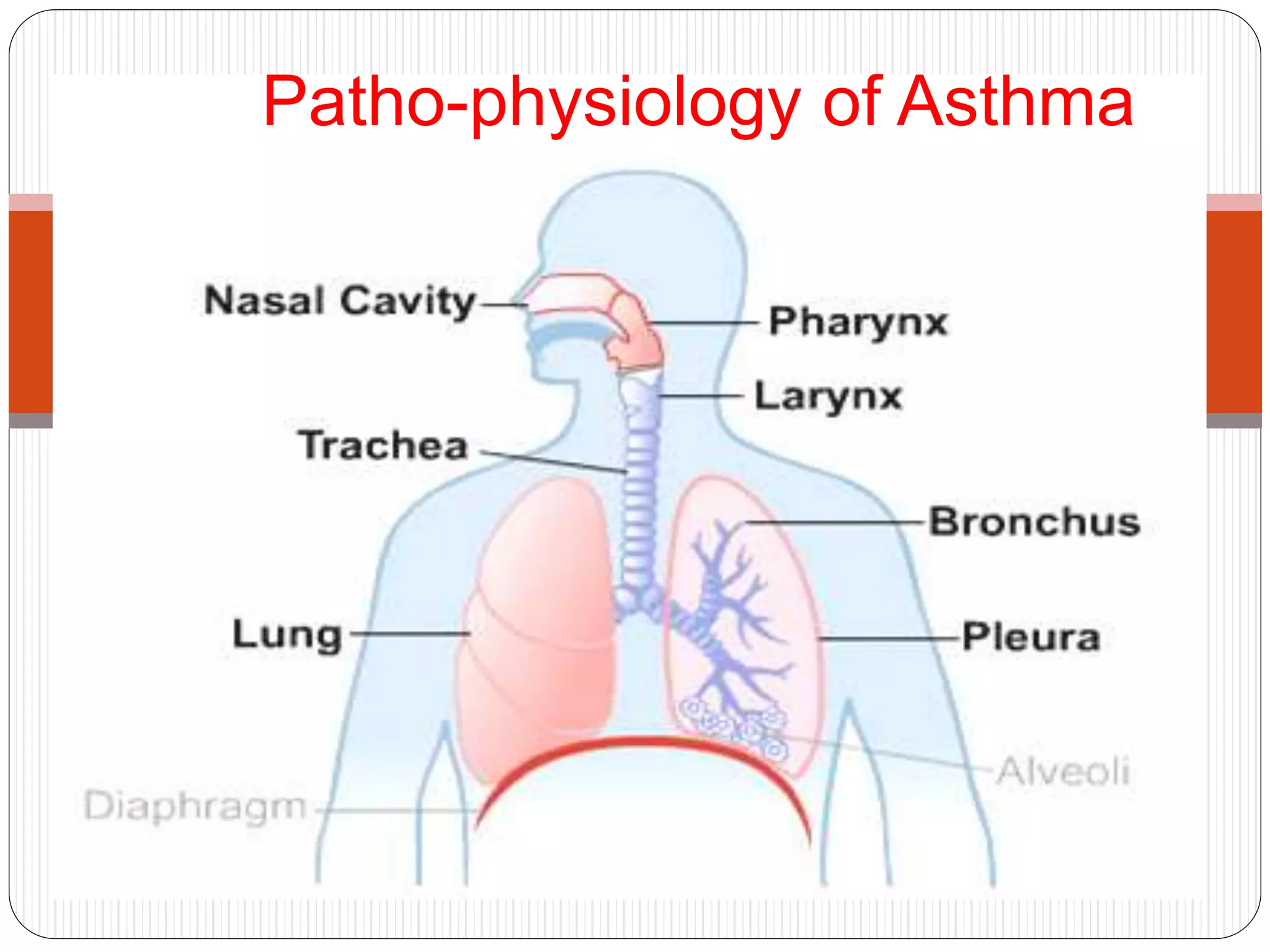
Patho-physiology of Asthma
Asthma
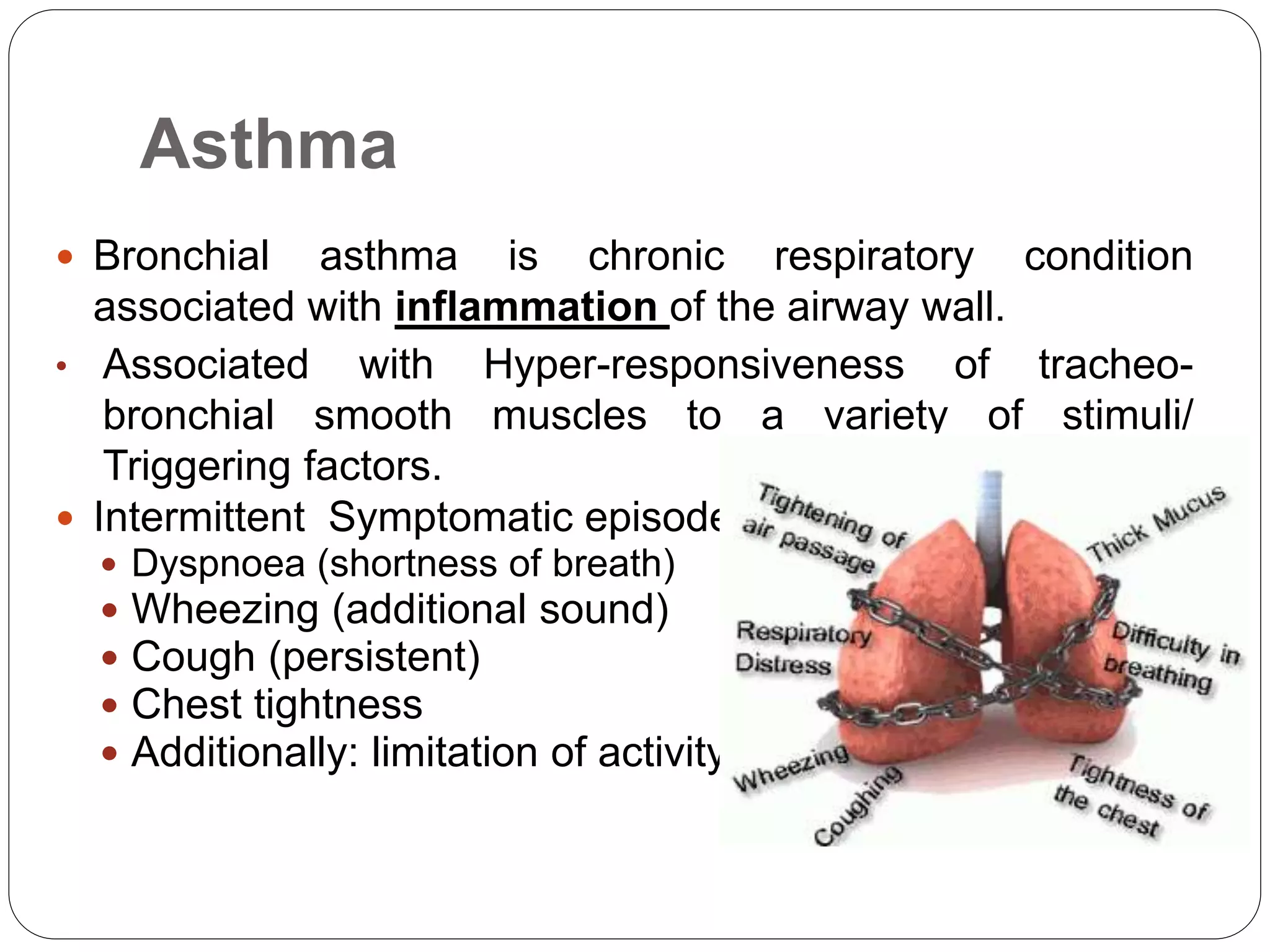
 Bronchial asthma is chronic respiratory condition
associated with inflammation of the airway wall.
• Associated with Hyper-responsiveness of tracheo-
bronchial smooth muscles to a variety of stimuli/
Triggering factors.
 Intermittent Symptomatic episodes of
 Dyspnoea (shortness of breath)
 Wheezing (additional sound)
 Cough (persistent)
 Chest tightness
 Additionally: limitation of activity
Etiology/ Triggering factors
 Tobacco smoke
 Infections such as colds, flu, or pneumonia
 Allergens such as food, pollen, mold, dust mites, and
pet dander
 Exercise
 Air pollution and toxins
 Weather, especially extreme changes in temperature
 Drugs (such as aspirin, NSAID, and beta-blockers)
 Food additives
 Emotional stress and anxiety
 Singing, laughing, or crying
 Smoking, perfumes, or sprays
 Acid reflux
Types of Asthma
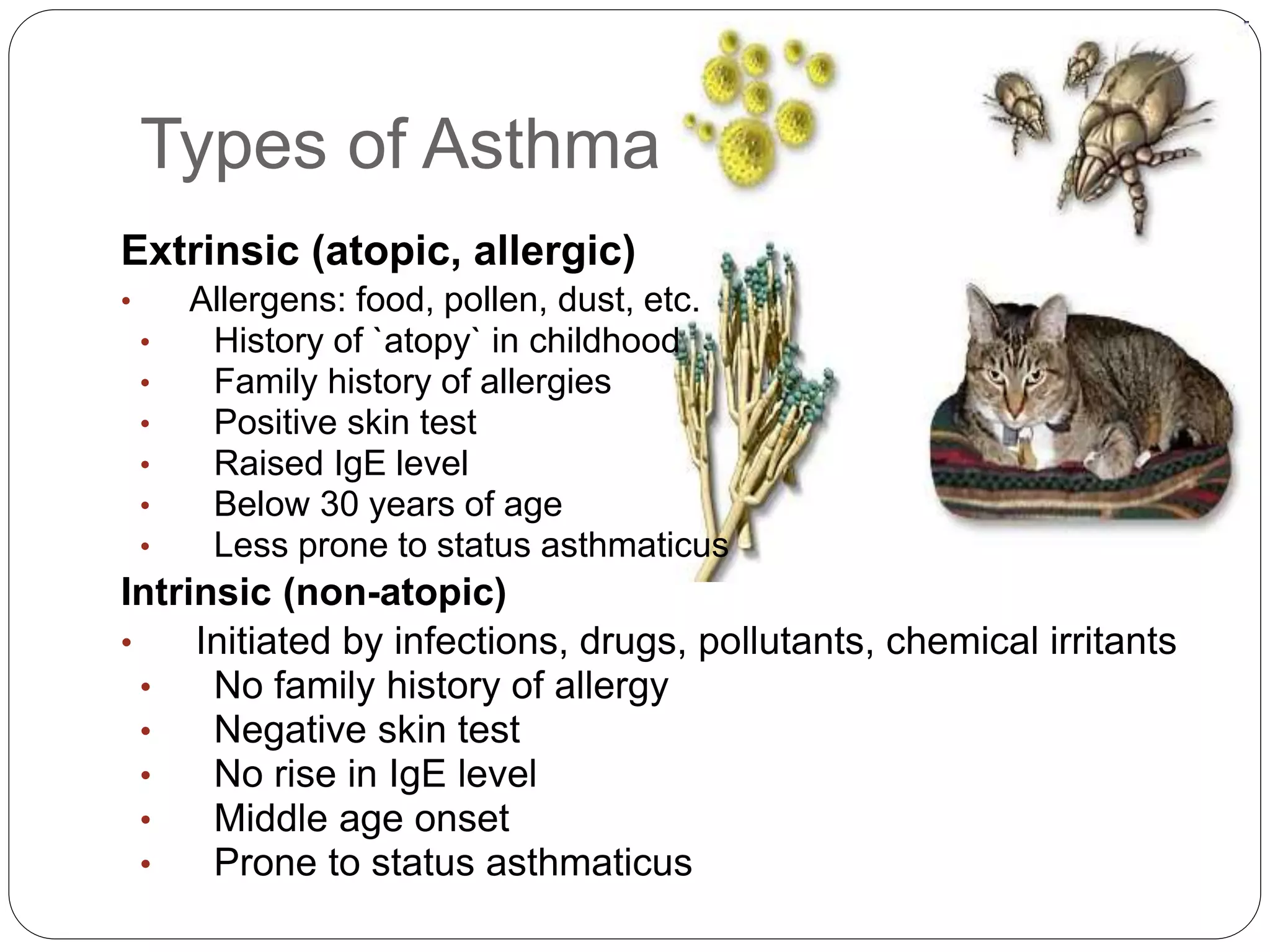
Extrinsic (atopic, allergic)
• Allergens: food, pollen, dust, etc.
• History of `atopy` in childhood
• Family history of allergies
• Positive skin test
• Raised IgE level
• Below 30 years of age
• Less prone to status asthmaticus
Intrinsic (non-atopic)
• Initiated by infections, drugs, pollutants, chemical irritants
• No family history of allergy
• Negative skin test
• No rise in IgE level
• Middle age onset
• Prone to status asthmaticus
Pathogenesis
Airflow limitation in asthma is recurrent and caused by a
variety of changes in the airway:
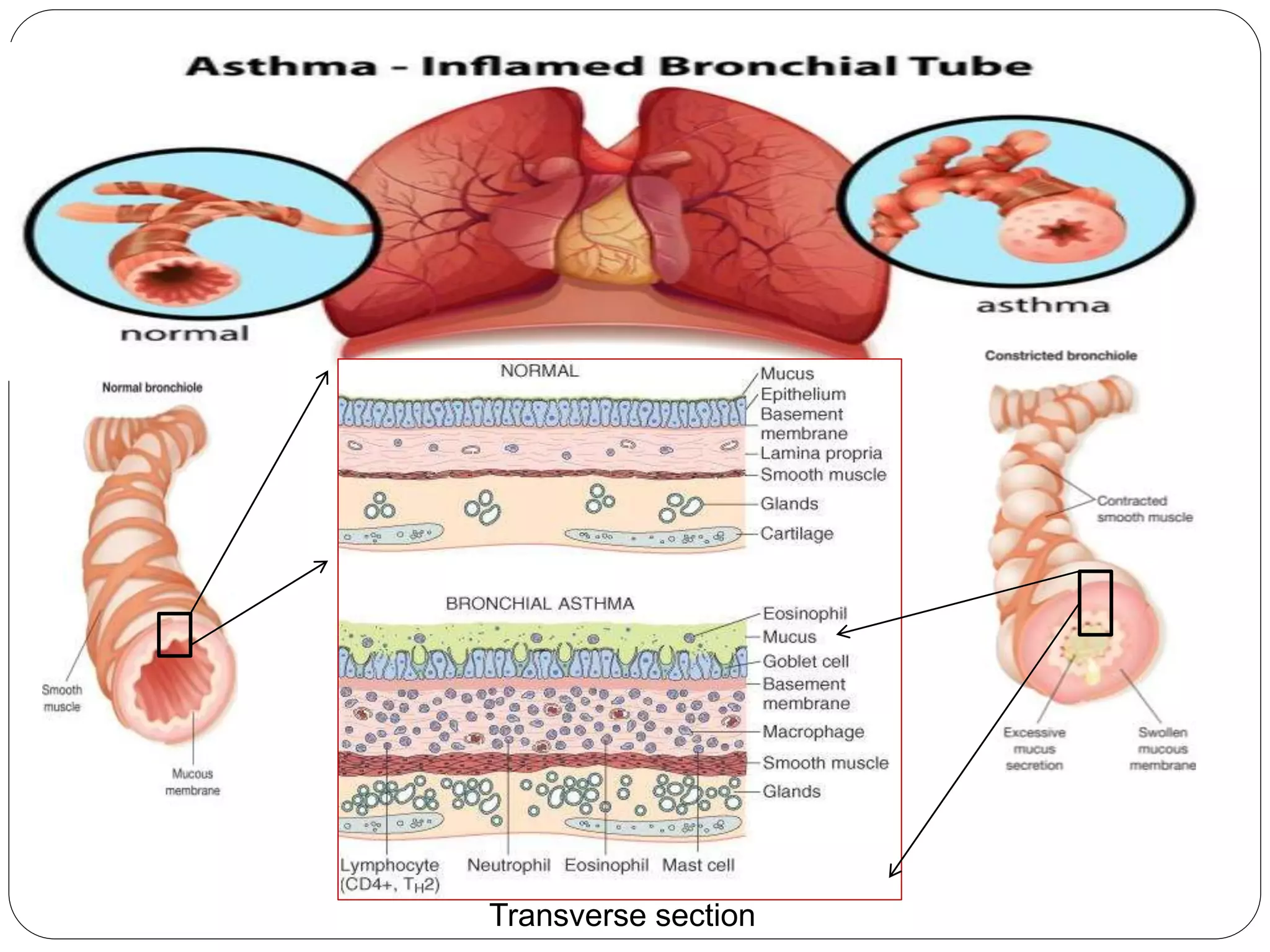
 Airway inflammation (Mast cell degranulation,
eosinophill infiltration )
 Bronchoconstriction (tightening of muscles)
 Airway edema (Mucous hypersecretion; Mucus plug
formation)
 Bronchial hyperresponsiveness to various stimulii
 Airway remodelling (thickening of the sub-basement
membrane, subepithelial fibrosis, airway smooth muscle
hypertrophy and hyperplasia, angiogenesis and
vasodilation, and mucous gland hyperplasia and
hypersecretion)
 Airflow obstruction (narrowing of air passage)
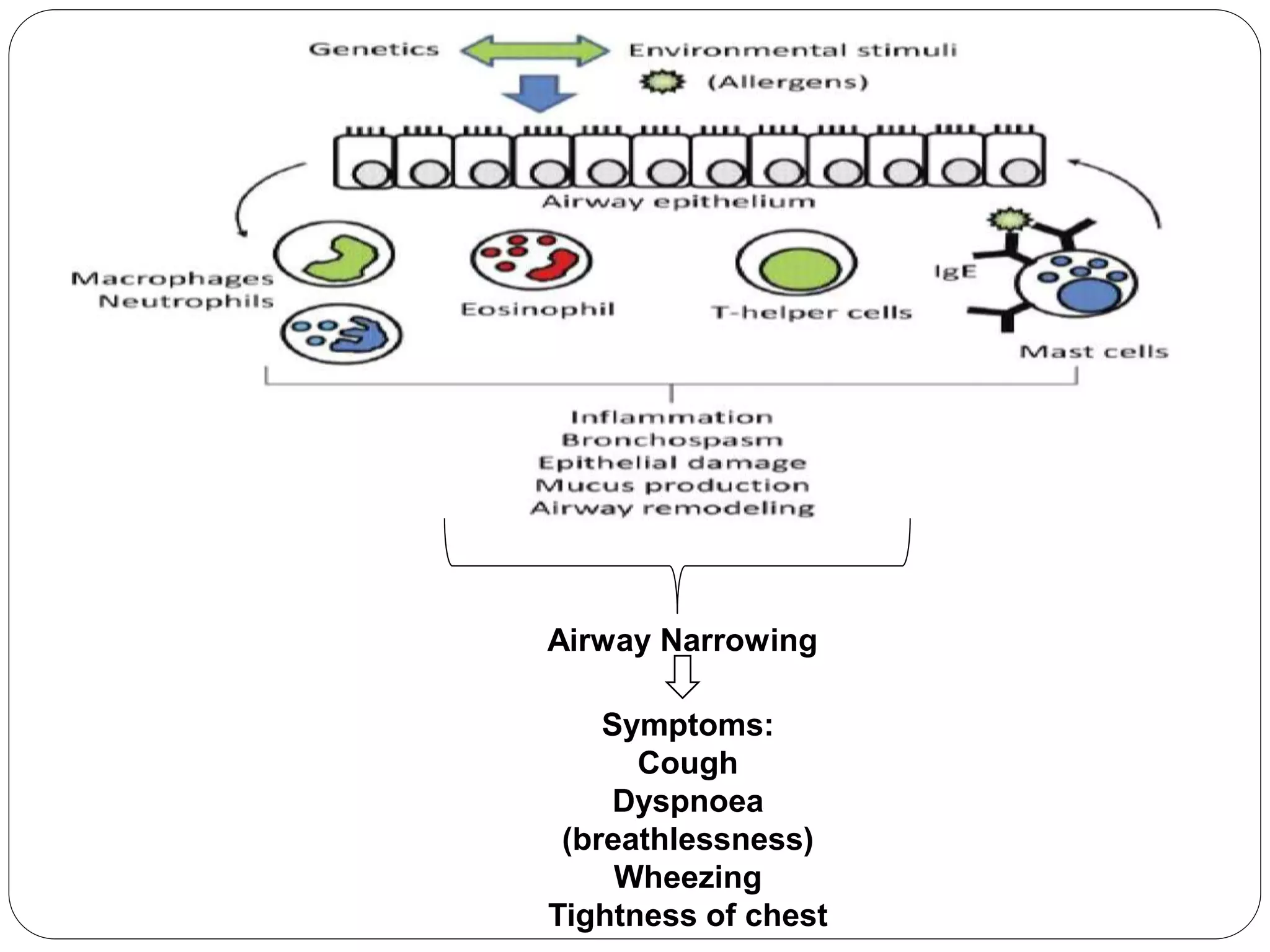
Inflammatory cells
 Lymphocytes: T-helper 2 cells (Th2 cells), activates
eosinophillic inflammation by releasing cytokines(IL-4,
IL-5 and IL-3) leads to: Eosinophill infiltration, Ig E
overproduction, development of bronchial
hyperresponsiveness.
 Mast cells: releases bronchoconstrictor mediators
(histamine, cysteinyl-leukotrienes, prostaglandin D2 )
 Eosinophils: generates inflammatory enzymes and
leukotrienes, most cases of asthma linked with
increased number of eosinophills.
 Dendritic cells: These cells function as key antigen-
presenting cells that interact with allergens from the
airway surface and then stimulate Th2 cell production
from naïve T cells
 Macrophages: Macrophages are the most numerous
cells in the airways
 Neutrophils: Neutrophils are increased in the airways
Transverse section
Airway Narrowing
Symptoms:
Cough
Dyspnoea
(breathlessness)
Wheezing
Tightness of chest
Morphology
 Bronchial obstruction with overinflation
 Small areas of atelectasis (collapse) may be seen
 Inflammation & thickening of mucosa.
 Bronchial wall smooth muscle hypertrophy
 Thickening of bronchial basement membrane.
 Mucus plugging of bronchi
 Curschmann spirals: whorls of shed epithelium
within mucus plugs
 Charcot-Leyden crystals: Within aggregates of
eosinophils ;crystalloids of galectin-10
Lung Hyperinflation
Histological findings in Sputum
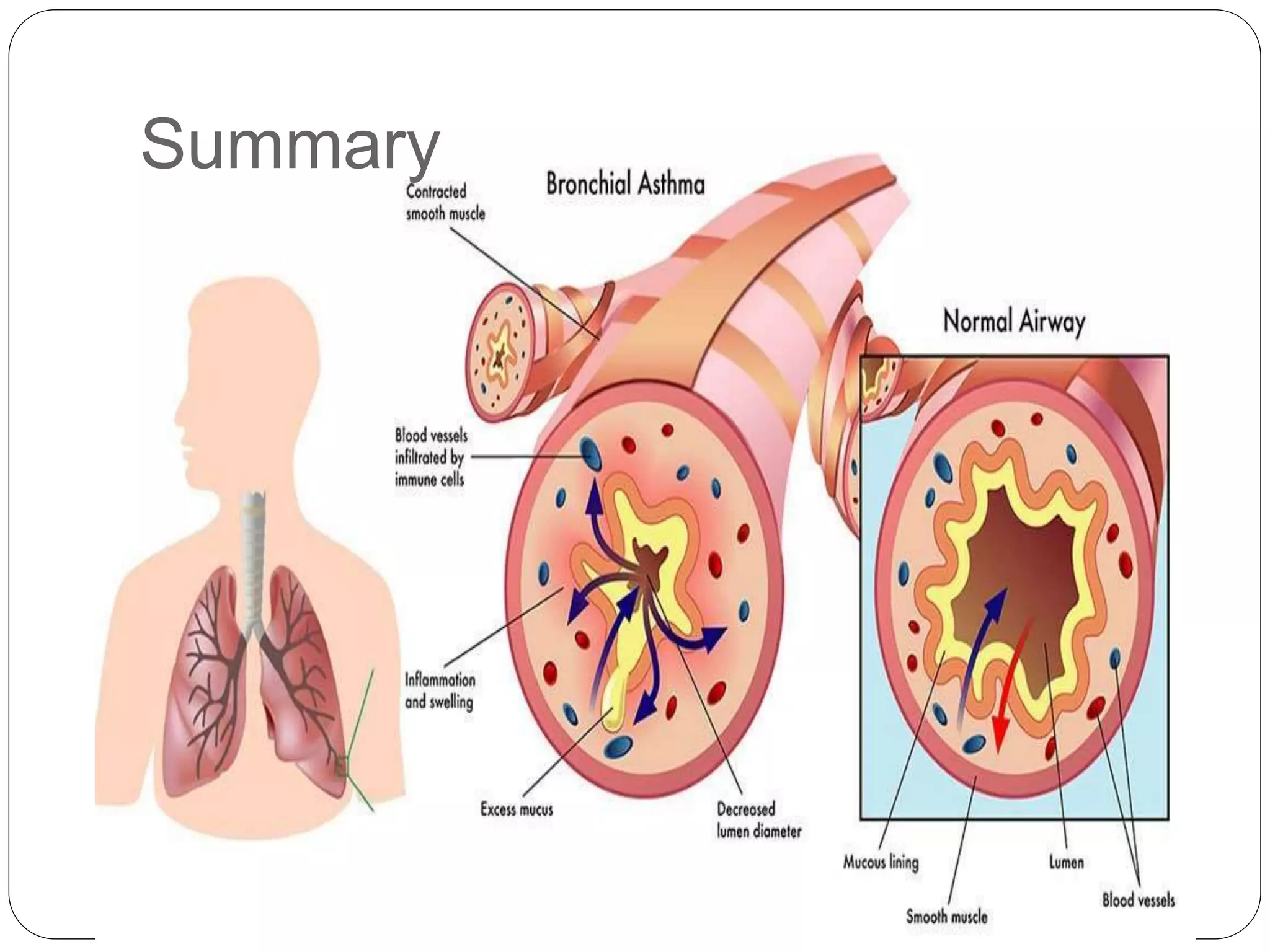
Summary
Thank You

Pathophysiology of asthma

  • 1.
  • 2.
    Asthma  Bronchial asthmais chronic respiratory condition associated with inflammation of the airway wall. • Associated with Hyper-responsiveness of tracheo- bronchial smooth muscles to a variety of stimuli/ Triggering factors.  Intermittent Symptomatic episodes of  Dyspnoea (shortness of breath)  Wheezing (additional sound)  Cough (persistent)  Chest tightness  Additionally: limitation of activity
  • 3.
    Etiology/ Triggering factors Tobacco smoke  Infections such as colds, flu, or pneumonia  Allergens such as food, pollen, mold, dust mites, and pet dander  Exercise  Air pollution and toxins  Weather, especially extreme changes in temperature  Drugs (such as aspirin, NSAID, and beta-blockers)  Food additives  Emotional stress and anxiety  Singing, laughing, or crying  Smoking, perfumes, or sprays  Acid reflux
  • 4.
    Types of Asthma Extrinsic(atopic, allergic) • Allergens: food, pollen, dust, etc. • History of `atopy` in childhood • Family history of allergies • Positive skin test • Raised IgE level • Below 30 years of age • Less prone to status asthmaticus Intrinsic (non-atopic) • Initiated by infections, drugs, pollutants, chemical irritants • No family history of allergy • Negative skin test • No rise in IgE level • Middle age onset • Prone to status asthmaticus
  • 5.
    Pathogenesis Airflow limitation inasthma is recurrent and caused by a variety of changes in the airway:  Airway inflammation (Mast cell degranulation, eosinophill infiltration )  Bronchoconstriction (tightening of muscles)  Airway edema (Mucous hypersecretion; Mucus plug formation)  Bronchial hyperresponsiveness to various stimulii  Airway remodelling (thickening of the sub-basement membrane, subepithelial fibrosis, airway smooth muscle hypertrophy and hyperplasia, angiogenesis and vasodilation, and mucous gland hyperplasia and hypersecretion)  Airflow obstruction (narrowing of air passage)
  • 6.
    Inflammatory cells  Lymphocytes:T-helper 2 cells (Th2 cells), activates eosinophillic inflammation by releasing cytokines(IL-4, IL-5 and IL-3) leads to: Eosinophill infiltration, Ig E overproduction, development of bronchial hyperresponsiveness.  Mast cells: releases bronchoconstrictor mediators (histamine, cysteinyl-leukotrienes, prostaglandin D2 )  Eosinophils: generates inflammatory enzymes and leukotrienes, most cases of asthma linked with increased number of eosinophills.  Dendritic cells: These cells function as key antigen- presenting cells that interact with allergens from the airway surface and then stimulate Th2 cell production from naïve T cells  Macrophages: Macrophages are the most numerous cells in the airways  Neutrophils: Neutrophils are increased in the airways
  • 7.
  • 8.
  • 9.
    Morphology  Bronchial obstructionwith overinflation  Small areas of atelectasis (collapse) may be seen  Inflammation & thickening of mucosa.  Bronchial wall smooth muscle hypertrophy  Thickening of bronchial basement membrane.  Mucus plugging of bronchi  Curschmann spirals: whorls of shed epithelium within mucus plugs  Charcot-Leyden crystals: Within aggregates of eosinophils ;crystalloids of galectin-10 Lung Hyperinflation
  • 10.
  • 11.
  • 12.