Pathophysiology of Intestinal Obstruction
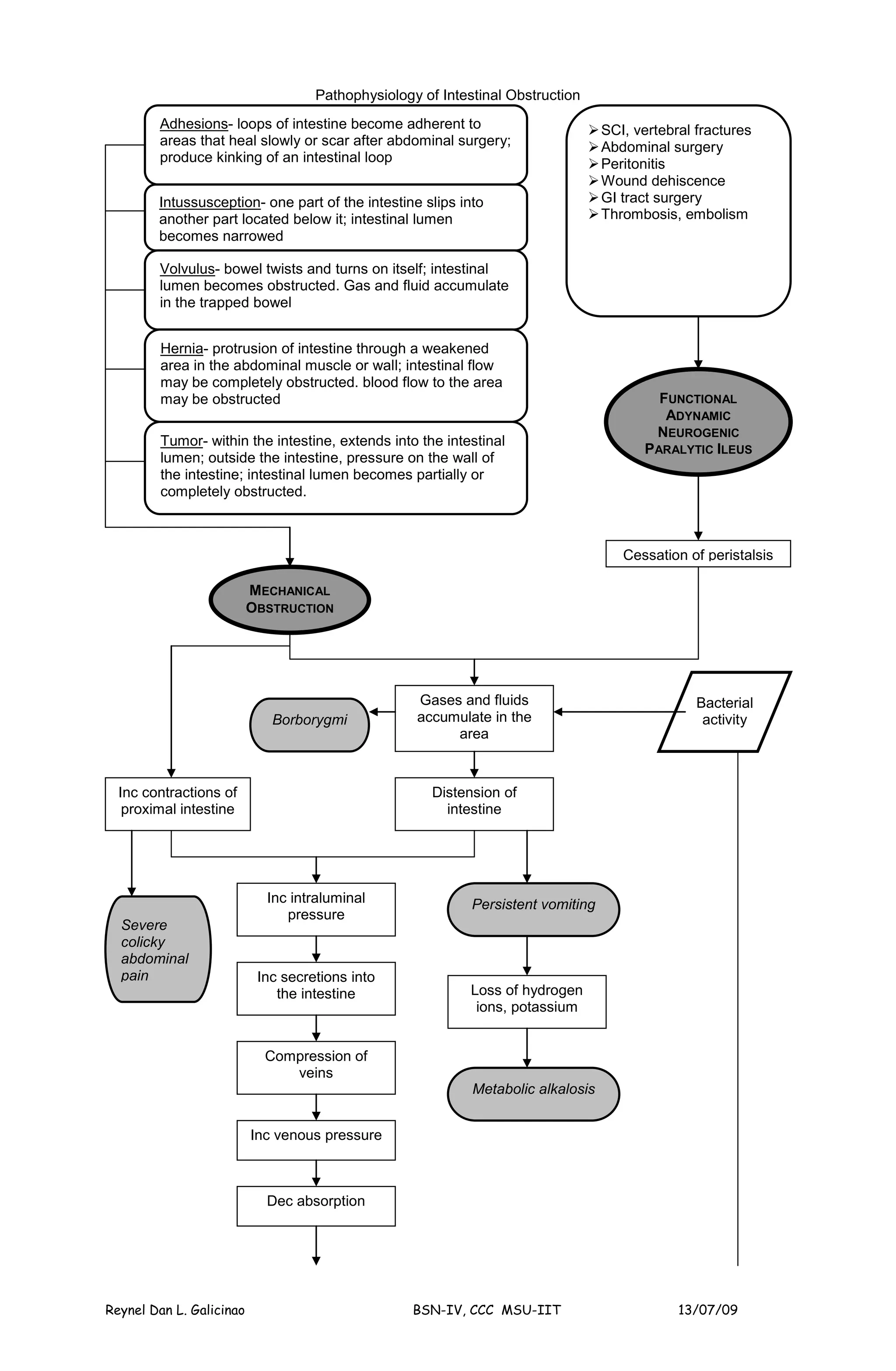
        Adhesions- loops of intestine become adherent to                         SCI, vertebral fractures
        areas that heal slowly or scar after abdominal surgery;                  Abdominal surgery
        produce kinking of an intestinal loop                                    Peritonitis
                                                                                 Wound dehiscence
        Intussusception- one part of the intestine slips into                    GI tract surgery
        another part located below it; intestinal lumen                          Thrombosis, embolism
        becomes narrowed

        Volvulus- bowel twists and turns on itself; intestinal
        lumen becomes obstructed. Gas and fluid accumulate
        in the trapped bowel


         Hernia- protrusion of intestine through a weakened
         area in the abdominal muscle or wall; intestinal flow
         may be completely obstructed. blood flow to the area
         may be obstructed                                                                 FUNCTIONAL
                                                                                            ADYNAMIC
                                                                                          NEUROGENIC
         Tumor- within the intestine, extends into the intestinal
                                                                                         PARALYTIC ILEUS
         lumen; outside the intestine, pressure on the wall of
         the intestine; intestinal lumen becomes partially or
         completely obstructed.


                                                                                     Cessation of peristalsis

                          MECHANICAL
                          OBSTRUCTION


                                                   Gases and fluids                              Bacterial
                             Borborygmi            accumulate in the                              activity
                                                        area


  Inc contractions of                                 Distension of
   proximal intestine                                   intestine


                            Inc intraluminal                Persistent vomiting
                               pressure
  Severe
  colicky
  abdominal
  pain                     Inc secretions into
                              the intestine                 Loss of hydrogen
                                                             ions, potassium


                            Compression of
                               veins
                                                            Metabolic alkalosis


                          Inc venous pressure


                            Dec absorption


Reynel Dan L. Galicinao                            BSN-IV, CCC MSU-IIT                        13/07/09
Pathophysiology of Intestinal Obstruction
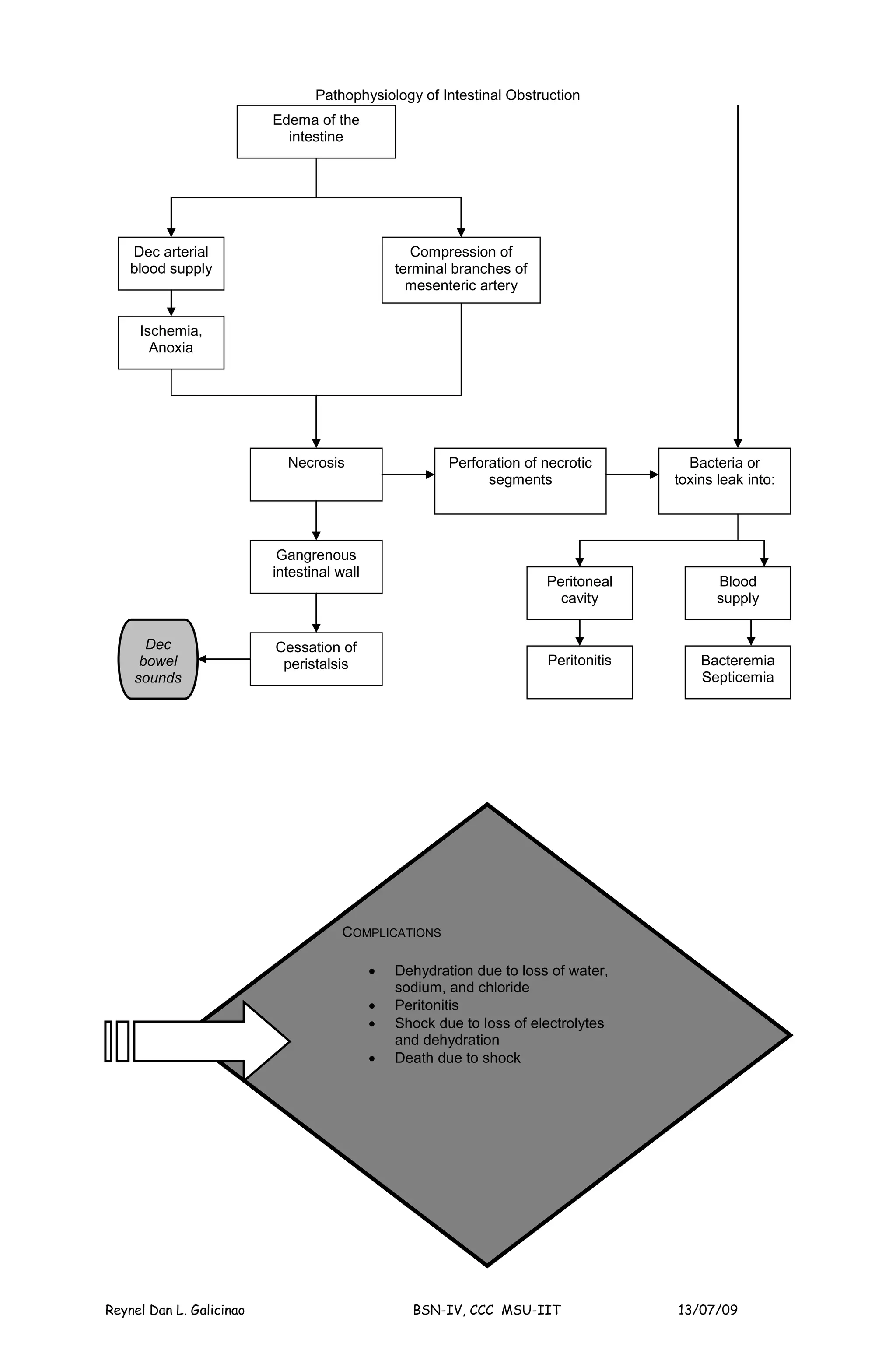
                          Edema of the
                            intestine


    Dec arterial                                   Compression of
    blood supply                                terminal branches of
                                                  mesenteric artery


     Ischemia,
       Anoxia


                            Necrosis                    Perforation of necrotic        Bacteria or
                                                              segments               toxins leak into:


                           Gangrenous
                          intestinal wall
                                                                       Peritoneal           Blood
                                                                         cavity             supply


      Dec                 Cessation of
     bowel                 peristalsis                                 Peritonitis       Bacteremia
    sounds                                                                               Septicemia


                                     COMPLICATIONS

                                               Dehydration due to loss of water,
                                                sodium, and chloride
                                               Peritonitis
                                               Shock due to loss of electrolytes
                                                and dehydration
                                               Death due to shock


Reynel Dan L. Galicinao                           BSN-IV, CCC MSU-IIT                13/07/09

Pathophysiology of intestinal obstruction

  • 1.
    Pathophysiology of IntestinalObstruction Adhesions- loops of intestine become adherent to  SCI, vertebral fractures areas that heal slowly or scar after abdominal surgery;  Abdominal surgery produce kinking of an intestinal loop  Peritonitis  Wound dehiscence Intussusception- one part of the intestine slips into  GI tract surgery another part located below it; intestinal lumen  Thrombosis, embolism becomes narrowed Volvulus- bowel twists and turns on itself; intestinal lumen becomes obstructed. Gas and fluid accumulate in the trapped bowel Hernia- protrusion of intestine through a weakened area in the abdominal muscle or wall; intestinal flow may be completely obstructed. blood flow to the area may be obstructed FUNCTIONAL ADYNAMIC NEUROGENIC Tumor- within the intestine, extends into the intestinal PARALYTIC ILEUS lumen; outside the intestine, pressure on the wall of the intestine; intestinal lumen becomes partially or completely obstructed. Cessation of peristalsis MECHANICAL OBSTRUCTION Gases and fluids Bacterial Borborygmi accumulate in the activity area Inc contractions of Distension of proximal intestine intestine Inc intraluminal Persistent vomiting pressure Severe colicky abdominal pain Inc secretions into the intestine Loss of hydrogen ions, potassium Compression of veins Metabolic alkalosis Inc venous pressure Dec absorption Reynel Dan L. Galicinao BSN-IV, CCC MSU-IIT 13/07/09
  • 2.
    Pathophysiology of IntestinalObstruction Edema of the intestine Dec arterial Compression of blood supply terminal branches of mesenteric artery Ischemia, Anoxia Necrosis Perforation of necrotic Bacteria or segments toxins leak into: Gangrenous intestinal wall Peritoneal Blood cavity supply Dec Cessation of bowel peristalsis Peritonitis Bacteremia sounds Septicemia COMPLICATIONS  Dehydration due to loss of water, sodium, and chloride  Peritonitis  Shock due to loss of electrolytes and dehydration  Death due to shock Reynel Dan L. Galicinao BSN-IV, CCC MSU-IIT 13/07/09