By
Jagadish Prasad Mishra
4th sem M.B.B.S.
Pathophysiology of Asthma
Asthma:-
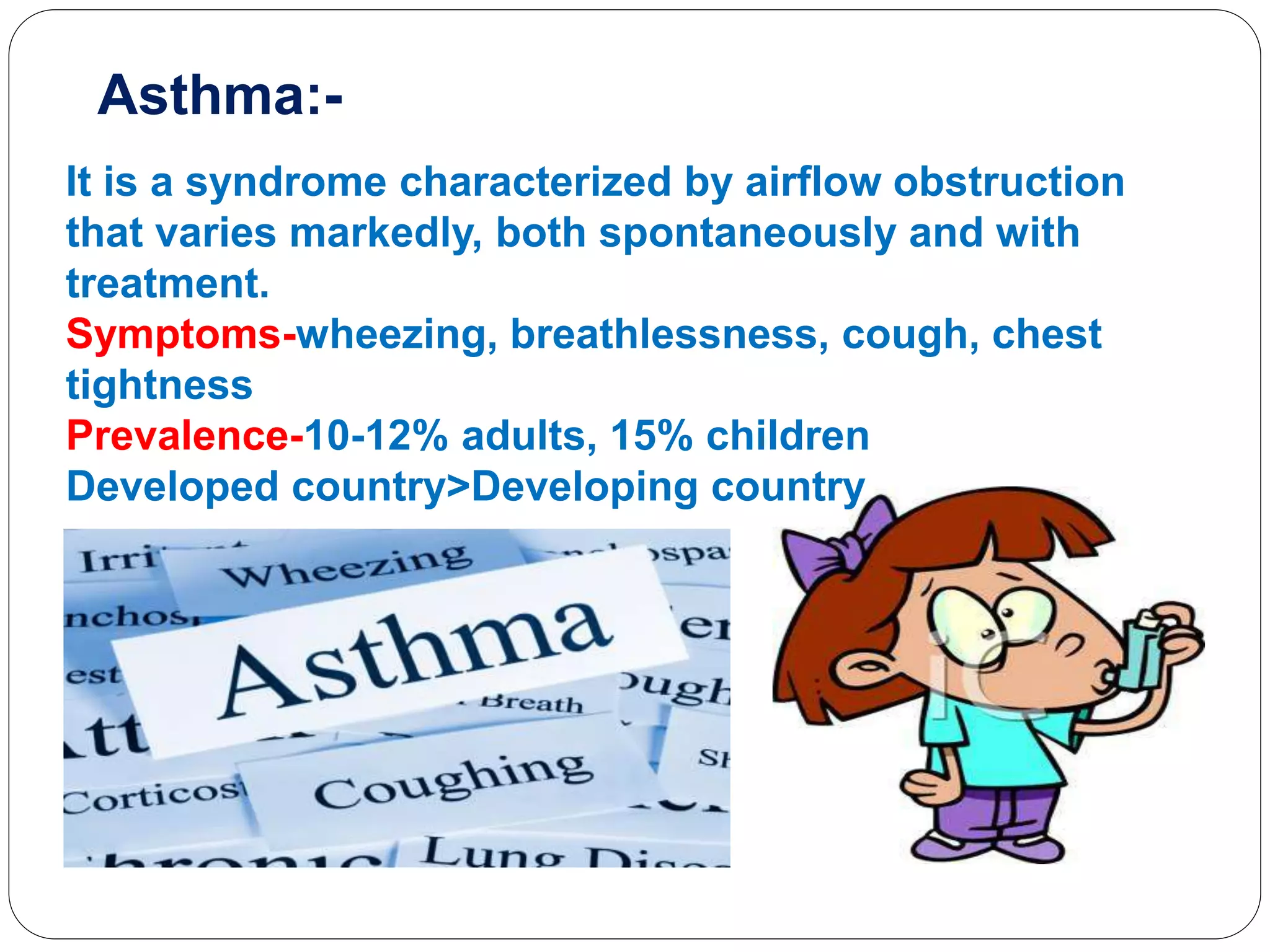
It is a syndrome characterized by airflow obstruction
that varies markedly, both spontaneously and with
treatment.
Symptoms-wheezing, breathlessness, cough, chest
tightness
Prevalence-10-12% adults, 15% children
Developed country>Developing country
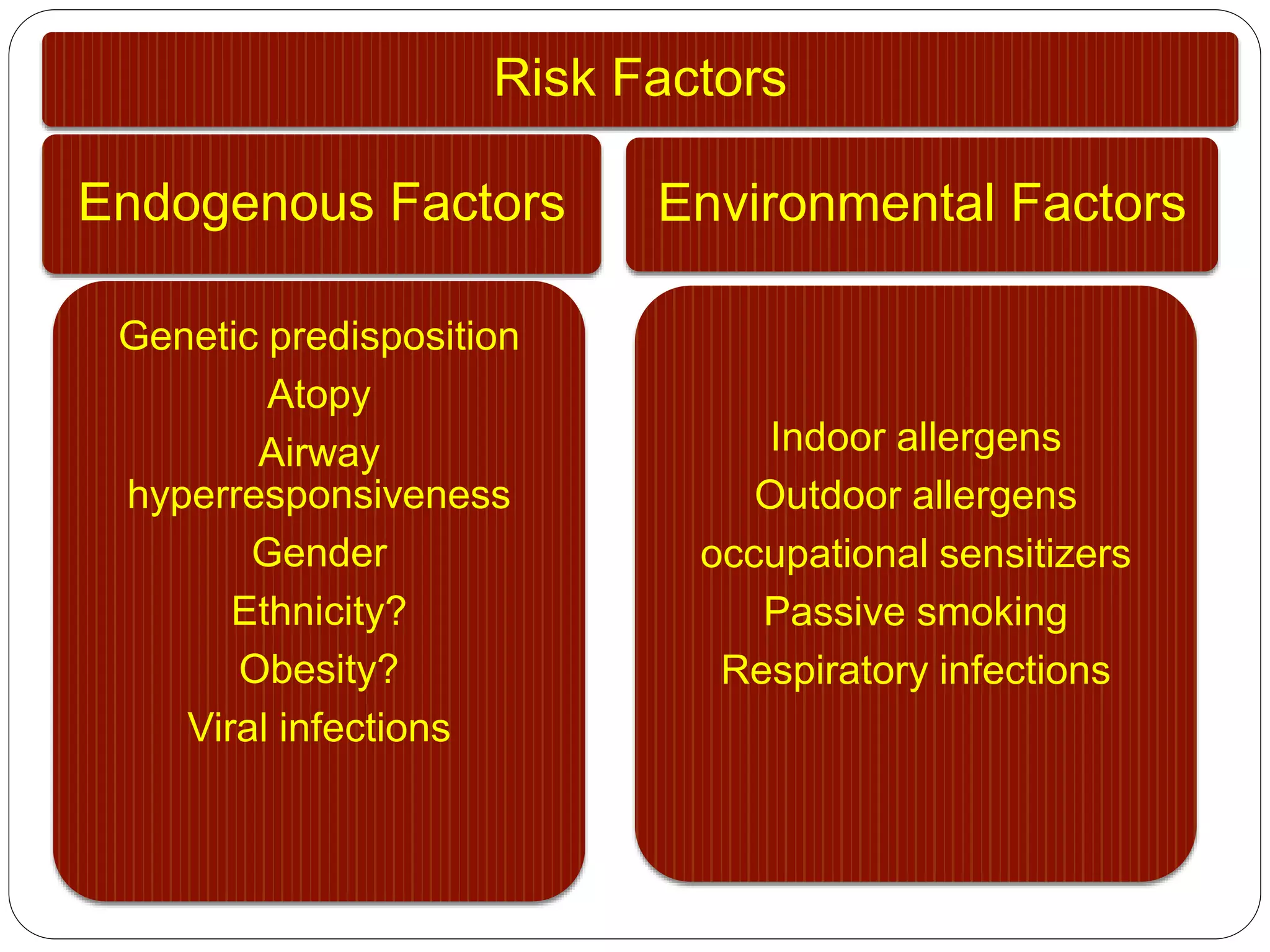
Risk Factors
Endogenous Factors
Genetic predisposition
Atopy
Airway
hyperresponsiveness
Gender
Ethnicity?
Obesity?
Viral infections
Environmental Factors
Indoor allergens
Outdoor allergens
occupational sensitizers
Passive smoking
Respiratory infections
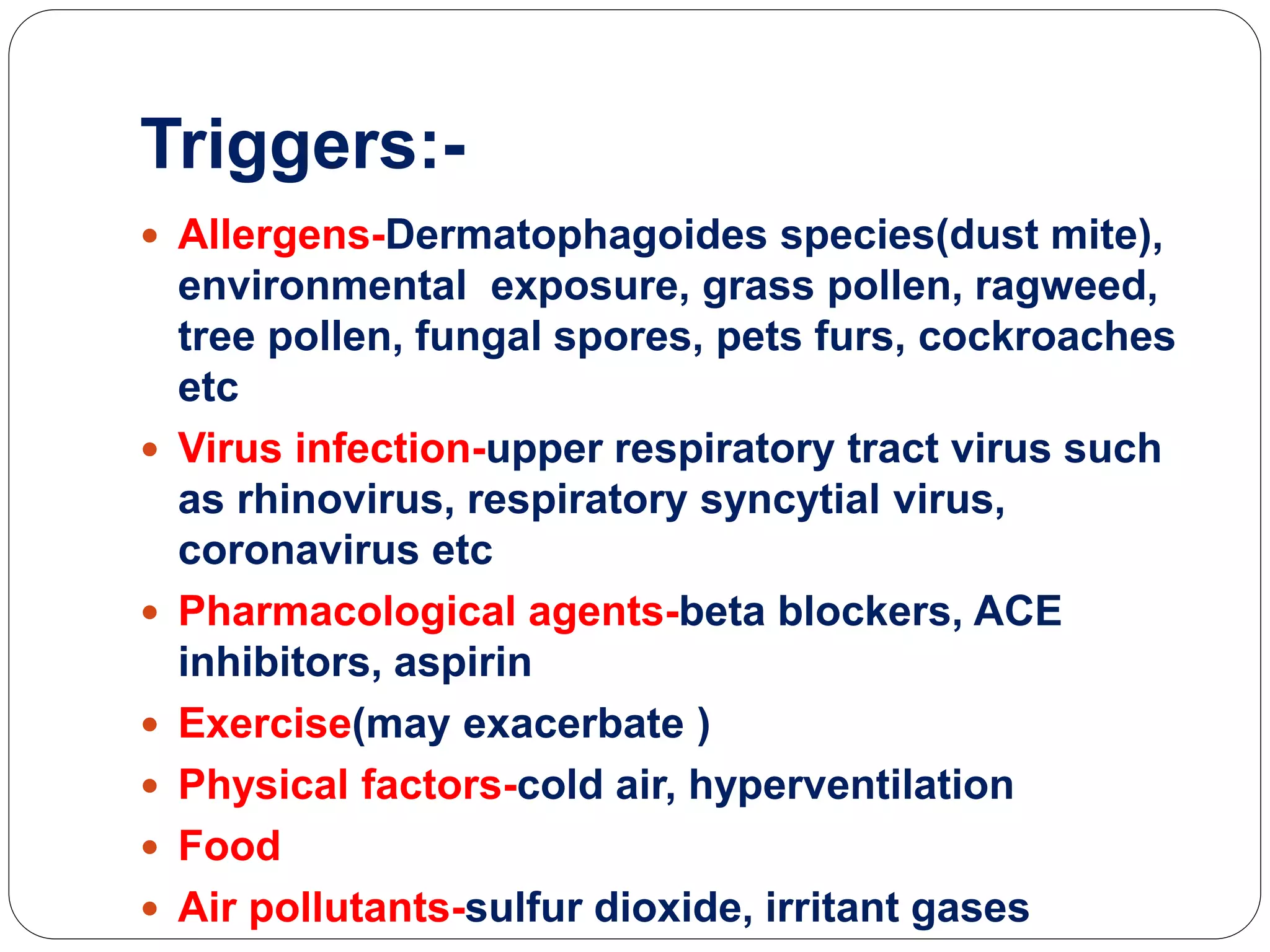
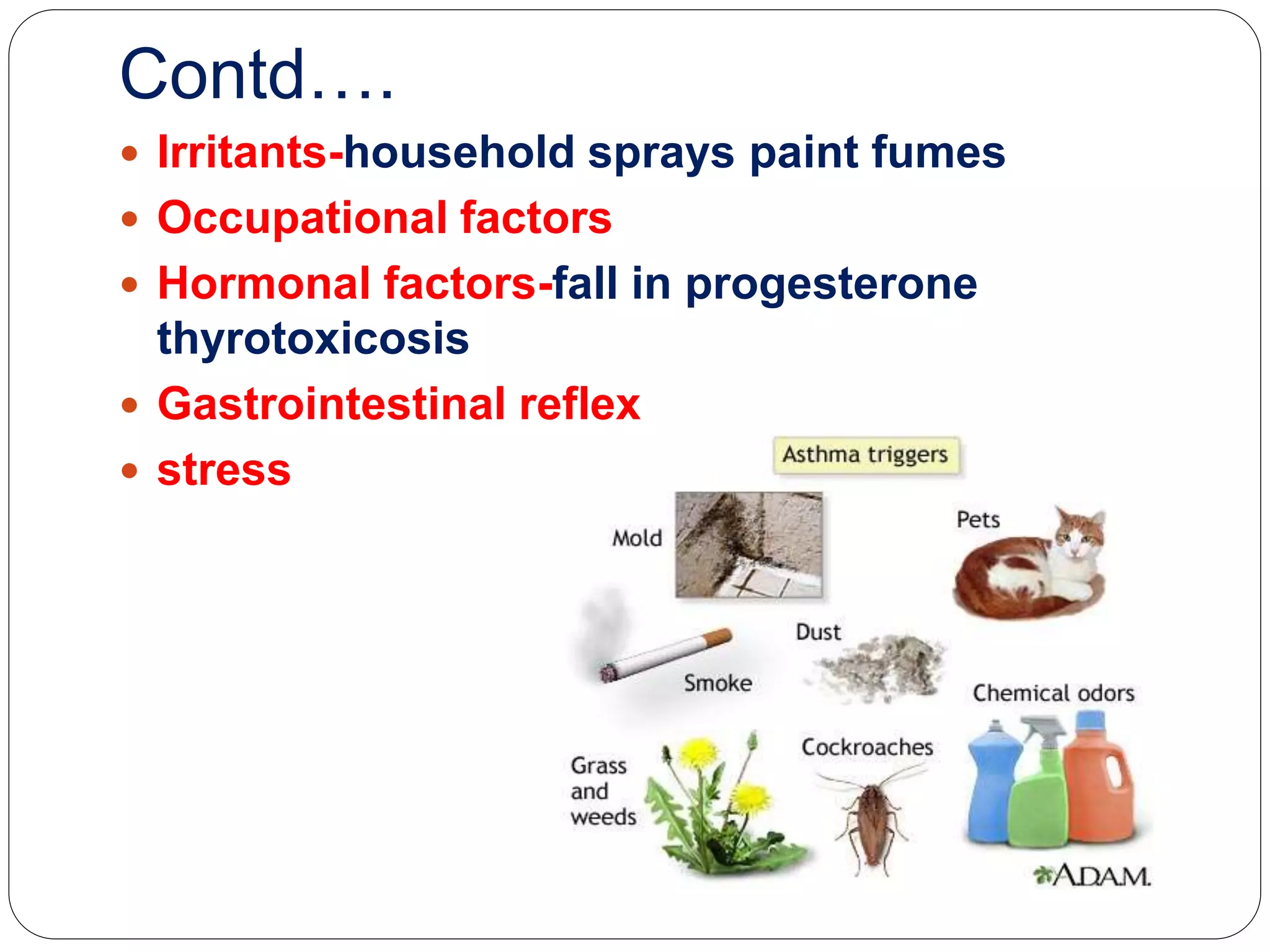
Triggers:-
 Allergens-Dermatophagoides species(dust mite),
environmental exposure, grass pollen, ragweed,
tree pollen, fungal spores, pets furs, cockroaches
etc
 Virus infection-upper respiratory tract virus such
as rhinovirus, respiratory syncytial virus,
coronavirus etc
 Pharmacological agents-beta blockers, ACE
inhibitors, aspirin
 Exercise(may exacerbate )
 Physical factors-cold air, hyperventilation
 Food
 Air pollutants-sulfur dioxide, irritant gases
Contd….
 Irritants-household sprays paint fumes
 Occupational factors
 Hormonal factors-fall in progesterone
thyrotoxicosis
 Gastrointestinal reflex
 stress
Types of asthma-
 Atopic asthma-classical type I IgE mediated
hypersensitivity, allergen sensitization, seen from
childhood, +ve history of asthma in family, skin
test +ve
 Non-atopic asthma-no allergen sensitization, no
such history, skin test –ve, virus infection?
 Drug induced asthma-sensitive to certain drugs
like aspirin, NSAIDS etc
 Occupational asthma-stimulants such as fumes,
organic and chemical dusts(wood, cotton),
gas(toluene), penicillin products etc
 Exercise induced asthma-begins after exercise
and stops after 30 minutes, worsen in cold and
dry climate
pathogenesis
 pathology
 Inflammation
 Inflammatory mediators
 Effects of inflammation
 Airway remodeling
pathology
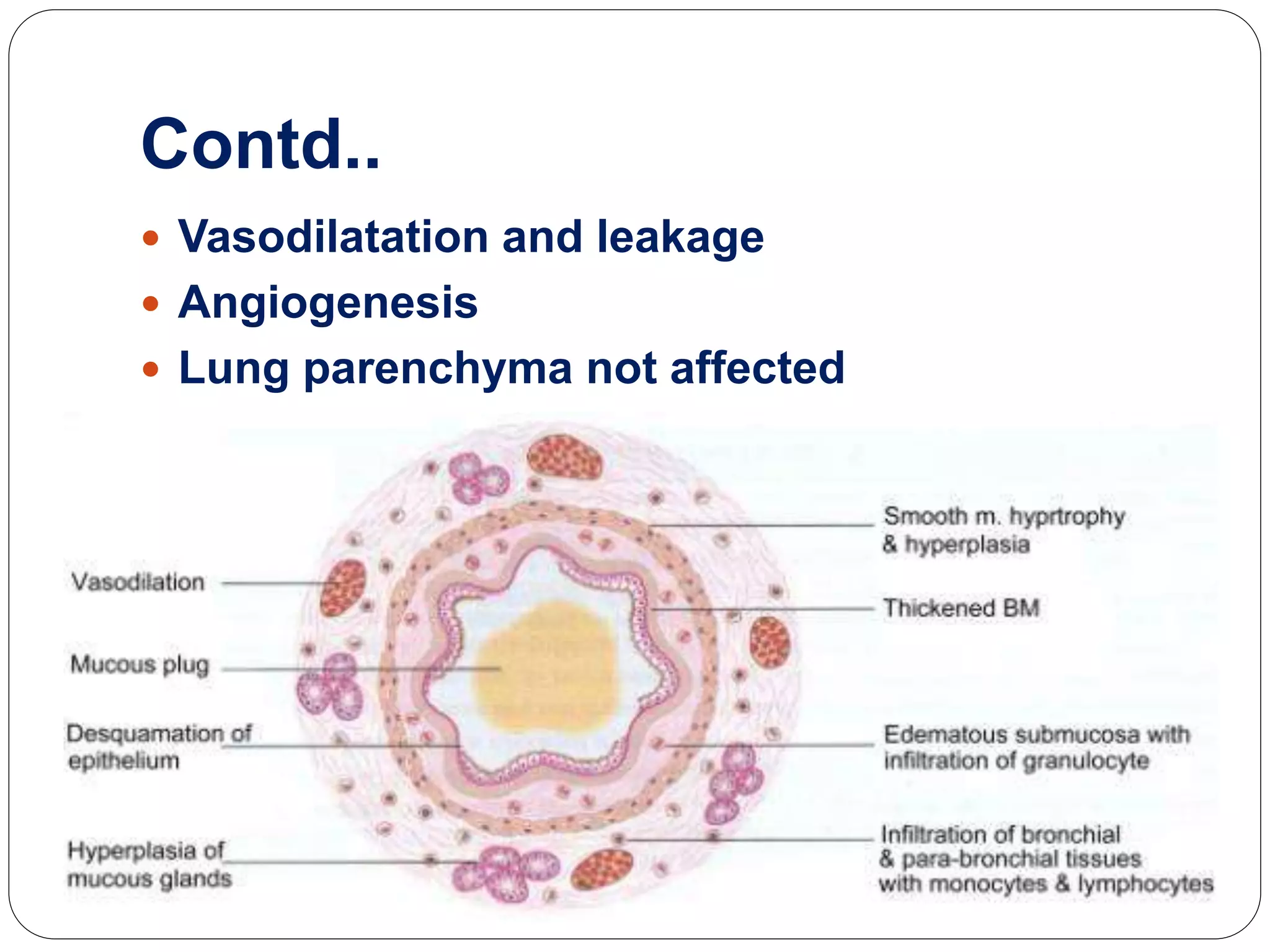
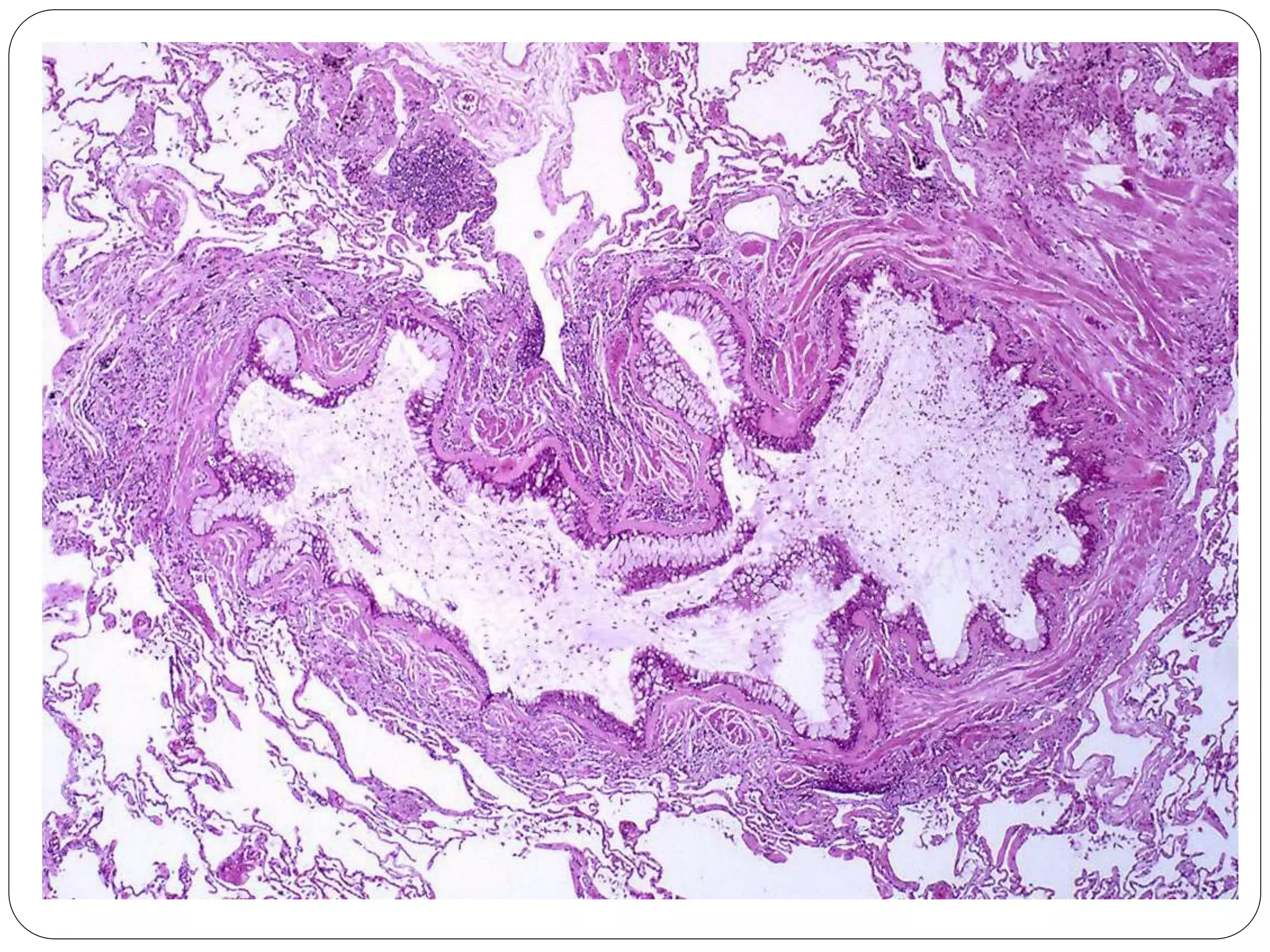
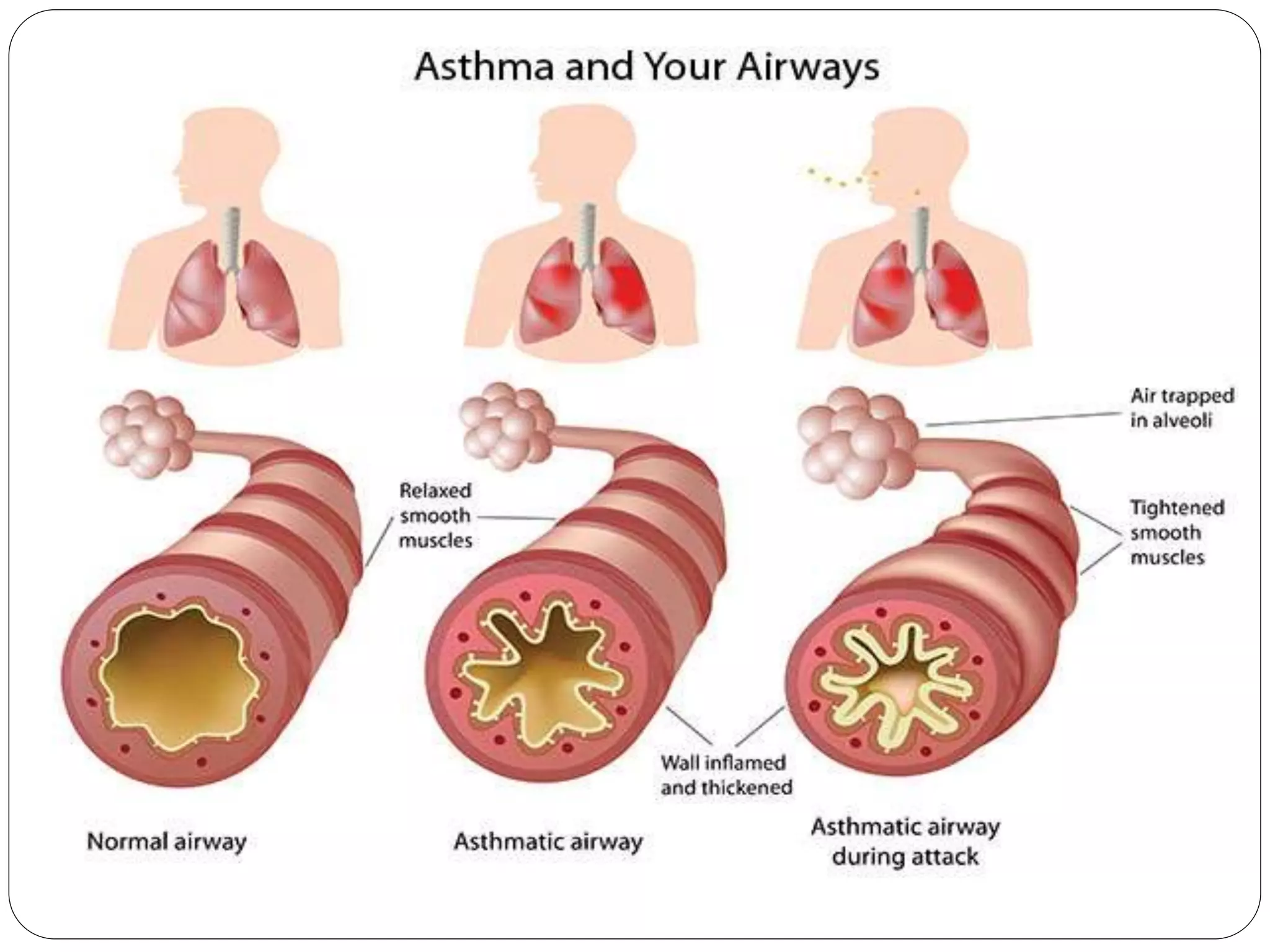
 Chronic inflammation of lower airways
 Mucosal infiltration of activated eosinophils
and T lymphocytes
 Thickening of basement membrane
 Goblet cell metaplasia
 Smooth muscle hypertrophy and thickening
 Shedding of epithelium
 Occlusion of airway by mucosal plug
Contd..
 Vasodilatation and leakage
 Angiogenesis
 Lung parenchyma not affected
Inflammation
 Allergic type of inflammation occurs
 From trachea to terminal bronchiole
 Predominantly in bronchi
 Airway hyperresponsiveness
 Cells involved in inflammation-mast cell
macrophages dendritic cell eosinophils
neutrophils T lymphocytes and structural
cells
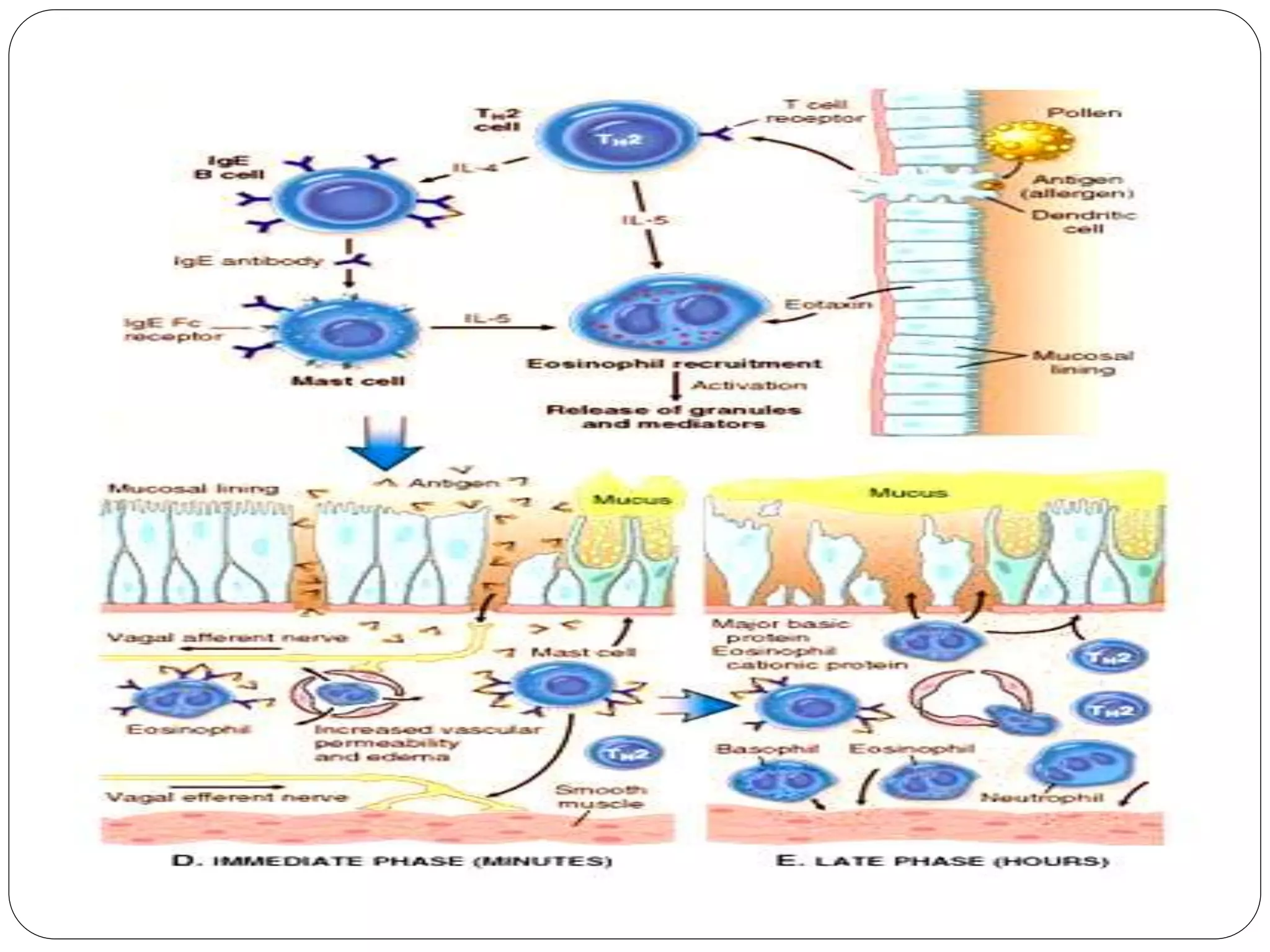
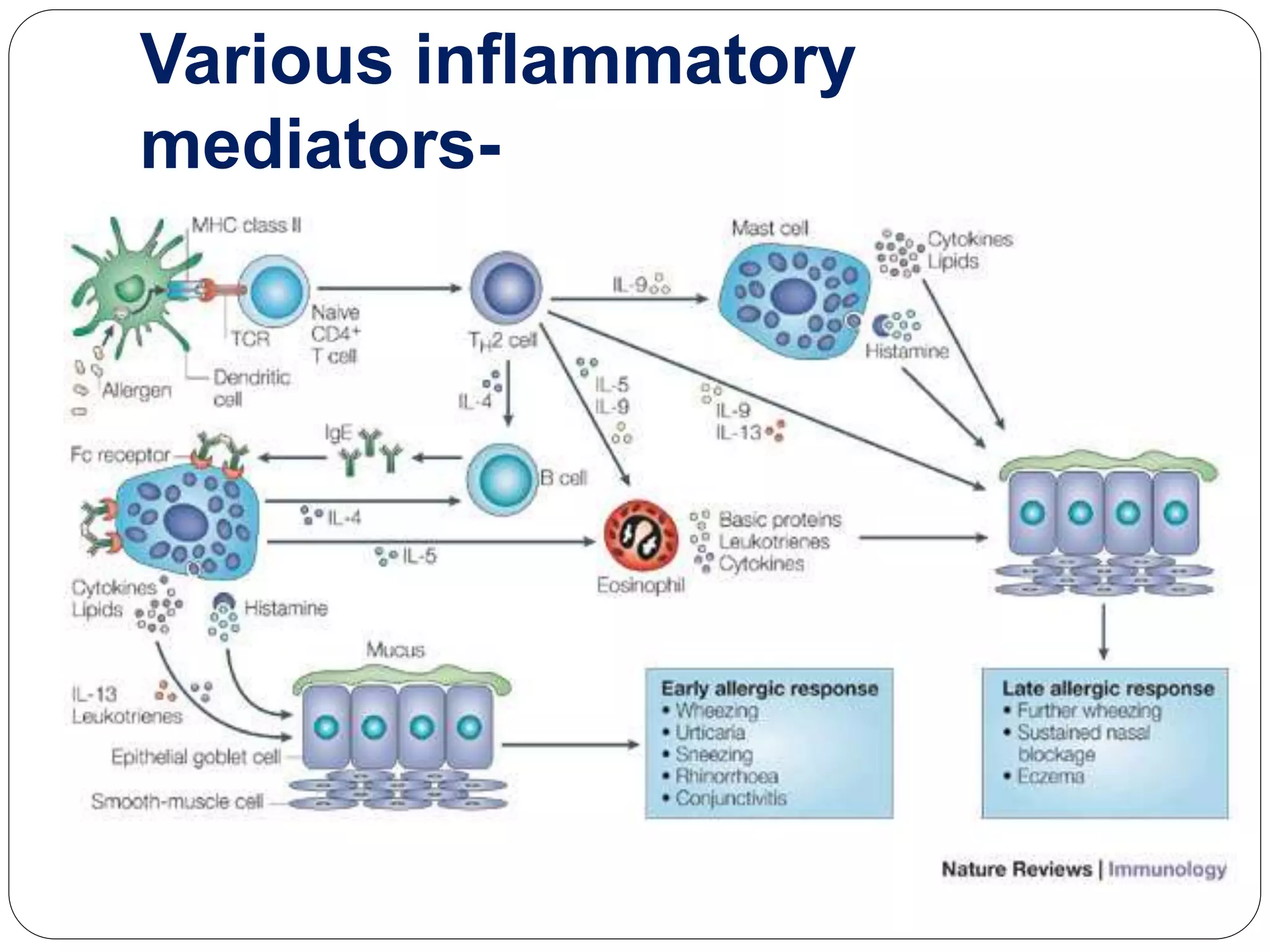
 Early phase reaction-mediated by granules
release from mast cell, bronchoconstriction,
vasodilation and increase permeability
Contd…
 Late phase reaction-inflammation with
recruitment of eosinophils, T lymphocytes,
neutrophils, macrophages etc and
subsequent release of mediators.
Contd…
 Mast cell-activated by IgE dependant
mechanism, initiate acute
bronchoconstriction action by releasing
histamine, prostaglandinD2,leukotrienes etc
 Macrophage-activated by low affinity IgE
receptor, produce various inflammatory
mediators
 Dendritic cell-macrophage like major APC in
airways, TSLP(Thymic stromal lymphopoietin)
by epithelial cell induced chemokine release
for TH2 cells
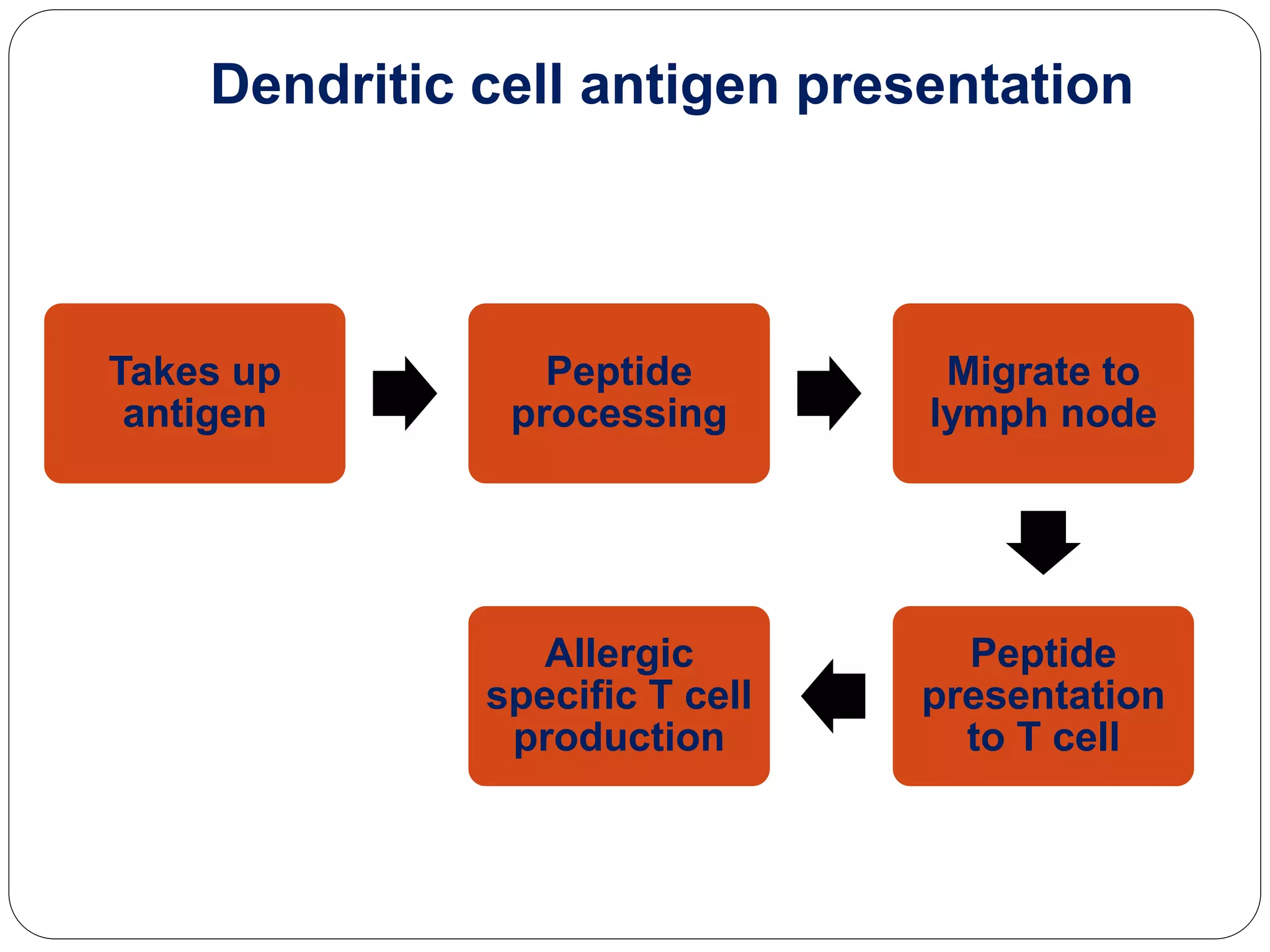
Takes up
antigen
Peptide
processing
Migrate to
lymph node
Peptide
presentation
to T cell
Allergic
specific T cell
production
Dendritic cell antigen presentation
Contd…
 Eosinophils-infiltration is characteristic
feature of asthma, activated by IL-5, causes
exacerbation of asthma by producing
mediators
 Neutrophil-activated and infiltration
 T cell-release cytokines, causes recruitment
of eosinophils, also causes maintenance of
mast cells, in asthma TH2 cell produce IL-
5(eosinophil recruitment) IL-4, IL-13(increase
IgE production and mucus secretion).CD4+
cell also involved
 Structural cells-epithelial cells(TSLP),
fibroblasts etc
Inflammatory mediators-
 Histamine, prostaglandin D2, cysteinly
leukotrienes-cause smooth muscle contraction,
increased microvascular leakage, increased
mucus secretion, act as chemoattractant for
inflammatory cells
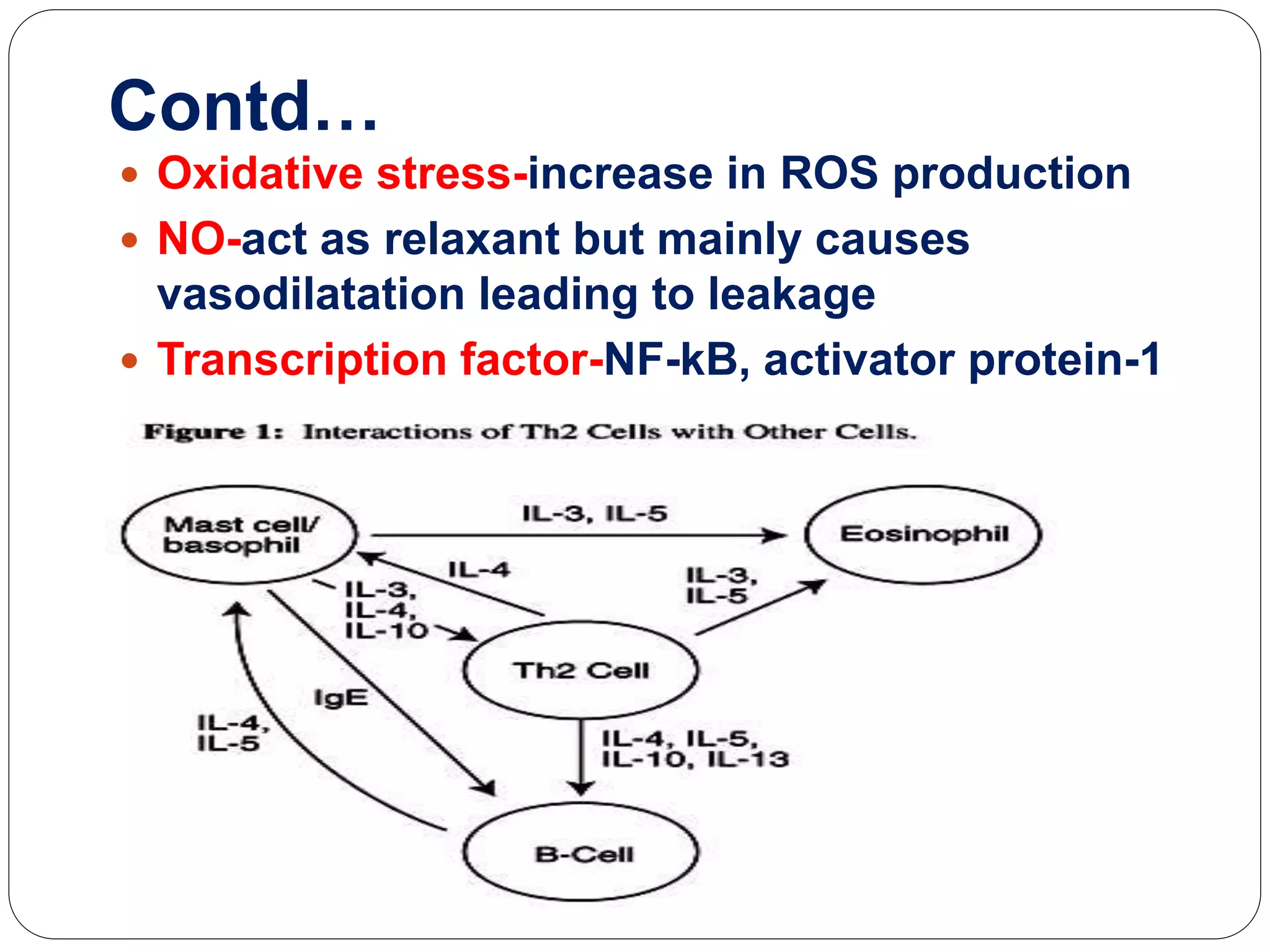
 Cytokines- IL-4, IL-5, IL-13-causes allergic
inflammation, IL-1beta, TNF-alpha-amplification of
inflammation, TSLP(Tymic stromal lmphopoietin)-
from epithelial cells act as chemoattractant for
TH2 cells, IL-10, IL-12-anti inflammatory
 Chemokines-attract inflammatory cells,
Eotaxin(CCL11) attract eosinophil via CCR3
receptor, TARC(CCL17) and MDC (CCL 22) from
epithelial cell attract TH2 cell via CCR4.
Contd…
 Oxidative stress-increase in ROS production
 NO-act as relaxant but mainly causes
vasodilatation leading to leakage
 Transcription factor-NF-kB, activator protein-1
Various inflammatory
mediators-
Effects of inflammation-
 Epithelium-dysfunction, damage, loss of
enzyme, loss of relaxant factors, loss of
barrier function
 Fibrosis- subepithelial fibrosis, basement
membrane thickening, deposition of III and V
collagen(by factors release from eosinophil)
 Smooth muscle- increased responsiveness to
constrictor mediators, in chronic cases
hypertrophy/hyperplasia by growth factors
released by inflammatory mediators
 Vascular response-vasodilation,
angiogenesis, microvascular leakage
Contd….
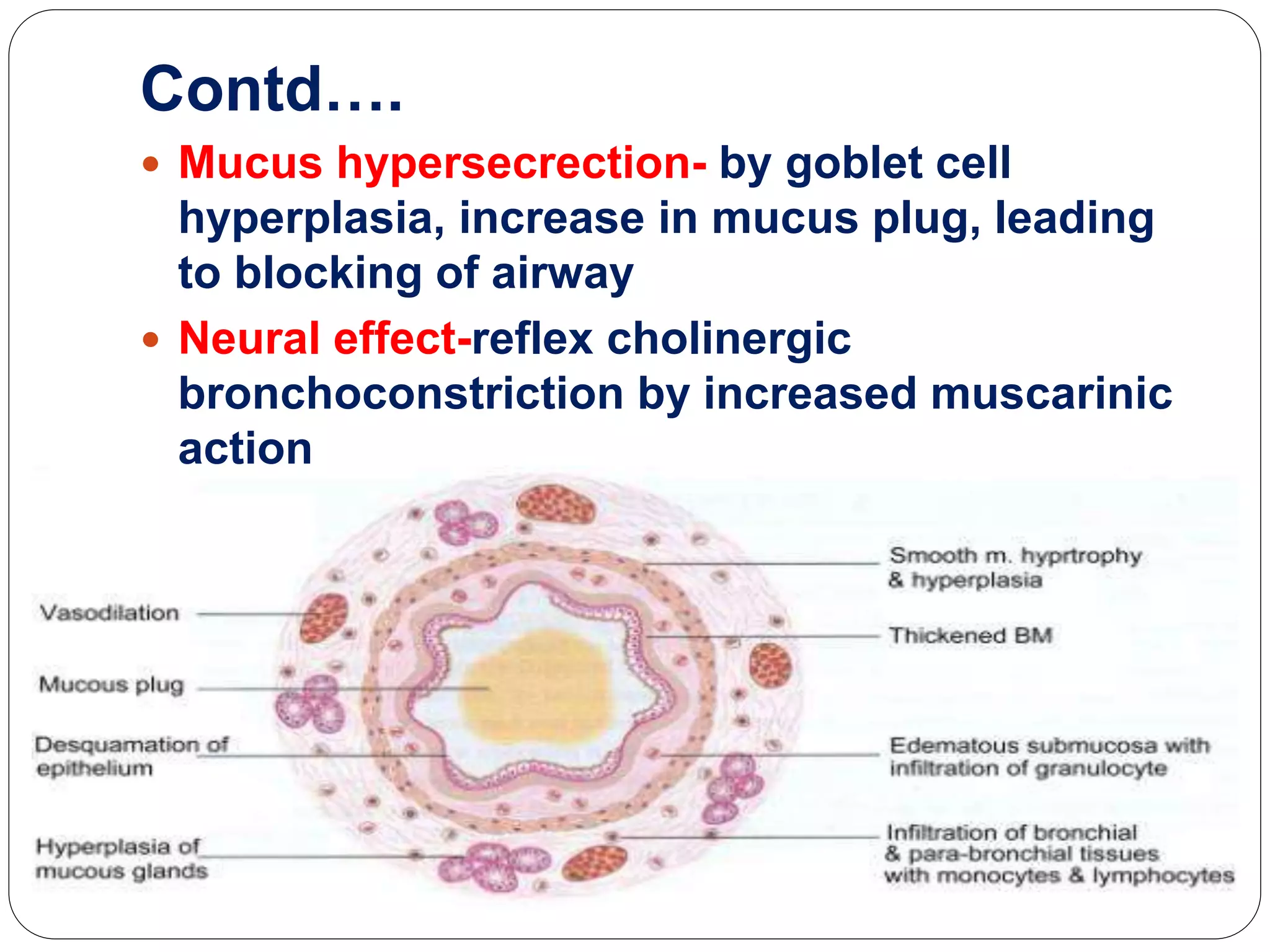
 Mucus hypersecrection- by goblet cell
hyperplasia, increase in mucus plug, leading
to blocking of airway
 Neural effect-reflex cholinergic
bronchoconstriction by increased muscarinic
action
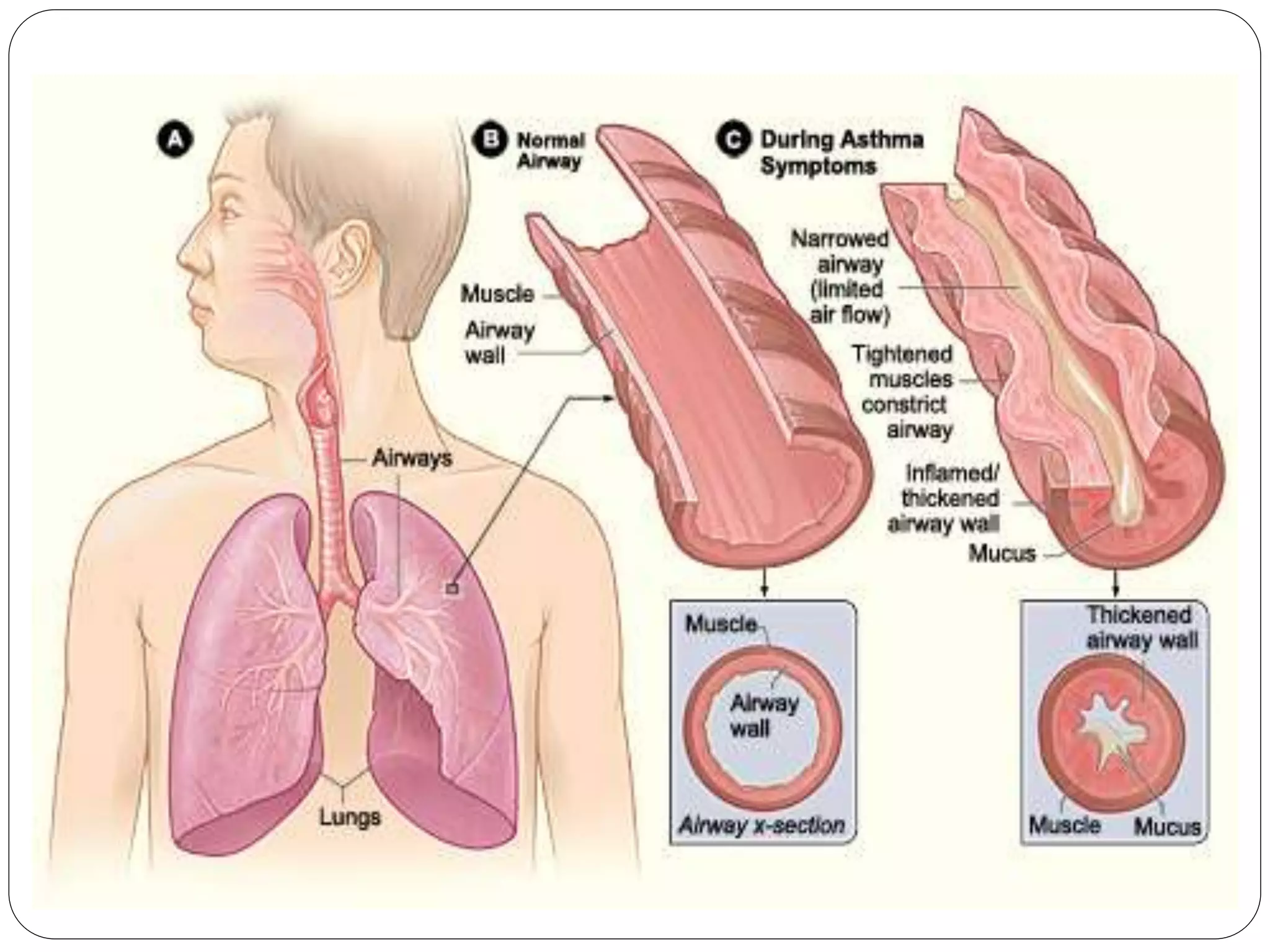
Airway remodeling:-
 Several changes can be seen
 Irreversible narrowing of lumen
 Decline in lung function
 Smooth muscle hyperplasia
 Fibrosis
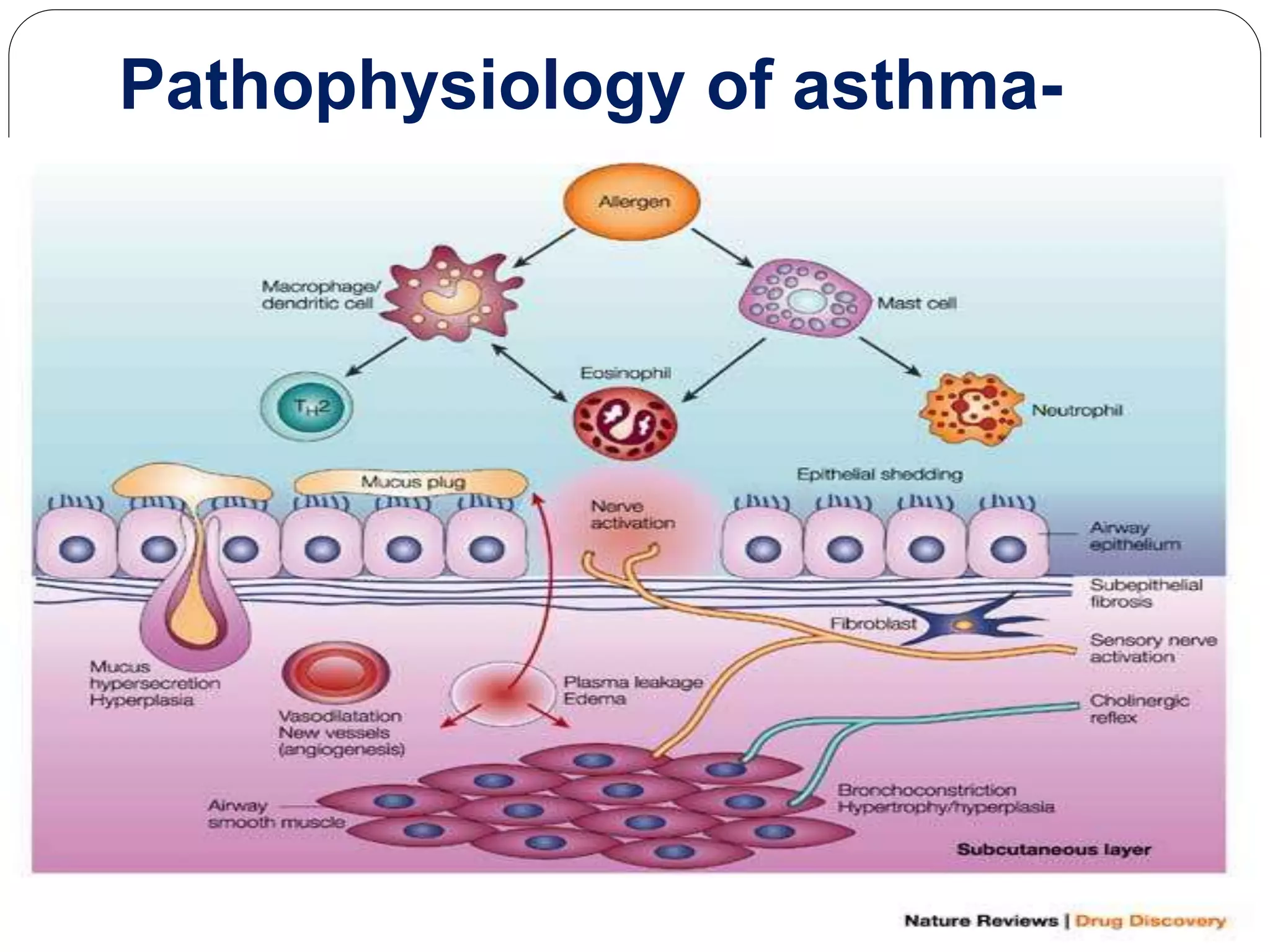
Pathophysiology of asthma-
Summary-
 Asthma is chronic inflammatory disorder with airway
hyperresponsiveness and airway obstruction.
 various risk factors and triggers
 Types-atopic and non-atopic
 Eosinophilic infiltration and thickening of B.M.
 Hyperplasia of gland and vasodilatation
 IgE dependant mast cell activation and release of
various mediators
 Early and late phase reactions with dendritic cell and
TH2 cell
 Various mediators-cytokine, chemokines, PGs etc
 Epithelium shedding, fibrosis, hypertrophy of muscle
and increased permeability
 Airway remodeling
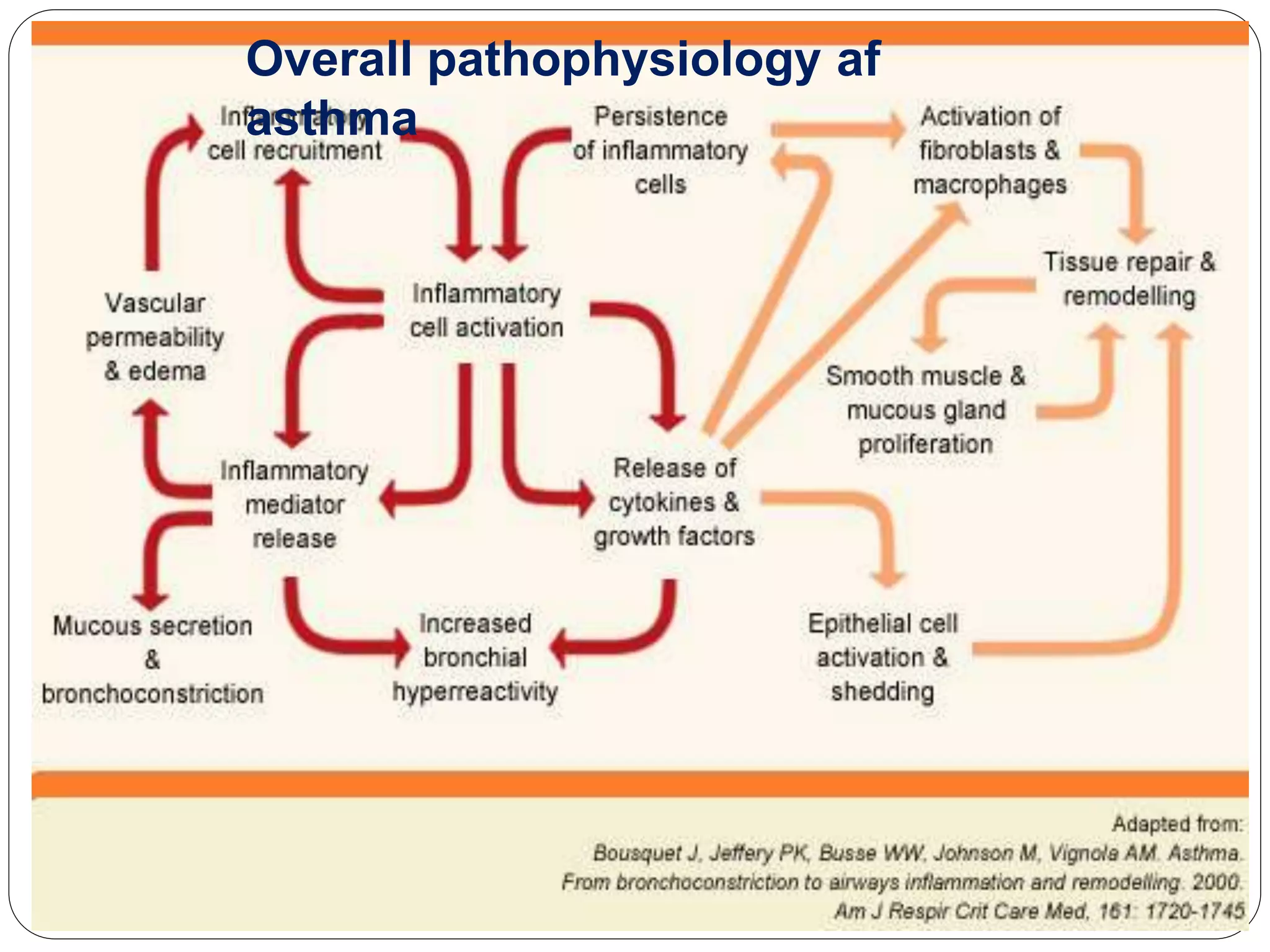
Overall pathophysiology af
asthma
Thank you

Pathophysiology of asthma

  • 1.
    By Jagadish Prasad Mishra 4thsem M.B.B.S. Pathophysiology of Asthma
  • 2.
    Asthma:- It is asyndrome characterized by airflow obstruction that varies markedly, both spontaneously and with treatment. Symptoms-wheezing, breathlessness, cough, chest tightness Prevalence-10-12% adults, 15% children Developed country>Developing country
  • 3.
    Risk Factors Endogenous Factors Geneticpredisposition Atopy Airway hyperresponsiveness Gender Ethnicity? Obesity? Viral infections Environmental Factors Indoor allergens Outdoor allergens occupational sensitizers Passive smoking Respiratory infections
  • 4.
    Triggers:-  Allergens-Dermatophagoides species(dustmite), environmental exposure, grass pollen, ragweed, tree pollen, fungal spores, pets furs, cockroaches etc  Virus infection-upper respiratory tract virus such as rhinovirus, respiratory syncytial virus, coronavirus etc  Pharmacological agents-beta blockers, ACE inhibitors, aspirin  Exercise(may exacerbate )  Physical factors-cold air, hyperventilation  Food  Air pollutants-sulfur dioxide, irritant gases
  • 5.
    Contd….  Irritants-household sprayspaint fumes  Occupational factors  Hormonal factors-fall in progesterone thyrotoxicosis  Gastrointestinal reflex  stress
  • 6.
    Types of asthma- Atopic asthma-classical type I IgE mediated hypersensitivity, allergen sensitization, seen from childhood, +ve history of asthma in family, skin test +ve  Non-atopic asthma-no allergen sensitization, no such history, skin test –ve, virus infection?  Drug induced asthma-sensitive to certain drugs like aspirin, NSAIDS etc  Occupational asthma-stimulants such as fumes, organic and chemical dusts(wood, cotton), gas(toluene), penicillin products etc  Exercise induced asthma-begins after exercise and stops after 30 minutes, worsen in cold and dry climate
  • 7.
    pathogenesis  pathology  Inflammation Inflammatory mediators  Effects of inflammation  Airway remodeling
  • 8.
    pathology  Chronic inflammationof lower airways  Mucosal infiltration of activated eosinophils and T lymphocytes  Thickening of basement membrane  Goblet cell metaplasia  Smooth muscle hypertrophy and thickening  Shedding of epithelium  Occlusion of airway by mucosal plug
  • 9.
    Contd..  Vasodilatation andleakage  Angiogenesis  Lung parenchyma not affected
  • 11.
    Inflammation  Allergic typeof inflammation occurs  From trachea to terminal bronchiole  Predominantly in bronchi  Airway hyperresponsiveness  Cells involved in inflammation-mast cell macrophages dendritic cell eosinophils neutrophils T lymphocytes and structural cells  Early phase reaction-mediated by granules release from mast cell, bronchoconstriction, vasodilation and increase permeability
  • 12.
    Contd…  Late phasereaction-inflammation with recruitment of eosinophils, T lymphocytes, neutrophils, macrophages etc and subsequent release of mediators.
  • 14.
    Contd…  Mast cell-activatedby IgE dependant mechanism, initiate acute bronchoconstriction action by releasing histamine, prostaglandinD2,leukotrienes etc  Macrophage-activated by low affinity IgE receptor, produce various inflammatory mediators  Dendritic cell-macrophage like major APC in airways, TSLP(Thymic stromal lymphopoietin) by epithelial cell induced chemokine release for TH2 cells
  • 15.
    Takes up antigen Peptide processing Migrate to lymphnode Peptide presentation to T cell Allergic specific T cell production Dendritic cell antigen presentation
  • 16.
    Contd…  Eosinophils-infiltration ischaracteristic feature of asthma, activated by IL-5, causes exacerbation of asthma by producing mediators  Neutrophil-activated and infiltration  T cell-release cytokines, causes recruitment of eosinophils, also causes maintenance of mast cells, in asthma TH2 cell produce IL- 5(eosinophil recruitment) IL-4, IL-13(increase IgE production and mucus secretion).CD4+ cell also involved  Structural cells-epithelial cells(TSLP), fibroblasts etc
  • 17.
    Inflammatory mediators-  Histamine,prostaglandin D2, cysteinly leukotrienes-cause smooth muscle contraction, increased microvascular leakage, increased mucus secretion, act as chemoattractant for inflammatory cells  Cytokines- IL-4, IL-5, IL-13-causes allergic inflammation, IL-1beta, TNF-alpha-amplification of inflammation, TSLP(Tymic stromal lmphopoietin)- from epithelial cells act as chemoattractant for TH2 cells, IL-10, IL-12-anti inflammatory  Chemokines-attract inflammatory cells, Eotaxin(CCL11) attract eosinophil via CCR3 receptor, TARC(CCL17) and MDC (CCL 22) from epithelial cell attract TH2 cell via CCR4.
  • 18.
    Contd…  Oxidative stress-increasein ROS production  NO-act as relaxant but mainly causes vasodilatation leading to leakage  Transcription factor-NF-kB, activator protein-1
  • 19.
  • 20.
    Effects of inflammation- Epithelium-dysfunction, damage, loss of enzyme, loss of relaxant factors, loss of barrier function  Fibrosis- subepithelial fibrosis, basement membrane thickening, deposition of III and V collagen(by factors release from eosinophil)  Smooth muscle- increased responsiveness to constrictor mediators, in chronic cases hypertrophy/hyperplasia by growth factors released by inflammatory mediators  Vascular response-vasodilation, angiogenesis, microvascular leakage
  • 21.
    Contd….  Mucus hypersecrection-by goblet cell hyperplasia, increase in mucus plug, leading to blocking of airway  Neural effect-reflex cholinergic bronchoconstriction by increased muscarinic action
  • 23.
    Airway remodeling:-  Severalchanges can be seen  Irreversible narrowing of lumen  Decline in lung function  Smooth muscle hyperplasia  Fibrosis
  • 25.
  • 26.
    Summary-  Asthma ischronic inflammatory disorder with airway hyperresponsiveness and airway obstruction.  various risk factors and triggers  Types-atopic and non-atopic  Eosinophilic infiltration and thickening of B.M.  Hyperplasia of gland and vasodilatation  IgE dependant mast cell activation and release of various mediators  Early and late phase reactions with dendritic cell and TH2 cell  Various mediators-cytokine, chemokines, PGs etc  Epithelium shedding, fibrosis, hypertrophy of muscle and increased permeability  Airway remodeling
  • 27.
  • 28.