Marine Automation 2
Bachelor of Science in Marine Engineering
-Principle of AC
Generator
-Parts of AC
Generator
Components of AC Generator
Field
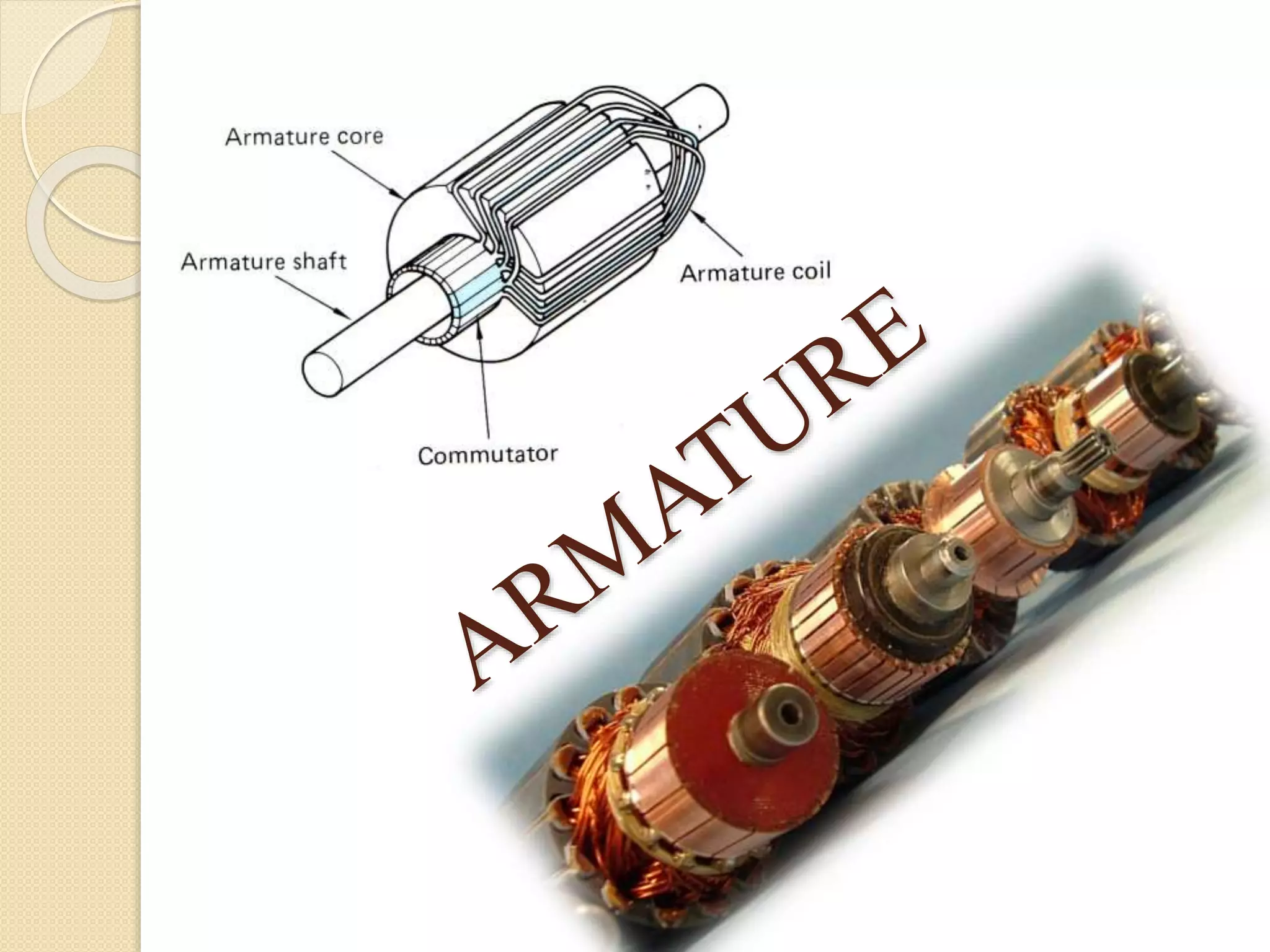
Armature
Prime mover
Rotor
Stator
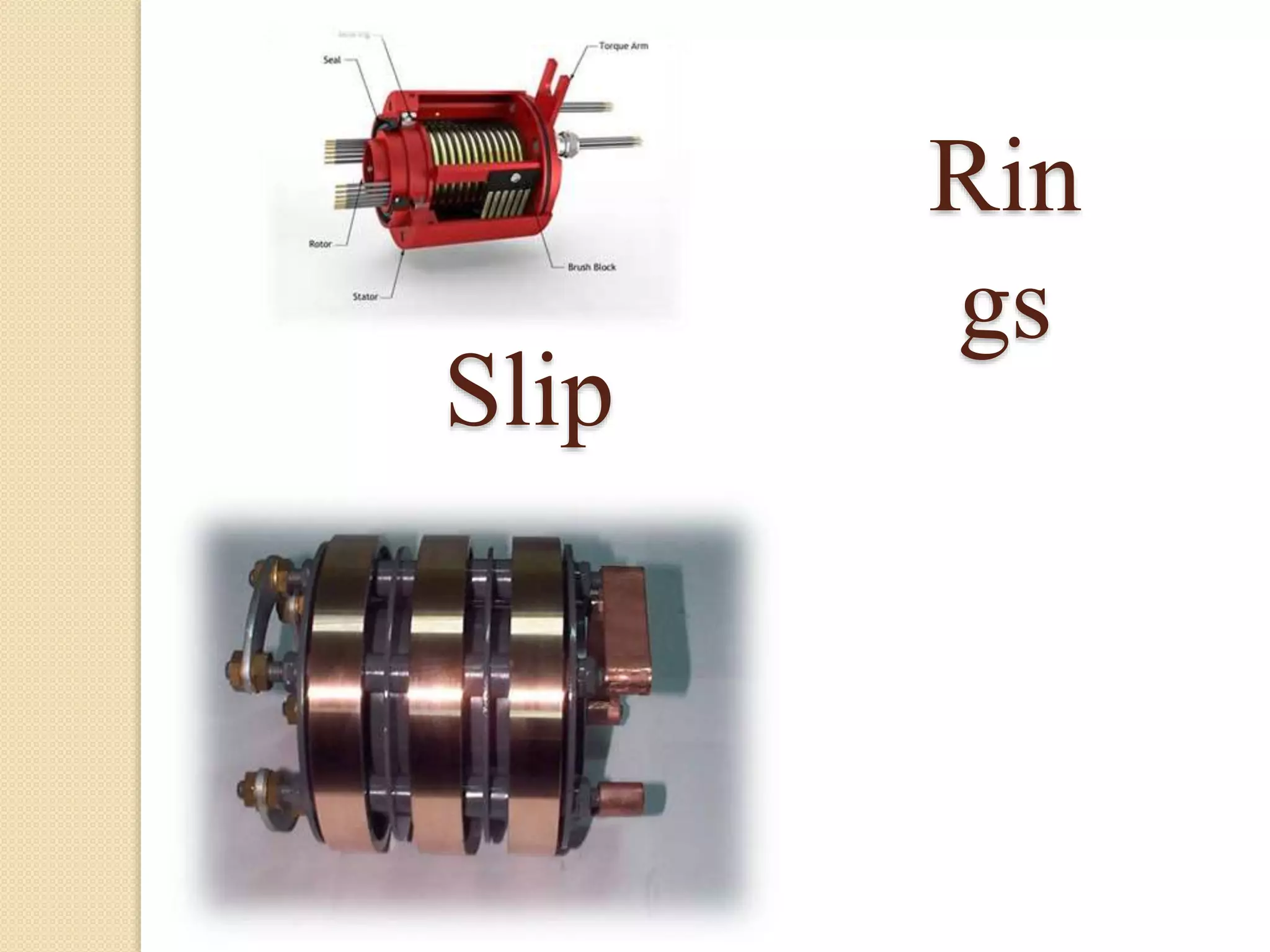
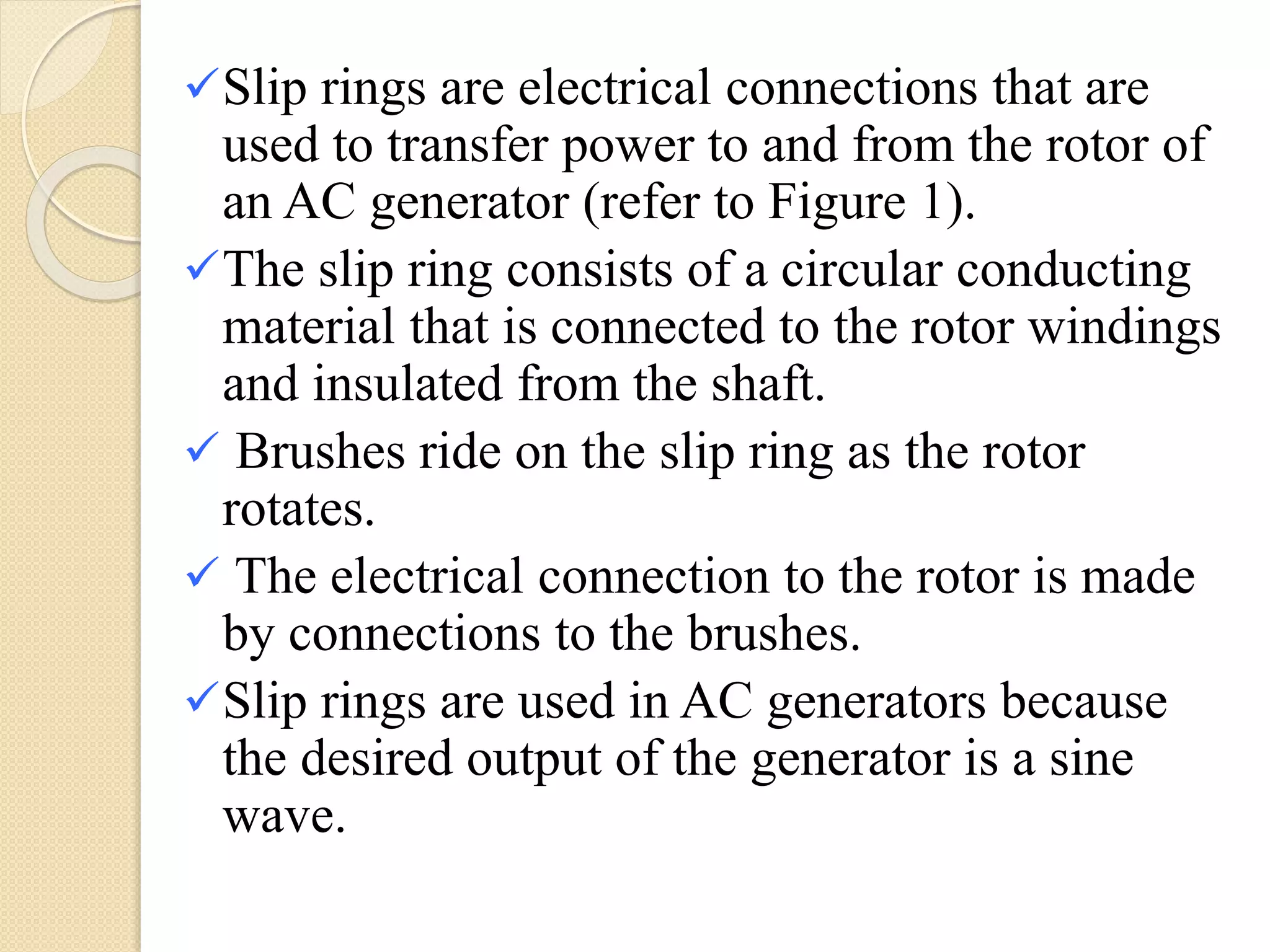
Slip rings
FIELD
The field in an AC generator consists of
coils of conductors within the generator that
receive a voltage from a source (called
excitation) and produce a magnetic flux.
The magnetic flux in the field cuts the
armature to produce a voltage. This voltage
is ultimately the output voltage of the AC
generator.
The armature is the part of an AC gener
ator in which voltage is produced.
This component consists of many coils of
wire that are large enough to carry the full-
load current of the generator
The prime mover is the component that is
used to drive the AC generator.
The prime mover may be any type of
rotating machine, such as a diesel engine, a
steam turbine, or a motor.
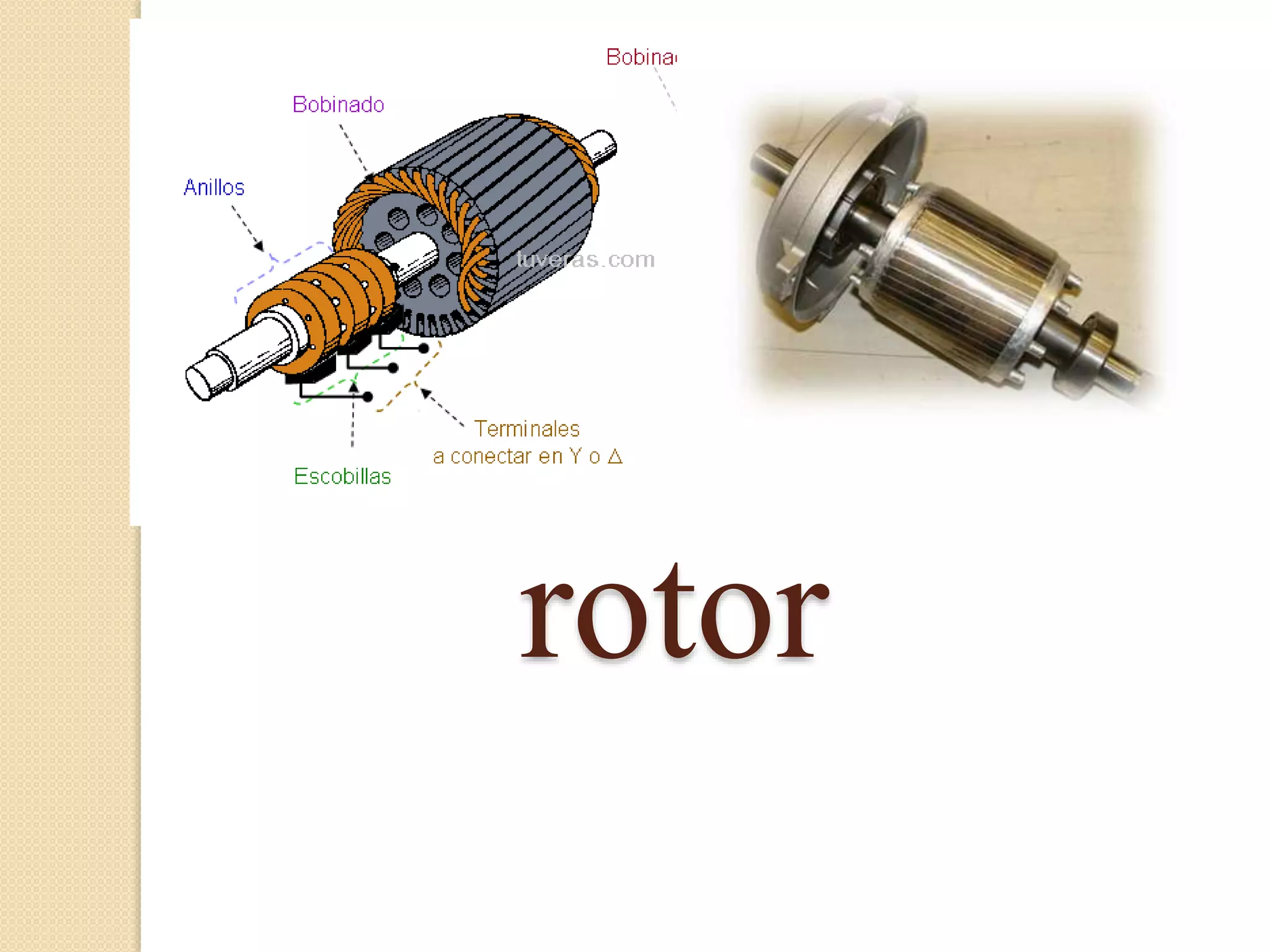
rotor
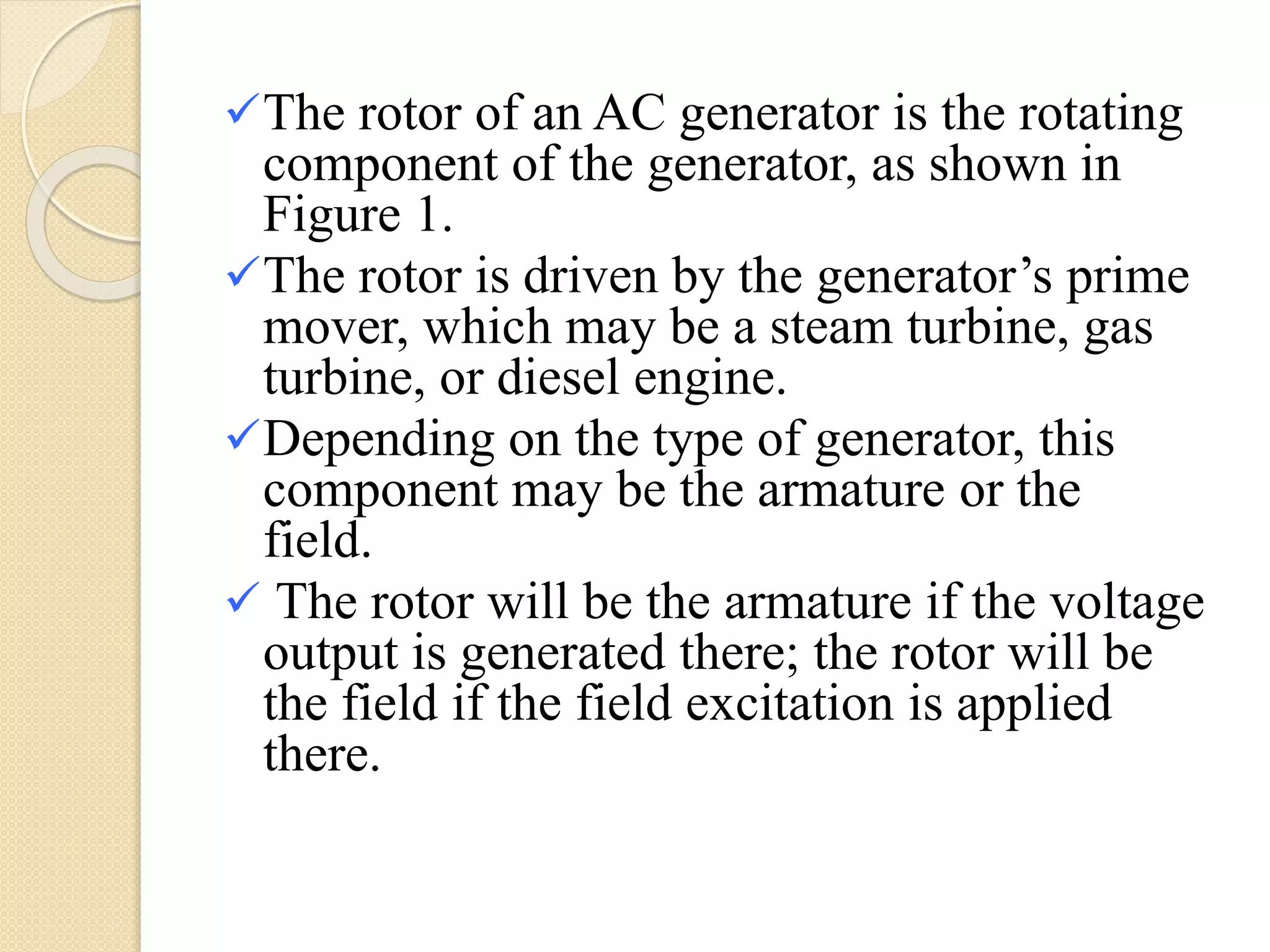
The rotor of an AC generator is the rotating
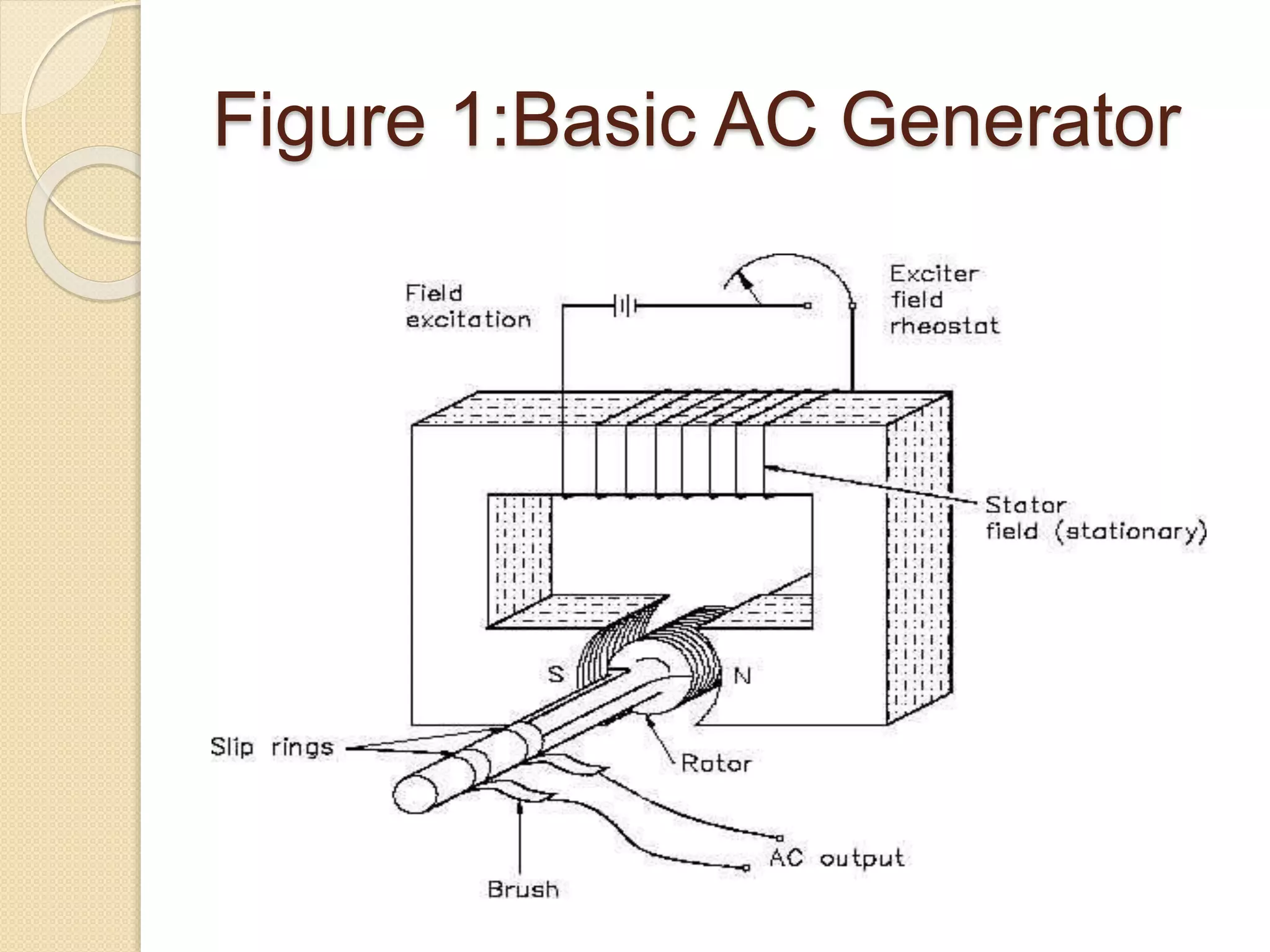
component of the generator, as shown in
Figure 1.
The rotor is driven by the generator’s prime
mover, which may be a steam turbine, gas
turbine, or diesel engine.
Depending on the type of generator, this
component may be the armature or the
field.
 The rotor will be the armature if the voltage
output is generated there; the rotor will be
the field if the field excitation is applied
there.
Figure 1:Basic AC Generator
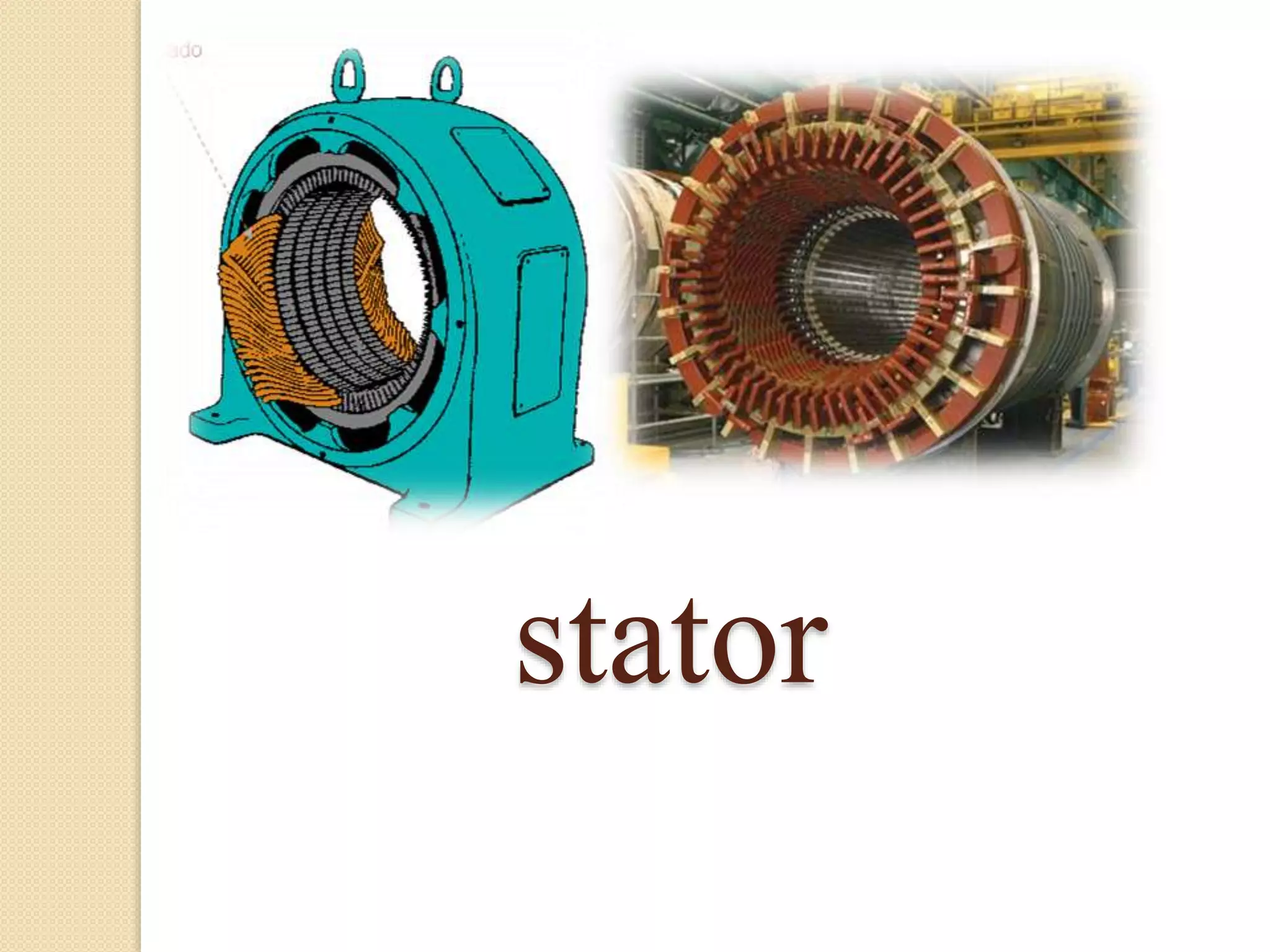
stator
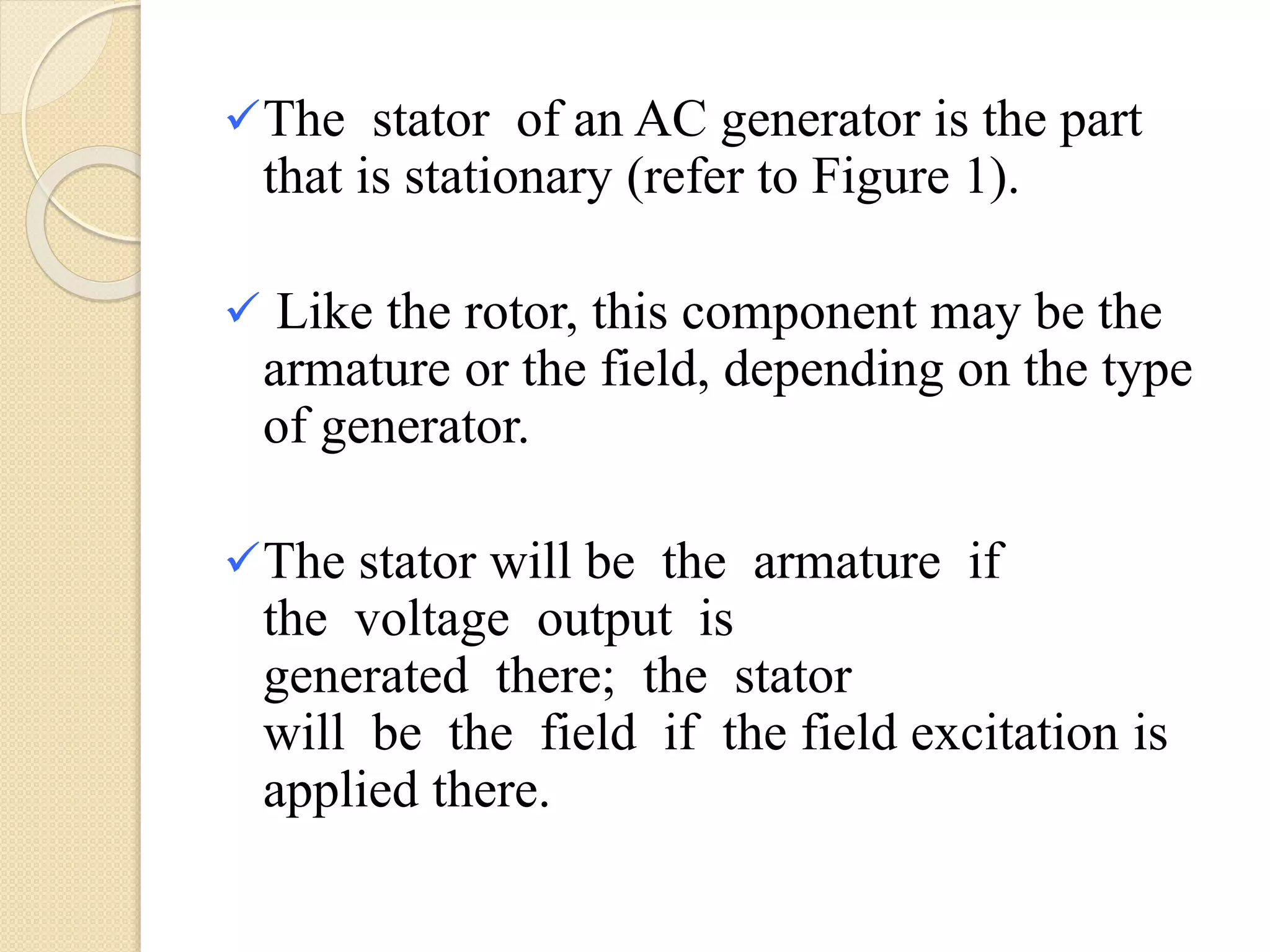
The stator of an AC generator is the part
that is stationary (refer to Figure 1).
 Like the rotor, this component may be the
armature or the field, depending on the type
of generator.
The stator will be the armature if
the voltage output is
generated there; the stator
will be the field if the field excitation is
applied there.
Slip
Rin
gs
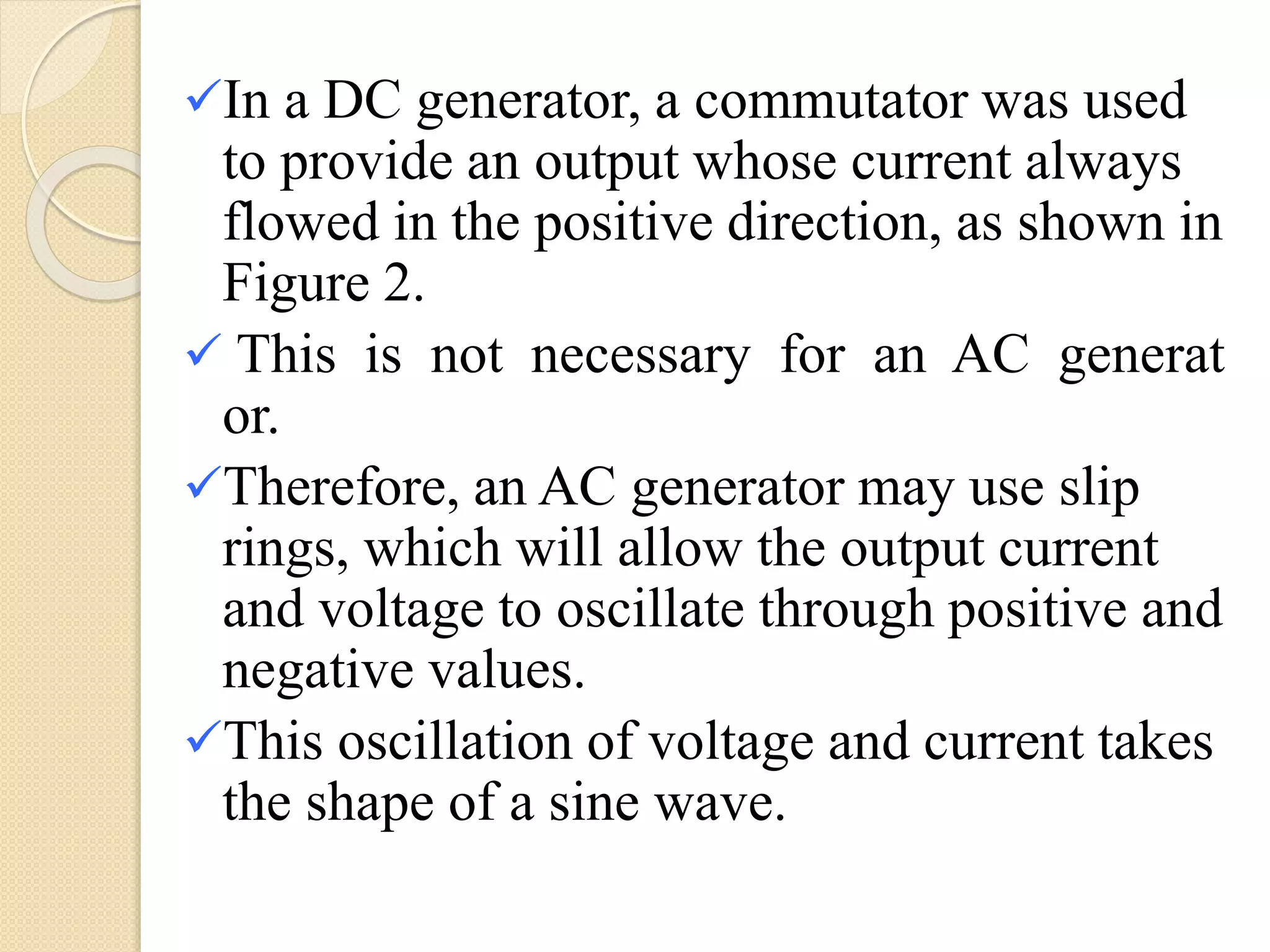
Slip rings are electrical connections that are
used to transfer power to and from the rotor of
an AC generator (refer to Figure 1).
The slip ring consists of a circular conducting
material that is connected to the rotor windings
and insulated from the shaft.
 Brushes ride on the slip ring as the rotor
rotates.
 The electrical connection to the rotor is made
by connections to the brushes.
Slip rings are used in AC generators because
the desired output of the generator is a sine
wave.
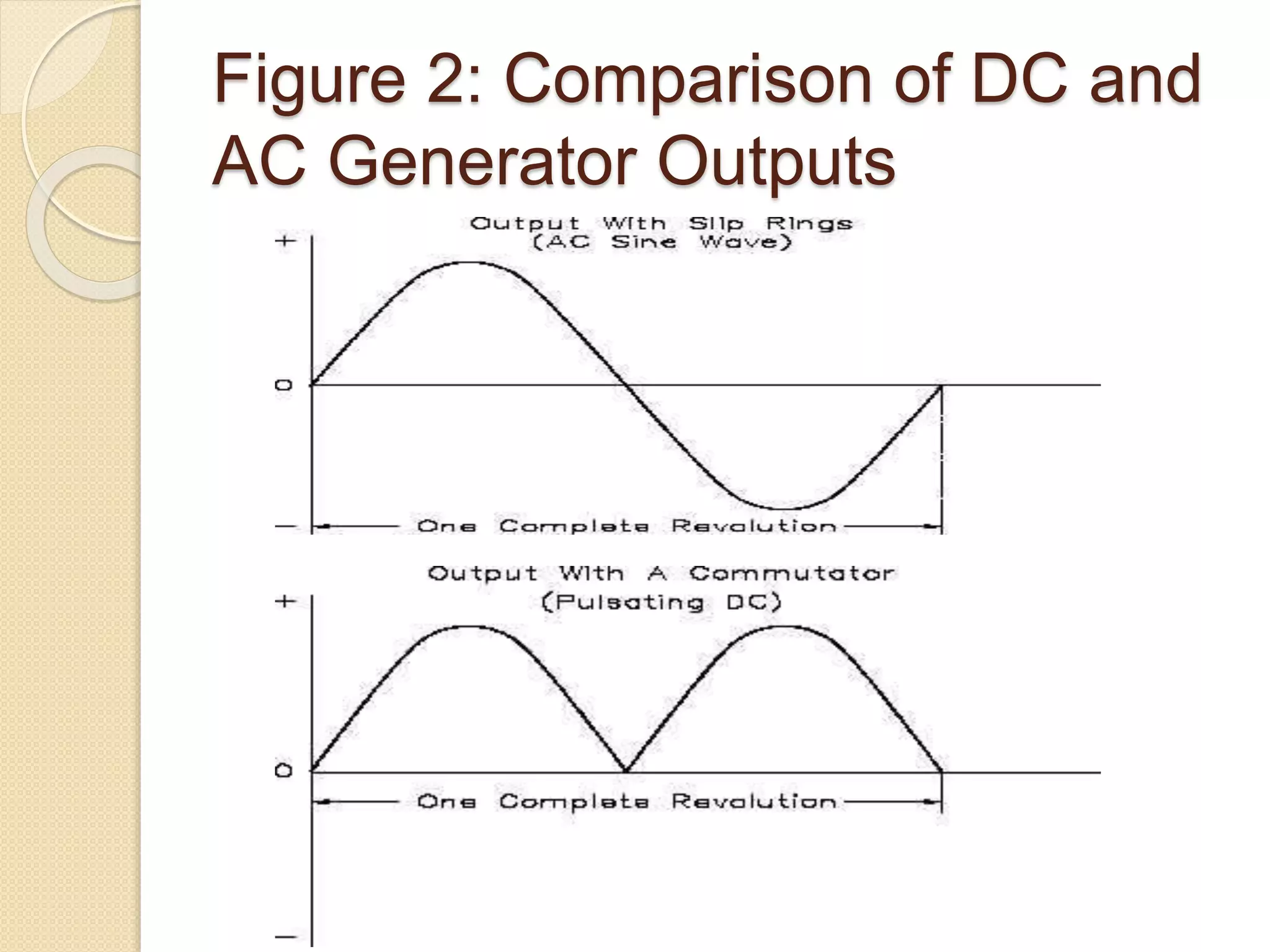
In a DC generator, a commutator was used
to provide an output whose current always
flowed in the positive direction, as shown in
Figure 2.
 This is not necessary for an AC generat
or.
Therefore, an AC generator may use slip
rings, which will allow the output current
and voltage to oscillate through positive and
negative values.
This oscillation of voltage and current takes
the shape of a sine wave.
Figure 2: Comparison of DC and
AC Generator Outputs
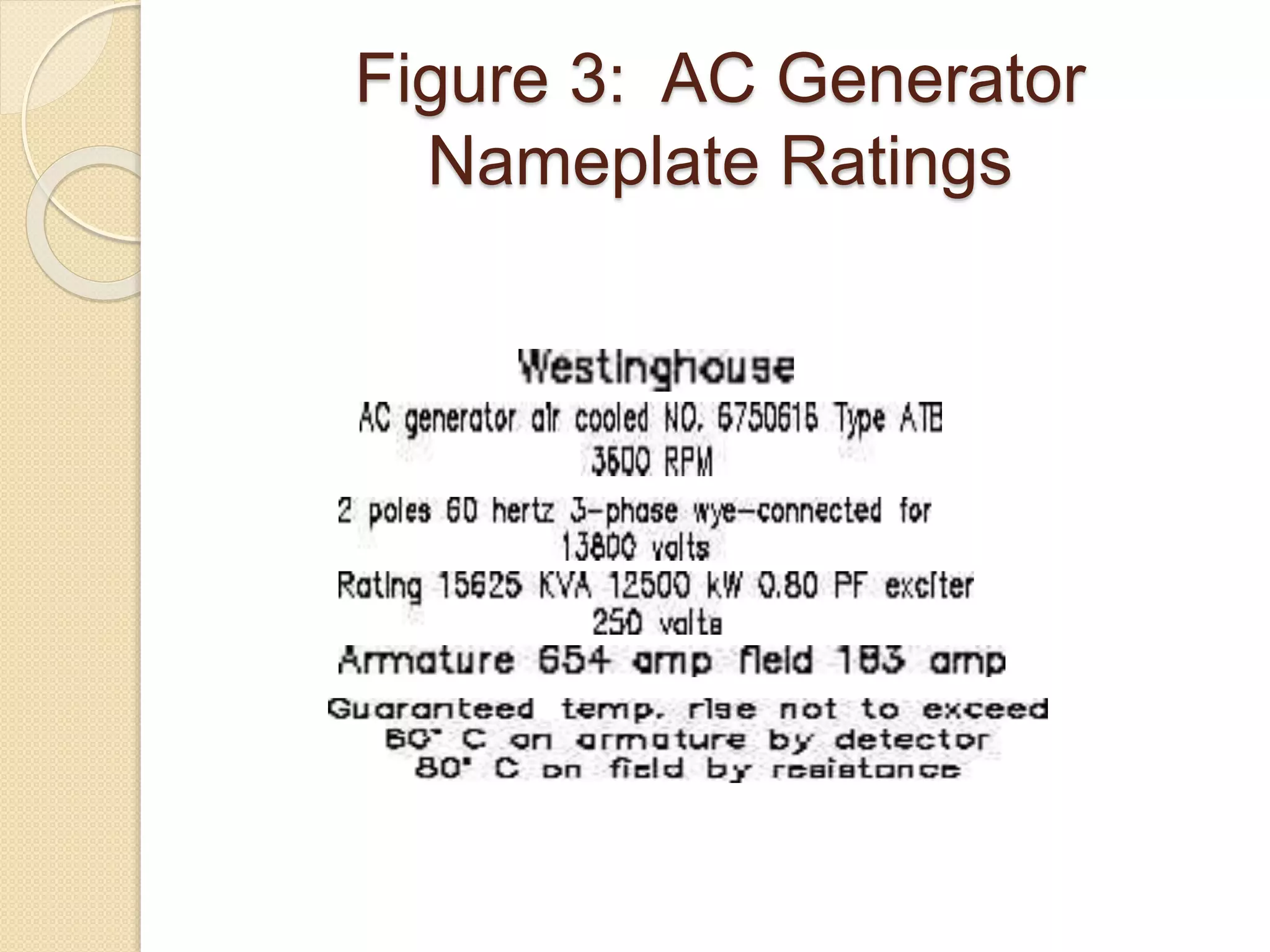
Typical name plate data for an AC generator
(Figure 3) includes:
 (1) manufacturer;
 (2) serial number and type number;
 (3) speed (rpm), number of poles, frequency of output,
number of phases, and maximum supply voltage;
 (4) capacity rating in KVA and kW at a specified power
factor and maximum output voltage;
 (5) armature and field current per phase; and
 (6) maximum temperature rise.
Power (kW) ratings of an AC generator
are based on the ability of the prime mover to
overcome generator losses and the ability of
the machine to dissipate the internally generated
heat.
The current rating of an AC generator is based on the
insulation rating of the machine.
rat
in
gs
Figure 3: AC Generator
Nameplate Ratings
 there are two types of AC generators:
1.) the stationary field, rotating armature;
2.) and the rotating field, stationary
armature.
Small AC generators usually have a stationary
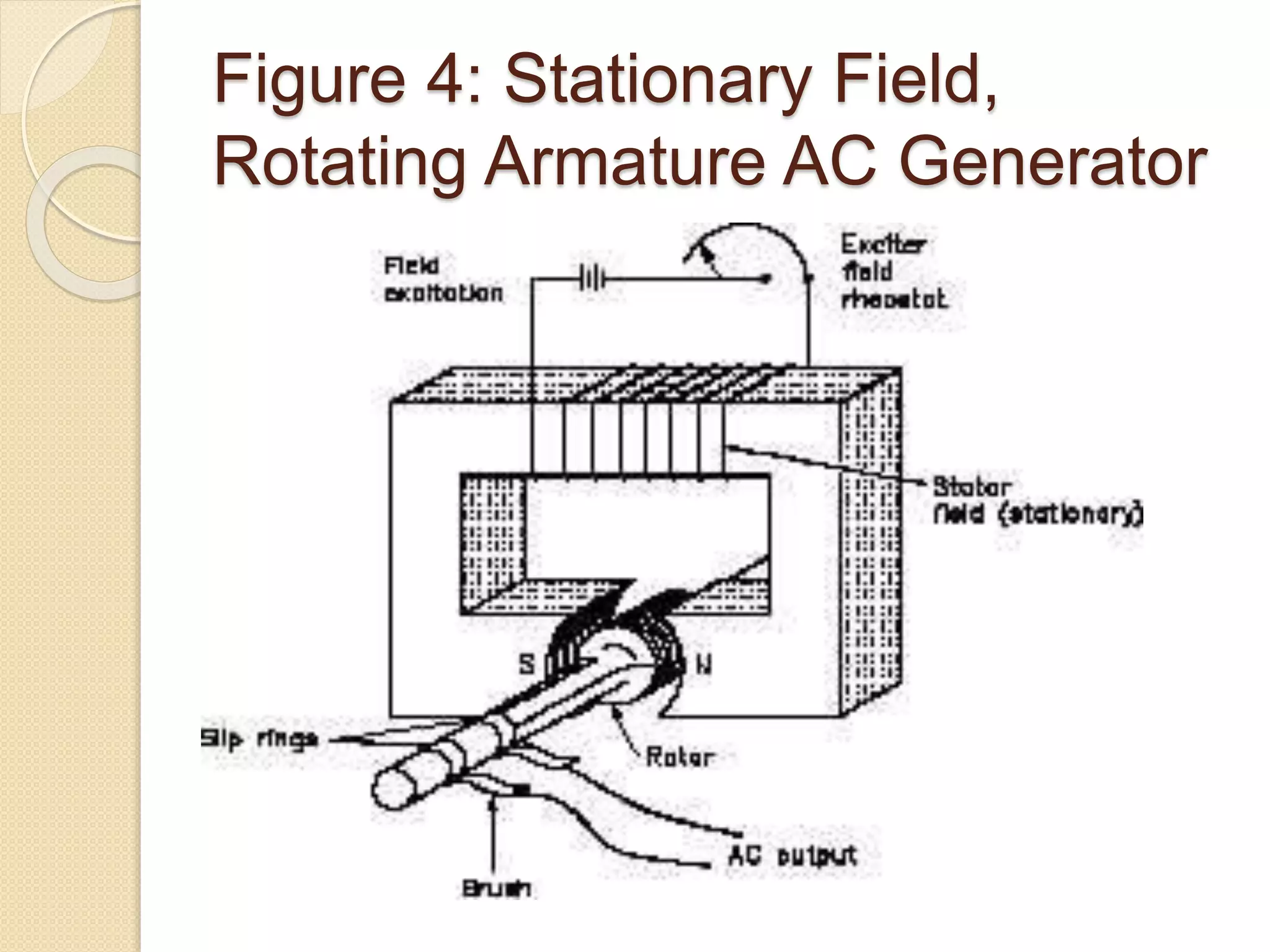
field and a rotating armature (Figure 4).
 One important disadvantage to this arrangement is
that the slip-ring and brush assembly is in series
with
the load circuits and, because of worn or dirty
components, may interrupt the flow of current.
Figure 4: Stationary Field,
Rotating Armature AC Generator
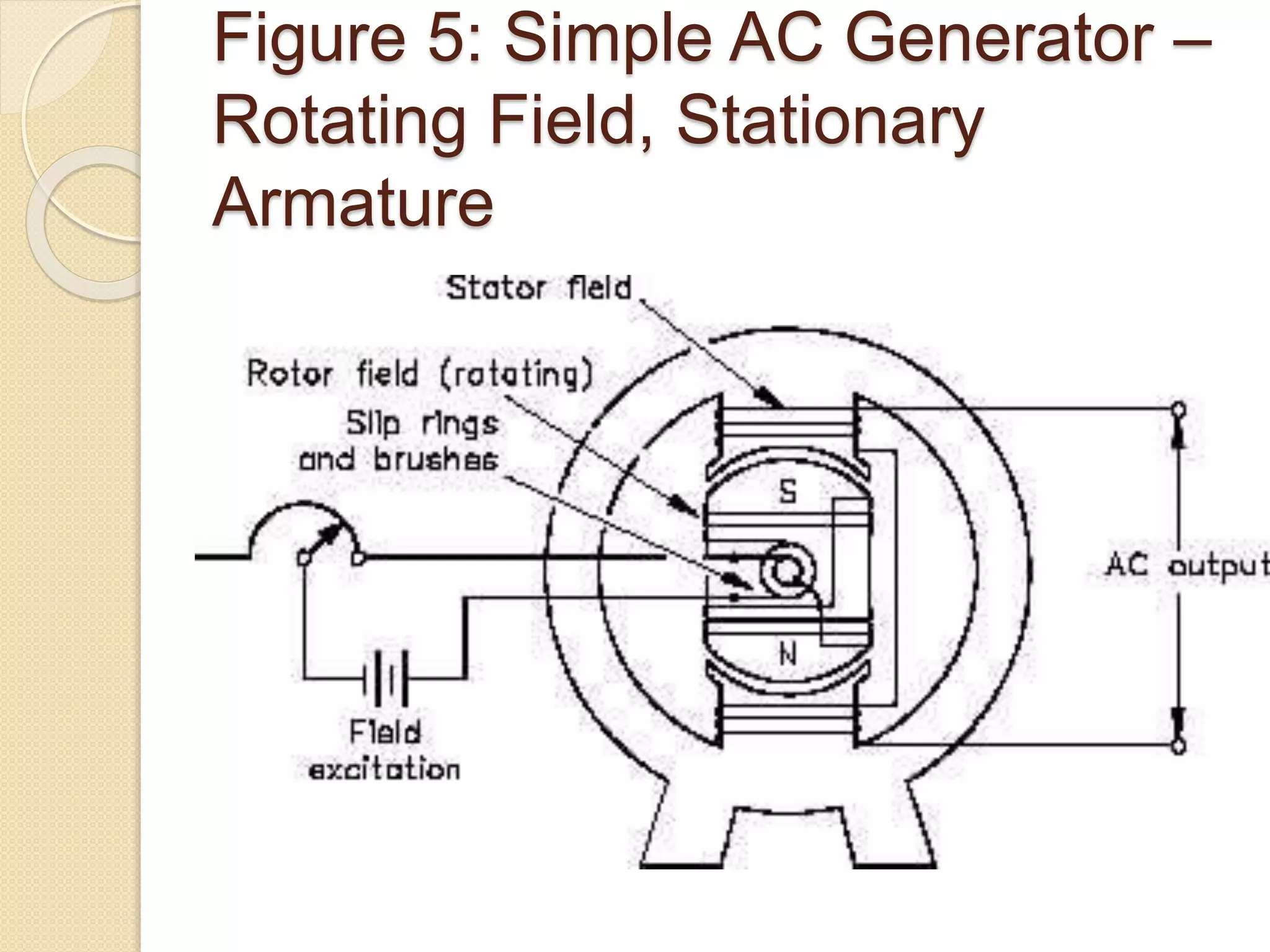
 If DC field excitation is connected to the rotor,
the stationary coils
will have AC induced into them (Figure 5).
 This arrangement is
called a rotating field, stationary armature AC
generator. The rotating field, stationary
armature type AC generator is used when large
power generation is involved.
 In this type of generator, a DC source is supplied
to the rotating field coils, which
produces a magnetic field around the rotating
element.
 As the rotor is turned by the prime mover, the field
will cut the conductors of the
stationary armature, and an EMF will be induced
into the armature windings.
 This type of AC generator has several
advantages over the stationary field,
rotating armature AC generator:
(1) a load can be connected to the
armature without moving contacts in the
circuit;
(2) it is much easier to insulate stator
fields than rotating fields; and
(3) much higher voltages and currents
can be generated.
Figure 5: Simple AC Generator –
Rotating Field, Stationary
Armature
PArts and Principle of AC Generator

PArts and Principle of AC Generator

  • 1.
    Marine Automation 2 Bachelorof Science in Marine Engineering
  • 2.
  • 3.
    Components of ACGenerator Field Armature Prime mover Rotor Stator Slip rings
  • 4.
  • 5.
    The field inan AC generator consists of coils of conductors within the generator that receive a voltage from a source (called excitation) and produce a magnetic flux. The magnetic flux in the field cuts the armature to produce a voltage. This voltage is ultimately the output voltage of the AC generator.
  • 7.
    The armature isthe part of an AC gener ator in which voltage is produced. This component consists of many coils of wire that are large enough to carry the full- load current of the generator
  • 9.
    The prime moveris the component that is used to drive the AC generator. The prime mover may be any type of rotating machine, such as a diesel engine, a steam turbine, or a motor.
  • 10.
  • 11.
    The rotor ofan AC generator is the rotating component of the generator, as shown in Figure 1. The rotor is driven by the generator’s prime mover, which may be a steam turbine, gas turbine, or diesel engine. Depending on the type of generator, this component may be the armature or the field.  The rotor will be the armature if the voltage output is generated there; the rotor will be the field if the field excitation is applied there.
  • 12.
  • 13.
  • 14.
    The stator ofan AC generator is the part that is stationary (refer to Figure 1).  Like the rotor, this component may be the armature or the field, depending on the type of generator. The stator will be the armature if the voltage output is generated there; the stator will be the field if the field excitation is applied there.
  • 15.
  • 16.
    Slip rings areelectrical connections that are used to transfer power to and from the rotor of an AC generator (refer to Figure 1). The slip ring consists of a circular conducting material that is connected to the rotor windings and insulated from the shaft.  Brushes ride on the slip ring as the rotor rotates.  The electrical connection to the rotor is made by connections to the brushes. Slip rings are used in AC generators because the desired output of the generator is a sine wave.
  • 17.
    In a DCgenerator, a commutator was used to provide an output whose current always flowed in the positive direction, as shown in Figure 2.  This is not necessary for an AC generat or. Therefore, an AC generator may use slip rings, which will allow the output current and voltage to oscillate through positive and negative values. This oscillation of voltage and current takes the shape of a sine wave.
  • 18.
    Figure 2: Comparisonof DC and AC Generator Outputs
  • 20.
    Typical name platedata for an AC generator (Figure 3) includes:  (1) manufacturer;  (2) serial number and type number;  (3) speed (rpm), number of poles, frequency of output, number of phases, and maximum supply voltage;  (4) capacity rating in KVA and kW at a specified power factor and maximum output voltage;  (5) armature and field current per phase; and  (6) maximum temperature rise. Power (kW) ratings of an AC generator are based on the ability of the prime mover to overcome generator losses and the ability of the machine to dissipate the internally generated heat. The current rating of an AC generator is based on the insulation rating of the machine. rat in gs
  • 21.
    Figure 3: ACGenerator Nameplate Ratings
  • 22.
     there aretwo types of AC generators: 1.) the stationary field, rotating armature; 2.) and the rotating field, stationary armature. Small AC generators usually have a stationary field and a rotating armature (Figure 4).  One important disadvantage to this arrangement is that the slip-ring and brush assembly is in series with the load circuits and, because of worn or dirty components, may interrupt the flow of current.
  • 23.
    Figure 4: StationaryField, Rotating Armature AC Generator
  • 24.
     If DCfield excitation is connected to the rotor, the stationary coils will have AC induced into them (Figure 5).  This arrangement is called a rotating field, stationary armature AC generator. The rotating field, stationary armature type AC generator is used when large power generation is involved.  In this type of generator, a DC source is supplied to the rotating field coils, which produces a magnetic field around the rotating element.  As the rotor is turned by the prime mover, the field will cut the conductors of the stationary armature, and an EMF will be induced into the armature windings.
  • 25.
     This typeof AC generator has several advantages over the stationary field, rotating armature AC generator: (1) a load can be connected to the armature without moving contacts in the circuit; (2) it is much easier to insulate stator fields than rotating fields; and (3) much higher voltages and currents can be generated.
  • 26.
    Figure 5: SimpleAC Generator – Rotating Field, Stationary Armature