Downloaded 127 times

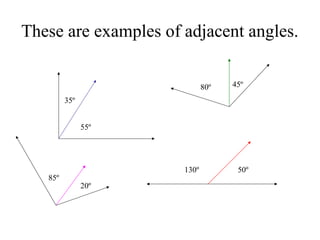

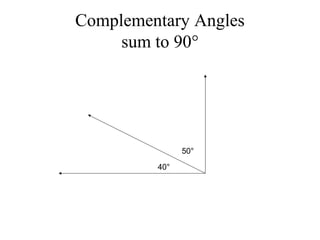

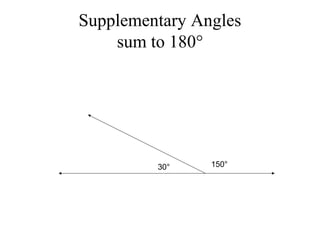





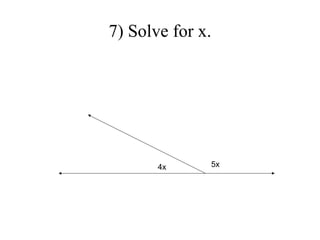


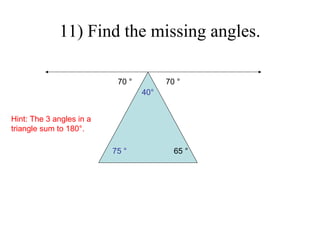


1) The document defines and provides examples of different types of angles including adjacent angles, complementary angles, supplementary angles, vertical angles, and angles formed when parallel lines are cut by a transversal. 2) It then provides practice problems involving calculating missing angles using properties such as angles summing to 90, 180 degrees, and the interior angles of triangles summing to 180 degrees. 3) The final problems involve identifying congruent, supplementary, and corresponding angles related to two parallel lines cut by a transversal.


![Angle Relations Comp & Supple Vertical Adjacent (Teacher) [Autosaved].pptx](https://cdn.slidesharecdn.com/ss_thumbnails/anglerelationscompsuppleverticaladjacentteacherautosaved-241209052056-6677bf45-thumbnail.jpg?width=640&height=640&fit=bounds)


