Ink & Paper examination
PALLAVI KUMARI
Ink
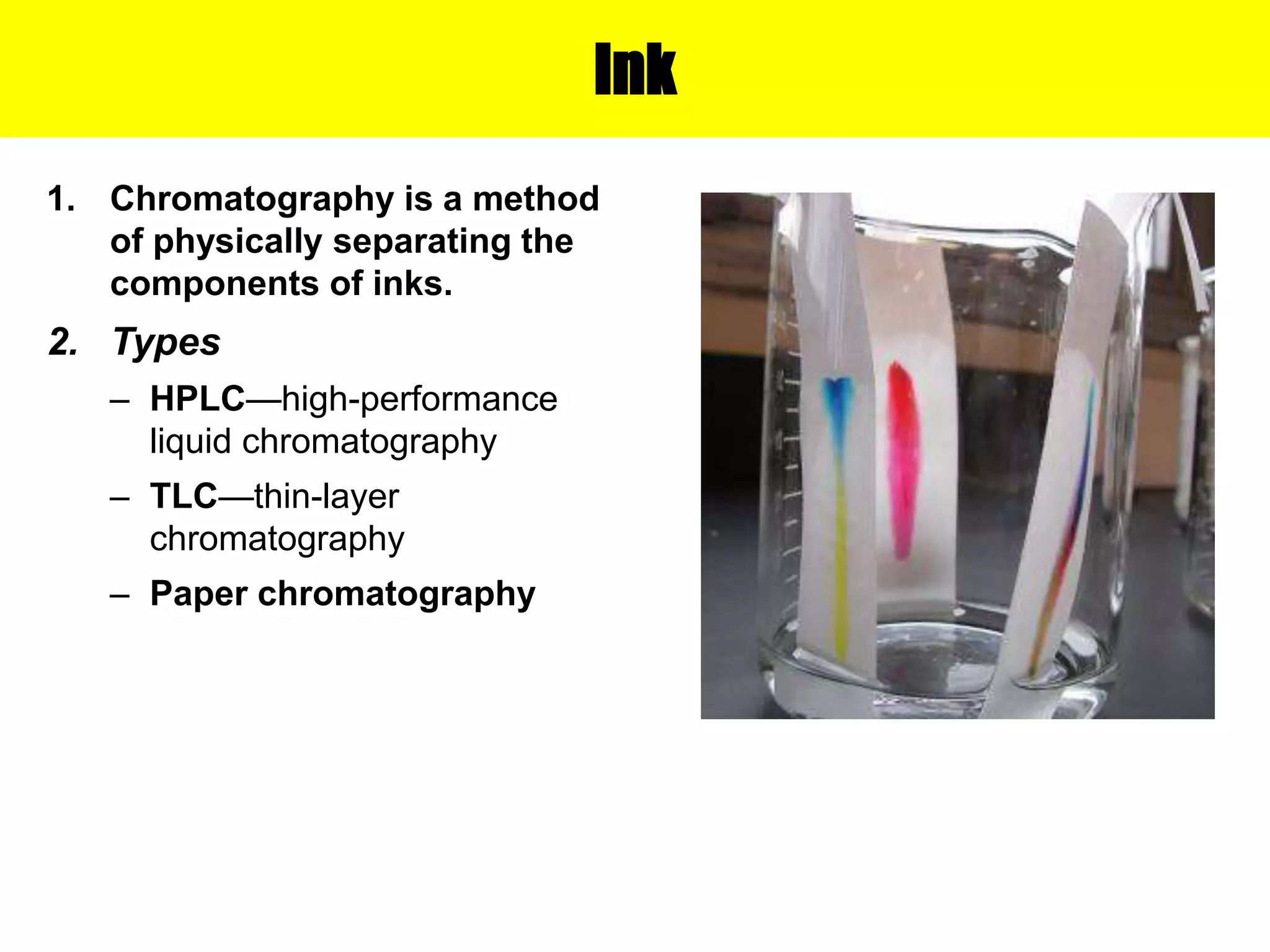
1. Chromatography is a method
of physically separating the
components of inks.
2. Types
– HPLC—high-performance
liquid chromatography
– TLC—thin-layer
chromatography
– Paper chromatography
Paper Chromatography of Ink
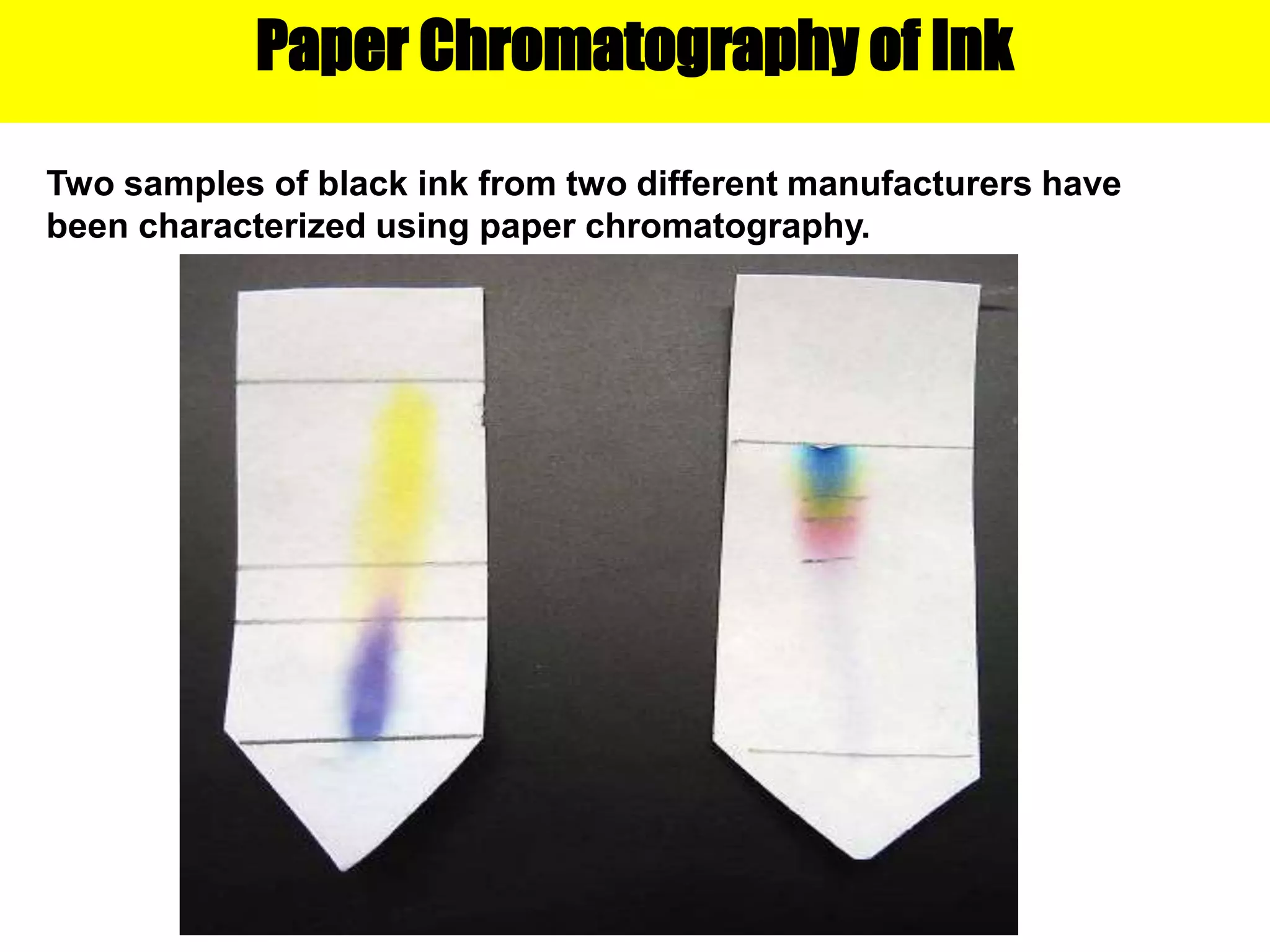
Two samples of black ink from two different manufacturers have
been characterized using paper chromatography.
Retention Factor (Rf)
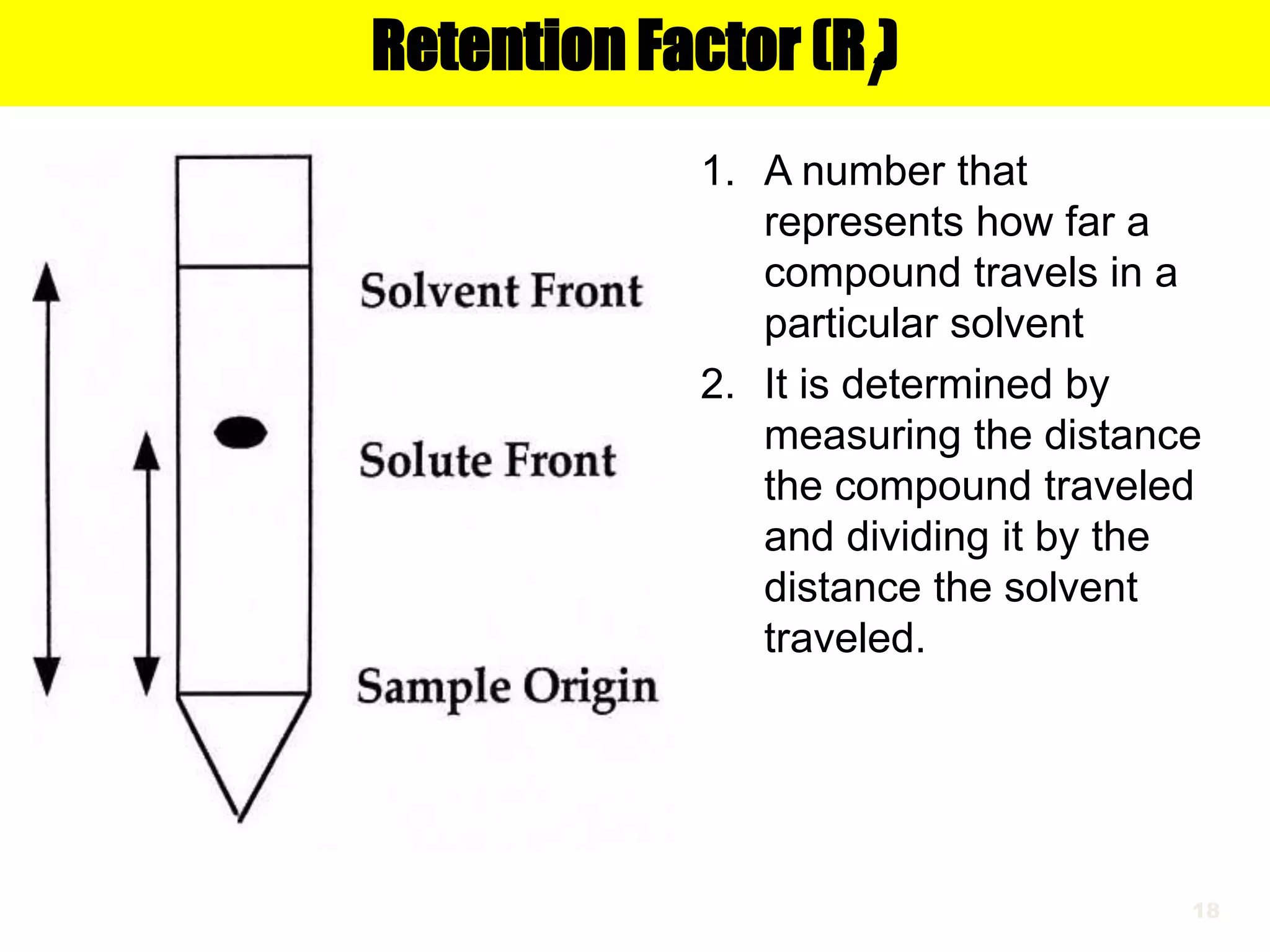
1. A number that
represents how far a
compound travels in a
particular solvent
2. It is determined by
measuring the distance
the compound traveled
and dividing it by the
distance the solvent
traveled.
18
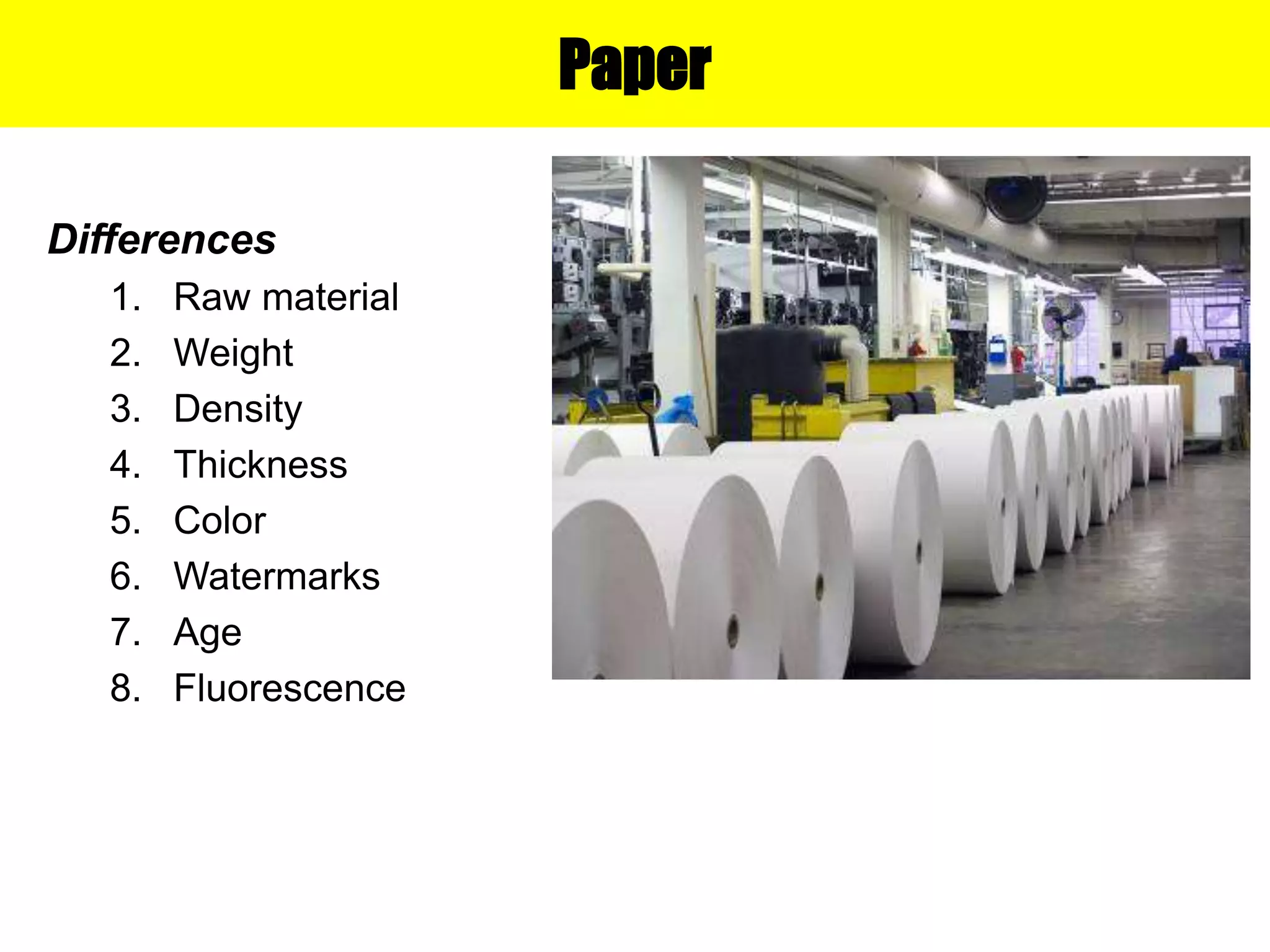
Paper
Differences
1. Raw material
2. Weight
3. Density
4. Thickness
5. Color
6. Watermarks
7. Age
8. Fluorescence
• What are obliterations
• What is IR luminescence
• Why the same ink used for obliterated writing
not possible to decipher
FAQ'S
References
• Morris, R. (2000). Forensic Handwriting Identification: Fundamental
Concepts and Principles. Academic Press.
• O. Hilton, Scientific Examination of Questioned Documents, CRC Press,
Boca Raton (1982).
• E. David, The Scientific Examination of Documents – Methods and
Techniques, 2nd Edition, Taylor & Francis, Hants (1997).
• Conway, J.V.P. (1959). Evidential Documents. Illinois: Charles C
Thomas.
• www.google.com/images/erasures
• www.google.com/images/obliterations

paper_and_ink_examination.ppt

  • 1.
    Ink & Paperexamination PALLAVI KUMARI
  • 2.
    Ink 1. Chromatography isa method of physically separating the components of inks. 2. Types – HPLC—high-performance liquid chromatography – TLC—thin-layer chromatography – Paper chromatography
  • 3.
    Paper Chromatography ofInk Two samples of black ink from two different manufacturers have been characterized using paper chromatography.
  • 4.
    Retention Factor (Rf) 1.A number that represents how far a compound travels in a particular solvent 2. It is determined by measuring the distance the compound traveled and dividing it by the distance the solvent traveled. 18
  • 5.
    Paper Differences 1. Raw material 2.Weight 3. Density 4. Thickness 5. Color 6. Watermarks 7. Age 8. Fluorescence
  • 6.
    • What areobliterations • What is IR luminescence • Why the same ink used for obliterated writing not possible to decipher FAQ'S
  • 7.
    References • Morris, R.(2000). Forensic Handwriting Identification: Fundamental Concepts and Principles. Academic Press. • O. Hilton, Scientific Examination of Questioned Documents, CRC Press, Boca Raton (1982). • E. David, The Scientific Examination of Documents – Methods and Techniques, 2nd Edition, Taylor & Francis, Hants (1997). • Conway, J.V.P. (1959). Evidential Documents. Illinois: Charles C Thomas. • www.google.com/images/erasures • www.google.com/images/obliterations

Editor's Notes