EXAMINATION OF ALTERATIONS AND
OBLITERATIONS
Session-9
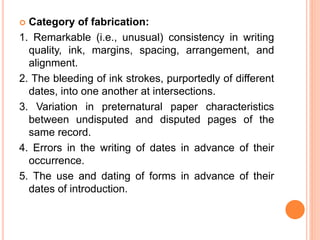
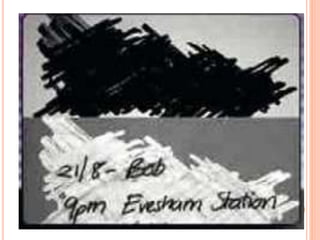
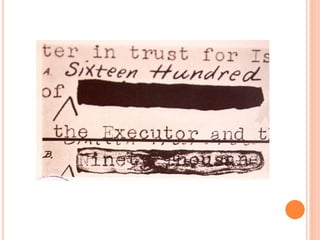
OBLITERATION IS THE PROCESS OF WRITING OVER
TEXT WITH THE INTENTION
 The text with the intention of hiding or destroying
the original information. Whether at the time the
document was created or at a later date,
obliteration made with the same ink used in the
original is virtually impossible to recover. If a
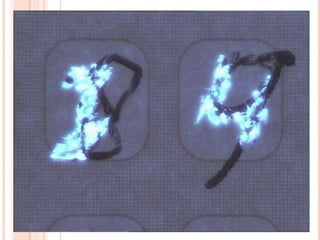
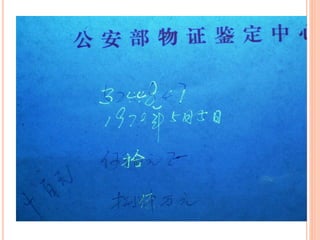
different ink was used to obliterate the text,
illumination with alternative light sources may show
differences in reflection or infrared luminescence,
which can be photographed. Similar techniques,
combined with handwriting analysis, are applied to
detect additive alterations.
 Category of alteration, they noted as evidence:
1. The crowding, squeezing in or fitting of insertions
around other material.
2. Irregularities (i.e., inconsistencies) in slant,
pressure, and quality.
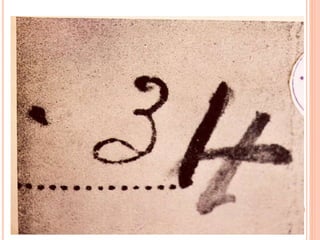
3. The occurrence of erasures, eradications, or
obliterations.
4. Irregularities (i.e., inconsistencies) in inks, writing
instruments, typing ribbons or machines.
5. The behaviour of lines intersecting with other lines,
folds, perforations, tears or holes in the paper.
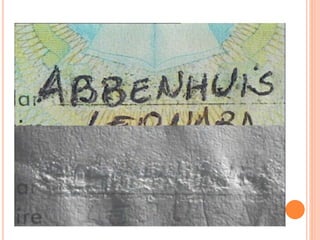
6. The presence or absence of indentations in
subsequent pages.
7. Inconsistencies in alignments.
 Category of fabrication:
1. Remarkable (i.e., unusual) consistency in writing
quality, ink, margins, spacing, arrangement, and
alignment.
2. The bleeding of ink strokes, purportedly of different
dates, into one another at intersections.
3. Variation in preternatural paper characteristics
between undisputed and disputed pages of the
same record.
4. Errors in the writing of dates in advance of their
occurrence.
5. The use and dating of forms in advance of their
dates of introduction.
7
8
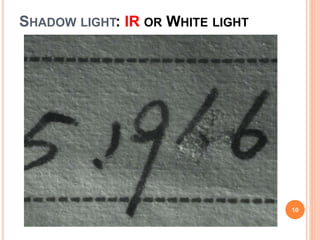
SHADOW LIGHT: IR OR WHITE LIGHT
10
9.Examination_of_Alterations_and_Obliterations.ppt

9.Examination_of_Alterations_and_Obliterations.ppt

  • 1.
    EXAMINATION OF ALTERATIONSAND OBLITERATIONS Session-9
  • 2.
    OBLITERATION IS THEPROCESS OF WRITING OVER TEXT WITH THE INTENTION  The text with the intention of hiding or destroying the original information. Whether at the time the document was created or at a later date, obliteration made with the same ink used in the original is virtually impossible to recover. If a different ink was used to obliterate the text, illumination with alternative light sources may show differences in reflection or infrared luminescence, which can be photographed. Similar techniques, combined with handwriting analysis, are applied to detect additive alterations.
  • 3.
     Category ofalteration, they noted as evidence: 1. The crowding, squeezing in or fitting of insertions around other material. 2. Irregularities (i.e., inconsistencies) in slant, pressure, and quality. 3. The occurrence of erasures, eradications, or obliterations. 4. Irregularities (i.e., inconsistencies) in inks, writing instruments, typing ribbons or machines. 5. The behaviour of lines intersecting with other lines, folds, perforations, tears or holes in the paper. 6. The presence or absence of indentations in subsequent pages. 7. Inconsistencies in alignments.
  • 4.
     Category offabrication: 1. Remarkable (i.e., unusual) consistency in writing quality, ink, margins, spacing, arrangement, and alignment. 2. The bleeding of ink strokes, purportedly of different dates, into one another at intersections. 3. Variation in preternatural paper characteristics between undisputed and disputed pages of the same record. 4. Errors in the writing of dates in advance of their occurrence. 5. The use and dating of forms in advance of their dates of introduction.
  • 7.
  • 8.
  • 10.
    SHADOW LIGHT: IROR WHITE LIGHT 10