Dyes versus pigments
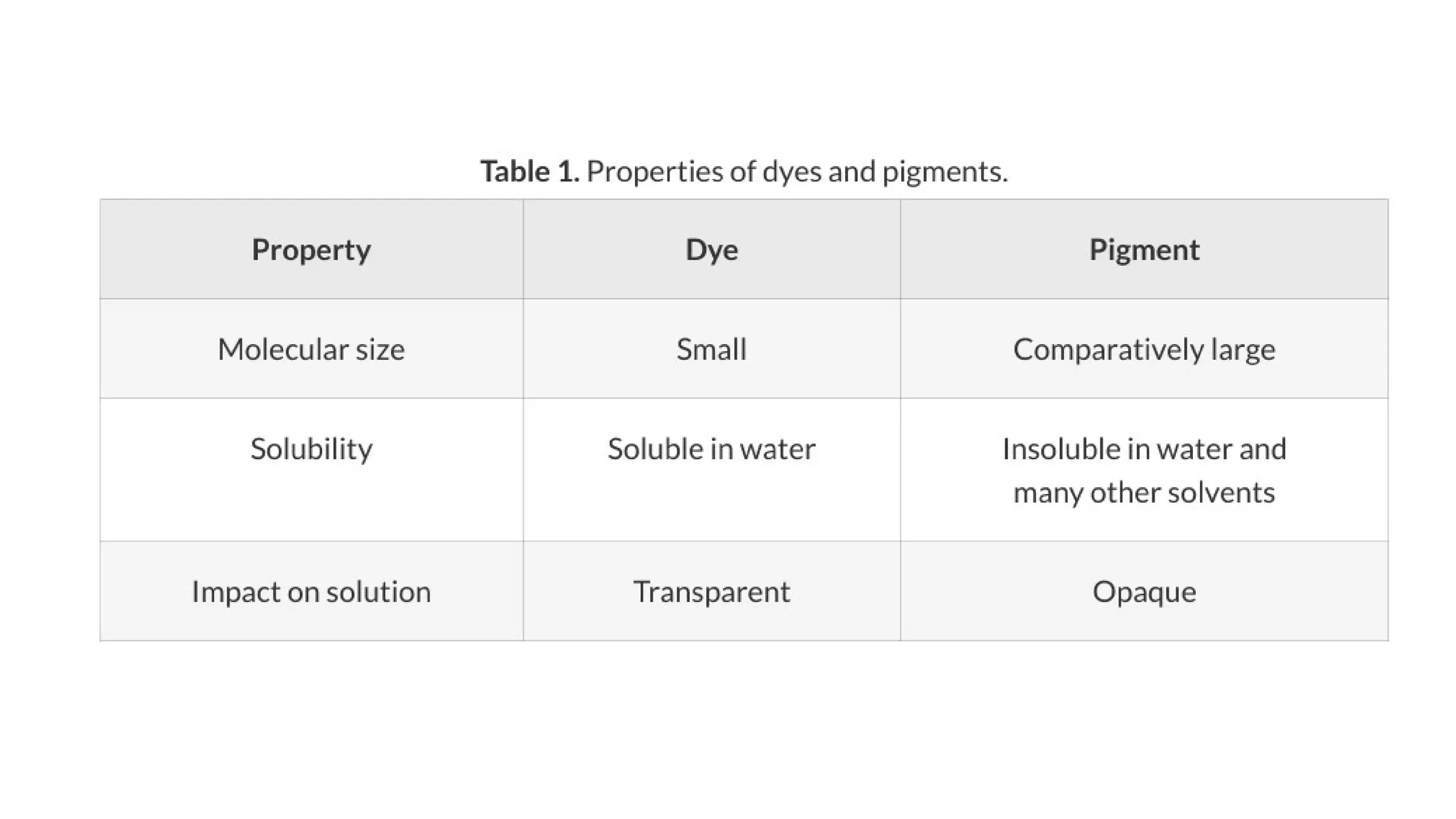
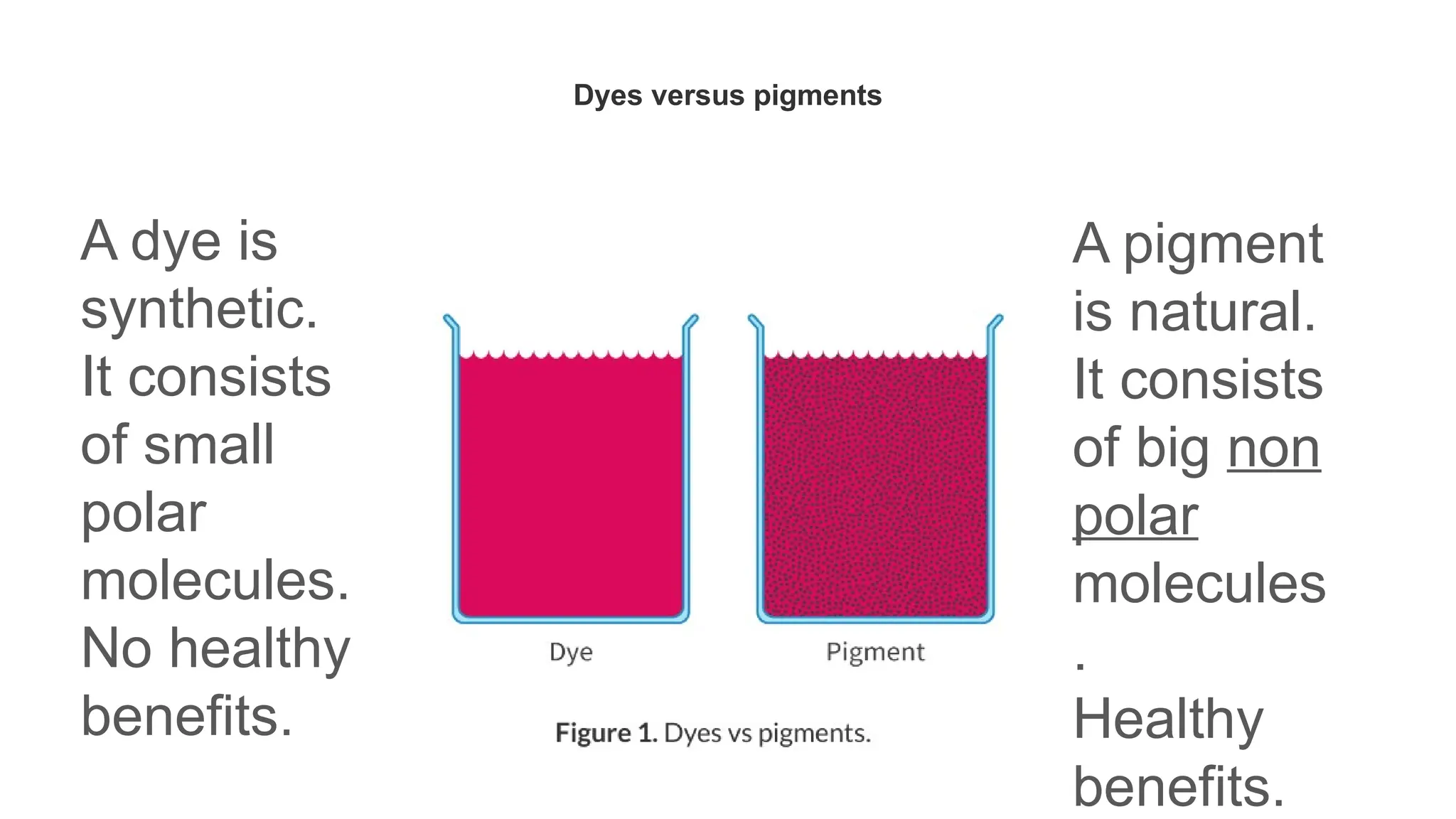
A dye is
synthetic.
It consists
of small
polar
molecules.
No healthy
benefits.
A pigment
is natural.
It consists
of big non
polar
molecules
.
Healthy
benefits.
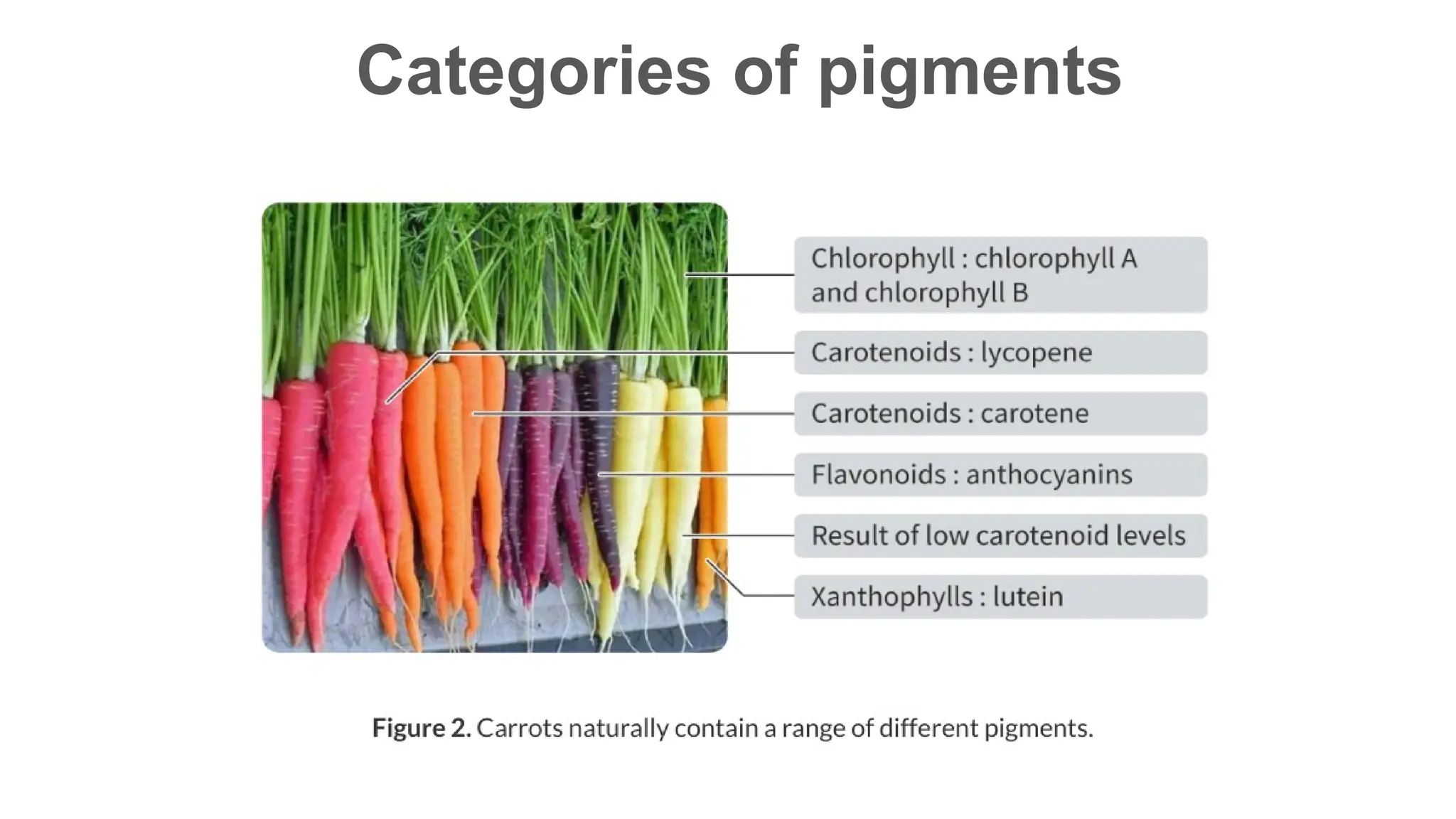
Categories of pigments
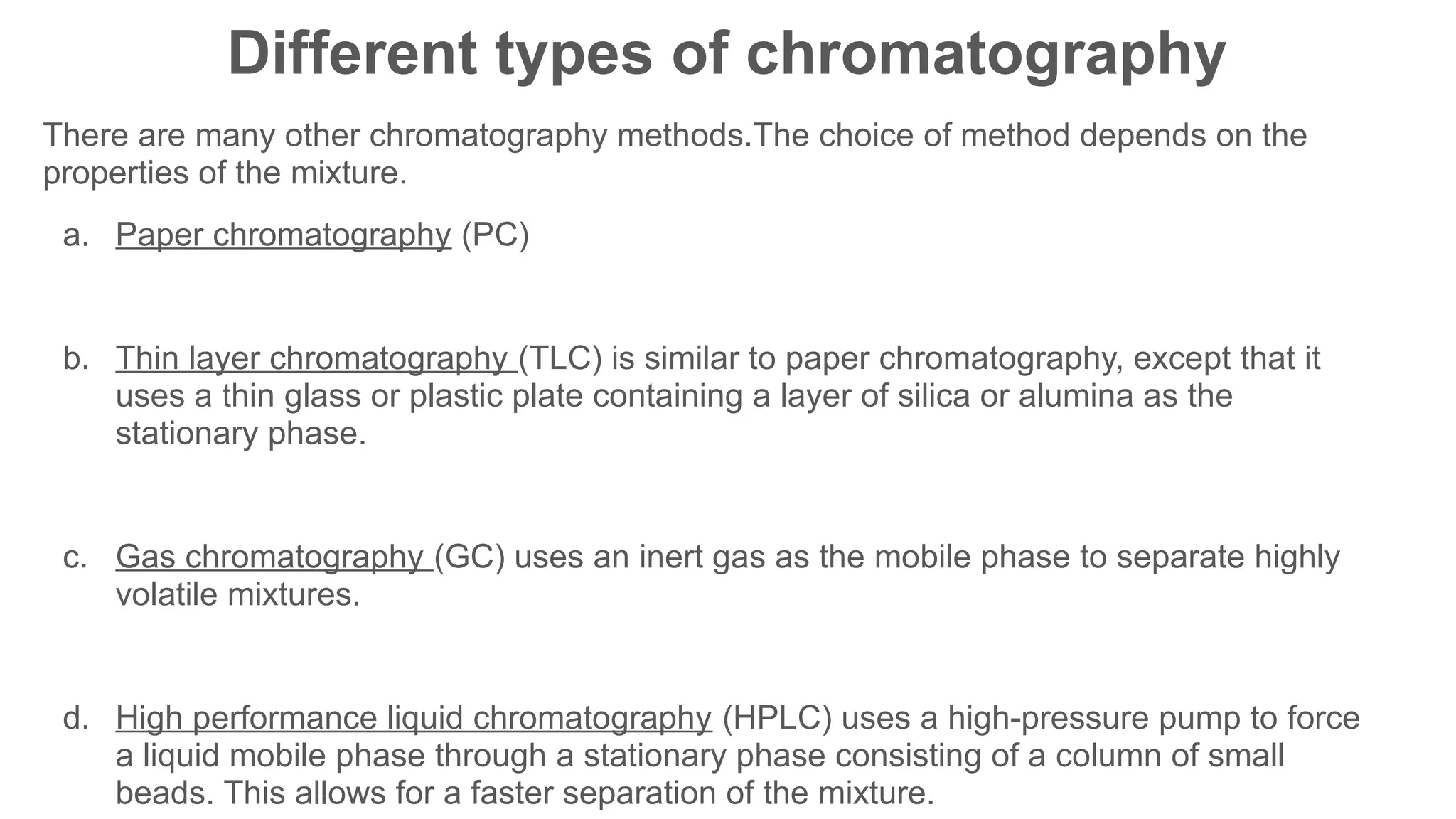
Different types of chromatography
There are many other chromatography methods.The choice of method depends on the
properties of the mixture.
a. Paper chromatography (PC)
b. Thin layer chromatography (TLC) is similar to paper chromatography, except that it
uses a thin glass or plastic plate containing a layer of silica or alumina as the
stationary phase.
c. Gas chromatography (GC) uses an inert gas as the mobile phase to separate highly
volatile mixtures.
d. High performance liquid chromatography (HPLC) uses a high-pressure pump to force
a liquid mobile phase through a stationary phase consisting of a column of small
beads. This allows for a faster separation of the mixture.
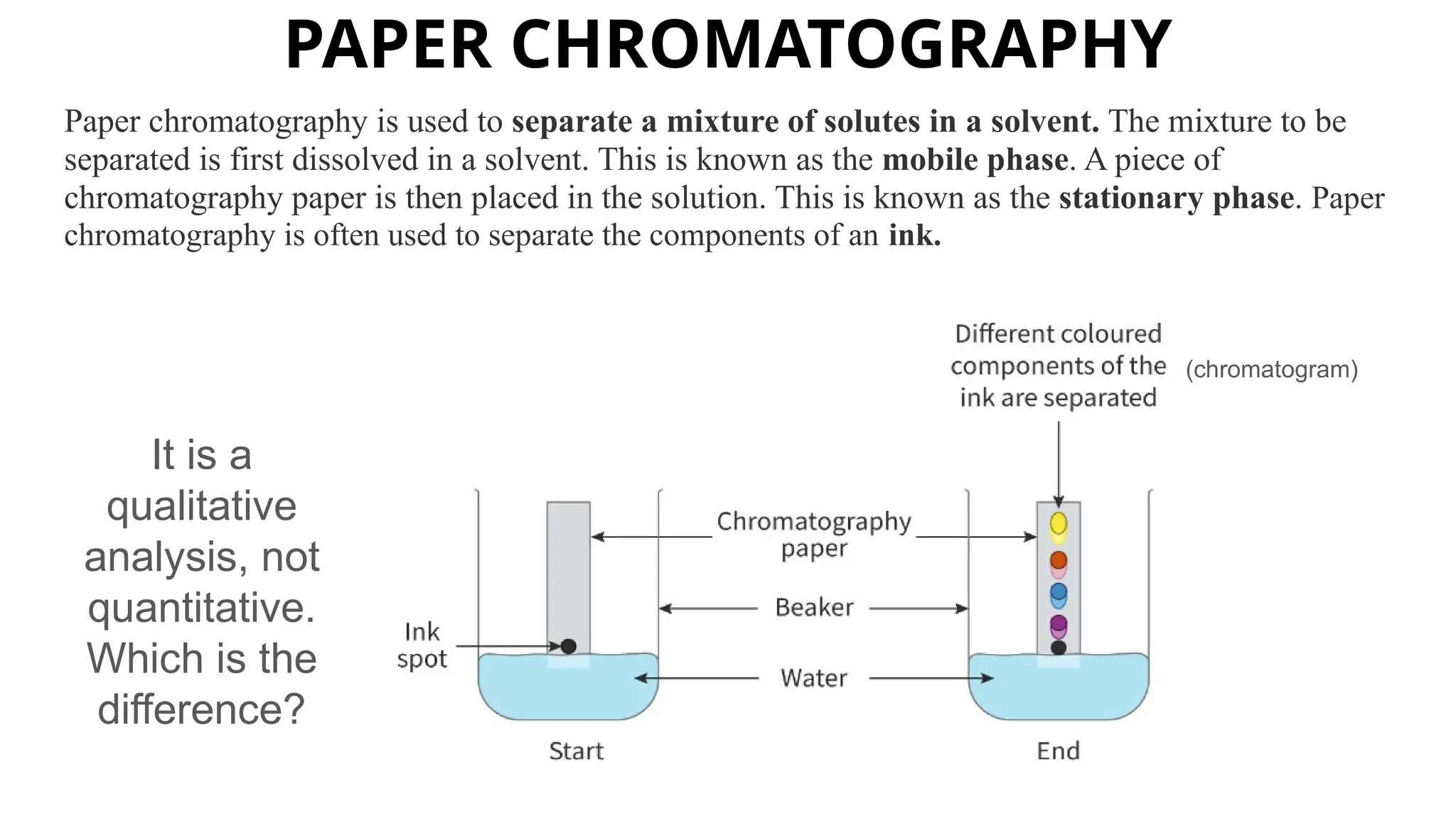
PAPER CHROMATOGRAPHY
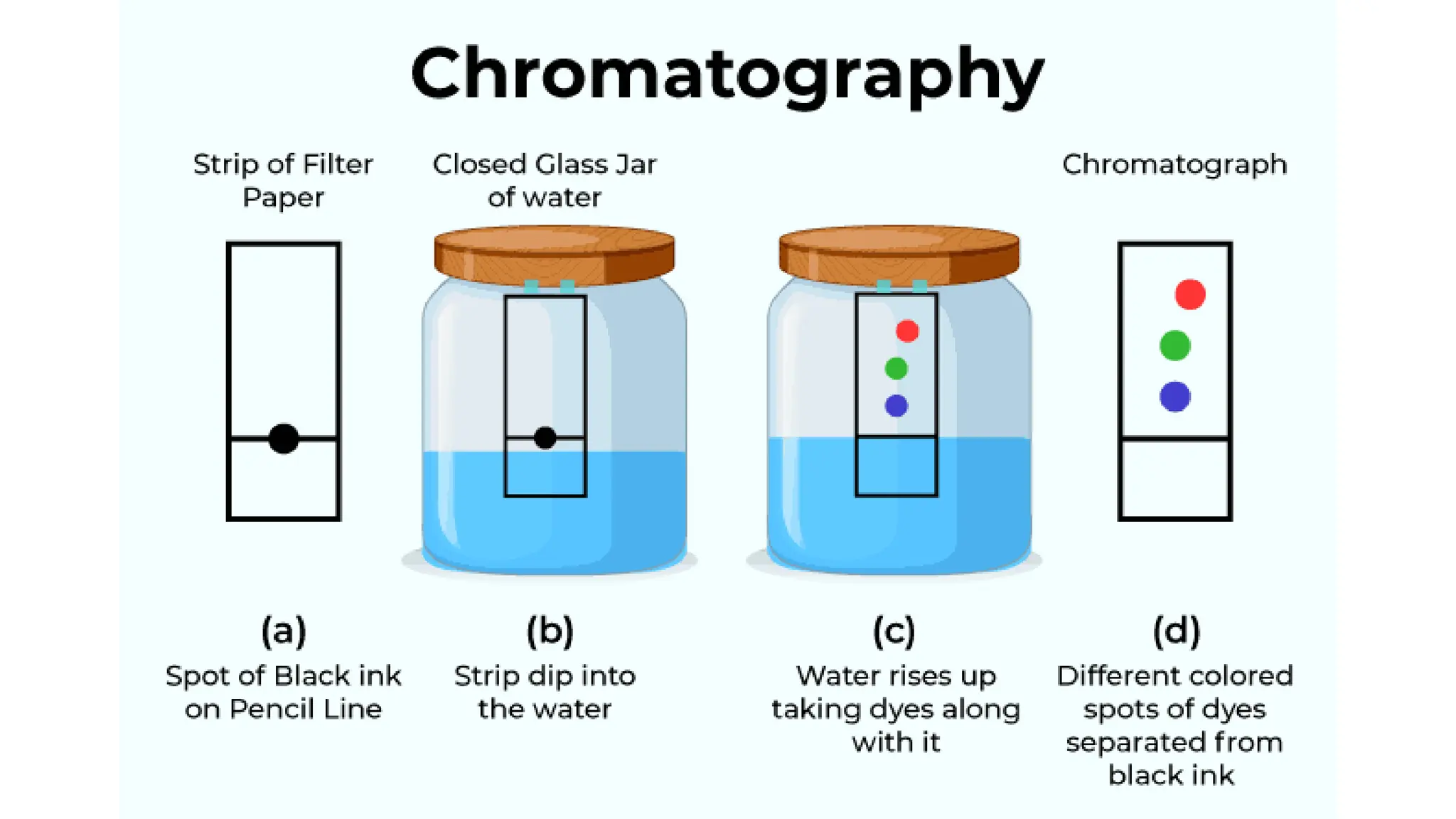
Paper chromatography is used to separate a mixture of solutes in a solvent. The mixture to be
separated is first dissolved in a solvent. This is known as the mobile phase. A piece of
chromatography paper is then placed in the solution. This is known as the stationary phase. Paper
chromatography is often used to separate the components of an ink.
It is a
qualitative
analysis, not
quantitative.
Which is the
difference?
(chromatogram)
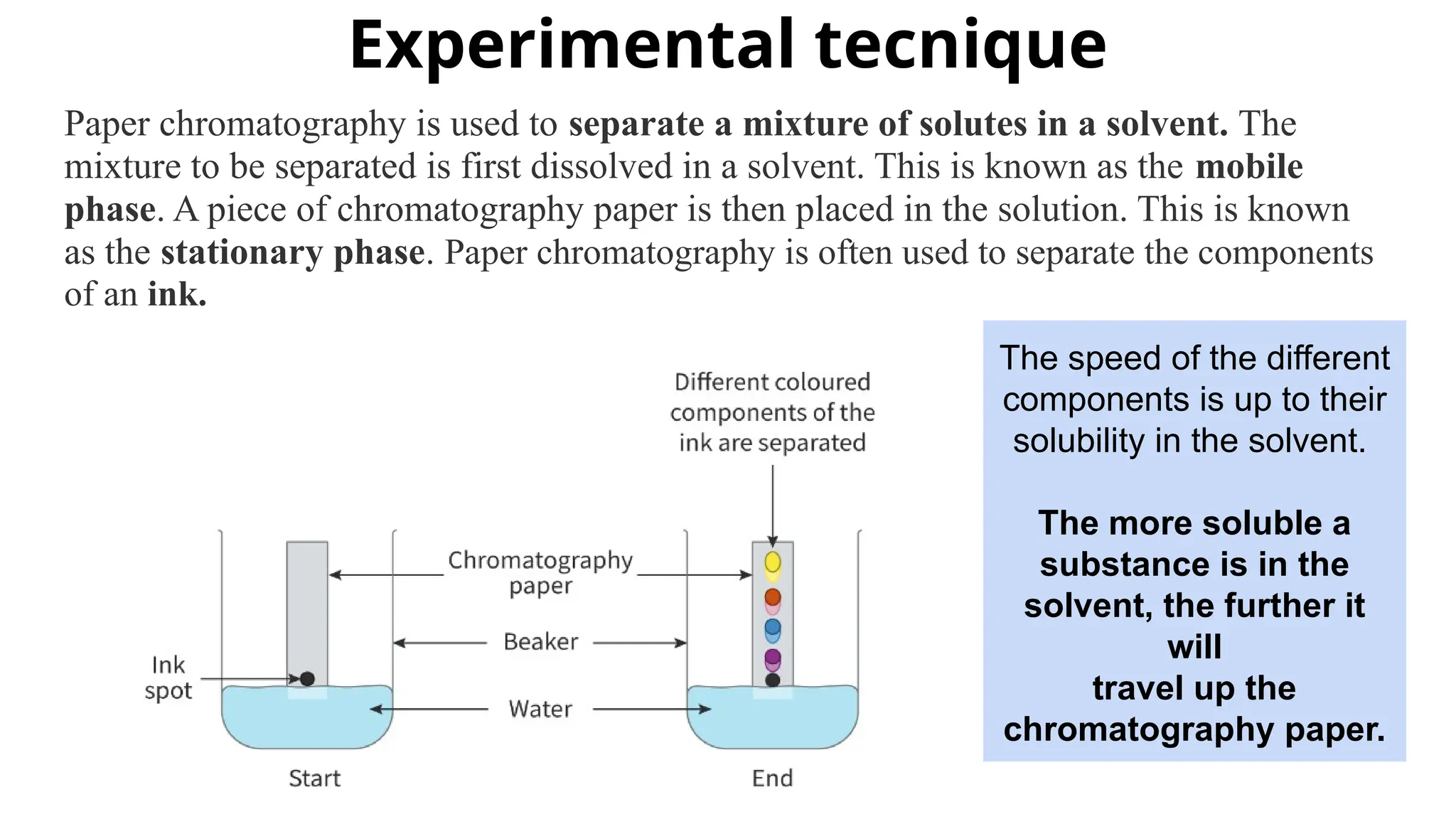
Experimental tecnique
Paper chromatography is used to separate a mixture of solutes in a solvent. The
mixture to be separated is first dissolved in a solvent. This is known as the mobile
phase. A piece of chromatography paper is then placed in the solution. This is known
as the stationary phase. Paper chromatography is often used to separate the components
of an ink.
The speed of the different
components is up to their
solubility in the solvent.
The more soluble a
substance is in the
solvent, the further it
will
travel up the
chromatography paper.
At the beginning of the chromatography process a small amount
of the mixture is added to a pencil line at the bottom of the
paper.
Why do you think the line must be drawn with a pencil and not
in pen?
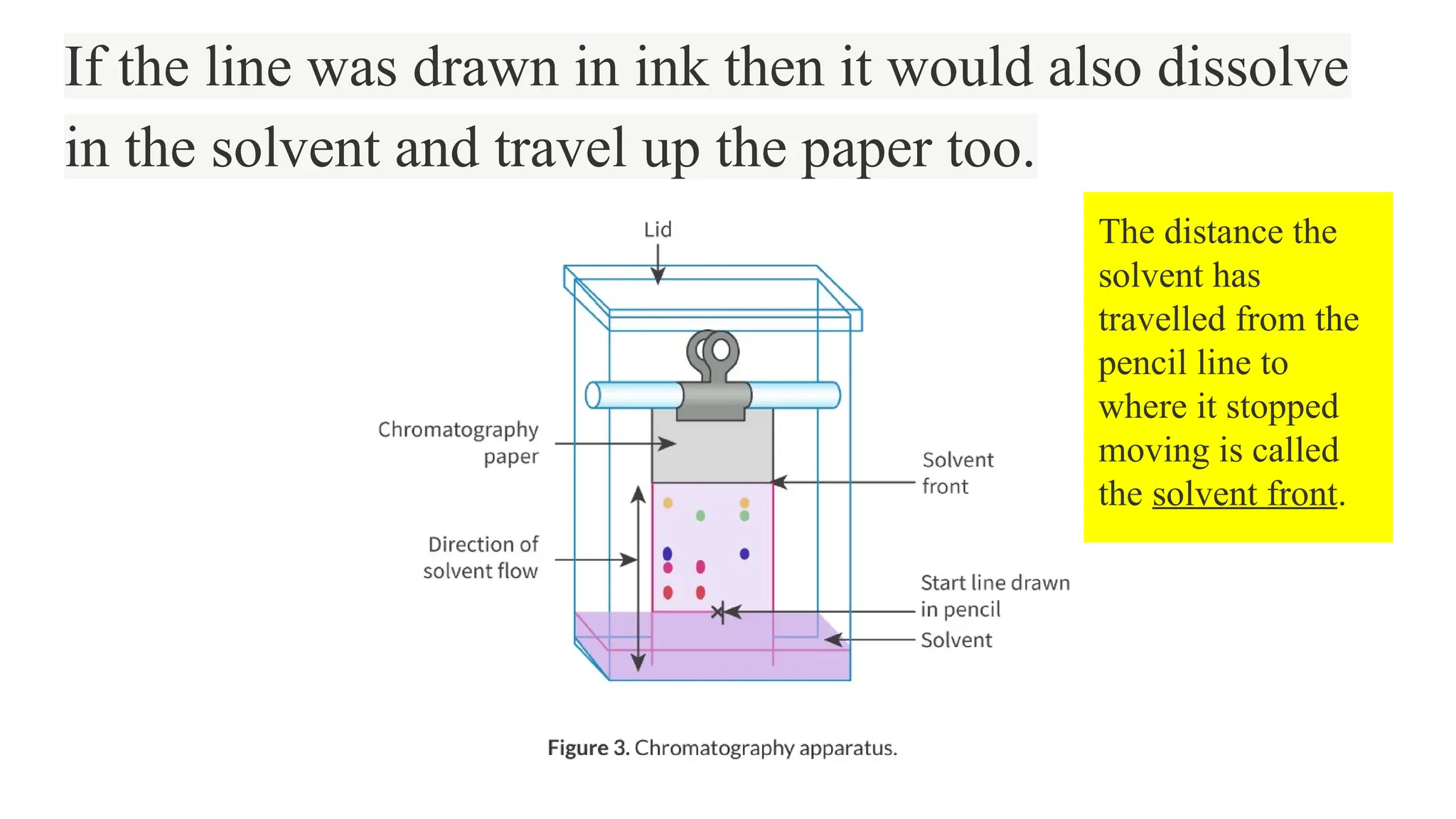
If the line was drawn in ink then it would also dissolve
in the solvent and travel up the paper too.
The distance the
solvent has
travelled from the
pencil line to
where it stopped
moving is called
the solvent front.
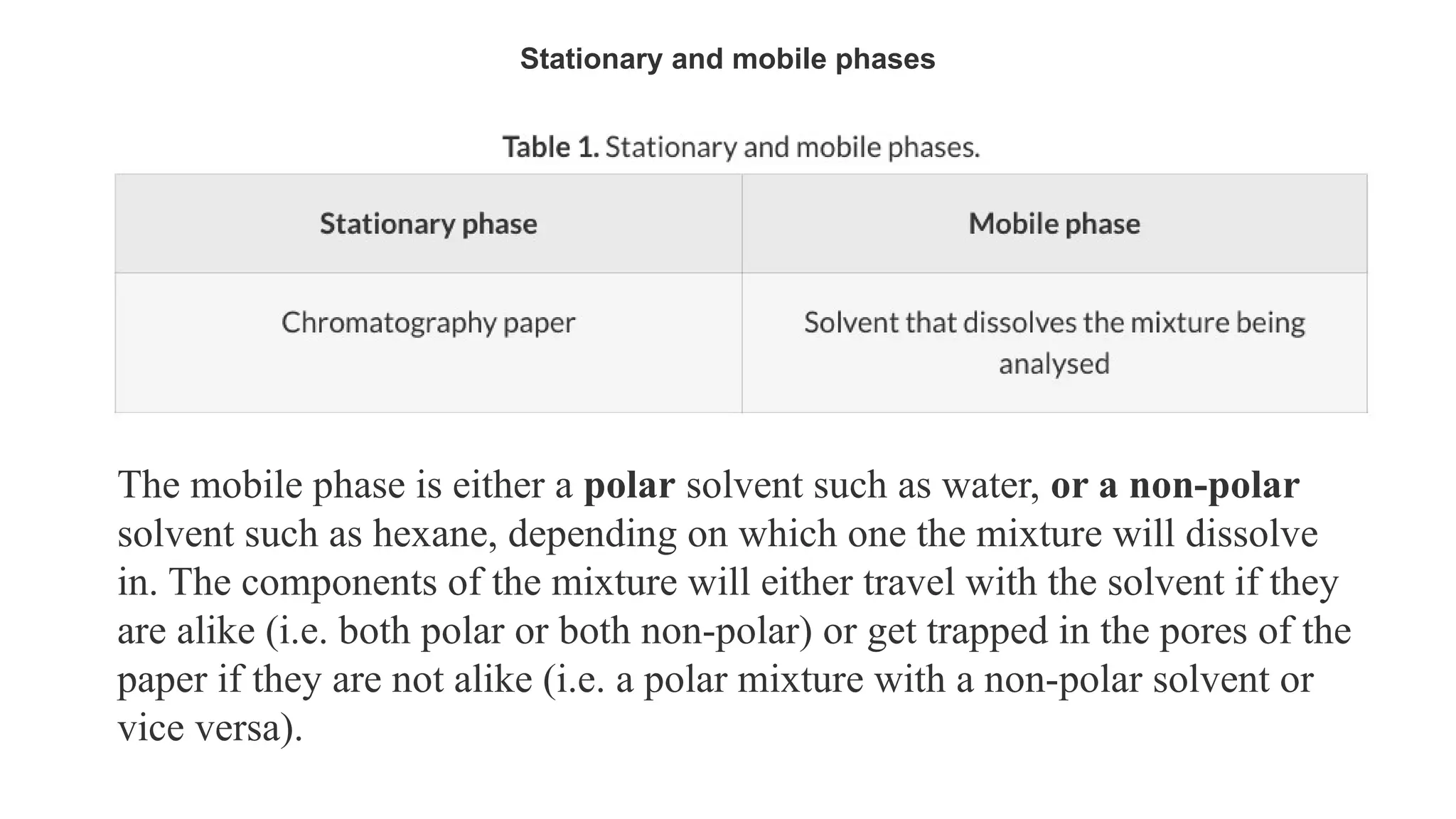
Stationary and mobile phases
The mobile phase is either a polar solvent such as water, or a non-polar
solvent such as hexane, depending on which one the mixture will dissolve
in. The components of the mixture will either travel with the solvent if they
are alike (i.e. both polar or both non-polar) or get trapped in the pores of the
paper if they are not alike (i.e. a polar mixture with a non-polar solvent or
vice versa).
Chromatography and intermolecular forces
The mixture will travel up the chromatography paper as it is attracted
by the water molecules trapped in the paper's fibres. It uses the
intermolecular forces that have caused it to become adsorbed on the
surface of the paper. It will exist in equilibrium between the hydrogen
bonds it forms with the solvent and the intermolecular forces it forms
with the solvent. This will determine how far up the paper it travels:
the amount of time spent in each of the phases is a reflection of the
strength of the intermolecular forces that are experienced in each
phase. (video)
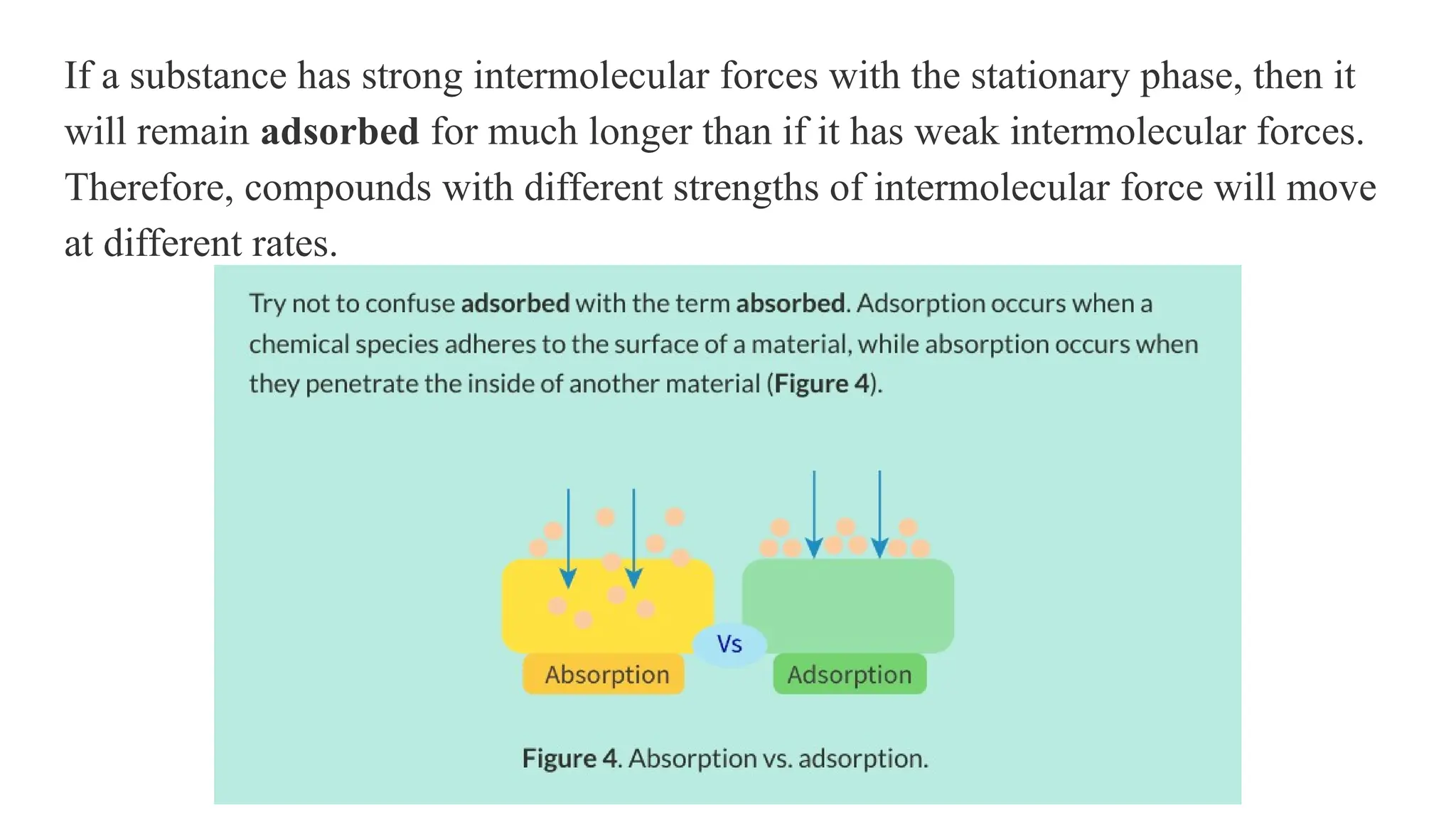
If a substance has strong intermolecular forces with the stationary phase, then it
will remain adsorbed for much longer than if it has weak intermolecular forces.
Therefore, compounds with different strengths of intermolecular force will move
at different rates.
Interpreting the chromatogram
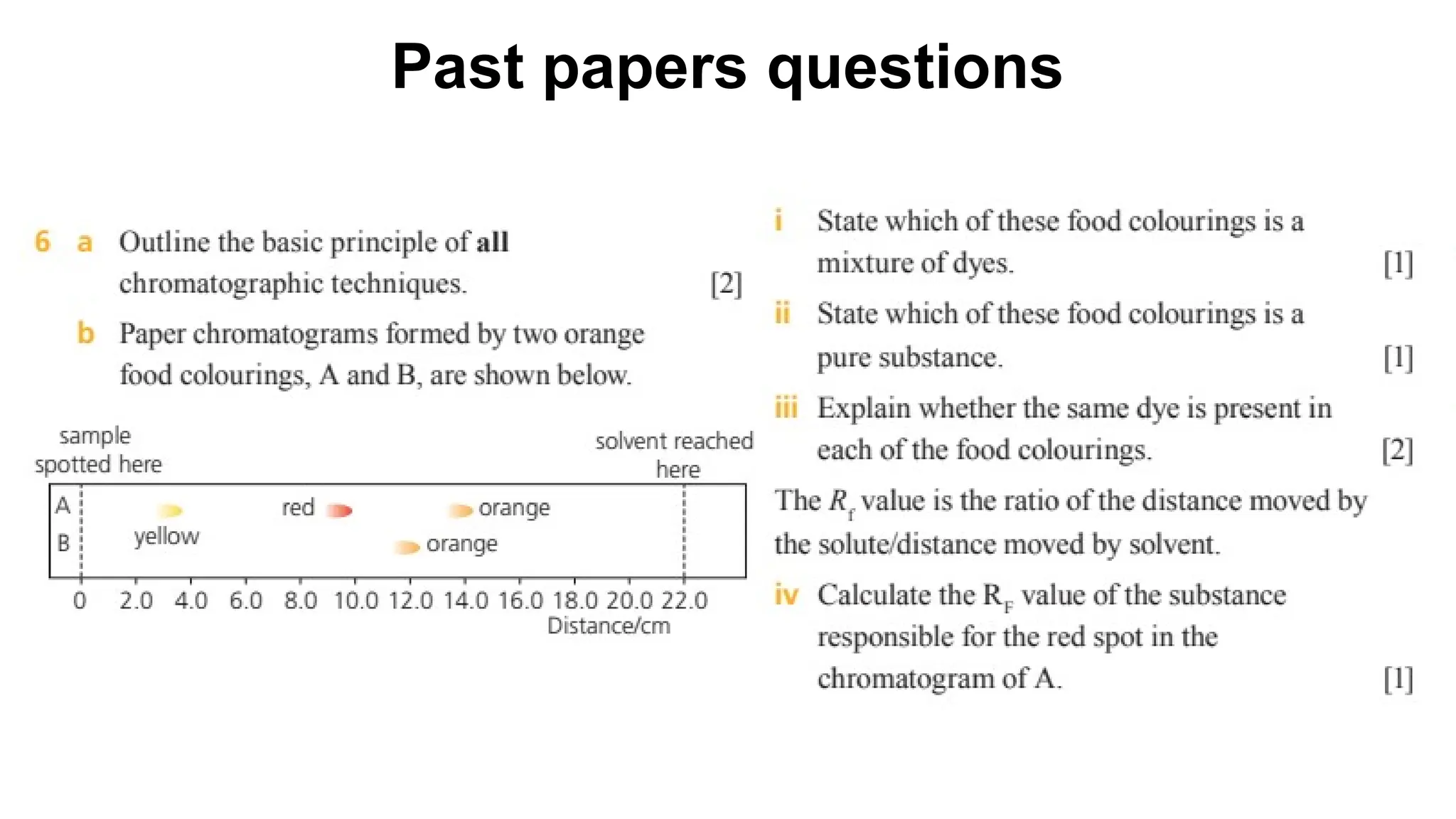
Qualitative data only: the number of spots will indicate the purity of a substance.
If only one spot is produced then the substance is pure. If two or more spots are
produced, then the substance is impure.
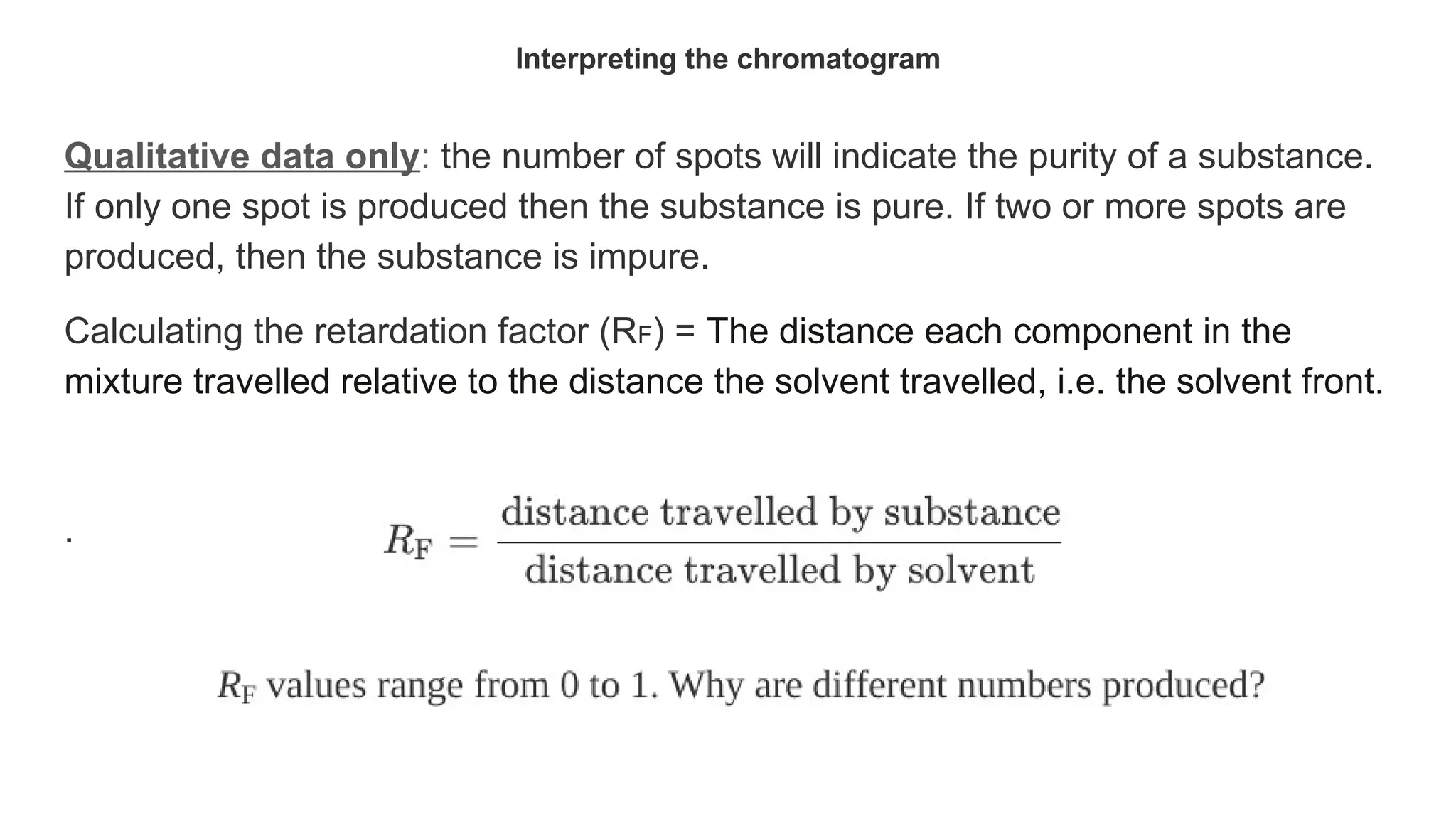
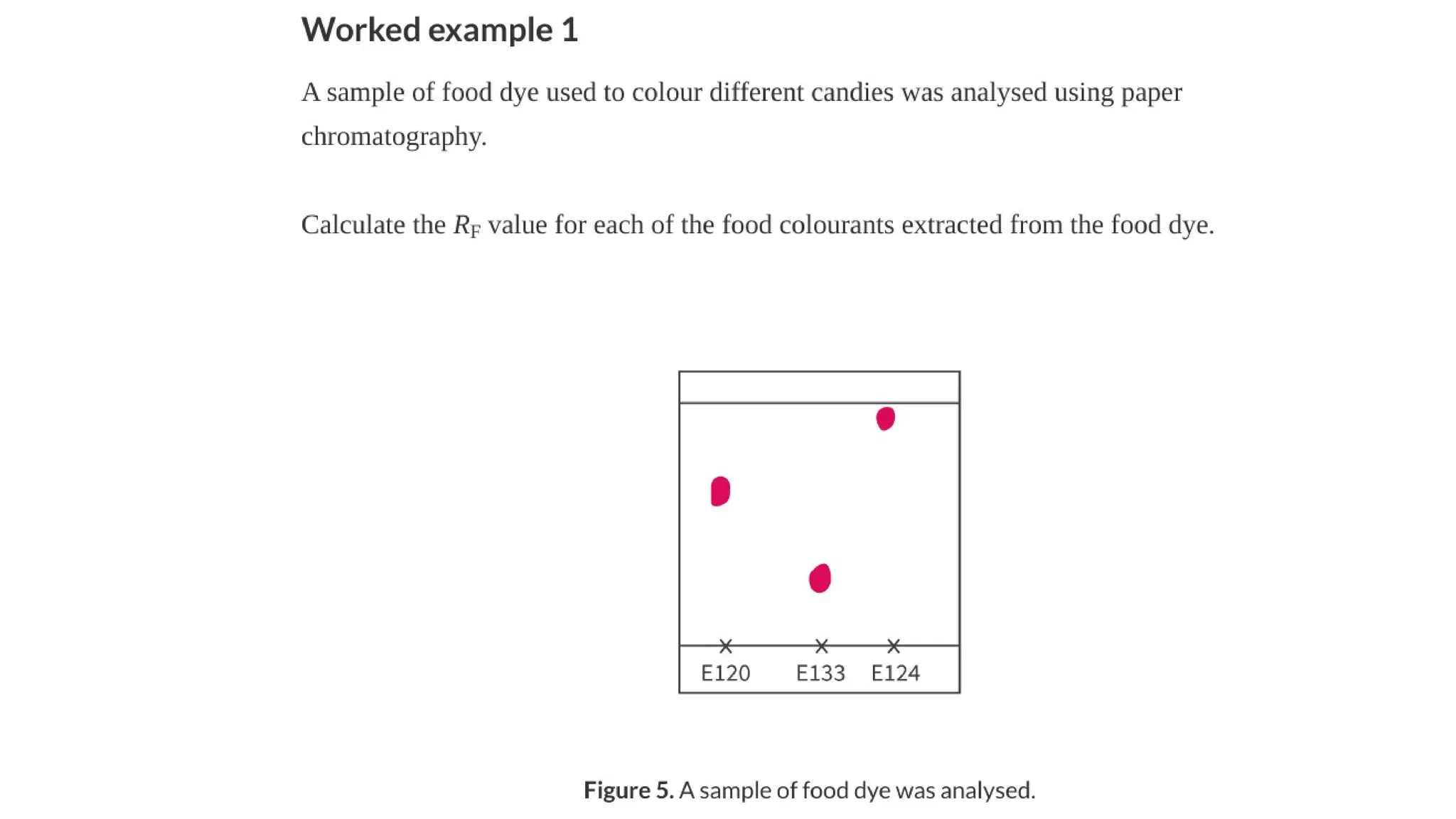
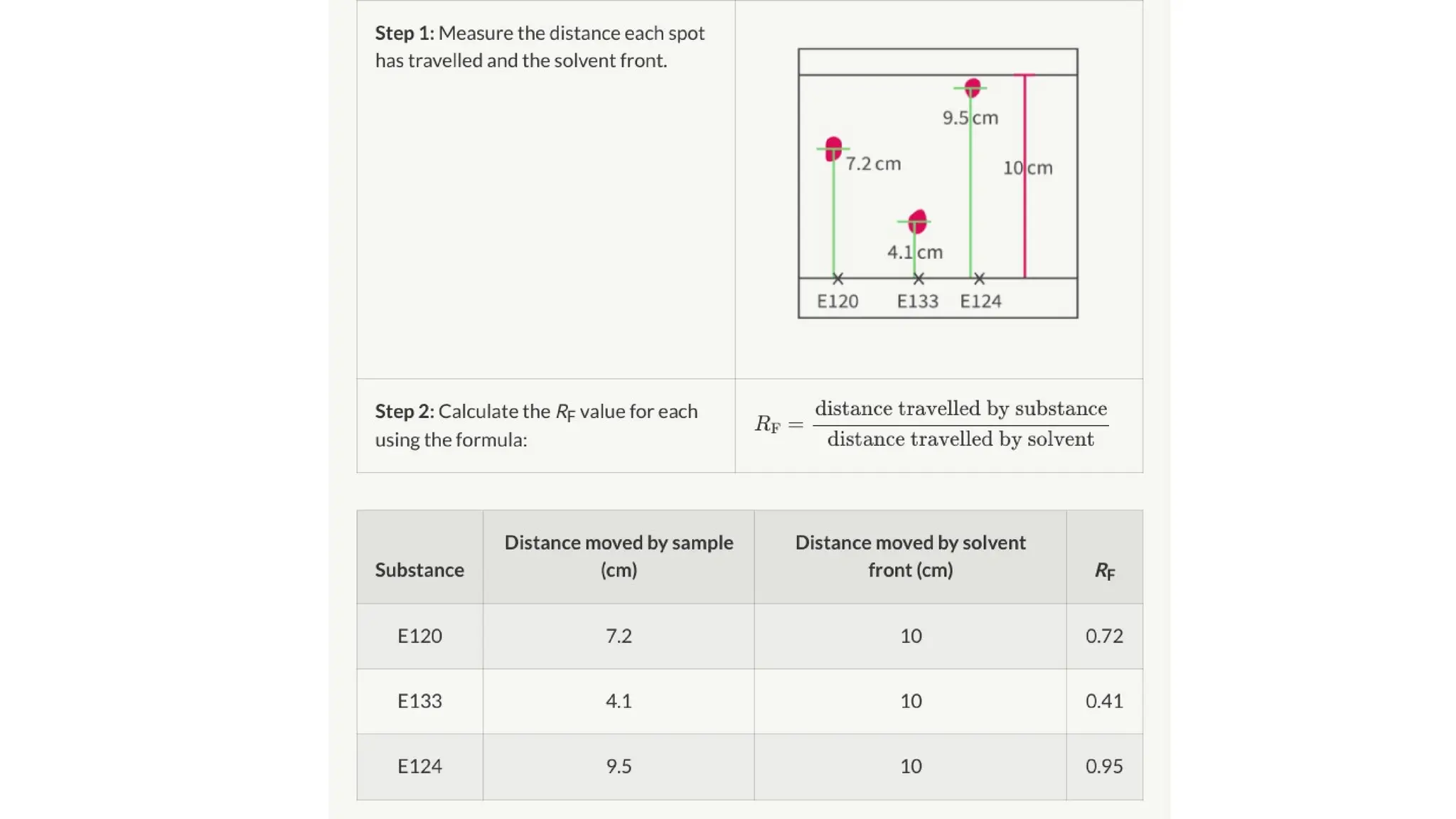
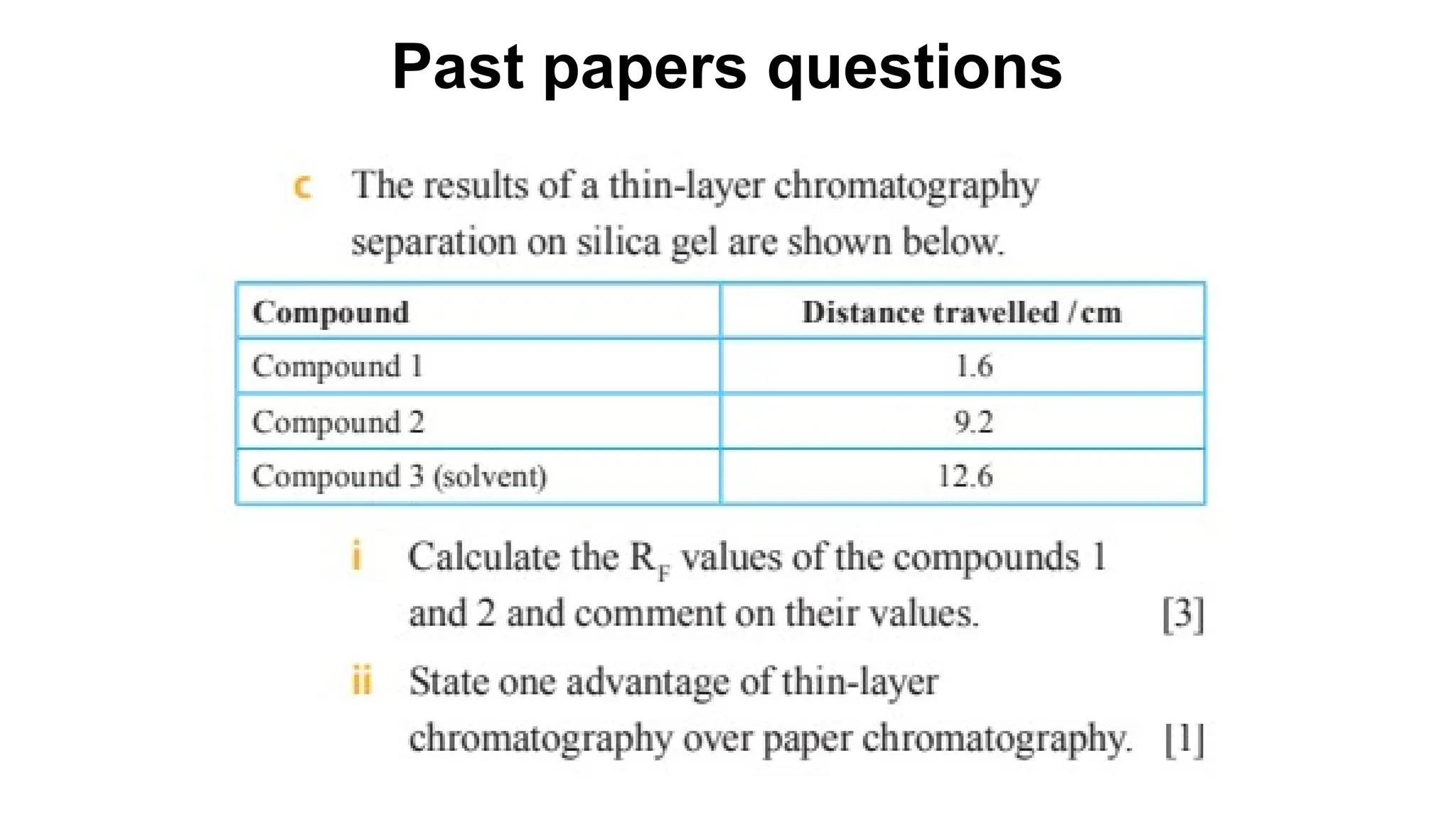
Calculating the retardation factor (RF) = The distance each component in the
mixture travelled relative to the distance the solvent travelled, i.e. the solvent front.
.
Interpreting the RF values
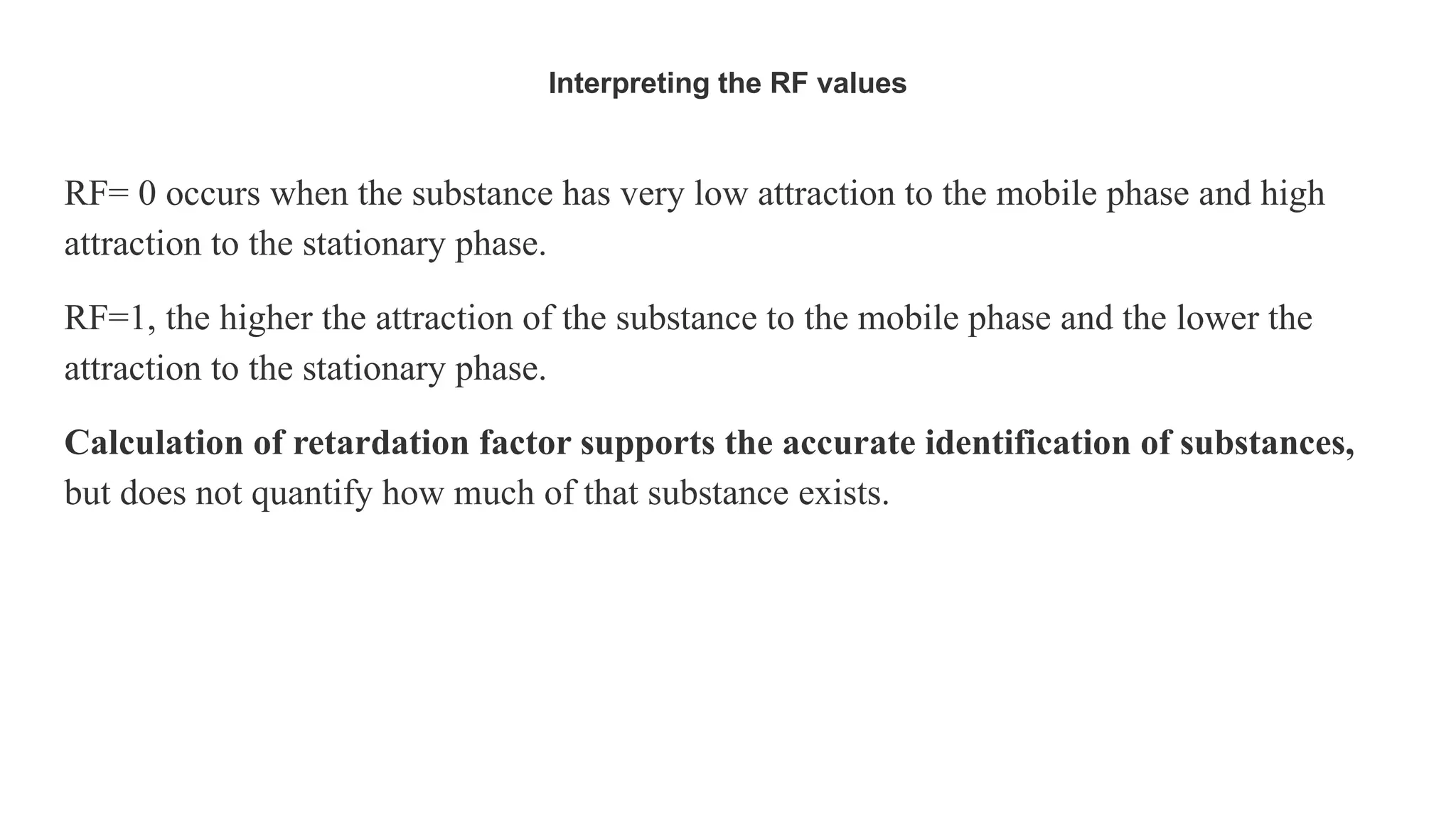
RF= 0 occurs when the substance has very low attraction to the mobile phase and high
attraction to the stationary phase.
RF=1, the higher the attraction of the substance to the mobile phase and the lower the
attraction to the stationary phase.
Calculation of retardation factor supports the accurate identification of substances,
but does not quantify how much of that substance exists.
Past papers questions
Activity

kognityCromatography.IB.chemistry.slides

  • 2.
    Dyes versus pigments Adye is synthetic. It consists of small polar molecules. No healthy benefits. A pigment is natural. It consists of big non polar molecules . Healthy benefits.
  • 4.
  • 5.
    Different types ofchromatography There are many other chromatography methods.The choice of method depends on the properties of the mixture. a. Paper chromatography (PC) b. Thin layer chromatography (TLC) is similar to paper chromatography, except that it uses a thin glass or plastic plate containing a layer of silica or alumina as the stationary phase. c. Gas chromatography (GC) uses an inert gas as the mobile phase to separate highly volatile mixtures. d. High performance liquid chromatography (HPLC) uses a high-pressure pump to force a liquid mobile phase through a stationary phase consisting of a column of small beads. This allows for a faster separation of the mixture.
  • 6.
    PAPER CHROMATOGRAPHY Paper chromatographyis used to separate a mixture of solutes in a solvent. The mixture to be separated is first dissolved in a solvent. This is known as the mobile phase. A piece of chromatography paper is then placed in the solution. This is known as the stationary phase. Paper chromatography is often used to separate the components of an ink. It is a qualitative analysis, not quantitative. Which is the difference? (chromatogram)
  • 7.
    Experimental tecnique Paper chromatographyis used to separate a mixture of solutes in a solvent. The mixture to be separated is first dissolved in a solvent. This is known as the mobile phase. A piece of chromatography paper is then placed in the solution. This is known as the stationary phase. Paper chromatography is often used to separate the components of an ink. The speed of the different components is up to their solubility in the solvent. The more soluble a substance is in the solvent, the further it will travel up the chromatography paper.
  • 8.
    At the beginningof the chromatography process a small amount of the mixture is added to a pencil line at the bottom of the paper. Why do you think the line must be drawn with a pencil and not in pen?
  • 9.
    If the linewas drawn in ink then it would also dissolve in the solvent and travel up the paper too. The distance the solvent has travelled from the pencil line to where it stopped moving is called the solvent front.
  • 10.
    Stationary and mobilephases The mobile phase is either a polar solvent such as water, or a non-polar solvent such as hexane, depending on which one the mixture will dissolve in. The components of the mixture will either travel with the solvent if they are alike (i.e. both polar or both non-polar) or get trapped in the pores of the paper if they are not alike (i.e. a polar mixture with a non-polar solvent or vice versa).
  • 11.
    Chromatography and intermolecularforces The mixture will travel up the chromatography paper as it is attracted by the water molecules trapped in the paper's fibres. It uses the intermolecular forces that have caused it to become adsorbed on the surface of the paper. It will exist in equilibrium between the hydrogen bonds it forms with the solvent and the intermolecular forces it forms with the solvent. This will determine how far up the paper it travels: the amount of time spent in each of the phases is a reflection of the strength of the intermolecular forces that are experienced in each phase. (video)
  • 12.
    If a substancehas strong intermolecular forces with the stationary phase, then it will remain adsorbed for much longer than if it has weak intermolecular forces. Therefore, compounds with different strengths of intermolecular force will move at different rates.
  • 13.
    Interpreting the chromatogram Qualitativedata only: the number of spots will indicate the purity of a substance. If only one spot is produced then the substance is pure. If two or more spots are produced, then the substance is impure. Calculating the retardation factor (RF) = The distance each component in the mixture travelled relative to the distance the solvent travelled, i.e. the solvent front. .
  • 14.
    Interpreting the RFvalues RF= 0 occurs when the substance has very low attraction to the mobile phase and high attraction to the stationary phase. RF=1, the higher the attraction of the substance to the mobile phase and the lower the attraction to the stationary phase. Calculation of retardation factor supports the accurate identification of substances, but does not quantify how much of that substance exists.
  • 17.
  • 18.
  • 19.