Seminar-III
Maruthi Prasad B P
III PhD
PAMB 1066
Dept. of GPB, UASB
2
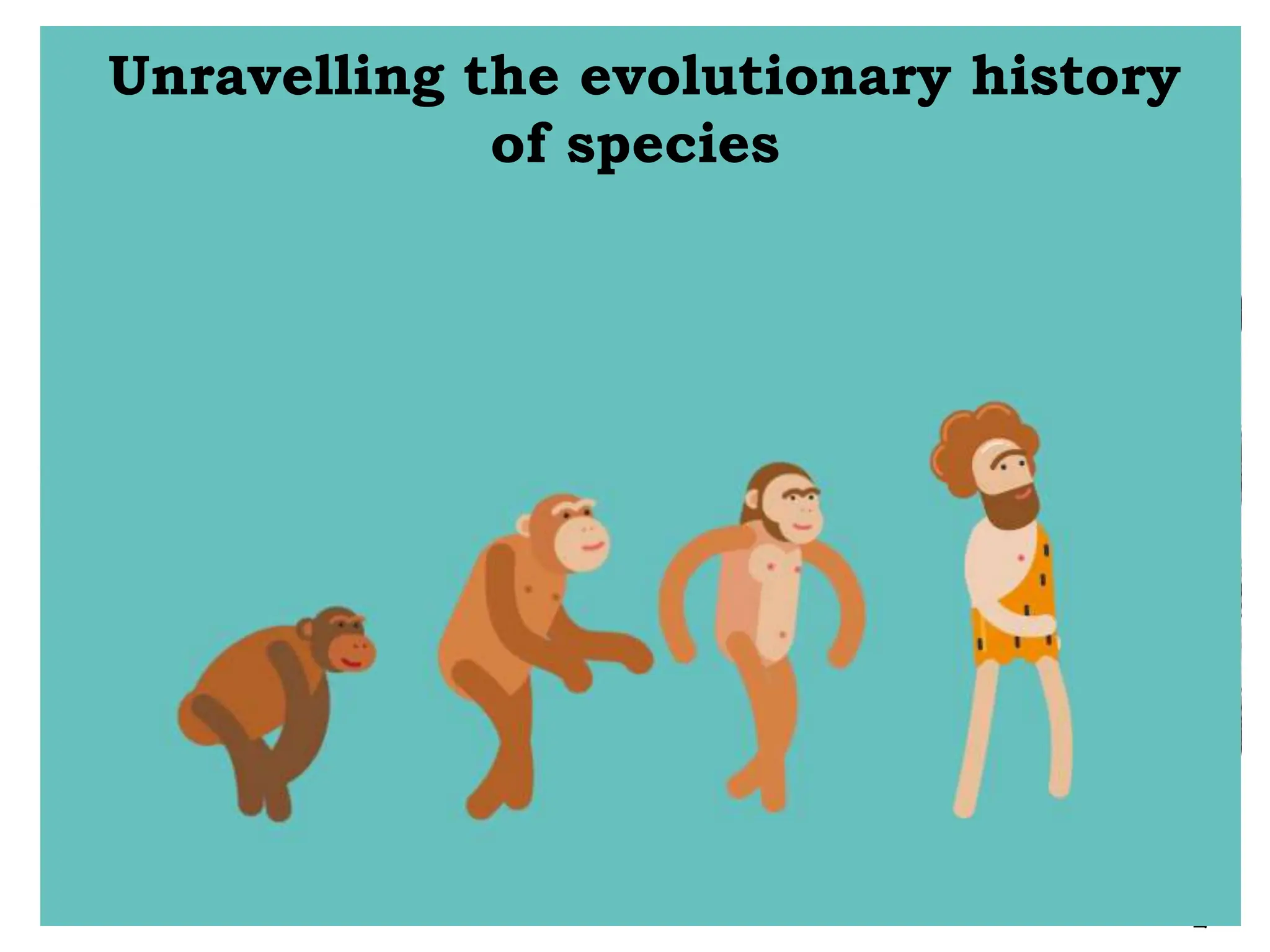
Unravelling the evolutionary history
of species
3
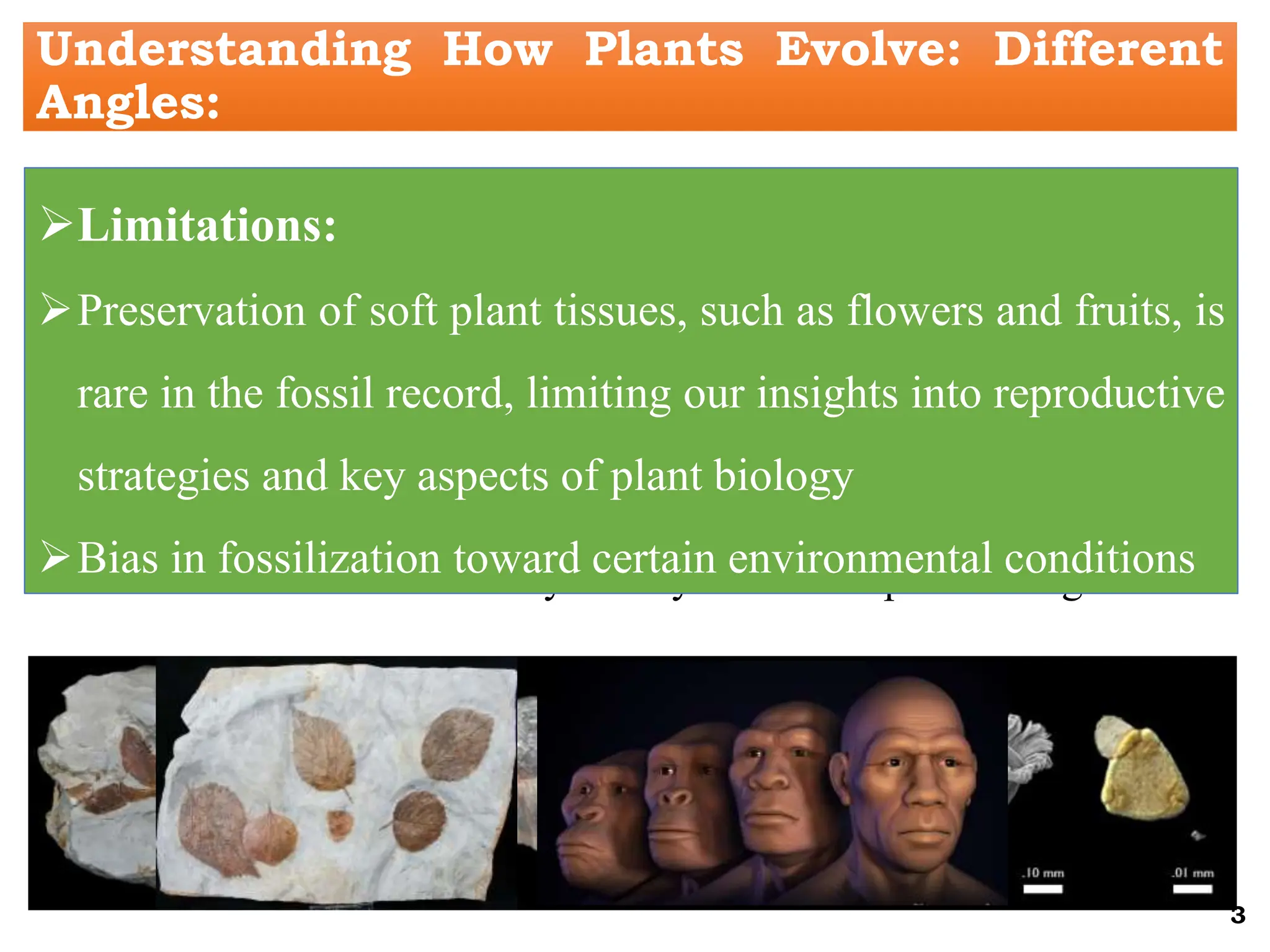
1. Studying direct evidence from the fossil records
Examining the preserved remains of ancient plant species
These fossils provide crucial insights into the morphological
changes, adaptations, and diversification of plants over geological
time
Radio carbon dating
Reconstruct the evolutionary history of various plant lineages
Limitations:
Preservation of soft plant tissues, such as flowers and fruits, is
rare in the fossil record, limiting our insights into reproductive
strategies and key aspects of plant biology
Bias in fossilization toward certain environmental conditions
Understanding How Plants Evolve: Different
Angles:
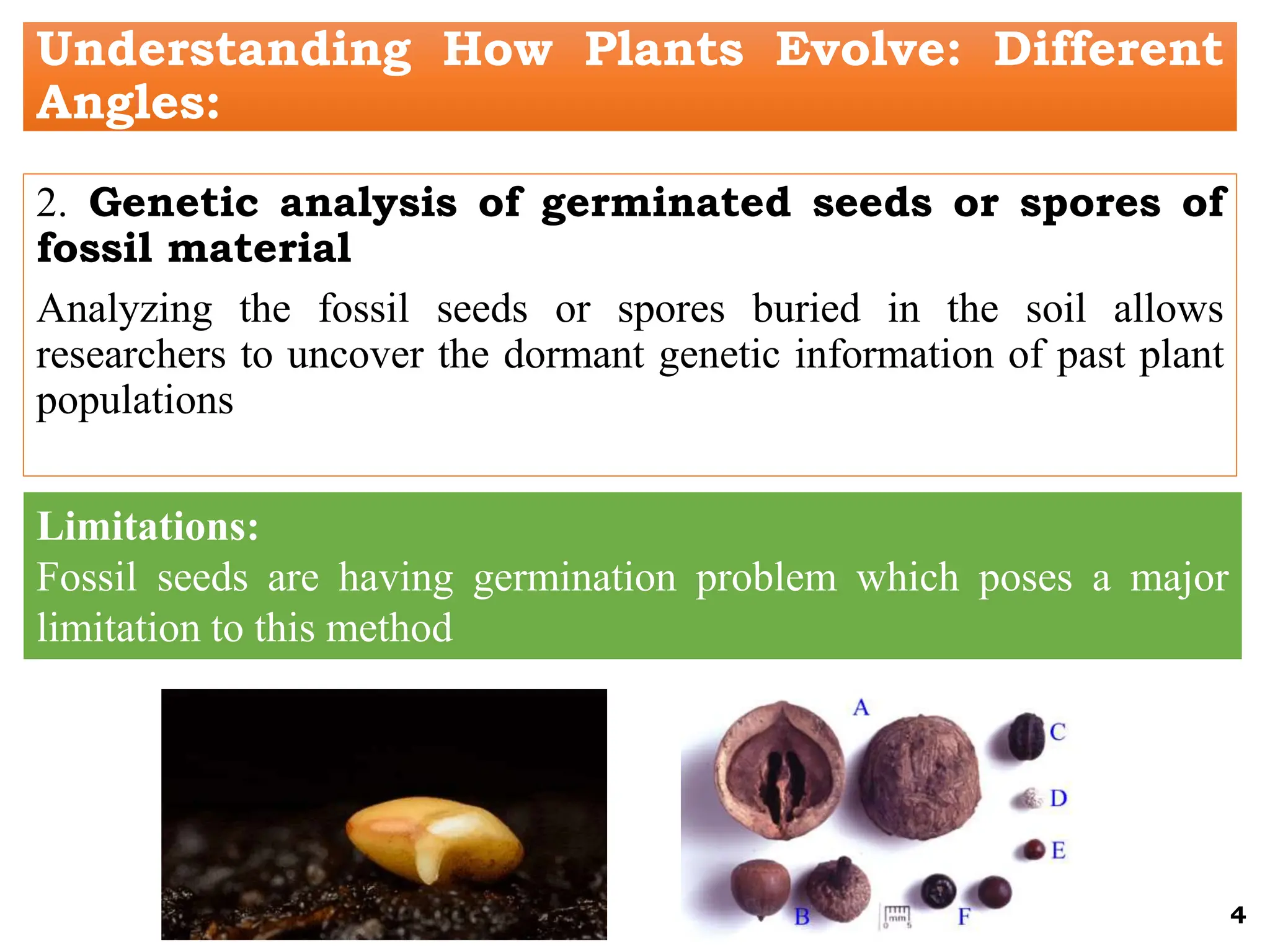
2. Genetic analysis of germinated seeds or spores of
fossil material
Analyzing the fossil seeds or spores buried in the soil allows
researchers to uncover the dormant genetic information of past plant
populations
4
Understanding How Plants Evolve: Different
Angles:
Limitations:
Fossil seeds are having germination problem which poses a major
limitation to this method
3. Studying the current genetic structure of
living organisms
Genetic Variation Analysis
Molecular Phylogenetics
Comparative Genomics
Population Genetics
Functional Genomics
5
Understanding How Plants Evolve: Different
Angles:
Limitation:
Living organisms are required for this approach, limiting the direct
study of extinct plant species and their genetic contributions to
evolutionary history
Paleogenomics:
Connecting the dots of
crop evolution from
Modern and Ancient
DNA
6
Case studies .
Introduction
Conclusion
01
Paleogenomics
02
03
04
05
06
Outline of Presentation
How is plaeogenome generated?
Applications of
Paleogenomics
Nature of Ancient DNA
Genomics in a Nutshell
Genomics is the study of an organism's complete set of DNA,
including genes and non-coding sequences
Involves sequencing, mapping, and analyze genomes to
understand genetic information
Mainstream genomics often focuses on living organisms
8
Overview of Paleontology
This interdisciplinary field combines elements of biology,
geology, and chemistry to unlock the mysteries of ancient life
 Insights into the processes that have shaped life over millions
of years, including extinction events, adaptations, and the
emergence of new species
9
Scientific discipline to study history of life on Earth
as revealed through the examination of fossils
Fossils are the preserved remains or traces of ancient
organisms
Paleontology
ancient organisms or
extinct organism
Genomics
study of an extinct
organism's
complete set of
DNA
PALEO-GENOMICS
Paleogenomics examines genomes of ancient
organisms, not just living ones
"Paleogenomics is a specialized field of study dedicated to unraveling
the genetic information of ancient organisms. Unlike traditional
genomics that focuses on living organisms, paleogenomics examines
the genomes of species that lived in the past, offering unique
insights into evolutionary history.”
What is Paleogenomics?
10
11
Brief glossary of terms
Ancient DNA (aDNA): DNA extracted from ancient specimens
Archaeogenomics: paleogenomic research on samples excavated
from archaeological sites and analyzed in relation to their
archaeological (human) context
Molecular paleontologist: Scientist studying ancient organisms
DNA to understand their evolutionary relationships
Fossilized remains: Preserved remnants of ancient organisms which
provides valuable sources of ancient DNA
Paleobotany- Complementary field of studying ancient plant fossils
Key Emphasis of Paleogenomics
Studying ancient DNA: Paleogenomics centers on extracting and
analyzing DNA from ancient specimens, such as fossils and
preserved remains
Reconstructing ancient genomes: By piecing together fragments
of ancient DNA, researchers aim to reconstruct the genetic
makeup of organisms that are extinct.
Understanding evolutionary processes: To decipher how species
have evolved over time, providing a window into the dynamics of
ancient ecosystems
12
Why to study ancient DNA?
13
1. Ancient DNA is a time capsule
2. Plant evolution and admixture
3. Ecology and evolution of life
4. Human migration
5. Development of agriculture
6. History of pathogens
7. Phenotypic traits
14
Svante Pääbo
His research established the
scientific discipline of
PALEOGENOMICS
Nobel Prize in Physiology or
Medicine 2022
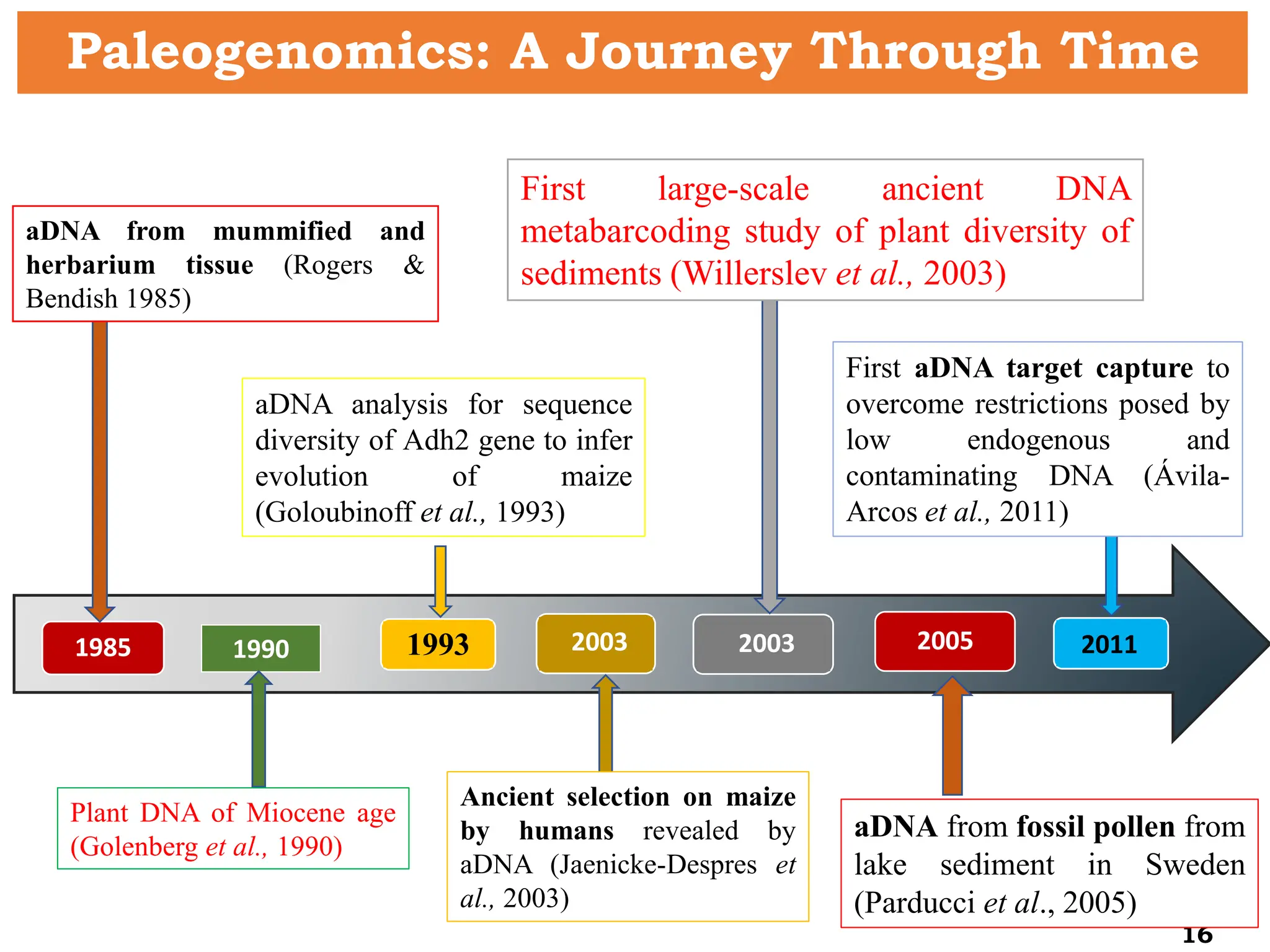
Paleogenomics: A Journey Through Time
Neanderthal Genome Sequencing
Identification of Denisovans human population
Developing and refining methods for extracting and
sequencing ancient DNA
First complete human paleogenome
(Denisovan Genomics) was
sequenced in 2010 from Denisova
Cave in Siberia
Paleogenomic studies reveal the
existence of the Denisovans group
of individuals, a sister group to
Neanderthals.
15
 The paleogenome study conducted by Ragsdale et al.,
2023 using Africa, Britain and Neanderthal
 It was believed that humans are originated from single
group of African people
 Modern humans are came from 2 diverse groups that
merged in ancient time
Paleogenomics: A Journey Through Time
16
1985 1990 2003 2003 2011
aDNA from mummified and
herbarium tissue (Rogers &
Bendish 1985)
aDNA analysis for sequence
diversity of Adh2 gene to infer
evolution of maize
(Goloubinoff et al., 1993)
First large-scale ancient DNA
metabarcoding study of plant diversity of
sediments (Willerslev et al., 2003)
First aDNA target capture to
overcome restrictions posed by
low endogenous and
contaminating DNA (Ávila-
Arcos et al., 2011)
Plant DNA of Miocene age
(Golenberg et al., 1990)
Ancient selection on maize
by humans revealed by
aDNA (Jaenicke-Despres et
al., 2003)
2005
aDNA from fossil pollen from
lake sediment in Sweden
(Parducci et al., 2005)
1993
Paleogenomics: A Journey Through Time
17
2013 2016 2017
Complete ancient plant genomes of barley
and Maize (Mascher et al. 2016, Ramos-
Madrigal et al., 2016, Vallebueno-Estrada et
al., 2016)
Small plant RNA in Barley
(Smith et al., 2017)
Eukaryotic plant pathogens like
Phytophthora infestans that triggered the
Irish potato famine (Martin et al., 2013,
Yoshida et al., 2013)
Ancient plant genome
sequencing in Gossypium
(Palmer et al., 2012)
2012
Paleogenomics: A Journey Through Time
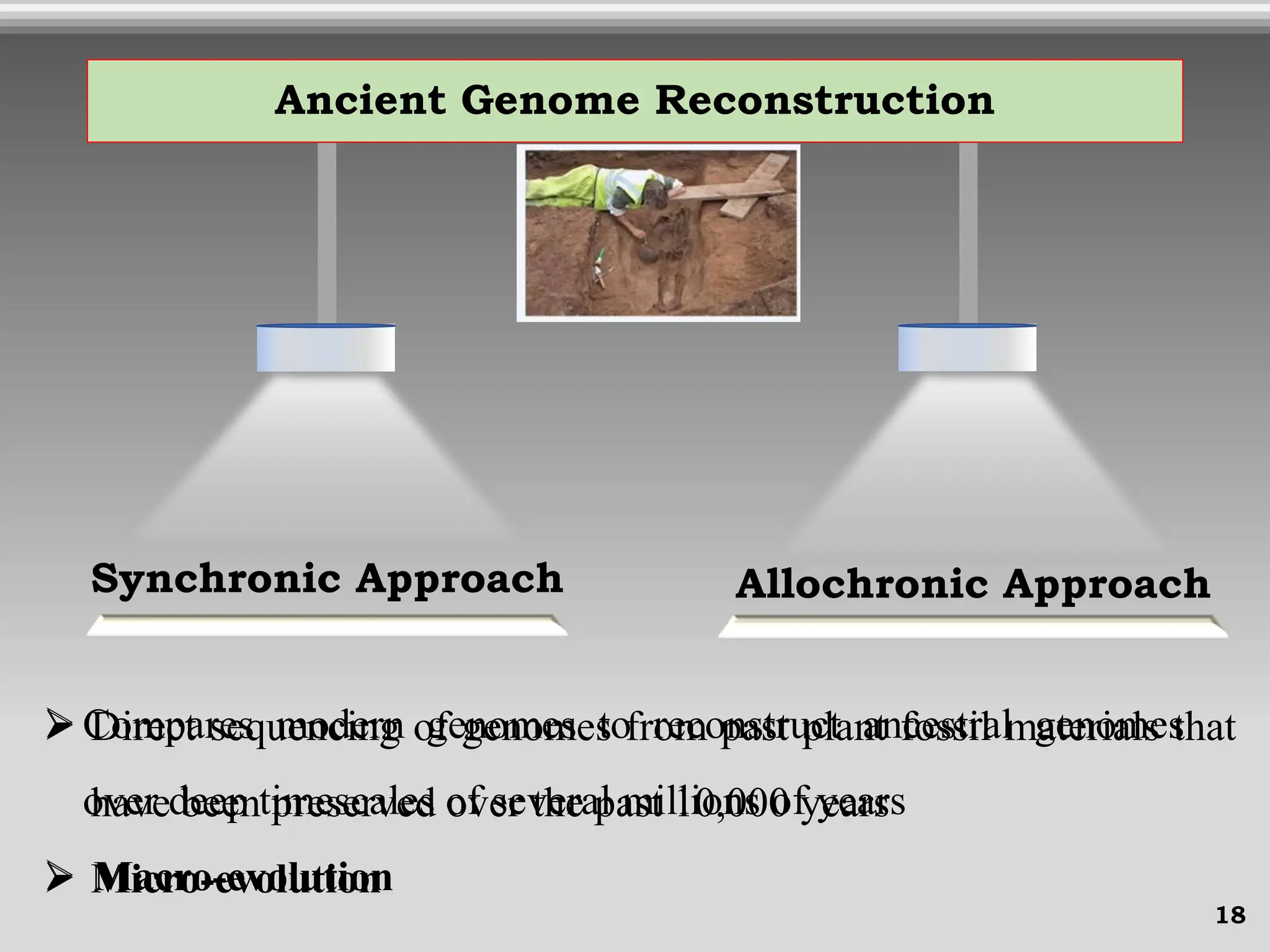
Ancient Genome Reconstruction
18
Synchronic Approach Allochronic Approach
Compares modern genomes to reconstruct ancestral genomes
over deep timescales of several millions of years
 Macro-evolution
 Direct sequencing of genomes from past plant fossil materials that
have been preserved over the past 10,000 years
 Micro-evolution
Ancient Genome Reconstruction using Synchronic
Approach
Ortholog
identification
→ pPGs
[Putative protogenes]
Synteny identification
→SBs
[Synteny blocks]
Ancestral chromosome
→ Core-pPGs
[Core protogenes]
Ancestral genome
→ oPGs
[Ordered protogenes]
(Pont et al., 2019) 19
Clustering or chaining collinear gene pairs
DRIMM-synteny,
ADHoRe,
DiagHunter,
DAGchainer,
SyMAP,
MCScanX
Reconstructing ancestral genomes
ANGES,
MRGA,
inferCARs
Tools for Synchronic approach
20
Paleogenomics work workflow- Allochronic Approach
(Pont et al., 2019) 21
22
Sample collection
Sources of aDNA
(Estrada et al., 2018)
23
2. Desiccated Leaves and stems
4. Seeds
Sample collection
1.Fossil Pollen grains
3. Fruits and nuts
Sample collection
24
1.Chaco Canyon (New Mexico, USA)
2.Jomon Period Sites (Japan)
3.Swiss Lake Dwellings
4.Mesoamerican Sites (e.g., Teotihuacan,
Mexico)
5.Neolithic Sites in the Near East (e.g.,
Jericho, Israel)
6.Ancient Egyptian Sites
7.Denisova Cave (Siberia, Russia)
25
Ancient DNA Extraction Methods
1.Preparation:
 Clean the fossil samples to remove surface contaminants
 If necessary, grind or pulverize the sample to increase surface
area and facilitate DNA extraction
2.Decalcification (if applicable):
 If the fossil contains mineralized material (e.g., calcium
carbonate), decalcify the sample using a weak acid (e.g., EDTA)
 To dissolve the minerals and expose the organic material
containing DNA
3.DNA Extraction:
 Perform DNA extraction using specialized protocols optimized
for ancient DNA recovery
 Utilize methods such as phenol-chloroform extraction, silica
column-based purification, or magnetic bead-based extraction to
isolate DNA from the fossil material
26
Ancient DNA Extraction Methods
(Donato et al., 2018)
27
Nature of Ancient DNA
1. Degradation or Damage of DNA in
deceased tissues
A. Short DNA fragment lengths
B. Low endogenous DNA content
C. High rates of nucleotide damage
2. Exogenous DNA contamination from
modern DNA
28
A. Short DNA fragment lengths
 Shorter fragment lengths compared to fresh DNA
 Environmental factors and enzymatic activity
contribute to DNA fragmentation over time
 Challenges in PCR amplification and sequencing
 Adapt extraction and amplification techniques for
successful analysis of short aDNA fragments
1. Degradation or Damage of DNA in
deceased tissues
29
B. Low endogenous DNA content
 Endogenous DNA refers to the authentic genetic material
originating from the fossil
 Ancient tissues often yield low endogenous DNA content due to
degradation
 Contaminating environmental DNA may contribute to the overall
DNA content but is non-endogenous.
 Rigorous contamination controls and selective amplification
strategies are essential for accurate analysis of low-endogenous
DNA samples
1. Degradation or Damage of DNA in deceased
tissues
30
1. Degradation or Damage of DNA in deceased
tissues
Ancient DNA (aDNA) in deceased tissues experiences chemical and
environmental degradation
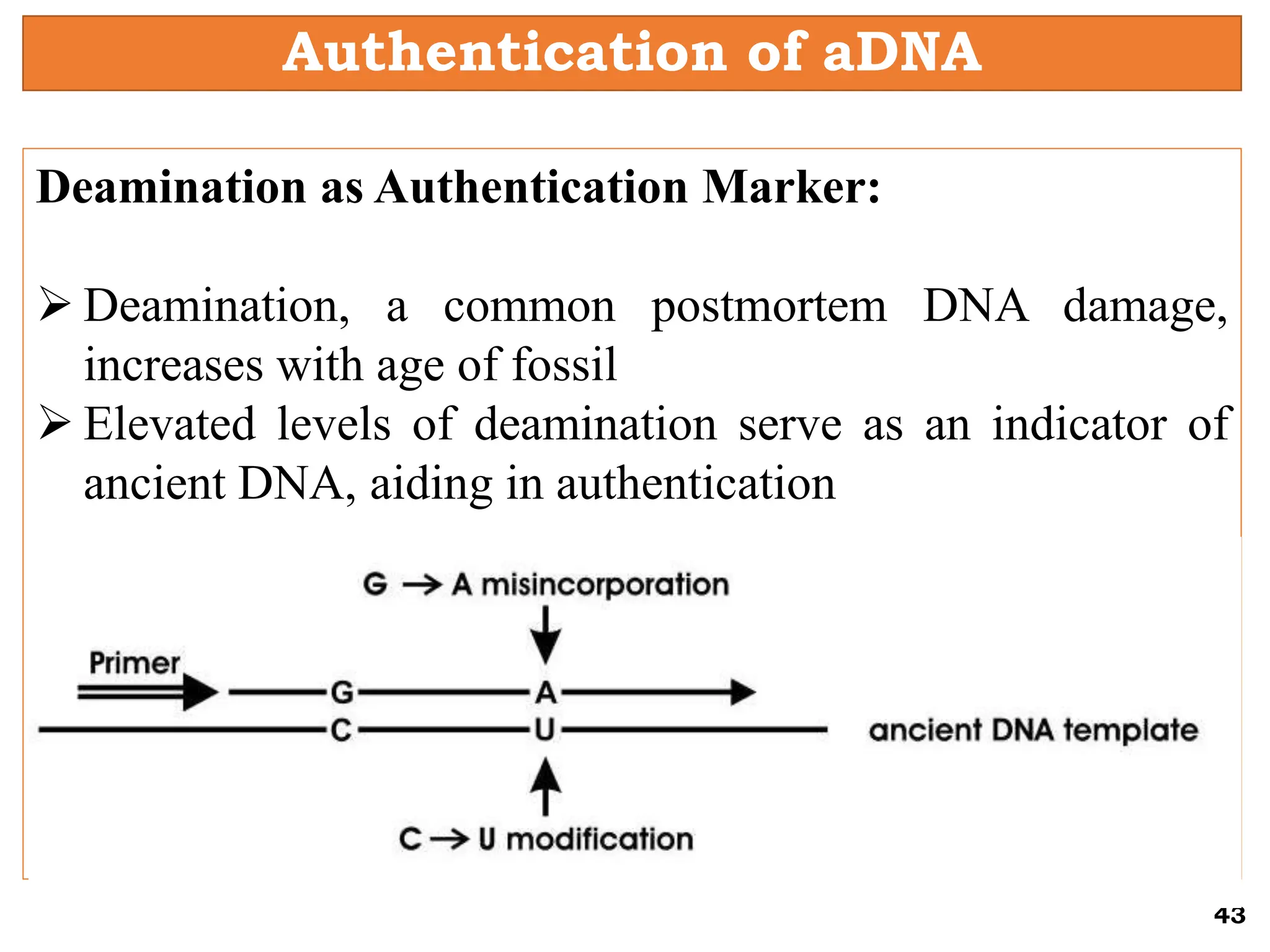
Deamination, a prevalent hydrolytic DNA damage, is notably
swift for cytosine, leading to the conversion of cytosine to uracil in
the DNA molecule
This chemical transformation occurs naturally in dead organisms and
has significant consequences for subsequent DNA analyses
 During PCR, deoxyuridine residues in the template strand prompt
DNA polymerases to incorporate deoxyadenosine at positions
where deoxyguanosine would typically be added
 Deamination induces C→T and G→A transitions in the DNA
sequence, creating mismatches during replication
Purine loss results in the formation
of overhanging ends
31
2. Exogenous DNA
contamination
 aDNA often coexists with abundant environmental DNA
mostly from microbes, fungi, and plants that colonized the
remains, resulting in extremely small proportion of endogenous
DNA in an extract
 For Ex, the first Neanderthal genome was reconstructed from
DNA samples with only 1-5% endogenous DNA (Green et al.,
2010)
Control Measures:
1. Laboratory Controls: Enforce strict separation and employ
dedicated equipment for aDNA analysis to minimize cross-
contamination
2. Authentication Markers: To differentiate between endogenous
and exogenous DNA
3. Protective Measures while working with aDNA
4. Negative Controls: Implement mock extractions and PCR
controls without ancient DNA to monitor and detect
contamination at every stage of the process
5. Unique Barcoding: Employ unique barcoding for aDNA
libraries to identify and discard contaminated sequences
 Exogenous DNA can distort the genetic information derived from
ancient samples, leading to misinterpretations
 Sources of Exogenous DNA
 Modern DNA
 Researcher's DNA
 Environmental DNA
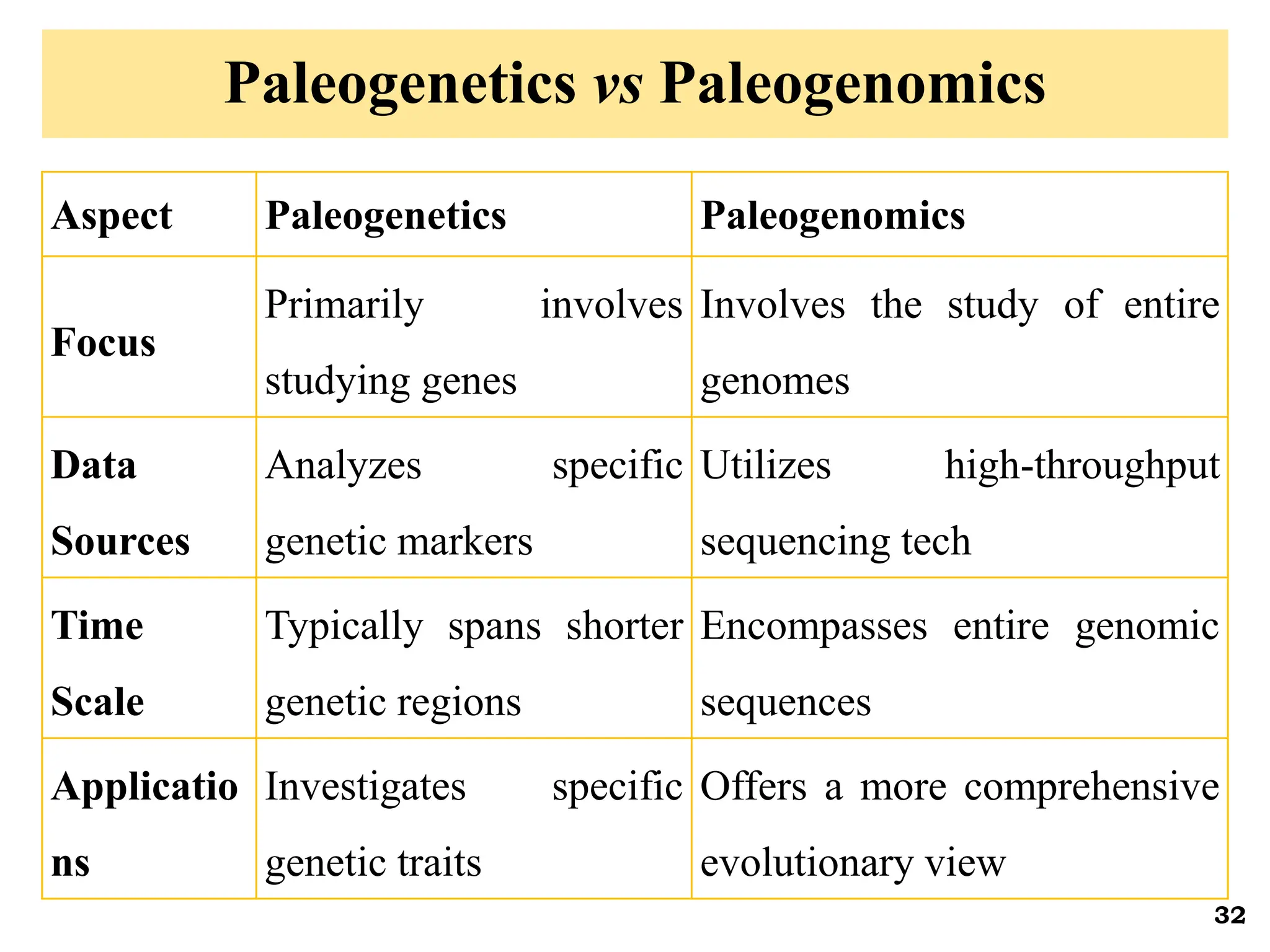
Aspect Paleogenetics Paleogenomics
Focus
Primarily involves
studying genes
Involves the study of entire
genomes
Data
Sources
Analyzes specific
genetic markers
Utilizes high-throughput
sequencing tech
Time
Scale
Typically spans shorter
genetic regions
Encompasses entire genomic
sequences
Applicatio
ns
Investigates specific
genetic traits
Offers a more comprehensive
evolutionary view
32
Paleogenetics vs Paleogenomics
Before introduction of NGS technologies, conventional
PCR followed by Sanger sequencing was used for aDNA
sequencing
It is not feasible for large-scale genomic studies due to its
limited throughput and high cost
Paleogenomics using Next-Generation
Sequencing and Library Preparation
33
 NGS technologies can generate millions to billions of
DNA sequence reads
 Provides whole-genome-scale data within a short period
and at much lower cost per base
NGS platforms require construction of a sequencing library,
where all DNA fragments in a sample are normally end-repaired
and ligated to universal sequencing adapters
Enables the sequencing of all the fragments simultaneously
For an aDNA sample, three major limiting factors:
Extremely low copy number of endogenous DNA
The high levels of PCR inhibitors
Abundance of damaged bases
34
Paleogenomics using Next-Generation
Sequencing and Library Preparation
Lead to less efficient conversion of DNA fragments into
an adapter-ligated form and substantial loss of endogenous
DNA due to several rounds of purification and inflation of
exogenous DNA content during amplification
Library Construction Methods
1. Double-stranded Library
construction method
2. Single-stranded Library
construction method
35
36
Blunt-end repair
Double-stranded
methods
A. 454-type Meyer
and Kircher, 2010
B. Illumina-type
Bentley et al., 2008
Adapter fill-in
Indexing oligo
A-tailing
Indexing-PCR Indexing oligo
Indexing-PCR
1. Compromised Sensitivity to Single-Stranded Fragments:
Fragments of surviving aDNA may be single-stranded,
only double-stranded fragments of DNA become part of the
sequencing library in this method
2. Higher Template Requirement
The preparation of double-stranded libraries often requires a
higher amount of starting material, which can be a
limitation when working with limited or highly degraded
ancient DNA samples
37
Limitations of Double-stranded Library
Single-stranded
methods
38
Denaturation
A. Gansauge and Meyer, 2013 B. ssDNA2.0 Gansauge et al., 2017
Biotinylated
adapter
Biotinylated
adapter
Advantages:
DNA molecules are tightly bound to streptavidin-coated beads,
which avoids the loss of molecules in purification step.
Single stranded molecules can be recovered
Recovery of more short reads
39
Single-stranded Library
Disadvantages:
It is more costly and time consuming
Conversion efficiency drops for molecules longer than 120bp
40
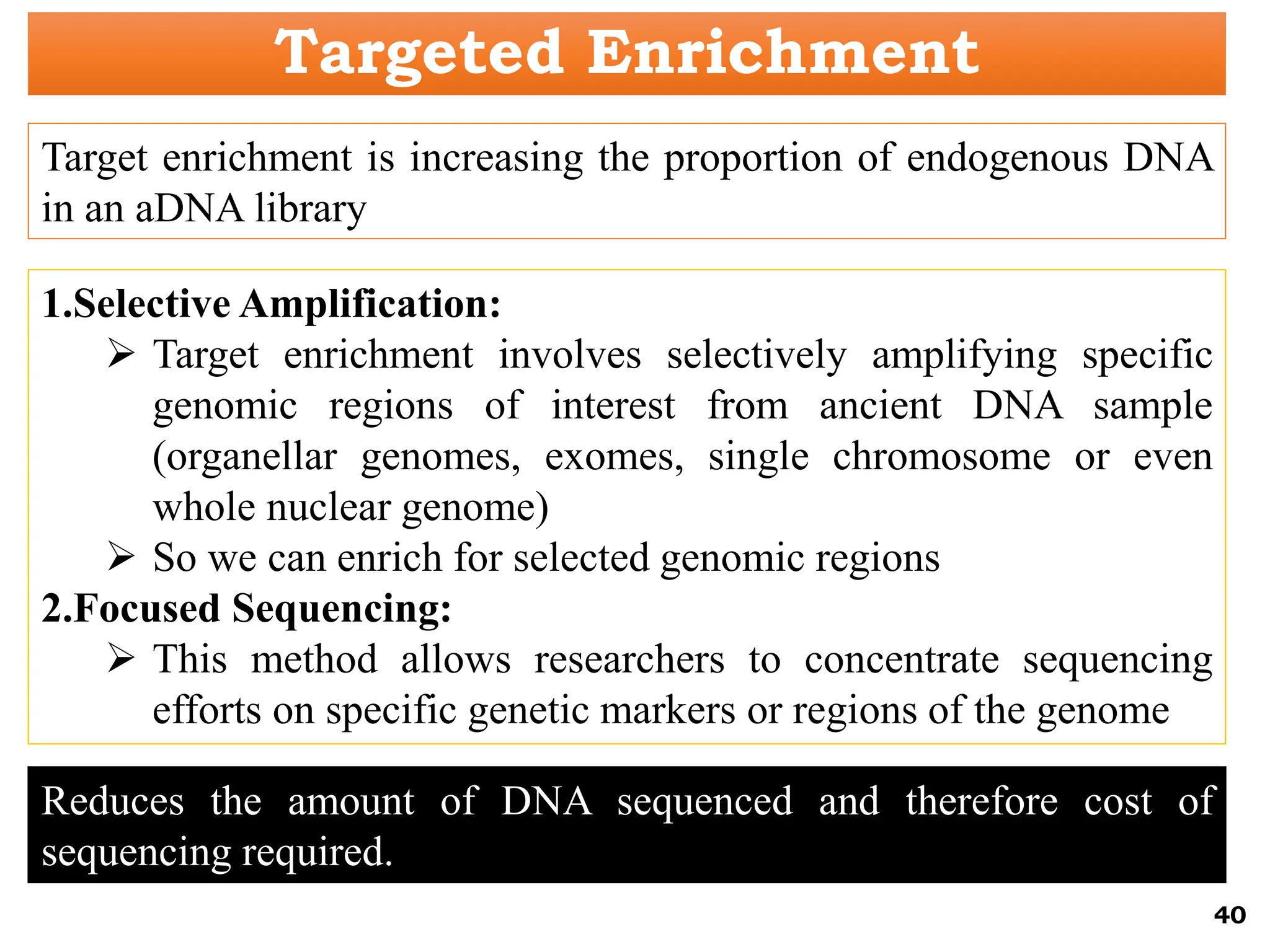
Targeted Enrichment
Target enrichment is increasing the proportion of endogenous DNA
in an aDNA library
Reduces the amount of DNA sequenced and therefore cost of
sequencing required.
1.Selective Amplification:
 Target enrichment involves selectively amplifying specific
genomic regions of interest from ancient DNA sample
(organellar genomes, exomes, single chromosome or even
whole nuclear genome)
 So we can enrich for selected genomic regions
2.Focused Sequencing:
 This method allows researchers to concentrate sequencing
efforts on specific genetic markers or regions of the genome
41
Targeted
Enrichment
In-solution beads capture Microarray-based capture
Hybridization
Sequencing library
Baits library- Sequence
is similar to existing
organism
Sequencing targeted
molecules only
(Lindqvist et al., 2019)
A
general
pipeline
for
bioinformatic
analyses
in
paleogenomic
studies
42
Authentication of aDNA
43
Deamination as Authentication Marker:
 Deamination, a common postmortem DNA damage,
increases with age of fossil
 Elevated levels of deamination serve as an indicator of
ancient DNA, aiding in authentication
A
general
pipeline
for
bioinformatic
analyses
in
paleogenomic
studies
44
45
Applications
of
Plaeogenomics
Evolutionary
Insights
Genetic
Diversity
Historical &
Cultural
Insights
Nutritional
quality
and Stress
tolerance
Bridging Time Gaps: Paleogenomics in Plant
Research
It is estimated that approximately 2,500 species of plants have been
subject to domestication since the last glacial period, over 12,000
years ago
However, the domestication history of most crop species remains
unclear, with several fundamental questions regarding wild progenitor
species, timing of domestication and geographic regions of
domestication, yet to be answered
Paleogenomics helps us time-travel through plant DNA, solving
mysteries about how ancient plants became the crops we rely on
today, answering questions about their origins, timelines, and where
they first grew
46
47
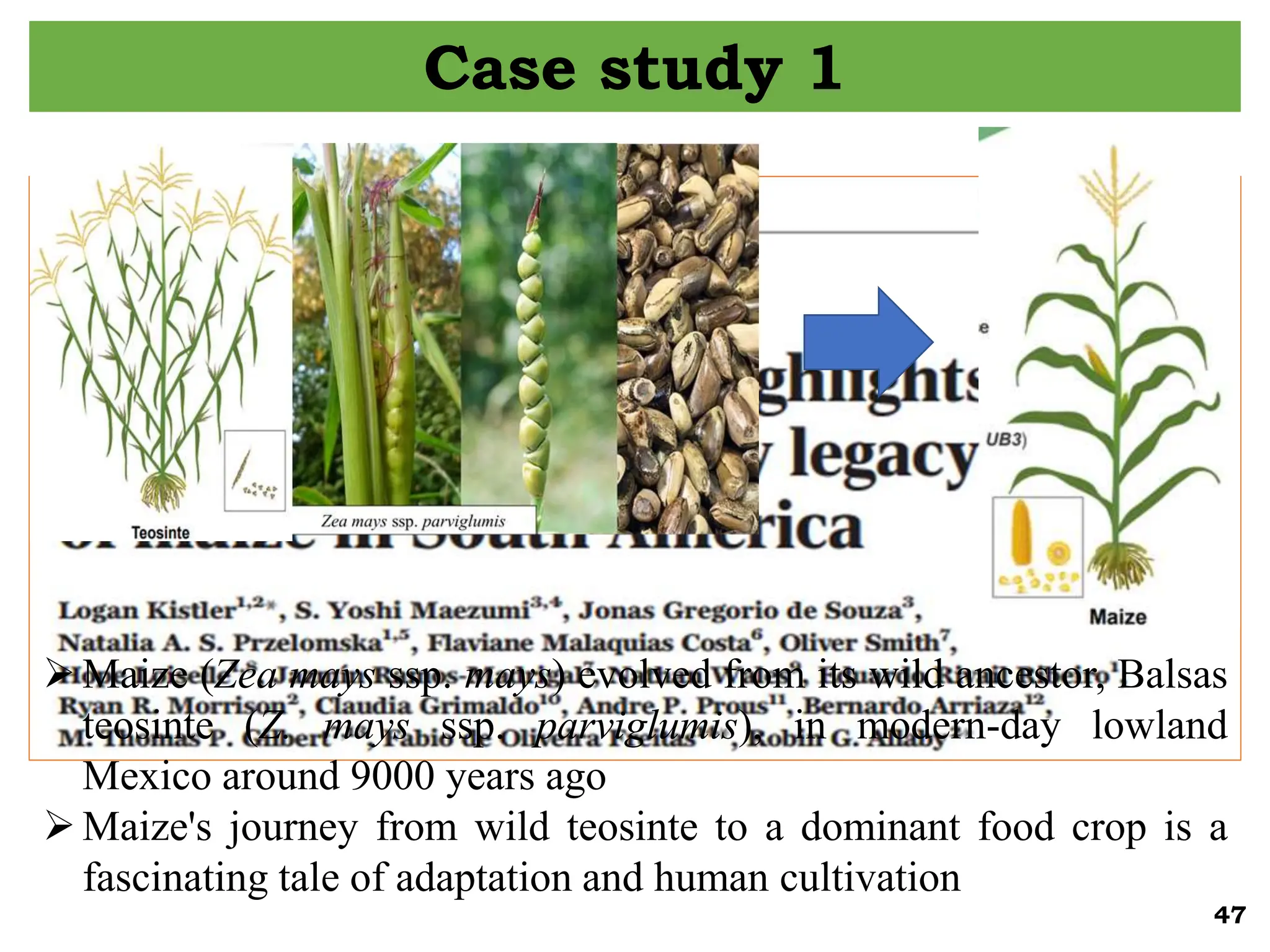
Case study 1
Maize (Zea mays ssp. mays) evolved from its wild ancestor, Balsas
teosinte (Z. mays ssp. parviglumis), in modern-day lowland
Mexico around 9000 years ago
Maize's journey from wild teosinte to a dominant food crop is a
fascinating tale of adaptation and human cultivation
48
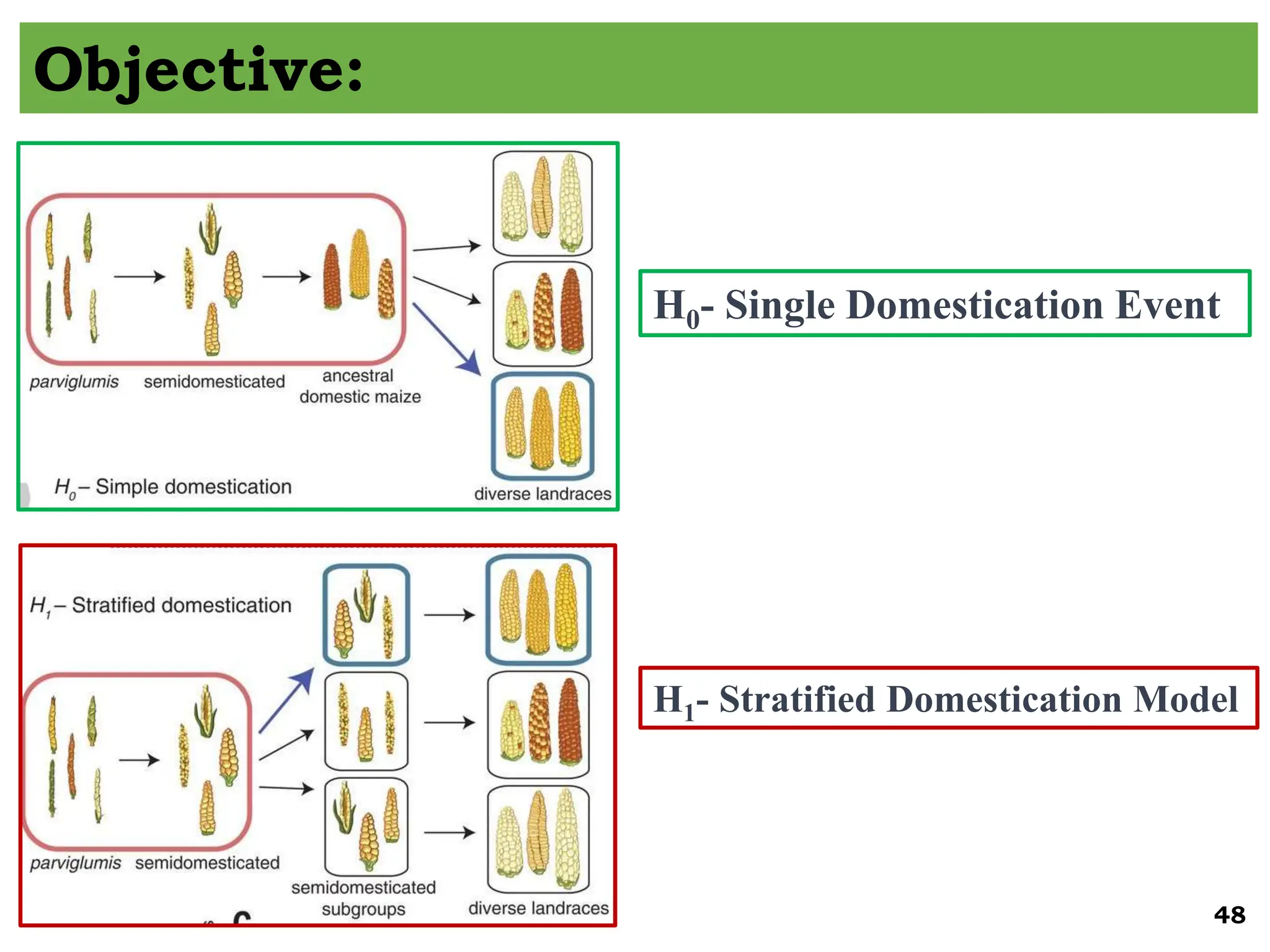
H0- Single Domestication Event
H1- Stratified Domestication Model
Objective:
49
Sample Type Number of
Samples
Source
Modern Landraces 40 Indigenous maize landraces from
South America
Archaeological
Samples
9 Excavated maize samples from
archaeological sites
Modern Genomes 68 Published modern maize
genomes
Ancient Genomes 2 Published ancient maize genomes
Teosinte Genomes 2 Published teosinte genomes
Material and Method:
50
Archaeogenomic evidence
Maize was Partially
domesticated in Mexico by
~5300 yr B.P.
Carrying a mixture of wild-
type and maize-like alleles
at loci involved in the
domestication syndrome
This partially domesticated
maize was grown in
Mexico
This state persisted even after maize had become established in other
regions
51
f4 Statistics
 f4 statistics demonstrated excess allele sharing between the Pan-
American lineage and wild parviglumis compared with other maize
 Revealing nonuniform crop-wild gene flow after initial
domestication
52
Output of study:
Complex Domestication Process: Maize domestication is not
a singular event; it involves a complex, stratified process
South American Maize Dynamics: South American maize
exhibited partial domestication and divergence during early
domestication stages
Multiple Dispersal Waves: Dispersal of maize occurred in
multiple waves, challenging the notion of a single migration
event
53
Herbarium Paleogenomics: Plant
Archival DNA Explored
herbaria contains preserved plants, seeds, fungi, and algae
collected at different phenological stages
Herbarium specimens are commonly preserved on paper sheets or
stored in folded packets or small boxes, which can be treated with
solvents or pesticides to protect the specimens
54
Herbarium Paleogenomics: Plant Archival
DNA Explored
 The history of modern herbaria began in
the 16th century
 Luca Ghini, Professor of medical botany,
at the University of Bologna
Luca Ghini (1490–1556)
Carl Linnaeus
In the 18th century, Carl Linnaeus
developed his herbarium “cabinet”
collection
 Includes approximately 14,000 sheets
of plant specimens and several
zoological specimens
 Developed a method to make plant specimens transportable and
preservable over time
 He created the first herbarium (Hortus siccus) in the year
1544
Linnaeus provided innovative instruction on how to
establish an herbarium collection
Herbarium Paleogenomics: Plant
Archival DNA Explored
55
Global herbarium collections:
 In 1935, the International Association for Plant Taxonomy (IAPT)
established the “Index Herbarium” (http://sweetgum.nybg.org/science/ih/)
 Comprehensive resource that serves as a global directory
of herbaria.
~400 million
specimens
~3500
active herbaria
(Papalini et al., 2023)
56
01
02
03
04
Muséum National d’Histoire
Naturelle, France
New York Botanical Garden, USA
Komarov Botanical Institute,
Russia
Royal Botanic Gardens, UK
Global herbarium collections:
Herbarium Paleogenomics: Plant
Archival DNA Explored
(Papalini et al., 2023)
57
Herbarium Paleogenomics: Plant
Archival DNA Explored
 DNA decay is fast (6x
faster than bone)
 Damage accumulates
faster
 High endogenous DNA
content
58
Herbarium Paleogenomics: Plant Archival DNA
Explored
(Papalini et al., 2023)
59
 Objective: To analyze the genomic evolution of
Phytophthora infestans, the causal agent of potato late
blight which caused Irish potato famine in 19th century
Materials and Methods
60
 Historic herbarium specimens
from the initial 1845 outbreaks in
Belgium and later outbreaks in
Europe
 Modern isolates from North
America
 High-throughput Sequencing:
Shotgun sequencing of DNA
extracts from blight-infected
potato leaves
Phylogenetic Analysis: To assess evolutionary relationships
61
Results
The diversity within historic samples highlights the complexity of P.
infestans evolution
Phylogenetic Analysis:
Output of study:
62
Phylogenetic analysis provide insights into the evolutionary
history of P. infestans
Identified distinct nuclear genotypes in historical European
samples
Understanding the multiple introductions is crucial for
tracing the pathogen's migratory history and its impact on
global potato late blight outbreaks
Multiple Episodes of Domestication
63
 Paleogenomics is changing our understanding of domestication
 It gives us the opportunity to witness the process as it unfolds
instead of being limited to studying the end product
64
The earliest Domestic horse specimen
from Botai culture site dated to around
5500 years ago
Przewalski’s horses have long been considered to
be the only living wild horse
Modern day horses
Extinct wild Horses specimens
Objective of the study:
65
Przewalski’s horse
Modern horse
Whether Przewalski
is a wild species ?
Is it a wild progenitor of
Modern day horses ?
Objective of the study:
Sample Type
Number of
Samples Description
Botai Culture Horse
Genomes
20
Genomes from horses
associated with the Botai
culture sites over the past 5000
years
Other European and
Central Asian Horse
Genomes
20
Genomes from horses
excavated from locations in
Europe and Central Asia (past
5000 years)
Previously Published
Ancient and Modern
Domestic Horse Genomes
N/A
Comparison with existing
ancient and modern domestic
horse genomes
19th Century Przewalski’s
Horse Genome
1
Genome from a Przewalski’s
horse dating back to the 19th
century
66
Material and Method:
67
Results
Domestication De-domestication/
Feralization
Feralization/De-domestication
Przewalski’s horse
Przewalski’s horses are a feral population
descended from the horses that were first
domesticated at sites like Botai
Modern domestic horses likely evolved from
a from a different lineage of wild horses.
68
Output of study:
69
The surprising findings of this study reveal that domestication can be a
complex process, characterized by feralization, population turnover
events, and interbreeding between wild and domestic stocks
These findings underscore the point that past population dynamics
cannot always be inferred from present-day DNA variation
The conventional view of crop evolution
includes domestication to landrace from
wild plants and improvement of modern
cultivars from the landrace
Feral plants (de-domesticates) form the
fourth node and, therefore, extend crop
evolutionary complexity
Domestication, as an extensive selection process, can also lead to
a reduction in the genetic diversity of cultivated species
Hence, investigating new sources of genetic variation is critical
for crop improvement
70
Paleogenomics opens a new path to directly access the genetic
information that has changed at various stages of plant
domestication
Utilizing Paleogenomics for Enhancing Crop Genetic Diversity
and Trait Improvement
Enabling the identification of lost genetic diversity and the potential
to reintroduce extinct loci related to desired traits
Studies of modern plant DNA have already detected
several genetic loci associated with tolerance to abiotic and
biotic factors
DNA capture-enrichment methods on aDNA can be used
to investigate such genes of ancient plants, and identify
allelic variants for these traits
71
Unlocking Ancient Genetic Variation for Modern Crop
Resilience
72
(Donato et al., 2018)
Unlocking Ancient Genetic Variation for Modern Crop
Resilience
73
Structural Variants in Ancient Genomes
(Pont et al., 2019)
74
Paleogenomic study on the Black Death revealed
the genomic makeup of the ancient pathogen
Yersinia pestis, shedding light on its evolutionary
history and dynamics of historical pandemics
Ancient Pathogens Through Human History:
The Black Death, a devastating pandemic in the
14th century
Ancient bacterial and viral genomes provide a
window into evolutionary processes of pathogens
that have accompanied humans throughout history
Most fatal pandemics in human history, as many as
50 million people perished, 50% of Europe’s
population
75
FUTURE PROSPECTS
There is a need for development of techniques
to study Paleoproteomics, Ancient
Epigenomics and Ancient RNA, will offer a
multidimensional understanding of ancient
organisms' biology
There is a need to study how plant species
have evolved and adapted to environmental
changes through time to adopt climate
change and habitat modification
Best practices for ethical sampling of
remains for aDNA research, as these are finite
resources
Build collaborations between genetics and
other disciplines, such as archaeology and
environmental studies to ensure
paleogenomic results are interpreted within
their appropriate cultural, historical, and
environmental contexts
Develop bioinformatics tools specifically
tailored for analyzing ancient DNA (aDNA)
data
Conclusion
76
77
Thank you

Paleogenomics: Connecting the dots of crop evolution

  • 1.
    Seminar-III Maruthi Prasad BP III PhD PAMB 1066 Dept. of GPB, UASB
  • 2.
  • 3.
    3 1. Studying directevidence from the fossil records Examining the preserved remains of ancient plant species These fossils provide crucial insights into the morphological changes, adaptations, and diversification of plants over geological time Radio carbon dating Reconstruct the evolutionary history of various plant lineages Limitations: Preservation of soft plant tissues, such as flowers and fruits, is rare in the fossil record, limiting our insights into reproductive strategies and key aspects of plant biology Bias in fossilization toward certain environmental conditions Understanding How Plants Evolve: Different Angles:
  • 4.
    2. Genetic analysisof germinated seeds or spores of fossil material Analyzing the fossil seeds or spores buried in the soil allows researchers to uncover the dormant genetic information of past plant populations 4 Understanding How Plants Evolve: Different Angles: Limitations: Fossil seeds are having germination problem which poses a major limitation to this method
  • 5.
    3. Studying thecurrent genetic structure of living organisms Genetic Variation Analysis Molecular Phylogenetics Comparative Genomics Population Genetics Functional Genomics 5 Understanding How Plants Evolve: Different Angles: Limitation: Living organisms are required for this approach, limiting the direct study of extinct plant species and their genetic contributions to evolutionary history
  • 6.
    Paleogenomics: Connecting the dotsof crop evolution from Modern and Ancient DNA 6
  • 7.
    Case studies . Introduction Conclusion 01 Paleogenomics 02 03 04 05 06 Outlineof Presentation How is plaeogenome generated? Applications of Paleogenomics Nature of Ancient DNA
  • 8.
    Genomics in aNutshell Genomics is the study of an organism's complete set of DNA, including genes and non-coding sequences Involves sequencing, mapping, and analyze genomes to understand genetic information Mainstream genomics often focuses on living organisms 8
  • 9.
    Overview of Paleontology Thisinterdisciplinary field combines elements of biology, geology, and chemistry to unlock the mysteries of ancient life  Insights into the processes that have shaped life over millions of years, including extinction events, adaptations, and the emergence of new species 9 Scientific discipline to study history of life on Earth as revealed through the examination of fossils Fossils are the preserved remains or traces of ancient organisms
  • 10.
    Paleontology ancient organisms or extinctorganism Genomics study of an extinct organism's complete set of DNA PALEO-GENOMICS Paleogenomics examines genomes of ancient organisms, not just living ones "Paleogenomics is a specialized field of study dedicated to unraveling the genetic information of ancient organisms. Unlike traditional genomics that focuses on living organisms, paleogenomics examines the genomes of species that lived in the past, offering unique insights into evolutionary history.” What is Paleogenomics? 10
  • 11.
    11 Brief glossary ofterms Ancient DNA (aDNA): DNA extracted from ancient specimens Archaeogenomics: paleogenomic research on samples excavated from archaeological sites and analyzed in relation to their archaeological (human) context Molecular paleontologist: Scientist studying ancient organisms DNA to understand their evolutionary relationships Fossilized remains: Preserved remnants of ancient organisms which provides valuable sources of ancient DNA Paleobotany- Complementary field of studying ancient plant fossils
  • 12.
    Key Emphasis ofPaleogenomics Studying ancient DNA: Paleogenomics centers on extracting and analyzing DNA from ancient specimens, such as fossils and preserved remains Reconstructing ancient genomes: By piecing together fragments of ancient DNA, researchers aim to reconstruct the genetic makeup of organisms that are extinct. Understanding evolutionary processes: To decipher how species have evolved over time, providing a window into the dynamics of ancient ecosystems 12
  • 13.
    Why to studyancient DNA? 13 1. Ancient DNA is a time capsule 2. Plant evolution and admixture 3. Ecology and evolution of life 4. Human migration 5. Development of agriculture 6. History of pathogens 7. Phenotypic traits
  • 14.
    14 Svante Pääbo His researchestablished the scientific discipline of PALEOGENOMICS Nobel Prize in Physiology or Medicine 2022 Paleogenomics: A Journey Through Time Neanderthal Genome Sequencing Identification of Denisovans human population Developing and refining methods for extracting and sequencing ancient DNA First complete human paleogenome (Denisovan Genomics) was sequenced in 2010 from Denisova Cave in Siberia Paleogenomic studies reveal the existence of the Denisovans group of individuals, a sister group to Neanderthals.
  • 15.
    15  The paleogenomestudy conducted by Ragsdale et al., 2023 using Africa, Britain and Neanderthal  It was believed that humans are originated from single group of African people  Modern humans are came from 2 diverse groups that merged in ancient time Paleogenomics: A Journey Through Time
  • 16.
    16 1985 1990 20032003 2011 aDNA from mummified and herbarium tissue (Rogers & Bendish 1985) aDNA analysis for sequence diversity of Adh2 gene to infer evolution of maize (Goloubinoff et al., 1993) First large-scale ancient DNA metabarcoding study of plant diversity of sediments (Willerslev et al., 2003) First aDNA target capture to overcome restrictions posed by low endogenous and contaminating DNA (Ávila- Arcos et al., 2011) Plant DNA of Miocene age (Golenberg et al., 1990) Ancient selection on maize by humans revealed by aDNA (Jaenicke-Despres et al., 2003) 2005 aDNA from fossil pollen from lake sediment in Sweden (Parducci et al., 2005) 1993 Paleogenomics: A Journey Through Time
  • 17.
    17 2013 2016 2017 Completeancient plant genomes of barley and Maize (Mascher et al. 2016, Ramos- Madrigal et al., 2016, Vallebueno-Estrada et al., 2016) Small plant RNA in Barley (Smith et al., 2017) Eukaryotic plant pathogens like Phytophthora infestans that triggered the Irish potato famine (Martin et al., 2013, Yoshida et al., 2013) Ancient plant genome sequencing in Gossypium (Palmer et al., 2012) 2012 Paleogenomics: A Journey Through Time
  • 18.
    Ancient Genome Reconstruction 18 SynchronicApproach Allochronic Approach Compares modern genomes to reconstruct ancestral genomes over deep timescales of several millions of years  Macro-evolution  Direct sequencing of genomes from past plant fossil materials that have been preserved over the past 10,000 years  Micro-evolution
  • 19.
    Ancient Genome Reconstructionusing Synchronic Approach Ortholog identification → pPGs [Putative protogenes] Synteny identification →SBs [Synteny blocks] Ancestral chromosome → Core-pPGs [Core protogenes] Ancestral genome → oPGs [Ordered protogenes] (Pont et al., 2019) 19
  • 20.
    Clustering or chainingcollinear gene pairs DRIMM-synteny, ADHoRe, DiagHunter, DAGchainer, SyMAP, MCScanX Reconstructing ancestral genomes ANGES, MRGA, inferCARs Tools for Synchronic approach 20
  • 21.
    Paleogenomics work workflow-Allochronic Approach (Pont et al., 2019) 21
  • 22.
    22 Sample collection Sources ofaDNA (Estrada et al., 2018)
  • 23.
    23 2. Desiccated Leavesand stems 4. Seeds Sample collection 1.Fossil Pollen grains 3. Fruits and nuts
  • 24.
    Sample collection 24 1.Chaco Canyon(New Mexico, USA) 2.Jomon Period Sites (Japan) 3.Swiss Lake Dwellings 4.Mesoamerican Sites (e.g., Teotihuacan, Mexico) 5.Neolithic Sites in the Near East (e.g., Jericho, Israel) 6.Ancient Egyptian Sites 7.Denisova Cave (Siberia, Russia)
  • 25.
    25 Ancient DNA ExtractionMethods 1.Preparation:  Clean the fossil samples to remove surface contaminants  If necessary, grind or pulverize the sample to increase surface area and facilitate DNA extraction 2.Decalcification (if applicable):  If the fossil contains mineralized material (e.g., calcium carbonate), decalcify the sample using a weak acid (e.g., EDTA)  To dissolve the minerals and expose the organic material containing DNA 3.DNA Extraction:  Perform DNA extraction using specialized protocols optimized for ancient DNA recovery  Utilize methods such as phenol-chloroform extraction, silica column-based purification, or magnetic bead-based extraction to isolate DNA from the fossil material
  • 26.
    26 Ancient DNA ExtractionMethods (Donato et al., 2018)
  • 27.
    27 Nature of AncientDNA 1. Degradation or Damage of DNA in deceased tissues A. Short DNA fragment lengths B. Low endogenous DNA content C. High rates of nucleotide damage 2. Exogenous DNA contamination from modern DNA
  • 28.
    28 A. Short DNAfragment lengths  Shorter fragment lengths compared to fresh DNA  Environmental factors and enzymatic activity contribute to DNA fragmentation over time  Challenges in PCR amplification and sequencing  Adapt extraction and amplification techniques for successful analysis of short aDNA fragments 1. Degradation or Damage of DNA in deceased tissues
  • 29.
    29 B. Low endogenousDNA content  Endogenous DNA refers to the authentic genetic material originating from the fossil  Ancient tissues often yield low endogenous DNA content due to degradation  Contaminating environmental DNA may contribute to the overall DNA content but is non-endogenous.  Rigorous contamination controls and selective amplification strategies are essential for accurate analysis of low-endogenous DNA samples 1. Degradation or Damage of DNA in deceased tissues
  • 30.
    30 1. Degradation orDamage of DNA in deceased tissues Ancient DNA (aDNA) in deceased tissues experiences chemical and environmental degradation Deamination, a prevalent hydrolytic DNA damage, is notably swift for cytosine, leading to the conversion of cytosine to uracil in the DNA molecule This chemical transformation occurs naturally in dead organisms and has significant consequences for subsequent DNA analyses  During PCR, deoxyuridine residues in the template strand prompt DNA polymerases to incorporate deoxyadenosine at positions where deoxyguanosine would typically be added  Deamination induces C→T and G→A transitions in the DNA sequence, creating mismatches during replication Purine loss results in the formation of overhanging ends
  • 31.
    31 2. Exogenous DNA contamination aDNA often coexists with abundant environmental DNA mostly from microbes, fungi, and plants that colonized the remains, resulting in extremely small proportion of endogenous DNA in an extract  For Ex, the first Neanderthal genome was reconstructed from DNA samples with only 1-5% endogenous DNA (Green et al., 2010) Control Measures: 1. Laboratory Controls: Enforce strict separation and employ dedicated equipment for aDNA analysis to minimize cross- contamination 2. Authentication Markers: To differentiate between endogenous and exogenous DNA 3. Protective Measures while working with aDNA 4. Negative Controls: Implement mock extractions and PCR controls without ancient DNA to monitor and detect contamination at every stage of the process 5. Unique Barcoding: Employ unique barcoding for aDNA libraries to identify and discard contaminated sequences  Exogenous DNA can distort the genetic information derived from ancient samples, leading to misinterpretations  Sources of Exogenous DNA  Modern DNA  Researcher's DNA  Environmental DNA
  • 32.
    Aspect Paleogenetics Paleogenomics Focus Primarilyinvolves studying genes Involves the study of entire genomes Data Sources Analyzes specific genetic markers Utilizes high-throughput sequencing tech Time Scale Typically spans shorter genetic regions Encompasses entire genomic sequences Applicatio ns Investigates specific genetic traits Offers a more comprehensive evolutionary view 32 Paleogenetics vs Paleogenomics
  • 33.
    Before introduction ofNGS technologies, conventional PCR followed by Sanger sequencing was used for aDNA sequencing It is not feasible for large-scale genomic studies due to its limited throughput and high cost Paleogenomics using Next-Generation Sequencing and Library Preparation 33  NGS technologies can generate millions to billions of DNA sequence reads  Provides whole-genome-scale data within a short period and at much lower cost per base
  • 34.
    NGS platforms requireconstruction of a sequencing library, where all DNA fragments in a sample are normally end-repaired and ligated to universal sequencing adapters Enables the sequencing of all the fragments simultaneously For an aDNA sample, three major limiting factors: Extremely low copy number of endogenous DNA The high levels of PCR inhibitors Abundance of damaged bases 34 Paleogenomics using Next-Generation Sequencing and Library Preparation Lead to less efficient conversion of DNA fragments into an adapter-ligated form and substantial loss of endogenous DNA due to several rounds of purification and inflation of exogenous DNA content during amplification
  • 35.
    Library Construction Methods 1.Double-stranded Library construction method 2. Single-stranded Library construction method 35
  • 36.
    36 Blunt-end repair Double-stranded methods A. 454-typeMeyer and Kircher, 2010 B. Illumina-type Bentley et al., 2008 Adapter fill-in Indexing oligo A-tailing Indexing-PCR Indexing oligo Indexing-PCR
  • 37.
    1. Compromised Sensitivityto Single-Stranded Fragments: Fragments of surviving aDNA may be single-stranded, only double-stranded fragments of DNA become part of the sequencing library in this method 2. Higher Template Requirement The preparation of double-stranded libraries often requires a higher amount of starting material, which can be a limitation when working with limited or highly degraded ancient DNA samples 37 Limitations of Double-stranded Library
  • 38.
    Single-stranded methods 38 Denaturation A. Gansauge andMeyer, 2013 B. ssDNA2.0 Gansauge et al., 2017 Biotinylated adapter Biotinylated adapter
  • 39.
    Advantages: DNA molecules aretightly bound to streptavidin-coated beads, which avoids the loss of molecules in purification step. Single stranded molecules can be recovered Recovery of more short reads 39 Single-stranded Library Disadvantages: It is more costly and time consuming Conversion efficiency drops for molecules longer than 120bp
  • 40.
    40 Targeted Enrichment Target enrichmentis increasing the proportion of endogenous DNA in an aDNA library Reduces the amount of DNA sequenced and therefore cost of sequencing required. 1.Selective Amplification:  Target enrichment involves selectively amplifying specific genomic regions of interest from ancient DNA sample (organellar genomes, exomes, single chromosome or even whole nuclear genome)  So we can enrich for selected genomic regions 2.Focused Sequencing:  This method allows researchers to concentrate sequencing efforts on specific genetic markers or regions of the genome
  • 41.
    41 Targeted Enrichment In-solution beads captureMicroarray-based capture Hybridization Sequencing library Baits library- Sequence is similar to existing organism Sequencing targeted molecules only (Lindqvist et al., 2019)
  • 42.
  • 43.
    Authentication of aDNA 43 Deaminationas Authentication Marker:  Deamination, a common postmortem DNA damage, increases with age of fossil  Elevated levels of deamination serve as an indicator of ancient DNA, aiding in authentication
  • 44.
  • 45.
  • 46.
    Bridging Time Gaps:Paleogenomics in Plant Research It is estimated that approximately 2,500 species of plants have been subject to domestication since the last glacial period, over 12,000 years ago However, the domestication history of most crop species remains unclear, with several fundamental questions regarding wild progenitor species, timing of domestication and geographic regions of domestication, yet to be answered Paleogenomics helps us time-travel through plant DNA, solving mysteries about how ancient plants became the crops we rely on today, answering questions about their origins, timelines, and where they first grew 46
  • 47.
    47 Case study 1 Maize(Zea mays ssp. mays) evolved from its wild ancestor, Balsas teosinte (Z. mays ssp. parviglumis), in modern-day lowland Mexico around 9000 years ago Maize's journey from wild teosinte to a dominant food crop is a fascinating tale of adaptation and human cultivation
  • 48.
    48 H0- Single DomesticationEvent H1- Stratified Domestication Model Objective:
  • 49.
    49 Sample Type Numberof Samples Source Modern Landraces 40 Indigenous maize landraces from South America Archaeological Samples 9 Excavated maize samples from archaeological sites Modern Genomes 68 Published modern maize genomes Ancient Genomes 2 Published ancient maize genomes Teosinte Genomes 2 Published teosinte genomes Material and Method:
  • 50.
    50 Archaeogenomic evidence Maize wasPartially domesticated in Mexico by ~5300 yr B.P. Carrying a mixture of wild- type and maize-like alleles at loci involved in the domestication syndrome This partially domesticated maize was grown in Mexico This state persisted even after maize had become established in other regions
  • 51.
    51 f4 Statistics  f4statistics demonstrated excess allele sharing between the Pan- American lineage and wild parviglumis compared with other maize  Revealing nonuniform crop-wild gene flow after initial domestication
  • 52.
    52 Output of study: ComplexDomestication Process: Maize domestication is not a singular event; it involves a complex, stratified process South American Maize Dynamics: South American maize exhibited partial domestication and divergence during early domestication stages Multiple Dispersal Waves: Dispersal of maize occurred in multiple waves, challenging the notion of a single migration event
  • 53.
    53 Herbarium Paleogenomics: Plant ArchivalDNA Explored herbaria contains preserved plants, seeds, fungi, and algae collected at different phenological stages Herbarium specimens are commonly preserved on paper sheets or stored in folded packets or small boxes, which can be treated with solvents or pesticides to protect the specimens
  • 54.
    54 Herbarium Paleogenomics: PlantArchival DNA Explored  The history of modern herbaria began in the 16th century  Luca Ghini, Professor of medical botany, at the University of Bologna Luca Ghini (1490–1556) Carl Linnaeus In the 18th century, Carl Linnaeus developed his herbarium “cabinet” collection  Includes approximately 14,000 sheets of plant specimens and several zoological specimens  Developed a method to make plant specimens transportable and preservable over time  He created the first herbarium (Hortus siccus) in the year 1544 Linnaeus provided innovative instruction on how to establish an herbarium collection
  • 55.
    Herbarium Paleogenomics: Plant ArchivalDNA Explored 55 Global herbarium collections:  In 1935, the International Association for Plant Taxonomy (IAPT) established the “Index Herbarium” (http://sweetgum.nybg.org/science/ih/)  Comprehensive resource that serves as a global directory of herbaria. ~400 million specimens ~3500 active herbaria (Papalini et al., 2023)
  • 56.
    56 01 02 03 04 Muséum National d’Histoire Naturelle,France New York Botanical Garden, USA Komarov Botanical Institute, Russia Royal Botanic Gardens, UK Global herbarium collections: Herbarium Paleogenomics: Plant Archival DNA Explored (Papalini et al., 2023)
  • 57.
    57 Herbarium Paleogenomics: Plant ArchivalDNA Explored  DNA decay is fast (6x faster than bone)  Damage accumulates faster  High endogenous DNA content
  • 58.
    58 Herbarium Paleogenomics: PlantArchival DNA Explored (Papalini et al., 2023)
  • 59.
    59  Objective: Toanalyze the genomic evolution of Phytophthora infestans, the causal agent of potato late blight which caused Irish potato famine in 19th century
  • 60.
    Materials and Methods 60 Historic herbarium specimens from the initial 1845 outbreaks in Belgium and later outbreaks in Europe  Modern isolates from North America  High-throughput Sequencing: Shotgun sequencing of DNA extracts from blight-infected potato leaves Phylogenetic Analysis: To assess evolutionary relationships
  • 61.
    61 Results The diversity withinhistoric samples highlights the complexity of P. infestans evolution Phylogenetic Analysis:
  • 62.
    Output of study: 62 Phylogeneticanalysis provide insights into the evolutionary history of P. infestans Identified distinct nuclear genotypes in historical European samples Understanding the multiple introductions is crucial for tracing the pathogen's migratory history and its impact on global potato late blight outbreaks
  • 63.
    Multiple Episodes ofDomestication 63  Paleogenomics is changing our understanding of domestication  It gives us the opportunity to witness the process as it unfolds instead of being limited to studying the end product
  • 64.
    64 The earliest Domestichorse specimen from Botai culture site dated to around 5500 years ago Przewalski’s horses have long been considered to be the only living wild horse Modern day horses Extinct wild Horses specimens Objective of the study:
  • 65.
    65 Przewalski’s horse Modern horse WhetherPrzewalski is a wild species ? Is it a wild progenitor of Modern day horses ? Objective of the study:
  • 66.
    Sample Type Number of SamplesDescription Botai Culture Horse Genomes 20 Genomes from horses associated with the Botai culture sites over the past 5000 years Other European and Central Asian Horse Genomes 20 Genomes from horses excavated from locations in Europe and Central Asia (past 5000 years) Previously Published Ancient and Modern Domestic Horse Genomes N/A Comparison with existing ancient and modern domestic horse genomes 19th Century Przewalski’s Horse Genome 1 Genome from a Przewalski’s horse dating back to the 19th century 66 Material and Method:
  • 67.
  • 68.
    Domestication De-domestication/ Feralization Feralization/De-domestication Przewalski’s horse Przewalski’shorses are a feral population descended from the horses that were first domesticated at sites like Botai Modern domestic horses likely evolved from a from a different lineage of wild horses. 68
  • 69.
    Output of study: 69 Thesurprising findings of this study reveal that domestication can be a complex process, characterized by feralization, population turnover events, and interbreeding between wild and domestic stocks These findings underscore the point that past population dynamics cannot always be inferred from present-day DNA variation The conventional view of crop evolution includes domestication to landrace from wild plants and improvement of modern cultivars from the landrace Feral plants (de-domesticates) form the fourth node and, therefore, extend crop evolutionary complexity
  • 70.
    Domestication, as anextensive selection process, can also lead to a reduction in the genetic diversity of cultivated species Hence, investigating new sources of genetic variation is critical for crop improvement 70 Paleogenomics opens a new path to directly access the genetic information that has changed at various stages of plant domestication Utilizing Paleogenomics for Enhancing Crop Genetic Diversity and Trait Improvement Enabling the identification of lost genetic diversity and the potential to reintroduce extinct loci related to desired traits
  • 71.
    Studies of modernplant DNA have already detected several genetic loci associated with tolerance to abiotic and biotic factors DNA capture-enrichment methods on aDNA can be used to investigate such genes of ancient plants, and identify allelic variants for these traits 71 Unlocking Ancient Genetic Variation for Modern Crop Resilience
  • 72.
    72 (Donato et al.,2018) Unlocking Ancient Genetic Variation for Modern Crop Resilience
  • 73.
    73 Structural Variants inAncient Genomes (Pont et al., 2019)
  • 74.
    74 Paleogenomic study onthe Black Death revealed the genomic makeup of the ancient pathogen Yersinia pestis, shedding light on its evolutionary history and dynamics of historical pandemics Ancient Pathogens Through Human History: The Black Death, a devastating pandemic in the 14th century Ancient bacterial and viral genomes provide a window into evolutionary processes of pathogens that have accompanied humans throughout history Most fatal pandemics in human history, as many as 50 million people perished, 50% of Europe’s population
  • 75.
    75 FUTURE PROSPECTS There isa need for development of techniques to study Paleoproteomics, Ancient Epigenomics and Ancient RNA, will offer a multidimensional understanding of ancient organisms' biology There is a need to study how plant species have evolved and adapted to environmental changes through time to adopt climate change and habitat modification Best practices for ethical sampling of remains for aDNA research, as these are finite resources Build collaborations between genetics and other disciplines, such as archaeology and environmental studies to ensure paleogenomic results are interpreted within their appropriate cultural, historical, and environmental contexts Develop bioinformatics tools specifically tailored for analyzing ancient DNA (aDNA) data
  • 76.
  • 77.