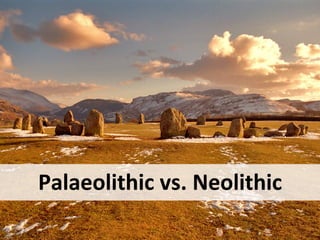
Palaeolithic vs. Neolithic
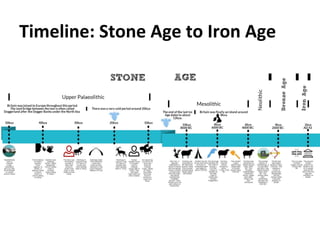
Timeline: Stone Age to Iron Age
Food
Palaeolithic Age
• Men hunted and women
gathered from around the area as
needed.
• Flora and fauna was markedly
different (e.g. Mammoths).
Neolithic Age
• People learned how to grow
crops.
• People domesticated animals,
insects and fish to provide meat,
skins and milk.
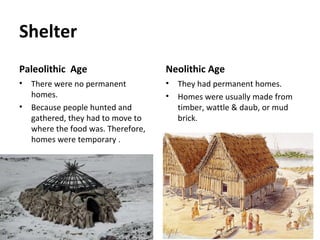
Shelter
Paleolithic Age
• There were no permanent
homes.
• Because people hunted and
gathered, they had to move to
where the food was. Therefore,
homes were temporary .
Neolithic Age
• They had permanent homes.
• Homes were usually made from
timber, wattle & daub, or mud
brick.
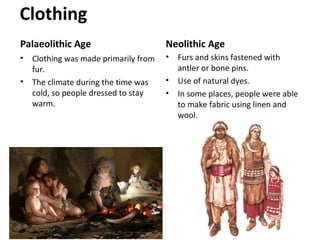
Clothing
Palaeolithic Age
• Clothing was made primarily from
fur.
• The climate during the time was
cold, so people dressed to stay
warm.
Neolithic Age
• Furs and skins fastened with
antler or bone pins.
• Use of natural dyes.
• In some places, people were able
to make fabric using linen and
wool.
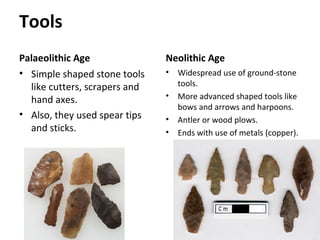
Tools
Palaeolithic Age
• Simple shaped stone tools
like cutters, scrapers and
hand axes.
• Also, they used spear tips
and sticks.
Neolithic Age
• Widespread use of ground-stone
tools.
• More advanced shaped tools like
bows and arrows and harpoons.
• Antler or wood plows.
• Ends with use of metals (copper).
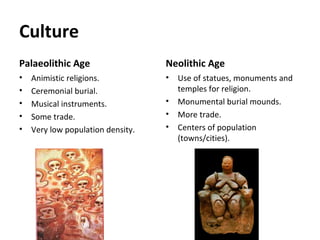
Culture
Palaeolithic Age
• Animistic religions.
• Ceremonial burial.
• Musical instruments.
Neolithic Age
• Use of statues, monuments
and temples for religion.
• Monumental burial
mounds.
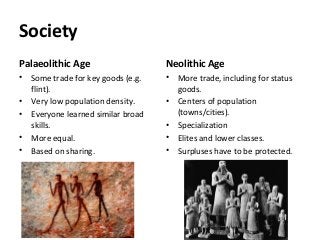
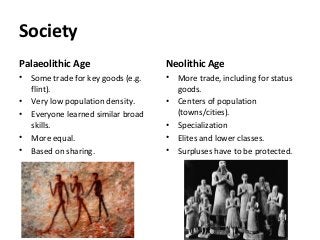
Society
Palaeolithic Age
• Some trade for key goods (e.g.
flint).
• Very low population density.
• Everyone learned similar broad
skills.
• More equal.
• Based on sharing.
Neolithic Age
• More trade, including for status
goods.
• Centers of population
(towns/cities).
• Specialization
• Elites and lower classes.
• Surpluses have to be protected.
Society
Palaeolithic Age
• Some trade for key goods (e.g.
flint).
• Very low population density.
• Everyone learned similar broad
skills.
• More equal.
• Based on sharing.
Neolithic Age
• More trade, including for status
goods.
• Centers of population
(towns/cities).
• Specialization
• Elites and lower classes.
• Surpluses have to be protected.

Palaeolithic and neolithic ages

  • 1.
  • 3.
  • 4.
    Food Palaeolithic Age • Menhunted and women gathered from around the area as needed. • Flora and fauna was markedly different (e.g. Mammoths). Neolithic Age • People learned how to grow crops. • People domesticated animals, insects and fish to provide meat, skins and milk.
  • 5.
    Shelter Paleolithic Age • Therewere no permanent homes. • Because people hunted and gathered, they had to move to where the food was. Therefore, homes were temporary . Neolithic Age • They had permanent homes. • Homes were usually made from timber, wattle & daub, or mud brick.
  • 6.
    Clothing Palaeolithic Age • Clothingwas made primarily from fur. • The climate during the time was cold, so people dressed to stay warm. Neolithic Age • Furs and skins fastened with antler or bone pins. • Use of natural dyes. • In some places, people were able to make fabric using linen and wool.
  • 7.
    Tools Palaeolithic Age • Simpleshaped stone tools like cutters, scrapers and hand axes. • Also, they used spear tips and sticks. Neolithic Age • Widespread use of ground-stone tools. • More advanced shaped tools like bows and arrows and harpoons. • Antler or wood plows. • Ends with use of metals (copper).
  • 8.
    Culture Palaeolithic Age • Animisticreligions. • Ceremonial burial. • Musical instruments. Neolithic Age • Use of statues, monuments and temples for religion. • Monumental burial mounds.
  • 9.
    Society Palaeolithic Age • Sometrade for key goods (e.g. flint). • Very low population density. • Everyone learned similar broad skills. • More equal. • Based on sharing. Neolithic Age • More trade, including for status goods. • Centers of population (towns/cities). • Specialization • Elites and lower classes. • Surpluses have to be protected.
  • 10.
    Society Palaeolithic Age • Sometrade for key goods (e.g. flint). • Very low population density. • Everyone learned similar broad skills. • More equal. • Based on sharing. Neolithic Age • More trade, including for status goods. • Centers of population (towns/cities). • Specialization • Elites and lower classes. • Surpluses have to be protected.