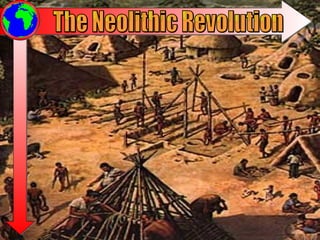
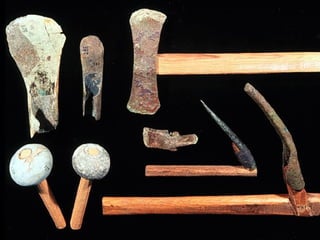

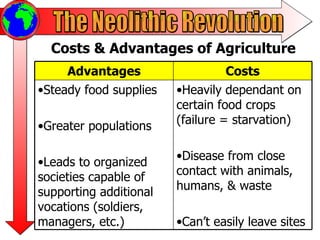
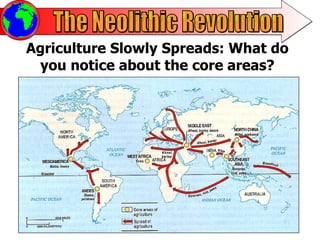




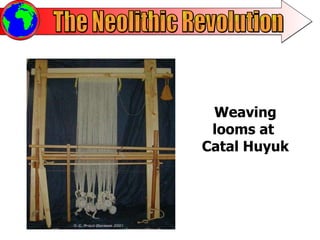


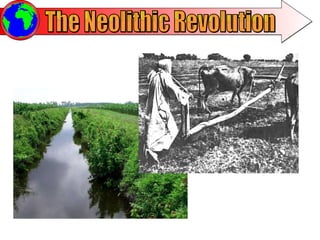

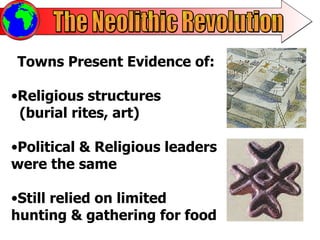


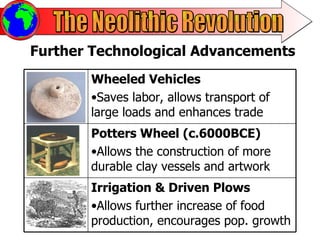


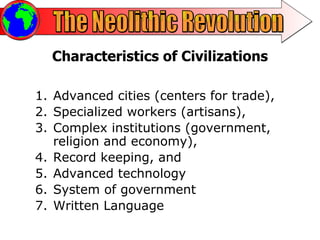

The Neolithic Revolution refers to the transition of human societies from hunting and gathering to agriculture and settlement between 8000-3500 BCE. The development of agriculture began in Southwest Asia and allowed populations to grow as food supplies became more reliable and abundant. Sedentary living led to the establishment of permanent villages and towns, which saw further technological advances in tools, pottery, weaving and metallurgy. The first large settlements, such as Catalhoyuk and Jericho, displayed evidence of social stratification and specialized labor. By 3500 BCE, advanced river valley civilizations had formed along major river systems.


![Early civilizations ppt[1]](https://cdn.slidesharecdn.com/ss_thumbnails/earlycivilizationsppt1-120905194248-phpapp02-thumbnail.jpg?width=640&height=640&fit=bounds)


