PRE- SPANISH COLONIAL ART
IN THE PHILIPPINES
History
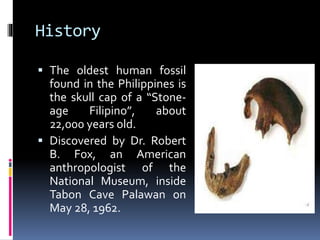
 The oldest human fossil
found in the Philippines is
the skull cap of a “Stone-
age Filipino”, about
22,000 years old.
 Discovered by Dr. Robert
B. Fox, an American
anthropologist of the
National Museum, inside
Tabon Cave Palawan on
May 28, 1962.
The Negritos
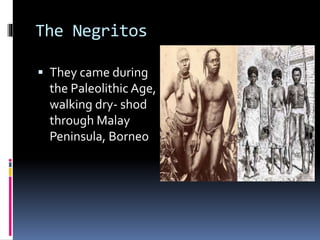
 They came during
the Paleolithic Age,
walking dry- shod
through Malay
Peninsula, Borneo
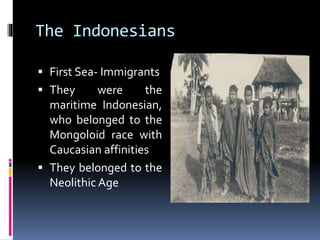
The Indonesians
 First Sea- Immigrants
 They were the
maritime Indonesian,
who belonged to the
Mongoloid race with
Caucasian affinities
 They belonged to the
Neolithic Age
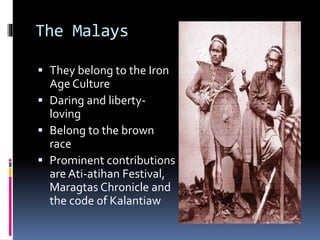
The Malays
 They belong to the Iron
Age Culture
 Daring and liberty-
loving
 Belong to the brown
race
 Prominent contributions
are Ati-atihan Festival,
Maragtas Chronicle and
the code of Kalantiaw
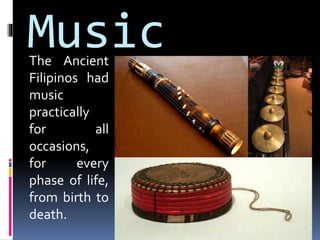
MusicThe Ancient
Filipinos had
music
practically
for all
occasions,
for every
phase of life,
from birth to
death.
Music
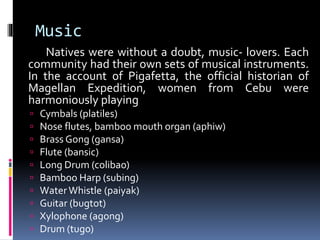
Natives were without a doubt, music- lovers. Each
community had their own sets of musical instruments.
In the account of Pigafetta, the official historian of
Magellan Expedition, women from Cebu were
harmoniously playing
 Cymbals (platiles)
 Nose flutes, bamboo mouth organ (aphiw)
 Brass Gong (gansa)
 Flute (bansic)
 Long Drum (colibao)
 Bamboo Harp (subing)
 WaterWhistle (paiyak)
 Guitar (bugtot)
 Xylophone (agong)
 Drum (tugo)
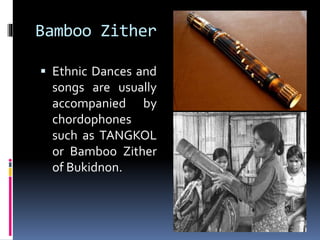
Bamboo Zither
 Ethnic Dances and
songs are usually
accompanied by
chordophones
such as TANGKOL
or Bamboo Zither
of Bukidnon.
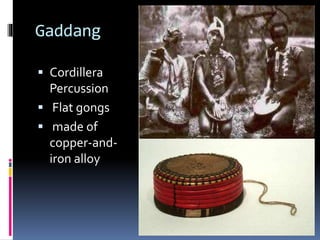
Gaddang
 Cordillera
Percussion
 Flat gongs
 made of
copper-and-
iron alloy
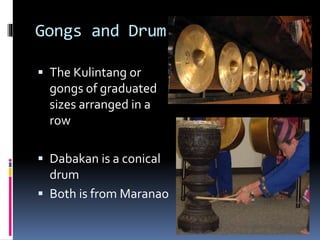
Gongs and Drum
 The Kulintang or
gongs of graduated
sizes arranged in a
row
 Dabakan is a conical
drum
 Both is from Maranao
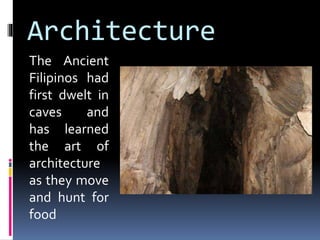
Architecture
The Ancient
Filipinos had
first dwelt in
caves and
has learned
the art of
architecture
as they move
and hunt for
food
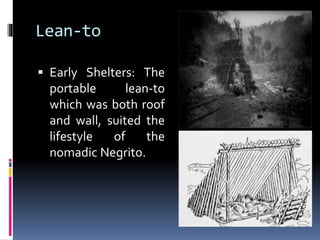
Lean-to
 Early Shelters: The
portable lean-to
which was both roof
and wall, suited the
lifestyle of the
nomadic Negrito.
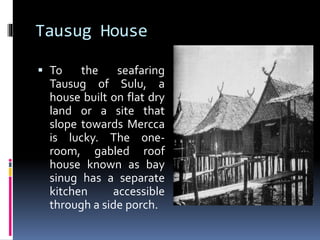
Tausug House
 To the seafaring
Tausug of Sulu, a
house built on flat dry
land or a site that
slope towards Mercca
is lucky. The one-
room, gabled roof
house known as bay
sinug has a separate
kitchen accessible
through a side porch.
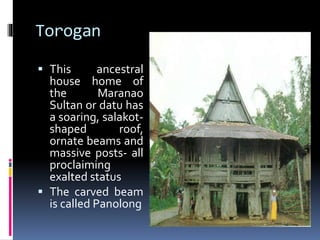
Torogan
 This ancestral
house home of
the Maranao
Sultan or datu has
a soaring, salakot-
shaped roof,
ornate beams and
massive posts- all
proclaiming
exalted status
 The carved beam
is called Panolong
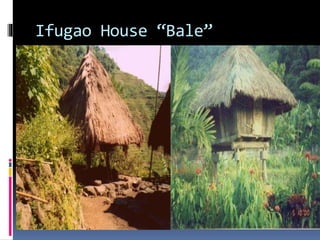
Ifugao House “Bale”
Sculpture
The ancient
Filipinos had
attained a
high artistic
level through
pottery,
jewelry and
wood-
carving.
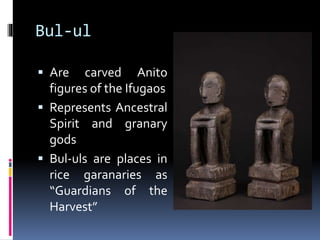
Bul-ul
 Are carved Anito
figures of the Ifugaos
 Represents Ancestral
Spirit and granary
gods
 Bul-uls are places in
rice garanaries as
“Guardians of the
Harvest”
Sarimanok
 Most well-known of the old
designs
 Represents a fowl with wings,
feathered tail, and a head
decorated with ornaments of
scrolled and painted motif of
leaves, spirals and feather- like
forms
 Usually perched atop a
bamboo pole, stands among
decorative flags during
weddings and other festive
occasions
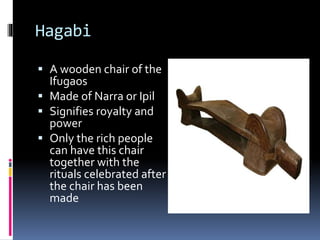
Hagabi
 A wooden chair of the
Ifugaos
 Made of Narra or Ipil
 Signifies royalty and
power
 Only the rich people
can have this chair
together with the
rituals celebrated after
the chair has been
made
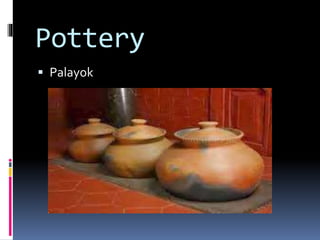
Pottery
 Palayok
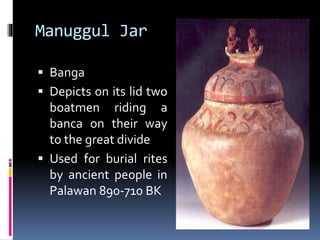
Manuggul Jar
 Banga
 Depicts on its lid two
boatmen riding a
banca on their way
to the great divide
 Used for burial rites
by ancient people in
Palawan 890-710 BK
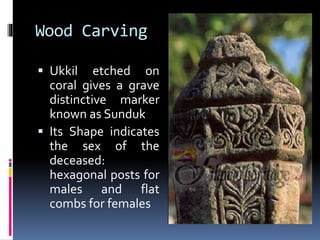
Wood Carving
 Ukkil etched on
coral gives a grave
distinctive marker
known as Sunduk
 Its Shape indicates
the sex of the
deceased:
hexagonal posts for
males and flat
combs for females
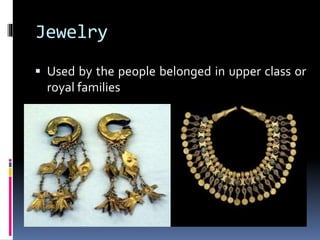
Jewelry
 Used by the people belonged in upper class or
royal families
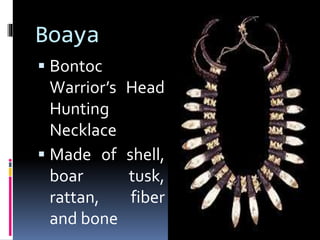
Boaya
 Bontoc
Warrior’s Head
Hunting
Necklace
 Made of shell,
boar tusk,
rattan, fiber
and bone
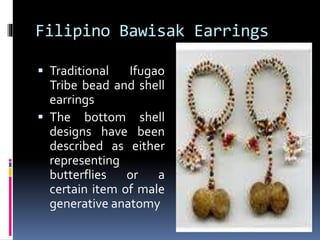
Filipino Bawisak Earrings
 Traditional Ifugao
Tribe bead and shell
earrings
 The bottom shell
designs have been
described as either
representing
butterflies or a
certain item of male
generative anatomy
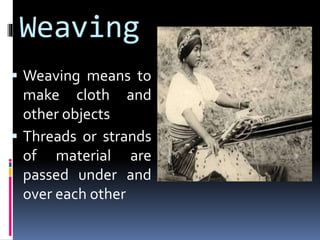
Weaving
 Weaving means to
make cloth and
other objects
 Threads or strands
of material are
passed under and
over each other
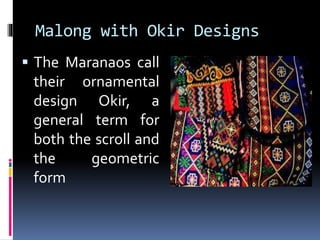
Malong with Okir Designs
 The Maranaos call
their ornamental
design Okir, a
general term for
both the scroll and
the geometric
form
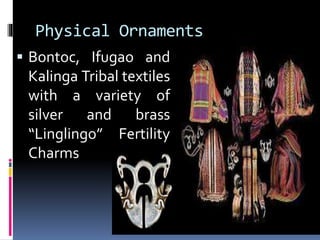
Physical Ornaments
 Bontoc, Ifugao and
Kalinga Tribal textiles
with a variety of
silver and brass
“Linglingo” Fertility
Charms
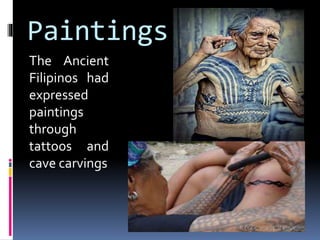
Paintings
The Ancient
Filipinos had
expressed
paintings
through
tattoos and
cave carvings
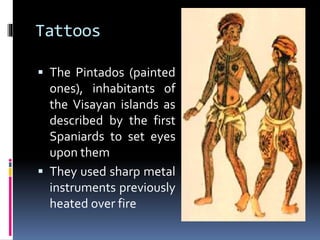
Tattoos
 The Pintados (painted
ones), inhabitants of
the Visayan islands as
described by the first
Spaniards to set eyes
upon them
 They used sharp metal
instruments previously
heated over fire
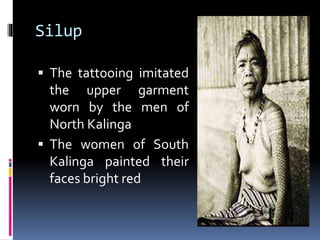
Silup
 The tattooing imitated
the upper garment
worn by the men of
North Kalinga
 The women of South
Kalinga painted their
faces bright red
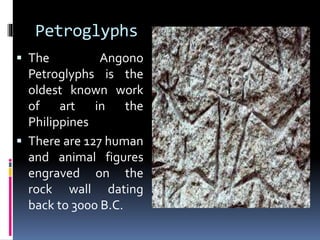
Petroglyphs
 The Angono
Petroglyphs is the
oldest known work
of art in the
Philippines
 There are 127 human
and animal figures
engraved on the
rock wall dating
back to 3000 B.C.
Literature
 The early form of literature during pre- Spanish
period was a classified into written or oral.
 Written
 Biag ni Lam- ang (Ilocano Epic)
 Indarapatra at Sulayman and Bidasari (Muslim Epics)
 Handiong (Bicolanos)
 Oral
 Maxims (sabi)
 Bugtong (riddles)
 Boat Song (talindaw)
 Victory Songs (tagumpay)
 Lullaby (uyayi)
 Wedding Songs (ihiman)
 War Song (Kumintang)
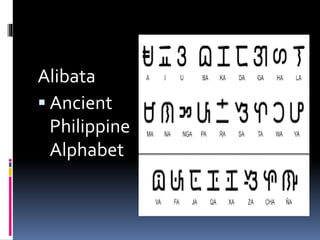
Alibata
 Ancient
Philippine
Alphabet

Pre spanish-colonial-art-in-the-philippines

  • 1.
    PRE- SPANISH COLONIALART IN THE PHILIPPINES
  • 2.
    History  The oldesthuman fossil found in the Philippines is the skull cap of a “Stone- age Filipino”, about 22,000 years old.  Discovered by Dr. Robert B. Fox, an American anthropologist of the National Museum, inside Tabon Cave Palawan on May 28, 1962.
  • 3.
    The Negritos  Theycame during the Paleolithic Age, walking dry- shod through Malay Peninsula, Borneo
  • 4.
    The Indonesians  FirstSea- Immigrants  They were the maritime Indonesian, who belonged to the Mongoloid race with Caucasian affinities  They belonged to the Neolithic Age
  • 5.
    The Malays  Theybelong to the Iron Age Culture  Daring and liberty- loving  Belong to the brown race  Prominent contributions are Ati-atihan Festival, Maragtas Chronicle and the code of Kalantiaw
  • 6.
    MusicThe Ancient Filipinos had music practically forall occasions, for every phase of life, from birth to death.
  • 7.
    Music Natives were withouta doubt, music- lovers. Each community had their own sets of musical instruments. In the account of Pigafetta, the official historian of Magellan Expedition, women from Cebu were harmoniously playing  Cymbals (platiles)  Nose flutes, bamboo mouth organ (aphiw)  Brass Gong (gansa)  Flute (bansic)  Long Drum (colibao)  Bamboo Harp (subing)  WaterWhistle (paiyak)  Guitar (bugtot)  Xylophone (agong)  Drum (tugo)
  • 8.
    Bamboo Zither  EthnicDances and songs are usually accompanied by chordophones such as TANGKOL or Bamboo Zither of Bukidnon.
  • 9.
    Gaddang  Cordillera Percussion  Flatgongs  made of copper-and- iron alloy
  • 10.
    Gongs and Drum The Kulintang or gongs of graduated sizes arranged in a row  Dabakan is a conical drum  Both is from Maranao
  • 11.
    Architecture The Ancient Filipinos had firstdwelt in caves and has learned the art of architecture as they move and hunt for food
  • 12.
    Lean-to  Early Shelters:The portable lean-to which was both roof and wall, suited the lifestyle of the nomadic Negrito.
  • 13.
    Tausug House  Tothe seafaring Tausug of Sulu, a house built on flat dry land or a site that slope towards Mercca is lucky. The one- room, gabled roof house known as bay sinug has a separate kitchen accessible through a side porch.
  • 14.
    Torogan  This ancestral househome of the Maranao Sultan or datu has a soaring, salakot- shaped roof, ornate beams and massive posts- all proclaiming exalted status  The carved beam is called Panolong
  • 15.
  • 16.
    Sculpture The ancient Filipinos had attaineda high artistic level through pottery, jewelry and wood- carving.
  • 17.
    Bul-ul  Are carvedAnito figures of the Ifugaos  Represents Ancestral Spirit and granary gods  Bul-uls are places in rice garanaries as “Guardians of the Harvest”
  • 18.
    Sarimanok  Most well-knownof the old designs  Represents a fowl with wings, feathered tail, and a head decorated with ornaments of scrolled and painted motif of leaves, spirals and feather- like forms  Usually perched atop a bamboo pole, stands among decorative flags during weddings and other festive occasions
  • 19.
    Hagabi  A woodenchair of the Ifugaos  Made of Narra or Ipil  Signifies royalty and power  Only the rich people can have this chair together with the rituals celebrated after the chair has been made
  • 20.
  • 21.
    Manuggul Jar  Banga Depicts on its lid two boatmen riding a banca on their way to the great divide  Used for burial rites by ancient people in Palawan 890-710 BK
  • 22.
    Wood Carving  Ukkiletched on coral gives a grave distinctive marker known as Sunduk  Its Shape indicates the sex of the deceased: hexagonal posts for males and flat combs for females
  • 23.
    Jewelry  Used bythe people belonged in upper class or royal families
  • 24.
    Boaya  Bontoc Warrior’s Head Hunting Necklace Made of shell, boar tusk, rattan, fiber and bone
  • 25.
    Filipino Bawisak Earrings Traditional Ifugao Tribe bead and shell earrings  The bottom shell designs have been described as either representing butterflies or a certain item of male generative anatomy
  • 26.
    Weaving  Weaving meansto make cloth and other objects  Threads or strands of material are passed under and over each other
  • 27.
    Malong with OkirDesigns  The Maranaos call their ornamental design Okir, a general term for both the scroll and the geometric form
  • 28.
    Physical Ornaments  Bontoc,Ifugao and Kalinga Tribal textiles with a variety of silver and brass “Linglingo” Fertility Charms
  • 29.
  • 30.
    Tattoos  The Pintados(painted ones), inhabitants of the Visayan islands as described by the first Spaniards to set eyes upon them  They used sharp metal instruments previously heated over fire
  • 31.
    Silup  The tattooingimitated the upper garment worn by the men of North Kalinga  The women of South Kalinga painted their faces bright red
  • 32.
    Petroglyphs  The Angono Petroglyphsis the oldest known work of art in the Philippines  There are 127 human and animal figures engraved on the rock wall dating back to 3000 B.C.
  • 33.
    Literature  The earlyform of literature during pre- Spanish period was a classified into written or oral.  Written  Biag ni Lam- ang (Ilocano Epic)  Indarapatra at Sulayman and Bidasari (Muslim Epics)  Handiong (Bicolanos)  Oral  Maxims (sabi)  Bugtong (riddles)  Boat Song (talindaw)  Victory Songs (tagumpay)  Lullaby (uyayi)  Wedding Songs (ihiman)  War Song (Kumintang)
  • 34.