• Eras can have definitive start and end points
(prehistory vs. history for example).
• Today we are learning about the “New Stone
Age” and “Old Stone Age.”
• What do you think is the distinction between
the two? When would it start and end? Who
do you think would have been around at the
time?
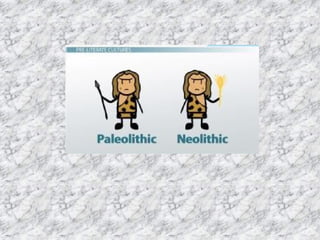
Paleolithic vs. Neolithic
1EB
BRITISH COUNCIL PROGRAMME
STUDENTS
Paleolithic
• “Paleo” = old, “-lithic”= stone
• Begins 2.6 million years ago with advent of
stone tools
• Lasts until about 10,000 BCE
• Sometimes referred to as “Old Stone Age”
• Hominids + Homo Sapiens
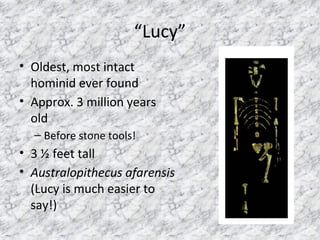
“Lucy”
• Oldest, most intact
hominid ever found
• Approx. 3 million years
old
– Before stone tools!
• 3 ½ feet tall
• Australopithecus afarensis
(Lucy is much easier to
say!)
Neolithic
• “Neo” = new, “-lithic” = stone
• 10,000 BCE to about 2,000 BCE
• Called the “New Stone Age”
• Only Homo Sapiens live into this era
– Otzi
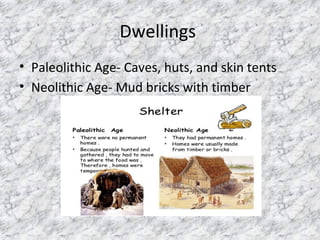
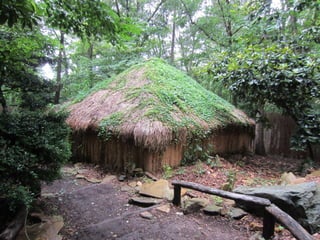
Dwellings
• Paleolithic Age- Caves, huts, and skin tents
• Neolithic Age- Mud bricks with timber
Lifestyle
• Paleolithic
– Nomadic
– Groups of up to 50
– Tribal
– Hunters & Gathers
• Neolithic
– Sedentary
– Permanent settlements
– Raise livestock/agriculture
– Family structure changes
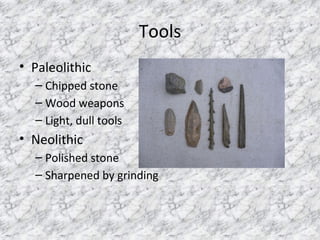
Tools
• Paleolithic
– Chipped stone
– Wood weapons
– Light, dull tools
• Neolithic
– Polished stone
– Sharpened by grinding
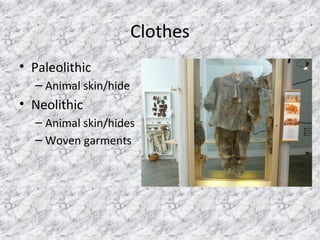
Clothes
• Paleolithic
– Animal skin/hide
• Neolithic
– Animal skin/hides
– Woven garments
Government.
• Paleolithic
– Tribal/clan
– Ruled by elders or the powerful
– Matriarchal or patriarchal
• Neolithic
– Military and religious leaders
– Monarchy develops
– Less equality among the sexes
Economy
• Paleolithic
– No private property
– Limited trade
• Neolithic
– Concept of private property emerges
– Land, livestock and tools could now be “owned”
– Trade networks develop
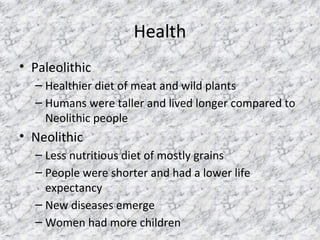
Health
• Paleolithic
– Healthier diet of meat and wild plants
– Humans were taller and lived longer compared to
Neolithic people
• Neolithic
– Less nutritious diet of mostly grains
– People were shorter and had a lower life
expectancy
– New diseases emerge
– Women had more children
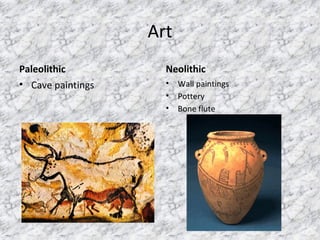
Art
Paleolithic
• Cave paintings
Neolithic
• Wall paintings
• Pottery
• Bone flute
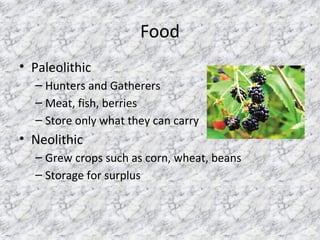
Food
• Paleolithic
– Hunters and Gatherers
– Meat, fish, berries
– Store only what they can carry
• Neolithic
– Grew crops such as corn, wheat, beans
– Storage for surplus
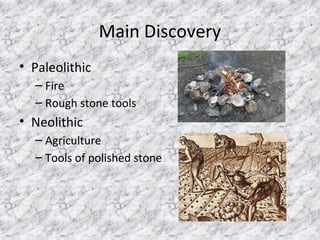
Main Discovery
• Paleolithic
– Fire
– Rough stone tools
• Neolithic
– Agriculture
– Tools of polished stone
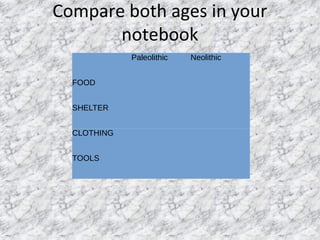
Compare both ages in your
notebook
Paleolithic Neolithic
FOOD
SHELTER
CLOTHING
TOOLS
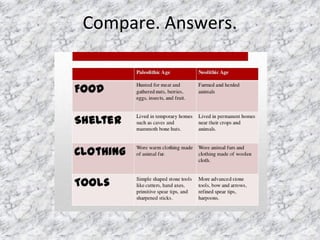
Compare. Answers.
Homework
• Create a flyer that will persuade a human
living in 10,000 BCE to either switch to
agriculture from hunting and gathering or
switch from hunting and gathering to
agriculture. Include information from
today’s lesson!
• This should be colorful, factual, and
interesting!

Paleolithic vs neolithic age

  • 1.
    • Eras canhave definitive start and end points (prehistory vs. history for example). • Today we are learning about the “New Stone Age” and “Old Stone Age.” • What do you think is the distinction between the two? When would it start and end? Who do you think would have been around at the time?
  • 2.
    Paleolithic vs. Neolithic 1EB BRITISHCOUNCIL PROGRAMME STUDENTS
  • 4.
    Paleolithic • “Paleo” =old, “-lithic”= stone • Begins 2.6 million years ago with advent of stone tools • Lasts until about 10,000 BCE • Sometimes referred to as “Old Stone Age” • Hominids + Homo Sapiens
  • 5.
    “Lucy” • Oldest, mostintact hominid ever found • Approx. 3 million years old – Before stone tools! • 3 ½ feet tall • Australopithecus afarensis (Lucy is much easier to say!)
  • 6.
    Neolithic • “Neo” =new, “-lithic” = stone • 10,000 BCE to about 2,000 BCE • Called the “New Stone Age” • Only Homo Sapiens live into this era – Otzi
  • 7.
    Dwellings • Paleolithic Age-Caves, huts, and skin tents • Neolithic Age- Mud bricks with timber
  • 9.
    Lifestyle • Paleolithic – Nomadic –Groups of up to 50 – Tribal – Hunters & Gathers • Neolithic – Sedentary – Permanent settlements – Raise livestock/agriculture – Family structure changes
  • 10.
    Tools • Paleolithic – Chippedstone – Wood weapons – Light, dull tools • Neolithic – Polished stone – Sharpened by grinding
  • 11.
    Clothes • Paleolithic – Animalskin/hide • Neolithic – Animal skin/hides – Woven garments
  • 12.
    Government. • Paleolithic – Tribal/clan –Ruled by elders or the powerful – Matriarchal or patriarchal • Neolithic – Military and religious leaders – Monarchy develops – Less equality among the sexes
  • 13.
    Economy • Paleolithic – Noprivate property – Limited trade • Neolithic – Concept of private property emerges – Land, livestock and tools could now be “owned” – Trade networks develop
  • 14.
    Health • Paleolithic – Healthierdiet of meat and wild plants – Humans were taller and lived longer compared to Neolithic people • Neolithic – Less nutritious diet of mostly grains – People were shorter and had a lower life expectancy – New diseases emerge – Women had more children
  • 15.
    Art Paleolithic • Cave paintings Neolithic •Wall paintings • Pottery • Bone flute
  • 16.
    Food • Paleolithic – Huntersand Gatherers – Meat, fish, berries – Store only what they can carry • Neolithic – Grew crops such as corn, wheat, beans – Storage for surplus
  • 17.
    Main Discovery • Paleolithic –Fire – Rough stone tools • Neolithic – Agriculture – Tools of polished stone
  • 18.
    Compare both agesin your notebook Paleolithic Neolithic FOOD SHELTER CLOTHING TOOLS
  • 19.
  • 20.
    Homework • Create aflyer that will persuade a human living in 10,000 BCE to either switch to agriculture from hunting and gathering or switch from hunting and gathering to agriculture. Include information from today’s lesson! • This should be colorful, factual, and interesting!