Neolithic Period
Understanding Culture, Society, and Politics report by:
 Johaira Asal
 Reine Marie Arrojado
 Romalyn Balana
Neolithic Period
Social Organization
During the Neolithic age of Eurasia, people
lived in small tribes.
There is little scientific evidence of
developed social stratification in most
Neolithic societies; social stratification is
more associated with the later Bronze Age.
Neolithic Period
Social Organization
Complex stratified chiefdoms or states evolved in
Eurasia only with the rise of metallurgy, and most
Neolithic societies on the whole were relatively
simple and egalitarian.
Possession of livestock allowed competition
between households and resulted in inherited
inequalities.
Neolithic Period
Shelter
In the Paleolithic, people did not normally live in
permanent constructions. In the Neolithic, mud
brick houses were appeared.
Agriculture made permanent houses possible.
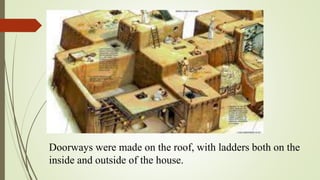
Doorways were made on the roof, with ladders both on the
inside and outside of the house.
Neolithic houses
in Catal Huyuk
Neolithic Period
Farming
Neolithic Revolution - the profound differences in human
interactions and subsistence methods associated with the
onset of early agricultural practice in the Neolithic Period.
Nomadic hunter-gatherer subsistence technique was
replaced by reliance upon food produced from cultivated
lands.
Neolithic Period
Farming
This greatly encouraged the growth of settlements,
because it increased the need to spend more time
and labor in tending crop fields.
Because of increasing sophistication of farming
technology, there could be surplus crop yields.
Neolithic Period
Adverse Effects of new agrarian communities:
Early farmers were adversely affected in times of
famine due to drought or pests; sensitivity to
shortages could be acute.
Post-agrarian diet was restricted to a limited package
of successfully cultivated plants and domesticated
animals.
Increased population density, decreased population
mobility, increased proximity to domesticated animals
altered sanitation needs and patterns of disease.
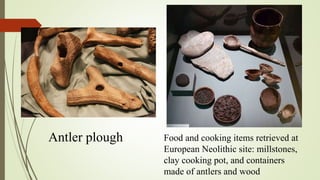
Antler plough Food and cooking items retrieved at
European Neolithic site: millstones,
clay cooking pot, and containers
made of antlers and wood
Neolithic Period
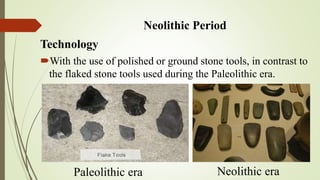
Technology
With the use of polished or ground stone tools, in contrast to
the flaked stone tools used during the Paleolithic era.
Paleolithic era Neolithic era
Neolithic Period
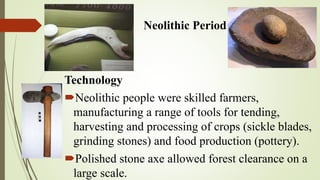
Technology
Neolithic people were skilled farmers,
manufacturing a range of tools for tending,
harvesting and processing of crops (sickle blades,
grinding stones) and food production (pottery).
Polished stone axe allowed forest clearance on a
large scale.
Neolithic Period
Technology
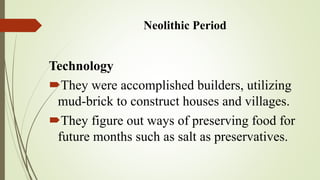
They were accomplished builders, utilizing
mud-brick to construct houses and villages.
They figure out ways of preserving food for
future months such as salt as preservatives.
Neolithic Period
Clothing
Most clothing appears to have been made of animal
skins because of finds of bone and antler pins ideal
for fastening leather.
Woolcloth and linen might have become available
during the later Neolithic, because of perforated
stones which served as spindle whorls or loom
weights.
Reference
Neolithic. (2017, May 12). Retrieved May 16, 2017, from
https://en.wikipedia.org/wiki/Neolithic
We want to share our presentation.
Thank you.

Neolithic Period

  • 1.
    Neolithic Period Understanding Culture,Society, and Politics report by:  Johaira Asal  Reine Marie Arrojado  Romalyn Balana
  • 2.
    Neolithic Period Social Organization Duringthe Neolithic age of Eurasia, people lived in small tribes. There is little scientific evidence of developed social stratification in most Neolithic societies; social stratification is more associated with the later Bronze Age.
  • 3.
    Neolithic Period Social Organization Complexstratified chiefdoms or states evolved in Eurasia only with the rise of metallurgy, and most Neolithic societies on the whole were relatively simple and egalitarian. Possession of livestock allowed competition between households and resulted in inherited inequalities.
  • 4.
    Neolithic Period Shelter In thePaleolithic, people did not normally live in permanent constructions. In the Neolithic, mud brick houses were appeared. Agriculture made permanent houses possible.
  • 5.
    Doorways were madeon the roof, with ladders both on the inside and outside of the house. Neolithic houses in Catal Huyuk
  • 6.
    Neolithic Period Farming Neolithic Revolution- the profound differences in human interactions and subsistence methods associated with the onset of early agricultural practice in the Neolithic Period. Nomadic hunter-gatherer subsistence technique was replaced by reliance upon food produced from cultivated lands.
  • 7.
    Neolithic Period Farming This greatlyencouraged the growth of settlements, because it increased the need to spend more time and labor in tending crop fields. Because of increasing sophistication of farming technology, there could be surplus crop yields.
  • 8.
    Neolithic Period Adverse Effectsof new agrarian communities: Early farmers were adversely affected in times of famine due to drought or pests; sensitivity to shortages could be acute. Post-agrarian diet was restricted to a limited package of successfully cultivated plants and domesticated animals. Increased population density, decreased population mobility, increased proximity to domesticated animals altered sanitation needs and patterns of disease.
  • 9.
    Antler plough Foodand cooking items retrieved at European Neolithic site: millstones, clay cooking pot, and containers made of antlers and wood
  • 10.
    Neolithic Period Technology With theuse of polished or ground stone tools, in contrast to the flaked stone tools used during the Paleolithic era. Paleolithic era Neolithic era
  • 11.
    Neolithic Period Technology Neolithic peoplewere skilled farmers, manufacturing a range of tools for tending, harvesting and processing of crops (sickle blades, grinding stones) and food production (pottery). Polished stone axe allowed forest clearance on a large scale.
  • 12.
    Neolithic Period Technology They wereaccomplished builders, utilizing mud-brick to construct houses and villages. They figure out ways of preserving food for future months such as salt as preservatives.
  • 13.
    Neolithic Period Clothing Most clothingappears to have been made of animal skins because of finds of bone and antler pins ideal for fastening leather. Woolcloth and linen might have become available during the later Neolithic, because of perforated stones which served as spindle whorls or loom weights.
  • 14.
    Reference Neolithic. (2017, May12). Retrieved May 16, 2017, from https://en.wikipedia.org/wiki/Neolithic
  • 15.
    We want toshare our presentation. Thank you.