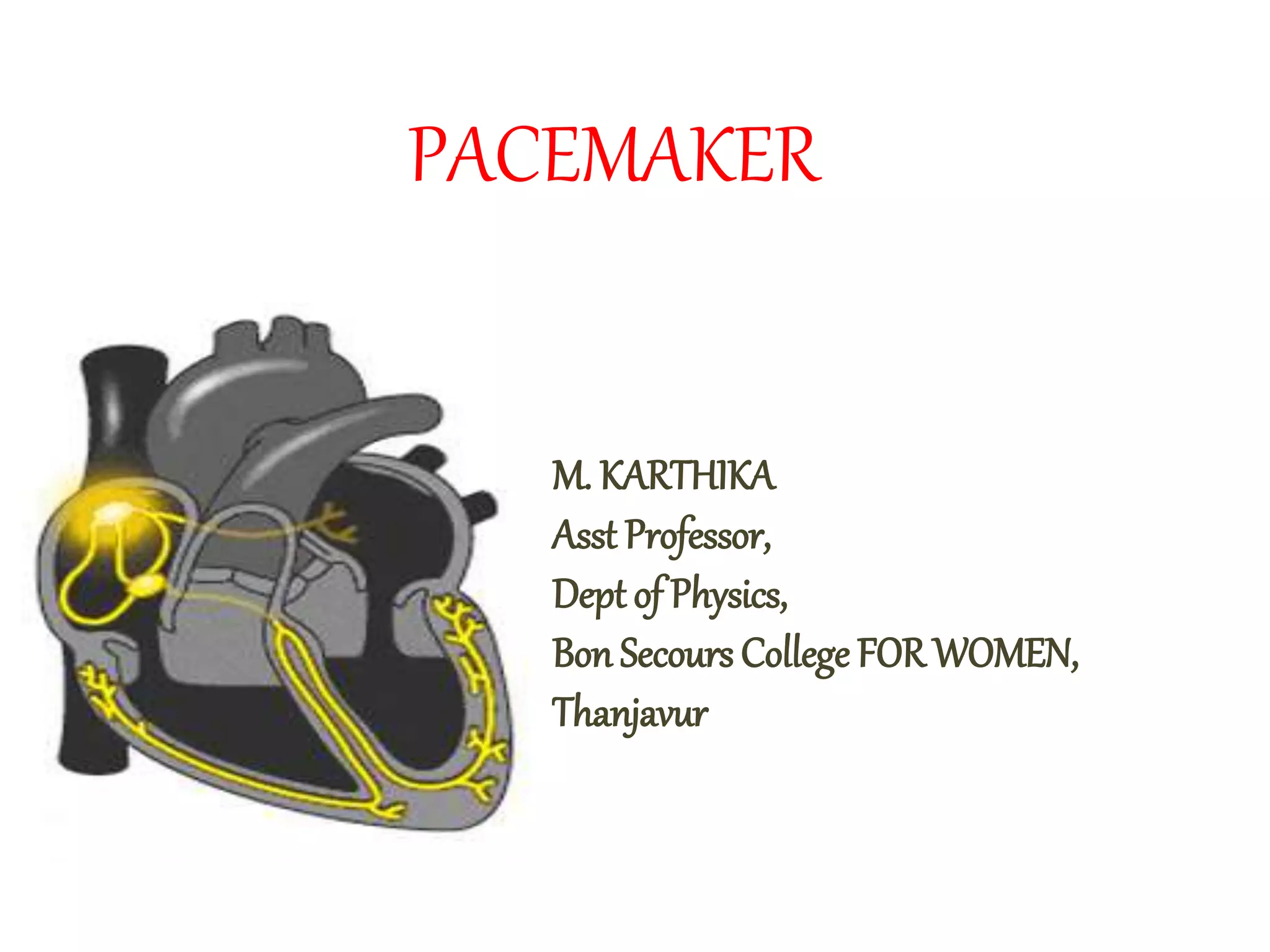
PACEMAKER
M. KARTHIKA
Asst Professor,
Dept of Physics,
Bon Secours College FOR WOMEN,
Thanjavur
PACEMAKER????
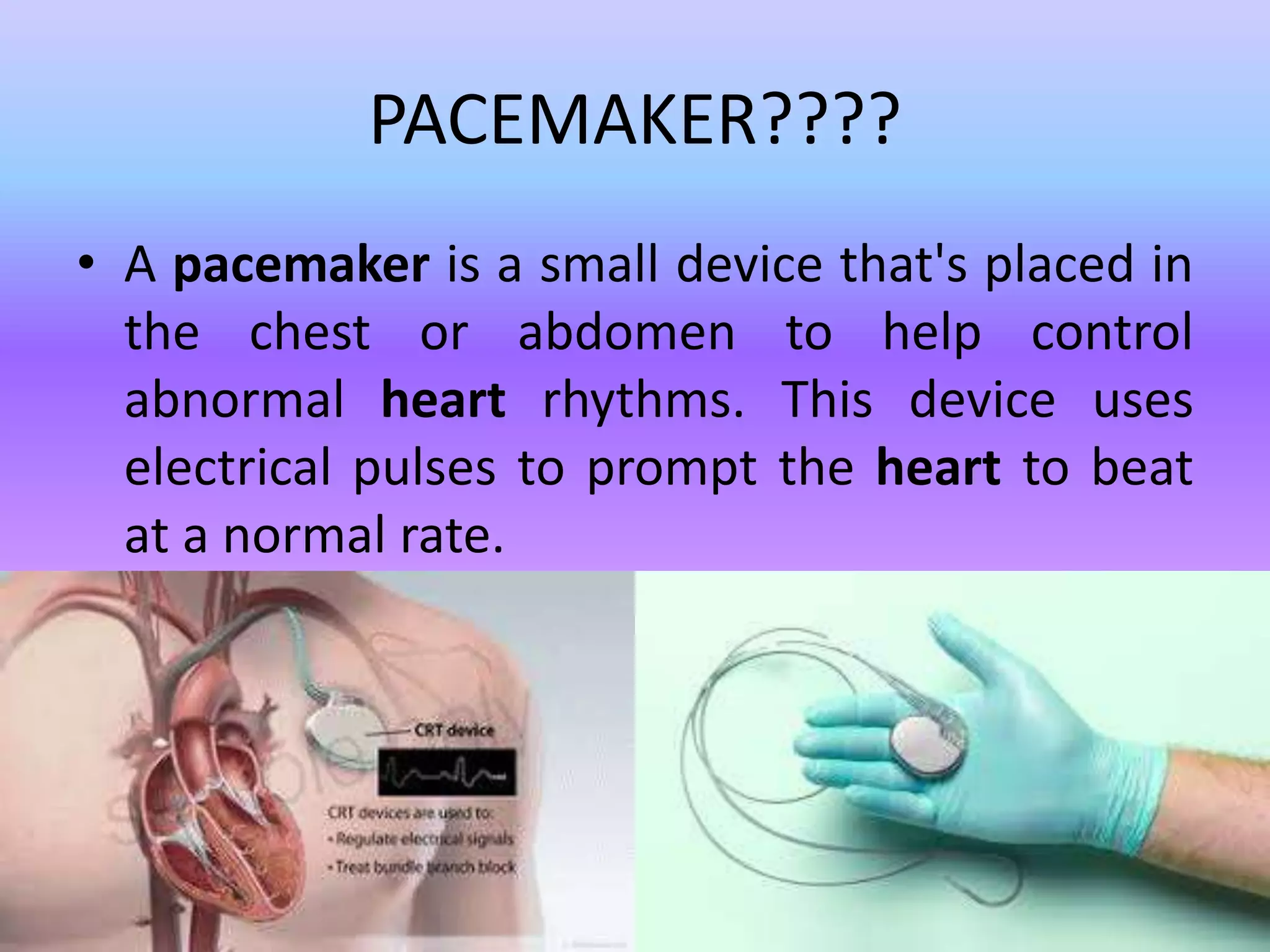
• A pacemaker is a small device that's placed in
the chest or abdomen to help control
abnormal heart rhythms. This device uses
electrical pulses to prompt the heart to beat
at a normal rate.
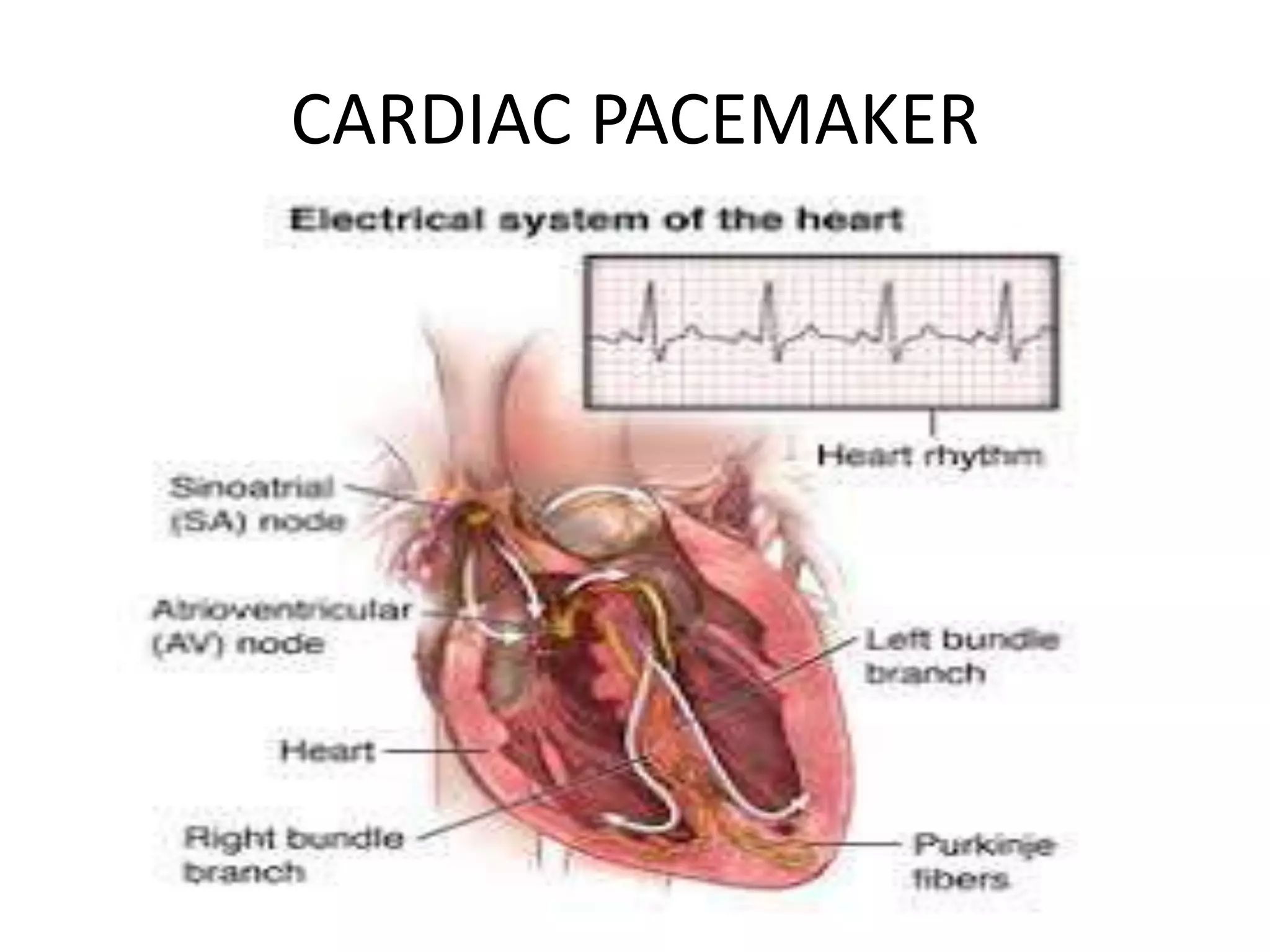
CARDIAC PACEMAKER
WORKING OF PACEMAKER
Heart Rhythm
SINUS RHYTHM
The normal cardiac rhythm is called sinus rhythm.
ARRHYTHMIA
Change in normal sinus rhythm is called
Arrhythmia.
BRADYCARDIA
Heart blocks occur when the conduction system
b/w atria and ventricles fails. If the blockage is
not complete some impulses get through from
atria but the heart rate will fall.(slow heart rate)
Types of Heart blocks
• There are three basic types of AV nodal block:
• First-degree AV block.
• Second-degree AV block. Type I second-degree AV
block (Mobitz I), also known as Wenckebach
block. Type 2 second-degree AV block (Mobitz II) -
due to a block in or below the bundle of His.
• Third-degree AV block (complete heart block)
The bundle of His
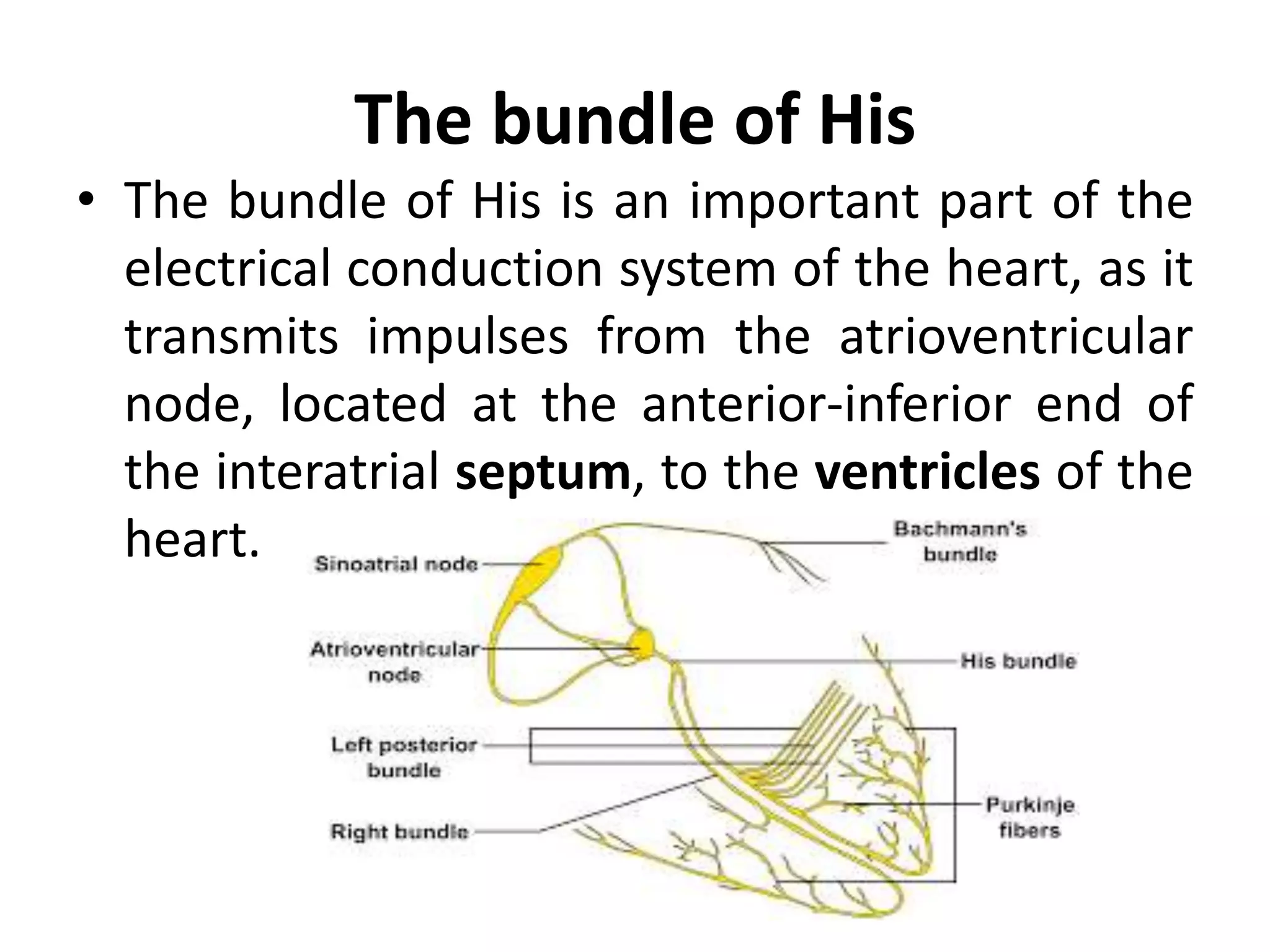
• The bundle of His is an important part of the
electrical conduction system of the heart, as it
transmits impulses from the atrioventricular
node, located at the anterior-inferior end of
the interatrial septum, to the ventricles of the
heart.
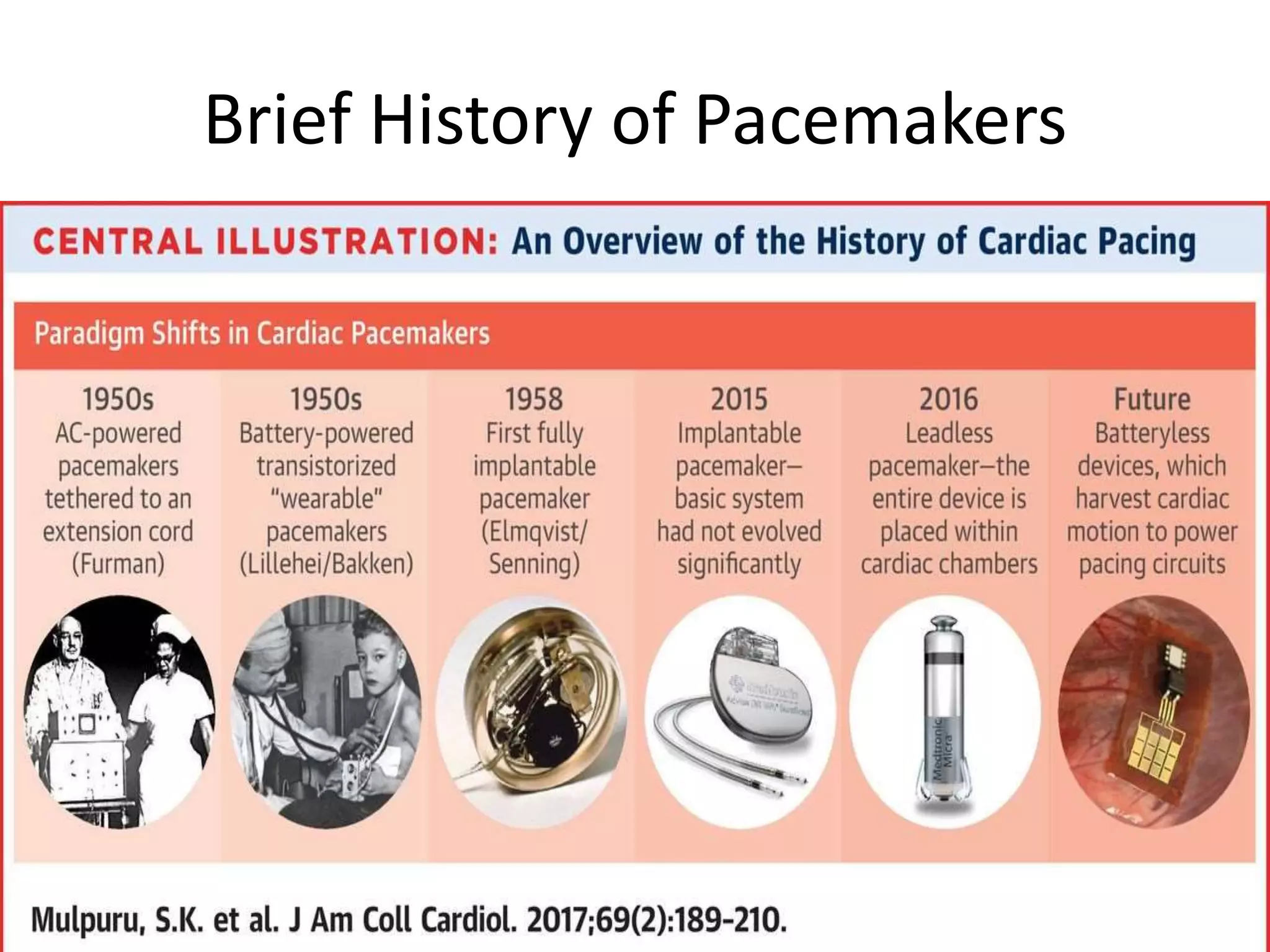
Brief History of Pacemakers
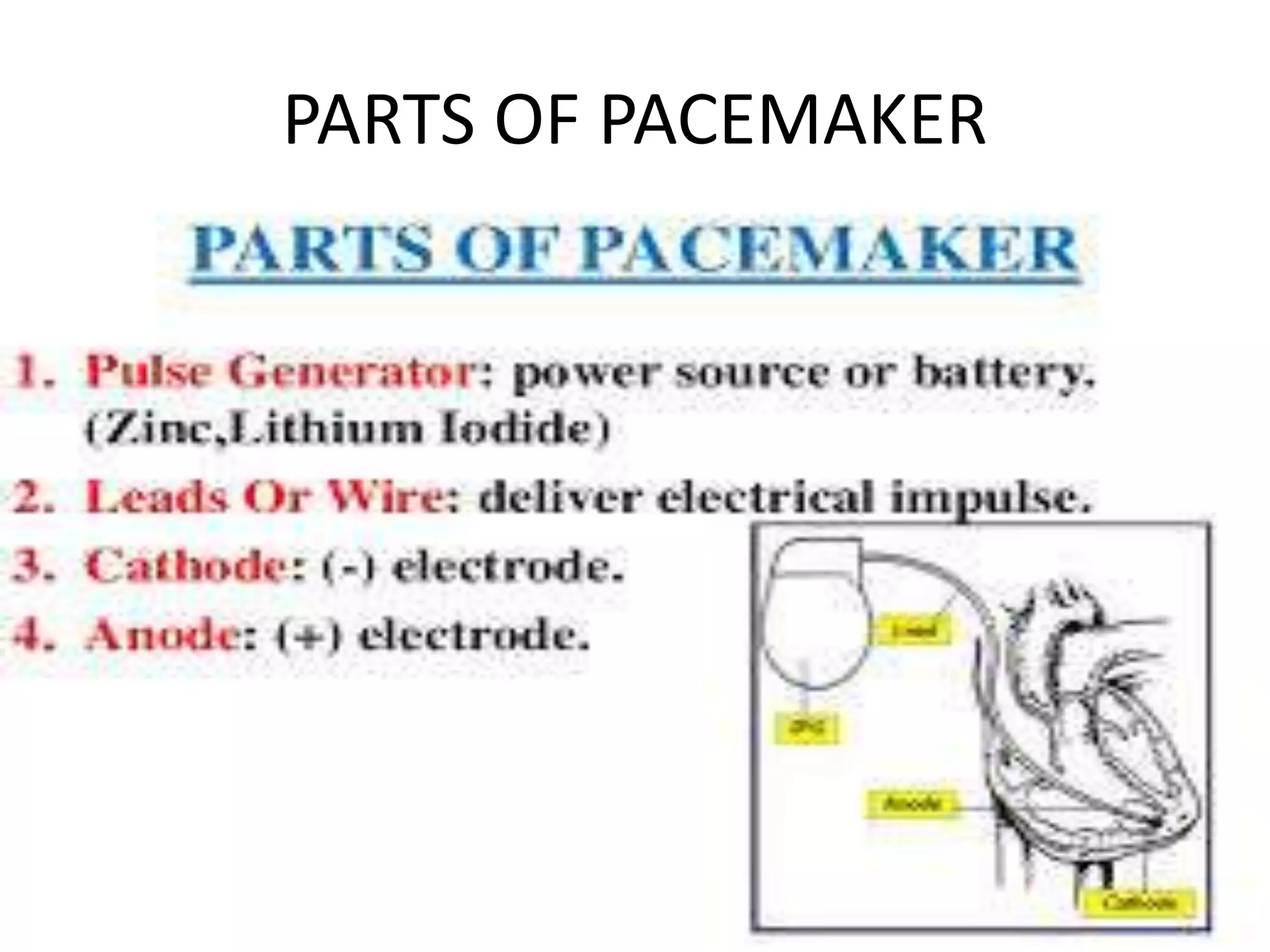
PARTS OF PACEMAKER
OUTPUT REQUIREMENTS &
ELECTRODES
RECTANGULAR PHASE
1mS
10mA
RESISTANCE 500 OHM
POWER= I*I*R
AVERAGE POWER= 50 MICROWATT
Pt, Ag, titanium, stainless steel electrodes
TYPES OF PACEMAKERS
• Cardiac Surgery
• Temporary Heart
ArrhythmiaEXTERNAL
• Implanted With Pulse
Generator
• Pass Through The Cephalic
Vein
INTERNAL
CATEGORIES OF PACEMAKER
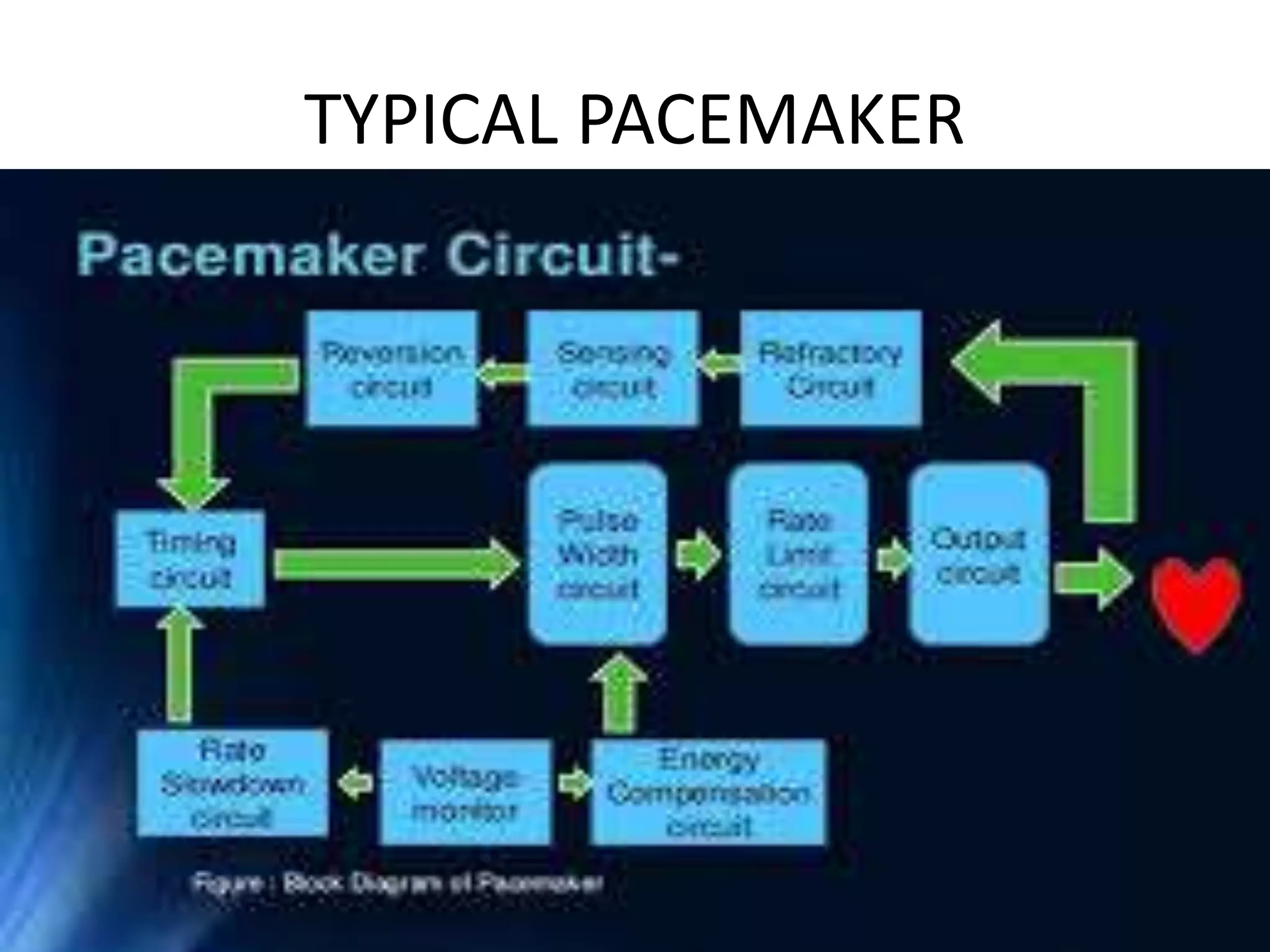
TYPICAL PACEMAKER
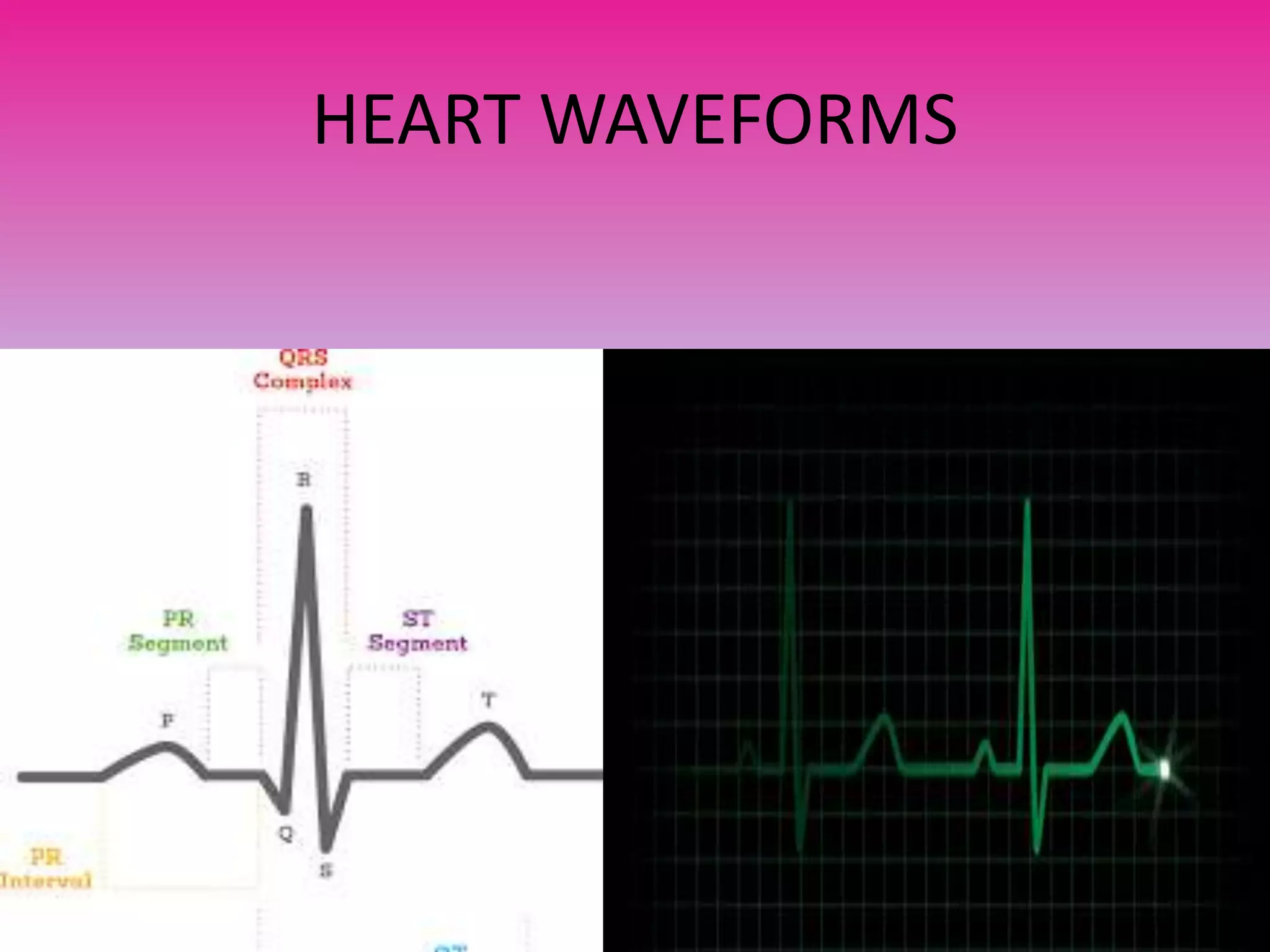
HEART WAVEFORMS
COMPETITIVE PACEMAKER
More-recent devices are synchronous, or
demand, pacemakers that trigger heart
contractions only when the normal beat is
interrupted. Most pacemakers of this type are
designed to generate a pulse when the natural
heart rate falls below 68 to 72 beats per
minute.
NON-COMPETITIVE
Non-Competitive Atrial Pacing (NCAP) is
intended to prevent triggering of atrial
tachycardias by delaying the scheduled atrial
pace from occurring within the atrium's
relative refractory period.
Tachycardias – FAST HEART BEAT RATE
Pacemaker

Pacemaker

  • 1.
    PACEMAKER M. KARTHIKA Asst Professor, Deptof Physics, Bon Secours College FOR WOMEN, Thanjavur
  • 2.
    PACEMAKER???? • A pacemakeris a small device that's placed in the chest or abdomen to help control abnormal heart rhythms. This device uses electrical pulses to prompt the heart to beat at a normal rate.
  • 3.
  • 4.
  • 5.
    Heart Rhythm SINUS RHYTHM Thenormal cardiac rhythm is called sinus rhythm. ARRHYTHMIA Change in normal sinus rhythm is called Arrhythmia. BRADYCARDIA Heart blocks occur when the conduction system b/w atria and ventricles fails. If the blockage is not complete some impulses get through from atria but the heart rate will fall.(slow heart rate)
  • 6.
    Types of Heartblocks • There are three basic types of AV nodal block: • First-degree AV block. • Second-degree AV block. Type I second-degree AV block (Mobitz I), also known as Wenckebach block. Type 2 second-degree AV block (Mobitz II) - due to a block in or below the bundle of His. • Third-degree AV block (complete heart block)
  • 7.
    The bundle ofHis • The bundle of His is an important part of the electrical conduction system of the heart, as it transmits impulses from the atrioventricular node, located at the anterior-inferior end of the interatrial septum, to the ventricles of the heart.
  • 8.
    Brief History ofPacemakers
  • 9.
  • 10.
    OUTPUT REQUIREMENTS & ELECTRODES RECTANGULARPHASE 1mS 10mA RESISTANCE 500 OHM POWER= I*I*R AVERAGE POWER= 50 MICROWATT Pt, Ag, titanium, stainless steel electrodes
  • 11.
    TYPES OF PACEMAKERS •Cardiac Surgery • Temporary Heart ArrhythmiaEXTERNAL • Implanted With Pulse Generator • Pass Through The Cephalic Vein INTERNAL
  • 12.
  • 13.
  • 14.
  • 15.
    COMPETITIVE PACEMAKER More-recent devicesare synchronous, or demand, pacemakers that trigger heart contractions only when the normal beat is interrupted. Most pacemakers of this type are designed to generate a pulse when the natural heart rate falls below 68 to 72 beats per minute.
  • 16.
    NON-COMPETITIVE Non-Competitive Atrial Pacing(NCAP) is intended to prevent triggering of atrial tachycardias by delaying the scheduled atrial pace from occurring within the atrium's relative refractory period. Tachycardias – FAST HEART BEAT RATE