Opto electronic devices
A.Vivetha
Assistant Professor of Physics
Bon secours College for Women
photons
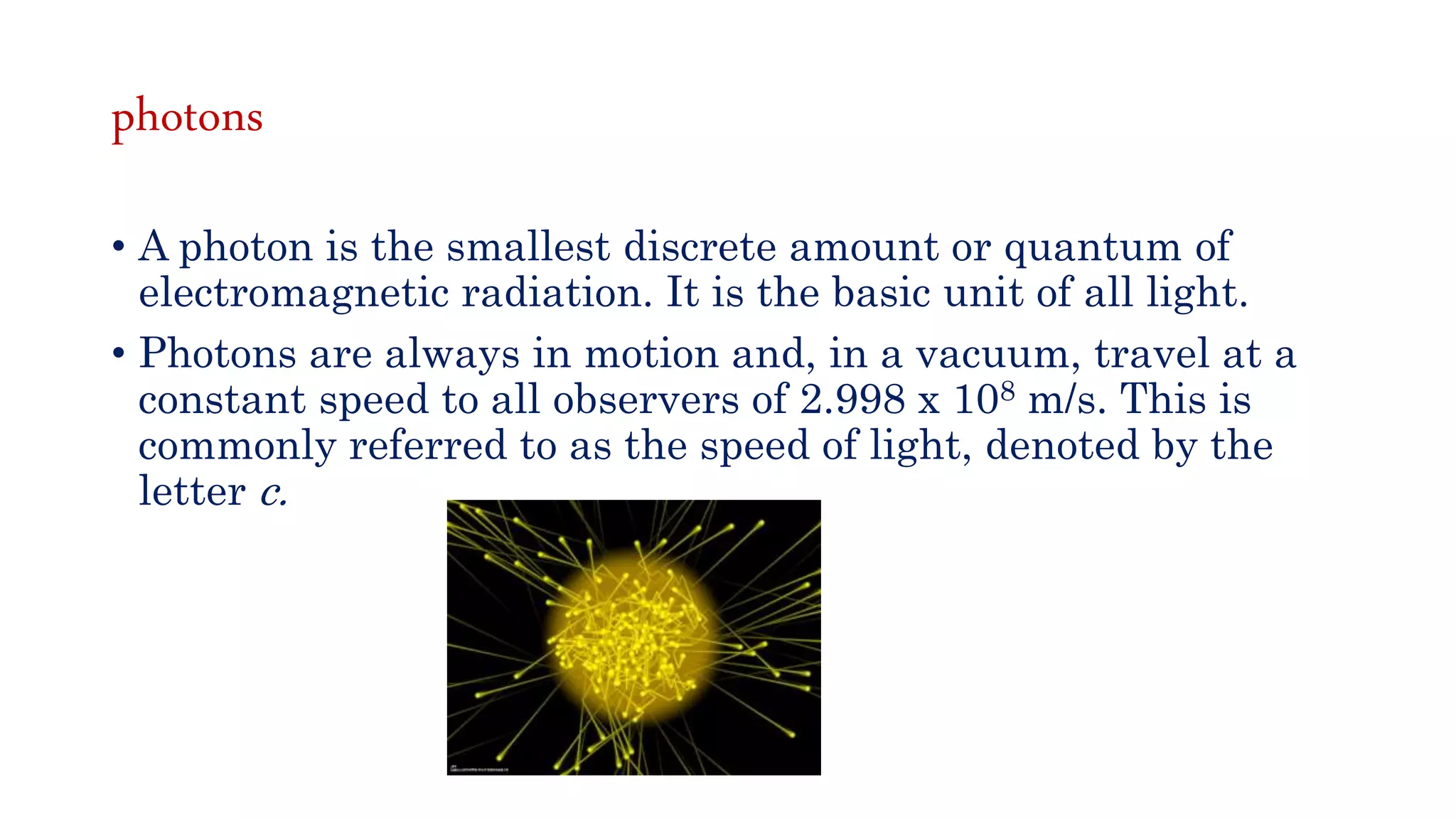
• A photon is the smallest discrete amount or quantum of
electromagnetic radiation. It is the basic unit of all light.
• Photons are always in motion and, in a vacuum, travel at a
constant speed to all observers of 2.998 x 10⁸ m/s. This is
commonly referred to as the speed of light, denoted by the
letter c.
Optoelectronics devices
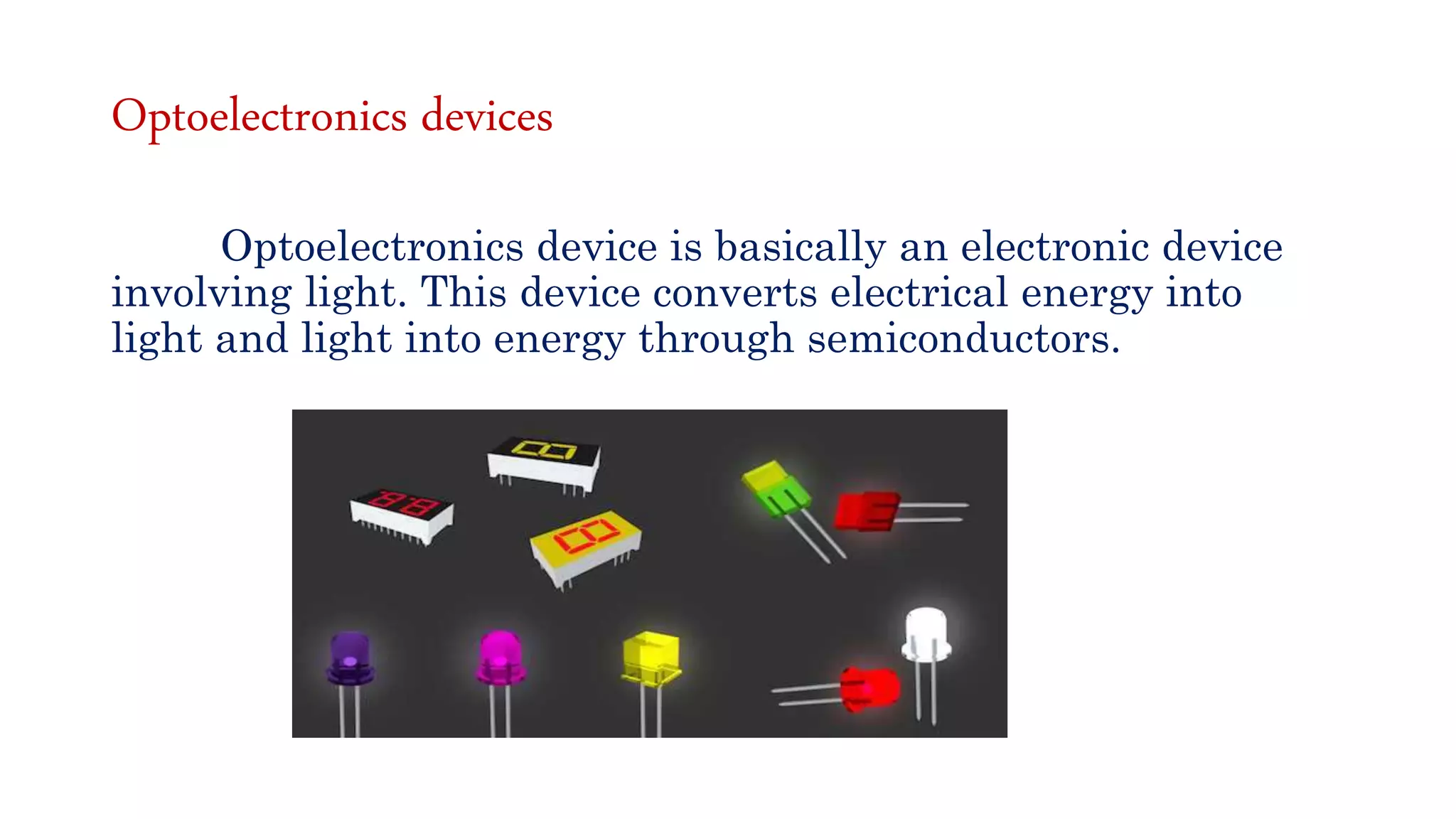
Optoelectronics device is basically an electronic device
involving light. This device converts electrical energy into
light and light into energy through semiconductors.
 The photoelectric effect
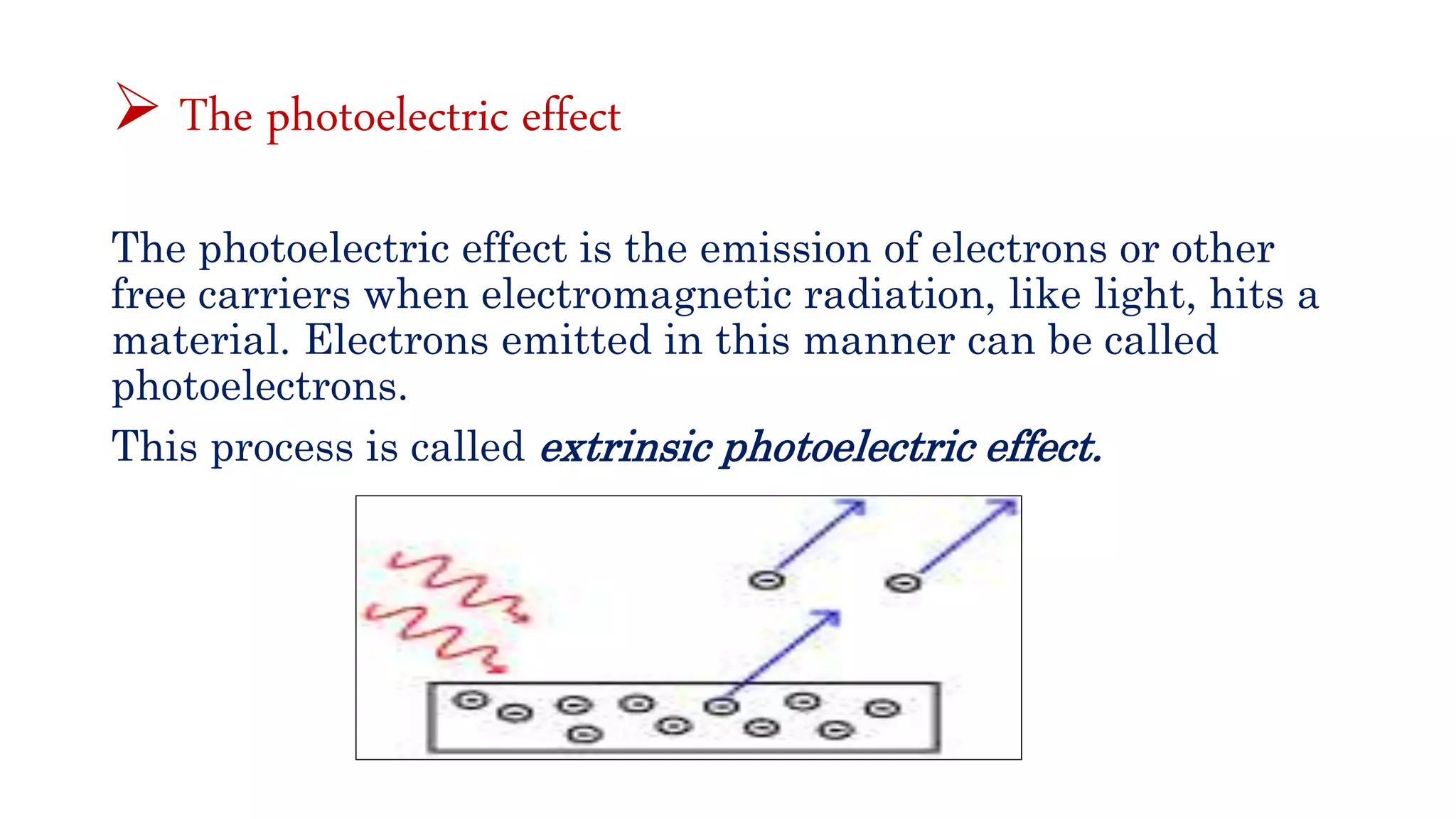
The photoelectric effect is the emission of electrons or other
free carriers when electromagnetic radiation, like light, hits a
material. Electrons emitted in this manner can be called
photoelectrons.
This process is called extrinsic photoelectric effect.
 Intrinsic photo electric effect
When light incident on a semiconductor, electron – hole
pairs are generated. This increases the electrical conductivity.
This is called intrinsic photo electric effect.
 Classification of photonic devices
Converts electrical energy into optical radiationLED & Diode laser
Detect optical signals through electronic processPhoto detectors
•
Converts optical radiation into electrical energyPhoto voltaic (or) solar cell
 electroluminescence
• Electroluminescence is the generation of light by an electric
current passing through a material under an applied electric
field.
• it is differ from thermal radiation.
• It contains narrow range of wavelength.
 Radioactive luminescence
luminescence is the emission of optical radiation (UV,Visible
or IR) as a result of electronic excitation of a material. this
luminescent radiation is a cold radiation.
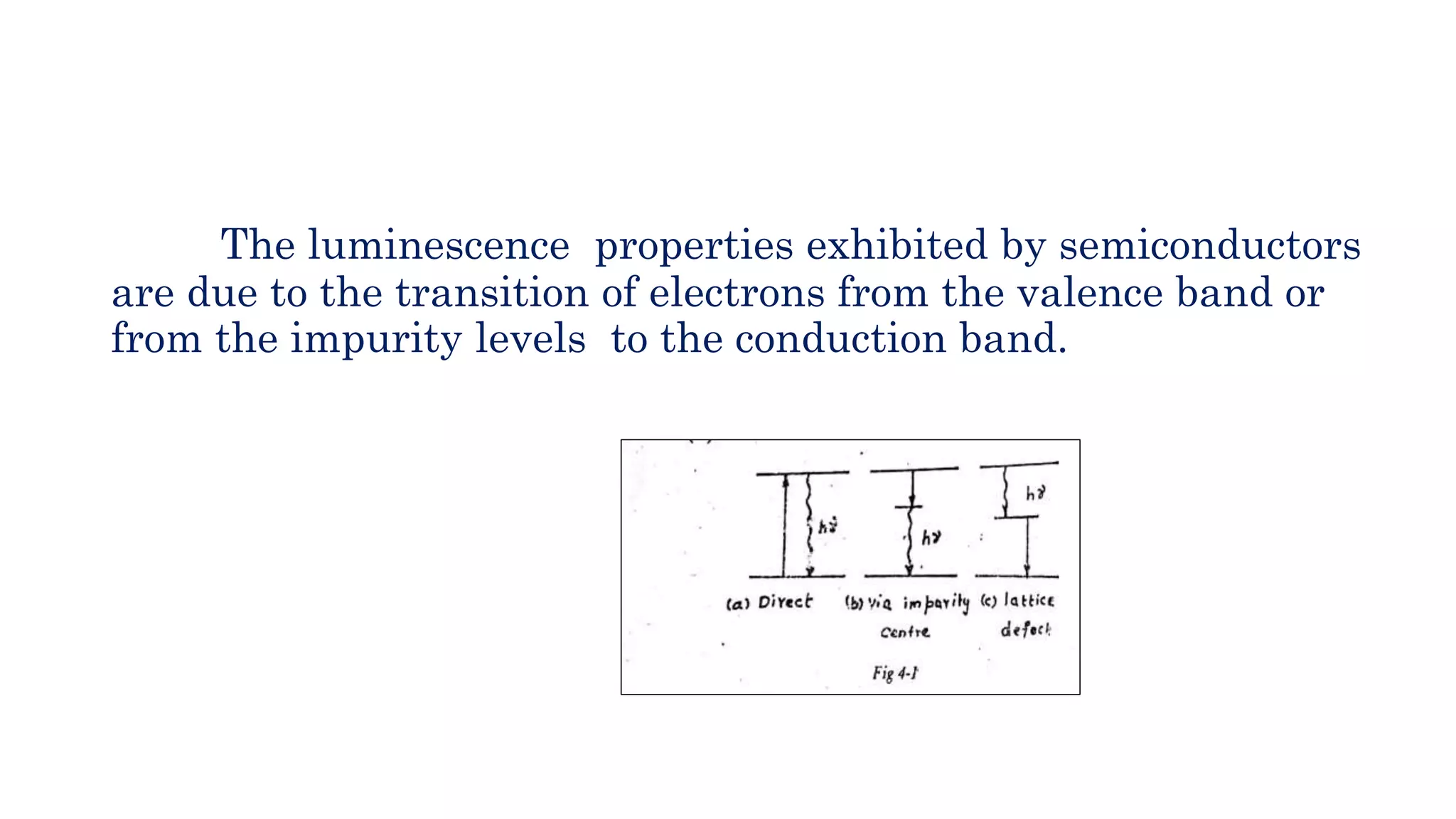
The luminescence properties exhibited by semiconductors
are due to the transition of electrons from the valence band or
from the impurity levels to the conduction band.
Classification of luminescent radiation:
• It is based on electronic excitation classified into four types.
Excitation by lightPhoto luminescence
•
Excitation by electric fieldElectro luminescence
•
Excitation by an electron beamCathode luminescence
•
Excitation by high energy radiationradio luminescence
Types of transitions
The quantum transitions are divided into two types.
 radioactive and
 non radioactive
In the radioactive transition the emitted radiations are
called recombination emission.
In non radioactive transitions the liberated energy is
expended on heating the crystal lattice. This may occur either
may impurity level or defect level.
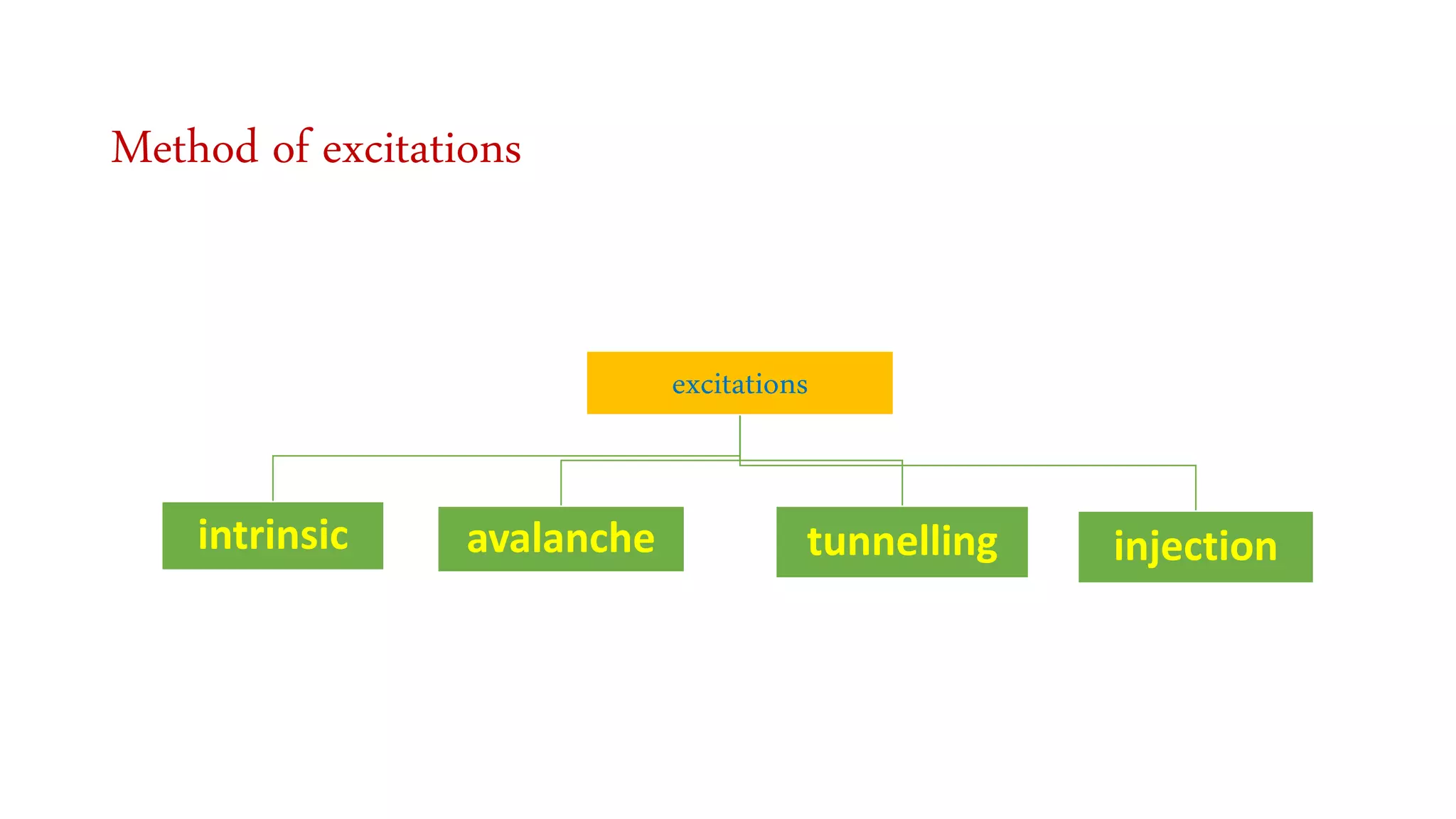
Method of excitations
excitations
intrinsic avalanche tunnelling injection
• A powder of semiconductor is suspended in a dielectric
medium
• It will emit lught only by applying an alternating voltage.
• Its efficiency is less than 1%.
• This is mainly caused by field emission of electrons from
trapping centres
Intrinsic excitation
Avalanche excitation
For the avalanche excitation a p-n junction is reverse
biased. when the reverse voltage is in the avalanche break
down, electron -hole pairs produced due to ionization.it may
result in emission of light.
Tunneling excittion
• Electro luminescence may be excited by tunnelling process.
Wnen a large rverse bias is given to a metal semiconductor
barrier, holes at the metal fermilevel can tunnel into the
valence band. It makes a radioactive recombination with
electrons that have tunneled from the valence band to the
conduction band.
Injection process
• In which the radiation originates recombination of electros in
the p region.
• Here the pn junction is in the forward direction.
• The recombination luminescence produced in higher
intensity.
Opto electronic devices

Opto electronic devices

  • 1.
    Opto electronic devices A.Vivetha AssistantProfessor of Physics Bon secours College for Women
  • 2.
    photons • A photonis the smallest discrete amount or quantum of electromagnetic radiation. It is the basic unit of all light. • Photons are always in motion and, in a vacuum, travel at a constant speed to all observers of 2.998 x 10⁸ m/s. This is commonly referred to as the speed of light, denoted by the letter c.
  • 3.
    Optoelectronics devices Optoelectronics deviceis basically an electronic device involving light. This device converts electrical energy into light and light into energy through semiconductors.
  • 4.
     The photoelectriceffect The photoelectric effect is the emission of electrons or other free carriers when electromagnetic radiation, like light, hits a material. Electrons emitted in this manner can be called photoelectrons. This process is called extrinsic photoelectric effect.
  • 5.
     Intrinsic photoelectric effect When light incident on a semiconductor, electron – hole pairs are generated. This increases the electrical conductivity. This is called intrinsic photo electric effect.
  • 6.
     Classification ofphotonic devices Converts electrical energy into optical radiationLED & Diode laser Detect optical signals through electronic processPhoto detectors • Converts optical radiation into electrical energyPhoto voltaic (or) solar cell
  • 7.
     electroluminescence • Electroluminescenceis the generation of light by an electric current passing through a material under an applied electric field. • it is differ from thermal radiation. • It contains narrow range of wavelength.
  • 8.
     Radioactive luminescence luminescenceis the emission of optical radiation (UV,Visible or IR) as a result of electronic excitation of a material. this luminescent radiation is a cold radiation.
  • 9.
    The luminescence propertiesexhibited by semiconductors are due to the transition of electrons from the valence band or from the impurity levels to the conduction band.
  • 10.
    Classification of luminescentradiation: • It is based on electronic excitation classified into four types. Excitation by lightPhoto luminescence • Excitation by electric fieldElectro luminescence • Excitation by an electron beamCathode luminescence • Excitation by high energy radiationradio luminescence
  • 11.
    Types of transitions Thequantum transitions are divided into two types.  radioactive and  non radioactive In the radioactive transition the emitted radiations are called recombination emission. In non radioactive transitions the liberated energy is expended on heating the crystal lattice. This may occur either may impurity level or defect level.
  • 12.
    Method of excitations excitations intrinsicavalanche tunnelling injection
  • 13.
    • A powderof semiconductor is suspended in a dielectric medium • It will emit lught only by applying an alternating voltage. • Its efficiency is less than 1%. • This is mainly caused by field emission of electrons from trapping centres Intrinsic excitation
  • 14.
    Avalanche excitation For theavalanche excitation a p-n junction is reverse biased. when the reverse voltage is in the avalanche break down, electron -hole pairs produced due to ionization.it may result in emission of light.
  • 15.
    Tunneling excittion • Electroluminescence may be excited by tunnelling process. Wnen a large rverse bias is given to a metal semiconductor barrier, holes at the metal fermilevel can tunnel into the valence band. It makes a radioactive recombination with electrons that have tunneled from the valence band to the conduction band.
  • 16.
    Injection process • Inwhich the radiation originates recombination of electros in the p region. • Here the pn junction is in the forward direction. • The recombination luminescence produced in higher intensity.