P1.2 Energy and
efficiency
Appliances transfer energy but they rarely transfer all
of the energy to the place we want. We need to
know the efficiency of appliances so that we can
choose between them, including how cost effective
they are, and try to improve them.
✓ compare the efficiency and cost effectiveness
of methods used to reduce ‘energy consumption’
✓ describe the energy transfers and the main
energy wastages that occur with a range of
appliances
✓ interpret and draw a Sankey diagram.
Key words
Appliance
Efficiency
Cost effectiveness
Sankey diagram
What would life be like without
electricity?
P1.2.1 Energy transfers and efficiency
a) Energy can be transferred usefully, stored, or
dissipated, but cannot be created or destroyed.
b) When energy is transferred, only part of it may be
usefully transferred; the rest is ‘wasted’.
c) Wasted energy is eventually transferred to the
surroundings, which become warmer. The wasted
energy becomes increasingly spread out and so
becomes less useful.
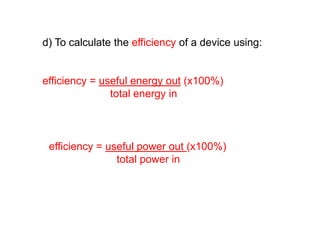
d) To calculate the efficiency of a device using:
efficiency = useful energy out (x100%)
total energy in
efficiency = useful power out (x100%)
total power in
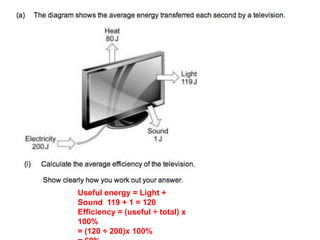
Useful energy = Light +
Sound 119 + 1 = 120
Efficiency = (useful ÷ total) x
100%
= (120 ÷ 200)x 100%
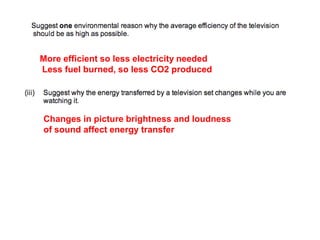
More efficient so less electricity needed
Less fuel burned, so less CO2 produced
Changes in picture brightness and loudness
of sound affect energy transfer
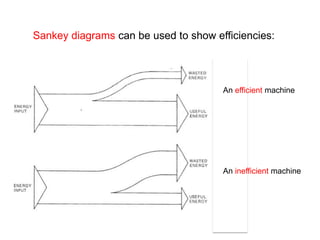
Sankey diagrams can be used to show efficiencies:
An efficient machine
An inefficient machine
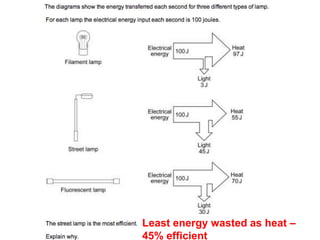
Least energy wasted as heat –
45% efficient
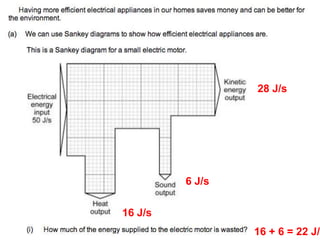
28 J/s
16 J/s
6 J/s
16 + 6 = 22 J/s
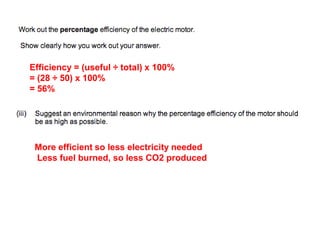
Efficiency = (useful ÷ total) x 100%
= (28 ÷ 50) x 100%
= 56%
More efficient so less electricity needed
Less fuel burned, so less CO2 produced
P1.3 The usefulness of
electrical appliances
We often use electrical appliances because they
transfer energy at the flick of a switch. We can
calculate how much energy is transferred by an
appliance and how much the appliance costs to
run.
✓ compare the advantages and disadvantages of
using different electrical appliances for a particular
application
✓ consider the implications of instances when
electricity is not available.
I can:
Key words
Appliance
Transducer
Dynamo
Power
Kilowatt-hours
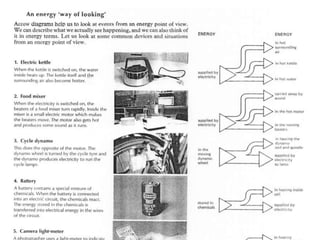
Transferring electrical energy
a) Examples of energy transfers that everyday
electrical appliances are designed to bring
about.
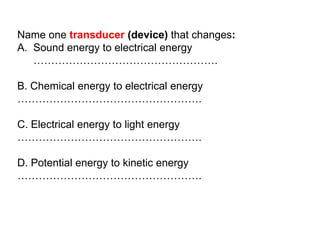
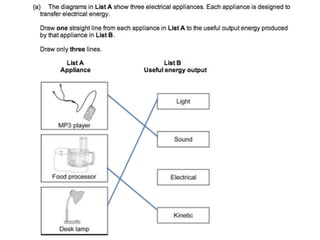
Name one transducer (device) that changes:
A. Sound energy to electrical energy
…………………………………………….
B. Chemical energy to electrical energy
…………………………………………….
C. Electrical energy to light energy
…………………………………………….
D. Potential energy to kinetic energy
…………………………………………….
Draw a chain diagram to show the energy changes that occur
when:
A. An electric drill is switched on
B. A Bunsen burner is ignited
C. A mass is lifted 1 metre
D. A bullet is fired from a rifle
E. A rubber ball is bounced on the floor.
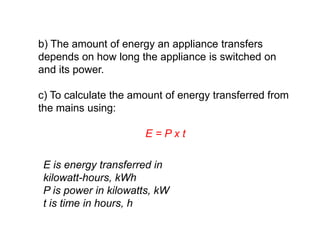
b) The amount of energy an appliance transfers
depends on how long the appliance is switched on
and its power.
c) To calculate the amount of energy transferred from
the mains using:
E = P x t
E is energy transferred in
kilowatt-hours, kWh
P is power in kilowatts, kW
t is time in hours, h
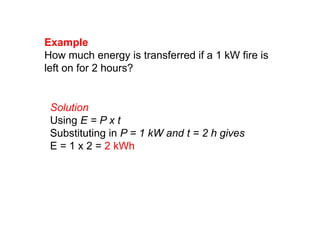
Example
How much energy is transferred if a 1 kW fire is
left on for 2 hours?
Solution
Using E = P x t
Substituting in P = 1 kW and t = 2 h gives
E = 1 x 2 = 2 kWh
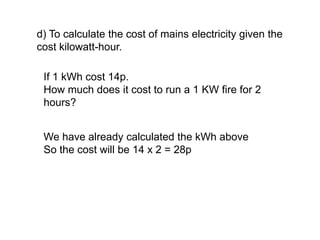
d) To calculate the cost of mains electricity given the
cost kilowatt-hour.
If 1 kWh cost 14p.
How much does it cost to run a 1 KW fire for 2
hours?
We have already calculated the kWh above
So the cost will be 14 x 2 = 28p
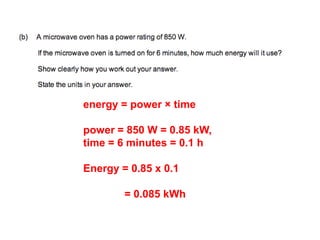
energy = power × time
power = 850 W = 0.85 kW,
time = 6 minutes = 0.1 h
Energy = 0.85 x 0.1
= 0.085 kWh
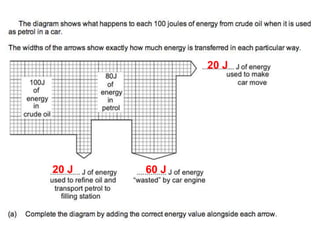
20 J 60 J
20 J
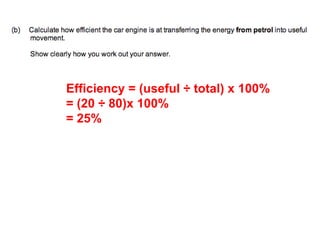
Efficiency = (useful ÷ total) x 100%
= (20 ÷ 80)x 100%
= 25%
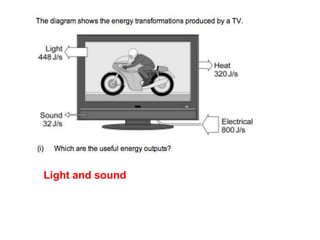
Light and sound
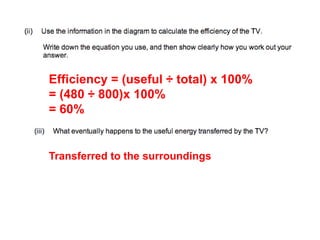
Efficiency = (useful ÷ total) x 100%
= (480 ÷ 800)x 100%
= 60%
Transferred to the surroundings
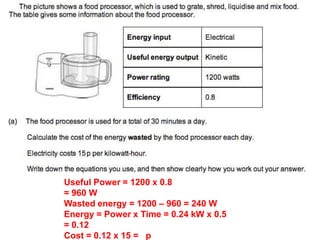
Useful Power = 1200 x 0.8
= 960 W
Wasted energy = 1200 – 960 = 240 W
Energy = Power x Time = 0.24 kW x 0.5
= 0.12
Cost = 0.12 x 15 = p
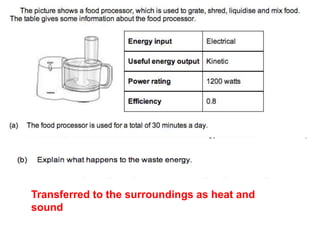
Transferred to the surroundings as heat and
sound
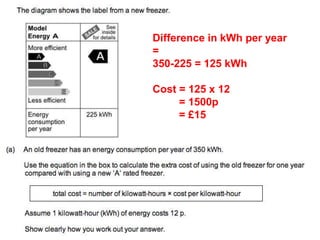
Difference in kWh per year
=
350-225 = 125 kWh
Cost = 125 x 12
= 1500p
= £15
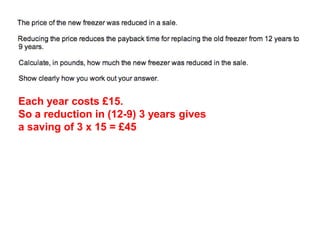
Each year costs £15.
So a reduction in (12-9) 3 years gives
a saving of 3 x 15 = £45
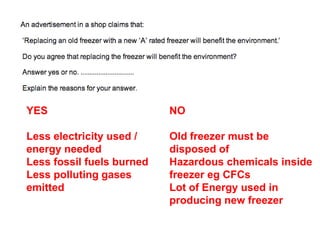
YES
Less electricity used /
energy needed
Less fossil fuels burned
Less polluting gases
emitted
NO
Old freezer must be
disposed of
Hazardous chemicals inside
freezer eg CFCs
Lot of Energy used in
producing new freezer
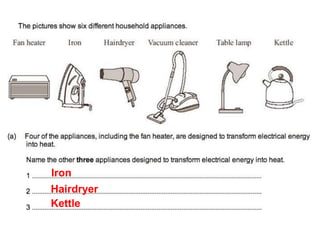
Iron
Hairdryer
Kettle
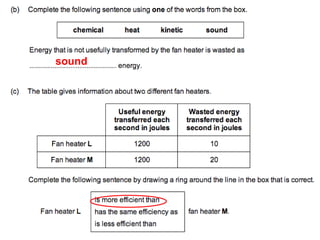
sound
P1.2 energyefficiency

P1.2 energyefficiency

  • 1.
    P1.2 Energy and efficiency Appliancestransfer energy but they rarely transfer all of the energy to the place we want. We need to know the efficiency of appliances so that we can choose between them, including how cost effective they are, and try to improve them.
  • 2.
    ✓ compare theefficiency and cost effectiveness of methods used to reduce ‘energy consumption’ ✓ describe the energy transfers and the main energy wastages that occur with a range of appliances ✓ interpret and draw a Sankey diagram.
  • 3.
  • 4.
    What would lifebe like without electricity?
  • 5.
    P1.2.1 Energy transfersand efficiency a) Energy can be transferred usefully, stored, or dissipated, but cannot be created or destroyed. b) When energy is transferred, only part of it may be usefully transferred; the rest is ‘wasted’. c) Wasted energy is eventually transferred to the surroundings, which become warmer. The wasted energy becomes increasingly spread out and so becomes less useful.
  • 6.
    d) To calculatethe efficiency of a device using: efficiency = useful energy out (x100%) total energy in efficiency = useful power out (x100%) total power in
  • 7.
    Useful energy =Light + Sound 119 + 1 = 120 Efficiency = (useful ÷ total) x 100% = (120 ÷ 200)x 100%
  • 8.
    More efficient soless electricity needed Less fuel burned, so less CO2 produced Changes in picture brightness and loudness of sound affect energy transfer
  • 9.
    Sankey diagrams canbe used to show efficiencies: An efficient machine An inefficient machine
  • 10.
    Least energy wastedas heat – 45% efficient
  • 11.
    28 J/s 16 J/s 6J/s 16 + 6 = 22 J/s
  • 12.
    Efficiency = (useful÷ total) x 100% = (28 ÷ 50) x 100% = 56% More efficient so less electricity needed Less fuel burned, so less CO2 produced
  • 14.
    P1.3 The usefulnessof electrical appliances We often use electrical appliances because they transfer energy at the flick of a switch. We can calculate how much energy is transferred by an appliance and how much the appliance costs to run.
  • 15.
    ✓ compare theadvantages and disadvantages of using different electrical appliances for a particular application ✓ consider the implications of instances when electricity is not available. I can:
  • 16.
  • 17.
    Transferring electrical energy a)Examples of energy transfers that everyday electrical appliances are designed to bring about.
  • 19.
    Name one transducer(device) that changes: A. Sound energy to electrical energy ……………………………………………. B. Chemical energy to electrical energy ……………………………………………. C. Electrical energy to light energy ……………………………………………. D. Potential energy to kinetic energy …………………………………………….
  • 20.
    Draw a chaindiagram to show the energy changes that occur when: A. An electric drill is switched on B. A Bunsen burner is ignited C. A mass is lifted 1 metre D. A bullet is fired from a rifle E. A rubber ball is bounced on the floor.
  • 21.
    b) The amountof energy an appliance transfers depends on how long the appliance is switched on and its power. c) To calculate the amount of energy transferred from the mains using: E = P x t E is energy transferred in kilowatt-hours, kWh P is power in kilowatts, kW t is time in hours, h
  • 22.
    Example How much energyis transferred if a 1 kW fire is left on for 2 hours? Solution Using E = P x t Substituting in P = 1 kW and t = 2 h gives E = 1 x 2 = 2 kWh
  • 23.
    d) To calculatethe cost of mains electricity given the cost kilowatt-hour. If 1 kWh cost 14p. How much does it cost to run a 1 KW fire for 2 hours? We have already calculated the kWh above So the cost will be 14 x 2 = 28p
  • 24.
    energy = power× time power = 850 W = 0.85 kW, time = 6 minutes = 0.1 h Energy = 0.85 x 0.1 = 0.085 kWh
  • 25.
    20 J 60J 20 J
  • 26.
    Efficiency = (useful÷ total) x 100% = (20 ÷ 80)x 100% = 25%
  • 28.
  • 29.
    Efficiency = (useful÷ total) x 100% = (480 ÷ 800)x 100% = 60% Transferred to the surroundings
  • 30.
    Useful Power =1200 x 0.8 = 960 W Wasted energy = 1200 – 960 = 240 W Energy = Power x Time = 0.24 kW x 0.5 = 0.12 Cost = 0.12 x 15 = p
  • 31.
    Transferred to thesurroundings as heat and sound
  • 32.
    Difference in kWhper year = 350-225 = 125 kWh Cost = 125 x 12 = 1500p = £15
  • 33.
    Each year costs£15. So a reduction in (12-9) 3 years gives a saving of 3 x 15 = £45
  • 34.
    YES Less electricity used/ energy needed Less fossil fuels burned Less polluting gases emitted NO Old freezer must be disposed of Hazardous chemicals inside freezer eg CFCs Lot of Energy used in producing new freezer
  • 35.
  • 36.