BODY DEFENSE
MECHANISMS
Navid Jubaer
Lecturer, The University of Asia Pacific
 The body has developed defense mechanisms to
control and to cope with the constant attack of
microorganisms
 The body has three lines of defense
 Physical Barriers
 Defensive Cells & Proteins, Inflammation, and Fever
 The Immune System
The First Line of Defense
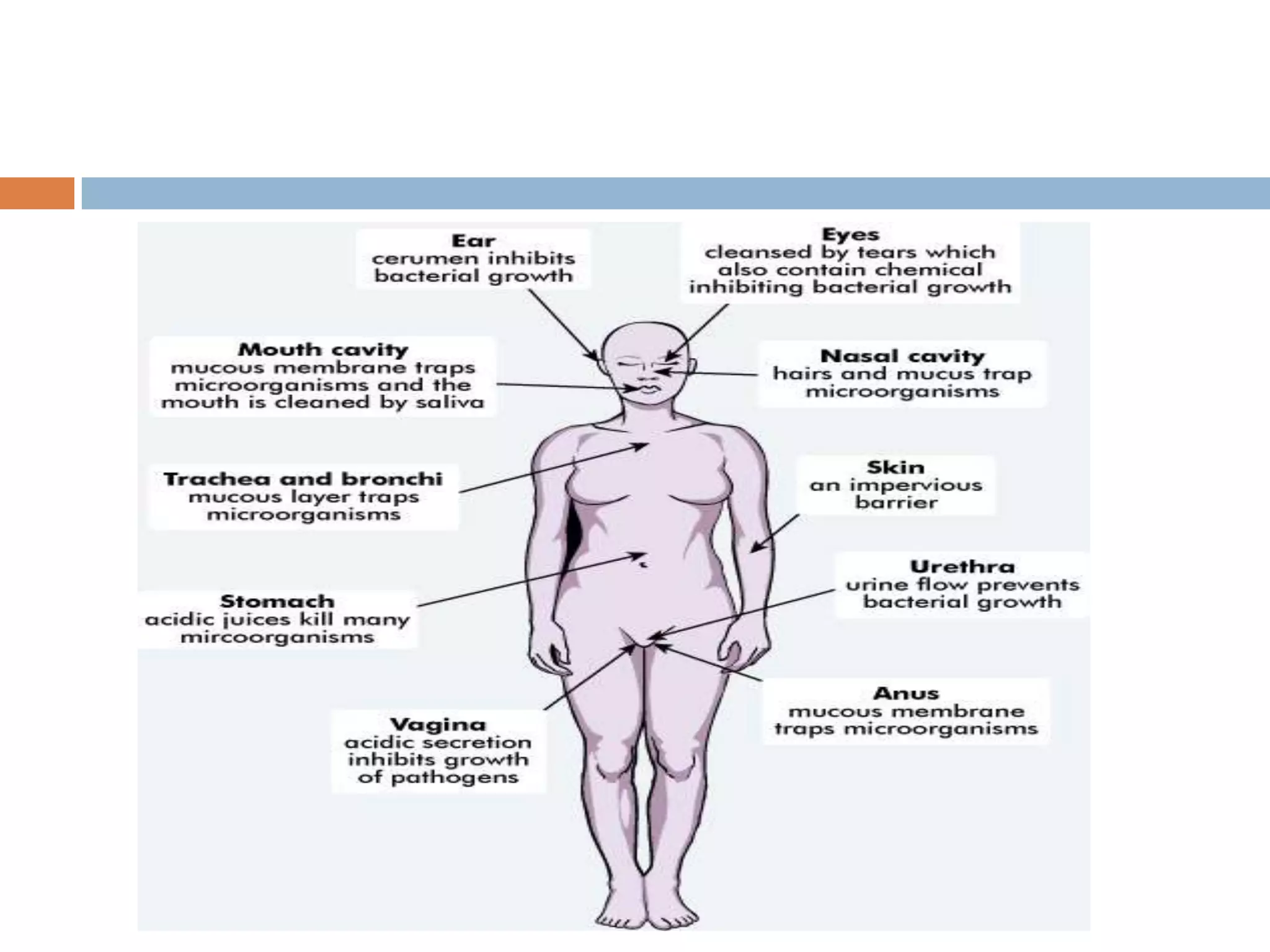
 These are a combination of physical and
chemical barriers that prevent all types of
foreign agents from penetrating the outer layer
of the body. No specific foreign agent is
targeted at this level.
The First Line of Defense:
Physical Barriers
 Skin
 Cells filled with keratin, making skin
impenetrable, waterproof, and resistant to
disruptive toxins and most invaders
 Dead cells are shed and replaced (1 million every
40 min), taking microbes with them
The First Line of Defense:
Physical Barriers
 Mucous Membranes
 The inner surfaces of the body are guarded by
mucous membranes that line the
respiratory, digestive, urinary, and reproductive
systems and protect the internal lining
 But, mucous membranes are more vulnerable
than skin
 Hair in the nose act as a coarse filter
The First Line of Defense:
Chemical Barriers
 Sweat produced by glands in the skin wash
away microbes and their acidity slows bacterial
growth.
 Mucous membranes produce sticky mucous
that traps many microbes
 Saliva and tears contain an enzyme called
lysozyme that kills bacteria by rupturing their
cell walls
 Cerumen (ear wax) – produced in the ear canal
and protects the canal by trapping dirt and dust
particles
The Second Line of Defense:
Defensive Cells
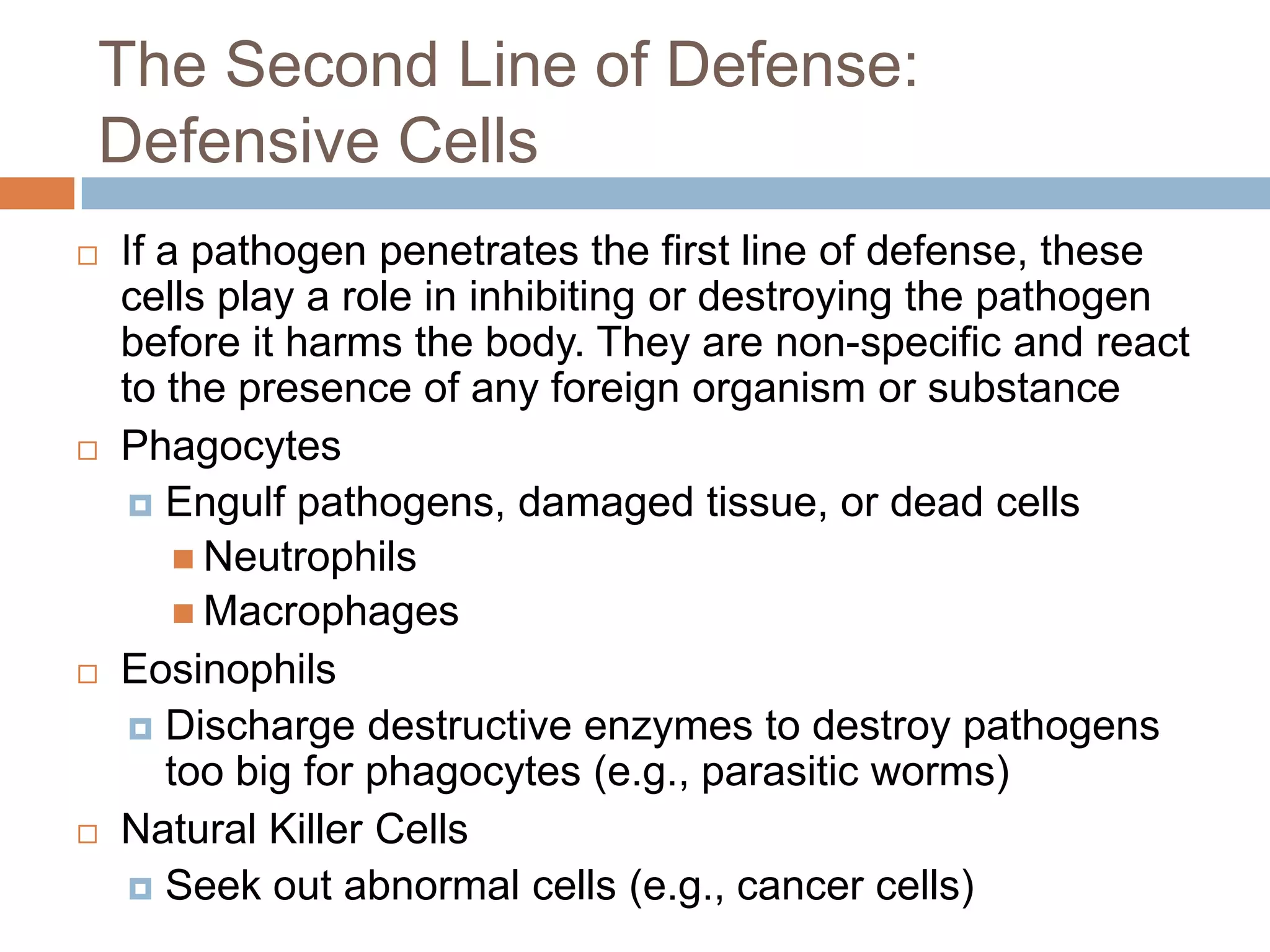
 If a pathogen penetrates the first line of defense, these
cells play a role in inhibiting or destroying the pathogen
before it harms the body. They are non-specific and react
to the presence of any foreign organism or substance
 Phagocytes
 Engulf pathogens, damaged tissue, or dead cells
 Neutrophils
 Macrophages
 Eosinophils
 Discharge destructive enzymes to destroy pathogens
too big for phagocytes (e.g., parasitic worms)
 Natural Killer Cells
 Seek out abnormal cells (e.g., cancer cells)
The Second Line of Defense:
Defensive Proteins
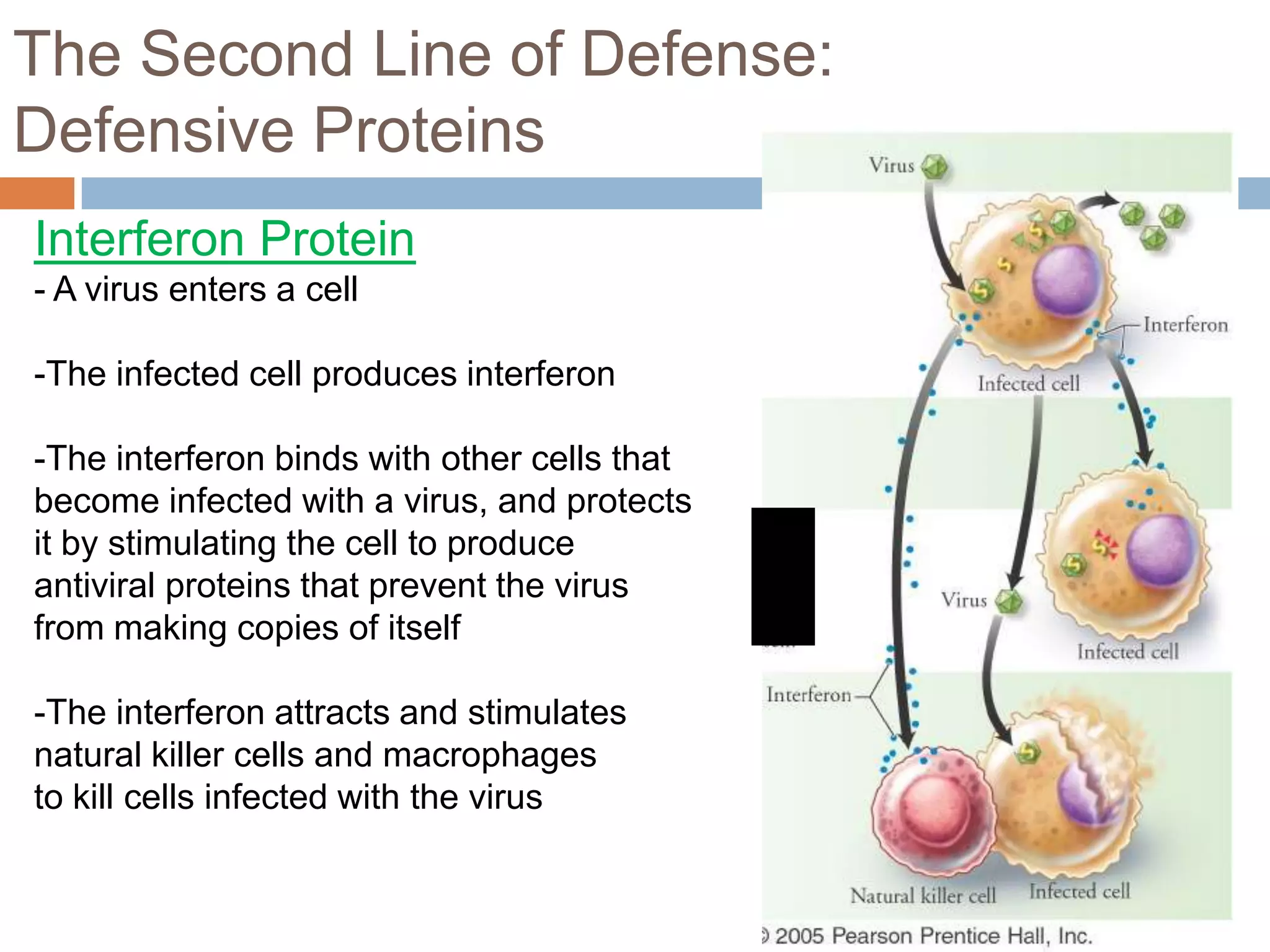
Interferon Protein
- A virus enters a cell
-The infected cell produces interferon
-The interferon binds with other cells that
become infected with a virus, and protects
it by stimulating the cell to produce
antiviral proteins that prevent the virus
from making copies of itself
-The interferon attracts and stimulates
natural killer cells and macrophages
to kill cells infected with the virus
The Second Line of Defense:
Defensive Proteins
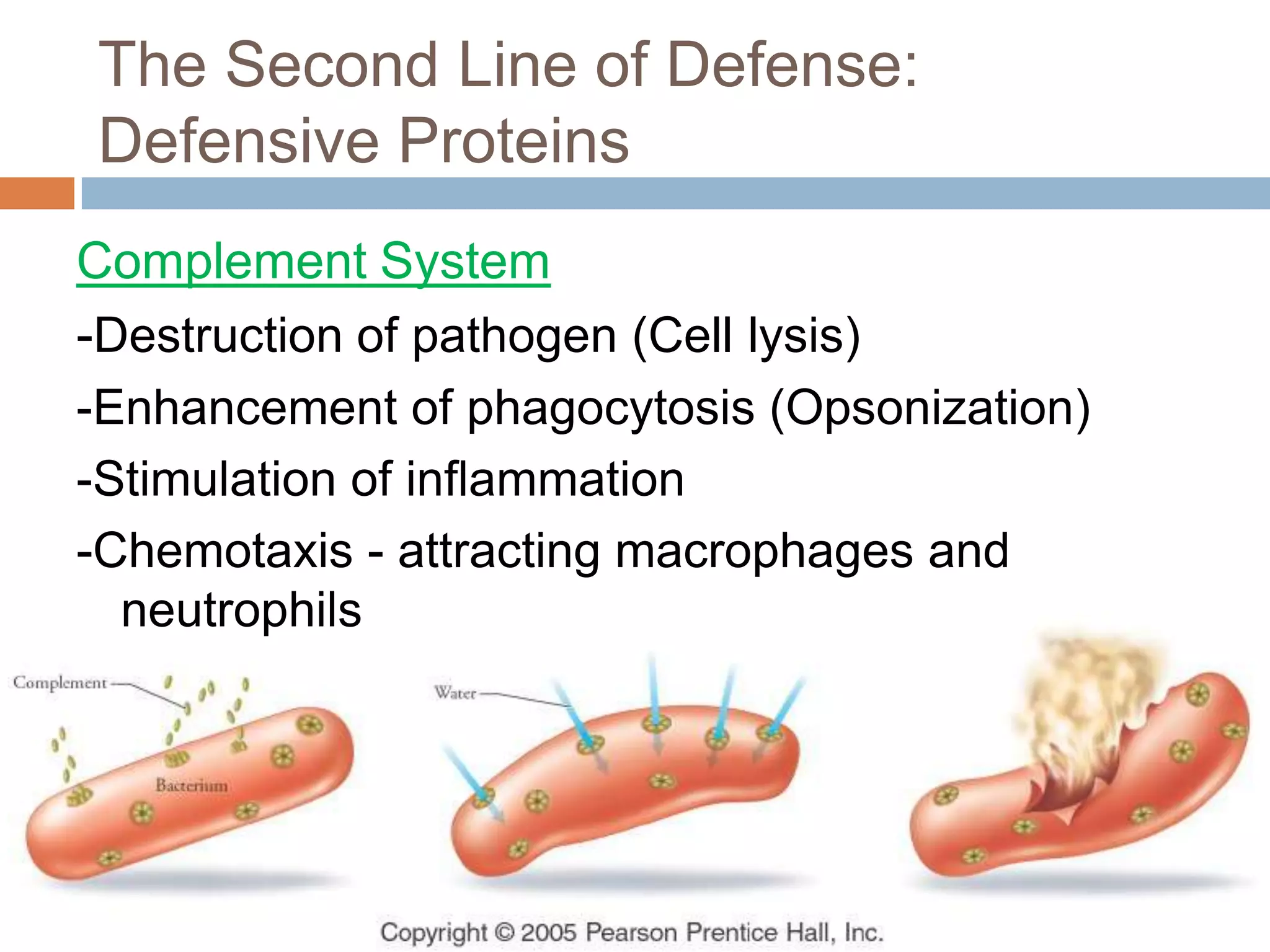
Complement System
-Destruction of pathogen (Cell lysis)
-Enhancement of phagocytosis (Opsonization)
-Stimulation of inflammation
-Chemotaxis - attracting macrophages and
neutrophils
The Second Line of Defense:
Inflammation
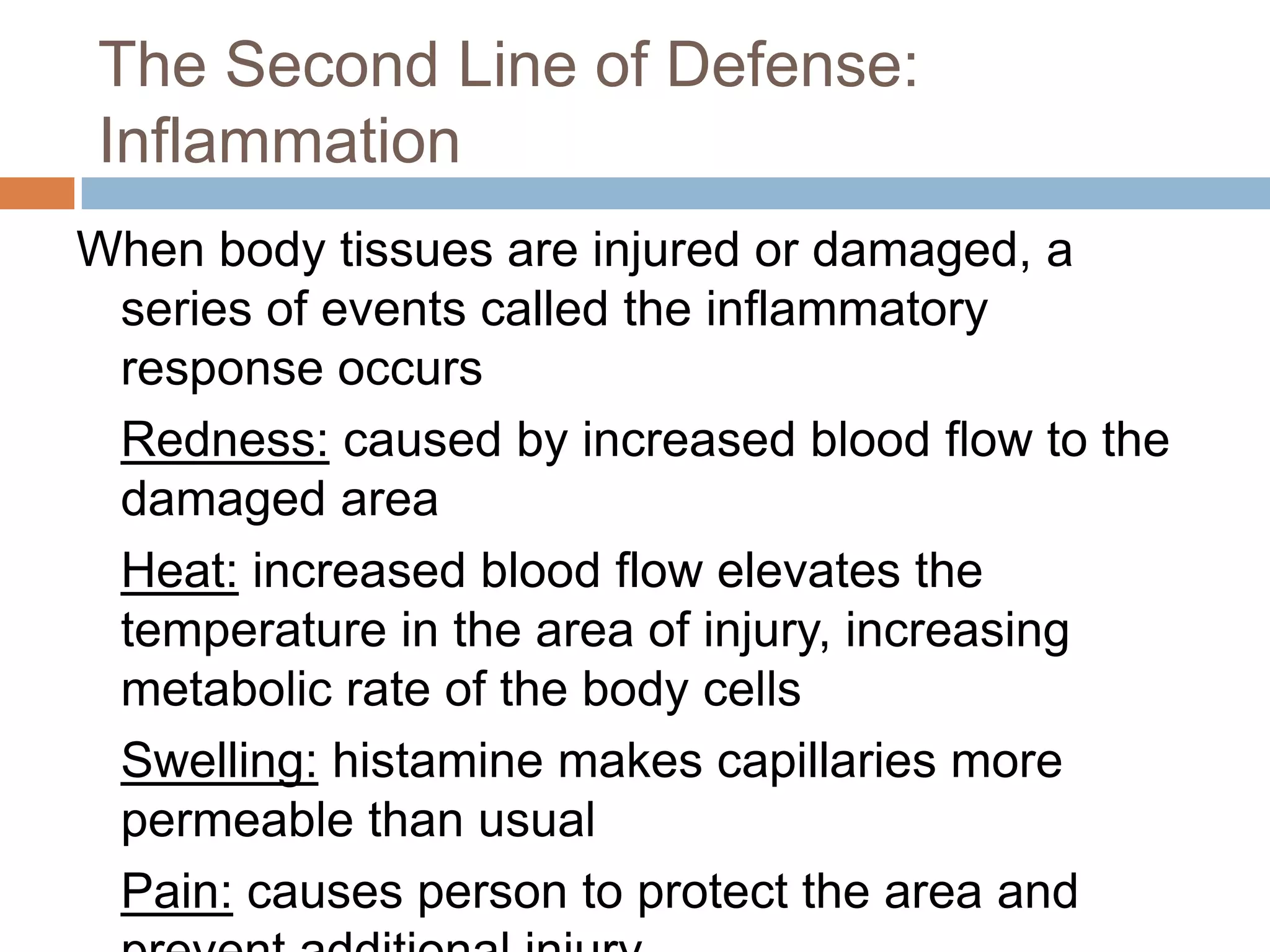
When body tissues are injured or damaged, a
series of events called the inflammatory
response occurs
Redness: caused by increased blood flow to the
damaged area
Heat: increased blood flow elevates the
temperature in the area of injury, increasing
metabolic rate of the body cells
Swelling: histamine makes capillaries more
permeable than usual
Pain: causes person to protect the area and
The Second Line of Defense:
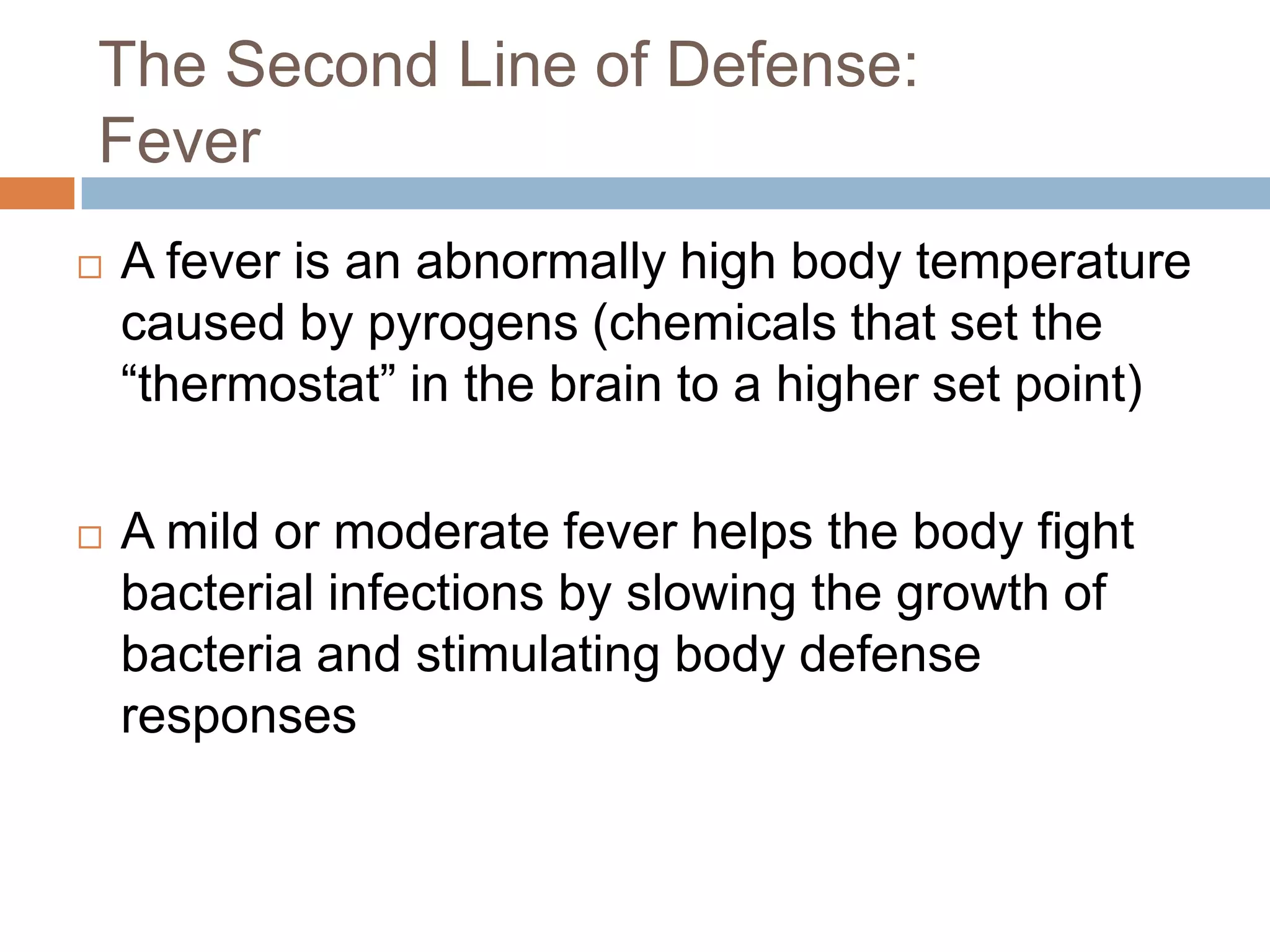
Fever
 A fever is an abnormally high body temperature
caused by pyrogens (chemicals that set the
“thermostat” in the brain to a higher set point)
 A mild or moderate fever helps the body fight
bacterial infections by slowing the growth of
bacteria and stimulating body defense
responses
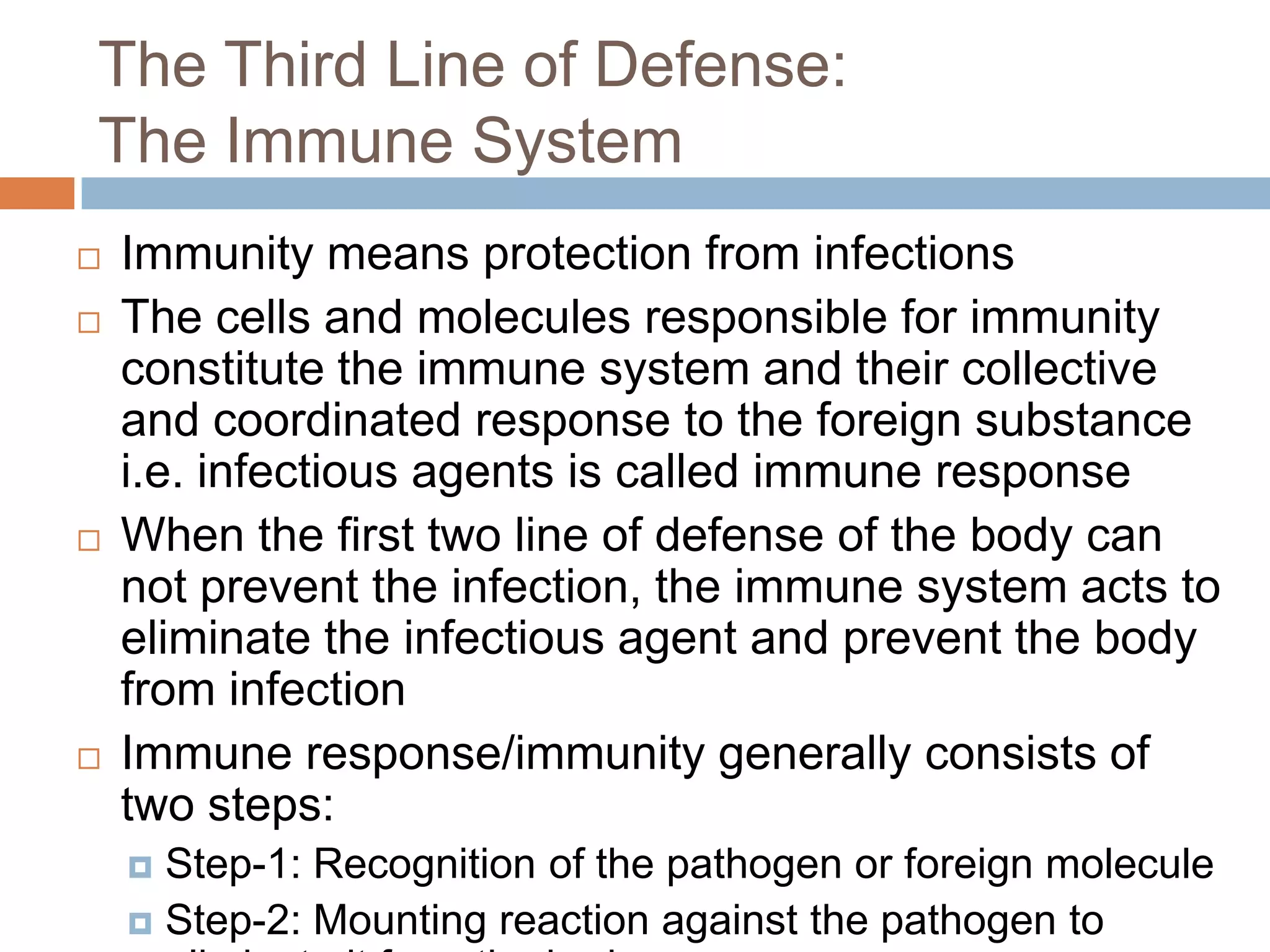
The Third Line of Defense:
The Immune System
 Immunity means protection from infections
 The cells and molecules responsible for immunity
constitute the immune system and their collective
and coordinated response to the foreign substance
i.e. infectious agents is called immune response
 When the first two line of defense of the body can
not prevent the infection, the immune system acts to
eliminate the infectious agent and prevent the body
from infection
 Immune response/immunity generally consists of
two steps:
 Step-1: Recognition of the pathogen or foreign molecule
 Step-2: Mounting reaction against the pathogen to
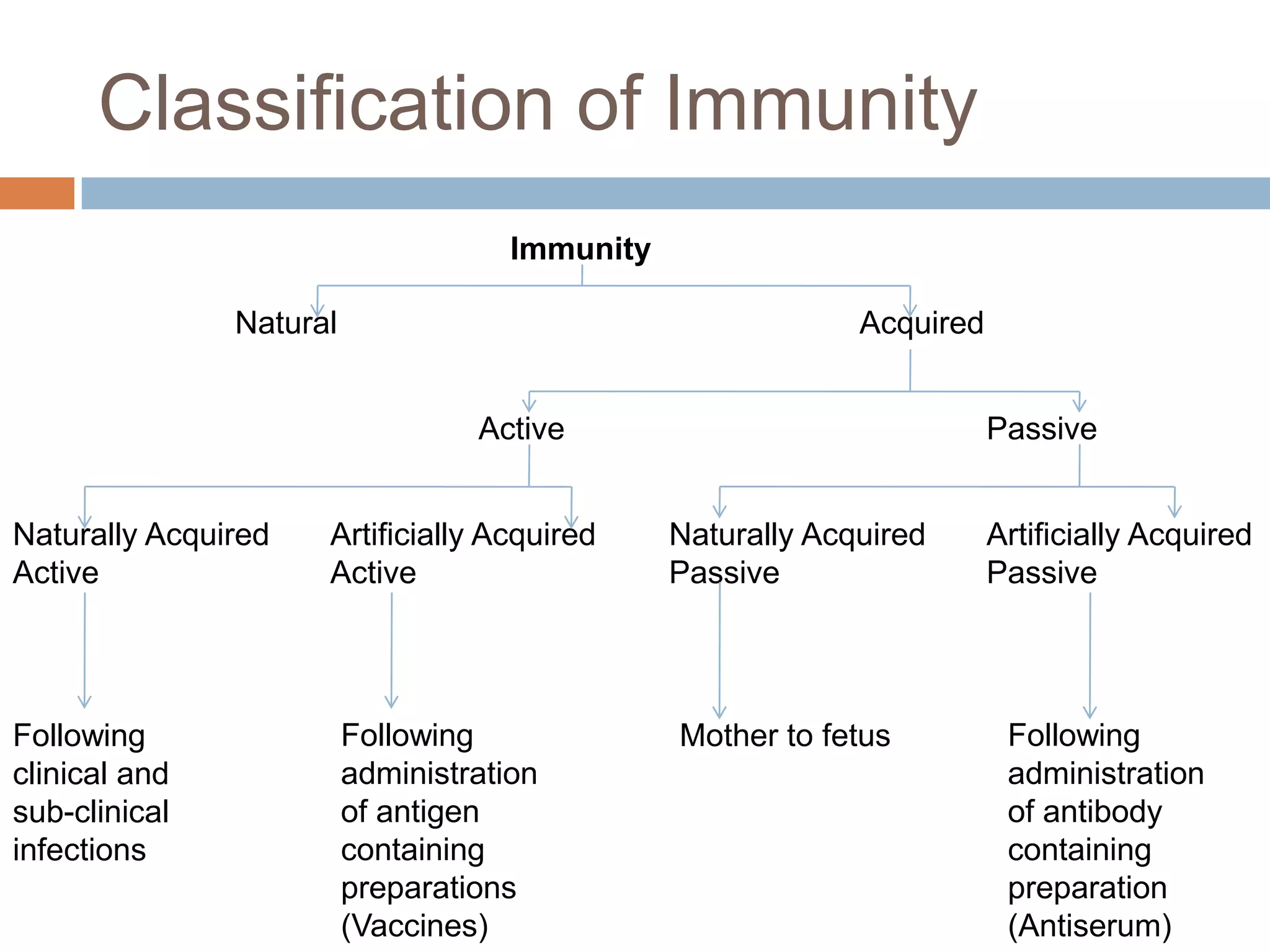
Classification of Immunity
Immunity
Natural Acquired
Active Passive
Naturally Acquired
Active
Artificially Acquired
Active
Naturally Acquired
Passive
Artificially Acquired
Passive
Following
clinical and
sub-clinical
infections
Following
administration
of antigen
containing
preparations
(Vaccines)
Mother to fetus Following
administration
of antibody
containing
preparation
(Antiserum)
 1) Natural Immunity: It is resistance to a disease
possessed by an individual. Nature has given
certain individuals, species and races immunity
against certain diseases. For example, some
individuals are more resistant to certain infections
than others
 2) Acquired Immunity: Only with the natural
immunity it is not possible to fight off each and
every infection and survive. So, immunity is
induced in individuals by certain ways. Acquired
immunity is developed during a person’s lifetime;
it is not inherited. This immunity can be acquired
 2.1) Naturally Acquired Active Immunity: This
immunity is acquired when a person is exposed to
natural infections or to some antigens in the day-
to-day life. Following the exposure, the immune
system responds by producing antibodies
 2.2) Artificially Acquired Active Immunity: This
immunity is acquired by administering specially
prepared antigens which produce specific
antibodies. This is also known as vaccination
where inactivated bacterial toxins (toxoids), killed
or living but attenuated micro-organisms are being
administered to body wherein they lose their
ability to cause disease but still capable of
stimulating the immune system
 2.3) Naturally Acquired Passive Immunity: This
involves natural transfer of antibodies from a
mother to a fetus via placenta or breast milk and
thus providing immunity to the new born for a few
days to a few months. Here, the fetus is immune
to those diseases for which the mother is
immune, but for a short period of time.
 2.4) Artificially Acquired Passive Immunity: Here
antibodies are directly administered to body for
stimulation of immune response. These antibodies
are either produced in animals or in human and
they are found in the serum after administration;
 Again, immunity can be broadly classified
into two categories:
 Innate immunity
 Adaptive immunity
 Adaptive immunity can be further divided
into two types
 Humoral immunity
 Cell mediated immunity
Innate Immunity
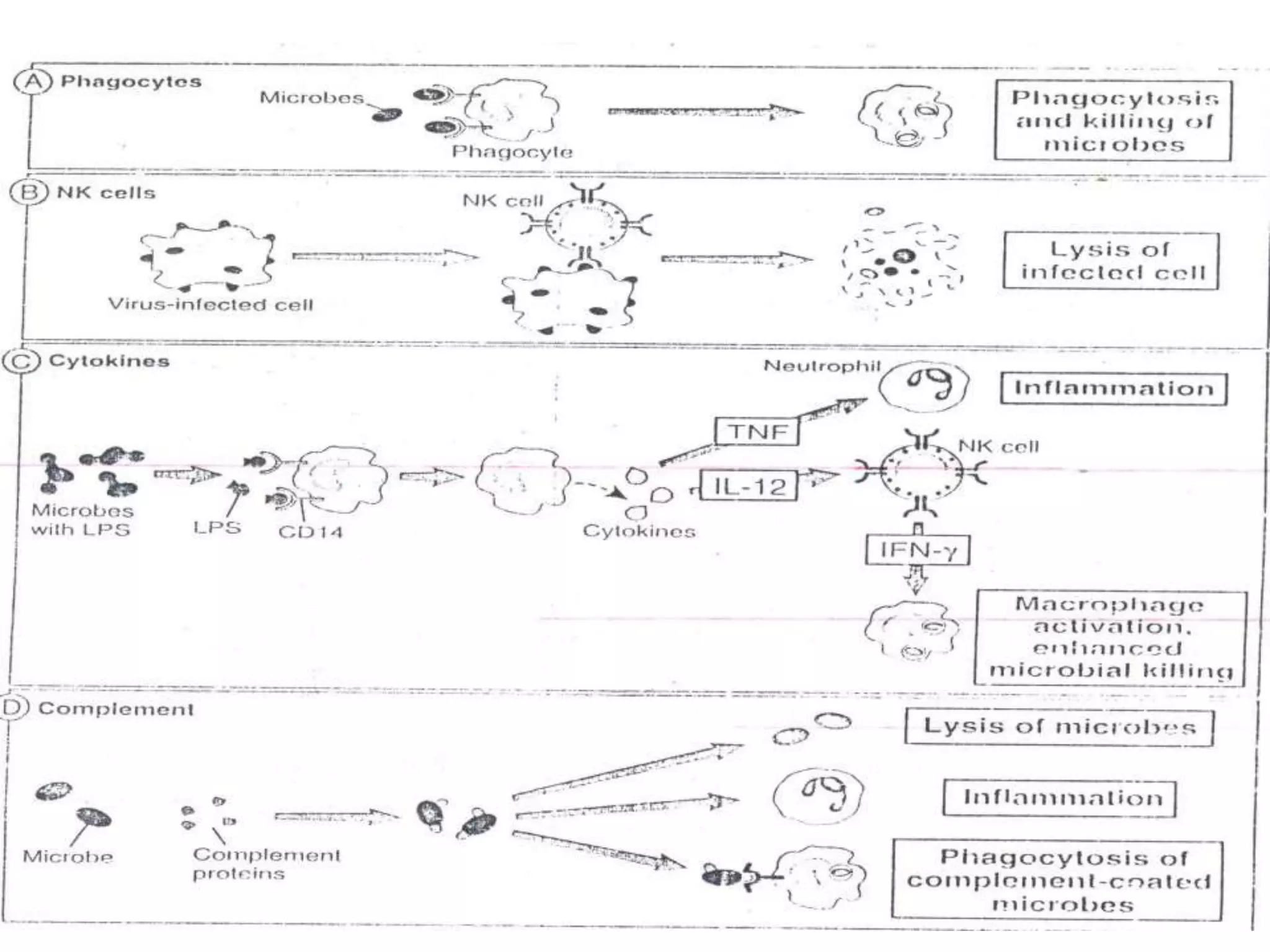
 Innate Immunity reflects the first and
second line of defense against infections
 It usually exist before encountering an
infectious agent i.e. it is the defense
mechanism which are present as inherent
 It’s mechanism is non-specific i.e. they are
not dependent on specific recognition of a
foreign material rather a mechanism which
can provide protection against different
pathogens
Components of Innate Immunity
 Physical and chemical barriers
 Skin
 GIT and acidic environment of stomach
 Respiratory tract
 Tears, saliva, sweat
 Effector cells
 Phagocytes e.g. macrophage, neutrophil
 NK cells
 Blood protein
 Complement system
 Antibody
 Cytokines
Adaptive Immunity
 Adaptive immunity consists of
defense mechanism which are
stimulated by exposure to infectious
agents
 It’s mechanism is specific because of
its ability to distinguish among
different, even closely related
infectious agents
 It is of 2 types: Humoral and Cell
Humoral Immunity
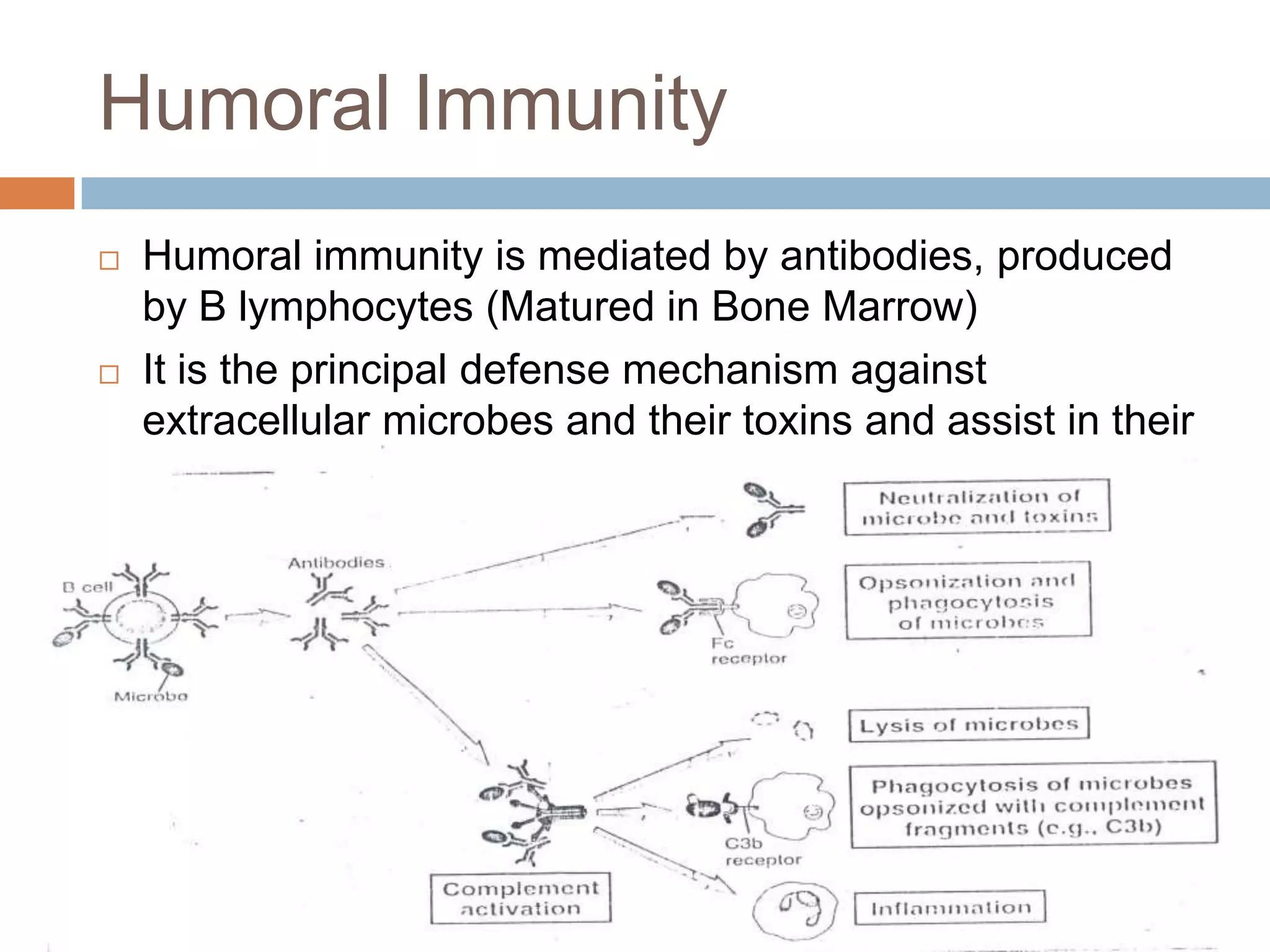
 Humoral immunity is mediated by antibodies, produced
by B lymphocytes (Matured in Bone Marrow)
 It is the principal defense mechanism against
extracellular microbes and their toxins and assist in their
elimination
Cell Mediated Immunity
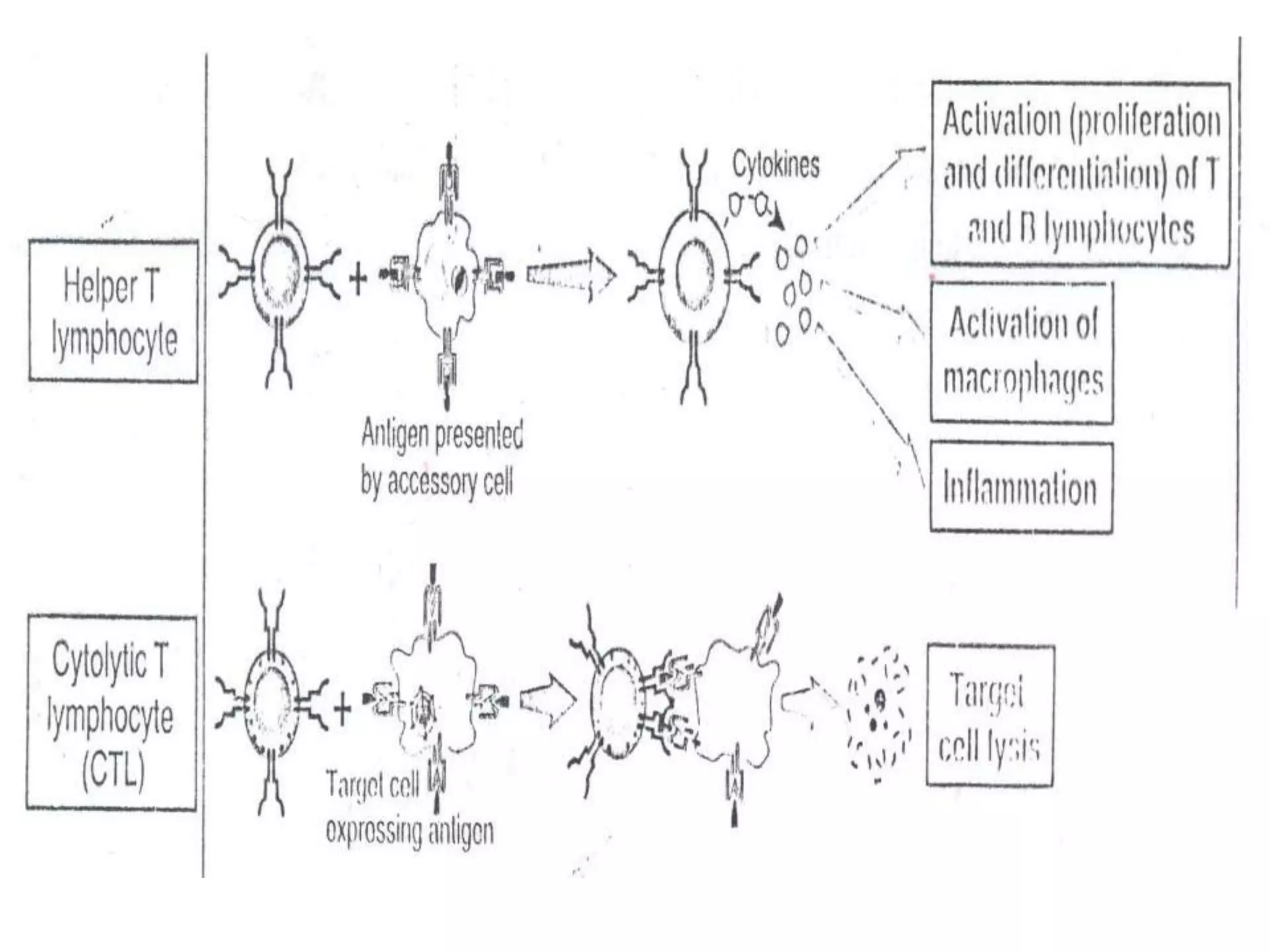
 Cell mediated immunity is mediated by
cytokines, produced by T lymphocytes
(matured in Thymus Glands)
 It is the defense mechanism against
intracellular microbes
 Two types of T cell regulate the cell mediated
immunity such as
 Helper T Cells (TH)
 Cytotoxic/Cytolytic T Cells (CTL)
 http://wps.prenhall.com/wps/media/objects/155
1/1589206/web_tut/13_02/nav/13_02.html

Body Defense Mechanism

  • 1.
    BODY DEFENSE MECHANISMS Navid Jubaer Lecturer,The University of Asia Pacific
  • 2.
     The bodyhas developed defense mechanisms to control and to cope with the constant attack of microorganisms  The body has three lines of defense  Physical Barriers  Defensive Cells & Proteins, Inflammation, and Fever  The Immune System
  • 3.
    The First Lineof Defense  These are a combination of physical and chemical barriers that prevent all types of foreign agents from penetrating the outer layer of the body. No specific foreign agent is targeted at this level.
  • 4.
    The First Lineof Defense: Physical Barriers  Skin  Cells filled with keratin, making skin impenetrable, waterproof, and resistant to disruptive toxins and most invaders  Dead cells are shed and replaced (1 million every 40 min), taking microbes with them
  • 5.
    The First Lineof Defense: Physical Barriers  Mucous Membranes  The inner surfaces of the body are guarded by mucous membranes that line the respiratory, digestive, urinary, and reproductive systems and protect the internal lining  But, mucous membranes are more vulnerable than skin  Hair in the nose act as a coarse filter
  • 6.
    The First Lineof Defense: Chemical Barriers  Sweat produced by glands in the skin wash away microbes and their acidity slows bacterial growth.  Mucous membranes produce sticky mucous that traps many microbes  Saliva and tears contain an enzyme called lysozyme that kills bacteria by rupturing their cell walls  Cerumen (ear wax) – produced in the ear canal and protects the canal by trapping dirt and dust particles
  • 8.
    The Second Lineof Defense: Defensive Cells  If a pathogen penetrates the first line of defense, these cells play a role in inhibiting or destroying the pathogen before it harms the body. They are non-specific and react to the presence of any foreign organism or substance  Phagocytes  Engulf pathogens, damaged tissue, or dead cells  Neutrophils  Macrophages  Eosinophils  Discharge destructive enzymes to destroy pathogens too big for phagocytes (e.g., parasitic worms)  Natural Killer Cells  Seek out abnormal cells (e.g., cancer cells)
  • 9.
    The Second Lineof Defense: Defensive Proteins Interferon Protein - A virus enters a cell -The infected cell produces interferon -The interferon binds with other cells that become infected with a virus, and protects it by stimulating the cell to produce antiviral proteins that prevent the virus from making copies of itself -The interferon attracts and stimulates natural killer cells and macrophages to kill cells infected with the virus
  • 10.
    The Second Lineof Defense: Defensive Proteins Complement System -Destruction of pathogen (Cell lysis) -Enhancement of phagocytosis (Opsonization) -Stimulation of inflammation -Chemotaxis - attracting macrophages and neutrophils
  • 11.
    The Second Lineof Defense: Inflammation When body tissues are injured or damaged, a series of events called the inflammatory response occurs Redness: caused by increased blood flow to the damaged area Heat: increased blood flow elevates the temperature in the area of injury, increasing metabolic rate of the body cells Swelling: histamine makes capillaries more permeable than usual Pain: causes person to protect the area and
  • 12.
    The Second Lineof Defense: Fever  A fever is an abnormally high body temperature caused by pyrogens (chemicals that set the “thermostat” in the brain to a higher set point)  A mild or moderate fever helps the body fight bacterial infections by slowing the growth of bacteria and stimulating body defense responses
  • 13.
    The Third Lineof Defense: The Immune System  Immunity means protection from infections  The cells and molecules responsible for immunity constitute the immune system and their collective and coordinated response to the foreign substance i.e. infectious agents is called immune response  When the first two line of defense of the body can not prevent the infection, the immune system acts to eliminate the infectious agent and prevent the body from infection  Immune response/immunity generally consists of two steps:  Step-1: Recognition of the pathogen or foreign molecule  Step-2: Mounting reaction against the pathogen to
  • 14.
    Classification of Immunity Immunity NaturalAcquired Active Passive Naturally Acquired Active Artificially Acquired Active Naturally Acquired Passive Artificially Acquired Passive Following clinical and sub-clinical infections Following administration of antigen containing preparations (Vaccines) Mother to fetus Following administration of antibody containing preparation (Antiserum)
  • 15.
     1) NaturalImmunity: It is resistance to a disease possessed by an individual. Nature has given certain individuals, species and races immunity against certain diseases. For example, some individuals are more resistant to certain infections than others  2) Acquired Immunity: Only with the natural immunity it is not possible to fight off each and every infection and survive. So, immunity is induced in individuals by certain ways. Acquired immunity is developed during a person’s lifetime; it is not inherited. This immunity can be acquired
  • 16.
     2.1) NaturallyAcquired Active Immunity: This immunity is acquired when a person is exposed to natural infections or to some antigens in the day- to-day life. Following the exposure, the immune system responds by producing antibodies  2.2) Artificially Acquired Active Immunity: This immunity is acquired by administering specially prepared antigens which produce specific antibodies. This is also known as vaccination where inactivated bacterial toxins (toxoids), killed or living but attenuated micro-organisms are being administered to body wherein they lose their ability to cause disease but still capable of stimulating the immune system
  • 17.
     2.3) NaturallyAcquired Passive Immunity: This involves natural transfer of antibodies from a mother to a fetus via placenta or breast milk and thus providing immunity to the new born for a few days to a few months. Here, the fetus is immune to those diseases for which the mother is immune, but for a short period of time.  2.4) Artificially Acquired Passive Immunity: Here antibodies are directly administered to body for stimulation of immune response. These antibodies are either produced in animals or in human and they are found in the serum after administration;
  • 18.
     Again, immunitycan be broadly classified into two categories:  Innate immunity  Adaptive immunity  Adaptive immunity can be further divided into two types  Humoral immunity  Cell mediated immunity
  • 19.
    Innate Immunity  InnateImmunity reflects the first and second line of defense against infections  It usually exist before encountering an infectious agent i.e. it is the defense mechanism which are present as inherent  It’s mechanism is non-specific i.e. they are not dependent on specific recognition of a foreign material rather a mechanism which can provide protection against different pathogens
  • 20.
    Components of InnateImmunity  Physical and chemical barriers  Skin  GIT and acidic environment of stomach  Respiratory tract  Tears, saliva, sweat  Effector cells  Phagocytes e.g. macrophage, neutrophil  NK cells  Blood protein  Complement system  Antibody  Cytokines
  • 22.
    Adaptive Immunity  Adaptiveimmunity consists of defense mechanism which are stimulated by exposure to infectious agents  It’s mechanism is specific because of its ability to distinguish among different, even closely related infectious agents  It is of 2 types: Humoral and Cell
  • 23.
    Humoral Immunity  Humoralimmunity is mediated by antibodies, produced by B lymphocytes (Matured in Bone Marrow)  It is the principal defense mechanism against extracellular microbes and their toxins and assist in their elimination
  • 24.
    Cell Mediated Immunity Cell mediated immunity is mediated by cytokines, produced by T lymphocytes (matured in Thymus Glands)  It is the defense mechanism against intracellular microbes  Two types of T cell regulate the cell mediated immunity such as  Helper T Cells (TH)  Cytotoxic/Cytolytic T Cells (CTL)
  • 26.