Overcoming Patient
Engagement Barriers
Koray Atalag, MD, PhD, FAIDH
CIO & Head of Research - The Clinician
Senior Research Fellow (Honorary) - University of Auckland
Paper#:167
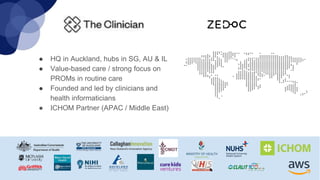
โ— HQ in Auckland, hubs in SG, AU & IL
โ— Value-based care / strong focus on
PROMs in routine care
โ— Founded and led by clinicians and
health informaticians
โ— ICHOM Partner (APAC / Middle East)
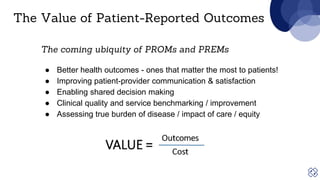
The coming ubiquity of PROMs and PREMs
โ— Better health outcomes - ones that matter the most to patients!
โ— Improving patient-provider communication & satisfaction
โ— Enabling shared decision making
โ— Clinical quality and service benchmarking / improvement
โ— Assessing true burden of disease / impact of care / equity
The Value of Patient-Reported Outcomes
The Problem: Patient Engagement
Barriers:
โ— Poor user experience โ‡’ adherence
โ— Low patient activation / motivation
โ— Lack of provider acknowledgement
โ— Typically low response rates in
industry: 15-20%.
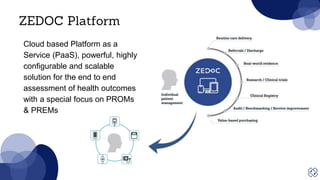
Cloud based Platform as a
Service (PaaS), powerful, highly
configurable and scalable
solution for the end to end
assessment of health outcomes
with a special focus on PROMs
& PREMs
ZEDOC Platform
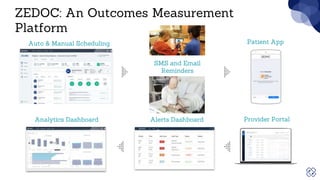
Auto & Manual Scheduling
Alerts Dashboard
SMS and Email
Reminders
ZEDOC: An Outcomes Measurement
Platform
Analytics Dashboard Provider Portal
Patient App
Patient Engagement in Real-World
Settings
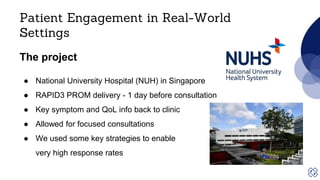
The project
โ— National University Hospital (NUH) in Singapore
โ— RAPID3 PROM delivery - 1 day before consultation
โ— Key symptom and QoL info back to clinic
โ— Allowed for focused consultations
โ— We used some key strategies to enable
very high response rates
Key Patient Engagement Strategies
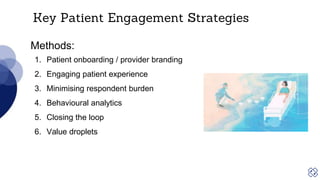
Methods:
1. Patient onboarding / provider branding
2. Engaging patient experience
3. Minimising respondent burden
4. Behavioural analytics
5. Closing the loop
6. Value droplets
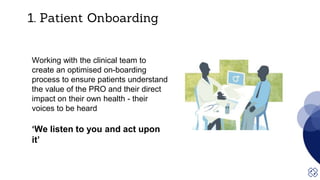
1. Patient Onboarding
Working with the clinical team to
create an optimised on-boarding
process to ensure patients understand
the value of the PRO and their direct
impact on their own health - their
voices to be heard
โ€˜We listen to you and act upon
itโ€™
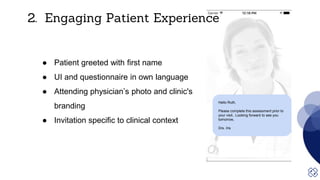
Hello Ruth,
Please complete this assessment prior to
your visit.. Looking forward to see you
tomorrow,
Drs. Iris
โ— Patient greeted with first name
โ— UI and questionnaire in own language
โ— Attending physicianโ€™s photo and clinic's
branding
โ— Invitation specific to clinical context
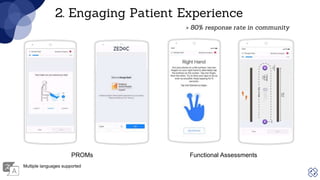
2. Engaging Patient Experience
> 80% response rate in community
Multiple languages supported
PROMs Functional Assessments
Item
1
Item
2
Item
3
Item
4
Item
5
Item
6
Item
7
Item
8
Item
9
Item
n
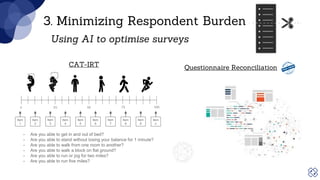
3. Minimizing Respondent Burden
CAT-IRT
- Are you able to get in and out of bed?
- Are you able to stand without losing your balance for 1 minute?
- Are you able to walk from one room to another?
- Are you able to walk a block on flat ground?
- Are you able to run or jog for two miles?
- Are you able to run five miles?
Using AI to optimise surveys
Questionnaire Reconciliation
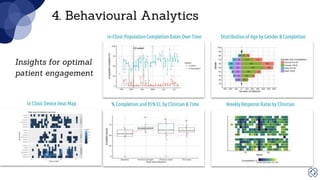
Insights for optimal
patient engagement
4. Behavioural Analytics
In-Clinic PopulationCompletion RatesOver Time Distributionof Ageby Gender & Completion
% Completion and 95% CI,by Clinician & Time WeeklyResponse Ratesby ClinicianIn ClinicDevice HeatMap
5. Closing the Loop - Shared Decision Making
โ— Real time actionable insights to the care
team
โ— Pre-visit reminders to review patientsโ€™
responses
โ— Highlights of patientโ€™s key health concerns
โ— (PREMs) Patientsโ€™ structured feedback on
care provision drives service improvement +
NLP on free text
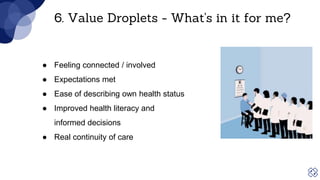
6. Value Droplets - What's in it for me?
โ— Feeling connected / involved
โ— Expectations met
โ— Ease of describing own health status
โ— Improved health literacy and
informed decisions
โ— Real continuity of care
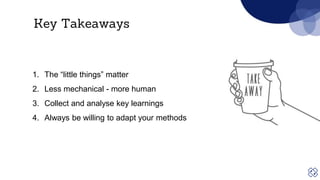
Key Takeaways
1. The โ€œlittle thingsโ€ matter
2. Less mechanical - more human
3. Collect and analyse key learnings
4. Always be willing to adapt your methods
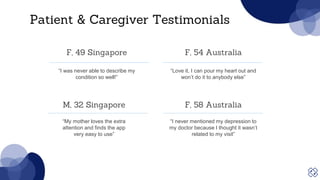
Patient & Caregiver Testimonials
โ€œLove it, I can pour my heart out and
wonโ€™t do it to anybody elseโ€
โ€œI was never able to describe my
condition so well!โ€
F, 49 Singapore F, 54 Australia
โ€œI never mentioned my depression to
my doctor because I thought it wasnโ€™t
related to my visitโ€
โ€œMy mother loves the extra
attention and finds the app
very easy to useโ€
M, 32 Singapore F, 58 Australia

Overcoming Patient Engagement Barriers

  • 1.
    Overcoming Patient Engagement Barriers KorayAtalag, MD, PhD, FAIDH CIO & Head of Research - The Clinician Senior Research Fellow (Honorary) - University of Auckland Paper#:167
  • 2.
    โ— HQ inAuckland, hubs in SG, AU & IL โ— Value-based care / strong focus on PROMs in routine care โ— Founded and led by clinicians and health informaticians โ— ICHOM Partner (APAC / Middle East)
  • 3.
    The coming ubiquityof PROMs and PREMs โ— Better health outcomes - ones that matter the most to patients! โ— Improving patient-provider communication & satisfaction โ— Enabling shared decision making โ— Clinical quality and service benchmarking / improvement โ— Assessing true burden of disease / impact of care / equity The Value of Patient-Reported Outcomes
  • 4.
    The Problem: PatientEngagement Barriers: โ— Poor user experience โ‡’ adherence โ— Low patient activation / motivation โ— Lack of provider acknowledgement โ— Typically low response rates in industry: 15-20%.
  • 5.
    Cloud based Platformas a Service (PaaS), powerful, highly configurable and scalable solution for the end to end assessment of health outcomes with a special focus on PROMs & PREMs ZEDOC Platform
  • 6.
    Auto & ManualScheduling Alerts Dashboard SMS and Email Reminders ZEDOC: An Outcomes Measurement Platform Analytics Dashboard Provider Portal Patient App
  • 7.
    Patient Engagement inReal-World Settings The project โ— National University Hospital (NUH) in Singapore โ— RAPID3 PROM delivery - 1 day before consultation โ— Key symptom and QoL info back to clinic โ— Allowed for focused consultations โ— We used some key strategies to enable very high response rates
  • 8.
    Key Patient EngagementStrategies Methods: 1. Patient onboarding / provider branding 2. Engaging patient experience 3. Minimising respondent burden 4. Behavioural analytics 5. Closing the loop 6. Value droplets
  • 9.
    1. Patient Onboarding Workingwith the clinical team to create an optimised on-boarding process to ensure patients understand the value of the PRO and their direct impact on their own health - their voices to be heard โ€˜We listen to you and act upon itโ€™
  • 10.
    Hello Ruth, Please completethis assessment prior to your visit.. Looking forward to see you tomorrow, Drs. Iris โ— Patient greeted with first name โ— UI and questionnaire in own language โ— Attending physicianโ€™s photo and clinic's branding โ— Invitation specific to clinical context 2. Engaging Patient Experience
  • 11.
    2. Engaging PatientExperience > 80% response rate in community Multiple languages supported PROMs Functional Assessments
  • 12.
    Item 1 Item 2 Item 3 Item 4 Item 5 Item 6 Item 7 Item 8 Item 9 Item n 3. Minimizing RespondentBurden CAT-IRT - Are you able to get in and out of bed? - Are you able to stand without losing your balance for 1 minute? - Are you able to walk from one room to another? - Are you able to walk a block on flat ground? - Are you able to run or jog for two miles? - Are you able to run five miles? Using AI to optimise surveys Questionnaire Reconciliation
  • 13.
    Insights for optimal patientengagement 4. Behavioural Analytics In-Clinic PopulationCompletion RatesOver Time Distributionof Ageby Gender & Completion % Completion and 95% CI,by Clinician & Time WeeklyResponse Ratesby ClinicianIn ClinicDevice HeatMap
  • 14.
    5. Closing theLoop - Shared Decision Making โ— Real time actionable insights to the care team โ— Pre-visit reminders to review patientsโ€™ responses โ— Highlights of patientโ€™s key health concerns โ— (PREMs) Patientsโ€™ structured feedback on care provision drives service improvement + NLP on free text
  • 15.
    6. Value Droplets- What's in it for me? โ— Feeling connected / involved โ— Expectations met โ— Ease of describing own health status โ— Improved health literacy and informed decisions โ— Real continuity of care
  • 16.
    Key Takeaways 1. Theโ€œlittle thingsโ€ matter 2. Less mechanical - more human 3. Collect and analyse key learnings 4. Always be willing to adapt your methods
  • 17.
    Patient & CaregiverTestimonials โ€œLove it, I can pour my heart out and wonโ€™t do it to anybody elseโ€ โ€œI was never able to describe my condition so well!โ€ F, 49 Singapore F, 54 Australia โ€œI never mentioned my depression to my doctor because I thought it wasnโ€™t related to my visitโ€ โ€œMy mother loves the extra attention and finds the app very easy to useโ€ M, 32 Singapore F, 58 Australia

Editor's Notes

  • #2ย Hi, my name is Koray Atalag In this video presentation I will explain how we overcame barriers for patient engagement and achieved very high response rates using our ePRO ZEDOC Platform. I'll give real-world insights from a project we ran at the Rheumatology service at NUH in Singapore. I wear two hats - this talk is with the first one!
  • #3ย The Clinician is an international privately owned company that specialises in solutions for value based health care. Our flagship product is ZEDOC, a platform for the end to end management of patient reported outcomes and experience measures, we often refer to as Patient Perspectives. The companyโ€™s original founders are a team of health industry veterans that a number of years ago now recognised that there would be a growing need to incorporate outcomes in clinical practice and designed the best of breed and robust solution ZEDOC, that integrates into health information eco systems to smartly manage the outcome measurements on multiple levels for different stakeholders - from statewide to regional networks, hospitals and right down to the single medical practice.
  • #4ย explain outcomes, their importance, and how collected. VBC.
  • #9ย consumer experience - enjoyable, seamless and all-encompassing
  • #12ย Language: A notable finding from this project was an overnight increase in response rate of 6% when introducing localised simplified Chinese into our Patient App and the RAPID3 PROM instrument. Despite the ability for the patient cohort to understand and read English, it was clear that the more natural, translated version had a considerable impact on patient engagement.
  • #14ย For an example in the Singapore project, we saw significantly higher response rates when SMSs were sent in the morning and observed that those under the age of 40 often responded immediately to the SMS compared with older patients.
  • #17ย Firstly, there are numerous small but significant steps that can be taken to create a more meaningful connection between patients and providers, such as adding a physicianโ€™s name in an SMS. Second, the collection and analysis of rich behavioural data is critical for developing insights around how to personalise engagement for specific patient cohorts. Finally, it is important to take an agile approach to patient engagement so that any friction points identified can be quickly addressed, thus resulting in overnight improvements in response rates