INTRODUCTION
NABH 5th EDITION
IYANAR. S
QUALITY MANAGER
INTRODUCTION
NABH is a constituent board of Quality Council
of India, set up to establish and operate
accreditation programme for healthcare
organizations in India.
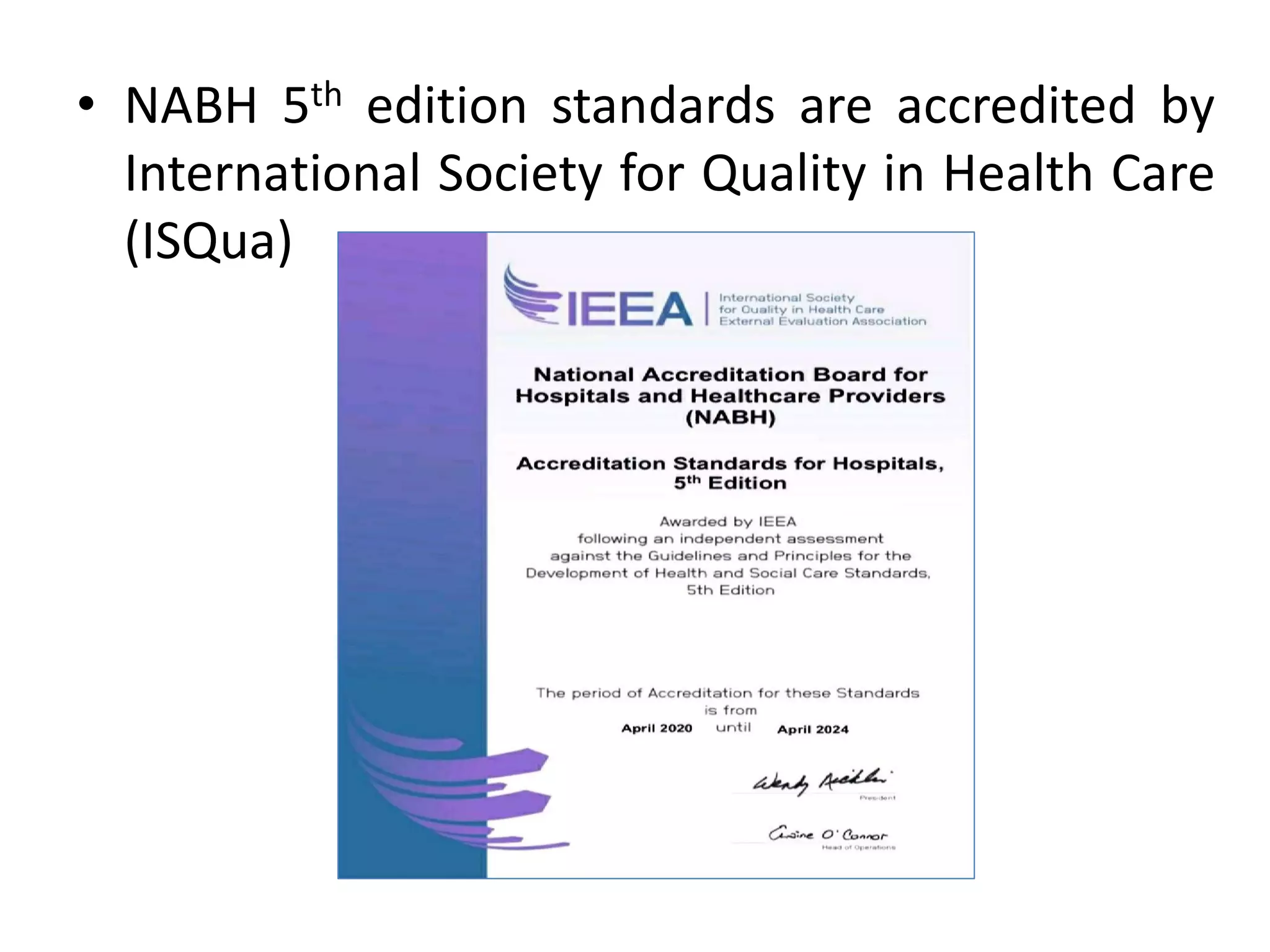
International Linkage with lSQua & ASQua
• NABH 5th edition standards are accredited by
International Society for Quality in Health Care
(ISQua)
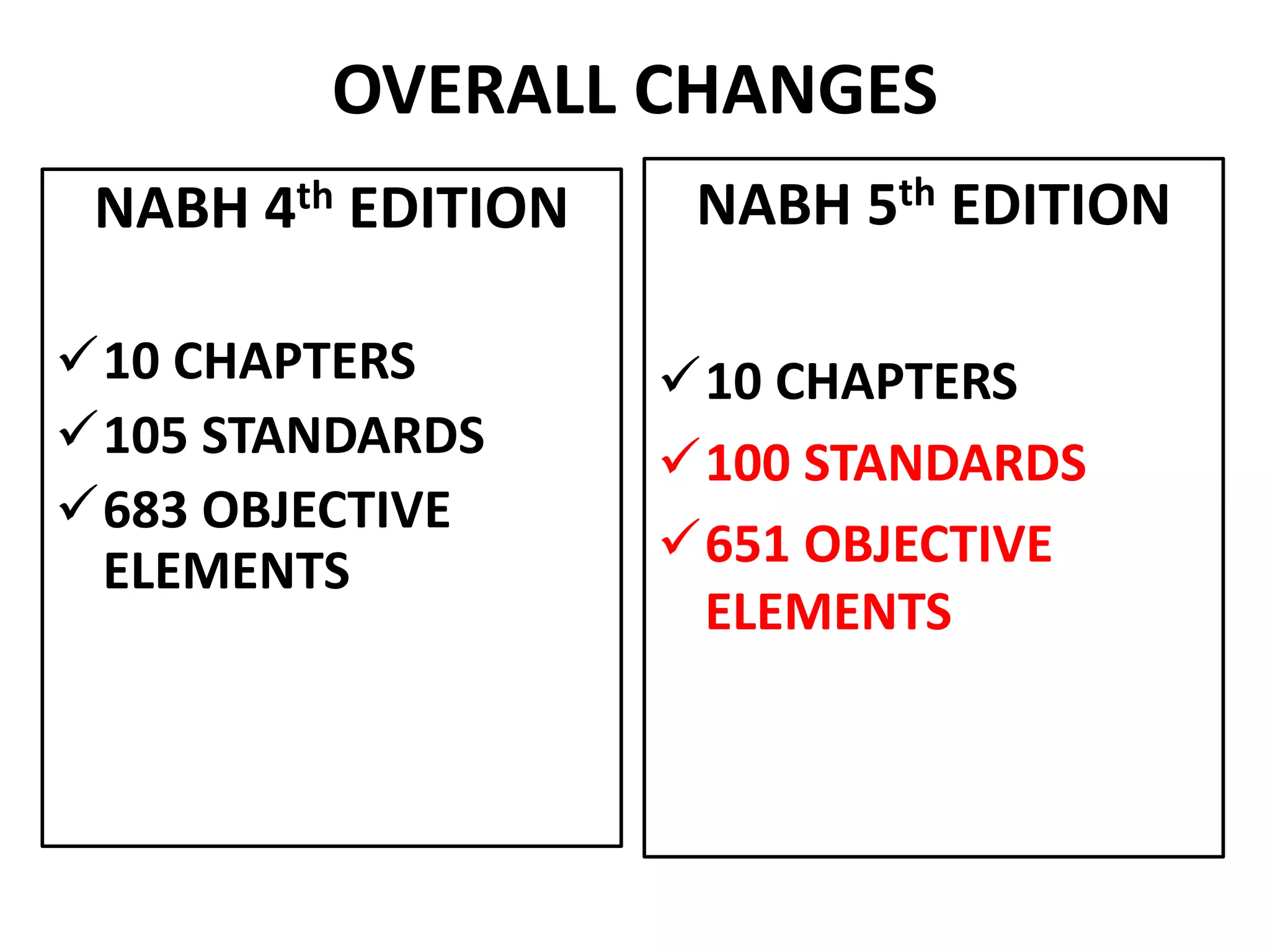
OVERALL CHANGES
NABH 4th EDITION
10 CHAPTERS
105 STANDARDS
683 OBJECTIVE
ELEMENTS
NABH 5th EDITION
10 CHAPTERS
100 STANDARDS
651 OBJECTIVE
ELEMENTS
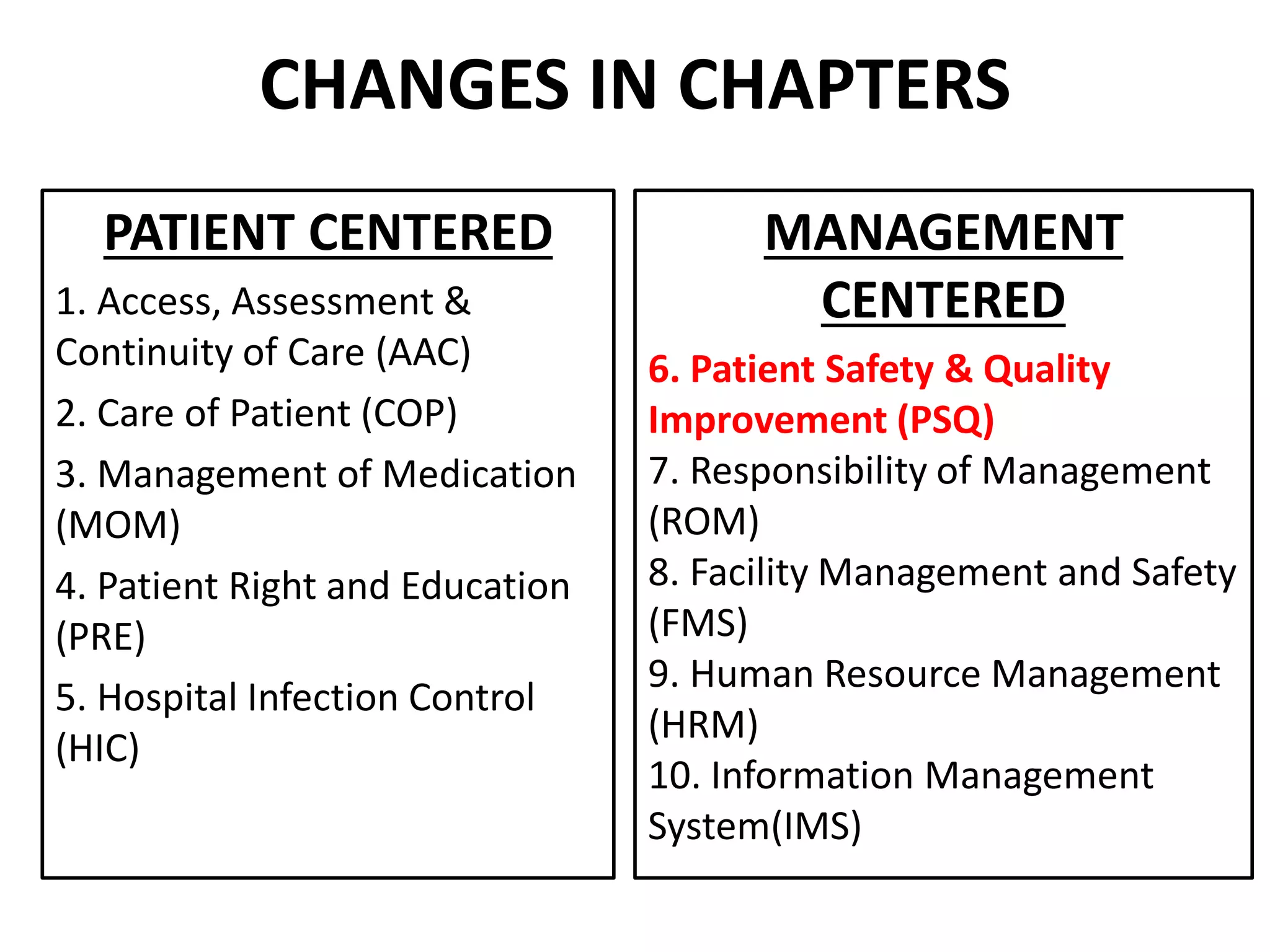
CHANGES IN CHAPTERS
PATIENT CENTERED
1. Access, Assessment &
Continuity of Care (AAC)
2. Care of Patient (COP)
3. Management of Medication
(MOM)
4. Patient Right and Education
(PRE)
5. Hospital Infection Control
(HIC)
MANAGEMENT
CENTERED
6. Patient Safety & Quality
Improvement (PSQ)
7. Responsibility of Management
(ROM)
8. Facility Management and Safety
(FMS)
9. Human Resource Management
(HRM)
10. Information Management
System(IMS)
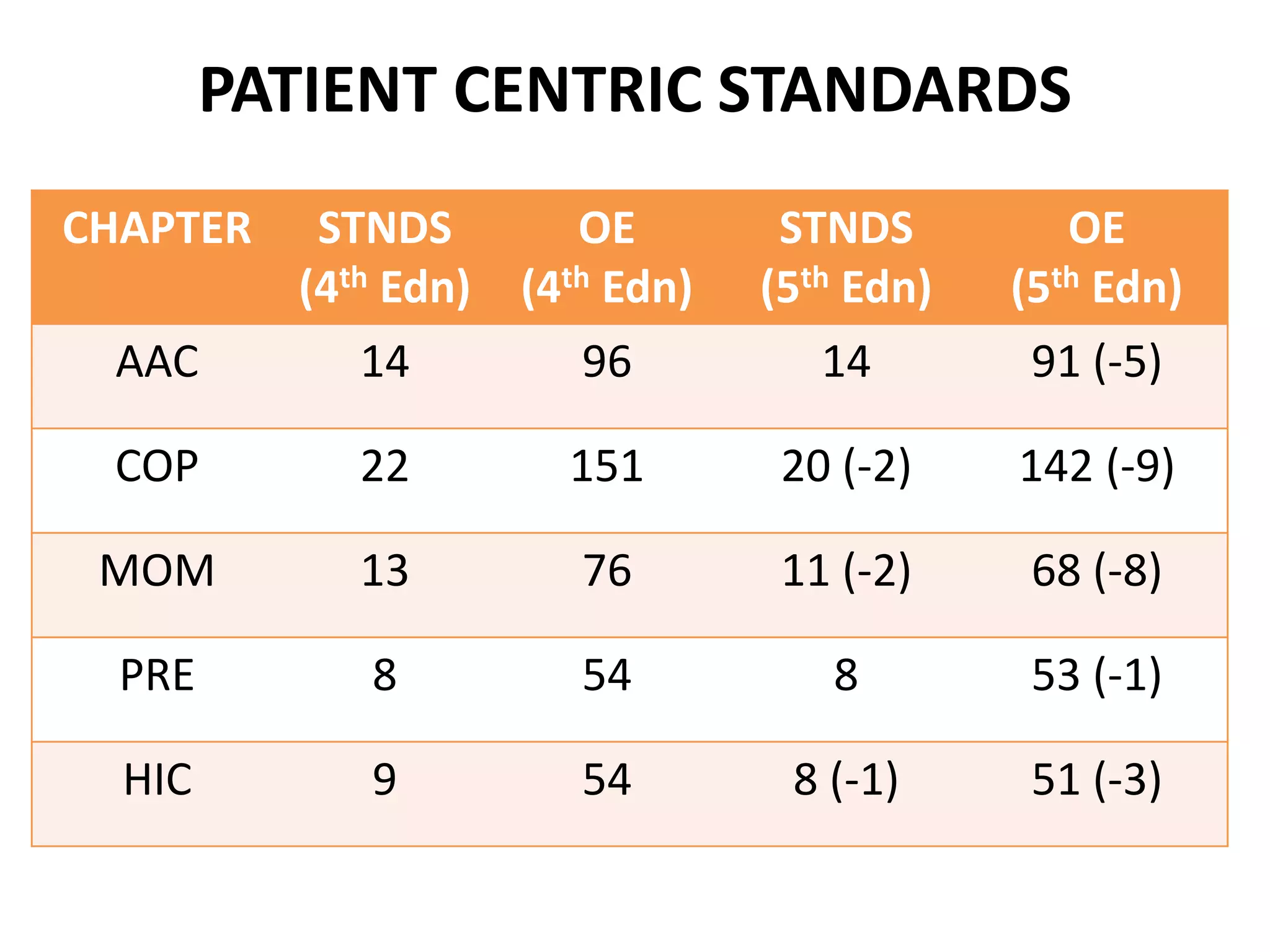
PATIENT CENTRIC STANDARDS
CHAPTER STNDS
(4th Edn)
OE
(4th Edn)
STNDS
(5th Edn)
OE
(5th Edn)
AAC 14 96 14 91 (-5)
COP 22 151 20 (-2) 142 (-9)
MOM 13 76 11 (-2) 68 (-8)
PRE 8 54 8 53 (-1)
HIC 9 54 8 (-1) 51 (-3)
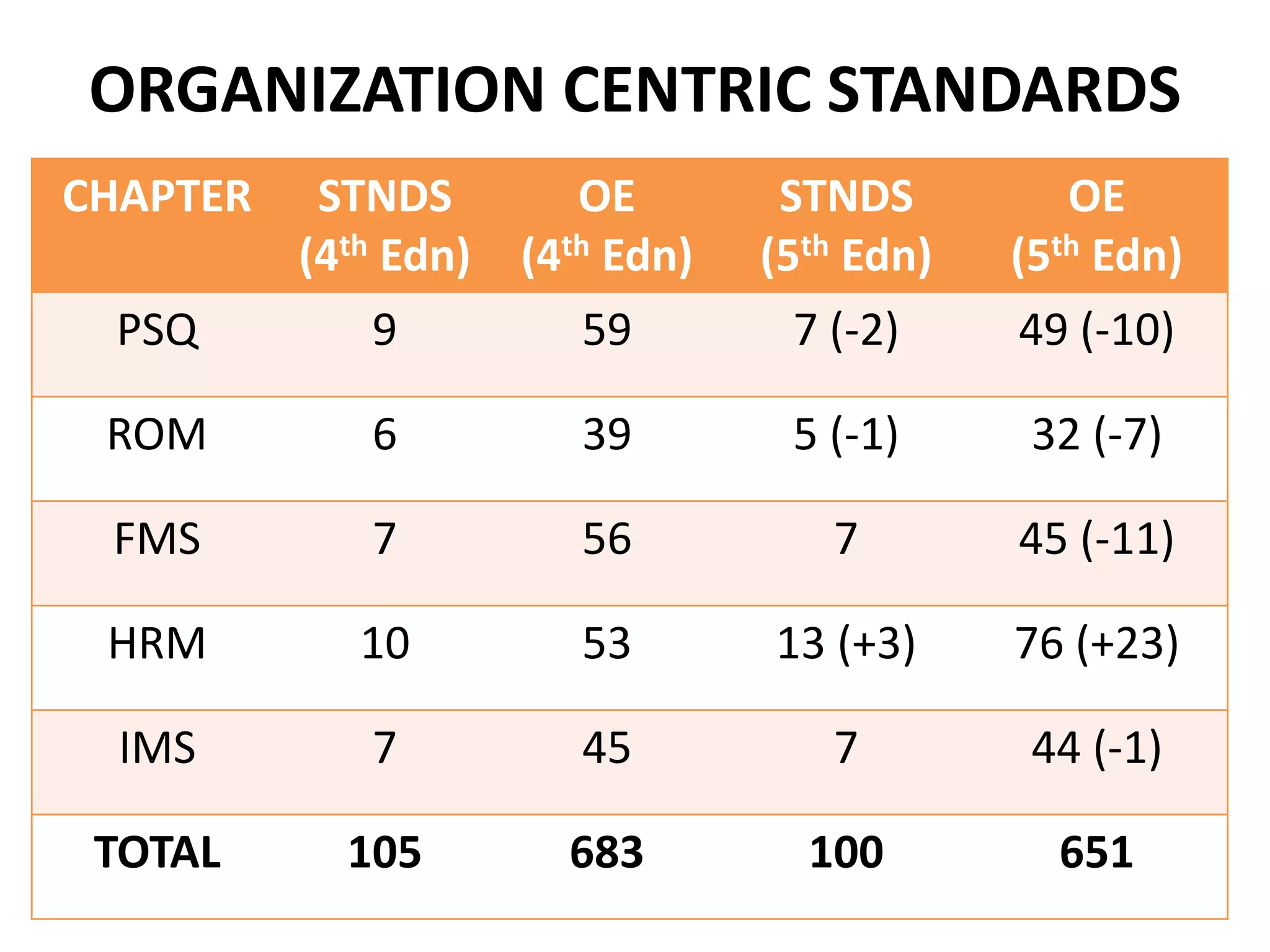
ORGANIZATION CENTRIC STANDARDS
CHAPTER STNDS
(4th Edn)
OE
(4th Edn)
STNDS
(5th Edn)
OE
(5th Edn)
PSQ 9 59 7 (-2) 49 (-10)
ROM 6 39 5 (-1) 32 (-7)
FMS 7 56 7 45 (-11)
HRM 10 53 13 (+3) 76 (+23)
IMS 7 45 7 44 (-1)
TOTAL 105 683 100 651
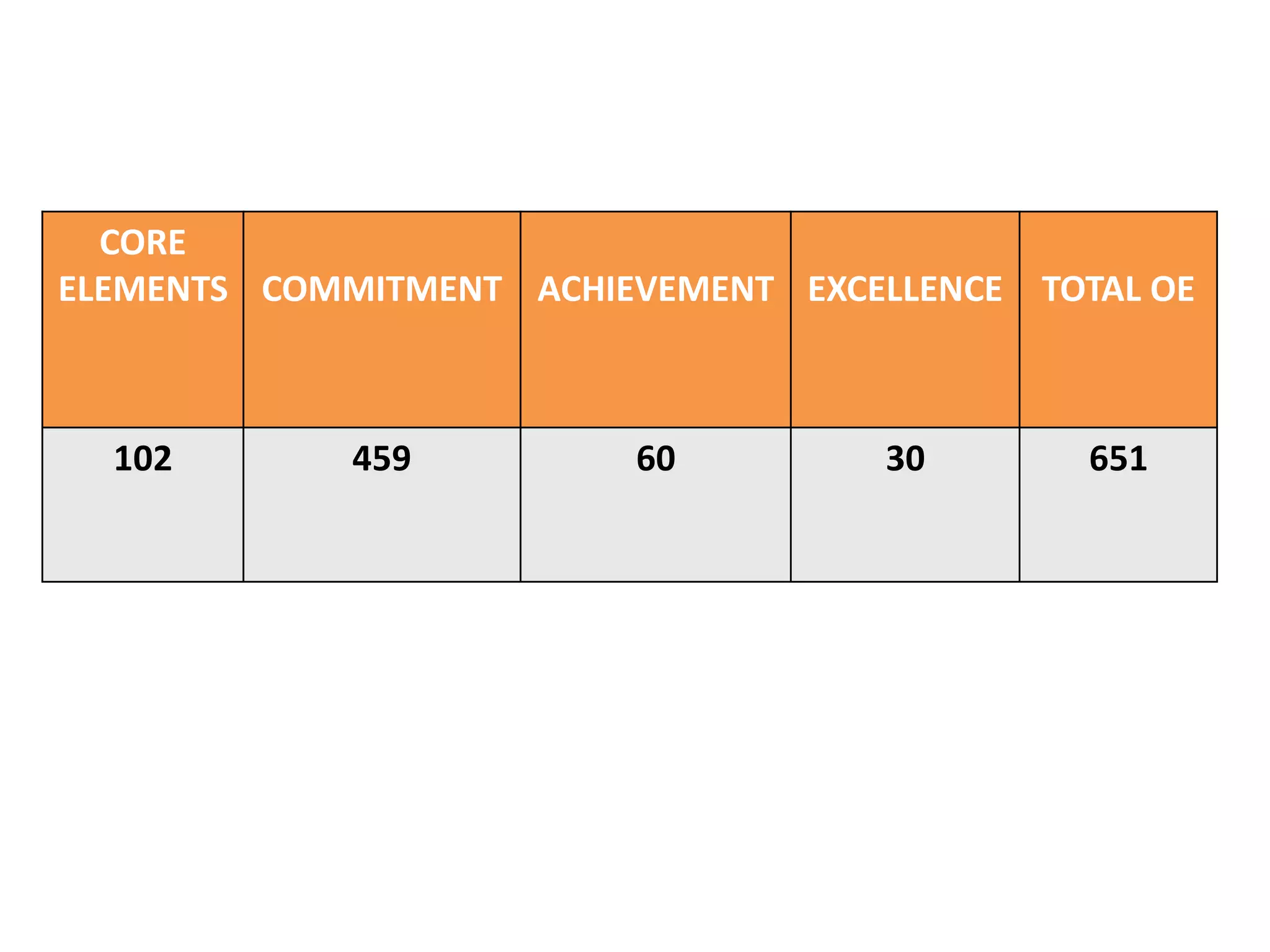
CORE
ELEMENTS COMMITMENT ACHIEVEMENT EXCELLENCE TOTAL OE
102 459 60 30 651
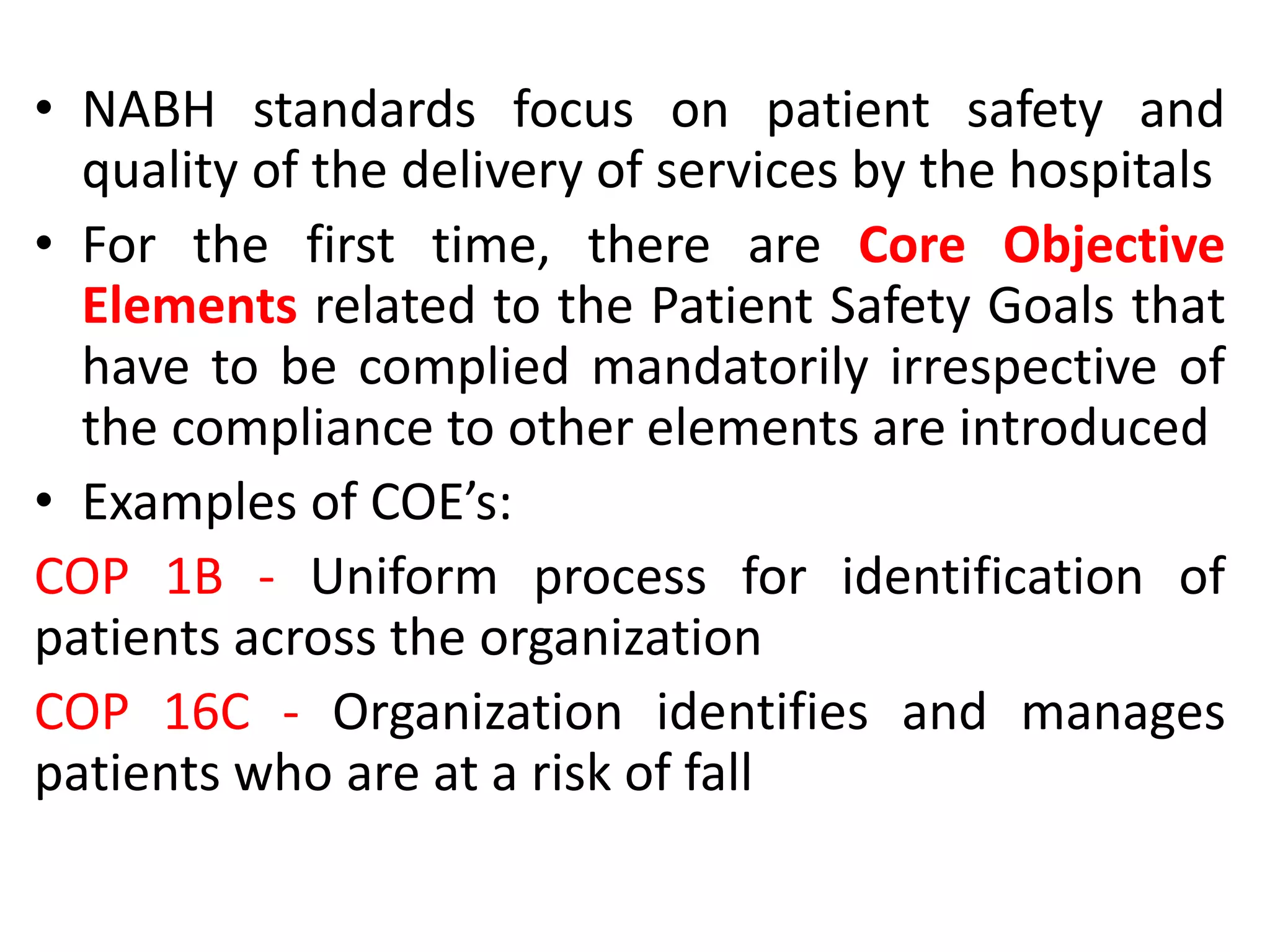
• NABH standards focus on patient safety and
quality of the delivery of services by the hospitals
• For the first time, there are Core Objective
Elements related to the Patient Safety Goals that
have to be complied mandatorily irrespective of
the compliance to other elements are introduced
• Examples of COE’s:
COP 1B - Uniform process for identification of
patients across the organization
COP 16C - Organization identifies and manages
patients who are at a risk of fall
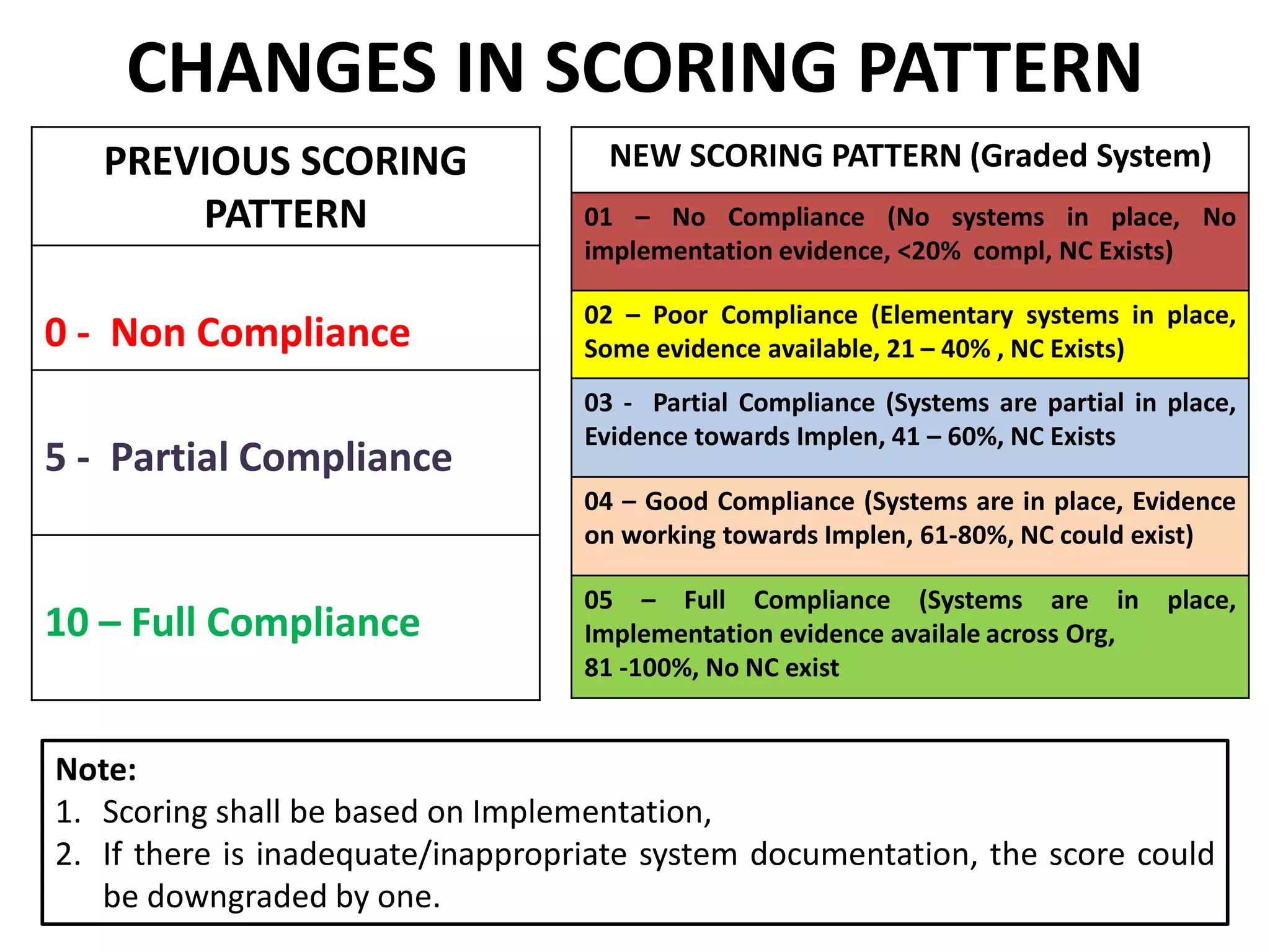
CHANGES IN SCORING PATTERN
PREVIOUS SCORING
PATTERN
0 - Non Compliance
5 - Partial Compliance
10 – Full Compliance
NEW SCORING PATTERN (Graded System)
01 – No Compliance (No systems in place, No
implementation evidence, <20% compl, NC Exists)
02 – Poor Compliance (Elementary systems in place,
Some evidence available, 21 – 40% , NC Exists)
03 - Partial Compliance (Systems are partial in place,
Evidence towards Implen, 41 – 60%, NC Exists
04 – Good Compliance (Systems are in place, Evidence
on working towards Implen, 61-80%, NC could exist)
05 – Full Compliance (Systems are in place,
Implementation evidence availale across Org,
81 -100%, No NC exist
Note:
1. Scoring shall be based on Implementation,
2. If there is inadequate/inappropriate system documentation, the score could
be downgraded by one.
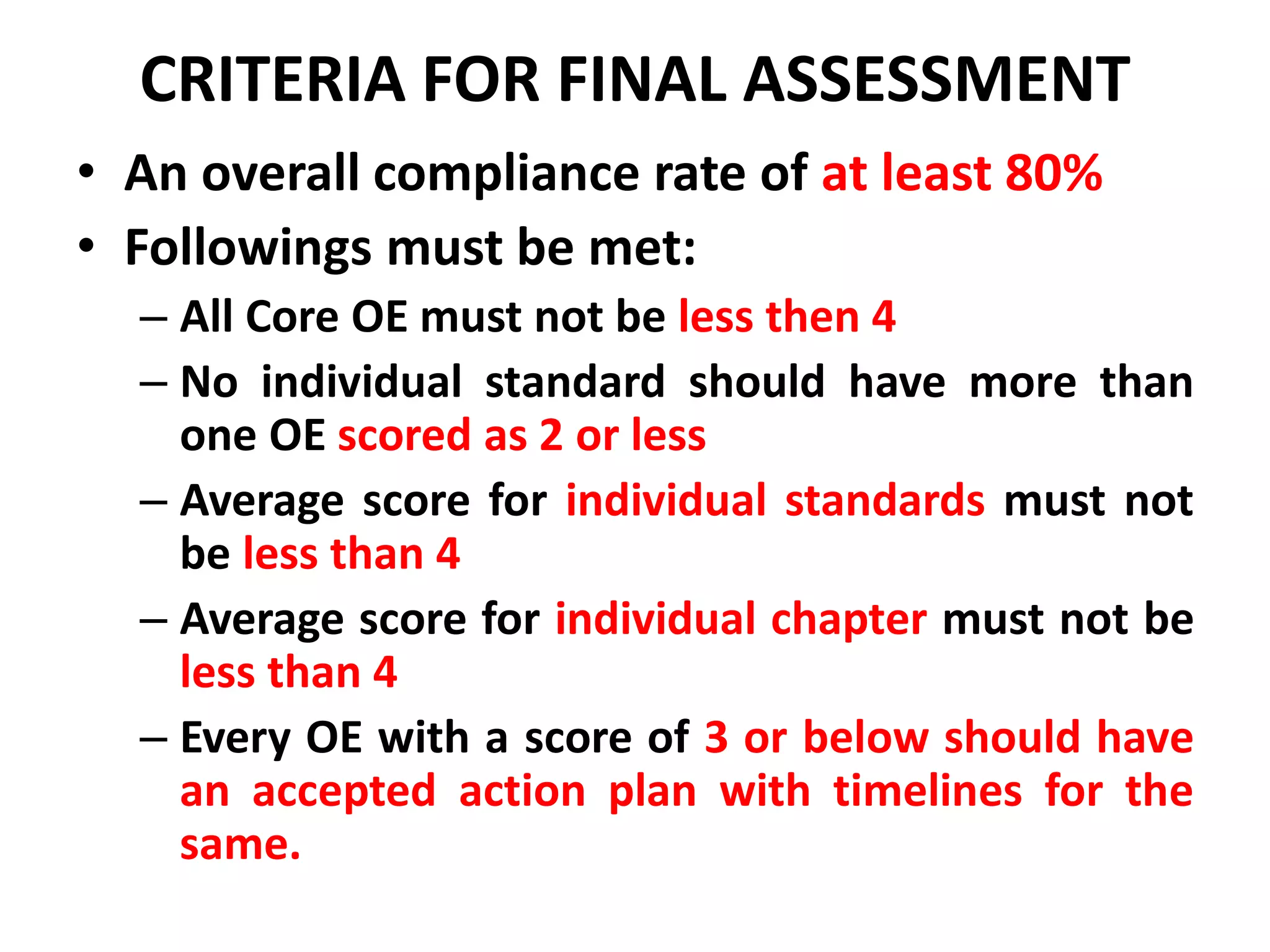
CRITERIA FOR FINAL ASSESSMENT
• An overall compliance rate of at least 80%
• Followings must be met:
– All Core OE must not be less then 4
– No individual standard should have more than
one OE scored as 2 or less
– Average score for individual standards must not
be less than 4
– Average score for individual chapter must not be
less than 4
– Every OE with a score of 3 or below should have
an accepted action plan with timelines for the
same.
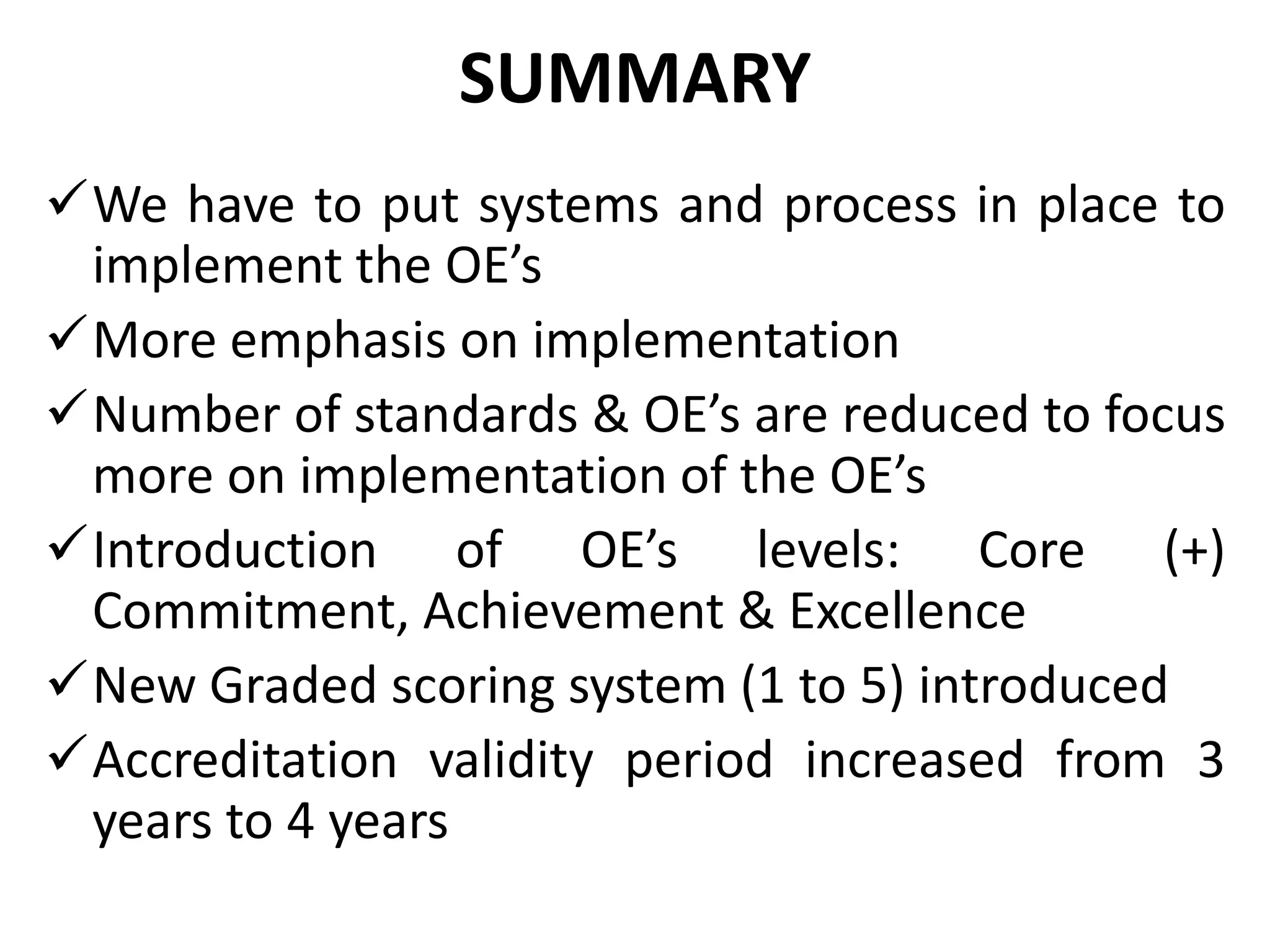
SUMMARY
We have to put systems and process in place to
implement the OE’s
More emphasis on implementation
Number of standards & OE’s are reduced to focus
more on implementation of the OE’s
Introduction of OE’s levels: Core (+)
Commitment, Achievement & Excellence
New Graded scoring system (1 to 5) introduced
Accreditation validity period increased from 3
years to 4 years
Nabh  5th edition introduction by Iyanar. S

Nabh 5th edition introduction by Iyanar. S

  • 1.
  • 2.
    INTRODUCTION NABH is aconstituent board of Quality Council of India, set up to establish and operate accreditation programme for healthcare organizations in India. International Linkage with lSQua & ASQua
  • 3.
    • NABH 5thedition standards are accredited by International Society for Quality in Health Care (ISQua)
  • 4.
    OVERALL CHANGES NABH 4thEDITION 10 CHAPTERS 105 STANDARDS 683 OBJECTIVE ELEMENTS NABH 5th EDITION 10 CHAPTERS 100 STANDARDS 651 OBJECTIVE ELEMENTS
  • 5.
    CHANGES IN CHAPTERS PATIENTCENTERED 1. Access, Assessment & Continuity of Care (AAC) 2. Care of Patient (COP) 3. Management of Medication (MOM) 4. Patient Right and Education (PRE) 5. Hospital Infection Control (HIC) MANAGEMENT CENTERED 6. Patient Safety & Quality Improvement (PSQ) 7. Responsibility of Management (ROM) 8. Facility Management and Safety (FMS) 9. Human Resource Management (HRM) 10. Information Management System(IMS)
  • 6.
    PATIENT CENTRIC STANDARDS CHAPTERSTNDS (4th Edn) OE (4th Edn) STNDS (5th Edn) OE (5th Edn) AAC 14 96 14 91 (-5) COP 22 151 20 (-2) 142 (-9) MOM 13 76 11 (-2) 68 (-8) PRE 8 54 8 53 (-1) HIC 9 54 8 (-1) 51 (-3)
  • 7.
    ORGANIZATION CENTRIC STANDARDS CHAPTERSTNDS (4th Edn) OE (4th Edn) STNDS (5th Edn) OE (5th Edn) PSQ 9 59 7 (-2) 49 (-10) ROM 6 39 5 (-1) 32 (-7) FMS 7 56 7 45 (-11) HRM 10 53 13 (+3) 76 (+23) IMS 7 45 7 44 (-1) TOTAL 105 683 100 651
  • 8.
    CORE ELEMENTS COMMITMENT ACHIEVEMENTEXCELLENCE TOTAL OE 102 459 60 30 651
  • 9.
    • NABH standardsfocus on patient safety and quality of the delivery of services by the hospitals • For the first time, there are Core Objective Elements related to the Patient Safety Goals that have to be complied mandatorily irrespective of the compliance to other elements are introduced • Examples of COE’s: COP 1B - Uniform process for identification of patients across the organization COP 16C - Organization identifies and manages patients who are at a risk of fall
  • 10.
    CHANGES IN SCORINGPATTERN PREVIOUS SCORING PATTERN 0 - Non Compliance 5 - Partial Compliance 10 – Full Compliance NEW SCORING PATTERN (Graded System) 01 – No Compliance (No systems in place, No implementation evidence, <20% compl, NC Exists) 02 – Poor Compliance (Elementary systems in place, Some evidence available, 21 – 40% , NC Exists) 03 - Partial Compliance (Systems are partial in place, Evidence towards Implen, 41 – 60%, NC Exists 04 – Good Compliance (Systems are in place, Evidence on working towards Implen, 61-80%, NC could exist) 05 – Full Compliance (Systems are in place, Implementation evidence availale across Org, 81 -100%, No NC exist Note: 1. Scoring shall be based on Implementation, 2. If there is inadequate/inappropriate system documentation, the score could be downgraded by one.
  • 11.
    CRITERIA FOR FINALASSESSMENT • An overall compliance rate of at least 80% • Followings must be met: – All Core OE must not be less then 4 – No individual standard should have more than one OE scored as 2 or less – Average score for individual standards must not be less than 4 – Average score for individual chapter must not be less than 4 – Every OE with a score of 3 or below should have an accepted action plan with timelines for the same.
  • 12.
    SUMMARY We have toput systems and process in place to implement the OE’s More emphasis on implementation Number of standards & OE’s are reduced to focus more on implementation of the OE’s Introduction of OE’s levels: Core (+) Commitment, Achievement & Excellence New Graded scoring system (1 to 5) introduced Accreditation validity period increased from 3 years to 4 years