Rania Mohamed El-Sharkawy
rania.elsharkawy@alex-mri.edu.eg
Lecturer of clinical chemistry, MRIAlexandria University ,CPHQ,LSSGB
Health governance –MRI-Alex university
unit coordinator
IHI Egypt & NAHQ member
Infection control indicators
between monitoring and improvement
WHO recommendations ………
GENERAL CONCEPTS

•Health care-associated infections lead
to death, disability and excess medical
costs.
•Infection prevention and control
program will reduce the cost if applied
and monitored effectively
WHO recommendations ………
GENERAL
CONCEPTS
Health-care facilities must implement
infection prevention and control
policies supported by institutional
management.
WHO recommendations ………
GENERAL
CONCEPTS
• Infection prevention and control
maximize patient outcomes and is
part of the institute's responsibility to
provide effective, efficient and quality
health services
WHO recommendations ………
Approach
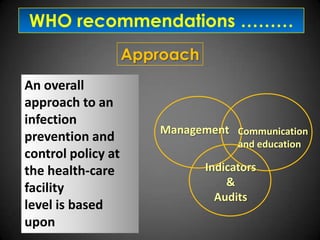
An overall
approach to an
infection
prevention and
control policy at
the health-care
facility
level is based
upon

Management Communication
and education

Indicators
&
Audits
KPI = Key Performance
Indicator
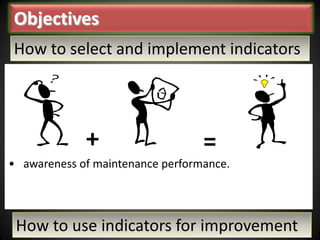
Objectives
How to select and implement indicators

+

=

• awareness of maintenance performance.

How to use indicators for improvement
Determine………
What are indicators?
KPIs are quantifiable measurements that
reflects the critical success factors of a
business.
KPIs have a major impact on the
performance of the business
KPIs are quantitative measures of a
specific part of a process or of an
outcome.
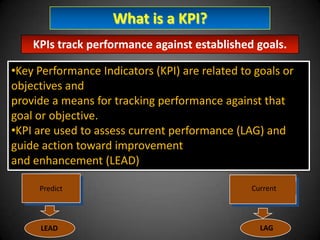
What is a KPI?
KPIs track performance against established goals.
•Key Performance Indicators (KPI) are related to goals or
objectives and
provide a means for tracking performance against that
goal or objective.
•KPI are used to assess current performance (LAG) and
guide action toward improvement
and enhancement (LEAD)
Predict

LEAD

Current

LAG
Why indicators?
Tool for performance monitoring
• Track changes over time
Identify areas that need further study
and investigation
Choice of indicators
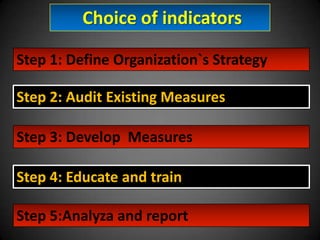
Step 1: Define Organization`s Strategy
Step 2: Audit Existing Measures

Step 3: Develop Measures
Step 4: Educate and train

Step 5:Analyza and report
Determine…

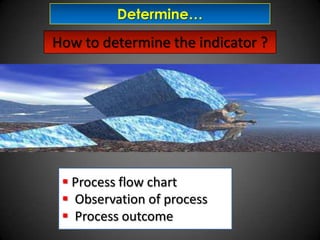
How to determine the indicator ?

 Process flow chart
 Observation of process
 Process outcome
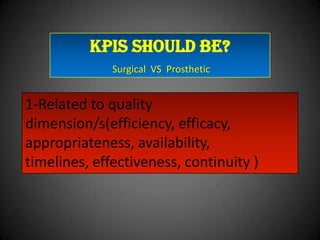
KPIs should be?
Surgical VS Prosthetic

1-Related to quality
dimension/s(efficiency, efficacy,
appropriateness, availability,
timelines, effectiveness, continuity )
KPIs should be?

2- Specific
3-Measurable
4-Aligned
5-Timely
6-Realistic
7-Ethical
8-Recorded
KPIs are not…………
WHAT ARE KPI’s NOT?
1-GROUP OF METRICS
• NOT EVERYTHING WE MEASURE IS A KPI !
2- STATISTICS
•THESE CAN HELP DEFINE KPI’s
3- A TOOL FOR BLAME
4- WALL PAPER
Types of indicators

• Efficiency of PROCESS
• Outcome ( effectiveness)

•Monitoring &measurement of
Processes
KPIs are tools for collection of
data

Types of indicator
 Sentinel-event
 Aggregate data
KPIs are tools for
collection of data
 ContinuousAggregate data

variable

 Rate –based
KPIs are tools for collection of
data

Types of indicator

 Sentinel-event
e.g Intrahospital mortality of patients
due to infections within two post
procedure days (MMR)
KPIs are tools for collection of
data

Aggregate data

 Continuous-variable
e.g No of complains or
incidents monthly raised /
department
KPIs are tools for collection of
data

Aggregate data

 Rate –based
e.g Proportion of staff observed performing
hand hygiene before
attending patients
Improvement…

How to use it for improvement ?

 HOW TO DETERMINE THE
desired performance ?
HOW TO DETERMINE THE
desired performance ?

 Compare against benchmark
 Refer to guidelines
 Compare self performance
versus same circumstances in the
same period
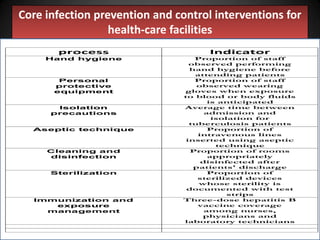
Core infection prevention and control interventions for
health-care facilities
process

Indicator

Hand hygiene

Proportion of staff
observed performing
hand hygiene before
attending patients
Proportion of staff
observed wearing
gloves when exposure
to blood or body fluids
is anticipated
Average time between
admission and
isolation for
tuberculosis patients
Proportion of
intravenous lines
inserted using aseptic
technique
Proportion of rooms
appropriately
disinfected after
patients' discharge
Proportion of
sterilized devices
whose sterility is
documented with test
strips
Three-dose hepatitis B
vaccine coverage
among nurses,
physicians and
laboratory technicians

Personal
protective
equipment
Isolation
precautions
Aseptic technique

Cleaning and
disinfection
Sterilization

Immunization and
exposure
management
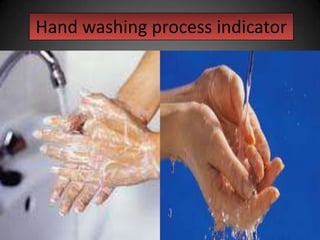
Hand washing process indicator
HAND WASHING KPI

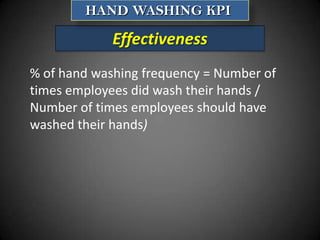
Effectiveness
% of hand washing frequency = Number of
times employees did wash their hands /
Number of times employees should have
washed their hands)
HAND WASHING KPI
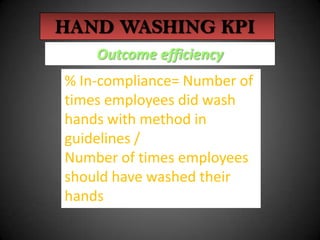
Outcome efficiency

% In-compliance= Number of
times employees did wash
hands with method in
guidelines /
Number of times employees

should have washed their
hands
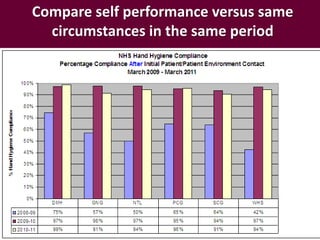
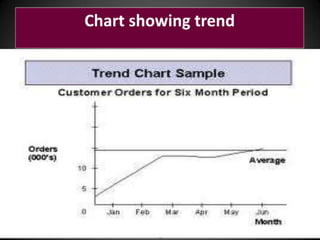
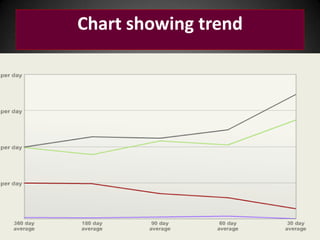
Compare self performance versus same
circumstances in the same period
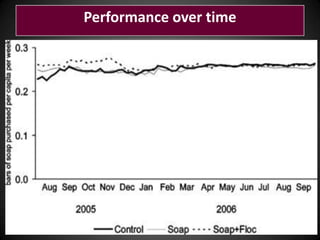
Performance over time
Chart showing trend
Self-Reported Factors for Poor
Adherence with Hand Hygiene
Hand washing agents cause irritation and
dryness
Sinks are inconveniently located/lack of sinks

Lack of soap and paper towels
Too busy/insufficient time
Understaffing/overcrowding
Patient needs take priority
Corrective actions
for improper compliance
1. Have a clear written policy and
procedure

2. Educate personnel continuously
3. Easy access to hand washing facilities
Provide an environment that
supports hand washing - NOT Like
THIS……………………………………..LIKE THIS
Bad hand washing facility

Encouraging hand washing facility
Corrective actions
for improper compliance
4. Careful selection of products
5.Monitor the technique and provide

indicators
6. Record and analyze the results to
improve the compliance
Cleaning and disinfection
KPI………
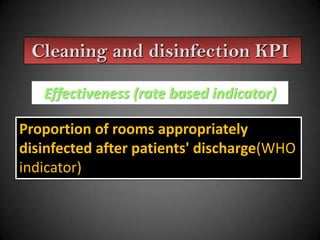
Cleaning and disinfection KPI
Effectiveness (rate based indicator)
Proportion of rooms appropriately
disinfected after patients' discharge(WHO
indicator)
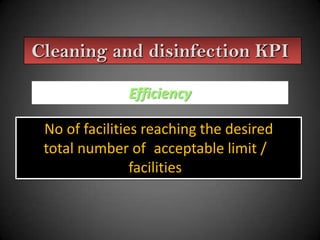
Cleaning and disinfection KPI
Efficiency
No of facilities reaching the desired
total number of acceptable limit /
facilities
For improvement
In any organization…
It is better to have………………….
HAND WASHING KPI
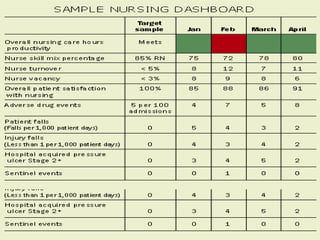
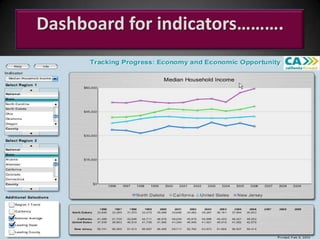
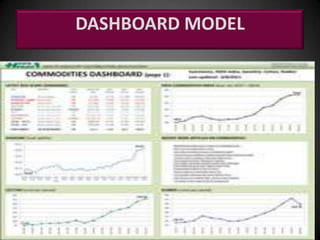
Dashboard for indicators……….
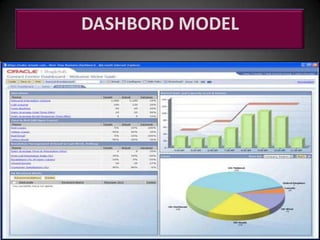
DASHBORD MODEL
DASHBOARD MODEL
Other Tips for Good KPIs
REMEMBER…….
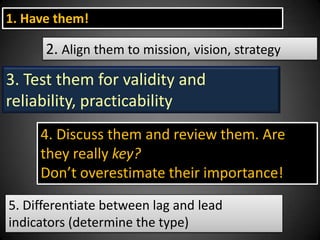
1. Have them!

2. Align them to mission, vision, strategy

3. Test them for validity and
reliability, practicability
4. Discuss them and review them. Are
they really key?
Don’t overestimate their importance!
5. Differentiate between lag and lead
indicators (determine the type)
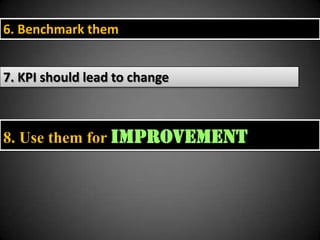
6. Benchmark them
7. KPI should lead to change

8. Use them for Improvement
Infection control key performance indicators selection and establishment

Infection control key performance indicators selection and establishment

  • 1.
    Rania Mohamed El-Sharkawy rania.elsharkawy@alex-mri.edu.eg Lecturerof clinical chemistry, MRIAlexandria University ,CPHQ,LSSGB Health governance –MRI-Alex university unit coordinator IHI Egypt & NAHQ member
  • 2.
    Infection control indicators betweenmonitoring and improvement
  • 3.
    WHO recommendations ……… GENERALCONCEPTS •Health care-associated infections lead to death, disability and excess medical costs. •Infection prevention and control program will reduce the cost if applied and monitored effectively
  • 4.
    WHO recommendations ……… GENERAL CONCEPTS Health-carefacilities must implement infection prevention and control policies supported by institutional management.
  • 5.
    WHO recommendations ……… GENERAL CONCEPTS •Infection prevention and control maximize patient outcomes and is part of the institute's responsibility to provide effective, efficient and quality health services
  • 6.
    WHO recommendations ……… Approach Anoverall approach to an infection prevention and control policy at the health-care facility level is based upon Management Communication and education Indicators & Audits
  • 7.
    KPI = KeyPerformance Indicator
  • 8.
    Objectives How to selectand implement indicators + = • awareness of maintenance performance. How to use indicators for improvement
  • 9.
  • 10.
    What are indicators? KPIsare quantifiable measurements that reflects the critical success factors of a business. KPIs have a major impact on the performance of the business KPIs are quantitative measures of a specific part of a process or of an outcome.
  • 11.
    What is aKPI? KPIs track performance against established goals. •Key Performance Indicators (KPI) are related to goals or objectives and provide a means for tracking performance against that goal or objective. •KPI are used to assess current performance (LAG) and guide action toward improvement and enhancement (LEAD) Predict LEAD Current LAG
  • 12.
    Why indicators? Tool forperformance monitoring • Track changes over time Identify areas that need further study and investigation
  • 13.
    Choice of indicators Step1: Define Organization`s Strategy Step 2: Audit Existing Measures Step 3: Develop Measures Step 4: Educate and train Step 5:Analyza and report
  • 14.
    Determine… How to determinethe indicator ?  Process flow chart  Observation of process  Process outcome
  • 16.
    KPIs should be? SurgicalVS Prosthetic 1-Related to quality dimension/s(efficiency, efficacy, appropriateness, availability, timelines, effectiveness, continuity )
  • 17.
    KPIs should be? 2-Specific 3-Measurable 4-Aligned 5-Timely 6-Realistic 7-Ethical 8-Recorded
  • 18.
    KPIs are not………… WHATARE KPI’s NOT? 1-GROUP OF METRICS • NOT EVERYTHING WE MEASURE IS A KPI ! 2- STATISTICS •THESE CAN HELP DEFINE KPI’s 3- A TOOL FOR BLAME 4- WALL PAPER
  • 19.
    Types of indicators •Efficiency of PROCESS • Outcome ( effectiveness) •Monitoring &measurement of Processes
  • 20.
    KPIs are toolsfor collection of data Types of indicator  Sentinel-event  Aggregate data
  • 21.
    KPIs are toolsfor collection of data  ContinuousAggregate data variable  Rate –based
  • 22.
    KPIs are toolsfor collection of data Types of indicator  Sentinel-event e.g Intrahospital mortality of patients due to infections within two post procedure days (MMR)
  • 23.
    KPIs are toolsfor collection of data Aggregate data  Continuous-variable e.g No of complains or incidents monthly raised / department
  • 24.
    KPIs are toolsfor collection of data Aggregate data  Rate –based e.g Proportion of staff observed performing hand hygiene before attending patients
  • 25.
    Improvement… How to useit for improvement ?  HOW TO DETERMINE THE desired performance ?
  • 26.
    HOW TO DETERMINETHE desired performance ?  Compare against benchmark  Refer to guidelines  Compare self performance versus same circumstances in the same period
  • 27.
    Core infection preventionand control interventions for health-care facilities process Indicator Hand hygiene Proportion of staff observed performing hand hygiene before attending patients Proportion of staff observed wearing gloves when exposure to blood or body fluids is anticipated Average time between admission and isolation for tuberculosis patients Proportion of intravenous lines inserted using aseptic technique Proportion of rooms appropriately disinfected after patients' discharge Proportion of sterilized devices whose sterility is documented with test strips Three-dose hepatitis B vaccine coverage among nurses, physicians and laboratory technicians Personal protective equipment Isolation precautions Aseptic technique Cleaning and disinfection Sterilization Immunization and exposure management
  • 28.
  • 29.
    HAND WASHING KPI Effectiveness %of hand washing frequency = Number of times employees did wash their hands / Number of times employees should have washed their hands)
  • 30.
    HAND WASHING KPI Outcomeefficiency % In-compliance= Number of times employees did wash hands with method in guidelines / Number of times employees should have washed their hands
  • 31.
    Compare self performanceversus same circumstances in the same period
  • 32.
  • 34.
  • 35.
    Self-Reported Factors forPoor Adherence with Hand Hygiene Hand washing agents cause irritation and dryness Sinks are inconveniently located/lack of sinks Lack of soap and paper towels Too busy/insufficient time Understaffing/overcrowding Patient needs take priority
  • 36.
    Corrective actions for impropercompliance 1. Have a clear written policy and procedure 2. Educate personnel continuously 3. Easy access to hand washing facilities
  • 37.
    Provide an environmentthat supports hand washing - NOT Like THIS……………………………………..LIKE THIS Bad hand washing facility Encouraging hand washing facility
  • 38.
    Corrective actions for impropercompliance 4. Careful selection of products 5.Monitor the technique and provide indicators 6. Record and analyze the results to improve the compliance
  • 39.
  • 41.
    Cleaning and disinfectionKPI Effectiveness (rate based indicator) Proportion of rooms appropriately disinfected after patients' discharge(WHO indicator)
  • 42.
    Cleaning and disinfectionKPI Efficiency No of facilities reaching the desired total number of acceptable limit / facilities
  • 43.
    For improvement In anyorganization… It is better to have………………….
  • 44.
  • 45.
  • 46.
  • 47.
  • 48.
    Other Tips forGood KPIs REMEMBER…….
  • 49.
    1. Have them! 2.Align them to mission, vision, strategy 3. Test them for validity and reliability, practicability 4. Discuss them and review them. Are they really key? Don’t overestimate their importance! 5. Differentiate between lag and lead indicators (determine the type)
  • 50.
    6. Benchmark them 7.KPI should lead to change 8. Use them for Improvement